Tag Archives: Sen. Johnny Isakson

New Poll Again Shows Tight
Numbers in Georgia Senate Race

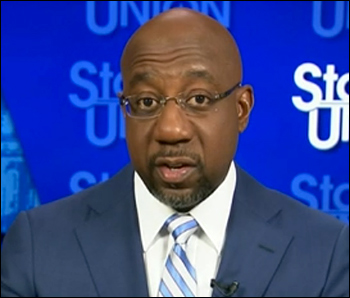
Georgia freshman Sen. Raphael Warnock (D)

By Jim Ellis

Aug. 11, 2021 — Late last week, Public Policy Polling released their new Georgia Senate findings (Aug. 4-5; 622 Georgia voters, interactive voice response system) and the results place the new Peach State Senate race in familiar territory: a virtual tie.

While PPP finds that freshman Sen. Raphael Warnock (D) leads three tested Republican potential nominees, former Sen. Kelly Loeffler, retired football star Herschel Walker, and three-term state Agriculture Commissioner Gary Black, only when paired against Black does Warnock’s edge extend beyond the polling margin of error. This early poll suggests what the conventional political wisdom already predicts, that the 2022 Senate race will again feature a close finish.

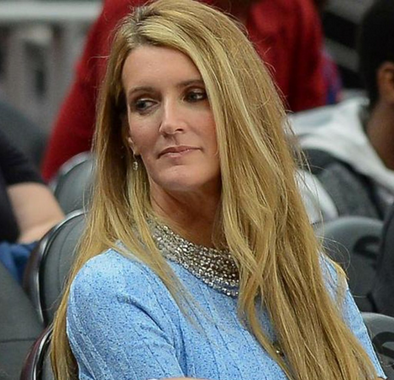
To reiterate, Sen. Warnock, though winning his seat only in 2020, must run for a full six-year term next year because he won the special election to fill the unexpired portion of former Sen. Johnny Isakson’s (R) final term. You will remember that Sen. Isakson resigned at the end of 2019 due to health reasons and Gov. Brian Kemp (R) appointed Loeffler to fill the seat until the special election was conducted.

The PPP results find Walker, who has yet to announce (and it’s still even unclear as to whether he will run), in the best position of the three tested potential candidates. In this poll, Sen. Warnock’s edge is 48-46 percent. Loeffler fares comparably with Walker, though slightly worse, trailing 44-47 percent. Commissioner Black, the only officially announced candidate of the group, falls behind by eight percentage points, 38-46 percent.

The favorability indexes provide further clues. Keeping in mind that almost everyone tends to skew negatively on the PPP favorability scores, the two benchmarks, President Biden and former President Trump, score 46:48 percent favorable to unfavorable and 43:48 percent, respectively. Sen. Warnock posts a 43:42 percent job approval score. Walker, obviously exclusively due to the personal recognition coming from both his college and professional football career, has the best result: 41:28 percent. Loeffler fares poorly: 28:47 percent, while Commissioner Black is an even split at 15:15 percent; still, that means 70 percent of the voters don’t have enough information about him to form an opinion.

These numbers provide us with several conclusions: first, Sen. Warnock has yet to establish himself beyond a partisan framework. The 85:8 percent score among Democrats carries his overall positive mark. He records a predictable 6:78 percent mark among Republicans, but perhaps most indicative, just 33:45 percent among those classifying themselves as political Independents.


Continue reading

Attack of the Attack Ads

(Sen. Perdue Ad)

By Jim Ellis

Nov. 17, 2020 — All four Georgia Senate runoff candidates are already hitting the airwaves with new messages that telegraph just where they want their campaigns to head in the final weeks of 2020 political overtime.

As you know, Sen. David Perdue (R) faces Democratic challenger Jon Ossoff for the in-cycle six-year term, and appointed Sen. Kelly Loeffler (R) opposes Rev. Raphael Warnock (D) in the special election to fill the final two years of resigned Sen. Johnny Isakson’s (R) final term. Loeffler was appointed when Isakson left office at the end of 2019 for health reasons. Both contests will be decided on Jan. 5.

The outcome will decide the Senate majority. If the Democrats sweep the two races, they will become the majority party because the new vice president, Kamala Harris, will break the 50-50 tie. If Republicans just win one of the two, they will maintain their current majority status, albeit smaller, at 51-49. Winning the pair means the GOP will have only lost a net of one seat in the 2020 election cycle as their majority would register 52-48.

Sen. Perdue set the tone of his runoff effort with a new ad (top) that highlights Senate Minority Leader Chuck Schumer (D-NY) saying, “when we (meaning the Democrats) take Georgia, we will change America.” The Perdue ad defines “the Schumer-Pelosi-Ossoff” change as “defund[ing] the police, voting rights for illegal immigrants, and making Washington, DC the 51st state.” The message then quotes Ossoff as saying, “change is coming to America.” The ad closes with the narrator saying, “believe them. Vote Perdue to stop them.”

(Jon Ossoff Ad)

Ossoff responds with an ad (above) solely devoted to COVID-19. The media consultants found virtually identical COVID related statements from President Trump and Sen. Perdue, and then runs their audio consecutively in an attempt to tie the two together. The ad closes with the narrator saying that “David Perdue ignored the medical experts, downplayed the crisis, and left us unprepared.”

The special election is taking a much different tone. Challenger Raphael Warnock, the Baptist minister who pastors the church over which Dr. Martin Luther King, Jr. and his father once presided, Ebenezer Baptist in Atlanta, re-visits Sen. Loeffler’s controversial COVID related stock transactions and creates an ad around this subject (below).

(Raphael Warnock Ad)

The script says Sen. Loeffler, “after receiving confidential briefings on Coronavirus immediately starts dumping stocks …making sale after sale and getting rid of $3.1 million before the market crashed.” The tagline ends with the narrator saying, “Kelly is for Kelly. Warnock is for us.”

The ad, of course, makes no mention of Sen. Loeffler’s transactions being investigated and cleared by the Securities and Exchange Commission, but it is more than probable that we will be hearing that part of the story in future Loeffler campaign communications.

Sen. Loeffler launched a hard-hitting new attack centered around her theme, “saving the Senate is about saving America.” The ad attacks Rev. Warnock for “calling police thugs and gangsters, host[ing] a rally for Communist dictator Fidel Castro, and prais[ing] Marxism in speeches and writings.” (below)

https://youtu.be/sUTe8yemoJM(Sen. Loeffler Ad)

With the campaign battle lines being drawn early in this two-month runoff campaign, we can expect this type of hard-hitting rhetoric to continue all the way to the Jan. 5 election as both sides attempt to motivate their base voters to return for the runoff.

The last time we saw a US Senate runoff in Georgia – Georgia and Maine are the only two states that require general election winners receive majority support – occurred in 2008 when Sen. Saxby Chambliss (R) was forced into a secondary vote. The circumstances were similar. Sen. Chambliss placed first in the general election but, like Sen. Perdue, finished just a few thousand votes under the 50 percent threshold (49.8 percent). This forced Chambliss and his opponent, Democrat Jim Martin who received 46.8 percent, into a Dec. 2 runoff election of that year.

Sen. Chambliss prevailed in the runoff with 57.4 percent of the vote. In that year, 3.752 million people voted in the general election with 2.138 million returned for the runoff election for a drop-off rate of 43 percent. In 2020, a total of 4,945,702 individuals cast a vote in the Perdue-Ossoff Senate race, while the figure was approximately 37,000 people lower for the special election, 4,907,872. While a drop-off from the 2020 general election is expected, political intensity suggests it will likely not be as high as we saw in the 2008 US Senate runoff campaign.

Political Overtime in Georgia & Maine

Note: Last week in the polling recount Update, a typographical error was made in one of the quoted Iowa polls. The Siena College/New York Times survey should have read: Sen. Joni Ernst (R) 45%, Theresa Greenfield (D) 44% (not 55-44%). We apologize for the mistake.


By Jim Ellis

Oct. 26, 2020 — There has been discussion about seeing a great number of political campaigns not being called on Election Night, thus creating what could become a rather long “political overtime” period. Laws in two states, however, could send key Senate races into political overtime, but for a different reason than not having all of the ballots either received or counted.

Georgia and Maine have unique laws that create a secondary election period should no candidate receive majority support in the general election. Many states employ runoff contests in nomination battles, but Georgia and Maine are two entities with special laws governing the general election should no majority be achieved. In this particular year, three US Senate races, in a cycle where the battle for chamber control is close and intense, could be forced into political overtime in just those two places.

In Georgia, all contenders failing to reach the 50 percent mark sends the contest into a general election runoff. Considering the 2020 calendar, that secondary election date is scheduled for Jan. 5, meaning that the current election cycle would then be expanded for an additional two months. If the majority hinges on the two Georgia seats, it won’t be until the new year until we would have the opportunity of knowing which party would lead the Senate in the next Congress.

In the Georgia-A seat, polling hasn’t yet put one of the candidates, Sen. David Perdue (R) or Democratic nominee Jon Ossoff, at or over the 50 percent mark. In the last 10 polls of the Perdue-Ossoff race, neither man has reached 50 percent when any of the three minor party or independent candidates were listed, or referred to, in the survey questionnaire.

The Georgia-B campaign, which is the special election to fill the balance of resigned Sen. Johnny Isakson’s (R) final term, is certainly headed for political overtime. Here, the candidates are placed on the same ballot regardless of political party affiliation.

Polling throughout this election year suggests that none of the four major candidates, appointed Sen. Kelly Loeffler (R), Rep. Doug Collins (R-Gainesville), Rev. Raphael Warnock (D), and businessman Matt Lieberman (D), are anywhere close to majority support. Therefore, the top two finishers on Nov. 3 would advance to the secondary election on Jan. 5.

Continue reading

Rep. Collins Makes His Move in
Georgia’s Special Senate Race

By Jim Ellis

Georgia Rep. Doug Collins (R-Gainesville)

Oct. 21, 2020 — Georgia Rep. Doug Collins (R-Gainesville) began the 2020 special Senate election campaign as the early leader, enjoying an advantage over appointed Sen. Kelly Loeffler (R), Atlanta businessman Matt Lieberman, the son of former Connecticut US senator and 2000 Democratic vice presidential nominee Joe Lieberman, and Baptist pastor Raphael Warnock (D), who now ministers the Ebenezer Baptist Church in Atlanta where Dr. Martin Luther King, Jr. and his father once pastored.

The race, however, has changed significantly since those early days.

Georgia Sen. Kelly Loeffler (R)

By taking advantage of her huge personal wealth and being cleared of wrongdoing over controversial stock transactions that she and her husband, Jeffrey Sprecher, the chairman of the New York Stock Exchange, made just after she received early COVID senatorial briefings, Loeffler eventually moved past Rep. Collins in the political standings.

Once Democrats began to coalesce around Rev. Warnock, the race again changed. The pastor began securing first place in multiple statewide polls after receiving many key national endorsements. This left Rep. Collins and Sen. Loeffler, the two Republicans, fighting each other for second place.

Baptist pastor Raphael Warnock (D)

The congressman, knowing he couldn’t compete with Sen. Loeffler’s wealth, or even the Democrats institutional money once the party establishment began to support Rev. Warnock in earnest, held a large portion of his resources for a strong late finish after raising $6 million for the race through Sept. 30.

Rep. Collins’ campaign strategy may be paying dividends. A new Emerson College survey (Oct. 17-19; 506 likely Georgia voters, interactive voice response system and online responses) finds another change in this rather uneven special election campaign. According to their data, Rep. Collins has now tied Rev. Warnock for first place in the jungle primary with 27 percent apiece. Sen. Loeffler trails with 20 percent and Lieberman, who had dropped well into single digits in many other polls, also rebounded to 12 percent support.

This poll conflicts somewhat with a recent Survey USA study (Oct. 8-12; 677 likely Georgia voters, online) that found Rev. Warnock at 30 percent, Sen. Loeffler posting 26 percent, Rep. Collins attracting 20 percent support, and Lieberman back in single digits with eight percent preference. Previous polls returned similar numbers to that of S-USA, but with larger percentages for Rev. Warnock.

Continue reading

Sen. Loeffler’s Strange Response

https://youtu.be/1SDGjd9JqMoLoeffler ad


By Jim Ellis

May 6, 2020 — As we have seen since the COVID-19 quarantines began, appointed Georgia Sen. Kelly Loeffler (R) has been reeling politically. Her backslide began after news stories showed that she and her husband, New York Stock Exchange chairman Jeffrey Sprecher, made stock transactions of at least $18 million to better position themselves after receiving early Senate briefings about the potential coronavirus effects. She has now launched a $4 million response media buy.

Her ads, however, yield a rather unusual approach. While not mentioning the core attack against her, which is that she took personal financial action in response to receiving alarming policy briefings, the ad script indirectly underscores her extraordinary wealth. This may prove an ill-advised self-defense approach and it is difficult to see how the ad message begins to reverse a negative tide. (See ad at top.)

The Loeffler campaign media buy is divided among three similar television and digital ads, but they all emphasize that Sen. Loeffler is being attacked by liberals, that she has donated $1 million of her own money to COVID-19 hospital operations and is forfeiting her Senate salary for the benefit of coronavirus victims. In two of the ads, the narrator explains that the senator sent her private jet to bring back stranded individuals in foreign countries after quarantine bans were implemented.

Recent polling has projected Sen. Loeffler as being buried within the middle of a field of five significant candidates. In the latest poll, from the Cygnal research group taken during the April 25-27 period, Rep. Doug Collins (R-Gainesville) holds a 29-12 percent lead over Atlanta businessman Matt Lieberman (D), the son of former Connecticut senator and 2000 vice presidential nominee Joe Lieberman. In third place with 10.6 percent preference is Rev. Raphael Warnock, who pastors Ebenezer Baptist Church in Atlanta, where Dr. Martin Luther King Jr. and his father once presided. Sen. Loeffler then follows, virtually tying Rev. Warnock at 10.5 percent. Former US Attorney Ed Tarver trails the group with 4 percent.

Continue reading

Georgia’s Dual Senate Races

By Jim Ellis

May 5, 2020 — Georgia is the only state this year that features two US Senate races, and a new poll suggests that both are interesting.

The Peach State’s politics have garnered more national attention since 2018 as election results suggest that Georgia is moving closer to the ideological center. Still conservative, the 2018 governor’s election that saw Republican Brian Kemp slipping past former state House Minority Leader Stacey Abrams (who has since become a national figure and one of the contenders to be Joe Biden’s vice-presidential running mate) by just over one percentage point. Additionally, the Democrats gained a congressional seat in the Atlanta metro area and came within 419 votes of converting a second.

Georgia Gov. Brian Kemp appointed businesswoman Kelly Loeffler (R) to the U.S. Senate to succeed retiring Sen. Johnny Isakson, who is leaving office at the end of the year due to health issues.

A substantial increase in the state’s minority population, almost all of which is occurring in the Atlanta metropolitan region, during the past decade (Asian, plus-31 percent; African American, plus-17 percent; Hispanic, plus-14 percent) is the chief reason for the uptick in Democratic candidate support.

With this background, the Cygnal research organization released the results of their most recent Georgia statewide poll (April 25-27; 591 Georgia voters, all but six of whom say they are definitely or probably voting) and their data finds two competitive US Senate races unfolding.

The results reveal one incumbent in serious trouble and the other headed for a potentially competitive re-election battle. In fact, appointed Sen. Kelly Loeffler (R) trails not only US Rep. Doug Collins (R-Gainesville), who leads the jungle primary field by over 17 points, but actually places fourth in the field behind two Democratic candidates yet close enough to them to become entangled in a statistical tie. Sen. David Perdue (R) maintains just a six-point lead over the only Democrat tested against him, former congressional candidate Jon Ossoff.

Continue reading

Kelly Loeffler In; Rep. Heck Out

Georgia Gov. Brian Kemp appointed businesswoman Kelly Loeffler to the U.S. Senate to succeed retiring Sen. Johnny Isakson, who is leaving office at the end of the year due to health issues.

By Jim Ellis

Dec. 6, 2019 — As expected, Georgia Gov. Brian Kemp (R) announced that businesswoman Kelly Loeffler is his choice to succeed Sen. Johnny Isakson (R) when Isakson resigns at the end of the year due to health problems.

Also, in Washington state, four-term Rep. Denny Heck (D-Olympia) announced that he will not seek re-election. In a released statement, while criticizing President Trump, Heck indicated that the ongoing investigations of which he has been a part as a member of the House Intelligence Committee, has caused him to become weary.

Georgia Senate

Loeffler’s pick is somewhat controversial among Republicans since President Trump and many state conservative leaders were publicly backing Rep. Doug Collins (R-Gainesville) for the seat. Additionally, the congressman has hinted in media interviews that running against the appointed senator in the 2020 special election to fill the balance of the term is not out of the realm of possibility.

Conservatives are expressing doubt about Loeffler, citing her past donations to certain Democratic candidates, support for Planned Parenthood, and weakness, from their perspective, on other social issues. For her part, Loeffler is pledging full support to passing the Trump agenda and voting to approve additional federal judges and Trump Administration appointments.

Loeffler will serve throughout 2020 and be eligible to compete in the special election to serve the final two years of Sen. Isakson’s term. The governor has scheduled a jungle primary to run concurrently with the 2020 general election. If no candidate receives majority support on Nov. 3, then the top two finishers will advance to a run-off election on Jan. 5. Should the general election go badly for Senate Republicans, it’s possible that the Georgia run-off could determine majority control.

Continue reading

The Twists & Turns of Replacing
Georgia’s Sen. Johnny Isakson

By Jim Ellis

Sept. 9, 2019 — Political chatter about the new Georgia Senate race is becoming prevalent. As we know, last week Georgia Sen. Johnny Isakson (R) announced that he will resign at the end of this year due to health problems. A great deal of speculation has occurred since, not only about who will be appointed to succeed the senator, but also who will run in the 2020 special election, and even about the election procedure, itself.

At this point, we know that Gov. Brian Kemp (R) will name a replacement for Sen. Isakson. The selected individual will serve throughout 2020 and will likely run in the succeeding special election. The winner then serves the balance of the current term and would be eligible to run for a full six-year stint in the 2022 election.

The special is scheduled somewhat concurrently with the November 2020 general election. It’s possible, however, that the initial Nov. 3 vote will not immediately produce a winner, thus forcing an early January 2021 run-off. The candidates will first run in a jungle primary – that is, all contenders regardless of party designation appearing on the same ballot – and if no one receives a majority vote, the top two finishers will advance to a run-off election to be held Jan. 5, 2021.

There is a potential scheduling nuance, however. Since the 2020 candidate filing deadline is March 6 for a May 19 regular primary and July 21 regular run-off, it is highly unlikely that the special election candidates will also file on that particular date. Therefore, if the candidate filing deadlines are different, will that allow individuals to run for an office in the 2020 regular cycle, and then simultaneously appear on the special US Senate election ballot? The question appears to be unanswered right now, and likely won’t be resolved until Gov. Kemp names his appointment and officially sets the election calendar.

The dual office speculation is beginning on the Democratic side because freshman Rep. Lucy McBath (D-Marietta) indicated yesterday that she is considering a potential Senate run. It would be assumed that the congresswoman would have to risk her House seat to run in the special, but is such the case? Since she, or anyone else, would already be filed for a race in 2020 before the Senate special filing deadline, does such status disqualify those candidates from entering the latter race?

Continue reading

Succeeding Georgia’s Sen. Isakson

By Jim Ellis

Georgia Sen. Johnny Isakson (R)

Aug. 30, 2019 — Georgia Sen. Johnny Isakson (R), first elected to the Senate in 2004 after spending six years in the US House and 18 years in the Georgia legislature, announced Wednesday that he will resign his seat at year’s end due to serious health problems.

The news stories have reported the details surrounding Isakson’s departure and his health status, but the succession situation will be the concentration of this update. The development means that both of Georgia’s Senate positions will be on the ballot in 2020. The two will run only semi-concurrently, however.

The first step is for Gov. Brian Kemp (R) to appoint a replacement for Sen. Isakson. The governor will install an interim senator to serve from Jan. 1 until the appointed individual or another is elected. It is believed that the governor will name his choice quickly so that the person will have a transition time to work with Isakson and his staff before assuming the office.

While Sen. David Perdue stands for a second term in the regular cycle, meaning a May 19, 2020 primary followed by a July 21 run-off if no candidate secures majority support in the initial vote, the special election will follow a different format and slightly altered schedule.

The regular general election is, of course, Nov. 3, 2020, but Georgia is also one of the few states that holds a post-election run-off in case no one receives majority support. That run-off will be held Jan. 5, 2021, but it is unlikely that the Perdue race would advance through to such a process regardless of who wins the November vote.

The Isakson seat, however, will not follow the same calendar or system. Since this is a special election called to fill the balance of the current term, which will last until the beginning of 2023, a jungle primary is to be held concurrently with the November election, and the top two individuals, regardless of political party affiliation, will advance to the Jan. 5 run-off if no one receives a majority vote in the first election. For this seat, the odds of seeing a run-off election intensify because a crowded field is expected, thus making it more difficult for any one individual to secure majority support.

One person who will not be competing is former Democratic gubernatorial nominee Stacey Abrams, the former state House Minority Leader. Abrams indicated that she will not be a Senate candidate in either seat next year, preferring to remain focused in her role of working with voter registration and turnout organizations.

Continue reading

Election Day Today

By Jim Ellis

June 20, 2017 — Voters in Georgia and South Carolina complete their special election processes today, with Republicans protecting both vacant US House seats and Democrats trying to make one of them a major national gain. The GA-6 and SC-5 seats of Trump Administration appointees Tom Price of Georgia and Mick Mulvaney from South Carolina have been vacant for months, but will have new representatives as tonight draws to a close.

GA-6

This is the big one. More than $40 million will be spent in the aggregate for this campaign, more money than ever expended for a single congressional contest. Democrats went “all in” on this contest at the beginning of the special election cycle, using President Trump’s 1.5 percentage point victory performance as a harbinger of a changing Republican district.

Polling shows the race between Democrat Jon Ossoff and Republican Karen Handel as being a dead heat. Ossoff has maintained a slight lead for most of the post-primary period, but the polling sample selections have often over-emphasized the 2016 presidential campaign, which has led to a greater number of Democratic respondents. This, plus the Republicans tending to under-poll in the South could give Handel a better chance than the pure numbers indicate.

Democrats are using this race as proof that they can sweep the mid-term elections, but GA-6 isn’t representative of their coming campaigns. First, they won’t be able to raise and spend $25 million for every congressional race in the 2018 cycle, so the financial aspect skews the outcome. Second, the Democratic spokespeople will make this result, should Ossoff win, a statement suggesting that the voting public is rejecting President Trump. This is only a surface argument because Ossoff’s public positions don’t often mention the chief executive, nor do they espouse liberal economic principles. Therefore, it is likely their post-election victory analysis won’t reflect Ossoff’s actual reasons for winning.

Continue reading