Tag Archives: Rep. Tim Ryan

Ohio Rep. Anthony Gonzalez
Won’t Seek Re-Election

By Jim Ellis

Ohio Rep. Anthony Gonzalez (R-Rocky River)

Sept. 21, 2021 — Saying he believes that former President Donald Trump “shouldn’t ever be president again,” sophomore Ohio Rep. Anthony Gonzalez (R-Rocky River) announced on Friday that he will not seek a third term in the House.

Rep. Gonzalez was one of 10 Republicans to support Trump’s second impeachment, and drew a strong Republican primary opponent as a result. Former President Trump responded to Gonzalez’s statement and decision with his own release saying, “1 down, 9 to go,” in reference to those Republican House members who supported removing him from office after the Jan. 6 Capitol invasion.

Gonzalez is the 19th member who will not be on the next election ballot for the US House seat he now holds, including the three vacancies to be filled in special elections. Of the 19, Republicans currently hold 10 seats as compared to nine for the Democrats. This is the first GOP opening with some competitive potential, however, though the Gonzalez decision will likely have a big impact upon the Ohio redistricting process currently under way within the state legislature in Columbus.

Former White House aide Max Miller had been Rep. Gonzalez’s top Republican competitor. Through the June 30 campaign financial disclosure period, Miller had raised just under $1 million ($951,520), but had only $533,153 remaining in cash-on-hand.

Despite Miller’s strong fundraising effort, Rep. Gonzalez still held the upper hand, reporting $1.22 million raised with over $1.5 million in the bank. Therefore, while the Miller challenge appeared formidable, it was not a foregone conclusion that he would have denied Rep. Gonzalez re-nomination had the congressman decided to continue running.

Rep. Gonzalez’s 16th Congressional District begins in the Westlake area to the west of Cleveland and stretches south toward the rural areas southwest of Canton. It then meanders to the northeast around Akron to end in the city of Edinburg.

Continue reading

Ohio Data: Below the Surface

By Jim Ellis

Sept. 10, 2021 — The London-based Redfield & Wilton Strategies international survey research firm tested electorates in several American states at the end of August, and today we look at their Ohio results. With a major open Senate campaign and a Republican governor seeking re-election in 2022, the Buckeye State is once again a national political focal point for the coming political year.

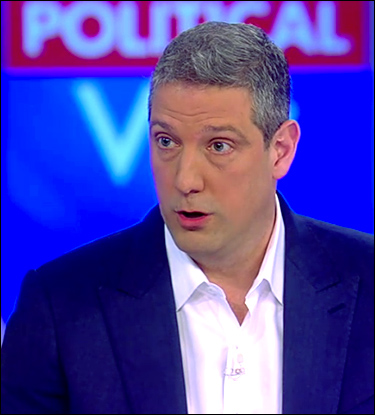
Ohio Rep. Tim Ryan announces his candidacy for the 2020 Presidential Election on the TV talk show, “The View.”

The Redfield & Wilton poll (Aug. 20-24; 1,200 likely Ohio voters) finds the Republican Senate candidates performing adequately opposite US Rep. Tim Ryan (D-Warren/Youngstown), who, at this early stage, has become the Democrats’ consensus statewide Senate contender.

Former state treasurer and 2012 US Senate candidate Josh Mandel (R) holds a 51-47 percent ballot test lead over Rep. Ryan within the sample segment who are self-identified as likely 2022 general election voters. Author J.D. Vance (R) largely falls into a dead heat with Ryan, trailing 37-36 percent, as does former Ohio Republican Party chair Jane Timken who places within two points of the congressman, 38-36 percent.

In the governor’s race, incumbent Republican Mike DeWine, who former Rep. Jim Renacci is challenging in the GOP primary from the ideological right, looks to be in strong shape against potential Democratic opponents. If Dayton Mayor Nan Whaley were the Democratic gubernatorial nominee, Gov. DeWine would post a 46-27 percent advantage. Should Cincinnati Mayor John Cranley become the Democratic nominee, he would trail the governor by a slightly larger 47-25 percent spread.

Generally, the Ohio polling pattern leans Democratic in the early going and then closes in the Republican candidates’ favor, while consistently understating GOP strength.

In the 2020 presidential election, Ohio polls in July of the election year were returning Joe Biden leads of 4-8 percentage points before former President Trump would rebound to score a mean average 1.0 percent polling lead close to election day, and then win the state going away with an eight-point margin, 53-45 percent. In 2016, the pattern was similar. In the July-September period, Hillary Clinton held leads of between 4 and 7 percentage points only to see the average favor Trump by a 2.2 percent spread. He would win the state 51-43 percent.

The same pattern occurred for Sen. Rob Portman (R) in 2016 and was present to a degree against Sen. Sherrod Brown (D) in 2018. In June through September of that year, certain polls found former Gov. Ted Strickland (D) leading incumbent Portman with a 3-6 point edge. As the race closed, Sen. Portman established an average 18-point lead and won 58-37 percent.

Even in a Democratic victory, the polling trend favoring Democrats early and then closing for the GOP toward election day was again present. During June-September of 2018, Sen. Brown held leads between 13-17 points. Going into the election, his polling average had slipped to 11 points, and he only won with a 6.4 percent margin.

Keeping this pattern in mind and then looking at the underlying Biden job approval numbers in the R&W poll suggests that even today, the GOP candidates are poised for a stronger finish than the current results yield. Overall, the Redfield & Wilton figures point to a 40:46 percent favorable to unfavorable presidential approval ratio for Biden, which isn’t particularly bad particularly in a state that the subject did not win. The underlying numbers, however, point to a much greater negative.

Continue reading

Ohio’s Lost Seat

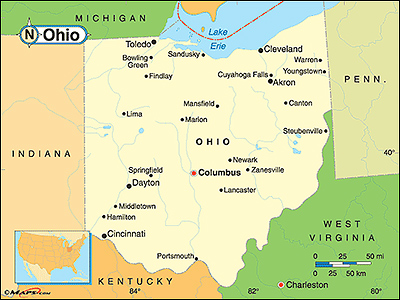
Ohio’s Congressional Districts

By Jim Ellis

Sept. 8, 2021 — In some of our previous redistricting articles, we’ve alluded to Ohio’s interesting situation. With a 16-member congressional delegation reducing to 15, it seemed unlikely that Republican map drawers would stretch the new map to 12R-3D from its current 12R-4D split. Outside pressures and other factors, however, suggest the first Buckeye State map could have such a partisan division.

Recently, news coming from Illinois suggests that Democratic leaders are looking at ways to reduce the Republican federal contingent in the Land of Lincoln from five House members to just three. If so, states like Ohio, where Republicans are in complete control of the redistricting process, face national pressure to maximize the partisan gain.

Another factor pointing to the Democrats losing the Ohio seat is that only one member to-date, Rep. Tim Ryan (D-Warren/Youngstown), is not running for re-election. The eastern Ohio congressman is an announced US Senate candidate, meaning that his 13th District, which stretches from Akron to the Pennsylvania border, is largely unprotected.

As in Pennsylvania, where Rep. Conor Lamb (D-Pittsburgh) is the lone House member not seeking re-election in his state because he, too, is running for the Senate, it is reasonable that the collapsed seat would be the one with no incumbent. Therefore, in both cases, Republican map drawers would have a defensible opportunity to collapse a Democratic seat. Furthermore, a Democratic power grab in Illinois, should that happen, makes Republican retribution in Ohio and Pennsylvania more likely.

Another transitional Ohio factor is the two new members coming into the House right after the Nov. 2 special election. Since the partisan primaries have already nominated candidates in a pair of vacated congressional districts that have consistently performed for each party, it became clear on primary night that Democrat Rep. Shontel Brown and Republican Rep. Mike Carey would be joining the delegation.

Brown’s 11th District that stretches from Cleveland to Akron is likely to be a key redistricting focal point. The 11th must gain 94,091 people to reach the new 15-District Ohio population quota of 786,630 individuals, which is the second most of any Buckeye State CD. Since this is also a majority minority seat, adding the necessary people from the Akron area would be a reasonable move, and such a population segment would have to come from Rep. Ryan’s 13th District.

Continue reading

Gerrymandering Wars Ignited

By Jim Ellis
Aug. 27, 2021 — In the past few days, Democratic leaders and news sources in two states, New York and Illinois, are suggesting that the party redistricting strategists will attempt to maximize Democratic US House gains. Republicans will then counter in similar states that they control.

New York Gov. Kathy Hochul (D), on her first official day in office after replacing resigned Gov. Andrew Cuomo (D), bluntly answered a reporter’s question to the affirmative when asked if she would use her newfound power to maximize Democratic congressional gains through the redistricting process.

Earlier this week, news sources were reporting that Illinois Democratic map drawers, though no preliminary congressional map has yet been released, are attempting to draw a new 14D-3R map that would likely collapse Reps. Adam Kinzinger (R-Channahon) and Rodney Davis (R-Taylorville) into a strong Democratic seat for the former and pairing for the latter with another downstate Republican.

Doing this would put added national pressure on Republicans in states such as Texas, Florida, North Carolina, Ohio, and Georgia – places where the GOP has full control of the redistricting process. Here, the states are either adding seats or in position to carve a sitting Democrat into unfriendly political territory.

With New York losing one seat, the prime district for elimination would appear obvious since Rep. Tom Reed (R-Corning) has already announced his retirement and his 23rd District is the lowest in population among all New York seats. Adjacent Rep. Claudia Tenney’s (R-New Hartford) 22nd CD is second lowest, so combining those two Upstate Republican districts into one appears to be a foregone conclusion. It remains to be seen if the Democratic leaders try to do more. The current delegation breaks 19D-8R but will reduce to 26 seats in the next Congress.

Of Illinois’ current 18 congressional districts, only one, that of Rep. Danny Davis (D-Chicago), is over-populated and only by 10,986 people. While the Kinzinger seat is 61,125 individuals short of the state quota of 753,677 for the new 17-district map, his is not even close to being the most under-populated. He, however, sits between two Democratic seats that the party needs to protect, those of retiring Rep. Cheri Bustos (D-Moline), whose 17th CD is 79,907 residents under quota, and Rep. Lauren Underwood’s (D-Naperville) 14th, where she had a close call in 2020 but is only 482 people short of quota.

While the 14th does not need many more people, it does need significantly more Democrats and they can be found by dividing Kinzinger’s 16th CD into pieces.

Redistricting is always full of surprises, so this analysis is merely educated speculation. If, however, the Democrats come away with gaining a net three or four seats from New York and Illinois combined, then how do the Republicans retaliate?

Continue reading

Rep. Murphy to Challenge Sen. Rubio

By Jim Ellis

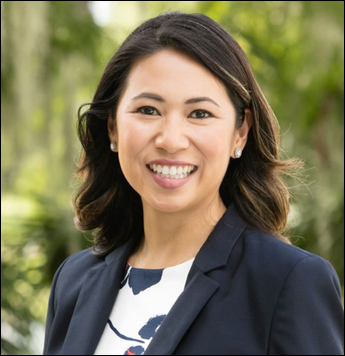
Florida Rep. Stephanie Murphy (D-Winter Park)

May 14, 2021 — According to the Axios news site, insiders close to Florida Rep. Stephanie Murphy (D-Winter Park) say that she has made the decision to challenge Sen. Marco Rubio (R) next year and will formally announce her campaign next month. The move had been expected for some time.

Rep. Murphy, a native of the country of Vietnam, was first elected to the House in 2016, defeating veteran Republican incumbent John Mica after the state Supreme Court had re-drawn the Florida congressional districts and made the 7th CD more Democratic. She unseated Rep. Mica 51-49 percent, and then scored re-election victories of 58 and 55 percent in 2018 and 2020, respectively.

A strong fundraiser, Rep. Murphy obtained over $3 million for both of her incumbent re-election campaigns. She ended the 1st quarter 2021 with a cash-on-hand figure of $1.43 million. Sen. Rubio posted $3.9 million in his campaign account during the same reporting period.

Assuming Murphy does enter the race next month, Democrats will have a credible challenger to Sen. Rubio, but one who still must be considered a decided underdog. In 2010, Sen. Rubio, then a state representative, defeated then-governor Charlie Crist, who was running as an Independent, and Democratic Congressman Kendrick Meek by a 49-30-20 percent margin. He was re-elected in 2016 with a 52-44 percent vote spread over then-congressman Patrick Murphy (D).

Florida races, as we know, are always competitive and usually very close, though the state has been trending more Republican over the past several elections. A Rubio-Stephanie Murphy race promises to become a national campaign.

With the Democrats apparently attracting a strong candidate in Florida, it is a good time to review the other key races.

In Pennsylvania, both parties are headed for very crowded primaries as each works to nominate a candidate to hopefully succeed retiring Sen. Pat Toomey (R). Afghan War veteran Sean Parnell entered the Republican primary earlier this week, but his only venture into elective politics was recording a two-point loss to Rep. Conor Lamb (D-Pittsburgh) last November in an Allegheny County suburban district.

Rep. Lamb, himself, may join the Democratic Senate campaign, meaning both parties are going to host political dogfights for the party nomination. In any event, however, the Pennsylvania race will be a top-tier national campaign.

Continue reading

The House Opens – Part I

By Jim Ellis

May 7, 2021 — With the number of House open and vacant seats continuing to grow, today we open a two-part series to update the status of each and begin to project where the most competitive incumbent-less districts might lie in 2022.

Adding the most recent retirement announcements or declarations for a different office, we see 16 districts that will introduce freshman members from their next election, eight from the Democratic side and an equal number of Republican seats. Of the 16, five are vacant and in special election cycles.

Today, we look at the Democratic open seats and tomorrow, the Republicans. The eight Democratic seats come from six states with another potential candidacy announcement coming shortly, at least based upon reading the Florida political tea leaves in association with this week’s gubernatorial race declaration from Rep. Charlie Crist (D-FL).

Three of the five vacancies are on the Democratic side and will be filled in elections conducted from June 1 through Jan. 11 of next year. The other five Democratic openings result from retirement decisions (3) and members seeking a different office (2) with an additional open seat announcement apparently coming imminently in Florida as all indications suggest that Rep. Val Demings (D-Orlando) will soon announce her gubernatorial bid.


AZ-2 – Rep. Ann Kirkpatrick – retirement

Rep. Kirkpatrick had represented the 1st District for three non-consecutive terms beginning in 2009. She then ran unsuccessfully for Senate in 2016 and returned in 2018 with a victory in the 2nd District. She was re-elected in 2020 with 55 percent of the vote. In March, Kirkpatrick announced that she would retire at the conclusion of the current Congress.

The reapportionment picture drastically changes the 2nd District political outlook. Originally, Arizona was projected to gain a seat, but did not once the official population figures were announced. Therefore, the Tucson anchored CD-2, expected to significantly change, is likely to remain closer to its current configuration.

If so, then the re-draw process will likely keep the 2nd in the Democratic column. The two leading early contenders to replace Rep. Kirkpatrick are state representative and surgeon Randy Friese (D-Tucson) and state Sen. Kirsten Engel (D-Tucson).

• President Biden carried the 2nd with a 54-44 percent margin.


Continue reading

Senate Action

Ohio Rep. Tim Ryan (D-Warren/Youngstown)

By Jim Ellis

April 29, 2021 — While most of the political world was focused on the census’s national apportionment announcement, several Senate moves of merit were also made this week.

In Ohio, US Rep. Tim Ryan (D-Warren/Youngstown) finally made his fledgling US Senate campaign official. Originally saying he would announce sometime in March only to postpone formal entry to an undetermined time, Ryan finally made his declaration on Monday. Once former Ohio Health Director Amy Acton — who was running slightly ahead of Rep. Ryan in early Democratic primary polling — said that she was not going to run, that paved the way for the 10-term congressman to open with an apparently clear path to the Democratic nomination.

Simultaneously, in Georgia, another announcement was made but one that contained a surprising message. Former Rep. Doug Collins (R), who placed third in the 2020 US Senate jungle primary, also declared his political intentions for 2022 on Monday. While observers were expecting the former four-term congressman to enter the current Senate race, he instead said he will not run for any office next year but didn’t close the door on returning to elective politics in another election cycle.

Yesterday, in another largely expected move, former North Carolina state Supreme Court Chief Justice Cheri Beasley (D), who lost her position in November by a scant 401 votes statewide, announced via video that she will enter the open Tar Heel State Senate race.

The three moves help further set the stage for a trio of critical Senate contests that will each contribute mightily toward determining which party breaks the 50-50 tie and assumes control of the body after the next election.

Despite Rep. Ryan looking as the candidate to beat for the Ohio Democratic nomination, the general election won’t be easy. Additionally, this political cycle could be different in terms of political options for Ryan. He has several times dipped his toe in the statewide or national waters only to return to the safety of his House district. With it now a certainty that Ohio will lose another congressional seat, and with at least one scenario suggesting that the eliminated seat could become Rep. Ryan’s 13th District, his usual fail-safe move might not again be available.

Continue reading

Ohio Rep. Stivers to Resign

By Jim Ellis

Ohio Rep. Steve Stivers (R-Columbus)

April 21, 2021 — The growing list of US House vacancies has risen again, but this one came as a surprise. Ohio Rep. Steve Stivers (R-Columbus), who had raised close to $1.4 million in the first quarter of 2021 in testing the waters for a possible US Senate campaign, has decided to leave elective politics altogether.

Effective May 16, Stivers will resign from the 15th District in the Buckeye State’s US House delegation in order to become President/CEO of the Ohio Chamber of Commerce. His about-face from joining the open Senate race leaves former Ohio Republican Party chair Jane Timken and ex-state Treasurer Josh Mandel in the GOP field along with author and venture capitalist J.D. Vance, who appears ready to enter.

Also in the contest are businessmen Mike Gibbons, a 2018 US Senate candidate, and Bernie Moreno. North Ohio state senator and Cleveland Indians baseball club minority owner Matt Dolan is also a possible Republican candidate. Democrats appear to be coalescing around Rep. Tim Ryan (D-Warren/Youngstown), though he has yet to formally announce his Senate campaign.

The Stivers move could open the door for one or more of his congressional colleagues who have been considering the Senate race, namely Reps. Mike Turner (R-Dayton), Bill Johnson (R-Marietta), and David Joyce (R-Russell Township).

The Stivers’ seat will become the fifth vacated House district once he departs in the middle of May and the Louisiana congressional vacancy (LA-2) is filled in a special election this Saturday, April 24. Currently, in addition to Rep. Stivers, seven House members have announced they will not be standing for re-election in 2022, either retiring or seeking a different office.

Once Rep. Stivers officially resigns, Gov. Mike DeWine (R) will schedule a replacement special election for the balance of the term. It is more than likely he will follow the same calendar set for the state’s other congressional vacancy, the 11th District of former representative and now-Housing & Urban Development Secretary Marcia Fudge (D-Cleveland/Akron).

The 11th CD schedule calls for a partisan primary on Aug. 3 with the general election Nov. 2. Ohio election law allows for special elections to be called only in certain months, hence the long cycle for these vacant seats.

The 15th District sits largely in the center of the state and occupies approximately 20 percent of Franklin County, including part of the city of Columbus, and also contains all or portions of 11 other counties. The seat encompasses the rural areas west, southwest, and southeast of the Columbus metro area. It is traditionally Republican, though a version of the seat elected Democrat Mary Jo Kilroy in the 2008 election after eight-term Rep. Deborah Pryce (R) had retired. Kilroy defeated Stivers, then a state senator, in a close 46-45 percent result. He returned for a re-match in 2010 and won a convincing 13-point victory, ousting Kilroy after just her first term in office. Since his first victorious congressional election, Stivers averaged 63.1 percent of the vote over five re-election campaigns.

In presidential elections, the 15th District backed Donald Trump in both of his national elections, 56-42 percent last November, and 55-40 percent against Hillary Clinton in 2016. We can expect a crowded special Republican primary with the eventual nominee beginning the general cycle as the favorite. Democrats can be expected, however, to field a credible nominee and will likely make a concerted effort to win the special election.

Though Ohio is set to lose a congressional district in reapportionment, the 15th, which touches the main growth region of the state, in and around Columbus, will likely remain relatively intact. According to the latest available Census records, the 15th would need to gain less than 10,000 residents, while adjacent Districts 3 (Rep. Joyce Beatty-D) and 12 (Rep. Troy Balderson-R), the only two over-populated CDs in Ohio, must shed people.

Assessing Ohio

By Jim Ellis

April 9, 2021 — Ever since Sen. Rob Portman (R) announced his retirement in late January, the open Ohio Senate race has attracted a great deal of national political attention.

With the first quarter now at an end and Federal Election Commission financial disclosure reports due on April 15, candidates who have found fundraising success in the previous 12 weeks are informally releasing their dollar totals. Such is the case for the major Ohio contenders.

At this point, the Democratic field already seems to be crystallizing. With a weak political bench in the state, the nomination favorite appears to be Rep. Tim Ryan (D-Warren/ Youngstown). Ryan is in even stronger position because a potential opponent, former Ohio Health Department Director Amy Acton (D) – who was actually faring slightly better against the Republican slate than he according to a March 18-19 Public Policy Polling survey – announced last week that she would not run.

For his part, Ryan originally said he would formally announce his Senate campaign in March, but later indicated that he would not be declaring so soon. Seeing that his first quarter political receipts exceeded $1.2 million suggests that he has been working hard on the fundraising circuit, giving us a further clue as to his actual intention.

The up-and-coming potential Republican candidate appears to be six-term Rep. Steve Stivers (R-Columbus). His aggressive fundraising resulted in $1.4 million obtained for the quarter and added to his previous $1 million cash-on-hand figure, gives him a base war chest of over $2.4 million to begin a statewide effort with millions more to come. The congressman says he will make a final decision about entering the Senate race later in the year.

Former Ohio Republican Party chair Jane Timken, however, had an even better fundraising sprint, obtaining just over $2.1 million. Ex-state Treasurer Josh Mandel, who held over $1.6 million in his campaign account from previous campaigns, brought in $1.3 million during Q1 of 2021. Therefore, the GOP top tier contenders are all financially strong. Two other potential entries are author J.D. Vance and US Rep. Mike Turner (R-Dayton).

Stivers, stressing that he has not yet made the decision to run for the Senate, said in an interview with the Cleveland.com news site that, “it’s a huge statement that someone who’s not in the race can outraise announced candidates.”

Continue reading

Ryan Hedging on Senate Run

By Jim Ellis

Ohio Rep. Tim Ryan (D-Warren/Youngstown)

March 2, 2021 — Last month, Ohio Rep. Tim Ryan (D-Warren/Youngstown) indicated that he would launch a statewide campaign for retiring Sen. Rob Portman’s (R) open seat in March. Now, he looks to be backpedaling.

In an interview with the Spectrum News Service, Rep. Ryan said, “we’ll make a decision here, I guess, in the coming weeks. I don’t think a March kickoff is going to happen.”

Such equivocation has seemingly been the congressman’s standard operating procedure over the years. Several times before he has been looking seriously at races for the US Senate, governor, and even lieutenant governor, but has always retreated to the relative safety of his House seat.

He did briefly campaign for president in 2020 but dropped out of the race when it was obvious his message was falling on deaf ears, exiting in plenty of time to meet the Ohio candidate filing deadline. Last November, Rep. Ryan went onto win a more competitive House race than he normally sees, defeating former state Rep. Christina Hagan (R), 52-45 percent.

Going back to the House race, if that’s what Rep. Ryan ultimately decides, may look different in 2022. If redistricting actually happens, considering all of the Census Bureau delays, Ohio faces the loss of another congressional seat in reapportionment, and it may well be Ryan’s.

His current 13th District stretches from the Pennsylvania border, encompasses Youngstown and the congressman’s hometown of Warren, and then captures a large part of the Akron metropolitan area. From preliminary census reports, it appears OH-13 will require an influx of more than 75,000 people once the final numbers are calculated. The Ryan district looks to rank 13th in population of the 16 Ohio congressional districts.

Perhaps a bigger problem for the 10-term incumbent, and what makes his 13th District vulnerable to collapse, is the adjacent 11th District that houses the western side of Akron in Summit County, is the least populated seat in Ohio and will need to gain as many as 100,000 individuals.

Therefore, collapsing the 13th District portion of Akron into the 11th in order to keep the city and at least most of the county together would be a sensible draw, thus leaving Rep. Ryan’s eastern district sector as a standing fragment. Since Districts 14 to the north, 6 and 7 to the south, and 16 to the west will all require more population, eliminating District 13 becomes a plausible option.

Continue reading