Tag Archives: Rep. Tim Ryan

Ohio Senate: Mandel Declares

By Jim Ellis

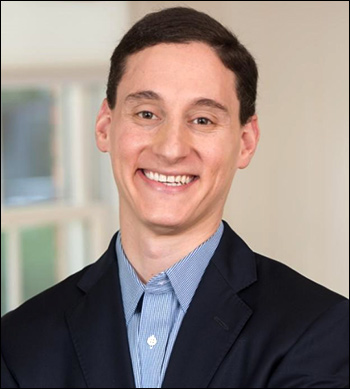
Former Ohio State Treasurer and 2012 US Senate candidate Josh Mandel (R), now 2022 senate candidate.

Feb. 12, 2021 — Former Ohio state treasurer and 2012 US Senate candidate Josh Mandel (R), armed with over $4.3 million in his federal campaign account, announced Wednesday that he will run for the state’s open Senate seat next year. Last week, Rep. Tim Ryan (D-Warren/ Youngstown) stated that he will officially declare his own federal statewide candidacy in March.

It is clear that Mandel will not be the only major Republican to battle for the GOP nomination. It is likely, however, that he will begin the primary campaign with more money than any of his future competitors. The only other person holding as large a federal war chest who didn’t run for office in 2020 is former US Rep. Pat Tiberi (R), but he has already made public his intention not to enter next year’s open Senate race.

Several members of the Republican congressional delegation are reportedly assessing the Senate contest as is sitting Secretary of State Frank LaRose. Often mentioned as potential candidates are Reps. Steve Stivers (R-Columbus), Bill Johnson (R-Marietta), Dave Joyce (R-Russell Township), and Warren Davidson (R-Troy). Reps. Jim Jordan (R-Urbana) and Troy Balderson (R-Zanesville) have publicly stated they will not run for the Senate.

Ex-congressman and 2018 US Senate nominee Jim Renacci (R) is another potential contender and confirms that he is considering the race. State Republican Party chair Jane Timken, who resigned her position at the end of last week, is also expected to become a candidate. State Sen. Matt Dolan (R-Chagrin Falls), whose district forms a virtual horseshoe around the city of Cleveland, is also contemplating launching a Senate campaign. Sen. Dolan, the chairman of the state Senate Finance Committee, is a part owner of the Cleveland Indians baseball club.

Mandel was first elected to the Ohio House of Representatives in 2006 when he was 29 years old. He then won the treasurer’s post in 2010 and held it for eight years. He lost the 2012 Senate race to Sen. Sherrod Brown (D) by a 51-45 percent count but raised more than $18 million for his campaign. Mandel was planning to run again in 2018, but his wife’s serious health situation caused him to exit the race after announcing. The couple has since divorced.
Continue reading

Another Delay in NY-22 Certification;
Rep. Ryan to Announce Senate Run

By Jim Ellis

Feb. 4, 2021 — After ordering the eight NY-22 counties to certify their final congressional election results by yesterday afternoon and now surpassing 90 days after the votes were cast, State Supreme Court of Oswego County Justice Scott DelConte has reversed course. Yesterday, he instructed the county election officials to suspend their certification process.

Justice DelConte said he now wants to consider at least until Friday the effect of 116th Congress incumbent Anthony Brindisi (D-Utica) possibly winning his motions for legal relief at the appellate level after race leader Claudia Tenney (R) is certified the winner and takes office. This new direction suggests it could be several more weeks before we see a member sworn into the House from this particular Upstate New York district.


OHIO SENATE

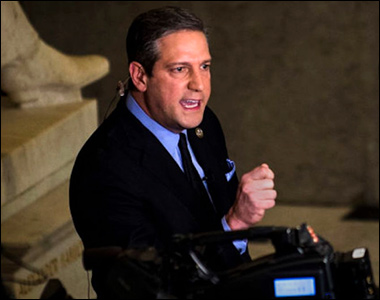
Ohio Rep. Tim Ryan (D-Warren/Youngstown)[/caption]Yesterday, Ohio Rep. Tim Ryan (D-Warren/Youngstown) indicated that he will officially announce a campaign for the state’s open Senate seat in March. Ryan becomes the first prominent Democrat to begin organizing a campaign.

Ohio Rep. Tim Ryan (D-Warren/Youngstown)

As we will remember, Rep. Ryan joined the Democratic presidential field attempting to approach the electorate from a union jobs, more centrist perspective. His campaign failed to gain legs and he dropped out well before the first votes were cast in the Iowa Caucuses. During his 10 terms in the House, Ryan has publicly considered running for lieutenant governor, governor, and the Senate, only to back away each time in order to seek re-election to the House.

This time, however, his statement is definitive about running, and such a move makes political sense. Ohio is slated to lose another congressional seat in reapportionment and there is reason to believe that Rep. Ryan’s 13th District seat could be the one collapsed.

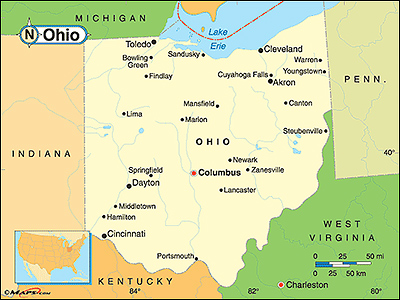
OH-13 begins at the Pennsylvania border and immediately encompasses the cities of Youngstown, Niles and Warren. Then the district moves further west to capture more than 228,000 individuals in the Akron metro area. Most of Akron city is shared with Rep. Marcia Fudge’s (D-Cleveland) 11th District, which is the least populated CD in the state. The 11th will likely need an influx of about 100,000 people to become compliant with the projected per district population number for the current decade under the new redistricting plan when adopted.

Continue reading

Jockeying for Ohio’s Senate Seat

By Jim Ellis

Jan. 28, 2021 — Monday’s surprise announcement that Sen. Rob Portman (R) will not seek re-election next year has ignited a flurry of activity and speculation from potential candidates and political observers alike. Some looking to challenge Gov. Mike DeWine (R) are now also beginning to survey and assess how an open US Senate candidate field might unfold.

Recent voter history suggests that the eventual Republican nominee will at least begin the general election campaign in the favorite’s role. The GOP, with a large number of statewide office holders, former elected officials, and a dozen sitting US House members, has an array of candidates from which to choose, and many will take the plunge.

For example, former US Rep. Jim Renacci, who held Sen. Sherrod Brown (D) to a 53-47 percent victory in the 2018 campaign and was reportedly looking to challenge Gov. DeWine in the 2022 Republican primary, may now set his sights on the open Senate seat.

Another ex-office holder, Pat Tiberi, who averaged 60.6 percent of the vote over nine elections from a Columbus area congressional district that former governor and presidential candidate John Kasich once held, still sits on more than $5 million in his federal campaign account even though he hasn’t been on the ballot since 2016.

It was widely believed that he was amassing a huge war chest to run against Sen. Brown in ’18, but family considerations led him to change his mind, resign from Congress and instead take the reins of the Ohio Business Roundtable.

Still another former elected official, ex-state Treasurer Josh Mandel (R), who lost the 2012 Senate election to Sen. Brown, was planning to run again in 2018 until leaving the race because of his wife’s health issue. Mandel raised almost $20 million for his Senate race eight years ago and has over $4 million in his campaign account even though he has not been a federal candidate in eight years.

Republicans hold all of the state’s constitutional offices. Lt. Gov. Jon Husted, Secretary of State Frank LaRose, Attorney General Dave Yost, state Treasurer Robert Sprague, and State Auditor Keith Faber are all credible potential US Senate candidates.

Continue reading

Ohio Sen. Portman to Retire

By Jim Ellis

Ohio Sen. Rob Portman (R) surprisingly announced his retirement Monday.

Jan. 27, 2021 — Ohio Sen. Rob Portman (R) surprisingly announced Monday that he will not seek a third term next year, opening the third Senate seat for the 2022 election cycle.

Addressing reporters at a news conference in Cincinnati yesterday, Sen. Portman said, “Our country’s polarized right now. It’s kind of shirts and skins. That makes it more difficult to find that common ground. Elected officials aren’t rewarded for that. What they’re rewarded for is throwing red meat to the talk show.”

The two-term senator indicated that the “partisan gridlock” is one of the reasons for his retirement. He further said in explaining his retirement decision, “we just keep pushing out to the right and to the left, there’s not going to be much left in the middle to solve the real problems we face.”

For the Republicans, they now have three big state open seats to defend as Sen. Portman joins Pennsylvania GOP Sen. Pat Toomey and North Carolina’s Richard Burr as incumbents who have already made their 2022 retirement plans public. Several others could be on the horizon.

Senators Richard Shelby (R-AL) and Chuck Grassley (R-IA) will be 88 and 89 years of age, respectively, at the time of the next election, and Wisconsin Sen. Ron Johnson (R) originally took a two-term pledge when he was first elected in 2010. None of these three lawmakers have made their future political plans public to date, however.

Ohio, once a bedrock Republican state, developed a swing image beginning in 1992 when the state deserted GOP President George H.W. Bush and backed Democrat Bill Clinton. They did so again in 1996. In 2000 and 2004, Ohio returned to the Republican column awarding George W. Bush with its electoral votes. In 2008 and 2012, the Buckeye State ventured back to the Democratic side of the political ledger, supporting Barack Obama in both of his national elections.

Therefore, rather than being cast as a swing state during this 20 year period, Ohio may actually have been a microcosm of the national electorate since the state’s voters chose the winning candidate in each of the presidential elections during that time span, and had done likewise for the three previous decades.

Continue reading

Deadlines Ahead in Ohio,
North Carolina 2020 Campaigns

By Jim Ellis

Dec. 17, 2019 — Interesting decisions await as candidate filing deadlines are approaching this week in Ohio (Dec. 18) and North Carolina (Dec. 20) for their respective March 17 and March 3 primaries.

The Ohio political situation, originally thought to be relatively mundane without a Senate campaign and little competition within the congressional delegation, may be changing.

In the 1st District, veteran Rep. Steve Chabot (R-Cincinnati), who lost this district in 2008 after first going to Congress in 1995 and then re-claiming the seat in 2010, again faces what will likely be a competitive re-election battle. In 2018, Chabot defeated Hamilton County Clerk of Courts Aftab Pureval by a 51-47 percent count, despite the Democratic nominee spending over $4 million for his campaign. Expected to file for the Democrats this year are healthcare executive Kate Schroder and US Air Force Reserve officer Nikki Foster.

The new potential contest coming onto the political scene emanates from the Youngstown area as Rep. Tim Ryan (D-Warren), who was an early presidential candidate but failed to generate any major attention, appears to be attracting strong opposition for the first time since he won his original congressional election in 2002.

Now reportedly moving toward challenging Rep. Ryan are former Lt. Gov. Mary Taylor, who fared poorly in the 2018 Republican gubernatorial primary, and ex-state Rep. Christina Hagan who scored over 40 percent of the vote against freshman Rep. Anthony Gonzalez (R-Rocky River/Medina) in the last nomination campaign from the neighboring 16th District.

Though both women have the ability to attract people and resources to their political efforts, the 13th CD is reliably Democratic and Congressman Ryan would be tough to dislodge. President Trump fared better than most Republicans here in 2016, but still lost 44-51 percent. President Obama, in both 2008 and 2012, topped 62 percent and Rep. Ryan has averaged 67.8 percent of the vote over his nine-term congressional career.

Still, House members who run for president often have a difficult time in their next re-election effort, so it remains to be seen if a credible challenge against the veteran congressman could develop legs.

Continue reading

With Beto Out … Will the Rest
of the Dominoes Start to Fall?

Beto O’Rourke | Facebook Photo

By Jim Ellis

Nov. 5, 2019 — Former US Rep. Beto O’Rourke (D-TX) ended his presidential campaign Friday, joining Rep. Eric Swalwell (D-CA), ex-Colorado Gov. John Hickenlooper, Washington Gov. Jay Inslee, US Rep. Seth Moulton (D-MA), New York Sen. Kirsten Gillibrand, New York City Mayor Bill de Blasio, and US Rep. Tim Ryan (D-OH) as 2020 national contenders who are no longer in the race.

O’Rourke’s concession statement made reference to departing because he no longer possesses adequate resources with which to compete. Beginning as a top tier candidate with a strong financial base, his effort rapidly crumbled largely due to ill-advised comments, poor debate performance, and calling for assault weapon confiscation, which did not reinvigorate his campaign as he expected. O’Rourke had hoped to use the latter issue to begin cracking into the party’s far-left faction that Sens. Elizabeth Warren (D-MA) and Bernie Sanders (I-VT) seemingly have cornered.

Democratic leaders had from the outset attempted to persuade O’Rourke to challenge Texas Sen. John Cornyn (R) instead of running for president, but they were ignored. In his statement announcing the end of his national campaign, the former congressman addressed the speculation that he might return to Texas to challenge Cornyn, but again ruled out running for that office or any other in 2020.

How does the Democratic race change now that O’Rourke has departed? Largely, his move could be a precursor of many more exits to come. At this point, it is clear three candidates occupy the top tier and separation exists between them and the rest of the pack. Former Vice President Joe Biden and Sens. Warren and Sanders maintain the top three positions in virtually every poll, and it is reasonable to expect that one of them will eventually become the Democratic nominee.

South Bend Mayor Pete Buttigieg has recently made a resurgence after lagging in single digits since the second nationally televised debate in July. Concentrating on fundraising and organization, Buttigieg’s efforts have proven worthwhile. Raising $19.1 million just in the third quarter, placing him behind only Sanders ($25.3 million raised in Quarter 3) and Warren ($24.6 million) during that period, the mid-size city mayor has brought in over $51.5 million since the onset of his presidential campaign.

Continue reading

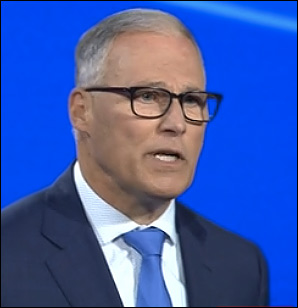
Inslee Bows Out of Presidential Race

By Jim Ellis

Washington Gov. Jay Inslee (D)

Aug. 23, 2019 — The Democratic National Committee leaders’ strategy to substantially increase the presidential debate qualification requirements in order to decrease the unwieldy and bloated candidate field is working.

The prerequisites to prove that a campaign has more than 130,000 donors and that each candidate reaches a minimum of two percent support from four of eight designated pollsters paid another dividend Wednesday as Washington Gov. Jay Inslee became the third Democratic candidate to officially exit the race.

Not making the debate stage signifies that a candidate has no chance to become a top-tier candidate. Without national exposure, also-ran candidates have little opportunity to increase name identification and familiarity in order to raise enough money to deliver a message, motivate people to work on their campaign, and attract serious media attention both nationally and in the important local markets within key states.

Inslee follows Rep. Eric Swalwell (D-CA) and former Colorado Gov. John Hickenlooper in making the decision to bow out of the race, and there are likely to be several more following suit once it becomes even more evident that the lower-tier candidates will no longer have the opportunity to climb onto the national debate stage.

Gov. Inslee, in an interview on MSNBC’s “The Rachel Maddow Show” Wednesday, stated ” … it’s become clear that I’m not going to be carrying the ball. I’m not going to be the president, so I’m withdrawing tonight from the race.” He is expected to announce that he will seek a third term as Washington’s governor.

The Inslee withdrawal is not a surprise to anyone, apparently even to the candidate himself. He remained non-committal about ruling out running for a third gubernatorial term, which froze most of the Washington Democratic potential aspirants in place. The rhetoric blocked them from overtly assembling a statewide campaign since most correctly interpreted the political tea leaves as meaning that Inslee would, in fact, be back to seek re-election.

With 10 candidates now qualified for the next debate since former HUD Secretary Julian Castro just joined the top-tier candidates of Joe Biden, Bernie Sanders, Elizabeth Warren, Kamala Harris, and Pete Buttigieg who are also joined by Sens. Cory Booker (D-NJ), Amy Klobuchar (D-MN), ex-Rep. Beto O’Rourke (D-TX), and businessman Andrew Yang, it remains to be seen just how many of those who won’t meet the qualifications will continue.

Continue reading

Poll: Biden Falling

By Jim Ellis

July 2, 2019 — The Morning Consult organization immediately went into the field after the second night of the Democratic presidential forum (June 27-28; 2,407 US self-identified Democratic registered voters) and found that former Vice President Joe Biden’s support slipped, at least as an immediate reaction to what is commonly viewed as his poor debate performance, while Sen. Kamala Harris (D-CA), evaluated as performing quite well, gained.

The MC data still finds Biden in first place, but down five points from their previous survey. On June 23, just three days before the first forum, Biden led Sen. Bernie Sanders (I-VT), 38-19 percent while Sen. Harris lagged at six percent support. Just after the debate, when completing the poll on June 28, Biden dropped to 33 percent, but Sanders remained constant at the 19 percent level. Conversely, Sen. Harris doubled her past support to 12 percent.

MORNING CONSULT POLL RESULTS:

Click on above graphic to go to complete Media Consult poll results story.

In the Morning Consult survey, Sen. Elizabeth Warren (D-MA) also posted 12 percent support, which was virtually on par with her standing in their June 23 poll when she recorded 13 percent preference. South Bend Mayor Pete Buttigieg, who actually scored well on the second debate night, had a similar result to Sen. Warren. While he was polling seven percent on the June 23 poll, he basically remained constant one week later, dropping to six percent on the MC June 28 survey.

Former Texas representative, Beto O’Rourke, who was dogged with poor debate reviews from his first night performance, also dropped in the Morning Consult polling. Before the forum, O’Rourke was only in the four percent range, and after, even lost half that support base, dropping to two percent.

Continue reading

The Scorecard – Part II

By Jim Ellis

May 21, 2019 — Today we continue with our overview of the 24 Democratic presidential candidates. Yesterday we outlined the first 12, and today we’ll finish up with the remaining candidates (listed alphabetically):

• Ex-Gov. John Hickenlooper (D-CO): Eschewing a Senate race against first-term Republican incumbent Cory Gardner, Hickenlooper, after leaving the Colorado governor’s office in January, became a presidential candidate in early March. But, his early results have been uninspiring.
Lagging in the polls but getting just enough to qualify for a debate podium, Hickenlooper is attempting to establish himself as a reasonable left-of-center candidate, but the constituent segment responding to such a message may simply be too small to make him viable. Colorado Sen. Michael Bennet’s presence in the race even cuts into Hickenlooper’s geographic support base. It is likely that the former two-term Colorado governor and Denver mayor will continue to languish in the second tier for the duration of his candidacy.

• Gov. Jay Inslee (D-WA): One of the also-ran candidates, Gov. Inslee, one of only two state chief executives in the field, is not a factor for the nomination. In fact, he has previously indicated that he would not rule out running for a third term as Washington’s governor next year if he fares poorly in the early presidential voting. It appears barely registering on key polls will be enough to place him in the presidential forums, but it is unlikely that he will receive enough of a boost from those events to make him a viable candidate.

• Sen. Amy Klobuchar (D-MN): From her announcement event where she spoke at an outside podium in a Minnesota snow storm, Sen. Klobuchar has yet to catch fire in any meaningful way. As the only candidate from the Midwest, Klobuchar has the opportunity of cobbling together a geographic coalition. The Iowa Caucus will be an important event for her to establish a legitimacy foothold. The Hawkeye State presidential electorate usually looks favorably on neighboring candidates, so it will be important for her to use this first-in-the-nation caucus as a way to become a top-tier candidate.

• Mayor Wayne Messam (D-Miramar, Fla.): Though Miramar is larger than Mayor Pete Buttigieg’s South Bend, Indiana, this local mayor has yet to catch fire. Many media publications do not even count him as part of the candidates’ list. Mayor Messam is unlikely to qualify for the candidate forums and faces major obstacles in developing national credibility for this presidential race.
Continue reading

We Now Have Candidate #22 In
The Race, And Sanders is Falling

By Jim Ellis

May 6, 2019 — A new Democratic presidential candidate entered the race late last week, one whom we didn’t expect to see this soon.

Colorado Sen. Michael Bennet

Despite undergoing prostate cancer surgery last month, Colorado Sen. Michael Bennet says he has already received a “clean bill of health” and is embarking upon his national political effort. Now at 22 candidates in the field of Democrats seeking their party’s nomination for the 2020 presidential election, eyes turn to Montana Gov. Steve Bullock who could be the last widely discussed potential candidate yet to make a decision about forming a campaign.

It’s difficult to see how Sen. Bennet breaks through to the top tier, however. He is not well known outside of Colorado and starts well behind most of the field, putting him in a difficult position from which to even qualify for the first two debate forums scheduled for late June and the end of July.

To earn a debate podium, all candidates must either tally at least one percent support in three Democratic National Committee designated polls, or attract financial support from 65,000 donors, from which they must have a minimum of 200 in at least 20 states. For the lesser known candidates, debate participation is a necessity in order to propel themselves into serious contention for the nomination.

Furthermore, Sen. Bennet doesn’t even have his home state electorate to himself. Former Colorado Gov. John Hickenlooper is also in the race, a man who Bennet once served as chief of staff. Just two days ago, Colorado moved its new primary – they used to apportion delegates through the caucus system – to March 3, the 2020 campaign’s Super Tuesday, which could serve to boost one of the two Centennial State candidates. Yet, with both men in the race, the state’s 67 first-ballot delegate contingent will prove less of a base for either one.

Continue reading