Tag Archives: Louisiana

Louisiana Poll Shows Clyburn in Lead;
Nevada Candidate Shows Up in Texas

By Jim Ellis

Feb. 5, 2021 — In the Baton Rouge area, a pre-election favorite shows a solid lead, and in Texas, a surprise candidate who previously was the NV-3 GOP front-runner in the Las Vegas area enters a Texas race.


LA-2
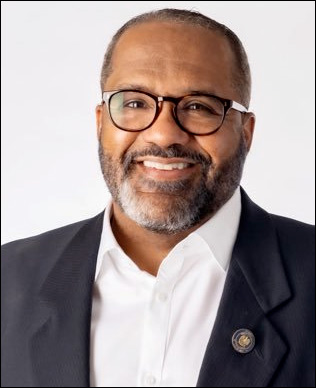
Louisiana state Sen. Troy Carter (D-New Orleans)

A new survey for the upcoming March 20 special election in the New Orleans-Baton Rouge vacant 2nd Congressional District places the pre-election favorite into a discernible lead.

While state Sen. Troy Carter (D-New Orleans), who House Majority Whip Jim Clyburn (D-SC), the Louisiana Democratic Party, and resigned Rep. Cedric Richmond (D) have all endorsed, posts a 28-19 percent lead over state Sen. Karen Carter Peterson (D-New Orleans), he is nowhere near the 50 percent mark required to elect outright. Therefore, it appears the odds are strong that we will see a secondary runoff election on April 24.

A Silas Lee study of 450 “chronic” LA-2 voters conducted during the February 12-14 period but released only this week, gives Sen. Carter the nine-point advantage within a field of 15 candidates – eight Democrats, four Republicans, two Independents, and one Libertarian – thus, the pair of competing local state senators appear headed toward an April 24 runoff election. Finishing a distant third in the Lee poll with just six percent support is Baton Rouge community activist Gary Chambers, Jr. (D).

While Sen. Carter was dominant in New Orleans, he falls into third position when moving to the district’s Baton Rouge sector. There, Chambers led Sens. Peterson and Carter with a 14-12-7 percent respective spread.

The state’s vacant 5th District also will be settled within the same schedule, but no relevant polling data is readily available for that race. In both contests, early voting begins this Saturday, March 6, and will continue only through March 13, a week before actual Election Day voting takes place.

Continue reading →

TX-6: Rep. Wright’s Widow to Run

By Jim Ellis

The late Rep. Ron Wright (R-TX) is sworn-into Congress Jan. 3, 2021 by House Minority Leader Kevin McCarthy (left) as Wright’s wife, Susan Wright, holds the Bible. Rep. Wright, 67, had been hospitalized with COVID-19; Susan Wright also had been hospitalized after contracting COVID-19. (Photo/Facebook)

Feb. 24, 2021 — The Texas Tribune newspaper broke the story this week that Susan Wright, widow of deceased Congressman Ron Wright (R-TX), will announce her candidacy as soon as this week for the yet unscheduled special election to succeed her late husband.

Ms. Wright will be the second recent widow running this year. Rep-Elect Luke Letlow’s death has led to a March 20 Louisiana special election in that state’s northeastern 5th District. Julia Letlow (R), the late-congressman-elect’s wife, is a candidate in that race and the favorite to prevail.

In US history, 39 widows have succeeded their late husbands in the House, and another eight in the Senate. One such widow, Doris Matsui (D-CA), is currently serving her ninth congressional term.

A large Republican potential field of candidates was thought to be building for the Texas special election, but with Susan Wright’s intention on becoming a candidate, that may block some of the local officials from the race. Freshman state Rep. Jake Ellzey (R-Waxahachie), who opposed Mr. Wright in the 2018 election and forced him into a runoff, and Katrina Pierson, the former Trump campaign spokeswoman, remain likely candidates, however.

At least two Democrats, 2018 congressional nominee Jana Lynne Sanchez and school district official Shawn Lassiter, have announced their candidacies and both are likely to remain in the race. The 2020 party nominee, Stephen Daniel, has also not ruled out running.

Now that the congressman has been laid to rest, Gov. Greg Abbott (R) will schedule the special election. The most likely date will be May 1st, in order to conform with the Uniform Election Day, which hosts local elections from around the state. All 6th District candidates will be on the same ballot and if any one candidate receives majority support, that individual will be elected outright. Otherwise, the top two finishers will advance to a runoff election that will be part of Abbott’s scheduling pronouncement. Assuming a May 1 special election, the secondary runoff would occur in late June or early July.

Continue reading →

Candidate Filing Closes

By Jim Ellis

Jan. 26, 2021 — Filing for the March 20 special congressional elections to fill the two Louisiana vacant seats, Districts 2 and 5, closed on Friday, meaning that the participating candidates are now identified.

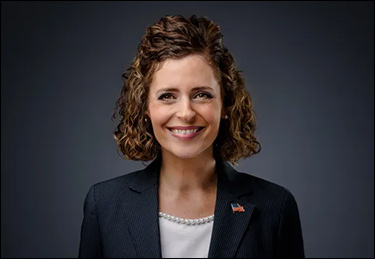
Louisiana Republican Rep.-Elect Luke Letlow’s widow, Julia Letlow, is running for her late husband’s seat.

In the 2nd District, the New Orleans-anchored seat that stretches northward to include part of Baton Rouge, we see 15 individuals filing. The locals, however, highlight three significant Democratic contenders, one of whom will almost certainly be elected outright in the March 20 special primary or an April 24 runoff election should no one secure majority support in the initial vote. It is further likely that should such a runoff occur, it will involve two Democrats.

Moving northward, the vacant 5th District is open because the 2020 winner, Republican Luke Letlow, tragically passed away within three weeks of winning the December 5th runoff election. Here, 13 candidates filed to run in the special election, which was assigned the same election calendar as District 2, and Julia Letlow (R), the late congressman-elect’s widow, headlines those vying to represent the district.

Former Rep. Cedric Richmond (D-New Orleans) resigned from the House on Jan. 15 in order to accept his White House position. Richmond was originally elected in 2010, and had little trouble holding the seat through six elections. He averaged 67.0 percent of the vote and was never forced into a secondary runoff election in Louisiana’s jungle primary system.

The district is solidly Democratic. The 2020 presidential election segmentation by congressional district for Louisiana is not yet available, but the Democratic nominee averaged 75.20 percent of the vote when combining the 2016 and 2012 results. The CD is 61.50 percent black according to the available Citizen Voting Age population data. Therefore, the chances of one of the African American candidates again winning the seat is extremely high.

The three top contenders are state Sen. Troy Carter (D-New Orleans), who Richmond has publicly endorsed as his successor, state Sen. Karen Carter Peterson (D-New Orleans), and prominent Baton Rouge political activist and blogger Gary Chambers, who has the political wherewithal to attract support.

Continue reading →

Early House Outlook – Part II

By Jim Ellis

Jan. 21, 2021 — Continuing with our electoral stage preview for the US House, today we look at 12 states in the country’s central region. Tomorrow and the following Monday, we move further east.


• Arkansas – 4 Seats (4R)

Arkansas holds four Republican districts, and the GOP controls the redistricting pen. They will obviously attempt to draw a new map that protects all four incumbents, and they should be able to do so with relative ease as the state continues to move toward the ideological right.

Arkansas had previously received Justice Department approval to draw a map where all of its 75 counties whole within the individual congressional districts, and thus exceeding the plus-or-minus one individual congressional district population variance requirement.


• Iowa – 4 Seats (1D – 3R)

Iowa has a hybrid redistricting system. The legislature voluntarily cedes power to a particular legislative committee, which then draws the four congressional districts based upon a mathematical population algorithm without regard to incumbent residences or political preferences. The legislature must then approve or reject the map without amendment.

The current map has produced competitive districts as is evidenced in the 2nd District being decided by just six votes in the 2020 election. Three of the state’s four CDs have seen both Republican and Democratic representation during this decade. It is likely we will see the process produce a similar map later this year.


• Kansas – 4 Seats (1D – 3R)

Both parties have seats at the redistricting table as Republicans control the state House and Senate while Democrats have the governorship. Republicans will attempt to at least protect the status quo but Democratic Gov. Laura Kelly can be expected to hold out for a 2R-2D plan. Any prolonged impasse will send the map to either a state or federal court in order to produce an interim map for the coming 2022 election.


• Louisiana – 6 Seats (0D – 4R; 2 Vacancies)

The more immediate political task Louisiana sees is filling its two vacant congressional districts. The New Orleans-Baton Rouge 2nd District has no representation because Rep. Cedric Richmond (D-New Orleans) resigned to accept a White House appointment from the Biden Administration. Rep-Elect Luke Letlow (R) tragically passed away after his election and before he was officially sworn into office. Therefore, both seats will be filled in a two-tiered March 20/April 24 special election calendar.

Republicans control the legislature, but Gov. John Bel Edwards (D) holds the veto pen. The number of seats will remain constant since the population appears relatively even through the state’s six districts. The 1st (Rep. Steve Scalise-R) and the 6th (Rep. Garret Graves-R) are over-populated while the 4th (Rep. Mike Johnson-R) and the 5th (Letlow vacancy) will need to gain residents.
Continue reading →

The Late Luke Letlow’s Widow to Run

By Jim Ellis

Late last week, Julia Letlow (above), widow of late Louisiana Republican Rep.-Elect Luke Letlow, announced that she will run for her late husband’s seat, issuing a statement saying she wants to “ … continue the mission Luke started.” Luke Letlow, 41, passed away Dec. 29, 2020 from a heart attack while battling COVID-19.

Jan. 18, 2021 — On Dec. 5, former congressional chief of staff Luke Letlow (R) won a big election victory, scoring a 62-38 percent Louisiana runoff victory to secure the 5th Congressional District seat and replace his retiring boss, retiring Rep. Ralph Abraham (R-Alto). Just 24 days later and before even being sworn into the House, Letlow, 41, tragically passed away from cardiac arrest after contracting COVID-19.

Late last week, his widow, Julia Letlow, issued a statement saying she wants to “ … continue the mission Luke started — to stand up for our Christian values, to fight for our rural agricultural communities and to deliver real results to move our state forward.” The comments were part of her announcement declaring her own candidacy for the 5th District special election to replace her late husband.

Gov. John Bel Edwards (D) has scheduled both the vacant 2nd District (Rep. Cedric Richmond-D has accepted a position in the Biden Administration and officially resigned from the House last Friday) and the 5th CD special elections for March 20, with a runoff on April 24 should no one receive majority support in the first vote. The candidate filing deadline for both seats is a week from today, Jan. 22.

So far, the LA-5 candidate field has been slow to form largely in anticipation of Julia Letlow becoming a contender. At this point, Democrat Candy Christophe, who missed qualifying for the regular election runoff by just 428 votes, is an announced special election candidate. The only other currently declared contender is frequent GOP candidate Allen Guillory. State Rep. Lance Harris (R-Alexandria), who qualified for the regular runoff election and lost to Luke Letlow, has not yet indicated whether he will enter the special election campaign.

Continue reading →

LA-5: Letlow Wins Runoff

Luke Letlow, Louisiana (LA-5) Republican

By Jim Ellis

Dec. 8, 2020 — Luke Letlow, who had served as chief of staff to Louisiana 5th District incumbent Rep. Ralph Abraham (R-Alto) up until the time he announced his candidacy to replace the retiring congressman, convincingly won Saturday’s double-Republican runoff election to claim the open seat contest as we noted yesterday.

With his victory, Letlow becomes the 212th Republican heading toward the new session of Congress with one campaign uncalled (NY-22) and another being challenged (IA-2). Majority Democrats currently have 222 clinched seats.

Letlow defeated state Rep. Lance Harris (R-Alexandria), 62-38 percent, winning all but one of the district’s 24 parishes. At total of 79,309 voters participated in the runoff election, a 15 percent turnout of the district’s 528,278 registered voters. The Letlow victory margin was just over 19,000 votes.

In the original “blanket primary” election on Nov. 3, Letlow placed first with 33 percent of the vote as compared to Rep. Harris’ 17 percent to create the double Republican secondary election. Harris slipped past Democrat Candy Christophe by 428 votes in the original vote in order to qualify for the runoff and effectively secure the seat for the Republicans. The Nov. 3 election saw a 5th District turnout rate of 70.1 percent.

The “blanket primary” is the phrase Louisianans use to describe the system more commonly described as a “jungle primary.” That is, all candidates appear on the same ballot regardless of political party affiliation and the top two advance into a runoff election if no one receives majority support in the original vote. The Bayou State was the first to adopt this system and originally did so in 1978.

Continue reading →

Friday’s LA-5 Runoff

https://youtu.be/1BUfn_Iia6oLouisiana state Rep. Lance Harris (R-Alexandria) attacks opposing candidate and fellow Republican Luke Letlow over enriching himself during his career in politics.

By Jim Ellis

Monday, Dec. 7, 2020 — The Jan. 5, 2021 Georgia US Senate runoffs are not the only post-election secondary campaign contests, even though they dominate the national political attention since their outcomes will determine the chamber majority. The nation’s other runoff election was scheduled for this past Saturday in northeastern Louisiana for the state’s 5th Congressional District.

A little background on the race: Unlike Georgia, there was no suspense as to which party wins the seat – both Louisiana contenders are Republicans – but the identity of the winning candidate was in question up till Friday.

Luke Letlow finished first on Nov. 3 (33.1 percent) from a field of nine candidates in what is termed a “blanket primary” in Louisiana but a “jungle primary” elsewhere. He also finished first Saturday, Dec. 5. More analysis tomorrow from that. The candidate field Nov. 3 consisted of five Republicans and four Democrats, and Letlow doubled the vote total of his nearest competitor. State Rep. Lance Harris (R-Alexandria) finished second (16.5 percent), qualifying for the runoff by just 428 votes over third-place finisher Candy Christophe, the top Democratic contender.

Letlow is a former chief of staff to retiring Congressman Ralph Abraham (R-Alto), who is honoring a term-limits pledge to only serve three terms. Dr. Abraham was a 2019 Republican gubernatorial candidate, losing the Republican nomination to businessman Eddie Rispone by three percentage points. Rispone would then fall to Gov. John Bel Edwards (D) in the November ’19 runoff on a 51-49 percent count.

Letlow served as Rep. Abraham’s chief during his entire congressional career up until the time he (Letlow) declared his own candidacy. Prior to that, the 2020 top 5th District vote-getter held a position in Gov. Bobby Jindal’s administration.

Lance Harris is a convenience store chain business owner and farmer who was elected to the state House of Representatives in 2011. He was unopposed in his succeeding re-election campaigns, those in 2015 and 2019.

Harris’ parents were missionaries in China and became prisoners of the Communist regime. They survived captivity and were released, only to be killed in a car accident in 1984 after returning to Louisiana. Harris explains that his parents’ experience drives him to fight socialism, which is why he entered elective politics after establishing his career in business.

While the contest was fairly quiet in the blanket primary, the runoff turned combative. Harris attacked Letlow for his career in politics (see ad at top), citing in his ads that his opponent has made “over $1 million in working for politicians including Bobby Jindal” and then worked as a lobbyist.

Continue reading →

The Decisions Within the Election

By Jim Ellis

Oct. 30, 2020 — The 2020 election cycle has been unique in many ways, but a series of significant decisions, typically through judicial rulings, will likely have a long-lasting effect upon the way the various states administer their elections.

Expanded early voting is likely here to stay. With more than 66 million people already voting through Wednesday, we can expect the states to continue with this relatively new process. Currently, only four states do not have some form of early voting.

Whether we see a continuance of the post-election ballot reception period may be another matter. There is likely to be controversy over this practice that 21 states will feature beginning next week. If the presidential race is close and gets bogged down in the political overtime, the negative aspects of counting votes that come in after the election could come to the forefront.

We have also seen changes in some states, most of which came in previous years, over their primary voting procedures. With reapportionment and redistricting on the political horizon, we are seeing states place measures on Tuesday’s ballot that could bring even more change to electoral systems around the country.

According to research presented from the University of Virginia’s Dr. Larry Sabato’s Crystal Ball publication and the Ballotpedia organization, voters in nine states will be deciding measures that could alter even further the way future elections are conducted. As we have seen develop, states adopting changes lead to further states following suit. Therefore, if many of the measures receive voter approval Tuesday, other states may also begin adopting some of these practices.

We start with states potentially changing their primary systems to a variation of the jungle primary system. Currently, Louisiana, where the procedure began, California, and Washington use the top-two qualifying system. In those states, all candidates are placed on the same primary ballot and the top two vote-getters advance to the general election irrespective of political party affiliation. Louisiana can elect a candidate outright if he or she receives majority support in the primary election because the state schedules the primary concurrently with the national general election.

Voters in Florida have a ballot proposition to decide if they want their state to adopt the jungle primary system. The Sunshine State voters are also considering a proposition that would allow changes voted through initiative only to take effect if the measure passes in two general elections. Therefore, should this latter idea attain approval, it, and all of the other passed measures, would be delayed until they again pass in a subsequent election.

Alaska voters are looking at another variation of the jungle primary. They are considering a measure where the primary would produce four finishers, thus setting up multi-candidate general elections.

Continue reading →

Delaware & Rhode Island Vote Today

By Jim Ellis

Former Delaware Sen. Joe Biden’s old seat is up for selection today.

Sept. 15, 2020 — The regular election state primaries conclude today as voters in Delaware and Rhode Island, two of America’s smallest states, vote to close out nomination season.

Louisiana holds its primary concurrent with the general election, so voters there will either elect officials outright with majority support or send the top two finishers into Dec. 5 runoff elections. We will also see a special jungle US Senate primary in Georgia concurrent with Election Day, and voters in the Atlanta area will go to the polls on Sept. 29 to choose a short-term successor to the late Rep. John Lewis (D-Atlanta). Otherwise, nominations throughout the 50 states are complete.

As Joe Biden runs for president, the Delaware US Senate seat he held for 36 years also appears on the ballot in this election. Biden resigned the position when he became vice president, just after being elected to his seventh term in the body. Then-Gov. Ruth Ann Minner (D) appointed Broadcasting Board of Governors member and Biden confidant Ted Kaufman (D) to replace the outgoing senator, and he served the first two years of the term but chose not to enter the 2010 special election. In that vote, voters selected a new senator to serve the final four years of that existing term.

The special election winner was then-New Castle County Executive Chris Coons (D), who was nominated in party convention and then defeated consultant Christine O’Donnell (R), 57-40 percent. This proved to be a wacky race where rumors abounded, and even a campaign commercial aired suggesting that O’Donnell believed herself to be a witch.

Sen. Coons was then re-elected to a full term in 2014, a 56-42 percent victory over Republican Kevin Wade. He now stands for a second six-year term this year and appears as a lock for re-election. Today, Sen. Coons faces a relatively minor Democratic primary challenge from business consultant Jess Scarane who had raised over $323,000 through the Aug. 26 pre-primary filing deadline. There is no indication that this election will be close either tonight or in the general election.

A pair of Republicans are on the ballot, attorney and Marine Corps veteran James Martino and Trump campaign activist Lauren Witzke. Whoever wins tonight will only be a small threat to Sen. Coons in the general election.

Gov. John Carney (D) runs for a second term, and he, too, should see little in the way of serious competition. He has one opponent today, Army veteran David Lamar Williams, Jr. (D), a minor candidate. Seven Republicans are in this gubernatorial primary race, including two state senators, Colin Bonini (R-Magnolia) and Bryant Richardson (R-Sussex County). Whoever wins the primary tonight begins as a heavy underdog to Gov. Carney in a very short general election cycle.

Continue reading →

The Primary Analysis

By Jim Ellis

March 19, 2020 — The COVID-19 virus is causing obvious problems worldwide, and it’s changing the United States’ electoral system. Several states all with primaries on or before June 23 have already moved their date or are discussing such an option.

First, a total of six states already have held primary events and three general election cards are set. On March 3, full state nominating elections were held in Alabama, Arkansas, California, North Carolina, and Texas. Illinois followed suit on March 17. Ohio was also supposed to also vote on March 17 but halted their election at the last minute and moved to June 2. Four of the six early voting states hold runoffs, and three will host some significant secondary nominating elections.

With a 30-percent runoff law, North Carolina only has one congressional finalist election, the open 11th District Republican battle between former Haywood County Republican Party chair Lynda Bennett and investor Madison Cawthorn. Texas has a 50 percent runoff law, and the state will feature a Democratic runoff in the Senate race along with five Democratic congressional runoffs and seven on the Republican side. Though Arkansas requires 50 percent to win a party nomination outright, no federal runoff elections are necessary. Therefore, we have full sets of general election nominees for all regular 2020 races in Arkansas, California, and Illinois.

News came from Alabama yesterday when Gov. Kay Ivey (R) announced that the state is transferring the March 31 runoff all the way to July 14. The significantly longer cycle will potentially change outcomes, the Senate race in particular.

As you will remember, former US Attorney General and ex-Alabama senator Jeff Sessions finished second in the March 3 primary, one point behind retired Auburn University head football coach Tommy Tuberville. Until yesterday, the two were heading for deciding the nomination at the end of the month. All polling was suggesting a Tuberville victory. Now, with almost four full months until the runoff, this contest has the potential of changing. Sessions will now have adequate time to alter his campaign message and has the opportunity to rebound and capture the nomination. The winner faces Sen. Doug Jones (D) in the general election.

Continue reading →