Category Archives: Special ELection

California’s Strange Special Election in District 22 Held Yesterday

By Jim Ellis

Connie Conway (R)

April 6, 2022 — Voters in California’s Central Valley region have had their special congressional election wrap up as of yesterday. Former Rep. Devin Nunes (R-Tulare) resigned at the beginning of this year, and Gov. Gavin Newsom (D) scheduled a special election to fill the balance of the term even though this seat will disappear in the next Congress.

The California Citizens Redistricting Commission members significantly re-drew the Fresno area, and Nunes’ 22nd District largely became the new 5th CD that stretches northerly from the Fresno area’s northeast sector to the outer Sacramento suburbs. The new 5th is strongly Republican, and Rep. Tom McClintock (R-Elk Grove) sought re-election from this district. Had Nunes wanted to remain in Congress, this is the seat where he would have run.

Such being the case, the current 22nd District that former President Trump carried 52-46 percent and where Rep. Nunes averaged 61.7 percent of the vote during the five elections of the past decade, is split into four different seats, meaning last night’s special election winner really has no place to run in the general election. Therefore, the new member will serve just the balance of this year and retire.

Despite the lack of a congressional future, the 22nd District special drew four Republicans and two Democratic contenders. The race leader as of this writing is former state Assembly Minority Leader Connie Conway (R), who had said from the beginning that she would only serve the remainder of this term. She currently leads the race with 34.8 percent. It will take a week before results can be finalized due to mail-in votes that still need to be tabulated.

Another Republican, Elizabeth Heng, who held Rep. Jim Costa (D-Fresno) to a 57-43 percent victory in the current 16th CD (Rep. Costa is seeking re-election this year in the new 21st District), was also in the race. She was originally talking about running for the full term in the neighboring 13th District, a marginally competitive open seat, but did not file for the regular election.

The other Republican candidates were former FBI agent Michael Maher and retired Navy officer Matt Stoll. The Democrats were Lourin Hubbard, an operations manager at the California Department of Water Resources, and graduate student Eric Garcia.

In this special election, all of the candidates were placed on one ballot. If a contender received a majority of 50 percent plus one vote, said individual is elected outright and would be sworn into the House upon the California Secretary of State officially certifying the election. If no one received a majority, the top two finishers, regardless of party preference, would advance to a special general election run concurrently with the regular California primary election on June 7; with Conway’s tally currently standing at just 34.8 percent of the vote, it looks like things are headed that way.

Though the seat will be occupied for only a short time, this is an important election. Five seats are currently vacant, the number increasing with the resignations of Reps. Jeff Fortenberry (R-NE) and Filemon Vela (D-TX) last week on March 31, and four are from the Republican side. This reduces the Republican conference temporarily to 209.

If the Republican party holds the 22nd CD in this special election cycle, and a Republican candidate ulitimately will likely win, the conference would grow to 210, with the majority Democrats at 221. If the Republicans hold the AK-at large, MN-1, and NE-1 seats in their own scheduled special elections later in the year, the party will again hold 213 seats. Democrats, on the other hand, look to drop to 220 when Rep. Ted Deutch (D-FL) resigns.

It is possible we will not see special elections in the Texas and Florida Democratic vacancies until the regular general election date. It appears that both Govs. Greg Abbott (R-TX) and Ron DeSantis (R-FL) have the legal leeway to schedule concurrently with the regular general election to fill the Vela and Deutch vacancies.

California’s current 22nd District is comprised of parts of Fresno and Tulare Counties and includes the northeastern portion of Fresno city and the communities of Clovis, Dinuba, Visalia, and Tulare.

Sarah Palin to Run for House

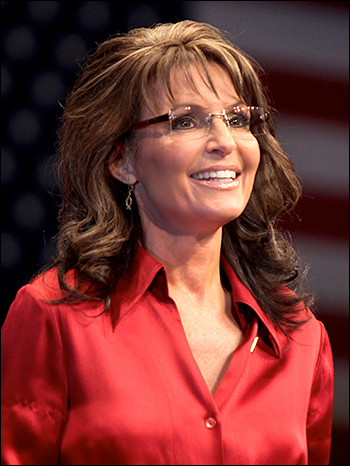
Sarah Palin, former Alaska governor and vice presidential candidate, is now running for the open at-large US House seat in The Last Frontier state.

By Jim Ellis

April 5, 2022 — Former Republican vice presidential nominee and ex-Alaska governor, Sarah Palin, filed at Friday’s candidate declaration deadline to enter the special election being held June 11 to replace the late at-large congressman, Rep. Don Young (R-AK).

Along with Palin, 17 others also filed. The state officials will release the qualified list at some point this week. Of the preliminary group, nine are Republican, eight are Independent or from minor parties, and just one, local Anchorage Assemblyman Chris Constant, is a Democrat.

The June 11 special primary will be interesting since it is the first test of Alaska’s new electoral system that places everyone together on a jungle ballot and sends the top four, regardless of party preference, to the special general election. The special primary will be conducted through the mail.

The special general will be run concurrently with the Alaska regular primary election on Aug. 16. Therefore, those casting ballots will both choose a special election winner and nominees for the regular election at the same time, but in two separate votes.

Should no one from the top four reach the 50 percent threshold in the special general election, then the Ranked Choice Voting (RCV) system is utilized to choose a winner. The voters rank their choices one to four. Without anyone getting majority support, the last-place finisher is eliminated, and those ballots ranking that candidate first are located, and their second choices are added to the candidate totals. This process continues in rounds until one of the candidates obtains majority support. At that point, said candidate is awarded the seat and will serve the balance of the current term.

The filing deadline for the regular primary is June 1, and those running in the special, including Palin, may or may not file for the regular term. At this point, all are expected to do so.

In addition to Palin, some of the key candidates include Dr. Al Gross, who was the Democratic nominee for Senate in 2020 and raised and spent almost $20 million in his unsuccessful challenge of Sen. Dan Sullivan (R). In this special election, Dr. Gross is running as an Independent.

Continue reading

Convicted Rep. Fortenberry to Resign

By Jim Ellis

Convicted Nebraska US Rep. Jeff Fortenberry (R-Lincoln)

March 29, 2022 — A Los Angeles, Calif. jury convicted Nebraska US Rep. Jeff Fortenberry (R-Lincoln) of three felony counts late last week, two involving campaign finance. The jury ruled he concealed illegal campaign funds received from a foreign national, and lied to federal investigators.

The congressman announced over the weekend that he will resign from the House on March 31, answering the call of both parties’ leadership to do so.

Rep. Fortenberry further says he will appeal the verdict and wrote in his official open resignation letter that “due to the difficulties of my current circumstances, I can no longer serve you (meaning his constituents) effectively.”

Since Nebraska’s candidate filing has closed and contenders certified, it is unclear at this time whether the congressman’s name can be removed from the primary ballot. The only ballot-related deadline that has not passed in relation to the May 10 primary is the period before April 4 when county clerks can make “corrections” to the ballot.

State Sen. Mike Flood (R-Norfolk) is the leading GOP candidate in Fortenberry’s absence. Retired Air Force officer John Glen Weaver, teacher Thireena Yuki, and welder Curtis Huffman round out the Republican congressional field. The consensus Democratic candidate is state Sen. Patty Pansing Brooks (D-Lincoln).

Now that Rep. Fortenberry is resigning, Gov. Pete Ricketts (R) will call a special election to fill the balance of the term. Under Nebraska law, since the seat will open before Aug. 1 of the even-numbered year, the special election must be scheduled within 90 days of the official date of vacancy. In this case, the vote must be held on or before June 28.

There will be no primary special election under Nebraska procedure. Nominations will come from the qualified political parties, handled through the 1st Congressional District committees of the various entities. A single-party candidate must be chosen and ballot qualified no later than 65 days before the scheduled election. Qualification refers to meeting the constitutional candidate requirements, filing the proper signature petitions, and paying relevant fees.

It is presumed the Republican and Democratic committees will turn to their leading candidates in state Sens. Flood and Brooks for the two major party nominations, but they don’t necessarily have to pursue such a direction because the special election’s candidate deadline will occur before the regular primary election. It would make little sense, however, for the parties to nominate someone other than their leading contenders, because the new individual(s) would not be able to run in the general election since the regular candidate filing period has closed.

Continue reading

Alaska Special Election Set

By Jim Ellis

Alaska’s At-Large Congressman, the late Don Young (R-Ft. Yukon)

March 24, 2022 — Decisions have been made about the special election calendar to replace the late at-large Alaska Congressman Don Young (R-Ft. Yukon).

Gov. Mike Dunleavy (R) has set June 11 as the special primary election day, and the vote will be conducted through the mail. Alaska’s new top-four jungle primary system will be in play, meaning that four competitors will advance into the special general election, regardless of party affiliation.

The special general will be run concurrently with the Aug. 16 regular primary election, meaning candidates will be placed separately on the ballot for both the special election and the regular full term.

If no candidate receives majority support in the Aug. 16 special election, the Ranked Choice Voting System will take effect. Voters would rank their choices from first to four just for the special general. Since no one would have received 50 percent, the last-place finisher is eliminated and the ballots that ranked the last place finisher as their first choice are located, and only their second choices are then added to the total. This process continues until one of the candidates reaches 50 percent.

This means that voters will rank the four finalists for the special general and then vote for one of the regular primary candidates for the Nov. 8 election during the same voting process on Aug. 16, or the date on which they choose to vote early.

Since Alaska’s at-large House seat has not been open since the 1973 special election when Rep. Young was originally elected, a large special election field will form. Already, Nick Begich III, grandson of Rep. Young’s first Democratic opponent back in 1972, then-Congressman Nick Begich (D) who perished in a plane crash shortly before the regular general election, is in the field but as a Republican. He had announced against Young in the Republican primary before the congressman’s death.

Also saying he will run both in the special and regular elections, as did Begich, is Anchorage City Assemblyman Chris Constant (D).

The Democratic/Independent 2020 US Senate nominee who raised and spent over $19.5 million to unsuccessfully challenge GOP Sen. Dan Sullivan, surgeon Al Gross, publicly said that he, too, plans to enter the open seat campaign. Dr. Gross begins the race with a reported $200,000 (approximate) in remaining campaign funds, obviously a big advantage.

Continue reading

Alaska Rep. Young’s Passing Yields Chaotic Special Election Process

By Jim Ellis

Alaska’s At-Large Congressman, the late Don Young (R-Ft. Yukon)

March 22, 2022 — On Friday, the Dean of the House of Representatives, Alaska’s At-Large Congressman Don Young (R-Ft. Yukon), passed away in an airplane flying back to his home state. The congressman, who was first elected in a 1973 special election, served in the House for 49 consecutive years, or just 14 years less than the time Alaska has been a state.

The congressman’s full and colorful national political career even began in an unusual way. As a sitting state legislator, he ran for Congress in 1972, opposite at-large Rep. Nick Begich (D). Less than a month before the election, however, Rep. Begich and then House Majority Leader Hale Boggs (D-LA) went down in a plane crash on a tour through the Last Frontier. With Boggs legally declared as missing, though it was imminently clear that all perished in the crash, he still defeated Young in the 1972 regular election.

Upon certification of Rep. Begich’s death, Don Young then won the succeeding special election in early 1973. He would never lose again. Coming full circle, Rep. Young’s 2022 opponent would likely have been Nick Begich III (D), the late congressman’s grandson.

While best wishes and remembrances for and about the congressional icon are coming from throughout the country, a potentially chaotic replacement process lies before the state’s governor to direct, and then for those who choose to become candidates.

Under Alaska law, a special election must be conducted to fill an electoral vacancy no less than 60 and no more than 90 days after the position is officially vacated. In this case, Young passed away on March 18. Therefore, at least the initial election must occur during the period between May 17 and June 16.

Because the state is changing its election procedure, much is unclear. An Alaska Department of Law spokesperson stated in an interview with the Anchorage Daily News that the agency personnel will review the applying statutes and prepare an advisory report for Gov. Mike Dunleavy (R).

In 2020, Alaska voters passed an initiative to change the state’s primary system. Thus, the state will now use a jungle primary format. Three other states, California, Louisiana, and Washington have jungle primaries, but in all of those places the top two finishers advance into the general election or post-election runoff. Louisiana holds its jungle primary concurrently with the regular general election so that a leading candidate with a percentage greater than 50 is elected outright.

Continue reading

Oklahoma Senate Special Challenged

By Jim Ellis

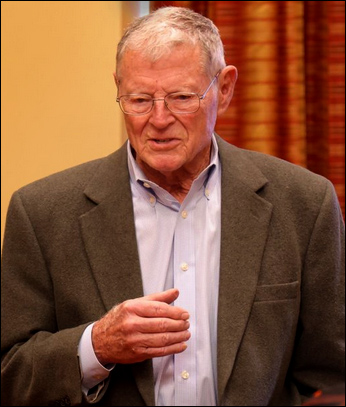
Veteran Oklahoma Sen. Jim Inhofe (R)

March 10, 2022 — The lawyer who defended 1995 Oklahoma City bomber Timothy McVeigh, the perpetrator who was later executed in 2001, has petitioned the Oklahoma Supreme Court challenging the state’s new special election law.

Last year, the Oklahoma legislature passed a bill that now allows US Sen. Jim Inhofe (in this case) to irrevocably declare that he would resign his position at the end of the year in order to conduct a concurrent special election to coincide with the current election calendar. Gov. Kevin Stitt (R) signed the bill into law.

Attorney Stephen Jones, himself a former US Senate candidate — he challenged then-Sen. David Boren in the 1990 Democratic primary and attracted just 17 percent of the vote — filed his challenge late Monday, and asked the high court to freeze the current Senate candidate filing period with respect to the special election. The legal move was made just after Gov. Stitt officially set the special election to run concurrently with the 2022 regular midterm election calendar.

Individuals have until April 15 to file for this year’s elections, and several, US Rep. Markwayne Mullin (R-Westville), state Sen. Nathan Dahm (R-Broken Arrow), former National Security Council staff head Alex Gray, and Inhofe former chief of staff Luke Holland, have already announced that they will enter the special Senate election. The Oklahoma primary is June 28. If no candidate receives majority support, the top two finishers advance to an Aug. 23 runoff election.

The legislature passed the bill last year, and Gov. Stitt signed the legislation that created the current system — which is, that if a letter is filed with the proper state authorities prior to March 1 of an even-numbered year containing a date certain as to when the office holder will officially resign, the succeeding special election to replace that person can proceed within the regular election calendar even though the person affected remains in office. Sen. Inhofe met those required conditions.

Continue reading

Cherfilus-McCormick Easily Wins Special election in Florida’s FL-20 Congressional District

By Jim Ellis

Democrat Sheila Cherfilus-McCormick easily won Tuesday’s special election in Florida’s FL-20 Congressional District.

Jan. 13, 2022 — Democrat Sheila Cherfilus-McCormick, as expected, easily defeated Republican Jason Mariner Tuesday in a district that gave President Biden a 77-22 percent majority in 2020. Cherfilus-McCormick scored a 79-20 percent victory with 55,457 people voting and will now serve the balance of the late Rep. Alcee Hastings’ (D-Delray Beach) final term.

After winning the special Democratic primary over Broward County Commissioner Dale Holness on Nov. 2 by just five votes, Rep-Elect Cherfilus-McCormick can now expect a highly competitive regular election Democratic primary challenge. Holness has already said he will oppose the new incumbent in the 2022 nomination election as he continues to pursue legal action in hopes of overturning the special primary results.

The Florida special congressional election was the nation’s eighth during this legislative session. Like the other seven, the candidate of the party originally holding the seat won the special vote. Five were Democrat seats, and three Republican. A ninth special election, that for resigned Rep. Devin Nunes’ (R) seat in California, has been scheduled for April 5 with a runoff on June 7 if none of the eventual contenders garner majority support in the first vote.

Though predictions of a coming wave Republican election appear to be rampant, the odd-year election pattern reveals no such precursor. As mentioned, 100 percent of the congressional special elections have remained true to the originating party, but that has almost also been true among special elections in state legislatures.

A total of 33 state special elections occurred in 2021. Republicans captured three Democratic seats in Connecticut, Iowa, and Texas, but Democrats turned the tables on Republicans in another three: New Hampshire, Maine, and Massachusetts. Therefore, a net conversion factor of zero resulted.

When the Democrats predicted their “blue wave” coming for the 2018 election, the commensurate election cycle saw much change in the special elections. In the 2017-18 cycle the Democrats flipped a net total of 19 seats that some believe was a prelude to the Democrats’ success in the regular ’18 election.

Continue reading

Today’s Election Scorecard

By Jim Ellis

Nov. 2, 2021 — Today is a significant Election Day, and the menu of races stretches beyond a Virginia governor’s race that has attracted the lion’s share of political attention.

While the VA governor’s race will of course be top of mind as results come in tonight and analysts attempt to assign precursor status to the contest regardless of the final result, other campaigns will also be of significance.

In the Virginia race, if Republican Glenn Youngkin scores an upset win, and the late indications are clearly moving his way, it may be cast as an affront to the Biden Administration and the Democratic majorities in Congress relating to their legislative agenda. In actuality, it is a more locally based issue, education, that should correctly be cast as the linchpin to describe a Youngkin victory.

Former Gov. Terry McAuliffe’s (D) debate comment saying he did not believe “parents should be telling schools what they should teach,” will actually prove to be the key turning point to a Youngkin victory should it materialize. In McAuliffe wins, then the talk of a coming Republican wave election next year will certainly dissipate at least in the short term.

In addition to the Virginia governor’s race, the remainder of the statewide ticket, the lieutenant governor and attorney general races could be of significance. If Winsome Sears (R), running for lieutenant governor, and Jason Miyares (R), running for attorney general, both win their races to compliment a Youngkin victory, then talk of a clear precursor or budding Republican wave election will carry a more serious tone.

New Jersey voters will decide their governor’s contest as well. In Jersey, late polling, after seeing some closer numbers not even 10 days ago, seems to show Gov. Phil Murphy (D) pulling away from Republican Jack Ciattarelli in the closing week. The final result will likely be closer than most analysts would have projected at the beginning of the odd-numbered year election cycle, however.

In both Virginia and New Jersey, voters will also be electing members of the state legislature. In the Old Dominion, only the House of Delegates is on the ballot, as state senators, with their four year terms, won’t face the voters as a unit until the 2023 election cycle.

In the Garden State, both parties are projecting they will gain seats, but no one believes the strong Democratic majorities in the state Senate and Assembly are in any danger. In the Virginia House of Delegates, Republicans need to convert a net six seats to re-claim the majority they lost in the 2019 election.

Continue reading

Brown, Carey Win In Ohio

Shontel Brown scored a convincing win in Ohio’s 11th District Democratic primary, virtually assuring her of a special general election victory on Nov. 2.

By Jim Ellis

Aug. 5, 2021 — Primary voters in two Ohio districts, for all intents and purposes, chose replacements Tuesday for resigned Reps. Marcia Fudge (D-Cleveland) and Steve Stivers (R-Columbus).

County Councilwoman and Cuyahoga County Democratic Party chair Shontel Brown scored a convincing win in the 11th District Democratic primary, virtually assuring her of a special general election victory on Nov. 2 in a seat that is safe for her party. Ohio Coal Association chairman Mike Carey did likewise in the 15th District Republican primary that occupies much of the Buckeye State’s southern sector.

Despite polling showing Brown trailing former state Sen. Nina Turner but consistently gaining momentum, it was obvious that the winner’s campaign peaked at precisely the right time. With 75,064 people voting in the Democratic primary, Brown scored a 50.2 – 44.5 percent victory. The other 11 candidates split the remaining 5.3 percent.

The 11th District contains most of the city of Cleveland in Cuyahoga County and part of Akron in Summit County. Brown’s Cuyahoga total percentage spread of 50.4 – 44.1 almost exactly mirrored the district-wide vote. Conversely, Turner scored a very tight 48.8 – 40.0 percent plurality in Summit County, a difference of just 54 votes.

Turner, the former national co-chair of the Bernie Sanders for President campaign attracted support from the Democratic socialist movement, including Rep. Alexandria Ocasio-Cortez (D-NY) and the Justice Democrats PAC. She began the campaign as almost a prohibitive favorite, leading by a 50-15 percent margin in a late May Tulchin Research organization survey. Once the final financial totals are known, it will be clear that Turner outspent the winner by a better than 2:1 margin.

Brown, receiving backing from the more establishment-oriented Democrats including House Majority Whip Jim Clyburn (D-SC), the Congressional Black Caucus, and former Secretary of State and 2016 Democratic presidential nominee Hillary Clinton, among others, began to chip away at the former state legislator’s lead about six weeks before the election and made steady gains through the closing period as polling highlighted.

The race’s most recent survey, from the Mellman Group (July 13-17; 400 OH-11 likely voters), gave Turner only a 41-36 percent advantage. A poll generally scoffed at in early July, from the Republican firm TargetPoint, found the two candidates tied at 33 percent. In the end, it was TargetPoint that proved closest to the final mark.

On the Republican side, with just 5,299 voters participating, community activist Laverne Gore was an easy winner, capturing 74 percent support. The Nov. 2 special election is now just a formality in the heavily Democratic district, however, and Brown can count on being sworn into the House toward the end of this year.

In his victory speech, 15th District Republican primary winner Mike Carey gave a large portion of the credit to former President Donald Trump who endorsed him in a crowded field of eleven candidates. “Tonight, the voters of the 15th Congressional District sent a clear message to the nation that Donald J. Trump is, without a doubt, the clear leader of our party,” Carey began his victory speech before his victory party supporters.

Continue reading

Ellzey’s Upset Win in TX-6

Texas state Rep. Jake Ellzey (R-Waxahachie) tallied an upset win in the TX-6 special election Tuesday.

By Jim Ellis

July 29, 2021 — Texas state Rep. Jake Ellzey (R-Waxahachie) tallied an upset win in the TX-6 double-Republican special runoff election Tuesday, defeating the race’s nominal favorite, Susan Wright, widow of the late Congressman Ron Wright (R-Arlington).

While polling and endorsements suggested a Wright victory – the most recent public poll from American Viewpoint released last week projected Wright holding a 10-point, 44-34 percent, advantage – the Ellzey win should be viewed as a mild upset. This is the third election in the four in which Rep-Elect Ellzey was a candidate where he considerably exceeded expectations.

Jake Ellzey, an airline pilot, rancher, and Iraq and Afghan War veteran, first came on the political scene with a surprising second-place finish in the 2018 open seat 6th District congressional primary, forcing then-Tarrant County Tax Assessor Wright into a secondary runoff election. Mr. Wright was viewed as a clear favorite in the follow-up vote but managed only a 52-48 percent win, with Ellzey again out-performing polling and projections. He then immediately came back an easily won an open seat primary and general election in a safe Republican state House of Representatives district.

When Rep. Wright passed away, the special election drew 23 candidates including Ms. Wright and state Rep. Ellzey. Local forecasters were expecting Democrat Jana Lynne Sanchez to secure a runoff position against Ms. Wright, possibly even perhaps finishing in first position, but Ellzey again surprised the analysts by edging Sanchez for second place. In the underdog role again, Ellzey recorded a 53-47 percent win.

Several noteworthy points came from the race. First, turnout was very low, only a 38,994 unofficial participation figure. This compares to 78,374 cast ballots in the special jungle primary for a drop-off rate of just over 50 percent. Considering that this was a double-Republican runoff and Democrats had little reason to vote since they had no candidate, such a small return voter figure is not particularly surprising.

Second, the early vote and election day vote proportion were virtually identical. Both Rep. Ellzey and Ms. Wright doubled their early vote total almost exactly. Conversely, in the jungle primary, Ellzey recorded over 70 percent of his total vote in the early phase, while Ms. Wright drew only 42 percent of her aggregate share from those voting prior to election day. Therefore, Ellzey significantly improved his election day operation.

Third, the big change from the jungle primary to the runoff election was the vote from Tarrant County, the district’s largest local entity. In the initial election, Ms. Wright ran strong in rural Navarro County and Ellzey did likewise in his home county of Ellis. This pattern remained consistent Tuesday night.

Continue reading