Category Archives: Polling

Biden’s Good and Bad News

By Jim Ellis

Former Vice President Joe Biden

Feb. 19, 2020 — Despite former Vice President Joe Biden’s poor performance in Iowa and New Hampshire, the latest available data suggests his presidential campaign status is not as dire as some in the media are prognosticating.

There have only been five Nevada Caucus polls released since the first of the year and the most recent one appears potentially unreliable. Point Blank Associates actually finds Tom Steyer leading the poll conducted over the Feb. 13-15 period, in a 19-16-14-13-13 percent count over Sen. Amy Klobuchar, Biden, Sen. Bernie Sanders, and former mayor, Pete Buttigieg. This poll has a sample size of only 256 respondents, thus making the error factor unacceptably high.

On the other hand, WPA Intelligence went into the field over the Feb. 11-13 period with a more reasonable sample size of 413 individuals who are described as likely voters. In contrast with the Point Blank result, WPAi finds Sen. Sanders leading the field, a conclusion more consistent with previously released polls. According to WPA, the split is 25-18-13-11-10-10 percent, with Biden in second place followed consecutively by Warren, Steyer, Buttigieg, and Klobuchar.

Therefore, while Biden is not leading either of these Nevada polls, he looks to be in range for potential delegate allocation. Obtaining delegate votes in Nevada will put him in better position to rebound for Super Tuesday, and particularly so if he can hold on to win in South Carolina.

The new East Carolina University survey still finds Biden leading the field in the Palmetto State as he has in every poll conducted in January, early February, and all of last year. East Carolina (Feb. 12-13; 703 likely South Carolina Democratic primary voters) projects Biden to a 28-20-14 percent lead over Sanders and Steyer, respectively. All others fall below 10 percent support.

Continue reading

Sessions in Trouble

By Jim Ellis

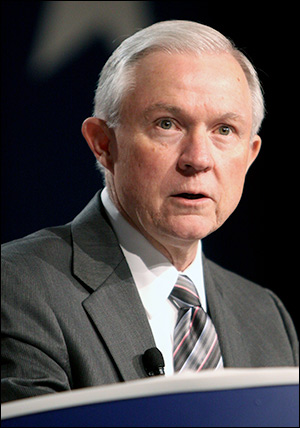
Former US attorney general and Alabama senator, Jeff Sessions (R)

Feb. 13, 2020 — Mason-Dixon Polling & Strategy conducted a new poll (Feb. 4-6; 400 likely Alabama Republican primary voters) of the Alabama Senate race and though former US attorney general and ex-Alabama senator, Jeff Sessions, still leads in what is a tightening Republican primary, peeling away the underlying data suggests that he could find rough going in an inevitable run-off election.

The M-D results find Sessions leading only 31-29 percent over former Auburn University head football coach Tommy Tuberville. Rep. Bradley Byrne (R-Mobile) trails with 17 percent, but well ahead of former Alabama Supreme Court chief judge and 2017 special election Senate nominee Roy Moore who posts just five percent support.

Sessions’ numbers have declined significantly since he entered the race, obviously suggesting a downward trend pointing to a more serious situation when further seeing that his name identification is universal.

With a significant double-digit margin between the top two poll finishers and Rep. Byrne, it becomes highly likely that both Sessions and Tuberville would advance to a run-off election. Neither is positioned to win the nomination outright, however. With Sessions nowhere close to a majority and, after considering his long political history in the state and 100% name identification among Republican primary voters and his current tepid ballot test numbers, it would not be surprising to see Tuberville overtake him in a one-on-one battle.

Another clue that Sessions has political problems is his favorability index as detected in the Mason-Dixon poll. According to their cell responses, Sessions carries a 49:18 percent favorable to unfavorable ratio among Republican primary voters, which looks positive on the surface, but after overlaying the pervasive name ID percentage it becomes clear that half of the respondents fail to have a positive impression.

Continue reading

Iowa Caucus Voting Tonight

By Jim Ellis

Feb. 3, 2020 — The final Iowa Caucus research surveys are providing very different results, while what is traditionally the state’s most reliable poll, from the Des Moines Register through Selzer & Company, is being held back.

The DMR and Selzer have decided not to release their latest data because of potential methodology errors in that a particular candidate’s name was omitted from an unknown number of survey questionnaires. This means the results could be compromised. Therefore, this particular poll will not be made publicly available.

The American Research Group (Jan. 27-30; 400 likely Iowa Democratic caucus meeting attenders) and Park Street Strategies’ (Jan. 24-28; 600 likely Iowa Democratic caucus meeting attenders) studies find different leaders but have a key new point in common.

The ARG findings post Sen. Bernie Sanders (I-VT) atop the field, as most recent polls have shown, with former Vice President Joe Biden in second place with 17 percent. Park Street, however, sees Biden pulling first place support with 20 percent as compared to Sen. Sanders’ 18 percent.

But the biggest change, as both of these pollsters detect, is a late surge coming from Minnesota Sen. Amy Klobuchar. ARG places her third with 16 percent, just ahead of Sen. Elizabeth Warren (D-MA) who posts 15 percent. Former South Bend Mayor Pete Buttigieg drops to just nine percent backing.

Park Street also sees Klobuchar jumping into double digits, but not as high as ARG forecasts. PSS projects the Minnesotan to a 12 percent level behind Buttigieg and Warren who both have 17 percent support.

Continue reading

One Week Out From Iowa,
It’s Looking Like a Four-Way Split

A four-way split? 2020 Democratic presidential candidates (from left) South Bend Mayor Pete Buttigieg, Sen. Bernie Sanders, former Vice President Joe Biden and Sen. Elizabeth Warren. (PBS.org photo)

By Jim Ellis

Jan. 28, 2020 — Now, just about one week from the first votes of the 2020 presidential election campaign being cast in Iowa, the most current polling suggests that we could see a four-way split for delegate apportionment in the first two voting states. After Iowans meet in their precinct meetings next Monday, New Hampshire voters will visit their polling places in the nation’s first 2020 presidential primary eight days later on February 11th.

Two new surveys each come from the two states: YouGov/CBS News and Suffolk University/USA Today in Iowa, and the University of New Hampshire/CNN and Marist College/NBC News in the Granite State.

In Iowa, Suffolk University/USA Today (Jan. 23-26; 500 likely Iowa Democratic Caucus attenders) finds former Vice President Joe Biden leading Sen. Bernie Sanders (I-VT) and the rest of the field, 25-19-18-13-8 percent. In third place is former South Bend Mayor Pete Buttigieg, while Sen. Elizabeth Warren (D-MA) follows, and Sen. Amy Klobuchar (D-MN) takes the drop into fifth place.

Based upon this poll, Biden, Sanders, and Buttigieg would qualify for delegate apportionment, while the actual vote would likely push Sen. Warren over the minimum threshold, as well. Iowa has 41 first-ballot delegates.

Continue reading

Latest Early-State Polling

By Jim Ellis

Jan. 16, 2020 — The most recent early-state polling again underscores the distinct possibility that we will not see a clear Democratic presidential leader emerge before Super Tuesday.

We are now inside three weeks before the Iowa Caucuses and the survey data and candidate messaging strategies are beginning to take firm hold. Polling is close among the top four candidates, though they appear to be in a proverbial pinball machine as the four bounce from top to bottom at least in the Hawkeye State.

It is likely that either former Vice President Joe Biden, Sen. Bernie Sanders (I-VT) or former South Bend Mayor Pete Buttigieg places first. Sen. Elizabeth Warren (D-MA) is likely to finish midway within the four leaders, seeing her support drop as we get closer to actual voting.

The Caucus rules could change some precinct outcomes. It is probable that the party will adopt a rule, as they have in the past, that allows a voter to change his or her vote if their candidate finishes last in a precinct Caucus tally. In any event, projections suggest that the top four will each exceed 15 percent of the at-large vote to qualify for delegates, and potentially achieve such a preference number in each of the four congressional districts.

This means we could well see a splitting of the 41 first-ballot delegates among the four candidates with the first-place finisher getting approximately just 12 delegates and the fourth-place qualifier earning as many as eight.

The news improves for Biden in New Hampshire, but the just released Patinkin Research Strategies study (Jan. 5-7; 600 likely New Hampshire Democratic primary voters) also shows at least three candidates qualifying for delegate apportionment. Here, Sen. Warren again appears to be falling off the pace.

Continue reading

Sen. Cory Booker Ends Run for 2020

By Jim Ellis

Sen. Cory Booker (D)

Jan. 15, 2020 — With less than three weeks from the first votes being cast in the Democratic presidential nomination process, Sen. Cory Booker (D-NJ) announced via Twitter that he is ending his national effort.

The move is not surprising, as Sen. Booker rarely reached or surpassed three percent support in any presidential primary poll. Like Sen. Kamala Harris (D-CA), who left the race just before the California candidate filing deadline in early December, visions of Senate re-election may have at least in part driven the timing of Booker’s move. While Sen. Harris doesn’t face voters in a strong Democratic state until 2022, Sen. Booker is on the New Jersey ballot this year.

Before the presidential race began, New Jersey legislators and Gov. Phil Murphy (D) changed the state election law to allow candidates to run simultaneously for more than one office. The move was obviously made to assist Sen. Booker’s presidential efforts. Now, however, the simultaneous filing option becomes moot.

Leaving the race now provides him an excuse for finishing poorly in the first four voting states: Iowa, New Hampshire, Nevada, and South Carolina, though he filed for each primary and caucus vote and will still be on the ballot in at least New Hampshire and South Carolina.

Though Sen. Booker appears safe for re-election, the New Jersey filing deadline isn’t until March 30. Poor finishes in all primary and caucus states could have left him in a vulnerable state, and while the Garden State is highly unlikely to elect a Republican to the Senate, it’s not out of the realm of possibility that a strong Democrat could have begun to mount a primary challenge. Now we can expect Sen. Booker to invest all of his political capital into cementing his re-election for a second full six-year term.

Continue reading

Sanders, Steyer With Momentum

By Jim Ellis

2020 presidential candidate, Tom Steyer

Jan. 14, 2020 — For the first time in this Democratic primary cycle, Sen. Bernie Sanders (I-VT) has taken the lead in an Iowa Caucus poll, while billionaire Tom Steyer is moving into contention in both Nevada and South Carolina.

Several surveys released on Friday point to these conclusions. In Iowa, Selzer & Company, polling for the Des Moines Register newspaper and Mediacom (Jan. 2-8; 701 likely Iowa Democratic primary voters) finds Sen. Sanders taking a 20-17-16-15 percent slight edge over Sen. Elizabeth Warren (D-MA), South Bend Mayor Pete Buttigieg, and former Vice President Joe Biden. The close results suggest that all four of these contenders are in position to qualify for the all-important delegate apportionment.

Des Moines based Selzer & Company has long been considered the polling industry standard for the Iowa electorate. According to their analysis, Sen. Sanders has the most committed support, and is in the best position to deliver his supporters to the individual caucus meetings on Feb. 3, which will translate into committed delegate votes.

The Selzer poll produces similar results to other pollsters in that the top four contenders are closely bunched, but the rest find a different leader. Instead of Sen. Sanders, most have recently found Mayor Buttigieg holding first position. All, however, suggest the top four finishers will likely qualify to split the 41 first ballot votes that the Democratic National Committee allots to Iowa.

Fox News conducted a series of research studies in Nevada, South Carolina, and Wisconsin over the Jan. 5-8 period and, in the two early states, Steyer has moved into a third place Nevada tie with Sen. Warren and is in sole possession of second place in South Carolina.

The Fox News Nevada poll (Jan. 5-8; 635 likely Nevada Democratic caucus attenders) gives Biden the overall edge in recording 23 percent, Sanders follows at 17 percent, and Steyer and Warren are tied with 12 percent.

Continue reading

Sanders Leading in California

By Jim Ellis

2020 Presidential candidate Sen. Bernie Sanders takes the lead in California

Jan. 13, 2020 — The new Capitol Weekly research survey (Jan. 1-9; 1,053 likely California Democratic primary voters) finds Sen. Bernie Sanders (I-VT) taking a slight polling lead in the California Democratic primary over Sen. Elizabeth Warren (D-MA), former Vice President Joe Biden, and South Bend Mayor Pete Buttigieg in what is consistently becoming a closely bunched field.

With two months to go before the Golden State primary is conducted but less than a month before early voting begins there on Feb. 3, the possibility of multiple candidates receiving portions of the state’s 415 first ballot delegates is becoming very real.

Sanders leads Warren, Biden, and Buttigieg by a 24-21-20-11 percent spread. Under party rules, a candidate must secure 15 percent of the statewide vote to earn at-large delegates. Therefore, Buttigieg must work to gain strength during the remaining time in order to reap the all-important mandated delegate commitments.

If he were to obtain 15 percent, and the others remained constant with these present percentages, the at-large delegate division would break 43 for Sanders and 38 for Warren, while Biden would earn 36 and Buttigieg 27 votes.

Should only the top three qualify for at-large delegate apportionment, Sanders would earn 53 votes, Warren 46, and Biden 45. Therefore, Buttigieg qualifying would significantly change the state and overall race because the large California delegation will be a major presence at the Democratic National Convention.

Scoring at-large delegate commitments is not the only way to earn votes, however. A larger total of 271 delegates will be awarded through the state’s 53 congressional districts. Each district, based upon its historical support performance for Democratic candidates, is awarded between 4 and 7 delegates, inclusive.

Continue reading

New Arizona Data

By Jim Ellis

Arizona Senate candidate, retired astronaut Mark Kelly (D), and Sen. Martha McSally (R)

Jan. 10, 2020 — Public Policy Polling conducted a study of the Arizona electorate (Jan. 2-6; 760 registered Arizona voters) to test the highly important impending US Senate race between appointed Sen. Martha McSally (R) and retired astronaut Mark Kelly, the presumed Democratic nominee.

PPP also ran ballot tests involving President Trump paired individually against the major Democratic presidential contenders. Even though Arizona is a critical state in the 2020 presidential general election, the early projection numbers are not particularly salient because the contest has yet to begin in earnest, but the Trump results do provide a credibility foundation to analyze the PPP Senate numbers.

The Senate ballot test shows, as does every other previous survey of this race, that the McSally-Kelly battle is within the polling margin of error. The PPP numbers, at 46-42 percent in Kelly’s favor, project a four-point spread between the candidates, which is a bit more separation than revealed in past Arizona surveys.

Both Kelly and McSally have been near the top of national Senate fundraising charts, so it is clear that each will have plenty of resources to communicate their specific campaign messages in addition to expected independent expenditures that will come into the state to aid and attack both candidates. It is already clear that the Arizona Senate race will become a national campaign.

At this point, the Grand Canyon State campaign looks to be the Democrats’ best conversion opportunity, and a victory for them becomes even more important to offset what is likely a predicted loss for Sen. Doug Jones (D) in Alabama. With the Democrats needing a net gain of at least three seats, or four depending upon the presidential race outcome, every swing seat becomes critical for both parties.

Continue reading

New Poll: Jones vs. Sessions

By Jim Ellis

Former Senator and US Attorney General, Jeff Sessions (R)

Jan. 8, 2020 — JMC Analytics and Polling just released their December statewide Alabama poll (Dec. 16-18; 525 likely Alabama voters) testing Sen. Doug Jones (D) against the Republican senatorial field including former senator and US attorney general Jeff Sessions.

Though JMC segmented demographics and geography within the polling universe they surprisingly did not identify partisan leanings. Therefore, it becomes difficult to see just how Republicans, Democrats, and Independents individually break and whether or not Sessions’ past public feud with President Trump is hurting him among GOP base voters.

The ballot test results, however, lead us to conclude that the former senator’s support within the Trump universe may be somewhat weak largely because he does no better than lesser known Republican candidates.

Sen. Jones is clearly the most vulnerable of the 11 Democratic incumbents standing for re-election in the 2020 cycle, not including Massachusetts Sen. Ed Markey’s Democratic primary challenge from Rep. Joseph P. Kennedy III (D-Newton). Considering that Republicans have a 53-47 advantage in the Senate and must defend 23 of the 35 in-cycle seats, re-taking Alabama is critically important to Republican majority goals.

According to the JMC data, Sessions would lead Sen. Jones, 46-41 percent, which is a credible showing for a Democrat in Alabama irrespective of incumbency. Pairing with the other Republican candidates produces similar results. Against former Auburn University head football coach Tommy Tuberville (R), Sen. Jones would trail 40-47 percent. If US Rep. Bradley Byrne (R-Mobile) were the GOP nominee, the spread would be 44-40 percent in the Republican’s favor.

Continue reading