Tag Archives: South Dakota

Ten Primaries Today

By Jim Ellis

June 2, 2020 — Super June is here. During the month, almost half of the country (24 entities) will hold nomination elections, 10 of which have moved their voting days to June from earlier dates. Here’s today’s lineup.


• DISTRICT OF COLUMBIA: Washington, DC voters will vote in a Democratic presidential primary that still features three individuals who are no longer contenders. Former vice president Joe Biden will defeat Sens. Bernie Sanders (I-VT) and Elizabeth Warren (D-MA), along with Rep. Tulsi Gabbard (D-HI), but the question to watch surrounds the strength of his vote percentage. It is arguable that his last two performances in Oregon and Hawaii fell below what a virtually unopposed presumptive nominee typically receives.

DC voters will also nominate candidates for Delegate to the US House of Representatives and for members of the DC City Council.


• IDAHO: The Idaho primary began with in-person voting on May 19, but Gov. Brad Little (R) extended the absentee ballot return deadline to today, June 2. Therefore, no votes will be counted until the mail votes are received today. The presidential primary was held earlier as a stand-alone vote, so this election in the state’s regular primary.

Sen. Jim Risch seeks a third term and is unopposed for re-nomination in the Republican primary. On the Democratic side, 2018 gubernatorial nominee Paulette Jordan, a former state representative, is favored. Reps. Russ Fulcher (R-Meridian) and Mike Simpson (R-Idaho Falls) face only minor opposition in their respective primaries. Sen. Risch and both congressmen are all prohibitive favorites in November.


• INDIANA: Gov. Eric Holcomb (R) leads the state ticket this year and is unopposed in the primary, as is Democratic former health commissioner, Woody Myers. Gov. Holcomb appears safe for re-election in the Fall.

With no Senate race in the Hoosier State this year, the US House delegation features two open seats that will attract most of the attention on primary night.

Veteran Rep. Peter Visclosky (D-Merrillville/Gary), first elected in 1984, is retiring after serving what will be 18 terms in the House. The Democrats will keep this seat (Clinton ‘16: 54-41 percent) so today’s election will almost assuredly choose the new representative. Of the 14 candidates, only two currently hold elective office, Mayor Tom McDermott of Hammond and state Rep. Mara Candelaria Reardon (D-Lake County), and both figure to be major contenders.

Continue reading

Is Biden’s Victory Secure?

By Jim Ellis

Former VP Joe Biden

March 30, 2020 — Articles have appeared in publications on successive days that somewhat surprisingly contemplate whether former vice president Joe Biden will actually reach majority delegate support for a first ballot win at the Democratic National Convention still scheduled to begin in mid-July.

Should the former VP somehow fail to obtain 1,991 votes on the first roll call a contested convention would begin, and some are introducing the idea that a deadlock could lead toward New York Gov. Andrew Cuomo emerging as an alternative to Biden.

Gov. Cuomo is receiving favorable media coverage for his handling of the COVID-19 virus situation in his state, which is one of the hardest hit areas in the country. Originally thought of as a possible presidential candidate at the very beginning of the process, Cuomo was first of the potential contenders to definitively pull his name from consideration.

Arriving at a contested convention at this stage of the process when calculating the delegate numbers is not a reasonable conclusion, however. While true that approximately half the states and territories still have not voted in their respective presidential primary, only 42 percent of the delegate universe (1,688) remains unclaimed. With Biden 777 votes away from the victory number according to the Green Papers election stats firm, it would take quite a negative swing for him to lose at this point.

Using simple arithmetic calculations, Biden needs only to secure 46 percent of the remaining bound first ballot delegates to win the party nomination. While he still must participate in the various primaries and attain that total, the chances of him winning are far greater than not. Post-Super Tuesday, his cumulative percentage among the nine states voting is 53.9 meaning that the future results would have to completely reverse for him to somehow lose the nomination.

Continue reading

Mid-Year Senate Primaries

By Jim Ellis

Jan. 24, 2020 — The second in our three-part series about the in-cycle Senate races covers the 13 contests with June and early August primary dates:

JUNE 2

Iowa: Sen. Joni Ernst (R) stands for a second term and will likely face Des Moines real estate executive Theresa Greenfield (D) in the general election. Greenfield, who aborted a congressional run in 2018 when her campaign effort didn’t collect the requisite number of legal petition signatures, enjoys at least unofficial backing from the Democratic establishment and party leadership. The leaders’ first choice to run, freshman Rep. Cindy Axne (D-Des Moines), decided to seek her first re-election instead of jumping into a statewide battle.
Sen. Ernst is favored for re-election but some of her approval ratings have been low. Much will depend upon the national political trend, particularly at the presidential level. Iowa is typically a swing state that has been moving right in most recent elections, though the Democrats did gain two congressional seats in the last election.

Montana: Sen. Steve Daines (R) stands for a second term, and with the Democrats unable to convince outgoing governor and former presidential candidate Steve Bullock to run for the Senate, most of the political attention has shifted to the open governor’s race and at-large US House contest. With Rep. Greg Gianforte (R-Bozeman) again running for governor, both the governor’s office and the state’s lone House seat are open for the coming election.
In fact, when looking at the entire statewide ticket, mostly due to term limits and statewide officials running for other offices, five of the seven statewide races are open contests in 2020. Therefore, the lack of attention and concentration on the Senate race certainly helps Sen. Daines. At this point, with the March 9 candidate filing deadline less than a month away, the type of candidate who could give the senator a serious run has not yet emerged.

New Jersey: Sen. Cory Booker (D) backed away from the presidential contest in order to concentrate on his re-election campaign. While state law was changed to allow candidates to run for offices simultaneously, Sen. Booker decided the time to exit the presidential race was upon him before embarrassing losses in Democratic primary states encouraged stronger primary competition for his re-election back home. Now concentrating on New Jersey full-time, Sen. Booker looks safe for re-election.

Continue reading

Intra-Party Primary Challenges On Both Sides Emerge This Week

By Jim Ellis

July 3, 2019 — If you thought the 2020 cycle might feature a smaller number of primary challenge campaigns than we’ve seen in recent election years, then Monday might have changed your opinion. No less than six combined intra-party incumbent opposition campaigns were announced, or at least publicly contemplated.

After seeing the results of some key primaries in the past couple of election cycles, such as the now famous Alexandria Ocasio-Cortez 2018 victory over veteran Rep. Joe Crowley in New York, it’s hard to discount any early intra-party candidate at face value. But, it appears, at least today, that all of the potentially challenged incumbents begin their re-nomination campaigns as clear favorites.

In South Dakota, state Rep. Scyller Borglum (R-Rapid City), an engineer and theologian who was just elected to the legislature in November, announced that she will oppose first-term senator and former governor Mike Rounds in next year’s Republican primary. This challenge is particularly curious since no Democrat has yet even come forward to battle Sen. Rounds. The odds of Borglum finding a way to deny her opponent re-nomination look particularly long, but the contest should be watched for indicative early happenings.

Rep. Danny Davis (D) has represented the downtown Chicago and Oak Park areas in Congress since the beginning of 1997. Before that, he served on the Chicago City Council or Cook County Commission for another 18 years. But his long service has not made him immune from enduring a primary challenge. Attorney Kristine Schanbacher announced her opposition to Davis in the March Democratic primary. The congressman is a prohibitive favorite to again win re-nomination. Two other minor Democratic candidates had declared earlier.

Indiana’s 3rd District will feature a “family affair.” Rep. Jim Banks (R-Columbia City/Ft. Wayne) largely won the safe Republican seat in the 2016 GOP primary against former Wisconsin state senator Pam Galloway and four others when he captured over one-third of the vote in a plurality victory scenario.

Continue reading

2020 Senate Review – Part III

By Jim Ellis

March 27, 2019
— The third and final segment of our three-part Senate review covers the races alphabetically from North Carolina through Wyoming, with a re-visit to the new open seat in New Mexico:

  • New Mexico – Sen. Tom Udall (D)Open Seat – Since our Senate review began, Sen. Udall, who looked to be a lock for election to a third term, announced he will not run in 2020. Democrats will be favored to hold the seat, but Republicans have won statewide races here as late as 2014, so the potential for a competitive 2020 campaign exists.
    So far, Attorney General Hector Balderas (D) and US Rep. Ben Ray Lujan (D-Nambe/Santa Fe) both confirm they are considering running, as is 2018 Republican nominee Mick Rich. Two individuals have already said they will not enter the Senate race: Gov. Michelle Lujan Grisham (D) and Santa Fe Mayor Alan Webber (D). Many more potential candidacies from both parties are being discussed. Currently, this open seat earns at the very least a Lean Democrat rating but is realistically Likely Democratic.

  • North Carolina – Sen. Thom Tillis (R) – This will be a top-tier race, as are almost all North Carolina Senate races. Sen. Tillis ousted then-Sen. Kay Hagan (D) in 2014 in a state that has re-elected only one senator since the days of Sam Ervin (D) and Jesse Helms (R).
    The Democrats failed to recruit their top target in Attorney General Josh Stein (D), and so far, their field is second tier. Only Mecklenburg County commissioner-at-large Trevor Fuller (D) and state Sen. Erica Smith (D-Gaston) have declared their candidacy.
    Sen. Tillis received pushback for originally opposing President Trump’s emergency border declaration, which has fueled rumors of a potential primary challenge. Therefore, the North Carolina campaign is in a state of flux. Much will change here in the coming year to affect the outcome. Currently, rate this seat as Lean Republican.

  • Oklahoma – Sen. Jim Inhofe (R) – The major discussion surrounds whether 84-year-old veteran Sen. Inhofe will retire. If he runs, the election campaign may be slightly more competitive based upon the 2018 Oklahoma results, in which the Democrats made some significant gains. Even if they continue to build momentum, their chances of winning a statewide election in the Sooner State still remain slim. Likely Republican until it becomes clear whether or not Sen. Inhofe will seek re-election.

  • Continue reading

Recapping the US House Open Seats — Part II: Nevada Through West Virginia

By Jim Ellis

the-primariesJuly 9, 2018 — With the election of Republican Michael Cloud (R-Victoria) to fill the vacant southeast Texas district (TX-27; Farenthold resignation) the total number of open House seats was reduced from 65 to 64. Within that group, 42 seats are currently Republican held, 21 are Democratic; one seat is new, created by Pennsylvania redistricting and left open when Rep. Conor Lamb (D-Pittsburgh) decided to run in a paired incumbent race with Rep. Keith Rothfus (R-Sewickley) instead of opting for the new Republican-dominated western Pennsylvania CD-14.

Among the 63 House members who have either passed away, resigned, lost their primaries, or are not seeking re-election, 23 chose to run for another office. Some of their political fates are decided, while others remain active campaigners. We we’ll look at those who became candidates for other offices and report on their current status. On Friday we examined Arizona through Minnesota. Today we’ll review Nevada through West Virginia.

NEVADA (NV-3): Freshman Rep. Jacky Rosen (D-Henderson) is skipping her first re-election campaign and instead enters the US Senate contest to challenge Sen. Dean Heller (R). Both she and Sen. Heller easily won their respective party nominations on June 12. The latest Gravis Marketing poll gave Rosen a 45-41 percent general election lead. The Senate race is expected to remain as a toss-up campaign all the way to Election Day.


NEW MEXICO (NM-1 & 2): Reps. Michelle Lujan Grisham (D-Albuquerque) and Steve Pearce (R-Hobbs) oppose each other in the open governor’s race after both became their respective party nominees on June 5. The first two post-primary polls staked Grisham to leads between 9-13 percentage points.


NORTH DAKOTA (ND-AL): After Rep. Kevin Cramer (R-Bismarck) announced he would seek re-election, he suddenly decided to change course and pivoted into a Senate challenge against incumbent Heidi Heitkamp (D). Both won unanimous party convention support, which paved the way for easy June 5 nomination victories. The first post-primary poll actually places Rep. Cramer three points ahead of Sen. Heitkamp in what promises to be a hard-fought general election.


Continue reading

Maine’s Instant Run-Off Examined

By Jim Ellis

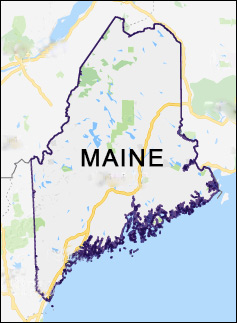
MAINEJune 15, 2018 — An interesting situation is developing from the still-in-progress Maine primary that could become a test case for either changing or instituting state run-off electoral systems.

As you know, run-offs ensure that a party nominee obtains a majority or, in the case of North Carolina and South Dakota, a substantial share of the vote. The run-off’s purpose is to prevent a party from nominating a winner in a multi-candidate election who garners only a small plurality.

The South Carolina 4th Congressional District race is a good example of why some states choose a run-off format. On Tuesday, both parties advanced a pair of candidates into respective run-off elections because no one came close to receiving majority support.

For the Republicans, with 13 candidates running to succeed retiring Rep. Trey Gowdy (R-Spartanburg), former state Sen. Lee Bright finished first, but with only 25 percent of the vote. In most other states, he would have been nominated. Since, 75 percent of the Republican voters chose another candidate, the run-off ensues. On June 26, Bright and state Sen. William Timmons (R-Greenville), who finished second with 19.2 percent, will decide the party nomination in one-on-one electoral competition. On the Democratic side, candidates Doris Lee Turner (29.4 percent) and Brandon Brown (28.5 percent) advance, while Eric Graben (25.7 percent), Will Morin (9.1 percent), and J.T. Davis (7.2 percent) are eliminated.

Maine is testing a unique new system that prevents situations such as their own that occurred in the past two gubernatorial elections, but avoids the cost of holding another separate election. Political observers will now see if their new idea will work and potentially withstand a legal challenge.

Continue reading

Big Primary Results

By Jim Ellis

June 6, 2018 — Voters chose their general election nominees in eight states last night with most races ending as predicted, though a few surprises also occurred. Here’s the rundown:

ALABAMA

the-primariesGov. Kay Ivey scored an outright Republican primary victory, defeating Huntsville Mayor Tommy Battle, state Sen. Bill Hightower (R-Mobile), and two others. The governor scored 56 percent of the GOP primary vote. She will now face Tuscaloosa Mayor Walt Maddox in the general election. Maddox defeated former state Supreme Court Chief Justice Sue Bell Cobb, 55-29 percent, in last night’s Democratic primary. None of the other four candidates even reached 10 percent support.

In House races, Rep. Martha Roby (R-Montgomery) placed first in her multi-candidate primary, but scored only 39 percent support. She will now advance to a July 17 run-off election with party-switching former Democratic Congressman and ex-Montgomery Mayor Bobby Bright, who recorded 28 percent of the vote. In 2010, Roby unseated then-Democratic incumbent Bright, so the run-off will be a re-match of sorts. Her low vote total suggests that Rep. Roby is in danger of losing re-nomination in the secondary election. The winner faces business analyst Tabitha Isner who won the Democratic primary with 60 percent of the vote. Either Roby or Bright will be favored in the general election after the run-off concludes.

In the other challenged primary race, Rep. Mo Brooks (R-Huntsville) notched a 61-39 percent win over businessman Clayton Hinchman. Earlier, this looked to be a significant challenge, but Rep. Brooks easily secured re-nomination.


CALIFORNIA

The California tabulation is incomplete as votes can still be received through Friday. Ballots postmarked yesterday will count as long as they reach the county elections office by 5 pm on Friday. Therefore, some second place finishes in the various races are somewhat undetermined though the current leader for the final general election qualifying position will likely hold on through the final counting phase.

As expected, Lt. Gov. Gavin Newsom (D) finished first (33 percent) in the open governor’s race and advances into the November general election. Republican attorney and former presidential candidate John Cox (26 percent) clinched second place making both the state GOP leadership and Newsom happy. The Republicans needed a statewide candidate in the general election to help with voter turnout for the down ballot races, while Newsom clearly wanted a Republican against him in the general as opposed to another Democrat. Former Los Angeles Mayor Antonio Villaraigosa finished third (13 percent) and state Assemblyman Travis Allen (R-Huntington Beach) was fourth (10 percent). In all, 27 individuals received votes for governor in the state’s jungle primary format.

Continue reading

Big Primary Preview

By Jim Ellis

June 5, 2018 — Today voters in eight states — Alabama, California, Iowa, Mississippi, Montana, New Jersey, New Mexico and South Dakota — will choose nominees for the 2018 general election in the single primary election day with the largest number of voters participating. Here’s a rundown on where things stand in each of the eight states:


ALABAMA

the-primariesThe most interesting race on the Alabama primary card is the state’s governor’s race. Incumbent Kay Ivey (R) runs for a first term after succeeding resigned Gov. Robert Bentley (R), when he left office last year as part of a plea bargain agreement for campaign finance violations.

Polling gives the governor wide leads to defeat Huntsville Mayor Tommy Battle, state Sen. Bill Hightower (R-Mobile), and Baptist minister Scott Dawson. For the Democrats, Tuscaloosa Mayor Walt Maddox and former state Supreme Court Chief Justice Sue Bell Cobb are vying for the party nomination. Gov. Ivey is the favorite today and in November.

In House races, Rep. Martha Roby (R-Montgomery) faces a multi-candidate Republican primary, including former US Rep. Bobby Bright, the man she unseated in 2010 when he was the Democrat incumbent. Also in the race is state Rep. Barry Moore (R-Enterprise) and former Roy Moore campaign manager Rich Hobson. Rep. Roby is favored, but the possibility of being forced to a run-off exists if she fails to obtain majority support.

Continue reading

A Not So Open Seat

By Jim Ellis

Aug. 22, 2017 — Currently, we see a low number of open US House seats during this 2018 election cycle, and the number is about to get even smaller. Colorado Rep. Ed Perlmutter (D-Golden) is expected to announce that he has changed political course once again and now will seek re-election.

In April, the six-term congressman announced his candidacy for governor, only to withdraw two months later. At the time when ending his statewide bid, Perlmutter confirmed that he would not be seeking re-election to a seventh term in the House. Believing the 7th District, a likely Democratic seat, would be open in 2018, three state legislators and a former US Ambassador jumped into the party primary.

At the very least, each of the three legislators has previously indicated that they would end their congressional campaigns and defer to the returning incumbent should he decide to return. Therefore, it is likely Perlmutter’s re-entry into the congressional race will not spur a competitive primary campaign.

Assuming this predicted new course of action proves true, the number of open regular cycle House seats will temporarily drop to 20. At this point in time, the total open seat universe is half of what it was in the last two election cycles, and less than one-third the high water number of 64 we saw in 2012.

Continue reading