Tag Archives: Sen. Bernie Sanders

Harris Down in California Poll

By Jim Ellis

Democrat Sen. Kamala Harris of California; dropping back in polls

Sept. 19, 2019 — Emerson College just released their new poll of the California Democratic electorate (Sept. 13-16; 424 likely California Democratic primary voters) and the research finds Sen. Kamala Harris (D) dropping well behind the front runners even in her home state.

In fact, just like in the rest of the country, Sen. Harris has fallen into single digits within her own California Democratic Party electorate, the very voting base that should be propelling her into the top tier. The Emerson result is Harris’ worst showing by far in California. Recording just six percent support, she drops even behind New York City businessman Andrew Yang who posted seven percent preference.

The Emerson survey was conducted directly after the televised Democratic presidential forum from Houston last week, and the California data confirms that Sen. Harris, in need of a homerun in that national forum to reverse her campaign’s downward trends, clearly did not succeed. In actuality, her poor debate performance has annotated that she should no longer be considered a first-tier candidate.

Of equivalent interest is an impending virtual three-way tie at the top for this state’s 416 first-ballot votes, a number making California the largest delegation at the upcoming Democratic National Convention scheduled for July 13-16 in Milwaukee.

According to the Emerson results, former Vice President Joe Biden and Sen. Bernie Sanders (I-VT) would tie at 26 percent while Sen. Elizabeth Warren (D-MA) would post 20 percent preference. With these three individuals splitting the delegate base, Biden and Sanders would each come away with approximately 150 delegate votes (if the 53 congressional districts broke in line with the statewide total; Democrats award delegates based upon statewide performance and within each individual congressional district), and Sen. Warren would record 116 bound convention delegate votes.

But the Capitol Weekly organization, running their monthly tracking poll of a Democratic segment (616) from an aggregate pool of 5,510 California voters, sees the former vice president having a bad month. In their September track, which covered the period of Sept. 1-13, Biden scored only 18 percent support as compared to Sen. Warren’s 33 percent and Sen. Sanders’ 17 percent. In this poll, Sen. Harris reaches a respectable double digit support figure at 18 percent.

Continue reading

Probing the Second Choice

By Jim Ellis

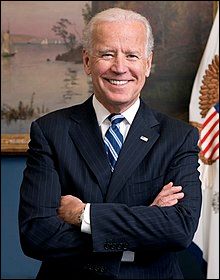
Former vice president and ex-Delaware senator Joe Biden

Sept. 18, 2019 — The Morning Consult organization released their post-debate survey and it shows former Vice President Joe Biden stabilizing his lead over the Democratic presidential field. Arguably the contender who needed to register the best performance in the September debate, Sen. Kamala Harris (D-CA), because she had lost considerable support since her August performance before a national televised audience, fell well short of her intended goal.

According to the MC data (Sept. 13-15; 7,487 Democratic likely primary voters with an over-sample from the first four voting states, Iowa, New Hampshire, Nevada and South Carolina), Biden remains well ahead of his two closest competitors. The results find the former vice president securing 32 percent support, holding constant from the August post-debate poll. Sen. Bernie Sanders (I-VT) also remains in a stagnant position posting 20 percent both in the new September survey and from August. Sen. Elizabeth Warren (D-MA), however, increased from 15 to 18 percent after the two Democratic presidential forums.

Sen. Harris has been on a downward spiral since July, a period that could prove to be her candidacy’s apex. After the first debate, Sen. Harris reached 14 percent support in the Morning Consult survey, and appeared to be on an upward trend. After the August forum, however, she slipped to nine percent, and post the September forum she slid even further to six percent preference.

South Bend Mayor Pete Buttigieg has also fallen over the course of time. It appears he hit is high mark in April when he scored nine percent nationally but fell back to the five percent range in July and, except for a short-lived blip in August, has remained stagnant in the mid-single digit range.

Though the numbers are consistent for the leaders in the Morning Consult survey series, other polling firms see a much tighter contest among the top three. The second choice question that MC routinely asks, on the other hand, may provide better perspective as to where the race is headed, or where it might should one of the top three fade in the early voting states, leave the campaign, or remain tightly bunched to force additional roll call votes at the convention.

Continue reading

Multiple Choice, Multiple Candidates

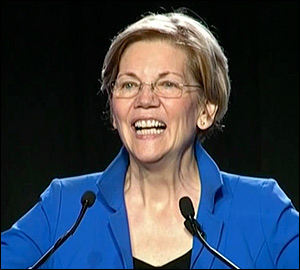
Sen. Elizabeth Warren (D-MA)

By Jim Ellis

Sept. 16, 2019 — The international polling firm YouGov for The Economist magazine just completed a major 86-question survey of 1,500 US adults (Sept. 8-10; online through an opt-in panel), 1,182 of whom are registered voters and found many interesting results. The most unique, however, might be their question asking the self-identified primary or caucus attending Democrats and Democratic-leaning Independents (632) just how many of their party’s presidential candidates they would consider supporting.

The purpose of the question was to test for multiple responses; therefore, most respondents named several candidates. Possibly the most interesting phase of the response process was that only one candidate exceeded 50 percent under this format, and the person receiving the 55 percent consideration factor might not be who you would name with your first guess.

Of the 20 candidates identified in the questionnaire, 10 broke into double digits. This is not particularly surprising when remembering that respondents were encouraged to give more than one candidate they are considering and, in fact, could name as many individuals as they liked.

But the candidate receiving the 55 percent mention factor was not former Vice President Joe Biden. Rather, it was Massachusetts Sen. Elizabeth Warren, and this type of outcome could be quite significant in determining who people might ultimately support. Biden was second but failed to reach a majority even from a respondent pool who could render multiple choices. He posted a 48 percent score.

In third position was Vermont Sen. Bernie Sanders (40 percent), so here again we see these three candidates, Warren, Biden, and Sanders, capturing the top positions by a wide margin.

Sen. Kamala Harris (D-CA) was fourth with 32 percent followed by South Bend Mayor Pete Buttigieg who was named by 27 percent of the sample. Others in double digits were New Jersey Sen. Cory Booker at 18 percent, ex-Rep. Beto O’Rourke recording 14 percent, and former HUD Secretary Julian Castro posting 13 percent, with Minnesota Sen. Amy Klobuchar and New York City businessman Andrew Yang both registering 11 percent under this format.

Continue reading

The “First Four” And The Scramble
For Delegate Apportionment

By Jim Ellis

Sept. 11, 2019 — The YouGov international polling organization conducted four simultaneous surveys in the states whose electorates will cast presidential nominating ballots in February of next year, referred to in the college basketball tournament vernacular as “the First Four”. The quartet of states are Iowa, New Hampshire, Nevada, and South Carolina.

Looking at the polls’ aggregate totals, it appears the contest is already gelling into a three-way race that could meld into a free-for-all should this particular YouGov polling trend translate into actual results.

All of the polling was conducted during the Aug. 28 – Sept. 4 period, and sampled between 492 (New Hampshire) and 785 (South Carolina) likely Democratic primary voters or caucus participants. All four polls found former Vice President Joe Biden, and Sens. Bernie Sanders (I-VT) and Elizabeth Warren (D-MA) occupying the first three positions, but in different orders.

Sen. Kamala Harris (D-CA) and South Bend Mayor Pete Buttigieg placed in the fourth and fifth positions in each entity, again not in the same order in all four states, yet neither reached double-digit percentages in any of the polls. Under this set of data, neither Harris nor Buttigieg would qualify for at-large delegates in any of the First Four states.

To reach the at-large delegate apportionment plateau, a candidate must receive 15 percent of the statewide vote. Candidates can also qualify for individual congressional district delegates, but those projections are not readily available from these polling results.

In Iowa, scheduled for caucus meetings on Feb. 3, Biden begins with a small lead according to the YouGov research. From the 682 individuals surveyed, the former vice president would score 29 percent, with Sanders closely following with 26 percent, and Warren posting 17 percent. Iowa has 41 delegates, and if the congressional district result followed the statewide percentage, Biden would receive 16 delegate votes, Sanders 15, and Warren 10.

Moving to New Hampshire, which will host the first-in-the-nation primary on Feb. 11, 2020, it is Sen. Warren who places first, but the result among the trio is a virtual three-way tie. Warren recorded 27 percent in the YouGov poll, with Biden getting 26 percent, and Sanders 25 percent. Again, assuming New Hampshire’s two congressional districts would vote in the same proportion as the state, each candidate would receive eight delegate votes, equally splitting the state’s 24-person delegation.

Continue reading

NC Special Elections Decided Today

By Jim Ellis

North Carolina’s 9th Congressional District

Sept. 10, 2019 — Voters in eastern and south-central North Carolina will go to the polls today to fill the state’s two vacant congressional seats. The 3rd Congressional District is open because Rep. Walter Jones (R-Farmville) passed away in February. The 9th District will finally get a representative after going vacant for this entire Congress. As we remember, the 2018 electoral result was not certified due to voter fraud allegations; hence, the calling of this new election.

North Carolina’s 3rd Congressional District

The 3rd District, which includes the Outer Banks area that Hurricane Dorian recently hit, hosts the cities of Jacksonville, New Bern, and part of Greenville within the 17-county region. It should remain in Republican hands. The seat has performed strongly for the GOP, including a 60-37 percent win for President Trump in 2016. Jones represented the district since his original election in 1994, when he unseated then-Rep. Martin Lancaster (D) in the Republican landslide of that year. Rep. Jones averaged 74.5 percent of the vote in the four elections of the present decade.

The Republican special election nominee, state Rep. Greg Murphy (R-Greenville), is favored to defeat former Greenville mayor Allen Thomas, who won the Democratic nomination outright at the end of April. The latest available polling yielded a low double-digit lead for Murphy.

The 9th District begins in Charlotte, encompassing approximately 20 percent of Mecklenburg County, and continues to annex Union – the most Republican county and largest population entity – Robeson, Richmond, Scotland, and Anson counties along with parts of Cumberland and Bladen. The final county, Bladen, was the site of the voter fraud allegations in the last regular election.

Continue reading

Inslee Bows Out of Presidential Race

By Jim Ellis

Washington Gov. Jay Inslee (D)

Aug. 23, 2019 — The Democratic National Committee leaders’ strategy to substantially increase the presidential debate qualification requirements in order to decrease the unwieldy and bloated candidate field is working.

The prerequisites to prove that a campaign has more than 130,000 donors and that each candidate reaches a minimum of two percent support from four of eight designated pollsters paid another dividend Wednesday as Washington Gov. Jay Inslee became the third Democratic candidate to officially exit the race.

Not making the debate stage signifies that a candidate has no chance to become a top-tier candidate. Without national exposure, also-ran candidates have little opportunity to increase name identification and familiarity in order to raise enough money to deliver a message, motivate people to work on their campaign, and attract serious media attention both nationally and in the important local markets within key states.

Inslee follows Rep. Eric Swalwell (D-CA) and former Colorado Gov. John Hickenlooper in making the decision to bow out of the race, and there are likely to be several more following suit once it becomes even more evident that the lower-tier candidates will no longer have the opportunity to climb onto the national debate stage.

Gov. Inslee, in an interview on MSNBC’s “The Rachel Maddow Show” Wednesday, stated ” … it’s become clear that I’m not going to be carrying the ball. I’m not going to be the president, so I’m withdrawing tonight from the race.” He is expected to announce that he will seek a third term as Washington’s governor.

The Inslee withdrawal is not a surprise to anyone, apparently even to the candidate himself. He remained non-committal about ruling out running for a third gubernatorial term, which froze most of the Washington Democratic potential aspirants in place. The rhetoric blocked them from overtly assembling a statewide campaign since most correctly interpreted the political tea leaves as meaning that Inslee would, in fact, be back to seek re-election.

With 10 candidates now qualified for the next debate since former HUD Secretary Julian Castro just joined the top-tier candidates of Joe Biden, Bernie Sanders, Elizabeth Warren, Kamala Harris, and Pete Buttigieg who are also joined by Sens. Cory Booker (D-NJ), Amy Klobuchar (D-MN), ex-Rep. Beto O’Rourke (D-TX), and businessman Andrew Yang, it remains to be seen just how many of those who won’t meet the qualifications will continue.

Continue reading

Nevada Looms Large for Biden, Harris

By Jim Ellis

Aug. 22, 2019 — The Nevada Caucus is third on the presidential nomination schedule and it appears the Silver State nomination event will carry more weight than it has in past elections.

After the Iowa Caucus (Feb. 3) and New Hampshire primary (Feb. 11), the candidates will stream into Nevada for the Feb. 22 caucus event that is traditionally held on a Saturday.

Nevada could be critically important for two of the candidates, former Vice President Joe Biden and California Sen. Kamala Harris, should the first two states evolve as currently predicted.

Kicking the cycle off in Iowa, Biden may find himself in a similar position to that of Hillary Clinton in 2016. Coming into the state as the clear front runner, Clinton stumbled in Iowa as she technically won the caucus vote, but only after a series of coin flips were conducted to break ties … and she won them all.

The rules are different in 2020, and it will be easier for more people to participate, but Iowa voters tend to like the Midwestern candidates, something Biden is not. Additionally, with Sen. Sanders proving he has a base in the state and two Midwestern candidates in the field, Minnesota Sen. Amy Klobuchar and South Bend Mayor Pete Buttigieg, the chances of Biden faltering here are actually quite high.

Then the candidates will move to Sens. Bernie Sanders’ (I-VT) and Elizabeth Warren’s (D-MA) New England backyard in New Hampshire. In 2016, Sen. Sanders upended Clinton with a 60 percent victory, so Biden’s ability to derail both Sanders and Warren in this state will prove to be a difficult task. Therefore, it is entirely possible that Biden could move into Nevada in search of a badly needed win.

Sen. Harris has a major advantage in that her home state of California will award 416 first-ballot delegates, a figure 45 percent larger than even the second-largest state, which is Texas. But, in order to maximize this advantage, Sen. Harris will have to be competitive in the First Four states.

Continue reading