

Tag Archives: Sen. Bernie Sanders

House Primary Challenges

By Jim Ellis

The Justice Democrats’ logo (click on image to go to their website)

July 16, 2019 — Controversy has been arising lately from the Congressional Black Caucus as the organization leaders are charging that the left faction Justice Democrats are isolating their members for primary challenges. But the number of Democratic incumbents having to defend themselves from potentially serious nomination opponents reaches well beyond the CBC.

In fact, currently 24 Democratic House members have what appear to be credible primary opponents and at least five more could soon be in a nomination race.

What makes these challenges potentially different and is clearly one reason more ideological candidates are coming forward in what used to be no-win campaigns, is the amount of money being raised online for such contenders.

For example, though his 2016 challenge of Rep. Debbie Wasserman Schultz (D-FL) went down to a landslide 57-43 percent defeat, South Florida law professor Tim Canova raised just under $4 million for his campaign. Almost all of the fundraising came in online donations after presidential contender Sen. Bernie Sanders endorsed his candidacy. Therefore, it is possible that several of the challengers listed below could also begin to attract national electronic donations under the right circumstances.

The Justice Democrats scored heavily in 2018 when Alexandria Ocasio-Cortez upset then-Rep. Joe Crowley (D-NY) and Boston City Councilwoman Ayanna Pressley did likewise to veteran Massachusetts Rep. Mike Capuano (D-Somerville). The credibility gained in those races make their support of 2020 Democratic challengers more noteworthy.

In addition to the incumbents listed below, other members, including Democratic Conference chairman Hakeem Jeffries (D-NY), are also on the Justice target list. Democratic National Committee member and former congressional nominee Rob Zimmerman confirms he is considering launching a challenge against Long Island Rep. Tom Suozzi (D-Glen Cove/Huntington). Observers also report that 2018 candidate Adem Bunkeddeko, who held Rep. Yvette Clarke (D-Brooklyn) to a 53-47 percent primary win, may make another run.

Continue reading

Change Reasearch Three-State Polling Shows Interesting Results

By Jim Ellis

July 15, 2019 — Just before the July 4th holiday break Change Research conducted a series of research studies in three of the first four Democratic presidential caucus and primary states.

The firm tested either 420 or 421 likely Democratic nomination event voters in each place during the period of June 29-July 4: in Iowa (420 respondents), New Hampshire (420), and South Carolina (420).

Iowa is, as we know, the site of the first caucus vote, which is scheduled for Feb. 3, 2020. This will be followed by the New Hampshire primary on Feb. 11 and the South Carolina primary pegged for Saturday, Feb. 29. The Nevada Democratic electorate, with their caucus placed on the calendar for Saturday, Feb. 22, was not polled.

Part of the media coverage surrounding these surveys looks at the aggregate numbers that these three individual places produced. The three states are highly important because they, together, will set the race’s early tone. But, from a statistical perspective, the aggregate total has little bearing as to who would eventually become the Democratic nominee.

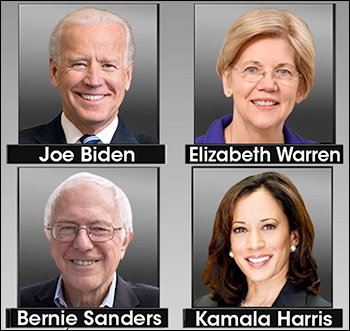
These aggregate Change Research numbers, however irrelevant to the actual race trajectory, have captured some attention because they are so close. The sum of the candidates’ support percentages from the combined three states, from a total of 1,261 respondents, find Sens. Bernie Sanders (I-VT) and Elizabeth Warren (D-MA) leading the group with 19 percent apiece, closely followed by former Vice President Joe Biden at 18 percent, Sen. Kamala Harris (D-CA) with 17 percent, and South Bend Mayor Pete Buttigieg posting a combined 15 percent preference. No other even candidate breaks the three percent level.

What carries much greater weight, however, is the individual candidates’ status in the individual early trend-setter states. As has been prevalent in Iowa’s electoral history, neighboring regional Midwestern candidates have typically done well in the first caucus. Such is the case again according to this Change Research poll.

Continue reading

The Trump Issues

President Donald Trump | whitehouse.gov


By Jim Ellis

July 12, 2019 — International pollster YouGov, surveying for The Economist magazine (July 7-9; 1,500 US adults from the YouGov opt-in Internet panel, 1,140 US registered voters, 592 likely Democratic primary voters) finds former Vice President Joe Biden maintaining a lead over the nomination field, but his margin is dissipating.

In this poll, Biden has a 22-17-14-11-5 percent advantage over Sens. Elizabeth Warren (D-MA), Kamala Harris (D-CA), Bernie Sanders (I-VT), and South Bend Mayor Pete Buttigieg, respectively, but the survey contains much more information.

This YouGov poll presents an exhaustive study of the electorate and some of the more interesting findings containing the respondents’ views regarding President Trump’s performance in certain key issue areas. In fact, the YouGov pollsters queried the respondents on 17 different subjects that yielded various conclusions.

In almost every poll, President Trump records upside-down overall job approval ratings. In this particular survey, his approval index is 43:53 percent (-10) positive to negative within the registered voter sample.

Continue reading

Poll: Biden Falling

By Jim Ellis

July 2, 2019 — The Morning Consult organization immediately went into the field after the second night of the Democratic presidential forum (June 27-28; 2,407 US self-identified Democratic registered voters) and found that former Vice President Joe Biden’s support slipped, at least as an immediate reaction to what is commonly viewed as his poor debate performance, while Sen. Kamala Harris (D-CA), evaluated as performing quite well, gained.

The MC data still finds Biden in first place, but down five points from their previous survey. On June 23, just three days before the first forum, Biden led Sen. Bernie Sanders (I-VT), 38-19 percent while Sen. Harris lagged at six percent support. Just after the debate, when completing the poll on June 28, Biden dropped to 33 percent, but Sanders remained constant at the 19 percent level. Conversely, Sen. Harris doubled her past support to 12 percent.

MORNING CONSULT POLL RESULTS:

Click on above graphic to go to complete Media Consult poll results story.

In the Morning Consult survey, Sen. Elizabeth Warren (D-MA) also posted 12 percent support, which was virtually on par with her standing in their June 23 poll when she recorded 13 percent preference. South Bend Mayor Pete Buttigieg, who actually scored well on the second debate night, had a similar result to Sen. Warren. While he was polling seven percent on the June 23 poll, he basically remained constant one week later, dropping to six percent on the MC June 28 survey.

Former Texas representative, Beto O’Rourke, who was dogged with poor debate reviews from his first night performance, also dropped in the Morning Consult polling. Before the forum, O’Rourke was only in the four percent range, and after, even lost half that support base, dropping to two percent.

Continue reading

Next for Democrat Candidates

By Jim Ellis

July 1, 2019 — The first Democratic candidate forum is in the books, and the question being posed is how the various performances over the two-night process will affect the candidates’ standing.
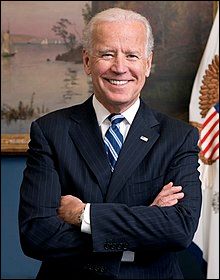

On the first night, Sen. Elizabeth Warren (D-MA), really the only top-tier candidate on stage, seemed to dominate the proceedings and clearly scored with her hard left base … a constituency she must wrest away from Sen. Bernie Sanders in order to become a major threat to win the nomination. Some post-debate polling suggests that Rep. Tulsi Gabbard (D-HI) is the lower-tier candidate who significantly improved her standing from the first night group, but she still may not be able to break through to the top.

The general consensus for the candidate performing the worst on the first night, even though he rated his own performance as an “A”, was former Texas congressman, Beto O’Rourke. His attempt at answering questions in Spanish did not seem to be well delivered or received.

The second night, Thursday night, the center stage seemed to go to a pair of candidates, California Sen. Kamala Harris and South Bend, Ind., Mayor Pete Buttigieg. Sen. Harris scored points in bringing the out of control group to order early, and then directly confronted former Vice President Joe Biden on his busing position from decades ago. Even Biden’s explanation of him opposing the Department of Education’s policy was fumbling and incorrect. The votes they were discussing occurred in 1975. The Department of Education didn’t even come into existence until 1979.

Mayor Buttigieg needed a strong performance to solidify his early rise in the polls, and it appears he delivered. He seemed to successfully diffuse the point about the police shooting in his home of South Bend by simply admitting that he failed to do the job. There wasn’t much to say on the topic after that, and none of the other candidates brought it back after Rep. Eric Swalwell (D-CA) made a follow-up point that he should have fired the police chief.

Now, we will see how the candidates fare in post-debate polling, and whether their strategies change.

Continue reading

Debates Begin; Some Polls Tighten

By Jim Ellis

June 28, 2019 — Several polls were released just before the presidential debate series began and we see some inconsistency. Former Vice President Joe Biden leads in the most recent national surveys, but by varying margins.

The closest poll comes from YouGov (June 22-25; 522 likely US Democratic primary voters) and finds Biden’s lead over Sen. Elizabeth Warren to be 24-18 percent. In a close third place is Vermont Sen. Bernie Sanders with 15 percent.

All other candidates are in single digits. Those who have been experiencing a recent downward trend, Sen. Kamala Harris, and ex-Rep. Beto O’Rourke, again posted poor support scores, this time seven and three percent, respectively. South Bend Mayor Pete Buttigieg has been polling inconsistently in recent surveys. Here, we see downward movement, as he registers only five percent support, a polling range that has also been detected in other late June polling.

YouGov also finds two of the lower-tier candidates performing a bit better in this survey. Hawaii Rep. Tulsi Gabbard reaches three percent national support, and Sen. Cory Booker posts two percent support. All others are at one percent or below.

But the Morning Consult data, with a much larger survey sample, tells a much different story. Their poll (June 19-26; 7,150 likely US Democratic primary voters via automated response device) detects a much larger Biden lead. The results find the former vice president at 35 percent support with Sen. Sanders in second place – as he has been in most national polls – with 18 percent, and Sen. Warren in third at 12 percent. Like in the YouGov poll, only the top three finishers posted double-digit support numbers.

The lower tier is very similar to the YouGov results sans Gabbard. They find Sen. Harris (six percent), Mayor Buttigieg (six percent), O’Rourke (four percent), and Sen. Booker (three percent) comprising a second tier. All the rest are at one percent or less.

The HarrisX survey (June 24-26; 892 self-identified Democratic registered voters) brandished a middle-sized sample with commensurate results. HarrisX also finds Biden leading the Democratic race, but his 29 percent support factor falls virtually evenly between what was found in YouGov and Morning Consult.

Continue reading

Biden’s Early Obstacle

By Jim Ellis

Former vice president and ex-Delaware senator Joe Biden

June 27, 2019 — One of the reasons that Hillary Clinton’s campaign began to come unglued in 2016 was failing to meet expectations in the early places.

Unfortunately for her, Iowa was always one of her weakest states and the fact that it is first on the voting schedule caused her air of inevitability to be pierced rather quickly.

As you may remember, Clinton won the Iowa Caucus, but the result was a virtual tie with Sen. Bernie Sanders, forcing the local committee people to decide some precinct results with the flip of a coin — tosses in which Clinton prevailed every time. With her inevitability veil coming off, Clinton then headed to New Hampshire where she would lose 60-38 percent.

Because the race winnowed to a two-person affair, Clinton was successfully able to rebound, scoring early victories in Nevada and South Carolina to get her campaign back on track.

Two new polls suggest that former Vice President Joe Biden may be facing a similar pattern in the early states, and being mired in a crowded field suggests we may see a different final result than what Clinton achieved.

Two new surveys suggest that Biden may already be weakening in the first two states. Though small in terms of first ballot delegate votes (Iowa, 41; New Hampshire, 24), the pair are critically important in casting early momentum. With 25 candidates now beginning the campaign, and at least six appearing viable, developing early momentum is more important than within the much smaller 2016 nomination field.

Change Research conducted the Iowa and New Hampshire polls (along with one in South Carolina where Biden has a comfortable 39-15-13-11 percent edge over Warren, Sanders, and Buttigieg) and their findings suggest that Biden could have some early trouble. Though the polling samples are small — 308 respondents for each state — the sample size may accurately reflect the diminutive voting universes found in the two places. All the surveys were conducted from June 17-20.

In Iowa, Biden leads, but with only a 27-20-18-17 percent margin over Sens. Elizabeth Warren and Sanders, while South Bend Mayor Pete Buttigieg posts a close 17 percent support. Having four candidates within 10 points suggests that any one of them could break out with a win, especially with the Feb. 3 Caucus still months away.

Continue reading

The Early Delegate Projections

By Jim Ellis

June 25, 2019 — There have been several important state polls recently released that provide us data about where the Democratic presidential candidates stand in relation to popular preference. But that is only half the story.
In order to gauge where the candidates might stand in terms of delegate apportionment, we have taken the available published polls from 16 states and began extrapolating a reasonable delegate projection for each.

For purposes of this exercise, all of the polling data is considered accurate, even though in some instances such a conclusion is a stretch. Additionally, these projections were only based upon the at-large numbers but understand more than half of the delegates come from the state’s chosen districts (usually congressional district, though Texas uses their state Senate seats).

It is reasonable to believe, however, that the district apportionment will, in most cases, be similar to the statewide total. At this point, the at-large ratios are the only data set from which we can begin to draw statistical conclusions.

With that short background, the states and their most recent polling result are listed below along with our unofficial delegate projections listed in chronological order based upon voting schedule:

February 3

Iowa Caucus

(YouGov – May 31-June 12; 587 likely Iowa Democratic primary voters)
• First-Ballot Delegates: 41

Biden 30%
Sanders 22%
Warren 12%
Buttigieg 11%

Delegate Projection:

Biden 15
Sanders 11
Warren   8
Buttigieg   7

Continue reading

Florida: Biden Up

Former vice president, Joe Biden (Getty Images)


By Jim Ellis

June 20, 2019 — Quinnipiac University surveyed the Florida electorate (June 12-17; 1,279 registered Florida voters, 417 self-identified Democrats) and found former Vice President Joe Biden opening a substantial lead over Sens. Bernie Sanders (I-VT) and Elizabeth Warren (D-MA) there. He also posts a healthy advantage against President Trump in a hypothetical general election pairing in what is always a critical voting domain.

The Q-Poll numbers find Biden scoring a 41-14-12 percent advantage over Sens. Sanders and Warren, respectively, with South Bend Mayor Pete Buttigieg and Sen. Kamala Harris (D-CA) trailing in single-digits with eight and six percent, sequentially.

As Nate Silver, founder of the 538 statistical website, said in an interview this week that looking at general election polling this early is basically a futile exercise. It does, however, provide us a clue into candidates’ strengths and weaknesses. In the general election Q-Poll pairing, Biden records a 50-41 percent advantage over President Trump in Florida. This poll, of course, was taken before Trump’s Florida rally Tuesday night in which he kicked off his 2020 campaign.

Silver’s spoken sentiments are true because, among other reasons, so much time remains between now and the 2020 Nov. 3 election, and so many unknown events will occur that could alter the final outcome. Additionally, the campaign will drastically change when both parties have nominees and voters begin paying serious attention to the race.

Continue reading

California Already Tightening

By Jim Ellis

June 17, 2019 — A new large-sample Golden State poll released from the University of California at Berkeley and the Los Angeles Times (June 4-10; 2,131 likely California Democratic primary voters from a pool of 4,435 registered voters) yields some surprising results. The three most unexpected findings first show a tight race among the four top contenders, Sen. Elizabeth Warren (D-MA) surging into second place, and home-state Sen. Kamala Harris only finishing fourth but not substantially behind.

The California primary, scheduled for March 3, possesses the largest number of first-ballot delegates of any state or territory. The state’s 416 first-ballot delegates, 272 of whom are divided among the 53 congressional districts and 144 at-large, will certainly help set the tone over how the Democratic National Convention unfolds.

Sen. Harris, who could well be the indicator candidate as to what scenario will occur at the convention, (i.e., will one candidate be able to coalesce a majority coalition on the first or second ballot or does the nomination battle fall into a multi-ballot contest) must score big in her home state, and this latest survey suggests her path is challenging but doable.

The Berkeley/LA Times study sees former Vice President Joe Biden holding a smaller lead than in past surveys, as he polls 22 percent first-choice responses. Sen. Warren makes a major jump into second place and records 18 percent, one of her best showings in any poll. Sen. Bernie Sanders (I-VT), who has been dipping in polling across the country, places third at 17 percent, and Sen. Harris trails in fourth position, but is still clearly in the game at 13 percent.

Polling from around the country within the last 10 days, and this California study is obviously no exception, has been projecting a tighter Democratic race. Though Biden still leads, his advantage is lessening.

Continue reading