Tag Archives: Gov. Ron DeSantis

Trump Tops DeSantis, Haley, Scott, Pence; Michigan Rep. Declines Senate Run; House Races Adding Candidates

By Jim Ellis — Wednesday, Feb. 1, 2023

President

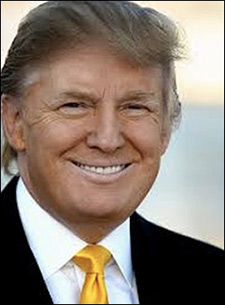
Former President Donald Trump

South Carolina: Sen. Scott, Ex-Gov. Haley Badly Trail Trump, DeSantis — Presidential state polls are beginning to surface, and a recently released Moore Information South Carolina survey (Jan. 18-24; 450 likely South Carolina Republican primary voters; live interview) finds former President Donald Trump leading the GOP field in one of the top early primary states while Florida Gov. Ron DeSantis follows. The surprise result is that both South Carolina Sen. Tim Scott and the Palmetto State’s former governor and ex-UN ambassador, Nikki Haley, each of whom appears to be testing the waters for their own presidential run, fare poorly on the ballot test question.

According to the numbers, Trump holds a 41-31-12-5-4 percent advantage over DeSantis, Haley, Scott, and former Vice President Mike Pence, respectively. While the two South Carolinians don’t score well on the ballot test, their favorability ratings among the Republican faithful are on par with the two leading candidates. Trump has a positive rating of 83 percent, Gov. DeSantis is at 82 percent, while Haley and Sen. Scott score 79 and 78 percent, respectively. Pence is also viewed positively with a 70 percent favorable rating.

Senate

Michigan: Rep. Haley Stevens (D) Declines Senate Bid — Three-term US Rep. Haley Stevens (D-Birmingham) who defeated then-Rep. Andy Levin in a redistricting forced Democratic primary pairing last August, said Monday that she would not pursue a race for Sen. Debbie Stabenow’s (D) open seat next year. Rep. Stevens believes she “can best serve Michigan’s working families, manufacturers, students, and small businesses in my current role.”

It had been expected that Rep. Elissa Slotkin (D-Lansing) was preparing an official announcement to enter the Senate race, but has yet to move forward. Despite a flurry of early activity among Democrats examining the open race, no one has yet formally declared their intention to become a Senate candidate.

House

AZ-3: Dems Positioning for Open Race — Arizona state Senate Minority Leader Raquel Teran (D-Phoenix), also a former Arizona Democratic Party chair, confirms that she is considering entering the open primary to succeed Rep. Ruben Gallego (D-Phoenix), who is now officially running for the Senate. With the downtown Phoenix 3rd District voting overwhelmingly Democratic — the FiveThirtyEight data organization rates the seat D+44 — the August 2024 party primary will determine the next representative. A crowded field featuring a number of local and state elected officials is expected to form.

CA-30: Field Now Grows to Eight — Rep. Adam Schiff (D-Burbank) running for the Senate has already led to a field of six viable 2024 candidates with two more announcements coming over the weekend. Both state Sen. Anthony Portatino (D-La Canada) and former Los Angeles City Attorney Mike Feuer (D) announced that they will run for the congressional seat next year.

Already in the field are state Assemblywoman Laura Friedman (D-Glendale), Los Angeles Unified School District board member Nick Melvoin, actor Ben Savage, and businessman John Bocanegra (D). The California jungle primary is scheduled for Super Tuesday, March 5, 2024. It is likely that two Democrats will advance into the general election from this D+45 rated CD.

IN-3: Former Congressman May Return — Former Republican US congressman and ex-Indiana state legislator Marlin Stutzman confirms that he is considering running for his previous position since Rep. Jim Banks (R-Columbia City) has declared for the Senate. At this point, the only formidable announced candidate in what will be an open safe Republican congressional seat anchored in the Ft. Wayne area is state Sen. Andy Zay (R-Huntington). Rep. Banks’ successor will come from the May 2024 Republican primary.

Zeldin’s Contemplation; Dems Positioning for Next Race in NY; Five Competitive Candidates in Chicago Mayoral Race; McDaniel Re-Elected as RNC Chair

By Jim Ellis — Jan. 31, 2023

Senate

Former NY Rep. Lee Zeldin (R-Shirley)

New York: Ex-Rep. Zeldin’s Contemplation — Former Long Island US Congressman Lee Zeldin (R), who held Gov. Kathy Hochul (D) to a highly competitive 53-47 percent statewide re-election victory in November, has seen his name being bandied about for many potential positions. Some Republican leaders want him to challenge New York Sen. Kirsten Gillibrand (D) next year, which would likely be a political suicide run in a presidential year from one of the Democrats’ strongest states, while others are talking up the possibility of him running for Suffolk County Executive.

This latter election will occur later this year and is an open race since Democratic incumbent Steve Bellone is ineligible to run for a third term. Considering Zeldin carried his home county by a 59-41 percent margin in the governor’s race and represented Suffolk in Congress for eight years, he would clearly be the Republicans’ strongest candidate for such a position. At this point, Zeldin has been quiet about what future political plans, if any, he may be contemplating.

House

NY-3: Dems Positioning for Next Race — While the fate of beleaguered freshman US Rep. George Santos (R-Long Island) continues as a daily media story, Democrats are beginning to position themselves for what could be a special election if Santos is eventually forced to resign or run in next cycle’s regular election. Some local Democratic leaders are reportedly attempting to convince former Rep. Tom Suozzi (D), to make a political comeback for his former position.

Suozzi left the House last year to make a head-scratching run for the Democratic gubernatorial nomination, a race he had scarcely little potential to win. So far, the former congressman has been non-committal about a future District 3 race. On the other hand, the man who Rep. Santos defeated in November, George Zimmerman (D), is preparing for another run. Nassau County Legislator Josh Lafazan (D), who lost the congressional nomination to Zimmerman in 2022, has already announced that he will run for the seat in the next election.

Cities

Chicago: Poll Shows Five Competitive Candidates — There has been a lot of attention paid to the Chicago mayoral race because the incumbent is in trouble and the election is fast approaching, now less than a month away on Feb. 28.

A new Victory Research survey (Jan. 23-25; 806 likely Chicago voters; live interview) finds former Chicago Public Schools CEO Paul Vallas and current Mayor Lori Lightfoot in a virtual tie at 19 percent support apiece. Rep. Jesus “Chuy” Garcia (D-Chicago) is a close third with 17 percent, while Cook County Commissioner Brandon Johnson, and businessman Willie Wilson follow with 15 and 12 percent, respectively. This shows that two of these candidates will head to a runoff election on April 4, but it remains unclear as to which pair will advance.

Political Parties

Republican National Committee: Ronna McDaniel Re-Elected — On Friday, RNC Chair Ronna McDaniel was easily re-elected to her position, capturing 66 percent support among the 168 voting members. Former President Donald Trump originally appointed McDaniel and continued to support her through this election. California National Committeewoman Harmeet Dhillon, who criticized McDaniel for the party losing touch with the grassroots and drew support from Florida Gov. Ron DeSantis, finished a distant second with 53 votes. My Pillow company founder Mike Lindell received four votes. McDaniel will now serve through the 2024 presidential election.

DeSantis’ Big Lead Suspect; Recount Confirms Rep. Boebert’s Victory;
A Rapid-Fire Special Primary; Lightfoot Looking Shaky in Chicago

By Jim Ellis — Thursday, Dec. 15, 2022

President

Gov. Ron DeSantis (R-FL)

USA Today Poll: DeSantis’ Big Lead Suspect — Suffolk University, polling for USA Today (Dec. 7-11; 1,000 registered US voters; 374 likely Republican primary voters; live interview) finds Gov. Ron DeSantis (R-FL) leading both President Biden and former President Donald Trump in their latest published survey.

The general election data that finds DeSantis leading President Biden, 47-43 percent, is the more legitimate number. The Republican primary result, which tested only 374 individuals nationally and shows DeSantis holding a huge 56-33 percent advantage over Trump, should be discarded because it is not statistically sound.

The Morning Consult organization also released a survey, this with a much greater sample size (Dec. 9-11; 4,215 self-identified Republican voters; online) and arrived at an opposite conclusion vis-à-vis the hypothetical Republican nomination battle. Including many candidates, Morning Consult finds Trump holding a 49-31 percent lead over Gov. DeSantis, with former Vice-President Mike Pence recording eight percent. All other candidates posted a preference factor of two percent or less.

House

CO-3: Recount Confirms Rep. Boebert’s Victory — The mandatory recount in Colorado’s 3rd District is complete, and the final tally confirms Rep. Lauren Boebert’s (R-Silt) close victory over former Aspen City Councilman Adam Frisch (D). The recount changed only four votes to the original tally, thus making Rep. Boebert’s margin of victory 546 votes. Frisch had conceded the election weeks ago, but Colorado election law mandated the recount because the two candidates were separated by less than half a percentage point. The Democratic nominee says he is open to seeking a re-match in 2024.

VA-4: Dems Schedule Rapid-Fire Special Primary — Gov. Glenn Youngkin (R) calling a Feb. 21 special congressional election to replace the late Rep. Donald McEachin (D-Richmond) has spurred the local 4th District Democratic committee to call a very quick “firehouse primary.” A Virginia “firehouse primary” is a term given to a primary election that has very few polling places. Gov. Youngkin’s order set Dec. 23 as the deadline for choosing party nominees.

The Democratic nomination battle, which will likely determine the next congressional member, is now scheduled for Dec. 20, giving the candidates only a week to campaign. The leading contenders are state Sens. Jennifer McClellan (D-Richmond), Joseph Morrissey (D-Richmond), and Delegate Lamont Baxby (D-Richmond). Republicans have yet to determine their nomination process.

Cities

Chicago: Rep. Garcia Leads Mayor’s Race in Union Poll — Though the poll is just about a month old, the International Union of Operating Engineers Local 150 just released their Impact Research study of the impending Chicago mayor’s race. The survey (Nov. 10-17; 700 likely Chicago local election voters; live interview and text) found US Rep. Jesus “Chuy” Garcia (D-Chicago) leading Mayor Lori Lightfoot 25-18 percent within a field of nine candidates. The data suggests the two would advance to an April 4 runoff election from the non-partisan Feb. 28 election.

In the hypothetical runoff, Rep. Garcia would lead Mayor Lightfoot by a whopping 55-25 percent margin. The controversial mayor posts very poor job approval ratings, with 68 percent disapproving of her performance in office. She received positive ratings only from the black community, and even there registered just a 50 percent favorable score. A total of 84 percent of white voters and 72 percent of Hispanics disapprove of how she has handled her mayoral duties.

Cruz Polling Up for Renomination, Down for President; Ariz. Dem Primary Looking Competitive; VA-4 Special Election Scheduled;
Sen. Braun Announces Candidacy

By Jim Ellis — Wednesday, Dec. 14, 2022

President

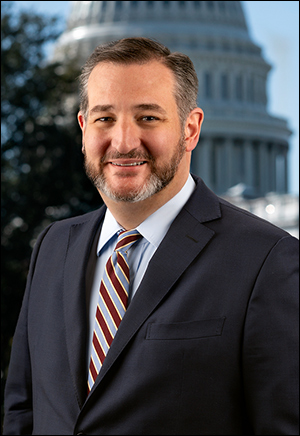
Texas Sen. Ted Cruz (R)

Texas: Cruz Polling Up for Renomination, Down for President — According to a Texas-based Republican pollster, Sen. Ted Cruz is in strong shape among prospective GOP primary voters for renomination, but not for a presidential campaign. The CWS Research firm recently conducted a Texas poll (Nov. 8-29; 860 likely Texas 2024 Republican primary voters; interactive voice response system and online) and finds the senator posting a strong 81 percent renomination score, but only records three percent support for another presidential bid.

The CWS poll leader is former President Donald Trump at 37 percent preference with Florida Gov. Ron DeSantis following closely with 34 percent. Former Vice President Mike Pence and ex-UN Ambassador and South Carolina Gov. Nikki Haley also finish slightly ahead of Sen. Cruz in his home state. Pence draws five percent backing and Haley four percent, as compared to Sen. Cruz’s three percent.

Senate

Arizona: Dem Primary Could Be Competitive — Apparently Rep. Ruben Gallego (D-Phoenix) is not the only Arizona Democratic congressman considering a run for the Senate. According to a report from the Daily Kos Elections site, Rep. Greg Stanton (D-Phoenix) — who served six years as mayor of Phoenix and nine years on the Phoenix City Council before being elected to the US House in 2018 — has conducted a statewide US Senate poll. If he were to run in what would now be an open US Senate Democratic primary since new Independent incumbent Sen. Kyrsten Sinema will advance directly into the general election, a tough battle would develop in an August 2024 primary between the two Phoenix-based congressional Democrats.

Rep. Stanton was re-elected in November with a 56-44 percent margin against a credible Republican, businessman Kelly Cooper. This, after his district was changed from a D+15 to a D+1 rating according to the FiveThirtyEight data organization calculations, meaning he rather impressively exceeded expectations.

House

VA-4: Special Election Scheduled — Gov. Glenn Youngkin (R) has surprisingly scheduled the special congressional election to replace the late Rep. Donald McEachin (D-Richmond) for Feb. 21. With Democrats certain to hold this seat in the special election, it was thought Gov. Youngkin would delay a bit longer, possibly to early April, in order to give the Republicans a further one-seat edge in the House party division count.

With the Feb. 21 general election date that will fast approach, the political parties must quickly assemble and determine how their nominees will be chosen. At this point, their realistic options are to nominate in a special district convention or hold a “firehouse primary,” that is an election with very few polling places around the district.

The Democratic nomination will be the contest to watch, since the 4th District is rated as D+30. At this point, state Sen. Jennifer McClellan (D-Richmond) and Delegate Lamont Bagby (D-Richmond) have announced their intention to file as candidates. For the Republicans, two-time nominee Leon Benjamin and insurance agent and frequent candidate Ron Wallace have declared that they will run.

Governor

Indiana: Sen. Braun Announces — First-term Hoosier State Sen. Mike Braun (R) made his obvious intentions to run for governor official Monday with his formal announcement. He will be a strong favorite for the Republican nomination, which gives him the inside track in the general election.

There is a good possibility that his Democratic opponent will be former US senator and current Ambassador to the Holy See, Joe Donnelly. The Holy See is the government of the Roman Catholic Church, which is led by the Pope in his role as the bishop of Rome. Ironically, this would set a re-match between the two men of the 2018 Senate race, a campaign that Sen. Braun won with a 51-45 percent victory margin. The Braun announcement now sets into motion a competitive Senate campaign that will likely feature a crowded Republican primary.

Former President Trump Announces, Already Polling Conflicts; Republicans Clinch House Majority

By Jim Ellis — Thursday, Nov. 17, 2022

President

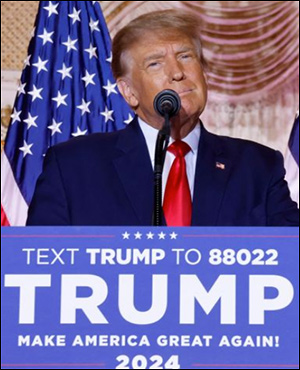
Former President Donald Trump announced that he will run for president in 2024.

Donald Trump: Officially Announces — Former President Donald Trump officially announced Tuesday night from his Palm Beach, Florida home in Mar-a-Lago that he will again run for president in 2024. He becomes the first official candidate in the next presidential race.

With controversy surrounding him and being tagged as the prime Republican loser in the 2022 elections because candidates he endorsed, supported, and in some cases recruited, went on to to lose their general election bids, Trump begins his new quest in a more weakened political position than he would have otherwise. It is now clear that he will not move unencumbered through the Republican nomination process as several candidates will eventually step up to challenge him in a fight as to who will become the party standard bearer.

Polling: Already Conflicts — Expect to see a plethora of polling released into the public domain for the 2024 presidential contest, and much of it will conflict with other data. Already, such a pattern has begun. Since the election, we’ve seen three Republican presidential primary polls being released.

YouGov, for the Economist periodical (Nov. 13-15; 432 US adults; online) posts Florida Gov. Ron DeSantis to a seven-point, 46-39 percent advantage over former President Donald Trump. A largely unfamiliar pollster, called Seven Letter Insight (Nov. 10-15; 542 US likely Republican primary voters) sees a similar result, Gov. DeSantis topping the former president, 34-26 percent. Morning Consult, polling for Politico, sees a much different result. Their survey (Nov. 10-14; 1,983 US registered voters) finds Trump with a sizable 47-33-5 percent result over Gov. DeSantis and former Vice President Mike Pence.

None of these polls should be taken particularly seriously. All are national polls, two of which have small samples and are not reflective of Republican primary voters casting ballots in state primaries.

House

Majority Status: Republicans Clinch — Late yesterday afternoon Pacific time, California US Rep. Mike Garcia (R-Santa Clarita) was projected the winner of his 27th District congressional race, which was enough to officially clinch the US House majority for the Republicans. The Garcia victory became the 218th GOP seat and with this result, four consecutive years of Democratic control comes to an end.

Rep. Garcia had led consistently throughout the 2022 race, and the size of his lead was somewhat surprising. Running for his second full term after winning a special election in early 2020 and being re-elected by a razor-thin margin in the regular election later that same year, Rep. Garcia was viewed as a highly vulnerable incumbent in heavily Democratic California.

In this current election, however, Garcia was projected the winner when holding a 54.2 percent preference factor with 78 percent of the vote tabulated. Obviously, his margin of 13,846 votes was enough to sustain even a late influx of Democratic votes.

Colorado: Projections Coming Soon — Tomorrow, we will reach the ballot acceptance deadline in Colorado. This means that, with all ballots finally in the system, we will soon see projections being made in the state’s two uncalled races, the 3rd District contest involving Rep. Lauren Boebert (R-Silt), and the new 8th District where state Rep. Yadira Caraveo (D-Eastlake) holds a slight 1,691-vote advantage over state Sen. Barbara Kirkmeyer (R-Weld County).

Party Division: Seven Seats Remain Uncalled — With four more seats being called yesterday, the overall House count now stands at 218R – 210D, with seven elections remaining to be called. In addition to Rep. Mike Garcia’s (R-CA) victory that clinched the Republican House majority, Reps. Mike Levin (D-CA), Jared Golden (D-ME), and state Rep. Andrea Salinas (D) in the new OR-6 seat were all projected as winners.

In the seven outstanding districts, both parties lead in three races, with the CA-13 contest headed to a potential seesaw ending where both candidates, state Assemblyman Adam Gray (D-Merced) and agribusinessman John Duarte (R), both have legitimate chances to win.

The three Republican advantage races are the CA-3 open seat, CA-22 (Rep. David Valadao), and CO-3 (Rep. Lauren Boebert). Democrats lead in AK-AL (Rep. Mary Peltola), CA-47 (Rep. Katie Porter), and the open CO-8 new district. CA-13 is too close to call.

2024 Presidential Polls Already Emerging; CNN Exit Polling Numbers; Senate Election Turnout Stats; Sen. Kennedy Planning to Run for Gov?

By Jim Ellis — Wednesday, Nov. 16, 2022

President

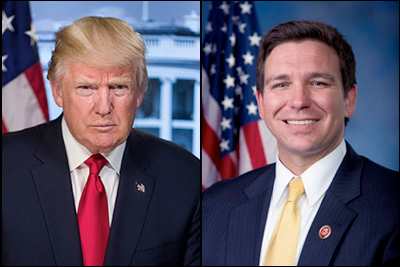
Former President Donald Trump; Florida Gov. Ron Desantis (R)

New Polling: Already Testing for 2024 — The House of Representatives isn’t even decided yet, and already we see a series of polls testing newly re-elected Florida Gov. Ron DeSantis (R) pitted against former President Donald Trump. The WPA Intelligence polling series finds the Florida governor opening up big Republican primary leads against Trump in several important nomination states: Iowa (+11), New Hampshire (+15), Texas (+11), Georgia (+20), and of course, Florida (+20). Count on presidential fever going non-stop for the next two years.

Voting

Exit Polling: CNN Releases Results — Though exit polling has not proven particularly accurate in past elections, looking at the results of the organization’s data still has value. A quick glance at the CNN data brings forth a couple of key observations. First, the Independent vote, which polling suggested through most of the election cycle was moving toward the Republicans, came back to the Democrats at election time. Self-described moderates were breaking Democratic, 56-41 percent. Those describing themselves as Independents voted Democratic in a 49-47 percent split. Within the cell segment, Independent women moved toward the Democrats in a 54-42 percent clip.

On the other end of the spectrum, Republicans actually were making their marks with minority voters, at least according to this data. Republicans were able to attract 39 percent of the Hispanic vote, 40 percent among Asians, and 13 percent with black voters. All of these numbers are an improvement from immediate past elections.

Additionally, while all men break toward the Republicans 56-42 percent, all women prefer the Democrats, 53-45 percent. Still, CNN measures that the national vote went Republican in a 51.3 – 46.7 percent swing even though Democrats held the Senate majority and it appears House control will come down to a minimum number of seats.

Senate

Senate States: Key Turnout Stats — Now that we are seeing closer to final turnout numbers in many places, we have derived some interesting participation statistics from the most competitive US Senate states.

In Georgia, the turnout may fall just short of the 4.0 million voters who cast ballots in 2018. The Nevada turnout, projected to just exceed the 1 million mark, will be an approximate four percent increase over 2018. In Wisconsin, once the final turnout report is released will likely show the same relative participation rate as recorded in 2018.

The Pennsylvania turnout looks to be up five percent from 2018. Florida, where Sen. Marco Rubio won an impressive 58-41 percent victory over US Rep. Val Demings (D-Orlando), who was clearly one of the strongest Democratic candidates in the nation, looks to be six percent under 2018’s total. In Iowa and Ohio, where Sen. Chuck Grassley (R) won an eighth term and Republican J.D. Vance held the open seat over US Rep. Tim Ryan (D-Warren/Youngstown), turnout appears to be down just under nine percent when compared to the 2018 participation rate in both states.

Governor

Louisiana: Sen. Kennedy Releases Poll — Armed with a fresh six years in the Senate with his 62 percent re-election vote against nine opponents, Sen. John Kennedy (R) is now admitting he is considering a run for governor next year when incumbent John Bel Edwards (D) will be ineligible to seek a third term. He then released a Torchlight Strategies poll (Nov. 9-12; 800 likely 2023 Louisiana jungle primary voters; live interview & text) that posted him to a 22-18-13-7-6 percent lead over state Transportation Secretary Shawn Wilson (D), attorney general and former Congressman Jeff Landry (R), Lt. Gov. Billy Nungesser (R), and fellow US Sen. Bill Cassidy (R), respectively.

Nebraska’s Gov. Ricketts to Become Sen. Ricketts? Dead Heats in CA-21 & FL-27; Oklahoma Shock Poll

By Jim Ellis — Tuesday, Oct. 11, 2022

Senate

Nebraska Gov. Pete Ricketts (R)

Nebraska: Gov. Ricketts Makes Succession Statement — Sen. Ben Sasse’s (R) resignation, to occur once he is confirmed as the University of Florida’s new president, has spurred discussion as to who will be appointed as Nebraska’s replacement junior senator. Term-limited Gov. Pete Ricketts (R), who refused to comment about his interest in assuming the position when Sen. Sasse announced his future plans, uttered a clarifying comment over the weekend.

Under Nebraska state law, a governor has 45 days to replace a resigning senator after the seat becomes officially vacant. Sen. Sasse indicated he will resign before the end of the year. Therefore, it is possible that Gov. Ricketts could make the appointment as one of his last official acts, or the likely incoming chief executive, University of Nebraska Regent Jim Pillen (R), would do so as one of his first duties.

Ricketts now indicates if he develops an interest in receiving the appointment, he will let the new governor choose the new senator and not appoint himself. In a crowded 2022 Republican gubernatorial primary, Gov. Ricketts endorsement of Pillen helped him win the nomination, so the early tea leaves are suggesting that the outgoing governor could be headed to the Senate.

New Hampshire: Dollars Changing Direction — Earlier, we speculated upon the National Republican Senatorial Committee eventually making the move to pull their media reservation dollars from New Hampshire and begin moving the money to places where the GOP candidate looks to be in better victory position — namely Nevada, Arizona, Georgia, and Pennsylvania. With the NRSC’s canceling its $2.6 million budget for the Boston market, as reported by the Adminpact and Daily Kos Elections organizations, the move has been made.

This, however, does not mean the Republican sector is abandoning New Hampshire, especially since polling still shows nominee Don Bolduc within high single-digits of Sen. Maggie Hassan (D). The Senate Leadership Fund and other outside right-of-center allies have reserved another $23 million in media time, so they are clearly not giving up on the NH Senate race even though the state and national party leadership overtly attempted to deny Bolduc his nomination.

House

CA-21: Rep. Costa in Dead Heat — The Trafalgar Group released the first post-primary survey of California’s new 21st Congressional District and the results reveal a surprising dead heat between Rep. Jim Costa (D-Fresno) and businessman and former FBI agent Michael Maher (R). The poll (Sept. 30/Oct. 3; 515 likely CA-21 general election voters; multiple sampling techniques) finds the two candidates tied at 44 percent.

While the Central Valley region is showing signs of voting more conservatively than the rest of the Golden State electorate, the Republicans taking this district would be quite a stretch. The FiveThirtyEight data organization rates the new 21st, which includes downtown Fresno, as D+16 while the Dave’s Redistricting App crew calculates a 58.2D – 39.7R partisan lean. In the jungle primary, Rep. Costa unexpectedly received just 47.0 percent of the vote, but the Democratic aggregate total was 57.0 percent.

FL-27: Tight Race Prediction Coming True — In 2020, Rep. Maria Elvira Salazar (R-Miami) upset then-Rep. Donna Shalala (D) from a South Florida district that votes Republican to a greater degree than the voter registration figures might suggest. The GOP redistricting map drawers made the seat more favorable for Rep. Salazar, but it still rates as a D+1 according to the FiveThirtyEight data organization and 52.4D – 46.5R on the Dave’s Redistricting App partisan scale.

Therefore, it is not surprising to see a SEA Polling & Strategic Design survey (Oct. 3-5; 400 likely FL-27 general election voters; live interview) finding state Sen. Annette Taddeo (D-Miami) and Rep. Salazar in a virtual dead heat (Taddeo, 47-46 percent). The poll also found Gov. Ron DeSantis (R) leading former governor and congressman, Charlie Crist (D), 50-44 percent within the 27th District, while Sen. Marco Rubio (R) held a 48-47 percent edge over Rep. Val Demings (D-Orlando).

Governor

Oklahoma: Shock Poll — Largely due to fallout from his Administration’s handling of some of the Covid 19 relief expenditures and attacks over his former business dealings, polling has suggested weakness for Gov. Kevin Stitt’s (R) re-election bid. Now we see a new survey that, for the first time, projects the governor falling behind his Democratic opponent, Superintendent of Public Instruction Joy Hofmeister (D).
The Sooner Poll, which surveys the Oklahoma electorate for various media outlets, released their new data (Oct. 3-6; 301 likely Oklahoma general election voters) and sees Hofmeister holding a surprising 47-44 percent lead. Though the Sooner Poll contains a very small sample and therefore a high error factor, it is becoming clear that this race will now draw further national attention.

Early Voting Open in Four States; Sen. Bennet Up Comfortably in Colorado; Utah Senate Polling Shows Close Results; Florida House Turmoil

By Jim Ellis — Tuesday, Sept. 27, 2022

Voting

Early voting has begun in Minnesota, South Dakota, Virginia, and Wyoming.

Voting Begins: Early Voting Open in Four States — The first general election votes of the 2022 election cycle will be received soon. The early voting calendar has opened in Minnesota, South Dakota, Virginia, and Wyoming. Ballots have been mailed to voters in North Carolina and Pennsylvania, so we can expect to see early voting commence in those two states, as well.

Most of the states return to their pre-2020 voting status, since the court-ordered Covid related universal mailing voting rules were in effect only for the previous election year unless the state enacted new electoral procedures in their 2021-22 legislative session. Even though the universal mail balloting provisions revert to previous law, 45 states now feature some type of early voting procedure.

Senate

Colorado: Sen. Bennet Up Comfortably — Emerson College tested the Centennial State electorate (Sept. 18-19; 1,000 likely Colorado general election voters; multiple sampling techniques) and found Sen. Michael Bennet (D) leading GOP businessman Joe O’Dea by a ten-point, 46-36 percent, margin. Republicans have tagged this race as an upset possibility, but this poll shows little weakness for the Democratic incumbent who is seeking his third full term.

Utah: Another Close Result — Polling data suggests that the Utah Senate race is the closest campaign that attracts the least national attention. A new Dan Jones & Associates survey for the Deseret News/Hinckley Institute of Politics (Sept. 3-21; 815 registered Utah voters; 786 likely general election voters) finds Sen. Mike Lee (R) ahead of Independent Evan McMullin by only a 37-34 percent margin. Though this poll has a very long sampling period, which adversely affects accuracy, it is consistent with some others we’ve seen of this race.

Early in September, both Impact Research and Kurt Jetta, polling for the Center Street PAC, found the candidates languishing within a combined four-point range. Impact Research actually found McMullen claiming a one-point edge.

Back in April, the majority of Utah Democratic Party convention delegates voted not to field a candidate for the purpose of coalescing behind McMullin. Though he is more conservative than what most of the delegates would have desired in a candidate, they did want to see McMullin have a one-on-one shot to challenge Sen. Lee.

House

FL-22: Rep. Deutch Announces Resignation Plans — In February, Florida Rep. Ted Deutch (D-Boca Raton) announced that he would leave the House before the end of the current legislative session in order to assume the leadership of the American Jewish Committee. At the time, Deutch said he would leave sometime on or around Oct. 1. Late last week, the congressman confirmed he will officially resign his seat before the end of September.

It is unlikely that Gov. Ron DeSantis (R) will have the time to call a special election to replace Deutch for a probable lame duck session since Florida law dictates a relatively long voting schedule period once such an election is called. Therefore, with the party nominations having been decided in the Aug. 23 primary, the new 23rd District will remain open until the new Congress convenes on Jan. 3, 2023. In the open seat general election, Broward County Commissioner Jared Moskowitz (D) is favored over Republican Joe Budd in a South Florida district that the FiveThirtyEight data organization rates D+9.

DeSantis Comfortably Ahead in Fla; Conflicting Results in Ga. Senate; McMullin Lead Reversed in Utah

By Jim Ellis — Friday, Sept. 23, 2022

Governor

Florida Gov. Ron DeSantis (R)

Florida: DeSantis Comfortably Ahead — We haven’t seen a Florida governor’s poll in weeks that showed enough change to report upon, but yesterday we two were almost simultaneously released. Both largely confirmed that Gov. Ron DeSantis (R) has a lead beyond the polling margin of error.

Civiqs, polling for the Daily Kos Elections site (Sept. 17-20; 617 likely Florida general election voters; online), posts the governor to a 52-45 percent advantage over former governor and recently resigned Congressman Charlie Crist (D). Suffolk University (Sept. 15-18; 500 likely Florida general election voters; live interview) derived similar results. They project the governor’s lead to be 48-41 percent over Crist.

Senate

Georgia: Conflicting Results — Continuing the seesaw political affair between Sen. Raphael Warnock (D) and former NFL and University of Georgia football star Herschel Walker (R), we reported yesterday that the new Atlanta Journal-Constitution/University of Georgia poll (Sept. 5-16; 861 likely Georgia general election voters) finds Walker leading Sen. Raphael Warnock (D), 46-44 percent.

Later in the day, YouGov, polling for CBS News (Sept. 14-19; 1,148 registered Georgia voters; online) released their Georgia survey that pushed voters to make a Senate race choice, and found the same two-point margin but in Sen. Warnock’s favor, 51-49 percent. The exhaustive poll asked 72 questions, and while Sen. Warnock is clearly more favorably viewed than Walker, the vote continues to remain virtually even. The University of Georgia and YouGov/CBS News surveys are even more evidence that the Georgia Senate campaign will be decided in a turnout battle.

Utah: McMullin Lead Reversed — It took awhile to rebuff the Impact Research group’s early September poll that posted Independent Evan McMullin to a 48-47 percent lead over two-term Utah Sen. Mike Lee (R), but we now see conflicting looks as to what may be happening in this largely under-the-radar Senate challenge. OnMessage (Sept. 13-15; 700 likely Utah voters; live interview), polling for the National Republican Senatorial Committee (NRSC), reports Sen. Lee to be holding a 51-34 percent advantage, a major difference from the Impact Research survey of two weeks earlier.

Following OnMessage, Lighthouse Research (Aug. 30-Sept. 13; 509 likely Utah voters), polling for the Utah Debate Commission, sees the senator holding a similar 48-37 percent margin over McMullin. Utah’s strongly Republican voting history suggests that these two latter polls finding Sen. Lee holding a substantial edge are likely more reflective of what will happen on Election Day.

House

WA-3: GOP Rebound — In late August, Expedition Strategies released a survey (Sept. 19-20; 400 likely WA-3 general election voters) that was cause for concern among local southwest Washington GOP activists and supporters. After Republican Joe Kent and Democrat Marie Gluesenkamp Perez denied Rep. Jaime Herrera Beutler (R-Battle Ground) advancement into the general election from the Aug. 2 jungle primary, ES released their survey that gave the Democrat a 47-45 percent lead in the general election.

Democratic pollster Public Policy Polling, surveying for the Northwest Progressive Institute, (Sept. 19-20; 834 WA-3 voters; live interview & text) now projects Kent to have overtaken Perez with a slight 47-44 percent margin. The WA-3 race is a must-win for the GOP if they are to reclaim the House majority, so this race merits further national attention.

Examining the Role of the RCV System in Alaska’s Special Election; Rep. Crist Resigns in Fla.; Indiana “Shock” Poll

By Jim Ellis — Friday, Sept. 2, 2022

House

Sarah Palin (R)

AK-AL: Sarah Palin Loses Special Election — The headline here is that former Alaska governor and 2008 GOP vice presidential nominee Sarah Palin fell to Democrat Mary Peltola in the at-large Alaska special election, and the first full usage of the state’s new Ranked Choice Voting (RCV) system was fully in play. Yesterday we reported the results; today we’ll delve into the RCV system that delivered those results.

At the end of the final counting, which was when the Aug. 16 deadline to accept ballots in the primary election expired, 60 percent of voters chose a Republican candidate. However, the RCV system yielded a Democratic victor. Therefore, in a system that is designed to create a majority candidate, in this case the RCV system produced a minority vote share winner.

The finalists from the jungle primary election began with Peltola, who recorded 40.2 percent of the vote. Palin secured 31.3 percent, and Nick Begich III (R) captured 28.5 percent. Begich III is the grandson of former Democratic US Rep. Nick Begich, Sr. (D), and the nephew of former US senator and ex-Anchorage Mayor Mark Begich (D). In finishing third, Begich was eliminated from further competition, and his first-place votes were located and then allocated to the remaining two candidates via the voters’ ranking.

Former state Rep. Mary Peltola (D) winner of the Alaska special election race.

As we predicted, based upon the experiences of other states and cities that have used the RCV system, a large number of votes were disqualified, or “exhausted” to use the Alaska vernacular.

Of the 192,158 individuals who participated in the special election and/or regular primary, a total of 3,401 ballots were listed as “blank,” meaning the individuals voted in the election but bypassed the special congressional contest. Another 342 ballots were categorized as “overvotes.” This terminology suggests the owners of such ballots voted incorrectly. Typically, it means the individual, presumably inadvertently, voted more than once for the same candidate, thus disqualifying the ballot.

The categories that likely cost Palin the election, despite the large majority voting for a Republican candidate, came in RCV’s Round 2. In that round, a total of 11,222 Begich voters did not properly manage the RCV system on their ballots, which was to rank the three candidates in the order of the individual voter’s preference.

Lawyers who challenged the RCV system in other places around the country warned that their experience showed a large number of disqualified, or “exhausted,” ballots would be present here, which certainly proved to be the case.

This latter number added to the initial overvotes, meant a total of 11,269 Begich first-place voters saw their ballot disqualified, more than twice the number of votes (5,219) that comprised Palin’s deficit against Peltola’s final victory total. Adding this number to those who chose to bypass the special congressional race meant that 14,965 individuals who voted in this election failed to have their ballot count in the RCV process.

The second category leading to Palin’s demise were the 15,445 individuals who voted for Begich on the first ballot, but decided to support Peltola with their second choice. This is a much higher number than our pre-election estimate projection, and are chiefly responsible for the ex-governor failing to win the general election.

A possible reason that some of these voters chose Peltola is that the Begich name identification comes from the current candidate’s family predecessors mentioned above who were, and are, affiliated with the Democrats. It is possible that the multiple confusion factors present in this race also extended to Begich’s name, with many traditional Democratic voters still thinking he is a member of their party and not noticing his Republican label on the ballot.

Also adding to the confusion factor was the RCV system being used only in this special general election that was run concurrently with the regular state primary. In all other races on Aug. 16, voters were simply choosing one candidate to advance into the general election, where four jungle primary candidates from each race would do so. Therefore, the almost 15,000 ballots being disqualified before the end of the RCV special election process suggests a large amount of confusion within the electorate.

With the same three finalists again advancing into the regular election from the regular congressional primary, which was also held on the same day (Aug. 16), thus producing one more confusion factor, we could see a rerun of the RCV results in the November election. If either Palin or Begich were to withdraw from the regular general election, however, Peltola’s fate would then likely be sealed, since the Republican vote would then presumably overwhelm the number of her Democratic preference ballots.

While the intrigue associated with this one race has now been resolved, new questions will immediately begin to unfold for the impending general election. For now, however, Mary Peltola will be sworn in as the House of Representatives’ newest member.

FL-13: Rep. Crist Resigns — Congressman Charlie Crist (D-St. Petersburg) resigned his Pinellas County-anchored US House seat Wednesday in order to fully concentrate on his gubernatorial campaign. Crist won the statewide Democratic primary on Aug. 23 and will face Gov. Ron DeSantis (R) in the general election. Another member of the Florida congressional delegation, Rep. Ted Deutch (D-Boca Raton), who announced in February that he would leave Congress to become the CEO of the American Jewish Committee, will reportedly officially resign on Oct. 1.

With the Crist and Deutch resignations, the Democrats will be down to 220 seats in the House even after adding New York Rep. Pat Ryan (D-Poughkeepsie) after his special election victory certification and the Alaska at-large seat where Democrat Mary Peltola was declared the special election winner. It is unclear if Gov. DeSantis will call a special election to fill the Florida vacancies or just leave them vacant until the new term begins in January.

Senate

Indiana: Shock Poll — Hoosier State Democratic US Senate nominee Tom McDermott’s campaign released the results of their recently conducted Change Research poll (Aug. 20-24; 2,111 likely Indiana general election voters; online), which posted Sen. Todd Young (R) to only a 45-42 percent lead. The Indiana Senate race had been considered non-competitive. The Young campaign responded with criticism over the online methodology and weighting system that Change Research employs. Expect the Young campaign to quickly counter this data with a poll release of their own.

Governor

South Carolina: Gov. McMaster Leading in Consecutive Polls — In a race that had not been polled during the general election period to-date, two new surveys were released on consecutive days. Yesterday, we reported that Gov. Henry McMaster (R) led in The Trafalgar Group survey (Aug. 25-28; 1,071 likely South Carolina general election voters; multiple sampling techniques) by a 51-43 percent margin over former Congressman Joe Cunningham, who won the Democratic nomination back in the June primary.

The next day’s polling release featured a survey from the Democratic firm, Blueprint Polling (Aug. 24-25; 721 likely South Carolina general election voters; live interview), that actually posted McMaster to a larger lead than the Trafalgar result, 50-39 percent.