Tag Archives: Texas

Rep. Yoho to Retire; Texas Filings

By Jim Ellis

Dec. 12, 2019 — Keeping his pledge to serve only four terms in the House, Florida Rep. Ted Yoho (R-Gainesville) announced in a local radio interview earlier this week that he will not seek re-election next year. Also, the 2020 Texas candidate filing deadline came on Monday, and lists of the qualifying candidates are now becoming public.

REP. YOHO, FL-3
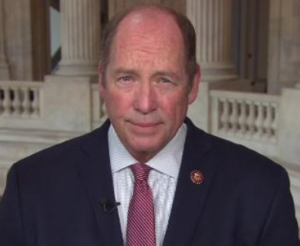
Florida Rep. Ted Yoho (R-Gainesville)

There had been some speculation brewing as to Yoho’s plans for 2020 with some suggesting he might eschew his original pledge. Making this now the 37th open House seat and second in Florida, potential candidates will have until May 1 to file for the Aug. 25 primary.

The eventual Republican nominee will clearly have the inside track to hold this seat for the GOP. Florida’s 3rd District is strongly, and consistently, Republican. President Trump scored 56.2 percent of the vote in 2016. This number is almost identical to the 56.6 percent that Mitt Romney posted against President Obama in 2012, and John McCain’s 54.6 percent that he garnered in the 2008 presidential election.

Rep. Yoho has averaged 61.0 percent of the vote here over four elections, but the district was significantly changed in the 2015 mid-decade court-ordered redistricting plan. In the current configuration, Yoho averaged almost exactly what the Republican presidential candidates scored: 57.2 percent in his two elections since the boundary alteration.

The 3rd District occupies five whole counties and parts of a sixth. The major population center is the city of Gainesville in Alachua County. The remaining portion of the CD is nestled squarely in the north/central section of the Florida peninsula.

Three Republicans had already announced their candidacies, but none seems particularly viable. The contender raising the most money through the Sept. 30 financial disclosure period is businesswoman Amy Pope Wells, but her receipts showed just under $40,000 raised for the campaign with a cash-on-hand figure of just under $8,500.

Continue reading

House 2020 Overview

By Jim Ellis

Dec. 3, 2019 — Now that two states have already completed their congressional candidate filing (Alabama and Arkansas) and five more are scheduled for December including Illinois, which closed yesterday, it is time to begin to ascertain where US House politics might reasonably stand right now.

California (Dec. 6), Texas (Dec. 9), Ohio (Dec. 11), and North Carolina (Dec. 20 – on hold due to court order), are the other states with candidate deadlines this month. At the end of December, the seven filed states including North Carolina, would account for 129 congressional district candidate slates.

Currently, the party division yields four vacant House seats — two from each party. Of the 431 seats with representation, Democrats hold 233 and Republicans have 197, along with one Independent — Michigan Congressman Justin Amash (I-Cascade Township/ Grand Rapids), who left the Republican Party earlier this year.

Comparing the current ratings for each district against where the seats stood a year before the 2018 election finds that 82 political situations have changed ratings with most moving away from the Republican column and toward the Democrats, but not in all cases.

Currently, 75 districts fall into either the Toss-up, Lean Democrat, or Lean Republican categories. This assumes that the four vacancies — CA-25 (Katie Hill-D), MD-7 (Elijah Cummings-D), NY-27 (Chris Collins-R), WI-7 (Sean Duffy-R) — all remain with their current party in upcoming special elections.

Adding another assumption concerning the House outlook involves the newly adopted court-ordered North Carolina congressional map, the third of this decade. On its surface, these latest district boundaries would net the Democrats at least two seats, those that Reps. George Holding (R-Raleigh) and Mark Walker (R-Greensboro) currently represent.

Both parties are lodging new legal challenges to the map, and the state’s Dec. 20 candidate filing deadline is on hold for the US House candidates until the legal situation is resolved. For the purposes of this analysis, the new North Carolina map is inserted into the national overlay, thus increasing the Democratic conference by two seats.

Of the 75 lean and toss-up seats, 36 are currently in the Democratic column and 38 lie in Republican hands. The remaining seat belongs to Independent Rep. Amash. Looking at how the seats might break right now, it appears that 33 are rated as Lean Democratic with 30 categorized as Lean Republican. The remaining dozen, including the Amash seat, are considered toss-ups.

Continue reading

Super Tuesday Senate Primaries

Super Tuesday 2020 States and Territories; *Important Senate primaries will also be occurring in four states — Texas, Arkansas, Alabama & North Carolina


By Jim Ellis

Nov. 26, 2019 — Super Tuesday is scheduled for March 3, and while the national focus will be on the 14 states and one territory whose electorates will vote in the Democratic presidential nomination contest, important Senate primaries will also be occurring in four states. Five places moved their regular-cycle primary to run concurrently with the early March presidential vote, and four from this group host 2020 Senate campaigns. The lone exception is California.

The Alabama Senate contest has drawn much attention lately since former US Attorney General and ex-Sen. Jeff Sessions has re-emerged as a candidate. His nomination is not a foregone conclusion, however. He faces a significant field of Republican opponents on March 3, all of whom became candidates before he decided to run again.

Along with Sessions, Alabama Secretary of State John Merrill, US Rep. Bradley Byrne (R-Mobile), retired Auburn University head football coach Tommy Tuberville, former state Supreme Court Chief Judge and 2017 Senate special election nominee Roy Moore, and state Rep. Arnold Mooney (R-Shelby County) comprise the credible candidate field.

Polling since Sessions returned to the race suggests that both the former senator and Coach Tuberville would advance to an April 14 run-off, but campaign prime time still remains, and much could change. Though Sessions has a residual base, he is unlikely to win the nomination outright against this field, none of whom have departed the race since his return. Therefore, the eventual nomination victor is still in doubt. The winner will face Sen. Doug Jones (D) in the general election.

Arkansas Sen. Tom Cotton (R) stands for a second term and currently has no opponent. Democratic businessman and former congressional candidate Josh Mahony had been traveling the state to organize support from local party leaders and became the sole filer at the deadline against Sen. Cotton, but then ended his effort just two hours after submitting his candidate documentation citing family issues. Since the Democrats have no candidate, the party will convene to choose a replacement nominee. Regardless of whom they select, Sen. Cotton looks solid for re-election.

Continue reading

Filings & Primaries

By Jim Ellis

Nov. 22, 2019 — As we approach the end of this year, two states have already held their 2020 candidate filings and six more will do so in December. This sets the stage for eight statewide primaries in March, four from large states. Mississippi, with a March 10 primary, set its filing deadline for Jan. 10.
In total, and in addition to the presidential campaign, filings during this period in these states have occurred or will occur for six Senate races and 151 US House districts. All five Super Tuesday primary states will host US Senate contests and hold an aggregate of 113 congressional districts.

Alabama and Arkansas have already filed, and the major stories coming from these places as already covered were former US Attorney General and senator, Jeff Sessions, again declaring for his former position and the lone Democrat challenging Arkansas Sen. Tom Cotton (R) dropping out of the race just two hours after he had filed. In the pair of states, two House incumbents, Alabama Rep. Terri Sewell (D-Birmingham) and Arkansas Rep. Rick Crawford (R-Jonesboro), are totally unopposed in their 2020 campaigns.

The other states heading for December candidate filing deadlines are Illinois on Dec. 2; California, Dec. 6; Texas, Dec. 9; and Ohio, Dec. 11. North Carolina is currently scheduled for Dec. 20, but it is conceivable that the pending redistricting lawsuits could potentially postpone the state primary and thus the qualifying candidate deadline.

The five Super Tuesday (March 3) primary states are: Alabama, Arkansas, California, North Carolina, and Texas.

Alabama has the first Senate primary and that will likely determine which two of the six major Republican candidates move into an April 14 run-off election. Currently, polling suggests that former Sen. Sessions and Auburn University retired head football coach Tommy Tuberville would advance to a run-off. Secretary of State John Merrill, US Rep. Bradley Byrne (R-Mobile), and former state Supreme Court Chief Judge and 2017 US Senate special election nominee Roy Moore round out the group of main competitors. The eventual nominee will face Sen. Doug Jones (D) in the November campaign.

Two open seat congressional races, both in South Alabama, will almost assuredly go to run-offs, though the eventual Republican nominee in the respective districts will be heavily favored to replace Reps. Byrne and Martha Roby (R-Montgomery), who is retiring.

The March 3 primary is relatively inconsequential in Arkansas since it appears the general election is relatively set. Since the Democrats have no candidate in the Senate race, the party structure will meet to nominate a consensus candidate for a ballot slot in the general election.

Continue reading

With Beto Out … Will the Rest
of the Dominoes Start to Fall?

Beto O’Rourke | Facebook Photo

By Jim Ellis

Nov. 5, 2019 — Former US Rep. Beto O’Rourke (D-TX) ended his presidential campaign Friday, joining Rep. Eric Swalwell (D-CA), ex-Colorado Gov. John Hickenlooper, Washington Gov. Jay Inslee, US Rep. Seth Moulton (D-MA), New York Sen. Kirsten Gillibrand, New York City Mayor Bill de Blasio, and US Rep. Tim Ryan (D-OH) as 2020 national contenders who are no longer in the race.

O’Rourke’s concession statement made reference to departing because he no longer possesses adequate resources with which to compete. Beginning as a top tier candidate with a strong financial base, his effort rapidly crumbled largely due to ill-advised comments, poor debate performance, and calling for assault weapon confiscation, which did not reinvigorate his campaign as he expected. O’Rourke had hoped to use the latter issue to begin cracking into the party’s far-left faction that Sens. Elizabeth Warren (D-MA) and Bernie Sanders (I-VT) seemingly have cornered.

Democratic leaders had from the outset attempted to persuade O’Rourke to challenge Texas Sen. John Cornyn (R) instead of running for president, but they were ignored. In his statement announcing the end of his national campaign, the former congressman addressed the speculation that he might return to Texas to challenge Cornyn, but again ruled out running for that office or any other in 2020.

How does the Democratic race change now that O’Rourke has departed? Largely, his move could be a precursor of many more exits to come. At this point, it is clear three candidates occupy the top tier and separation exists between them and the rest of the pack. Former Vice President Joe Biden and Sens. Warren and Sanders maintain the top three positions in virtually every poll, and it is reasonable to expect that one of them will eventually become the Democratic nominee.

South Bend Mayor Pete Buttigieg has recently made a resurgence after lagging in single digits since the second nationally televised debate in July. Concentrating on fundraising and organization, Buttigieg’s efforts have proven worthwhile. Raising $19.1 million just in the third quarter, placing him behind only Sanders ($25.3 million raised in Quarter 3) and Warren ($24.6 million) during that period, the mid-size city mayor has brought in over $51.5 million since the onset of his presidential campaign.

Continue reading

Biden Showing Up Strong in North Carolina – But Is It Enough?

Former vice president and 2020 Democratic presidential candidate, Joe Biden

By Jim Ellis

Oct. 11, 2019 — Raleigh-based Public Policy Polling just released their latest North Carolina survey (Oct. 4-6; 963 likely North Carolina voters, 410 likely North Carolina Democratic primary voters) Wednesday, which projects a two-person race developing in the Tar Heel State as former Vice President Joe Biden leads Sen. Elizabeth Warren (D-MA), 39-22 percent. South Bend Mayor Pete Buttigieg receives nine percent support, while Sen. Bernie Sanders (I-VT) earns only a disappointing six percent. All other candidates fail to break the three percent level.

North Carolina is one of the Super Tuesday states, a state whose electorates will cast ballots on March 3, the largest voting day of the nominating season. On March 3, a total of 14 states and one territory will host primaries or caucuses, seven of which come from the south. It is here where former Biden would have to make his stand, since his southern numbers are the best of any candidate by a wide margin.

The question being posed is whether a sluggish Biden start in the first three voting states, Iowa, New Hampshire, and Nevada, where he could conceivably fail to place first in any, would derail his momentum to the point of lessening his southern advantage.

Making rudimentary delegate calculations from the 19 entities that would vote on or before Super Tuesday, we find that current polling would place the former vice president in the lead on the evening of March 3, but that his delegate edge would certainly not be dominating.

To re-cap, based upon the latest polling from Iowa, New Hampshire, and Nevada, the delegate estimate prior to South Carolina would find the former VP and Sen. Warren tied with 37 delegates apiece, while Sen. Sanders would have 27, meaning a virtual three-way tie despite Biden not winning any of the states outright. If he can stay in the hunt — with neither of his key opponents establishing themselves as a clear leader — the tide turns Biden’s way.

Continue reading

Democratic National Convention Shaping Up to be Historic

By Jim Ellis

Oct. 8, 2019 — At this point, Democratic presidential primary patterns are beginning to reveal themselves.

The February First Four states are becoming a hodgepodge of political strength with both Sens. Elizabeth Warren (D-MA) and/or Bernie Sanders (I-VT) potentially stealing Iowa and New Hampshire away from national front-runner Joe Biden. That means the former vice president may have his back up against the proverbial wall when the campaign streams into Nevada, the third voting state whose caucus participants will convene on Feb. 22. He may well need a victory there, before getting to South Carolina and his southern states political oasis.

As the new Fox News South Carolina Democratic primary poll shows (Sept. 29-Oct. 2; 803 likely South Carolina Democratic primary voters), Biden’s lead is very strong in the Palmetto State at 41-12-10 percent over Sens. Warren and Sanders, respectively. These numbers are commensurate with his standing in other recently polled southern domains.

But new data coming from delegate-rich states that are not frequently polled give us a further perspective about just how the nomination drama might unfold.

Four new state surveys were released at the end of last week with clear separation only detected in Arizona. Data coming from California and Ohio show dead heats among the three major candidates. Additionally, the latest Wisconsin poll gives Biden only a small lead.

The first three states in this group will vote in March, on Super Tuesday (March 3, California), March 10 (Ohio), and March 17 (Arizona). The fourth state’s electorate, Wisconsin, will cast their ballots on April 7.

Change Research (Oct. 27-28; 396 likely Arizona Democratic primary voters) finds that Arizona is polling as one of the ex-vice president’s weakest states and the only one that shows a relatively competitive four-way race. The Change results finds Sen. Warren claiming a significant lead with 35 percent support, ahead of Sen. Sanders’ 19 percent, Biden’s 15 percent, with South Bend Mayor Pete Buttigieg making a viable appearance with 13 percent preference.

Continue reading