Tag Archives: Texas

Polling vs. Delegates:
“The Game Within the Game”

By Jim Ellis

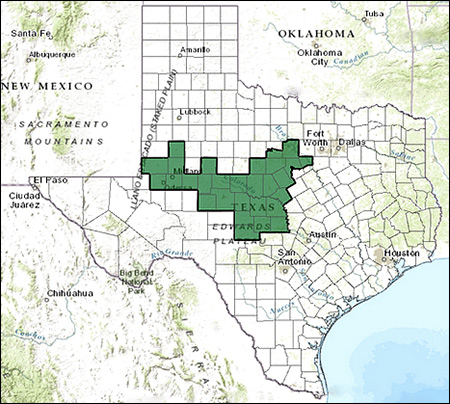
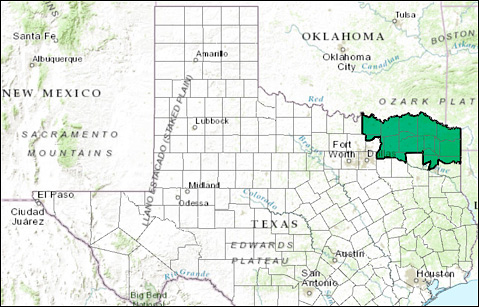
Texas state senate districts

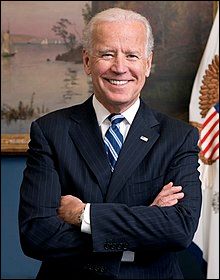
June 7, 2018 — Quinnipiac University released their latest Texas poll (May 29-June 4; 1,159 registered Texas voters) and it finds former Vice President Joe Biden doing well in opponents’ Beto O’Rourke and Joaquin Castro’s home state.

According to the results, Biden heads the Lone Star State Democratic presidential field and is the only candidate to top President Trump when the president is isolated against each competitive Democrat (Biden over Trump: 48-44 percent).

Arguably, Texas, with its 38 Electoral Votes and the largest cache that a Republican candidate can generally claim, is Trump’s most important state. Losing here would likely mean forfeiting the presidency. There is no mathematical way to compensate for Trump failing to win Texas’ electoral votes and still allow him a path to reach the 270 Electoral Votes to claim a national victory.

In the Democratic primary, scheduled for Super Tuesday, March 3, Biden leads the pack of candidates with 30 percent of the vote, topping ex-Rep. O’Rourke (16 percent), Sen. Bernie Sanders (15 percent), Sen. Elizabeth Warren (11 percent), and the nine others who recorded between one and four percent statewide support.

Sens. Amy Klobuchar (D-MN), Kirsten Gillibrand (D-NY), Michael Bennet (D-CO), Govs. Jay Inslee (D-WA) and Steve Bullock (D-MT), Reps. Tulsi Gabbard (D-HI), Eric Swalwell (D-CA), Seth Moulton (D-MA), and Mayors Bill de Blasio (New York, NY), Wayne Messam (Miramar, FL), failed to reach the one percent plateau.

But, how would such a vote split translate into delegates for the participating candidates? Under Democratic Party rules, each state has both at-large and district delegates. Another group, called PLEO’s, are comprised of state and local Democratic Party leaders along with elected officials.

Continue reading

The Early Primary Cycle

By Jim Ellis

June 6, 2019 — Looking at the 2020 primary calendar, it is obvious that the presidential race is already having an impact upon what is becoming an accelerated congressional campaign schedule in many states.

The analysts for the Daily Kos Elections website released their research posting all of the 2020 state primary dates giving us a better indication of which congressional primaries will be held earlier than their traditional scheduled primary slot.

Several states that have moved to early presidential primary dates have also transferred their entire ballot, meaning the congressional cycle will start earlier than usual for many members and challengers.

Texas and Illinois are typically the first states to hold primary elections, and they are again at the forefront of the congressional calendar. Texas will hold its presidential and congressional nominating elections on March 3, which will become the 2020 Super Tuesday. Illinois, along with Florida and Arizona, will vote on March 17. But, on that date, only Illinois will hold congressional nomination elections.

Next year, however, several other states, will join Texas with a full ballot primary on March 3.

Continue reading

Electoral Vote Compact Takes a Hit

By Jim Ellis

June 3, 2019 — Recently, Sen. Elizabeth Warren (D-MA) spoke one of her strongest applause lines on the presidential campaign trail, when she talked about eliminating the Electoral College. And the National Popular Vote Interstate Compact organization had been gaining significant energy when Colorado, Delaware, and New Mexico officially joined its ranks earlier this year. But, that momentum hit a major roadblock yesterday.

The National Popular Vote Interstate Compact, or NPVIC, began soon after the 2000 presidential election when Democratic nominee Al Gore won the popular vote count but fell to George W. Bush in the Electoral College. The result marked the first time since the 1888 election when the popular vote winner failed to win the presidency.

By 2007, Maryland became the first state to officially join the NPVIC. Today, 14 states are Compact members, representing 189 Electoral Votes. The organization’s stated goal is to recruit enough states to equal a majority of 270 EVs that will agree the respective members will deliver its Electors to the national popular vote winner regardless of how their own electorate votes.

However, the Maine House of Representatives, on a 76-66 vote, defeated legislation late last week to add their state to the growing NPVIC organization. And, Nevada Gov. Steve Sisolak (D), in a surprise move to some, vetoed the compact legislation that had reached his desk. Earlier in the Oregon legislative session, the state Senate passed its bill to join the compact and action is awaited in the House before the legislative session’s scheduled end on June 21.

Continue reading

The 2020 Democratic Nomination
Will Look Much Different From 2016

By Jim Ellis

May 24, 2019 — As the Democratic presidential field swells to 24 candidates — with the first Democratic presidential forum on tap for late June in Miami, and the first votes being cast in Iowa now just over eight full months away — it’s a good time to review how different this presidential nomination contest will be from the 2016 version.

To review, Hillary Clinton won 34 primaries and caucuses in 2016 as compared to 23 for Sen. Bernie Sanders (I-VT). There are 57 sanctioned delegate voting entities in the Democratic nomination universe. The 57 are comprised of the 50 states, the District of Columbia and the five territories, and a Democrats Abroad category that combines all US citizens living in foreign countries who will still have voting privileges in US elections.

Clinton won 55.2 percent of the 2016 national Democratic popular vote versus Sen. Sanders’ 43.1 percent when combining the totals from all the primaries and caucuses. Though the Sanders Campaign called foul over the Super Delegate voting inflating Clinton’s delegate total, and actually turning six states’ first-ballot roll call from Sanders to Clinton and sending one more state into a tie, Clinton still carried the pledged, or elected delegate, count 2,205 to 1,846, translating to a 54.4 percent margin. When adding the Super Delegate and uncommitted delegate votes, she captured 58.3 percent of the convention total.

Continue reading

Weekly Political Synopsis,
Period Ending May 17, 2019

By Jim Ellis

PRESIDENT
• Gov. Steve Bullock: As has been expected for some time, Montana Gov. Steve Bullock (D) officially announced his presidential effort this week, becoming the 23rd Democratic candidate. Bullock made the argument that he will be an effective national candidate because he’s won two elections in a conservative state and has been able to earn legislative achievements, like Medicaid expansion, in negotiating with Republican leaders.

• Mayor Bill de Blasio: Following Gov. Bullock, New York City Mayor Bill de Blasio released an announcement video at the end of the week making him the 24th Democratic presidential candidate for the 2020 election cycle. His declaration centered around being the candidate for “working families,” and cited the $15 minimum wage, a free pre-K school program, a comprehensive healthcare program that especially covers mental health, and paid sick leave.

• Florida: Former Vice President Joe Biden continues to see strong polling numbers, with the latest data coming from Florida. The Tel Opinion Research organization is reporting its latest results (released May 8; 800 likely Florida Democratic primary voters) that show Biden pulling away from his Democratic opponents on an open-ended ballot test poll. An open-ended ballot test is one where the respondent is not given the candidates’ names. That approach tests for committed strength.
According to Tel Opinion, Biden leads Sen. Bernie Sanders (I-VT), 39-16 percent, with Sens. Elizabeth Warren (D-MA) and Kamala Harris (D-CA) each pulling only five percent support. South Bend (IN) Mayor Pete Buttigieg follows at three percent preference. All of the candidates scored well on the favorability index scale. Biden is viewed positively with an 81:13 percent ratio, where Sen. Sanders’ score is 68:23 percent.

SENATE
• Arizona: Phoenix-based pollster OH Predictive Insights released their latest data from their May 1-2 poll (600 likely Arizona voters) where they queried the respondent universe about the impending Senate race between appointed Sen. Martha McSally (R) and retired astronaut Mark Kelly (D). Though we are more than a year before Arizona’s 2020 late August primary, the chances are strong that the aforementioned will be their respective party standard bearers.
According to the OH poll results, the early race again earns toss-up status. The sample breaks 45-44 percent in Sen. McSally’s favor, which is virtually identical with the firm’s late February poll giving the incumbent a 46-44 percent edge.

Continue reading

Will Schilling Become a 2-State Rep?

By Jim Ellis

Republican Bobby Schilling

May 14, 2019 — In a dozen instances throughout American history a person has been elected to the House of Representatives from one state, departed Congress for whatever reason, moved to another domain, and then won an additional congressional election, or elections, from the adopted place.

Republican Bobby Schilling served one term in the House from western Illinois’ 17th District, losing his re-election bid in 2012. Relocating across the Mississippi River to Iowa in 2017, former Representative Schilling is reportedly looking to make a political comeback. It is expected that he will soon announce his candidacy for the Hawkeye State’s open 2nd Congressional District.

If the ex-Illinois representative were to win the Iowa seat, he would become the 13th person in American history to represent two different states in the House of Representatives. It last occurred when former Texas congressman, Ed Foreman (R), won a New Mexico US House seat in the 1968 election. Prior to that, the two-state switch had only happened one other time since the turn of the 20th Century.

Interestingly, the same number of individuals, 12, have represented two states by serving first in the House, moving, and then winning a Senate seat from the secondary place. The most famous of these is Sam Houston, who served in the House from Tennessee and as governor before helping found Texas as a country and state, and then subsequently serving as its president and US senator, respectively.

Schilling, a local restaurant owner, first won his Quad Cities anchored seat in the Republican landslide year of 2010, defeating then-two-term Rep. Phil Hare (D-Rock Island). But, in a redistricting year from a process the Democrats controlled, and with President Obama running for re-election at the top of his home state ballot in 2012, Schilling was unable to politically survive in the more Democratic district.

Continue reading

Texas by the Numbers

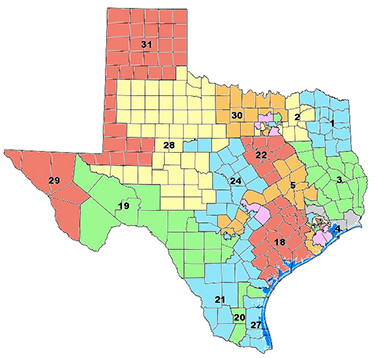
Map of US Congressional districts in Texas


By Jim Ellis

May 2, 2019 — The Lone Star State continues to move toward competitiveness, meaning the Texas political apparatus will see new approaches from both parties in the 2020 election campaigns.

A new Emerson College poll (April 25-28; 779 likely Texas voters, 342 likely Democratic primary voters, 344 likely Republican primary voters via Interactive Voice Response system) finds President Trump tied with two of the Democratic presidential candidates and only slightly ahead of the rest of the field. And, in Democratic Party trial heats, the results project an equally close potential finish for the state’s 228 first ballot delegates.

According to the Emerson numbers, President Trump would slightly trail former Vice President Joe Biden with each man finishing in the 50 percent realm. Trump is then slightly ahead of Texas former Rep. Beto O’Rourke (D-El Paso) but, here too, both men are in the 50 percent realm.

The president fares better against the others, but even they are within striking distance of him in what is arguably his most important state. With 38 Electoral Votes, Texas was the only big state that Republicans could count upon winning without having to campaign, but apparently those days are over.

The next closest Democrat is Vermont Sen. Bernie Sanders. He trails by two points, 51-49 percent. The president has healthier margins against Sen. Kamala Harris (D-CA) and South Bend (IN) Mayor Pete Buttigieg, ahead of both, 54-46 percent, and tops Massachusetts Sen. Elizabeth Warren, 53-47 percent. The fact that all scenarios present no undecideds tells us the pollsters prodded respondents for a definitive answer or are extrapolating some of the results.

Continue reading

Texas Race Forming

By Jim Ellis

Texas Sen. John Cornyn (R)

April 25, 2019 — Three-term Texas Sen. John Cornyn (R) is obviously anticipating a tough 2020 fight for re-election. During this year’s first quarter, he led all incumbents in fundraising bringing in $7.8 million to his campaign account and ending the period with $7.4 million cash-on-hand.

It appears the senator will have credible opposition, but quite possibly not the person who most people believed would enter the race.

Though he still hasn’t confirmed or denied that he will become a Senate candidate, reading the figurative political tea leaves suggests that Rep. Joaquin Castro (D-San Antonio) will not run statewide. But, retired Army helicopter pilot, M.J. Hegar (D), will challenge the veteran incumbent who was Texas’ attorney general and a state Supreme Court Justice before running for federal office.

Hegar, who raised more than $5.12 million for her race against veteran Rep. John Carter (R-Round Rock), to whom she lost, announced Tuesday that she is entering the Texas Senate campaign. Though her 2018 announcement video entitled “Doors” (below) — which detailed her wartime heroism and attracted more than 3 million viewers — didn’t result in victory in a strong Republican district against a popular incumbent (she lost 51-48 percent), it did put her on the national political map and raised her status to that of a national congressional candidate and led to her strong fundraising effort.


M.J. Hegar’s “Door” video


Earlier in the year, Rep. Castro began making statements strongly hinting that he would run for the Senate. But, his actions and the latest developments suggest otherwise.

First, there appears to be no internal momentum associated with his building a major campaign. Leading to that conclusion is Castro’s own first quarter fundraising support. From Jan. 1 through March 31, the four-term incumbent and former Texas state representative raised only $36,028 and has just $87,572 in his campaign treasury.
Continue reading

The Early Targets

By Jim Ellis

April 3, 2019 — Continuing our early outlook of the 2020 House situation, we can begin by narrowing the field to those districts where Republicans will be concentrating at least their initial efforts in order to reclaim the majority they lost in November.

After the 2016 election, there were 12 districts that supported President Trump but elected a Democrat to the House. After the 2018 midterm, that number rose to 31. For the Republicans to regain the majority, they will need to convert a net 18 seats back to their column, or 19 if the Democrats score a victory in the NC-9 special election to be held later this year in the Charlotte-Fayetteville metro areas in southern North Carolina.

The other two House special elections, PA-12 (May 21) and NC-3 (Sept. 10), unless huge upsets occur, look to remain within the Republican stable of districts.

Of the 31 Trump/House Democrat seats, 16 of them also voted for Mitt Romney over President Obama in 2012. Furthermore, a dozen within this group elected a Republican Representative until the 2018 election. They are:

  • GA-6 – Rep. Lucy McBath (D) – Defeated Karen Handel (R)
  • IL-14 – Rep. Lauren Underwood (D) – Defeated Randy Hultgren (R)
  • MI-8 – Rep. Elissa Slotkin (D) – Defeated Mike Bishop (R)
  • MI-11 – Rep. Haley Stevens (D) – Replaced David Trott (R)
  • NJ-11 – Rep. Mikie Sherrill (D) – Replaced Rodney Frelinghuysen
  • NM-2 – Rep. Xochitl Torres Small (D) – Replaced Steve Pearce (R)
  • NY-22 – Rep. Anthony Brindisi (D) – Defeated Claudia Tenney (R)
  • OK-5 – Rep. Kendra Horn (D) – Defeated Steve Russell (R)
  • SC-1 – Rep. Joe Cunningham (D) – Replaced Mark Sanford (R)
  • UT-4 – Rep. Ben McAdams (D) – Defeated Mia Love (R)
  • VA-2 – Rep. Elaine Luria (D) – Defeated Scott Taylor (R)
  • VA-7 – Rep. Abigail Spanberger (D) – Defeated Dave Brat (R)

Continue reading

2020 Senate Review – Part III

By Jim Ellis

March 27, 2019
— The third and final segment of our three-part Senate review covers the races alphabetically from North Carolina through Wyoming, with a re-visit to the new open seat in New Mexico:

  • New Mexico – Sen. Tom Udall (D)Open Seat – Since our Senate review began, Sen. Udall, who looked to be a lock for election to a third term, announced he will not run in 2020. Democrats will be favored to hold the seat, but Republicans have won statewide races here as late as 2014, so the potential for a competitive 2020 campaign exists.
    So far, Attorney General Hector Balderas (D) and US Rep. Ben Ray Lujan (D-Nambe/Santa Fe) both confirm they are considering running, as is 2018 Republican nominee Mick Rich. Two individuals have already said they will not enter the Senate race: Gov. Michelle Lujan Grisham (D) and Santa Fe Mayor Alan Webber (D). Many more potential candidacies from both parties are being discussed. Currently, this open seat earns at the very least a Lean Democrat rating but is realistically Likely Democratic.

  • North Carolina – Sen. Thom Tillis (R) – This will be a top-tier race, as are almost all North Carolina Senate races. Sen. Tillis ousted then-Sen. Kay Hagan (D) in 2014 in a state that has re-elected only one senator since the days of Sam Ervin (D) and Jesse Helms (R).
    The Democrats failed to recruit their top target in Attorney General Josh Stein (D), and so far, their field is second tier. Only Mecklenburg County commissioner-at-large Trevor Fuller (D) and state Sen. Erica Smith (D-Gaston) have declared their candidacy.
    Sen. Tillis received pushback for originally opposing President Trump’s emergency border declaration, which has fueled rumors of a potential primary challenge. Therefore, the North Carolina campaign is in a state of flux. Much will change here in the coming year to affect the outcome. Currently, rate this seat as Lean Republican.

  • Oklahoma – Sen. Jim Inhofe (R) – The major discussion surrounds whether 84-year-old veteran Sen. Inhofe will retire. If he runs, the election campaign may be slightly more competitive based upon the 2018 Oklahoma results, in which the Democrats made some significant gains. Even if they continue to build momentum, their chances of winning a statewide election in the Sooner State still remain slim. Likely Republican until it becomes clear whether or not Sen. Inhofe will seek re-election.

  • Continue reading