Tag Archives: Sen. Sherrod Brown

Ryan Hedging on Senate Run

By Jim Ellis

Ohio Rep. Tim Ryan (D-Warren/Youngstown)

March 2, 2021 — Last month, Ohio Rep. Tim Ryan (D-Warren/Youngstown) indicated that he would launch a statewide campaign for retiring Sen. Rob Portman’s (R) open seat in March. Now, he looks to be backpedaling.

In an interview with the Spectrum News Service, Rep. Ryan said, “we’ll make a decision here, I guess, in the coming weeks. I don’t think a March kickoff is going to happen.”

Such equivocation has seemingly been the congressman’s standard operating procedure over the years. Several times before he has been looking seriously at races for the US Senate, governor, and even lieutenant governor, but has always retreated to the relative safety of his House seat.

He did briefly campaign for president in 2020 but dropped out of the race when it was obvious his message was falling on deaf ears, exiting in plenty of time to meet the Ohio candidate filing deadline. Last November, Rep. Ryan went onto win a more competitive House race than he normally sees, defeating former state Rep. Christina Hagan (R), 52-45 percent.

Going back to the House race, if that’s what Rep. Ryan ultimately decides, may look different in 2022. If redistricting actually happens, considering all of the Census Bureau delays, Ohio faces the loss of another congressional seat in reapportionment, and it may well be Ryan’s.

His current 13th District stretches from the Pennsylvania border, encompasses Youngstown and the congressman’s hometown of Warren, and then captures a large part of the Akron metropolitan area. From preliminary census reports, it appears OH-13 will require an influx of more than 75,000 people once the final numbers are calculated. The Ryan district looks to rank 13th in population of the 16 Ohio congressional districts.

Perhaps a bigger problem for the 10-term incumbent, and what makes his 13th District vulnerable to collapse, is the adjacent 11th District that houses the western side of Akron in Summit County, is the least populated seat in Ohio and will need to gain as many as 100,000 individuals.

Therefore, collapsing the 13th District portion of Akron into the 11th in order to keep the city and at least most of the county together would be a sensible draw, thus leaving Rep. Ryan’s eastern district sector as a standing fragment. Since Districts 14 to the north, 6 and 7 to the south, and 16 to the west will all require more population, eliminating District 13 becomes a plausible option.

Continue reading

Ohio Senate: Mandel Declares

By Jim Ellis

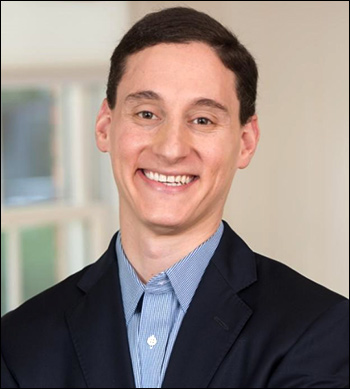
Former Ohio State Treasurer and 2012 US Senate candidate Josh Mandel (R), now 2022 senate candidate.

Feb. 12, 2021 — Former Ohio state treasurer and 2012 US Senate candidate Josh Mandel (R), armed with over $4.3 million in his federal campaign account, announced Wednesday that he will run for the state’s open Senate seat next year. Last week, Rep. Tim Ryan (D-Warren/ Youngstown) stated that he will officially declare his own federal statewide candidacy in March.

It is clear that Mandel will not be the only major Republican to battle for the GOP nomination. It is likely, however, that he will begin the primary campaign with more money than any of his future competitors. The only other person holding as large a federal war chest who didn’t run for office in 2020 is former US Rep. Pat Tiberi (R), but he has already made public his intention not to enter next year’s open Senate race.

Several members of the Republican congressional delegation are reportedly assessing the Senate contest as is sitting Secretary of State Frank LaRose. Often mentioned as potential candidates are Reps. Steve Stivers (R-Columbus), Bill Johnson (R-Marietta), Dave Joyce (R-Russell Township), and Warren Davidson (R-Troy). Reps. Jim Jordan (R-Urbana) and Troy Balderson (R-Zanesville) have publicly stated they will not run for the Senate.

Ex-congressman and 2018 US Senate nominee Jim Renacci (R) is another potential contender and confirms that he is considering the race. State Republican Party chair Jane Timken, who resigned her position at the end of last week, is also expected to become a candidate. State Sen. Matt Dolan (R-Chagrin Falls), whose district forms a virtual horseshoe around the city of Cleveland, is also contemplating launching a Senate campaign. Sen. Dolan, the chairman of the state Senate Finance Committee, is a part owner of the Cleveland Indians baseball club.

Mandel was first elected to the Ohio House of Representatives in 2006 when he was 29 years old. He then won the treasurer’s post in 2010 and held it for eight years. He lost the 2012 Senate race to Sen. Sherrod Brown (D) by a 51-45 percent count but raised more than $18 million for his campaign. Mandel was planning to run again in 2018, but his wife’s serious health situation caused him to exit the race after announcing. The couple has since divorced.

Continue reading

Jockeying for Ohio’s Senate Seat

By Jim Ellis

Jan. 28, 2021 — Monday’s surprise announcement that Sen. Rob Portman (R) will not seek re-election next year has ignited a flurry of activity and speculation from potential candidates and political observers alike. Some looking to challenge Gov. Mike DeWine (R) are now also beginning to survey and assess how an open US Senate candidate field might unfold.

Recent voter history suggests that the eventual Republican nominee will at least begin the general election campaign in the favorite’s role. The GOP, with a large number of statewide office holders, former elected officials, and a dozen sitting US House members, has an array of candidates from which to choose, and many will take the plunge.

For example, former US Rep. Jim Renacci, who held Sen. Sherrod Brown (D) to a 53-47 percent victory in the 2018 campaign and was reportedly looking to challenge Gov. DeWine in the 2022 Republican primary, may now set his sights on the open Senate seat.

Another ex-office holder, Pat Tiberi, who averaged 60.6 percent of the vote over nine elections from a Columbus area congressional district that former governor and presidential candidate John Kasich once held, still sits on more than $5 million in his federal campaign account even though he hasn’t been on the ballot since 2016.

It was widely believed that he was amassing a huge war chest to run against Sen. Brown in ’18, but family considerations led him to change his mind, resign from Congress and instead take the reins of the Ohio Business Roundtable.

Still another former elected official, ex-state Treasurer Josh Mandel (R), who lost the 2012 Senate election to Sen. Brown, was planning to run again in 2018 until leaving the race because of his wife’s health issue. Mandel raised almost $20 million for his Senate race eight years ago and has over $4 million in his campaign account even though he has not been a federal candidate in eight years.

Republicans hold all of the state’s constitutional offices. Lt. Gov. Jon Husted, Secretary of State Frank LaRose, Attorney General Dave Yost, state Treasurer Robert Sprague, and State Auditor Keith Faber are all credible potential US Senate candidates.

Continue reading

Rep. Moulton Sees A Different Path

By Jim Ellis

March 13, 2019 — While former New York City mayor and media magnate Michael Bloomberg and Sen. Sherrod Brown (D-OH) both backed away from entering the presidential campaign because they couldn’t see a path for themselves to win the Democratic nomination, a different Democratic office holder appears to be taking the opposite view.

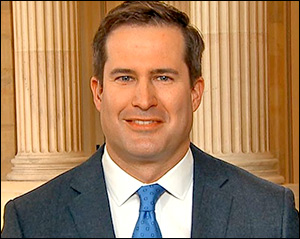
Massachusetts Rep. Seth Moulton (D-Salem)

Massachusetts Rep. Seth Moulton (D-Salem) was one of the leaders of the group who attempted to deny Nancy Pelosi a return to the speakership. Therefore, with little thought of becoming a factor in the current House Democratic majority, Moulton is looking at other opportunities.

While he didn’t expressly deny examining a potential primary challenge to Sen. Ed Markey (D) earlier in the year, such a move no longer appears to be on the congressman’s horizon. Rather, he appears to believe his chances might be a bit better in trying for the “big prize.”

Scheduling visits to neighboring New Hampshire and then over to Iowa in the coming weeks, Rep. Moulton is clearly testing the waters to enter the presidential race. And, according to reports from people close to his effort, a national campaign announcement is likely forthcoming at the end of April or beginning of May.

Rep. Moulton, who served four tours of duty in the Iraq War and saw significant combat action, is a liberal Democrat, but he seems to be a hybrid in falling between the socialist Democrats such as Bernie Sanders, Alexandria Ocasio-Cortez (D-NY), and his Massachusetts colleague Sen. Elizabeth Warren, and the former Blue Dog Democrats who trend more centrist.

Continue reading

With Brown Bowing Out,
Does That Mean Biden Will Begin?

By Jim Ellis

Ohio Sen. Sherrod Brown (D) – not running for president

March 11, 2019 — Ohio Sen. Sherrod Brown, another of the potential Democratic presidential candidates who most observers thought would enter the race, is not.

His announcement late last week was a bit surprising considering his home state with 136 first-ballot delegates and 153 overall (the seventh largest state delegation at the Democratic National Convention) moved the primary to March 10, partially with the idea of giving him a boost.

Sen. Brown’s decision provides us a clue as to what else may happen, however. He, like former New York City Mayor Michael Bloomberg, basically said the reason for not becoming a candidate is that the victory path is not evident. The underlying conclusion is they obviously believe former Vice President Joe Biden will enter the race.

Though all three men (Biden, Bloomberg, and Brown) certainly must be considered liberals on the ideological scale, they are not part of the far-left faction that Sens. Bernie Sanders, Kamala Harris, Elizabeth Warren, Cory Booker, and others are attempting to attract. Therefore, if the Bloomberg and Brown paths are blocked, then it is Biden who is their most formidable impediment.

If the former vice president and Delaware senator enters the race, and some say he will do so early next month, is he a lock for the nomination? Polling indicates he would jump to the top of the current heap but would be nowhere close to the majority of delegate votes required to win the nomination on the first convention ballot. In four late February national polls of likely Democratic primary voters, Biden tops them all but with preference percentages of 27, 30, 29, and 31 – hardly dominating numbers.

Continue reading

Bloomberg & Other Surprises

By Jim Ellis

Former New York City Mayor Michael Bloomberg (D)

March 8, 2019 — Former New York City Mayor Michael Bloomberg’s decision earlier this week not to enter the Democratic presidential race becomes the first major surprise move of the early campaign.

It was clearly expected that he would become a candidate. After all, he was talking about committing $500 million of his own money to the effort, he’d hired key campaign staff, designed a presidential campaign logo, and even organized an announcement tour beginning in his birthplace of Boston, Massachusetts.

Speculation continues to surround former Vice President Joe Biden’s decision regarding whether or not he may also ultimately decide to take a pass on the race; Bloomberg’s reasoning provides us a key clue that at least he thinks Biden will soon form a campaign.

So far, 11 Democrats have become candidates with two more filing exploratory committees. The pair remaining in pre-candidate status are Sen. Kirsten Gillibrand (D-NY) and Rep. Tulsi Gabbard (D-HI).

It is conceivable that one or both of the latter women could decide not to become candidates. Rep. Gabbard has run into organizational trouble, is being attacked for her foreign policy positions, and now has drawn serious primary opposition for her congressional seat. Just recently, state Sen. Kai Kahele (D-Hilo) has earned public endorsements from former governors and key Hawaii Democratic Party leaders.

While many in the media cast Sen. Gillibrand as a top-tier candidate, she has gone nowhere since her exploratory announcement, failing so far to even break one percent in any released poll.

Continue reading

Biden Up Twice

By Jim Ellis

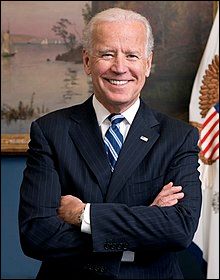
Former vice president and ex-Delaware senator Joe Biden

Dec. 18, 2018 — A pair of Democratic presidential primary polls were just released — one with a national respondent universe, and the other for the first-in-the-nation Iowa Caucus. In both, former vice president and ex-Delaware senator Joe Biden is staked to a lead. The most disappointing performer appears to be Massachusetts Sen. Elizabeth Warren, who settles into middle-of-the-pack status in both surveys.

CNN conducted the national poll (conducted by the SSRS firm; Dec. 6-9; 463 Democrats and independent-leaning Democrats). For two reasons, this survey is of little statistical relevance. First, the national sample of only 463 individuals is very low, thus leading to a huge error factor. Second, as we know, the presidential nomination process is decided by winning delegate support in every state and territory, thus monitoring a candidate’s national standing, while being of media interest, actually provides little in the way of tangible political value.

The Des Moines Register/CNN Mediacom Iowa poll (conducted by Selzer & Company; Dec. 10-13; 455 likely Iowa Democratic Caucus attenders) is the more relevant of the two studies since it previews the Iowa Caucus, which is responsible for apportioning the state’s nominating delegates and tentatively scheduled for Feb. 3, 2020.

In the national poll, Biden places first with 30 percent preference followed by Vermont Sen. Bernie Sanders (I/D-VT) who posts 14 percent. These are the only two potential candidates in double figures.

Continue reading

Ohio: Contrasting Polls

By Jim Ellis

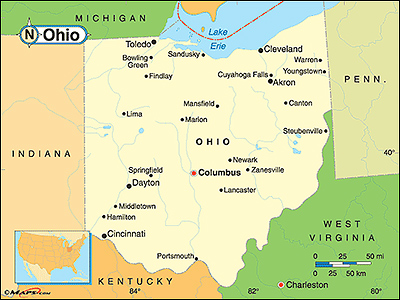
state-of-ohio-mapNov. 1, 2018 — The Buckeye State of Ohio is viewed as one of the country’s quintessential swing states. In 2016, however, the state exceeded polling and even Republican expectations in their presidential vote, as President Trump won a decisive 52-44 percent victory over Hillary Clinton.

Some suggested the Trump vote was an indication that the state could be moving more definitively to the political right, but new surveys suggest the Buckeye electorate is returning to its previous swing vote history.

Still, Ohio proves a reliable national political barometer. In both 2008 and 2012, the electorate here voted for President Obama after twice after backing President George W. Bush in his two elections. The state previously favored President Bill Clinton in his two successful national campaigns. In fact, the last time Ohioans failed to vote for the winning presidential candidate came in 1960 when the state awarded its electoral votes to Republican Richard Nixon in his national losing effort against John F. Kennedy.

Two new polls were released this week that paint different pictures of the Ohio electorate’s current state. Some of the results are curious to the point of questioning the polling reliability or not being able to adequately determine how the governor’s race will end and failing to understand the wide discrepancy in US Senate polling projections.

Continue reading

Supreme Politics

By Jim Ellis

July 11, 2018 — President Donald Trump’s choice of US Circuit Judge of the DC Court of Appeals Brett Kavanaugh to replace retiring Supreme Court Justice Anthony Kennedy will likely fundamentally change the 2018 Senate election cycle.

Judge Brett Kavanaugh at the White House, where President Trump nominated him to replace retiring Supreme Court Justice Anthony Kennedy. | C-SPAN

Judge Brett Kavanaugh speaks at the White House, where President Trump announced Monday that Kavanaugh would be his nominee to replace retiring Supreme Court Justice Anthony Kennedy. | C-SPAN

With Senate Majority Leader Mitch McConnell (R-KY) already publicly indicating that he is planning to keep the Senate working through August, the Supreme Court confirmation process now guarantees such will happen. With majority Republicans having leverage over the confirmation hearings and vote schedule, we can expect a great deal of politics will be accompanying the legal rhetoric that awaits us during the remaining summer months.

The Senate political map helps Judge Kavanaugh in his confirmation battle. Both sides will mount crushing pressure on those members perceived as swing votes, and the eventual targets will be backed into such a position where it will be impossible to avoid political damage once their eventual vote is cast. The three Democrats who supported Supreme Court Justice Neil Gorsuch when he was confirmed on April 7, 2017 are:

  • Sen. Joe Donnelly (D-IN)
  • Sen. Heidi Heitkamp (D-ND)
  • Sen. Joe Manchin (D-WV)

The three will naturally be the top targets for this confirmation battle, and there is a strong chance that each will also vote for Judge Kavanaugh. Already trapped in tough re-election battles, these senators will be hard-pressed by both sides pushing them to vote for or against Kavanaugh; but considering their respective states voted for President Trump in margins of 19 (IN), 36 (ND), and 43 (WV) percentage points suggests the density of pressure to support the nominee will overwhelm the opposition.

After last night’s announcement, Sen. Manchin issued a statement saying he is particularly interested about Judge Kavanaugh’s position on healthcare issues, especially those affecting people with pre-existing conditions as they relate to healthcare insurance coverage. Sen. Manchin says over 800,000 people in his state of West Virginia fall into this category.

Continue reading

Big Primary Results

By Jim Ellis

2018-elections-open-seats-185May 9, 2018 — Voters in four states made their preliminary electoral statements known last night, choosing nominees in Indiana, North Carolina, Ohio, and West Virginia in the 2018 election cycle’s first multi-state primary event. The night included defeating the first incumbent of the electoral season, North Carolina three-term Rep. Bob Pittenger (R-Charlotte), and nominating two Senate nominees in what could become first-tier Republican challenger campaigns.

Indiana

One of the more interesting contests heading into yesterday’s voting was the Indiana GOP Senate primary where three major contenders were vying for the right to advance into the general election and face first-term Sen. Joe Donnelly (D). There, former state representative and national distribution company owner Mike Braun attempted to seamlessly drape both Reps. Todd Rokita (R-Brownsburg/Lafayette) and Luke Messer (R-Greensburg/Muncie) in the algae of the Washington swamp, with the two House members retaliating that Braun is a former Democrat with a voting record that supported raising taxes 47 times.

Considering that Braun proved successful in winning the nomination last night, his strategy and clever advertising campaign worked but, in the aggregate, almost 60 percent of the Republican primary electorate still voted for one of the two congressman. In the end, Braun captured 41.2 percent of the vote, enough of a plurality to claim the nomination. Rep. Rokita was second with 30 percent, while Rep. Messer was a very close third, getting 28.8 percent of the GOP vote. Braun swept virtually all of the counties outside of Congressional Districts 4 and 6, which belong to Reps. Rokita and Messer, respectively.

A Donnelly-Braun general election will be highly competitive, as now the new Republican nominee will make the incumbent senator the focal point of his anti-Washington swamp, politics-as-usual campaign strategy. The Indiana race now becomes one of the premier GOP challenge targets in the country.

In the House races, while Braun ran strongly throughout most of the state, he failed to provide familial coattails. His brother, Steve Braun, fell to state Rep. Jim Baird (R-Greencastle) in a 36-29 percent spread from a 4th District GOP electorate that exceeded 80,000 votes. Baird will easily win the general election and come to Washington as Rep. Rokita’s replacement in the western state congressional district that touches the outer Indianapolis suburbs.

Turning to the eastern 6th District, in a highly expected result, Vice President Mike Pence’s older brother, Greg Pence, easily captured the Republican nomination for Rep. Messer’s open seat. His 65 percent victory over four opponents sends him into a general election campaign that he will surely win in November.

North Carolina

All local political observers were following the two Republican US House incumbents facing strong challengers. As mentioned in the introduction, Rep. Bob Pittenger (R-Charlotte) became the first House member in this fledgling election cycle to be denied re-nomination. Pittenger, who came within just 134 votes of losing the 2016 GOP primary, could not overcome former pastor Mark Harris this year. Harris, a 2014 US Senate candidate, ran two years later for the post court-mandated redistricting seat that changed 60 percent of the district just before the 2016 primary.

Though it looked like Rep. Pittenger would have an easier road to re-nomination this year, the opposite proved true. Harris won the party nomination, 48.5–46.2 percent, a margin of 814 votes of more than 35,000 primary votes cast. Harris will now face the new Democratic nominee, businessman Dan McCready who is already on record saying he won’t vote for Nancy Pelosi as House speaker if he wins in November. The 9th District, which stretches from Charlotte to Fayetteville, posted a 54-43 percent victory for President Trump. Rep. Pittenger won re-election in 2016 with 58 percent of the vote. Though the numbers stack up well for Republicans in this district, with McCready already raising $1.9 million for the primary, it makes this contest competitive and may become a targeted Democratic challenge race.

Moving to the Outer Banks region, veteran Rep. Walter Jones (R-Farmville), also facing serious competition, scored a 43 percent victory to win what he says will be his last term. The fact that he had two opponents who pulled virtually equal support allowed Jones to win again with just a plurality. He faces no competition in the general election, which means last night’s victory assures him of re-election in the fall.

In the Greensboro area, as expected, University of North Carolina at Greensboro trustee Kathy Manning, another challenger who has raised well into seven figures, easily advanced into the general election last night with 70 percent of the vote. She will face freshman Rep. Ted Budd (R-Advance) in another November race that appears more competitive than the regional voting history might suggest. Budd garnered 56 percent in his first general election. The congressman was unopposed last night in the Republican primary.

Ohio

The Ohioans voted as expected last night. Rep. Jim Renacci (R-Wadsworth) scored a 47-32 percent win over investment banker Mike Gibbons to win the 2018 Republican Senate nomination. The congressman now advances against two-term Sen. Sherrod Brown (D) in November.

Originally a gubernatorial candidate, Renacci made the smart switch to the Senate race after attorney general and former US Sen. Mike DeWine and Secretary of State Jon Husted voluntarily formed a ticket to effectively clinch the nomination in the early part of the year. All of these strategic moves proved prescient, as DeWine easily won the gubernatorial election last night, 60-40 percent over Lt. Gov. Mary Taylor (R); Rep. Renacci secured the Senate nomination.

In the 12th District special election, state Sen. Troy Balderson (R-Zanesville) out-paced Liberty Township Trustee Melanie Leneghan by a single percentage point (29-28 percent) and topped a field of seven other candidates to win the Republican nomination and advance to the Aug. 7 special election. Franklin County Recorder Danny O’Connor easily won the Democratic nomination. The 12th is a reliably Republican seat, and with a 24,000-vote edge in total turnout last night, Sen. Balderson becomes the clear favorite to win the special general. Both men also were nominated for the full two-year term in November.

Looking at Rep. Renacci’s open Cleveland-Akron area 16th District, technology executive and former NFL football player Anthony Gonzalez defeated conservative state Rep. Christina Hagan (R-Marlboro Township) 53-41 percent to win the Republican nomination. Gonzalez will now face healthcare company executive Susan Moran Palmer, who captured the Democratic nomination. The former Indianapolis Colts and Ohio State Buckeye wide receiver is the favorite to win the seat in November.

West Virginia

In the other premier Senate contest of the evening, media reports that disgraced former coal company CEO Don Blankenship was making a serious move on the Republican nomination proved erroneous as two-term Attorney General Patrick Morrisey won the GOP primary with a 35-29 percent margin over US Rep. Evan Jenkins (R-Huntington). Placing third with 20 percent of the Republican vote was Blankenship. AG Morrisey won the right to challenge Sen. Joe Manchin in the general election. The incumbent defeated a Democratic primary challenger from his left, environmentalist Paula Jean Swearingen, 70-30 percent.

Morrisey swept the northern and central portions of the state, with Rep. Jenkins dominating south West Virginia, the site of his congressional district. Blankenship won four small counties. The Manchin-Morrisey Senate election now becomes a top-tier Republican challenge race.

With Reps. David McKinley (R-Wheeling) and Alex Mooney (R-Charles Town) running unopposed for re-nomination, the congressional action was in Rep. Jenkins’ open 3rd District where state House Majority Whip and farmer Carol Miller (R-Cabell County) topped a field of six other Republican candidates, including two sitting state delegates, one former delegate and congressional nominee, and an ex-West Virginia Republican Party chairman to win a close nomination campaign. She begins the general election in the favorite’s position against state senator and Iraq War veteran Richard Ojeda (D-Holden/Logan) who easily won the Democratic primary.