Tag Archives: Sen. Bob Menendez

Redistricting:
California & New Jersey Maps

Click on map of California above for detailed view

By Jim Ellis

Jan. 3, 2022 — The California and New Jersey redistricting commissions are completing the last steps of passing what look to be the final congressional plans for each state. The cursory analysis suggests that Democrats may gain a seat in California with Republicans doing likewise in the Garden State.


California

The California Citizens Redistricting Commission members approved and sent toward final adoption a new 52-district congressional map that could give the Democrats even more seats in the delegation, though we will see several more competitive districts come into play. California lost one seat in reapportionment and Democrats are taking the loss of one of their Los Angeles County seats, but look to be replacing it, and then some, in other parts of the Golden State.

The 47th and 40th Districts of retiring members Alan Lowenthal (D-Long Beach) and Lucille Roybal-Allard (D-Downey) were combined to construct a new 42nd CD, which is heavily Democratic. Rep. Karen Bass (D-Los Angeles), who is leaving the House to enter the campaign for mayor of Los Angeles, sees her 37th District, which was on the chopping block in the first draft map, restored almost intact.

Major change is occurring in the Central Valley. Rep. Josh Harder (D-Turlock) sees his 10th District going from an R1 rating according to the FiveThirtyEight statistical analysis organization to R17. Therefore, it is unlikely he will run in his new designated 5th District.

Rep. Jim Costa (D-Fresno) may leave what is a new 13th District at D7 and move to the downtown Fresno seat, now labeled District 21. This seat has much of resigning Rep. Devin Nunes’ (R-Tulare) territory but is rated a D16. Rep. Costa choosing the 21st might allow Rep. Harder to drop down into new District 13, which would be a much more favorable partisan situation but takes him away from his geographical base.

Rep. Mike Garcia (R-Santa Clarita), who won his 2020 election by just a 333-vote margin, sees his designated district, now numbered 27, become at least three points more Democratic. This endangers even further his re-election chances. The 538 organization rated his current 25th CD as a D5. The new 27th becomes a D8.

Several Republicans have proven they can win these D-plus single digit type seats, however. In addition to Rep. Garcia’s two victories in current CD-25, Rep. David Valadao’s (R-Hanford/Bakersfield) 21st district is rated a D9. His new seat, designated District 22, goes to a D10. Another option for him would be to also run in District 13 (D7), which contains some of his current territory. Rep. Young Kim (R-La Habra) won a 39th District that FiveThirtyEight rated as a D6. Her new 45th CD is calculated at D5.

We could possibly see a district swap operation between Reps. Zoe Lofgren (D-San Jose) and Jimmy Panetta (D-Carmel Valley) due to geography, and between Reps. Michelle Steel (R-Orange County) and Katie Porter (D-Irvine) for partisan reasons.

Rep. Steel’s district moves from a R2 to a D6, while Rep. Porter’s adjacent CD shifts in the opposite direction, going from a D6 all the way to a R4. The problem can be solved for both members by them simply switching districts. This would mean Rep. Porter would run in the new coastal 47th with Rep. Steel going to the inland new 40th.

Rep. John Garamendi (D-Walnut Grove) gets a solid Democratic district, but its new positioning is unfavorable to him from a geographic perspective. Garamendi’s new 8th District moves closer to the San Francisco Bay Area making him vulnerable to a challenge from a Bay Area Democratic state or local official. It is likely this new Vallejo-anchored CD would produce a double Democratic general election under the state’s top two jungle primary system.

Several members see their districts downgraded from a partisan perspective. Rep. Tom McClintock (R-Elk Grove/Sacramento) goes from R15 to R8 in a new 3rd District that stretches into southern California along the Nevada border.

Rep. Jerry McNerney’s (D-Stockton) 9th CD goes from D14 to D8, again according to the 538 analysis. Rep. Ken Calvert’s (R-Corona) designated CD, numbered 41, drops from his current R13 to R7. Rep. Mike Levin’s (D-San Juan Capistrano) 49th CD recedes two points from D7 to D5.


New Jersey
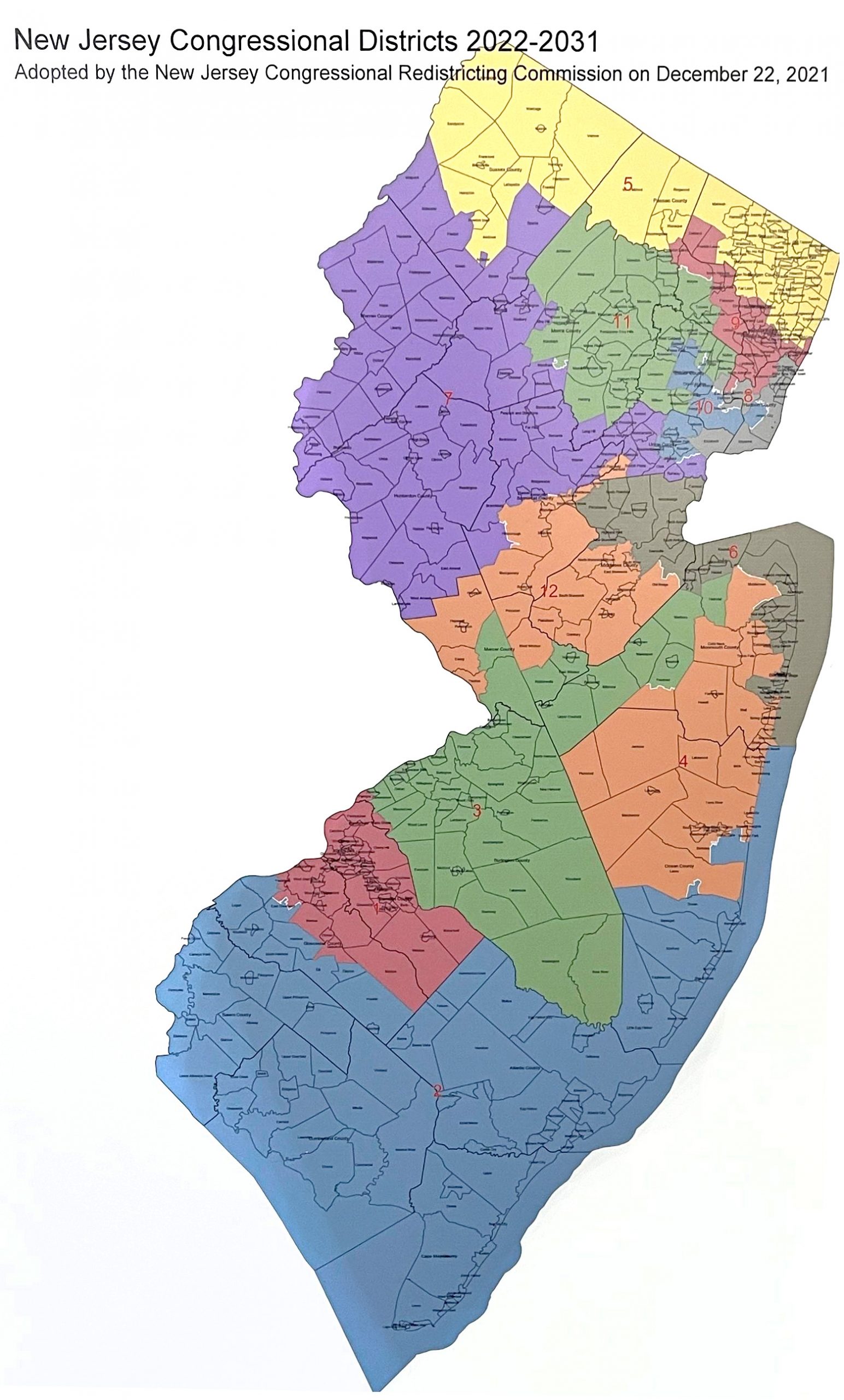
Click on map of New Jersey above to see detailed view

It appears that the New Jersey Redistricting Commission comprised of six Democratic elected officials, six similar Republicans, and a state Supreme Court selected tie-breaking member, have also agreed upon a new congressional map. New Jersey’s representation level remained constant with 12 seats, so it was a matter of adjusting the current districts.

It is evident that the rumor suggesting the commission would adopt a map that drastically weakened Rep. Tom Malinowski’s (D-Rocky Hill) seat in order to strengthen three other Democratic districts, those of Reps. Andy Kim (D-Bordentown), Josh Gottheimer (D-Wyckoff), and Mikie Sherrill (D-Montclair/Morristown) proved true.

It further appears that Rep. Albio Sires’ (D-West New York) retirement did not change the commissioners’ outlook as to which district to weaken. Sires’ 8th District returns virtually intact, another indication that Sen. Bob Menendez’s son, Robert J. Menendez (D), will likely be the retiring congressman’s successor. The latter Menendez currently serves on the NY/NJ Port Commission.

While the NJ Democrats are securing three of their more politically marginal districts, Districts 3, 5, and 11, Republicans appeared poised, probably in the person of state Senate Minority Leader Tom Kean Jr. (R-Edison) who held Malinowski to a 51-49 percent win in 2020, to convert the new 7th CD.

More research will be done on the likely-to-be-adopted California and New Jersey congressional maps when detailed district descriptions become available. It looks like several incumbent members will have decisions before them about where to run in California, while the focus of the New Jersey competitive action will center around the District 7 Malinowski-Kean re-match.
Florida Rep. Stephanie Murphy &
New Jersey Rep. Albio Sires to Retire

By Jim Ellis

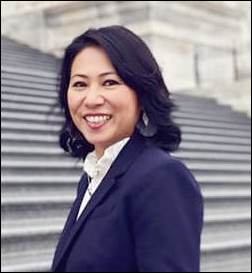
Florida Rep. Stephanie Murphy (D-Winter Park)

Dec. 22, 2021 — In a surprising move, three-term Florida US Rep. Stephanie Murphy (D-Winter Park) announced that she won’t run for re-election next year, becoming the third member of the Florida delegation to leave the House at the beginning of 2023 in addition to the state gaining a new seat in national reapportionment. Not included in the total is the special election to fill the late Rep. Alcee Hastings’ (D-Delray Beach) South Florida 20th District that will conclude on Jan. 11.

The Murphy move means the Sunshine State will host four open congressional elections next year, three of which lie in the Orlando metro area. In addition to Congresswoman Murphy, Rep. Val Demings (D-Orlando) in an adjacent district is also leaving the House. She is challenging Sen. Marco Rubio (R). Furthermore, the state’s new 28th District will likely be placed in the Orlando metroplex. The lone non-Orlando area open seat is in the Tampa Bay area as Rep. Charlie Crist (D-St. Petersburg) is foregoing re-election to again run for governor.

Rep. Murphy was elected in 2016, defeating then-Rep. John Mica (R) in a 51-49 percent result after the Florida state Supreme Court made the 7th District more Democratic during a mid-decade redistricting order. She averaged 56.5 percent of the vote in her two subsequent re-election campaigns and holds a seat on the powerful Ways & Means Committee.

New Jersey Rep. Albio Sires (D-West New York)

Also, New Jersey Rep. Albio Sires (D-West New York) announced Monday that he will not seek a ninth full term in the House. The congressman was first elected in a concurrent 2006 special and general election replacing then-Rep. Bob Menendez (D) who had been appointed to the Senate. At the time, the eastern New Jersey district that borders the Hudson River across from New York City was numbered CD-13. It was changed to number 8 in the 2011 redistricting plan.

Prior to his election to Congress, Sires served in the New Jersey General Assembly and was the body’s speaker from 2002-06. During the 1995-2006 period, he was the mayor of West New York, and concurrently served in the legislature for most of that time. Prior to a 2006 law banning the practice, it was commonplace for New Jersey mayors to simultaneously hold both their municipal position and serve in the legislature.

Continue reading

The Senate Approvals

By Jim Ellis

April 29, 2019 — The Morning Consult organization released the first quarter approval ratios for all 100 senators, and it appears that quite a number of the 2020 in-cycle incumbents need to improve their ratings before facing the voters next year. In fact, when looking at the ratio spread from positive to negative, seven of the 10 weakest performers will be on the next ballot.


The senator with the highest positive score, 62 percent, is presidential candidate Bernie Sanders. The Vermont electorate is the most pleased with their senators. Not only did Sen. Sanders score a 62 percent favorable job approval rating, but his veteran seat mate, seven-term incumbent Patrick Leahy (D), is right behind him with a 59 percent positive total.

But, the swing between the individual positive and negative scores may be the better indicator of an office holder’s actual standing. The senator with the widest range, in his case seeing his positive score (55 percent) run 33 points higher than his negative (22 percent), is North Dakota Sen. John Hoeven (R).

Continue reading

Senators’ Approvals vs. Votes

By Jim Ellis

Dec. 13, 2018 — Reviewing documentation from the 2018 US Senate races, it appears there is at least a tangential correlation between an incumbent senator’s pre-campaign approval rating and the vote percentage garnered on Election Day.

(Click on image to go to full story at Morning Consult.)

The Morning Consult public affairs firm routinely surveys senators and governors to produce approval indexes for every member. Their 3rd Quarter 2018 sampling was publicly released on Oct. 10, one month before the election and just at the beginning of prime time campaigning.

Looking at the 32 incumbent senators who were on the ballot in November, the mean average increase from the individual’s approval score to the final vote percentage is 9.6 points when using the Morning Consult favorability index as our constant and the median is nine points.

The senator dropping the furthest from approval to vote percentage, down five points, was Maine Sen. Angus King (I), but the number is a bit deceiving. King scored a 58 percent positive approval rating in mid-October, but only received 53 percent in the election. Because the senator is an Independent and the Democrats with whom he caucuses did file their own candidate, the next closest opponent scored 35 percent. Therefore, his political standing still proved strong.

On the other end of the spectrum, the senator who improved the most from an upside-down favorability index rating to the vote was New Jersey Sen. Bob Menendez (D). While his October index was a poor 31:46 percent favorable to unfavorable, the worst by far among the 32 senators standing for re-election, he was successfully re-elected, 54-43 percent, over retired pharmaceutical company CEO Bob Hugin (R).

Continue reading

Poll: New Jersey Closing

By Jim Ellis

new-jersey-mapMay 31, 2018 — A new curious poll was released right before the Memorial Day break that suggests the New Jersey Senate race is already closing.

Since presumed Republican nominee Bob Hugin, the former chairman and CEO of the Celgene pharmaceutical corporation, has already spent $3.7 million on his campaign in conjunction with the June 5 primary, it is not particularly surprising that the margin between he and Sen. Bob Menendez (D) is getting tighter.

What appears unusual are the raw numbers from the recent Fairleigh Dickinson University survey, however. The poll (May 16-21; 856 registered New Jersey voters) looks to be sound methodologically, and the numbers reported for various approval ratings and other data points seem consistent with previously released research. The ballot test, however, raises questions because the incumbent’s support figure is so low and the undecideds high (46 percent). According to the F-D study, Sen. Menendez leads Hugin only 28-24 percent.

Despite the veteran senator seeing the federal bribery case against him fall apart and charges dismissed, his reputation has still suffered. The F-D report finds the senator’s favorability index at 33:39 percent favorable to unfavorable with only 51 percent of Democrats answering with a positive response. In comparison, the state’s junior senator, Cory Booker (D), posts a 55:27 percent ratio and a positive rating among Democratic respondents of 79 percent.

Demographically, the senator’s numbers are weak across the board. Even while leading Hugin in every category, his margins are tight and overall support figures poor. Sen. Menendez gets 27 percent among men, 29 percent from women, 27 percent with white voters, and just 30 percent from non-white voters. Even the college-educated voters, usually a strength segment for Democratic candidates, favor him only 32-24 percent.

This May poll is drastically different from published university polls in April and March. But Hugin’s strong early campaign provides at least a partial explanation. The former corporate leader is so far self-funding to the tune of $7.5 million and had raised almost $700,000 from individuals as listed in the May 16 pre-primary disclosure report.

Continue reading

Senate Match-Ups Forming

By Jim Ellis

April 2, 2018
— Only two primaries are in the books, but already we appear to have clear Senate match-ups forming in as many as 14 statewide races.

2018-elections-open-seatsBelow are the races that look set as general election campaigns. Those headed for serious primary battles are not included on this list.

In alphabetical order, the following are the impending general election contests:

Arizona: Assuming Rep. Martha McSally (R-Tucson) repels her primary challenge from the right, the Grand Canyon State general election will feature McSally and Rep. Kyrsten Sinema (D-Phoenix) in what will be one of the premier Senate contests in the country this year.

California: It appears we are again headed for a double-Democratic general election in the Golden State. Sen. Dianne Feinstein should have little trouble dispensing with state Senate President Kevin de Leon (D-Los Angeles).

Florida: With Gov. Rick Scott (R) scheduling an announcement for April 9, it looks like the long-anticipated contest between the two-term governor and incumbent Sen. Bill Nelson (D) will come to fruition.

Minnesota: Appointed Sen. Tina Smith (D) will be running to fill the remaining two years of resigned Sen. Al Franken’s (D) term. State Sen. Karen Housley (R-St. Mary’s County) immediately declared her candidacy and, so far, she appears headed for the Republican nomination. Neither woman has run statewide before, so this campaign has the prospect of turning highly competitive especially with Minnesota moving rightward in the past few elections.

Mississippi: Developments within the past two weeks are yielding a second Mississippi Senate race for the 2018 election cycle. With Agriculture & Commerce Commissioner Cindy Hyde-Smith (R) already being designated to replace retiring Sen. Thad Cochran (R) when he leaves office in April, she will draw serious opposition from state Sen. Chris McDaniel (R-Ellisville). If no candidate obtains majority support in the Nov. 6th vote, the top two finishers will run-off three weeks later.

Continue reading

Senate News From
North Dakota & New Jersey

1200px-Seal_of_the_United_States_Senate.svgBy Jim Ellis

Feb. 15, 2018 — The North Dakota US Senate campaign is on the precipice of drastic change. Earlier in the week, at-large US Rep. Kevin Cramer (R-Bismarck) indicated that he was reconsidering his decision to bypass challenging first-term Democratic Sen. Heidi Heitkamp.

According to one of the contenders who just dropped out of the race, and who is a close confidant of Rep. Cramer, the congressman has made the decision to enter the Senate race. Former ND Republican Party chairman Gary Emineth told the media that he is ending his fledgling Senate campaign to make way for Rep. Cramer. He further said that the congressman will shortly announce his new plans.

The Republican Senate race had gotten off to a slow start. Rep. Cramer had been keeping the party leaders hanging for the better part of a year, and then announced he wouldn’t run. State Sen. Tom Campbell (R-Grafton) has been running for months, but it is obvious that national and state party officials don’t think he is a strong enough opponent for Sen. Heitkamp. That was one reason Emineth jumped in, but he quickly made a media gaffe, so his credibility was suffering even from the very beginning of his statewide effort.

Continue reading

Turbulent Senate Politics

By Jim Ellis

Sen. Al Franken (D-MN) and Leeann Tweeden

Sen. Al Franken (D-MN) and Leeann Tweeden

Nov. 20, 2017 — Currently, the near-term and long-range Senate outlook seems to fluctuate by the hour. Last week we repeatedly detailed the Republicans’ problem with Alabama Senate nominee Roy Moore and the effect the Dec. 12 special election will have upon the 2018 Senate cycle. But, yesterday became a day for the Democrats’ to receive similar bad news, albeit along with some good news.

While the Republicans languish in Alabama, Democrats were becoming increasingly concerned about Sen. Bob Menendez’s (D-NJ) corruption trial when a verdict appeared imminent, and what might happen should he be convicted. Last week, seeing the trial judge declare a mistrial, may mean that the senator’s legal hurdles have been cleared since it seems unlikely that the government would again pursue the case when prosecutors obviously had too little evidence to completely convince a jury that any crime had been committed.

But the positive Menendez result for the Dems was negated by the unfolding sexual harassment debacle involving Sen. Al Franken. Interestingly, though seemingly unrelated to the Alabama situation, both of these Democratic developments could influence the campaign’s course and help determine whether Judge Moore will be allowed to serve in the Senate if he rebounds to win the special election.

Continue reading

The Alabama Debacle

By Jim Ellis

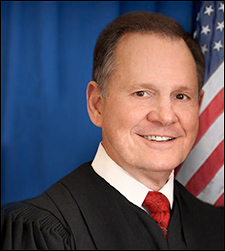
Judge Roy Moore, the Republican nominee in a special Senate election in Alabama.

Judge Roy Moore, the Republican nominee in a special Senate election in Alabama.

Nov. 14, 2017 — Senate Republicans have a major advantage in the current election cycle, but may be on the precipice of giving it away.

Looking at the 2018 Senate map, Republicans have only to defend eight of the 33 in-cycle seats. Considering that six of the eight are the safe Republican states of Mississippi, Nebraska, Tennessee, Texas, Utah, and Wyoming and the Democrats need a net gain of three conversion seats to claim the majority, it appears unattainable even if the latter party converts legitimate targets in politically marginal Nevada and now open Arizona.

But the mathematics change if Democrats score an unlikely upset in the Alabama special election on Dec. 12, and the latest unfolding events there suggest that such an outcome is far more likely to happen.

As we know, Republican Senate nominee Roy Moore, the twice removed former state Supreme Court Chief Justice, has been accused of sexual impropriety with at least one teenage girl when he was 32 years old in 1979. Washington, DC Republicans, who appear to be taking the Washington Post story and the woman’s allegations at face value, are urging Moore to remove himself from the race. Alabama Republicans are still standing firm for Moore, refusing to accept the story without proof. For his part, Judge Moore denies the incident happened.

Three polls have already surfaced telling us that Moore has suffered a major hit. Earlier surveys found him leading in low double-digits, but Opinion Savvy, Gravis Marketing, and JMC Analytics & Polling immediately went into the field to test the Alabama electorate’s reaction.

Opinion Savvy (Nov. 10; 515 likely Alabama special election voters) conducted their survey just hours after the Moore story broke. Their results find that Moore’s lead has evaporated into a 46-46 percent tie with Democratic nominee Doug Jones, a former US Attorney.

Gravis Marketing launched their poll just as quickly (Nov. 10; 478 likely Alabama voters) and finds a similar ballot test tally: 48-46 percent in Moore’s favor.

JMC Analytics (Nov. 9-11; 575 registered Alabama voters) sees Jones pulling into a 46-42 percent lead (48-44 percent when leaners to both candidates are added), but an over-sampling of female voters could account for the Democratic advantage. Fifty-six percent of the survey respondents were female and they break for Jones, 46-40 percent. Men favor the Democrat 46-45 percent.

Considering these polls were taken immediately as the story was breaking and the questionnaires included an explanation of what was being said about him, the results for Moore are not devastating. For the most part, Republican voters are taking Moore’s side while Democrats believe the accuser. The fact that the division is roughly even suggests that Moore has a chance to rebound if he can effectively tell his story.

While Republican leaders may be calling upon Judge Moore to remove himself from the ticket, realistically and legally, he cannot. Under Alabama election law, the ballot cannot be changed within 76 days of the election. That period began Sept. 28. Now comes talk that Gov. Kay Ivey (R) could be approached to postpone the election, or call a special session of the legislature to pass a new emergency election statute. The governor says she is not inclined to even think about such an option.

Additionally, some absentee packets containing Moore’s name have already mailed, thus making it logistically difficult, if not illegal, to inject a new ballot into the campaign. Therefore, the outlook is virtually certain that the election will proceed as scheduled on Dec. 12.

Another idea suggests that the Senate refuse to seat Moore if he wins the election. Should all Democrats vote against Moore, only three Republicans would need to break ranks to keep the seat in abeyance. Presumably, the state could then call a new election, but there would be nothing preventing Moore from running again. Should that be the case, Gov. Ivey then could appoint another interim senator or even keep Sen. Luther Strange (R) in the position. Also, a new election would allow him to run again, too.

For their part, Democrats are remaining publicly quiet. They are likely doing so for two reasons. First, they are adopting the old axiom, “if one’s political opponents are in process of destroying themselves don’t stop them.” Second, they may soon be faced with another vote to eject a senator. Should New Jersey Democratic Sen. Bob Menendez be found guilty in his corruption trial, there will likely be a move to expel him. Democrats would find themselves in a bind if they make a public spectacle of denying entry to Moore, and then quickly pivot to do the opposite in order to save Menendez.

The Roy Moore saga is far from over but at the outset, the situation appears perilous for Republicans. Since losing this seat would endanger their majority standing in 2018, the stakes for how the majority leadership chooses to handle the Alabama situation becomes even more challenging.

New Jersey Primary Today

By Jim Ellis

June 6, 2017 — The 2017-18 election cycle’s first regular primary is occuring today as New Jersey voters head to the polls to choose major party nominees in the governor’s race. This campaign will lead to replacing term-limited state chief executive and former Republican presidential candidate Chris Christie.

We can expect a low turnout, because it appears a foregone conclusion that Lt. Gov. Kim Guadagno and former US Ambassador to Germany Phil Murphy will easily win the Republican and Democratic nominations, respectively.

Polls have been few and far between, and the three surveys that were released in May show strong and solid margins for both Guadagno and Murphy. The most recent study, from Stockton University (May 16-23; 389 likely New Jersey GOP primary voters) finds Guadagno with a 37-18 percent advantage over Assemblyman Jack Ciattarelli and three others who don’t even top four percent support. Earlier in the month, Quinnipiac University April 26-May 1; 331 likely New Jersey GOP primary voters) surveyed the state and found Guadagno up in similar fashion: 23-12 percent over Ciattarelli with no other candidate breaking five percent.

Continue reading