Tag Archives: President Trump

Heller Down Again, But Not Out

By Jim Ellis

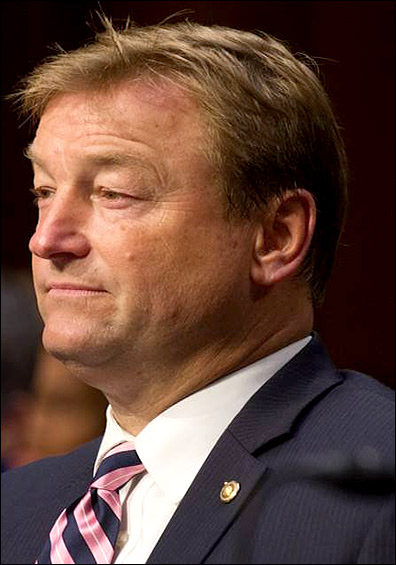
Sen. Dean Heller (R-NV)

Sen. Dean Heller (R-NV)

Oct. 31, 2017 — You may remember that JMC Analytics and Polling released an August survey that found Republican Danny Tarkanian, before he entered the Senate race, to be leading Nevada Sen. Dean Heller, 39-31 percent. On Friday, JMC released new polling results.

Immediately after the August poll was published, the Heller campaign circulated a Tarrance Group survey of its own that showed a completely different tally. This study projected the Senator ahead 55-33 percent among their universe of likely Republican primary voters. Now, Heller’s political operatives may need to counter again.

The latest JMC survey (Oct. 24-26; 500 likely Nevada primary voters answering an automated questionnaire) finds Tarkanian again leading the senator, but this time the margin is 44-38 percent, a slightly closer tally and with many more voters forming a decided opinion.

Continue reading

Fast Action in Arizona

By Jim Ellis

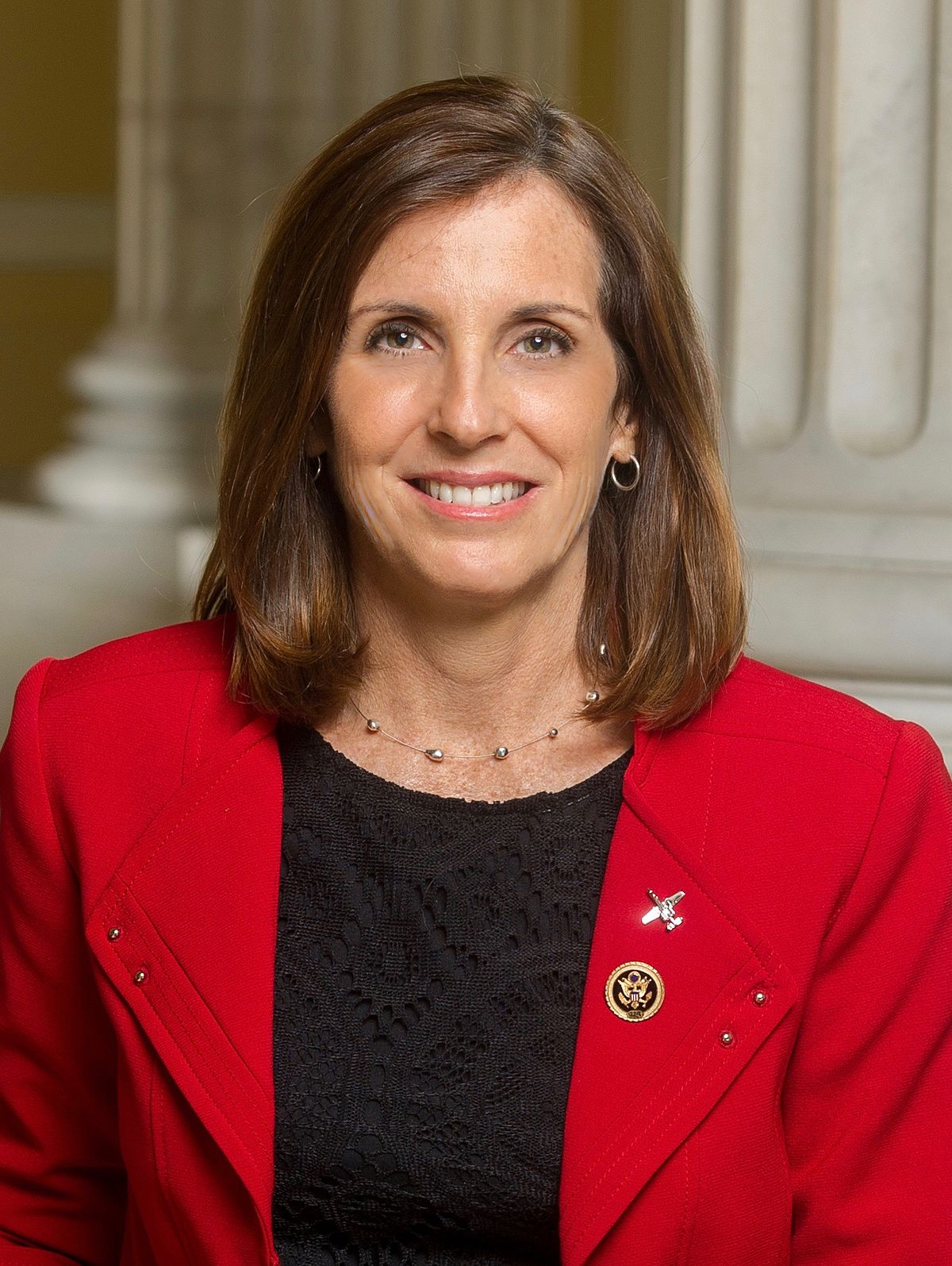
Rep. Martha McSally (R-Tucson)

Rep. Martha McSally (R-Tucson)

Oct. 30, 2017 — Sen. Jeff Flake’s (R) announcement Wednesday that he will not run for re-election has ignited a flurry of political activity in Arizona about who now might enter the newly open 2018 Senate race. Decisions are already being made, with many quickly saying they won’t run for the seat.

A great deal of attention surrounds 2nd District US Rep. Martha McSally (R-Tucson) for obvious reasons, because she is likely the best Republican candidate on paper, but the congresswoman has yet to make a public statement about running for the Senate. Published reports, however, quote sources close to her as saying she is being “inundated” with supporters urging that she run.

Winning her first congressional election in 2014, a 161-vote victory over then-Rep. Ron Barber (D-Tucson) that proved to be the closest congressional result in the country that year, and then racking up 57 percent support over former state Rep. Matt Heinz (D) last year even though Hillary Clinton was scoring a five-percentage point win in her southeastern Arizona congressional district makes Rep. McSally a proven political commodity. As a freshman House member, she raised an eye-popping $7.7 million for her first re-election effort. This year, ranking high on Democratic target lists and drawing eight announced opponents including former US Rep. Ann Kirkpatrick (D-Flagstaff) who moved to Tucson right after losing to Sen. John McCain (R) in the 2016 election, Rep. McSally already has accumulated over $1.45 million for her next campaign.

Continue reading

The New Arizona Senate Race

By Jim Ellis

Oct. 26, 2017 — Arizona Sen. Jeff Flake (R) surprised most in the political world during a speech a couple days ago from the Senate floor, and thereby to the nation, that he will not seek re-election for a second term.

Former Arizona state senator and GOP Senate challenger Kelli Ward

Former Arizona state senator and GOP Senate challenger Kelli Ward

With the text of his retirement address devoted mostly to his long-enduring battle with President Trump, Sen. Flake admits to having “regrets” about leaving elected politics and over the nation’s current state of affairs. But, the more salient reason hastening his departure is likely the polling data that shows his standing among Republicans is worse than the Arizona electorate as a whole, and that he would likely lose to both GOP challenger Kelli Ward, a former state senator who held Sen. John McCain to a 51-40 percent victory in the 2016 Republican primary, and US Rep. Kyrsten Sinema (D-Phoenix) in the general election.

Contrary to media and Democratic Party analyses, the Republicans’ chances of holding this Senate seat actually improve with Sen. Flake’s departure. It was clear that his presidential sparring with Trump had left him worse for wear, and the GOP will likely be able to nominate a less encumbered, and thereby stronger, general election candidate.

Continue reading

Fox Poll: Moore Tied – Dubious

By Jim Ellis

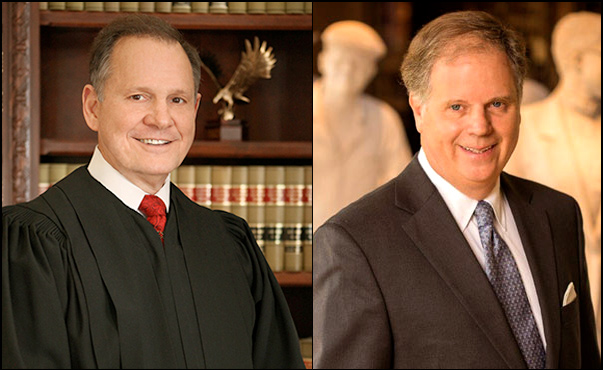
Left: Former state Supreme Court Chief Justice Roy Moore (R) Right: Ex-US Attorney Doug Jones (D)

Left: Former state Supreme Court Chief Justice Roy Moore (R) Right: Ex-US Attorney Doug Jones (D)

Oct. 20, 2017 — A new Fox Poll (Oct. 14-16; 801 registered Alabama voters) just released earlier this week finds former state Supreme Court Chief Justice Roy Moore (R) and ex-US Attorney Doug Jones (D) tied at 42 percent in the special Alabama Senate race to be decided Dec. 12, but such a result begs further analysis.

Though the sample size appears sound from a numerical perspective, its composition causes one to doubt the final result. The actual segment cell sizes are not revealed in the analysis section, but it appears they are not wholly reflective of the Alabama electorate. Those with the greatest error factors: non-whites (+/-7 percent), liberals (+/-7 percent), moderates (+/-7 percent), and independents (+/-8.5 percent) all are strong cells for Jones. The error factors for other segments: whites (+/-4 percent), conservatives (+/-4.5 percent), and gun owners (+/-4.5 percent) are all much lower than the other tested subgroups and each of those favor Judge Moore.

While the overall error rating within the entire sample of registered voters is only listed at +/-3.5 percent, all 18 of the subgroups have corresponding rates that are much higher. This is not particularly unusual since the subgroups, by definition, are smaller than the overall sample, but the considerably larger error factor among Jones’ best groups provides us clues that the poll is skewed in the Democratic nominee’s favor.

Earlier, the Cygnal polling firm released its statewide poll (Oct. 2-5; 497 likely Alabama special election voters) finding Moore leading 49-41 percent, a survey we analyzed last week, and the ex-Judge does particularly well among those identified as most likely to vote. By contrast, the Fox sample is only of registered voters and did not screen for voting propensity. Not isolating voting likelihood is another polling factor that favors Jones’ standing.

Continue reading

Could Bannon Cost the GOP?

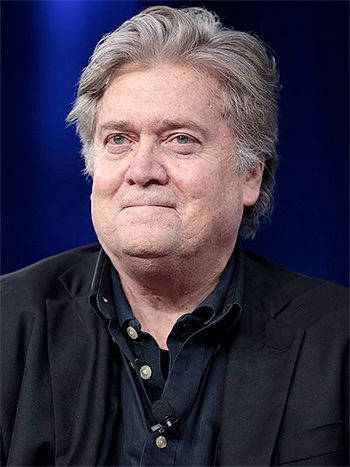
Steve Bannon (Photo by Gage Skidmore)

Steve Bannon (Photo by Gage Skidmore)

By Jim Ellis

Oct. 13 2017 — Several articles have surfaced this week speculating that former presidential advisor Steve Bannon wanting to find and support challengers to Republican Senate incumbents could cost the GOP its majority. It appears individuals making such a claim have forgotten how to count.

Keeping in mind that the Democrats must protect 25 of 33 in-cycle Senate seats, there are simply not enough legitimate targets available for the minority to change their status within the chamber, even though they need a net gain of only three seats. Yes, the Dems are forcing Sens. Dean Heller (R-NV) and Jeff Flake (R-AZ) into toss-up situations, but the remaining six GOP incumbents are some of the safest in the Senate. So, even if Bannon or other conservative insurgents recruit opposition to incumbents, the chances of the eventual Republican nominee losing the general election in these particular states are extremely low.

Continue reading

The Missouri Move


By Jim Ellis

Oct. 12, 2017 — Missouri Attorney General Josh Hawley (R) officially announced his long-awaited challenge to Sen. Claire McCaskill (D) on Tuesday this week. The move had been expected since even before he formed a senatorial exploratory committee at the beginning of August. Hawley then found himself encouraged to run for the Senate literally from the first few days after his election as the state’s AG in November.

Saying Sen. McCaskill has turned her back on many key Show Me State constituencies and industries, that she has been in Washington “forever”, and simply “doesn’t represent Missouri” anymore, Hawley declared his new US Senate candidacy via campaign video featuring he, his wife, and two young sons (above).

Already, a McCaskill-Hawley general election race is being viewed as the Republicans’ top conversion opportunity. Though Hawley must get past several lesser GOP primary candidates, including state Rep. Paul Curtman (R-Pacific/Franklin County), he is the prohibitive favorite to become the party nominee next August.

The McCaskill Campaign and the national Democratic political apparatus has been readying a defense plan against a Hawley offensive for several months. In his campaign for attorney general, Hawley used ladders as props in his ads to symbolize politicians who win one office and then immediately turnaround and jump to another. Now, doing exactly what he campaigned against, we can expect a steady barrage of attacks over what McCaskill and the Democrats will claim is Hawley’s “hypocrisy.”

Continue reading

Yes, She Will

By Jim Ellis

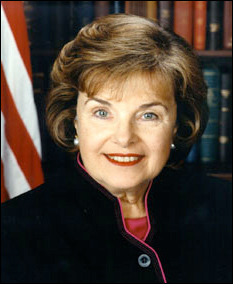
California Sen. Dianne Feinstein (D)

California Sen. Dianne Feinstein (D)

Oct. 11, 2017 — California Sen. Dianne Feinstein (D) announced this week that she will seek a fifth full term next year despite, at 84 years of age, being the Senate’s oldest member. Curiously, her recent comments about President Trump and gun control have created some problems for the senator within the far left of her California Democratic Party. Thus, Feinstein’s decision to run again has engendered possible opposition from at least one prominent Democratic elected official.

Sen. Feinstein was first elected in 1992, when she defeated appointed Sen. John Seymour (R) after Gov. Pete Wilson (R) selected him to fill the Senate vacancy. Then-Sen. Wilson was elected governor in 1990, thus creating the vacancy. Two years later, Sen. Feinstein nipped then-Rep. Michael Huffington (R-Santa Barbara) 47-45 percent in the 1994 general election, the last close California Senate race. She would go onto win easy re-elections in 2000, 2006, and 2012.

A few weeks ago, Sen. Feinstein made the public comment that Donald Trump actually “can be a good president,” which drew the ire of many of his ardent Golden State opponents including state Senate President Kevin de Leon (D-Los Angeles), who seemingly has become the chief anti-Trump spokesman in California. After the Las Vegas shooting, Sen. Feinstein made the further statement that “no gun laws could have prevented the Las Vegas massacre.” Predictably, this comment was also met with derision from the far left, including Sen. de Leon.

Continue reading

With Murphy Out in PA, Corker Out in TN, Who Will Fill the Vacancies?

By Jim Ellis

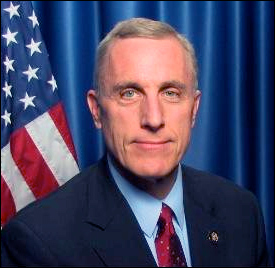
Rep. Tim Murphy  (R-Pittsburgh)

Rep. Tim Murphy (R-Pittsburgh)

Oct. 9, 2017 — A new special US House election will soon be on tap, this time in southwestern Pennsylvania in PA-18. Beleaguered Rep. Tim Murphy (R-Pittsburgh) succumbed to the negative publicity leaking out about his extra-marital affairs, abortion hypocrisy, and internal relations with staff members to announce late last week that he will resign his congressional office effective Oct. 21. This, just a day after he made public his intention not to seek re-election but serve the balance of the current term.

Once the seat is vacant, Gov. Tom Wolf (D) will call a special election to choose a replacement. Since the Nov. 7 municipal elections occur less than three full weeks after Rep. Murphy departs, that means holding a new special congressional contest concurrently with the regular off-year vote would be impossible. Therefore, it is probable a mid-December or post-January 1st election will be scheduled.

There will be no primary period. Under Pennsylvania law, the parties will meet in district conclaves and local delegates will select the respective nominees.

Continue reading

Pennsylvania’s Importance

Pennsylvania Congressional Districts Map (click on image to enlarge to see detail)

Pennsylvania Congressional Districts Map (click on image to enlarge to see detail)

By Jim Ellis

Oct. 6, 2017 — In every election, it seems one or two states become that cycle’s political focal point and we can already identify which places might serve in such a role for 2018. Along with California for House races, political fortunes in the Keystone State of Pennsylvania could well influence national Senate and House outcomes, while strongly contributing to the national redistricting outlook when the state’s competitive governor’s race is ultimately decided.

Gov. Tom Wolf (D) seeks re-election with improving favorability ratings and will be in a targeted 2018 campaign. Sen. Bob Casey Jr. (D) is running for a third term and drawing considerable opposition, particularly from US Rep. Lou Barletta (R-Hazelton). US House competition is projected for as many as 11 of the state’s 18 congressional districts, some of which coming in primaries, and a live political gerrymandering lawsuit before the state court system could potentially radically change Pennsylvania’s redistricting maps prior to the next election. Therefore, we see a state teeming with political activity in each of its four corners.

Gov. Wolf came from nowhere in 2014 as a successful York business owner to capture the Democratic nomination, and then proved to become the only member of his party to unseat a Republican governor in what was otherwise a Republican wave election year. He will face his own highly competitive re-election battle next year, as the GOP must re-capture this statehouse to protect its congressional and state legislative gains as a new redistricting cycle will begin during this next governor’s term.

Continue reading

Alabama: Strange vs. Moore

By Jim Ellis

Sept. 27, 2017 — Voters returned to Alabama polling places yesterday, as Republican run-off participants voted to choose a nominee to advance to the Dec. 12 special general election. To re-cap, former state Supreme Court Chief Justice Roy Moore placed first in the Aug. 15 special Republican primary election, taking 40 percent of the vote from the over 423,000 individuals who cast their ballots. Appointed Sen. Luther Strange took second with 32 percent, which allowed both to move into yesterday’s run-off election. That’s almost exactly the way election turned out yesterday. Judge Moore scored a robust victory last night over Sen. Strange in the special Republican Alabama Senate run-off election. Sen. Strange went down to a 55-45% crushing defeat, just as the pre-election polls predicted. Judge Moore now advances to the Dec. 12 special general election against the Democratic nominee, former US Attorney Doug Jones.

Sen. Strange was the choice of the GOP establishment, which, in this case, somewhat surprisingly included President Trump, who usually lines up on the other side. But all the firepower this group brought to bear and Strange’s minimum 3:1 spending advantage was insufficient to overtake and defeat the former state Supreme Court chief, who was twice removed from the bench for disobeying federal court orders that violated his principles.

Since the primary, polls had shown Judge Moore holding the advantage heading into yesterday’s vote. So did the very last published polls released within the past 48 hours preceding election day.

The Trafalgar Group, proving to be the most accurate pollster from the 2016 election through the special elections held earlier this year, went into the field during the Sept. 23-24 period and interviewed 1,073 likely run-off voters. According to their results, Judge Moore’s lead was major: 57-41 percent, far beyond any reasonable margin of error.

Continue reading