Tag Archives: President Trump

Castro Out; Bernie Brings in $34.5M

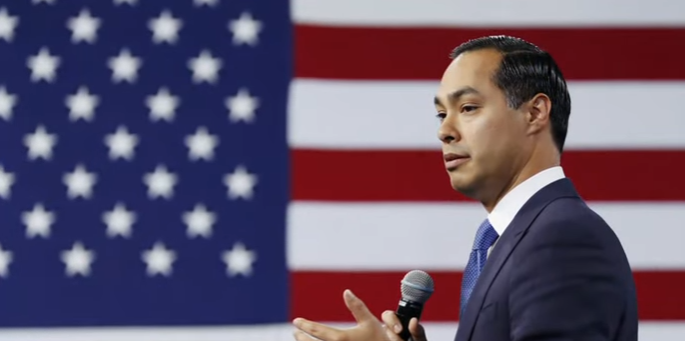
Julian Castro, 2020 Presidential candidate and Former Housing and Urban Development Secretary, bows out of the race.


By Jim Ellis

Jan. 6, 2020 — Saying that it simply “isn’t our time,” former Housing and Urban Development Secretary Julian Castro announced late last week that he is ending his bid for the Democratic presidential nomination now, exactly one month before the campaign’s first votes are cast in the Iowa Caucuses.

Castro, who served the final two-and-a-half years of the Obama Administration in the president’s cabinet after a five-year stint as mayor of San Antonio and previously being elected to one term on the city council, was one of the first candidates to enter the 2020 presidential campaign. Beginning the race as a little-known political figure despite serving in a national office, Castro couldn’t get his campaign untracked. He never came close to attaining high single digit support in any poll, even when including those from his home state of Texas.

On the money front, Castro raised slightly over $10 million for his national effort. Through Sept. 30, he attracted $7.6 million in financial backing with estimates of approximately $3.5 million for his final quarter in the race. Castro qualified for participation in four of the six national candidate forums, taking a major risk in one of them that proved to backfire.

Continue reading

The North Carolina Filings

All the best for a wonderful holiday season.
Ellis Insight daily updates will return on Jan. 3, 2020.

By Jim Ellis

Dec. 24, 2019 — Candidate filing in the Tar Heel State closed Friday, and the North Carolina political contestants are now set for the March 3 Super Tuesday state primary. In addition to the presidential race, North Carolina voters will choose nominees for governor, US Senate, 13 congressional races, the state constitutional offices, and state legislature.

No surprises came from the presidential filings, though 38 individuals filed to run for the nation’s highest office. Twenty of the 38 are minor party candidates, however. Fifteen Democrats are running, including all of the major contenders. President Trump draws Republican primary opposition from former Massachusetts governor Bill Weld and Illinois ex-congressman Joe Walsh.

Sen. Thom Tillis sees only minor Republican primary opposition and now is a cinch for re-nomination. Businessman Garland Tucker was expected to run a competitive primary race but decided to end his effort prior to the filing deadline. When Rep. Mark Walker (R-Greensboro) was drawn out of a winnable district in the court-mandated redistricting plan, he began considering entering the Senate race. The congressman, however, ultimately decided to wait a cycle and looks to run for Sen. Richard Burr’s (R) open seat in 2022.

Five Democrats filed for the Senate, but the nomination battle is realistically between former state senator Cal Cunningham, who is the party leadership favorite, and state Sen. Erica Smith (D-Gaston). The eventual Democratic nominee will face Sen. Tillis in what promises to be a competitive general election in a state that has defeated more incumbents in the modern political era than any other place.

Continue reading

Rep. Mark Meadows to Retire

By Jim Ellis

North Carolina Rep. Mark Meadows (R-Skyland/ Asheville)

Dec. 23, 2019 — Four-term North Carolina Rep. Mark Meadows (R-Skyland/ Asheville), the former chairman of the House Freedom Caucus, surprisingly announced that he would not file for re-election this past Friday, and immediately rumors began circulating that he will soon accept a position in the Trump Administration.

Prospective candidates had less than two full days to decide if they wanted to enter the now open congressional race since he sent his announcement tweet on Wednesday night and candidate filing closed at noon Friday, Dec. 20. Six Democrats had already announced their candidacies, so the onus is on Republican potential contenders to make a quick decision and complete the filing process.

Stronger potential Democratic candidates only had that same small time window to make a decision, as well. Of those six already running no one has yet reported even raising $40,000.

The new redistricting plan changed North Carolina’s 11th District to the degree where just under a quarter of the constituency is new but no more Democratic even though the entire city of Asheville was placed back into the CD.

The 11th District sits in the far western tail of North Carolina, nestled among the bordering states of Virginia, Tennessee, Georgia, and South Carolina. The new 11th District encompasses 16 whole counties along with a part of Rutherford County. The changes included adding all of Buncombe (Asheville) and Avery Counties, while annexing about half of Rutherford County. In exchange, Burke and Caldwell Counties are transferred to Rep. Virginia Foxx’s (R-Banner Elk) new 5th District.

Continue reading

Impeachment Politics

By Jim Ellis

Dec. 20, 2019 — As the most recent polling from national research sources and in key states shows President Trump gaining political strength, the US House last night, on a virtual party line vote, approved the resolution to send the Articles of Impeachment to the US Senate for trial.

The vote was 229-198, with three Democrats voting against the articles and one Republican-turned-Independent, Michigan’s Justin Amash, supporting the measures. Presidential candidate Tulsi Gabbard, who represents the 2nd District of Hawaii, voted “Present”. Three members, two Republicans and one Democrat, were absent. Rep. Duncan Hunter (R-CA) will soon resign his seat due to pleading guilty to a federal campaign finance charge. Retiring Reps. Jose Serrano (D-NY) and John Shimkus (R-IL) were the others who did not vote. All present and voting Republicans opposed the impeachment measures.

Two of the three opposition Democrats were expected to vote no, Reps. Collin Peterson (D-MN) who represents the strongest Trump district in the country to elect a Democrat to the House, and New Jersey’s Jeff Van Drew who is about to leave his party to join the Republicans. The third no vote came from freshman Rep. Jared Golden (D-ME), who represents the northern district in Maine that delivered its electoral vote to Trump in 2016 even though the state voted for Hillary Clinton. Maine and Nebraska are the only two states that choose to divide their electoral votes.

Two pollsters who had been showing national political support for the impeachment are now projecting a swing toward the opposite conclusion.

The CNN poll, conducted by their usual research partner, the SSRS firm, surveyed 1,005 adult respondents over the Dec. 12-15 period. A total of 45 percent of the respondents favored impeaching the president, while 47 percent said, “they don’t feel that way.” In contrast, their Nov. 21-24 survey found 50 percent favoring impeachment while 43 percent said they didn’t agree with the move. Previously, the CNN polls had reported positions consistently favoring impeachment since late September.

Continue reading

What The Van Drew Switch Means

By Jim Ellis

NJ-2 Freshman Rep. Jeff Van Drew

Dec. 18, 2019 — We can expect an official announcement coming this week that freshman New Jersey Rep. Jeff Van Drew (D-Dennis Township) will become a Republican. Seeing most of his staff resign over this past weekend is the clearest indication that the speculation surrounding the congressman’s impending political move will in fact occur.

What does Van Drew’s switch mean for the House outlook in 2020? After the 2018 cycle House were finally tabulated, including the 2019 special elections to fill vacancies, the Republicans were tasked with converting a net 18 seats to obtain a bare one-vote majority.

Such a calculation has changed, however. The North Carolina court-mandated redistricting plan, the state’s third in this decade, will cost the Republicans at least two seats, meaning the GOP majority conversion number increases to 20. The Van Drew switch now reduces that number to 19, assuming each party holds their two vacant seats that will be decided in special elections prior to the regular 2020 general election.

Van Drew decided to switch parties due to his opposition to the Trump impeachment plans, but the underlying related reason points to some of his key county Democratic chairmen indicating they would support an intra-party challenge against him. New Jersey political parties are strong, and a Democratic chairman opposing one of his own incumbents would be taken seriously. The party endorsements in this state carry tangible benefits, including a particular advantageous ballot placement. An incumbent not receiving the party endorsement goes a long way to seeing such an office holder replaced.

The Republican move doesn’t solve all of Rep. Van Drew’s political problems, however. Upon hearing the party switching speculation, venture capitalist David Richter stated that not only is he remaining in the Republican primary to face Van Drew, but he is prepared to spend $1 million of his own money to win the nomination. On the Democratic side, college professor Brigid Callahan Harrison announced that she will run for the party nomination, and others are expected to soon follow her lead. It is clear that Rep. Van Drew will face both a competitive Republican primary and general election to secure a second term.

Continue reading

Deadlines Ahead in Ohio,
North Carolina 2020 Campaigns

By Jim Ellis

Dec. 17, 2019 — Interesting decisions await as candidate filing deadlines are approaching this week in Ohio (Dec. 18) and North Carolina (Dec. 20) for their respective March 17 and March 3 primaries.

The Ohio political situation, originally thought to be relatively mundane without a Senate campaign and little competition within the congressional delegation, may be changing.

In the 1st District, veteran Rep. Steve Chabot (R-Cincinnati), who lost this district in 2008 after first going to Congress in 1995 and then re-claiming the seat in 2010, again faces what will likely be a competitive re-election battle. In 2018, Chabot defeated Hamilton County Clerk of Courts Aftab Pureval by a 51-47 percent count, despite the Democratic nominee spending over $4 million for his campaign. Expected to file for the Democrats this year are healthcare executive Kate Schroder and US Air Force Reserve officer Nikki Foster.

The new potential contest coming onto the political scene emanates from the Youngstown area as Rep. Tim Ryan (D-Warren), who was an early presidential candidate but failed to generate any major attention, appears to be attracting strong opposition for the first time since he won his original congressional election in 2002.

Now reportedly moving toward challenging Rep. Ryan are former Lt. Gov. Mary Taylor, who fared poorly in the 2018 Republican gubernatorial primary, and ex-state Rep. Christina Hagan who scored over 40 percent of the vote against freshman Rep. Anthony Gonzalez (R-Rocky River/Medina) in the last nomination campaign from the neighboring 16th District.

Though both women have the ability to attract people and resources to their political efforts, the 13th CD is reliably Democratic and Congressman Ryan would be tough to dislodge. President Trump fared better than most Republicans here in 2016, but still lost 44-51 percent. President Obama, in both 2008 and 2012, topped 62 percent and Rep. Ryan has averaged 67.8 percent of the vote over his nine-term congressional career.

Still, House members who run for president often have a difficult time in their next re-election effort, so it remains to be seen if a credible challenge against the veteran congressman could develop legs.

Continue reading

Impeachment: First Political Clues

By Jim Ellis

President Donald Trump | whitehouse.gov

Dec. 16, 2019 — As we move toward the impeachment vote in the full House and the impending Senate trial to determine whether President Trump should be removed from office, a great deal of speculation exists about how voters will respond to this situation. A series of early December polls from the most critical swing states gives us a clue.

Firehouse Strategies/Optimus commissioned simultaneous polls within the Dec. 3-5 period in the top swing states of Pennsylvania, Michigan, and Wisconsin. As we remember, all of these places gave Trump a small victory margin in 2016. Phoenix-based pollster OH Predictive Insights conducted a poll of the Arizona electorate during the same period. Firehouse found sampling groups numbering between 551 and 610 respondents in the three states. OH used a slightly larger 628 person sample cell in the Grand Canyon State.

Both pollsters tested President Trump in each targeted state against former Vice President Joe Biden, Sens. Elizabeth Warren and Bernie Sanders, South Bend Mayor Pete Buttigieg, and ex-New York City mayor, Michael Bloomberg.

In all instances President Trump led his prospective opponent when individually paired. Since he had been trailing in similar ballot test responses from several previous polls in the Great Lakes States and was about even in Arizona, the change at the height of the impeachment proceedings suggests that he is seeing a net positive early return from the legal attack.

Of course, much could change before the process concludes, but this first data does provide us an interesting political snapshot as it relates to impeachment perceptions. As a rule, general election polling before the parties nominate their presidential candidates is usually irrelevant but, considering the present impeachment overlay, these numbers appear to be significant and particularly so because they are originating from critically important states.

For President Trump to win re-election, he must carry all five of the states in his 2016 coalition that typically vote Republican but have been trending closer to the Democrats since the last presidential election. Those are: Arizona, Georgia, and Texas. Florida and North Carolina are always swing states in virtually every election and will be again in 2020. To win, the president must first carry all of these aforementioned states. If so, he then would need to win just one of the Michigan, Pennsylvania, Wisconsin trio in order to yield a bare Electoral College majority.

Continue reading

Rep. Yoho to Retire; Texas Filings

By Jim Ellis

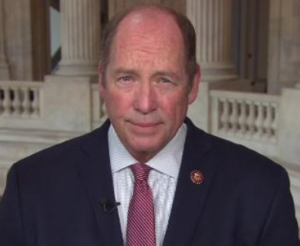
Dec. 12, 2019 — Keeping his pledge to serve only four terms in the House, Florida Rep. Ted Yoho (R-Gainesville) announced in a local radio interview earlier this week that he will not seek re-election next year. Also, the 2020 Texas candidate filing deadline came on Monday, and lists of the qualifying candidates are now becoming public.

REP. YOHO, FL-3

Florida Rep. Ted Yoho (R-Gainesville)

There had been some speculation brewing as to Yoho’s plans for 2020 with some suggesting he might eschew his original pledge. Making this now the 37th open House seat and second in Florida, potential candidates will have until May 1 to file for the Aug. 25 primary.

The eventual Republican nominee will clearly have the inside track to hold this seat for the GOP. Florida’s 3rd District is strongly, and consistently, Republican. President Trump scored 56.2 percent of the vote in 2016. This number is almost identical to the 56.6 percent that Mitt Romney posted against President Obama in 2012, and John McCain’s 54.6 percent that he garnered in the 2008 presidential election.

Rep. Yoho has averaged 61.0 percent of the vote here over four elections, but the district was significantly changed in the 2015 mid-decade court-ordered redistricting plan. In the current configuration, Yoho averaged almost exactly what the Republican presidential candidates scored: 57.2 percent in his two elections since the boundary alteration.

The 3rd District occupies five whole counties and parts of a sixth. The major population center is the city of Gainesville in Alachua County. The remaining portion of the CD is nestled squarely in the north/central section of the Florida peninsula.

Three Republicans had already announced their candidacies, but none seems particularly viable. The contender raising the most money through the Sept. 30 financial disclosure period is businesswoman Amy Pope Wells, but her receipts showed just under $40,000 raised for the campaign with a cash-on-hand figure of just under $8,500.

Continue reading

House Retirement No. 36

Four-term Rep. George Holding (R-Raleigh) announced that he will not seek re-election next year.

By Jim Ellis

Dec. 10, 2019 — The 36th US House seat to come open lies in Raleigh, North Carolina, as four-term Rep. George Holding (R-Raleigh) announced late Friday that he will not seek re-election next year. He is in the rare situation of being forced from his position because of an unfavorable redistricting draw during the fifth election of the political decade.

We can expect to see a number of such redistricting-related instances occur throughout the country in the next election cycle, but to be still fighting redistricting legal battles, as they are in North Carolina, with a new census and apportionment directly upon us is unprecedented.

Rep. Holding says he is now not seeking re-election because of what he describes as the “terrible” manner in which the boundaries of his 2nd District have been reconstructed. The 2nd moves from a 53-44 percent Trump district to one that voted 60-36 percent for Hillary Clinton.

Though the Republican legislators reconfigured the map, the partisan division will increase the Democratic number by at least two seats, which directly affects the Raleigh and Greensboro and Winston-Salem areas. The court directive forced a criterion change upon the legislature, which responded with the new map.

The post-2020 election delegation will likely feature an 8R-5D split, and Democrats sued arguing they should have more in a state whose electorate typically splits close to 50/50. The three-judge panel that originally struck down the previous GOP map unanimously approved this latest mapping effort, so the new plan will stand for the 2020 elections.

This new congressional map significantly changes the North Carolina political picture. The Holding seat is now a Democratic primary fight, and the early leader is former state Rep. Deborah Ross, who challenged Sen. Richard Burr (R) in 2016 and held him to a hard fought 51-45 percent victory.

The other Republican incumbent left without a political home is three-term Rep. Mark Walker (R-Greensboro), and it is clear he will not seek re-election in the new 6th District. He is reportedly weighing his options for other political opportunities. Rep. Walker averaged 58.1 percent of the vote in his three congressional victories while the newly constructed NC-6 constituency supported Hillary in a 59-38 percent result.

Continue reading

Georgia Rep. Tom Graves to Retire

By Jim Ellis

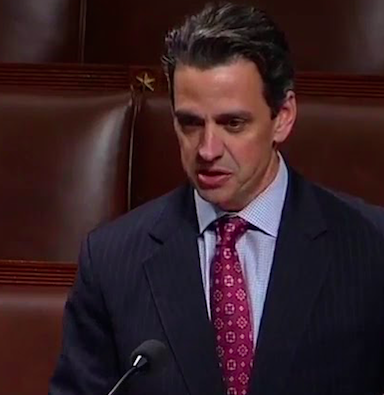
Georgia Rep. Tom Graves (R-Ranger/Rome) to retire

Dec. 9, 2019 — It appears we have again entered into a potentially sustained period of multiple retirement announcements, which is not particularly surprising, since members are beginning to face candidate filing deadlines in their individual states.

This week has been active. After Rep. Duncan Hunter (R-CA) pled in federal court to a campaign finance violation and will soon resign, and Rep. Denny Heck (D-WA) announced Wednesday that he won’ seek another term, six-term Georgia Rep. Tom Graves (R-Ranger/Rome) followed suit in releasing his social media message late last week declaring that the current term will be his last.

Though still young, Graves indicated to his local media that the reason for his retirement is to explore new avenues with his family now that his offspring have reached adulthood. He was in no political danger, having won his last election with 76 percent of the vote in a district that went 75-22 percent for President Trump in 2016.

The Graves decision moves the open-seat count to 35, with 24 coming from the Republican side of the aisle versus only 11 from the majority Democrats.

Georgia’s 14th District sits in the far northwest corner of the state, encompassing the relatively narrow area that borders both Tennessee and Alabama. The seat contains 11 counties and part of another, with the population relatively evenly spread throughout small towns and rural areas. The city of Rome, with a population of just over 36,000 people, is the district’s largest municipality, though Paulding County with just under 160,000 residents spread through small towns west of Marietta is the district’s most sizable population entity.

Since GA-14 has such a strong Republican voting history, the battle to replace Rep. Graves will occur in the GOP primary. We can expect a crowded field to soon form. The primary will assuredly yield the top two finishers advancing to a run-off, because it is a virtual certainty that no one will reach majority support in the first vote.

The state legislative district overlay suggests that the state Senate may produce the most viable contenders. The congressional district occupies five state Senate seats, all Republican, and parts of 15 state House districts, just one of which a Democrat represents. In the latter districts, no state House seat exceeds even 10 percent of the congressional district constituency.

Continue reading