Tag Archives: President Joe Biden

Trouble for Biden in Swing States; Incumbents Reign in 2023 Elections; Former Michigan Rep. Announces for Senate; What the Amo RI-1 Win Means

By Jim Ellis — Thursday, Nov. 9, 2023

President

President Joe Biden is in trouble in swing states. / Photo by Gage Skidmore

Siena College/NYT Poll: Trouble for Biden in Swing States — Siena College and the New York Times teamed up on recent polls in six key swing states all conducted during the Oct. 22 to Nov. 3 period. The six states are: Arizona, Georgia, Michigan, Nevada, Pennsylvania, and Wisconsin. The tested Republicans against President Joe Biden were former President Donald Trump, Florida Gov. Ron DeSantis, and ex-UN Ambassador Nikki Haley. In all instances, with the exception of Trump in Wisconsin, the named Republican would poll ahead of President Biden, thus unseating him if the election were today.

Of the three Republicans, Haley performs the strongest against the Biden. Her best number, +14, comes among Wisconsin likely voters. Trump’s best state is Nevada (+11); DeSantis tops President Biden by five percentage points among Arizona registered voters; Biden’s best showing comes against Trump in Wisconsin (+2).

The Democrats certainly have time to right their political ship, and if Trump is convicted in any of his criminal cases, that might get adjudicated before the election, and the tables could quickly turn. This campaign will prove the most unique of presidential elections.

Election 2023

Déjà Vu: Incumbents Reign — The 2023 odd-numbered year elections are now in the books, and, as we saw on Election Night, the results are very similar to what occurred a year earlier in the 2022 midterm elections.

Most of the political pundits are calling this election year a victory for Democrats despite having an unpopular president in office, while others cite the abortion issue as a continuing turnout driver, which also benefits Democrats. Both statements are true, but perhaps the more definitive underlying pattern is that the incumbents, just as they did in 2022, again reign supreme.

In 2022, 55 of the 56 US senators and governors who ran for re-election won. In the US House elections, 98.1 percent of incumbents who ran for re-election were successful. On Election Night, we saw two more incumbent governors win again.

Governors Andy Beshear (D) and Tate Reeves (R) in Kentucky and Mississippi, respectively, were re-elected with similar five percentage point margins. Polling in the two states suggested a closer result for both incumbents, but each was favored to win.

The Virginia situation is a bit different. Largely due to new court-imposed redistricting maps that radically changed the complexion of most districts, voters elected Democratic majorities in both houses of the legislature. It is inconsistent to rate the Virginia results as incumbent-oriented because we saw roughly one-third of all districts run without incumbents, and most of those office holders who did seek re-election found themselves in new districts vastly different from the one in which they were originally elected.

Democrats will now have at least 21 of 40 seats in the Virginia state Senate and 52 of 100 in the House of Delegates. The party division margin differences yield no change in the Senate, while Democrats converted at least four seats in the House.

While it’s difficult to overlay an incumbent victory matrix across the Old Dominion legislative elections, it is not unusual to see a state that has become reliably Democratic over the past two decades to again vote for that party’s candidates in the 2023 elections. Therefore, the fact that the state’s favored party over the course of time again performed better is consistent with the incumbent voting pattern seen elsewhere.

The abnormal facet of the incumbent-oriented elections we have witnessed in 2022 and now 2023 is that the issue polls consistently show voters certainly believing the country is headed down the wrong track, with similar feelings regarding most states. The state right direction/wrong track questions, however, are not as intensely negative as at the national level.

Yet, despite the recorded discontent, voters return to their respective polling places and almost unanimously re-elect the incumbents. This again suggests that the Republican campaign message machine needs an overhaul. It is clear that their campaign themes and approaches are not driving enough voters to support the GOP candidates in the most hotly contested races.

Once numbers become finalized, we can better understand the results. Because the 2023 vote tabulations verified the pattern set in 2022, it is likely this precursor favors incumbents at large, and more specifically the Democrats, to have another positive election year in 2024 despite what today’s issue polls may currently be projecting.

Senate

Michigan: Ex-Rep. Meijer Announces — Former one-term Congressman Peter Meijer (R), who was defeated for renomination in 2022, announced Monday that he will join the open Michigan US Senate field. The move had been expected for weeks, but is a curious one, nonetheless. It is hard to see a victory path for Rep. Meijer since he couldn’t get enough conservative support to defeat his ’22 GOP challenger, John Gibbs. Gibbs would then go onto lose the general election to now freshman Rep. Hillary Scholten (D-Grand Rapids).

The top Republican contenders for the party’s Senate nomination are former US Rep. Mike Rogers and retired Detroit Police Chief James Craig. It is possible that Meijer’s entry could actually help Rogers, since Craig and Meijer will likely both appeal to the more centrist element of the Republican voter base. If so, this will help Rogers unite the conservatives behind his candidacy and propel him to the nomination. Whoever wins the Republican primary will almost assuredly face Rep. Elissa Slotkin (D-Lansing) in the general election.

The open Michigan race is likely to be close, but Democrats will have at least a slight edge in the general election. Sen. Debbie Stabenow (D) is retiring after serving what will be four full terms once the current congressional session concludes at the beginning of 2025.

House

RI-1: Gabe Amo (D) Wins Special Election — Former Biden and Obama White House aide Gabe Amo virtually assured himself of succeeding resigned Rep. David Cicilline (D-Providence) when he won the Sept. 5 special Democratic primary. Amo easily defeated Republican Gerry Leonard Tuesday in the special general election. Upon winning the seat, Amo now will be sworn in to the House and serve the balance of the current term.

Rhode Island’s 1st Congressional District is solidly Democratic. The FiveThirtyEight data organization rates the seat as D+32. Dave’s Redistricting App calculates the partisan lean at 64.9D – 33.1R. President Biden carried the seat with a 64-35 percent victory margin in 2020. The Daily Kos Elections site ranks the seat as the 99th most vulnerable seat in the Democratic Conference — pretty secure. Therefore, there was little doubt as to which candidate would win the special election.

The Amo victory will bring the Democrats back to their full 213-member compliment in the House. The next special election, in UT-2, will be held on Nov. 21. Republican Celeste Maloy is favored to hold resigned Rep. Chris Stewart’s (R-Farmington) seat. Should she win, the House will be restored to its post-regular election division of 222R-213D.

Kennedy Breaks 20 Percent Threshold; Nevada’s Lombardo Endorses One-Time Opponent; US Governors’ Approval Ratings; Early Voting Trends Ahead of Tuesday

By Jim Ellis — Monday, Nov. 6, 2023

President

Robert F. Kennedy Jr., running as an Independent general election candidate.

Quinnipiac Poll: Kennedy Breaks 20 Percent Threshold — A new national Quinnipiac University survey (Oct. 26-30; 1,772 US Adults; 1,610 US registered voters; live interview) finds Robert F. Kennedy Jr., running as an Independent general election candidate, securing 22 percent support in a ballot test featuring him, President Joe Biden, and former President Donald Trump. The Kennedy presence dragged both President Biden (39 percent) and Mr. Trump (36 percent) below the 40 percent mark. Kennedy’s strongest groups were voters aged 18-34 (38 percent), Independents (36 percent), and Hispanics (33 percent).

As has been the case with other polling, Kennedy draws slightly more support from the Trump/Republican coalition than he does from the Biden/Democratic voter group. In this particular survey, 14 percent of Republicans and 12 percent of Democrats support Kennedy.

House

NV-4: Governor Endorses Ex-North Las Vegas Mayor — Gov. Joe Lombardo (R) has already waded into the 4th Congressional District Republican primary to endorse former North Las Vegas Mayor John Lee, a Democrat turned Republican. Interestingly, Lee opposed Lombardo in the 2022 governor’s race, but fared poorly in garnering only eight percent support. Lombardo, then the Clark County Sheriff, would go on to defeat incumbent Gov. Steve Sisolak (D) in the associated general election to become the only challenger to unseat either a sitting governor or a senator in the entire country.

The 2024 4th District Republican primary winner will challenge Rep. Steven Horsford (D-Las Vegas) in what is likely to become a competitive race. The FiveThirtyEight data organization rates NV-4 as D+5. The Daily Kos Elections site ranks the district as the 34th most vulnerable seat in the 213-member Democratic Conference.

Governor

Morning Consult: Governor Approval Survey — The Morning Consult firm released their regular report measuring job approval scores of all 50 US governors and found everyone in positive territory. Govs. Phil Scott (R-VT; 83:14 percent approval/disapproval), Mark Gordon (R-WY; 73:13 percent), Chris Sununu (R-NH; 67:28 percent), Josh Green (D-HI; 66:25 percent), and Mike Dunleavy (R-AK; 63:25 percent) were the five governors commanding the strongest ratios.

The five with the worst ratings are: Govs. Tina Kotek (D-OR; 44:41 percent approval/ disapproval), Tate Reeves (R-MS; 46:44 percent), Katie Hobbs (D-AZ; 48:40 percent), Kim Reynolds (R-IA; 49:47 percent), and outgoing Gov. John Bel Edwards (D-LA; 49:43 percent). The poorer scores were particularly concerning for Mississippi Gov. Reeves, who is on the ballot for re-election Tuesday, Gov. Reynolds in Iowa who was consistently highly rated in previous surveys, and Gov. Edwards who will leave office in December but, heretofore, had enjoyed reliably positive scores.

States

Early Voting: Monitoring Trends Before Tuesday — Since most states have adopted some form of early voting, analyzing the pre-election vote has proven to be an accurate way to forecast momentum. Monitoring early voting becomes a reliable precursor to forecasting which party will do better when all ballots are counted. Unfortunately, for Tuesday’s election, Mississippi is one of the three states that has no early voting program. Kentucky only allows in-person early voting on the Thursday, Friday, and Saturday before the election so early trends are not available in those two states.

The Virginia numbers for the state’s legislative races are interesting. As reported through Nov. 2 from the Target Smart organization, Republican early voting is up three percentage points when compared to the party’s 2021 performance, while Democrats are down 2.7 percent under the same model. Unaffiliated voters are down 0.4 percent from their 2021 performance statistics. Democrats, however, still have more people casting their ballots than do Republicans and unaffiliated voters (52.2 percent of early ballots come from Democrats, 32.7 percent from Republicans, and 15.0 percent from the unaffiliated segment).

The Virginia Public Access Project also charts the pre-election voting. In addition to the early vote by party, they also track the early in-person vote. Here, Republicans have clear momentum for the Tuesday legislative elections. Compared to the 2021 turnout (numbers are recorded in 2021 and 2023 at the 16-day before election mark), Republican early in-person turnout is up 7.4 percentage points, while Democratic early in-person participation is down 6.3 points. Again, however, more Democrats than Republicans have voted, but the comparison within each party’s previous performance has routinely proven significant.

New Hampshire for Biden Write-In Effort; NJ First Lady Files; OR-3 Rep. Blumenauer to Retire; Bowman on Hot Seat Since Pulling Fire Alarm

By Jim Ellis — Thursday, Nov. 2, 2023

President

A New Hampshire for Biden poster

New Hampshire: Democratic Leaders Launch Biden Write-in Effort — A group of leading Democrats, including the state’s two senators and their pair of US House members, as well as all 10 Democratic state senators and most of the party’s large delegation to the state House of Representatives, are forming an organization to qualify President Joe Biden as a write-in candidate for the still unscheduled Democratic presidential primary. Biden is choosing to bypass New Hampshire because the state did not agree with the new Democratic National Committee presidential primary scheduling recommendations.

Though the show of internal Democratic strength is positive for the Biden campaign, their move also increases the stakes for the New Hampshire primary. US Rep. Dean Phillips (D-MN) is a candidate and will secure a ballot position. Therefore, the pressure would be on the Biden write-in effort to defeat Phillips, otherwise his national campaign would begin with a major political black eye.

Senate

New Jersey: NJ First Lady Files Candidate Committee — New Jersey First Lady Tammy Murphy (D) may be joining the US Senate race. Rumored to be a candidate once the scandal involving incumbent Sen. Bob Menendez (D) broke, Murphy had not taken any official step to create a formal campaign. That changed Tuesday, however, as she filed a senatorial exploratory committee with the Federal Election Commission but stopped short of declaring her candidacy. An announcement may be coming in the next couple of weeks.

Murphy may have a difficult time in the Senate Democratic primary. Sen. Menendez, though faring poorly in early polling, has not indicated that he will resign or retire. Rep. Andy Kim (D-Moorestown) immediately announced his Senate primary entry upon the Menendez indictment becoming public and has jumped out to an early lead.

Additionally, Gov. Phil Murphy had a close call for re-election in 2021, meaning the Murphy family is likely weakened within the Democratic voting base. Finally, Murphy has never been a candidate before, and starts well behind Rep. Kim despite having name identification. An early October Data for Progress poll showed Kim leading an entire proposed candidate field, including Sen. Menendez, by a large margin. Murphy stood at just four percent support.

House

OR-3: Rep. Earl Blumenauer to Retire — Fifteen-term Oregon US Rep. Earl Blumenauer (D-Portland) has announced that he will retire at the end of the current Congress. Blumenauer, first elected to the House in a 1996 special election, has served in public office consecutively since 1973, including his time in the Oregon House of Representatives, the Multnomah County Commission, and as a Portland City Commissioner, in addition to his 28-plus years in Congress. He currently serves on the Ways & Means and Budget Committees.

Rep. Blumenauer leaves a safely Democratic Portland suburban-anchored seat that covers Hood River County and parts of Multnomah and Clackamas counties. The FiveThirtyEight data organization rates as D+43. Dave’s Redistricting App calculates a whopping 70.5D – 25.0R partisan lean. The Daily Kos Elections site ranks OR-3 as the 155th most vulnerable seat in the Democratic Conference.

Blumenauer’s retirement decision means there are now 22 open House seats, 15 from the Democratic side, six that Republicans hold, with one new redistricting-created open seat in Alabama. Of the 21 incumbents not seeking re-election at this point, eight are retiring or have resigned, and 13 are running for a different office. We can expect a crowded and hotly contested 3rd District Democratic primary scheduled for May 21, 2024.

NY-16: Rep. Bowman Primary Opponents Unifying — Pastor Michael Gerald (D) announced that he is putting his Democratic primary challenge against Rep. Jamaal Bowman (D-Yonkers) on hold until Westchester County Executive George Latimer (D) decides whether he will run. Rep. Bowman has been on the hot seat regarding being found guilty of deliberately pulling a fire alarm in the Cannon House Office Building and could face an expulsion resolution. Obviously, this has generated negative publicity for the congressman.

Prior to winning the County Executive’s position in the 2017 election, Latimer had served in the New York State Senate and Assembly. Westchester County contains 91 percent of NY-16, so a Latimer challenge to Rep. Bowman, should it materialize, would become a major campaign.

RFK Jr.’s Equal Impact; Casey Maintains Lead in PA; Blake Masters Enters Open Arizona Race; Redistricting Map Struck Down in Georgia; Sarbanes to Retire; North Carolina News

By Jim Ellis — Monday, Oct. 30, 2023

President

Robert F. Kennedy Jr. / Photo by Gage Skidmore

RFK Jr.: Equal Impact Effect — Before Robert F. Kennedy Jr. announced his Independent candidacy, President Joe Biden and former President Donald Trump were generally at parity in national polling, with either contender clinging to a small lead or being deadlocked. We see two new national surveys adding Kennedy to their questionnaire, yet the leader still records the same type of close margins. Dr. Cornel West is included in some polls as another Independent candidate, but it is doubtful that he can qualify for enough state ballots to become a viable factor.

The HarrisX poll (Oct. 16-23; 3,029 US registered voters; online) sees Trump leading Biden and Kennedy, 40-38-18 percent. In what is now an unrealistic head-to-head pairing between Trump and Biden, Trump’s edge is four percentage points.

Suffolk University (Oct. 17-20; 1,000 US registered voters; live interview) sees a similar Biden-Trump-Kennedy 38-37-14 percent split. If the two major party candidates were only running against each other, the Suffolk data finds a 43-41 percent division in President Biden’s favor. Again, with such small margins that don’t greatly change, it appears that Kennedy may be pulling almost equally from both major party candidates.

Senate

Pennsylvania: Sen. Casey Maintains Lead — Franklin & Marshall College again surveyed the Keystone State electorate (Oct. 11-22; 873 registered Pennsylvania voters; live interview & online) as they do several times per year, and while this particular sampling period is long the US Senate ballot test results are consistent with other previously published surveys. According to the F&M data, Sen. Bob Casey Jr. (D) has a 46-39 percent advantage over Republican former hedge fund CEO David McCormick (R). Sen. Casey runs four points ahead of President Biden within the same sampling universe, while McCormick’s support percentage is three points below that of former President Trump.

House

AZ-8: Blake Masters Enters Open Race — As expected when this seat opened, 2022 Republican US Senate nominee Blake Masters announced that he will run for the 8th District seat in the 2024 election. Also in the race is Abe Hamadeh, the Republican attorney general nominee who lost the 2022 statewide race by less than 300 votes. Retiring US Rep. Debbie Lesko (R-Peoria), has already endorsed state House Speaker Ben Toma (R-Paradise), but Toma has yet to announce his congressional candidacy.

Masters’ chances of coming through a crowded primary with plurality support are good. The eventual Republican will be a heavy favorite in the general election. The FiveThirtyEight data organization rates AZ-8 as R+22. The Daily Kos Elections site ranks the seat as the 77th most vulnerable district in the Republican Conference.

Georgia: Federal Judge Strikes Down Congressional Map — In a developing story, a federal judge has struck down the Georgia congressional map as a racial gerrymander. The main district in question is Rep. Rich McCormick’s (R-Suwanee) 6th CD. It remains to be seen what steps the state takes. The judge is giving the lawmakers until Dec. 8 to redraw the map.

MD-3: Rep. John Sarbanes (D) to Retire — Nine-term Maryland US Rep. John Sarbanes (D-Baltimore) announced late last week that he will retire from the House after this current Congress ends. In a statement, Sarbanes said, “ … before coming to Congress, I also found great reward in working with nonprofits, volunteering and otherwise contributing to my community. That too is a powerful form of public service. For some time now, I have found myself drawn back to that kind of work — wanting to explore the many opportunities to serve that exist outside of elected office. With that in mind, I have decided not to seek re-election in 2024.”

Sarbanes’ departure will ignite a major Democratic primary for the open seat. The FiveThirtyEight data organization rates this seat as D+14. President Biden carried the district with a 62-36 percent margin. The Daily Kos Elections site ranks MD-3 as the 79th most vulnerable district in the Democratic Conference. In a presidential election year, this race will be decided in what promises to be a crowded Democratic primary.

NC-14: Rep. Jackson (D) to Run for Attorney General — As expected, Rep. Jeff Jackson (D-Charlotte), saying a Democrat cannot win the newly drawn 14th District, announced that he will not seek re-election and instead is now a candidate for the open attorney general’s position. In a video showing him as a boxer giving and taking punches, Jackson said he is targeting corrupt politicians, big corporations, and organized crime in his run for the top law enforcement job in the Tar Heel State.

As in the nine other Republican districts on the new congressional map, the new 14th that begins in Charlotte and moves west to encompass all or parts of five other counties, will likely elect the GOP nominee. All indications point to state House Speaker Tim Moore (R-Cleveland County) as Rep. Jackson’s eventual successor.

North Carolina: Redistricting Passes into Law; Ex-Rep. Walker Will Run — Both the North Carolina House and Senate passed the new congressional and state legislative maps, thus enacting them into law as Gov. Roy Cooper (D) has no veto authority over redistricting legislation. The map favors Republicans in 10 of the state’s 14 districts.

In Rep. Kathy Manning’s (D-Greensboro) new 6th District, which voted for Donald Trump by a 57-41 percent split according to the Daily Kos Elections statisticians, former US representative and 2022 US Senate candidate Mark Walker (R) announced that he will leave the governor’s race and instead run for this new district. For three terms, Walker represented a similar 6th District. He chose not to run in 2020 after a court-drawn map made NC-6 a heavily Democratic seat that Manning was able to claim.

Biden to Get Challenger; New OR-5 Candidate; Conflicting Polls in Kentucky; Presley Gaining Ground

By Jim Ellis — Friday, Oct. 27, 2023

President

President Joe Biden / Photo by Gage Skidmore

Rep. Dean Phillips: Apparently Will Challenge President Biden — The Wall Street Journal is reporting that three-term Minnesota Congressman Dean Phillips (D-Plymouth) is reportedly prepared to file to enter the New Hampshire Democratic primary to challenge President Joe Biden. Rep. Phillips has been calling for other Democrats to oppose the president for the party nomination, and now he is prepared to take up the mantel. Conversely, Biden’s campaign announced that the president will not participate in the New Hampshire primary, saying that he will “follow the rules” that he proposed to the Democratic National Committee that changes the progression of pre-Super Tuesday states.

It is likely we will see Biden’s New Hampshire supporters initiate a write-in effort for the president, but Rep. Phillips could still be positioned to win the state in a primary that has yet to be scheduled. The only two reasonable dates available that would keep the state as the first-in-the-nation primary is Jan. 23, because state law dictates that their primary not only be first, but also a week before any other.

House

OR-5: Dem Governor Endorses a New Candidate — Gov. Tina Kotek (D) this week announced her endorsement of state Rep. Janelle Bynum (D-Happy Valley) in the 5th Congressional District Republican primary, thus eschewing 2022 Democratic nominee Jamie McLeod-Skinner who received 49 percent of the vote against now freshman Rep. Lori Chavez-DeRemer (R-Happy Valley).

Going into the general election, McLeod-Skinner was tabbed as the favorite to retain the seat for the party after she upset then-Rep. Kurt Schrader in the Democratic primary.

Therefore, her performance against Chavez-DeRemer was deemed an under-performance. This explains why the Democratic leadership would be looking to change nominees for the 2024 election.

The FiveThirtyEight data organization rates as D+3. President Biden carried the seat 53-44 percent. The Daily Kos Elections site ranks OR-5 as the ninth most vulnerable seat in the Republican Conference.

Governor

Kentucky: Conflicting Polls — As we draw closer to the Nov. 7 gubernatorial election in Kentucky, recent polling shows a major difference regarding the size of Gov. Andy Beshear’s (D) lead over Attorney General Daniel Cameron (R).

The co/efficient survey research firm polling for the Bluegrass Freedom Action Fund (Oct. 18-19; 1,845 likely Kentucky general election voters; live interview & text) found Gov. Beshear’s lead dissipating. According to this survey, the ballot test has closed to 47-45 percent. Garin-Hart-Yang Research, however, conducted an internal survey for the Beshear campaign several days earlier and found a different result. The poll (Oct. 14-16; 741 likely Kentucky general election voters; live interview & text) sees Gov. Beshear holding a 52-44 percent advantage. The Kentucky election is scheduled for Nov. 7.

This election, and the governor’s contest in Mississippi, could become precursors for next year’s regular election if the voters follow the Louisiana lead. The Oct. 14 gubernatorial election in the latter state opened eyes when Republican Attorney General Jeff Landry scored an upset outright win on Oct. 14. Polling consistently showed Landry leading, but with a percentage much lower than his final showing. Democrat Shawn Wilson finished well below his research projections. Gov. Beshear is favored to win re-election, but if co/efficient is correct, this race could be headed for a photo finish.

Mississippi: Presley Gaining Ground — Democrats are releasing a new Public Policy Polling internal survey (Oct. 19-20; 601 likely Mississippi general election voters; multiple sampling techniques) that finds their nominee, Public Service Commissioner Brandon Presley, who is a second cousin to the late Elvis Presley, pulling to within one point of Gov. Tate Reeves (R), 46-45 percent.

Again, the turnout and voter swing dynamics that we saw in Louisiana might also play a role here. If so, we could be seeing a positive Republican trend. If not, then the Louisiana results would be considered an outlier. Additionally, the 2019 featuring then-Lt. Gov. Reeves and then-Attorney General Jim Hood (D), produced similarly close polling within the last month of the campaign. In the end, Reeves posted a 52-47 percent victory.

Independent Gwendolyn Gray is also on the ballot. She could be significant in a close race between the major party contenders by keeping the leader under 50 percent. If no one receives majority support, a secondary runoff election will be held on Nov. 28.

The Kennedy Factor in Alaska; Maryland Gov. Moore Endorses Senate Candidate; Malinowski’s Response; Candidate Search in PA-10

By Jim Ellis — Thursday, Oct. 26, 2023

President

Alaska: First Poll with Kennedy — The Alaska Survey Research firm tested the 2024 general election with, for the first time, Robert F. Kennedy Jr. on the questionnaire as an Independent candidate. Some have been saying that Kennedy on the ballot could force former President Donald Trump below 50 percent, which would jump-start a Ranked Choice Voting round. This could open the door to President Joe Biden winning Alaska even though he would be nowhere close to victory in the initial vote.

According to the ASR data (Oct. 13-18; 1,375 likely Alaska general election voters; online) Trump is leading the field but with just 37 percent support. President Biden follows with 29 percent, while Kennedy draws 17 percent. In an initial test without Kennedy, Trump would lead President Biden 45-37 percent. Therefore, both candidates would yield 8 percent support to Kennedy. The key here for Trump is making sure he does not fall below the 50 percent threshold, and this poll suggests he would be in danger of doing so if Kennedy continues to remain relatively strong.

Senate

Maryland Gov. Wes Moore (D)

Maryland: Gov. Moore Endorses Senate Candidate — Maryland Gov. Wes Moore (D) involved himself in what promises to be a hotly contested open Democratic primary to replace retiring Sen. Ben Cardin (D). Maryland’s voting history suggests that Sen. Cardin’s successor will be found in the Democratic primary, as Republicans will have little chance to win a Maryland statewide race in a presidential election year.

Gov. Moore announced that he is supporting Prince Georges County Executive Angela Alsobrooks for the party nomination. Her chief opponent is US representative and Total Beverage chain founder, Rep. David Trone (D-Potomac). The Moore endorsement is a signal to the African American community, the base of the state’s Democratic Party, that they should unite behind Alsobrooks.

Maryland’s black population accounts for just under 32 percent of the state’s residents. In a Democratic primary, however, their size is significantly larger.

Rep. Trone has already put just under $10 million of his own money into his campaign account and is currently advertising in targeted markets. According to Trone’s latest campaign finance report, 98 percent of his money comes from him.

House

NJ-7: Ex-Rep. Malinowski Responds — Former two-term US Rep. Tom Malinowski (D) responded to a statewide op-ed piece asking him to challenge the man who unseated him in 2022, freshman US Rep. Tom Kean Jr. (R-Westfield).

While Malinowski has not publicly ruled out running again, his response to the piece suggests that he will not become a candidate. His quote: “I am very happy in my life right now and looking forward to the next challenge, not backward.” Currently in the Democratic primary are former State Department official Jason Blazakis and progressive left activist Sue Altman.

PA-10: New Democratic Leader — According to a new Public Policy Polling Democratic primary survey of Pennsylvania’s competitive 10th District (Oct. 16-17; 547 PA-10 likely Democratic primary voters; live interview & text), the respondents are looking for a new nominee to challenge US Rep. Scott Perry (R-Dillsburg/Harrisburg).

The poll suggests that retired news anchor Janelle Stelson holds an early 33-20 percent edge over 2022 Democratic nominee and Harrisburg City Councilwoman Shamaine Daniels. In November, Daniels held Rep. Perry to a 54-46 percent victory. Her 27 years on the air in south-central Pennsylvania provides her with a substantial district-wide name identification advantage.

Expect this race to again be competitive, but Rep. Perry begins as the favorite for re-election. The FiveThirtyEight data organization rates PA-10 as R+9. The Daily Kos Elections site ranks the seat as the 37th most vulnerable seat in the Republican Conference.

Biden Challenger Poised; Jawando Drops Maryland Senate Bid;
A Challenger Emerges in IA-2; North Carolina Redistricting

By Jim Ellis — Tuesday, Oct. 24, 2023

President

Minnesota US Rep. Dean Phillips (D-Plymouth)

Rep. Dean Phillips: Reportedly Still Considering Biden Challenge — Media reports are again suggesting that three-term Minnesota US Rep. Dean Phillips (D-Plymouth) is still considering challenging President Joe Biden for the Democratic nomination. It is difficult to see how the congressman would have any reasonable path of victory in challenging the incumbent president of his party when starting at such a late date.

Rep. Phillips has been urging more prominent Democrats to challenge the president, the reason for which is he believes there should be competition for the party nomination. Phillips concedes, however, that he agrees with President Biden ideologically.

Senate

Maryland: Jawando Drops Senate Bid — Montgomery County Councilman Will Jawando (D), who was one of the first individuals to declare for the Senate once incumbent Sen. Ben Cardin (D) announced his retirement, now becomes the first to withdraw. Jawando indicated he does not see a path to victory for himself, hence his decision to end his campaign. With his main opponents for the Democratic nomination having much more in the way of resources, a gap which was looking to grow larger, Jawando was finding it hard to compete.

Rep. David Trone (D-Potomac) has already spent nearly $10 million on his race and is already advertising heavily. Prince Georges County Executive Angela Alsobrooks (D) has raised over $3 million. Jawando reported just over $320,000 in his campaign account. The May 14, 2024, Democratic primary will likely be the deciding factor and it appears the race is already becoming a two-way contest between Trone and Alsobrooks.

House

IA-2: Rep. Hinson Draws First Challenger — Disability rights activist Sarah Corkery (D) became the first individual from either party to announce a challenge to two-term Iowa US Rep. Ashley Hinson (R-Marion/Cedar Rapids). Three of the four Iowa districts are competitive, including Rep. Hinson’s 2nd. According to the FiveThirtyEight data organization, IA-2 rates R+4. Dave’s Redistricting App calculates the partisan lean at 51.4R – 45.6D. The Daily Kos Elections site ranks IA-2 as the 29th most vulnerable seat in the Republican Conference.

While the district is competitive on paper, Rep. Hinson is in strong position. She won re-election last year with a 54-46 percent margin against then-state Sen. Liz Mathis (D) who, like Hinson, is a former television news anchor and very strong challenger who spent $4.2 million in her race against the congresswoman. Rep. Hinson also outperformed then-President Donald Trump in the district by a net four percentage points. Therefore, though the district is politically marginal, Rep. Hinson, who is reporting more than $1.3 million in her 2024 campaign account, is a well-positioned incumbent.

North Carolina: Redistricting Numbers Calculated — North Carolina legislative leaders released two congressional maps late last week, and now we see voting trend analyses being made public. Dave’s Redistricting App has already calculated partisan leans for the pair of maps.

The map drawers obviously adopted a strategy of making the maximum number of Republican districts. They did so by giving each of the seats targeted for GOP candidates partisan trend numbers between 54 and 58 percent. The three Democratic districts have partisan trends between 66 and 74 percent. In the second map, the one that could produce an 11R-3D result, Rep. Don Davis’ (D-Snow Hill) 1st District would be up for grabs, with a partisan lean of 50.4D – 48.7R.

Expect the legislature to vote on the maps this week. Legal challenges will follow enactment, but the chance of the plan being upheld in the North Carolina Supreme Court with its new 5R-2D composition is strong.

Polling Projects Electoral College Win for Trump; California Senate Jockeying; New Jerseyans Want Menendez Out; New Candidate in MN-2; GOP Candidate Emerges in NC

By Jim Ellis — Monday, Oct. 23, 2023

President

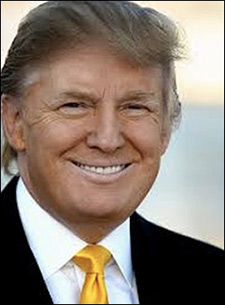
Former President Donald Trump

Trump’s Numbers: Polling Finds 291 Electoral Votes — According to a series of concurrently conducted independent polls, former President Donald Trump today would lead in enough states to provide him with 291 electoral votes, or 21 more than required to unseat President Joe Biden. Morning Consult, polling for Bloomberg News in various targeted states, projects Trump to leads in Arizona (+4), Georgia (+5), North Carolina (+4), Pennsylvania (+1), and Wisconsin (+2).

Last week, Emerson College also found Trump holding an advantage in Pennsylvania and Wisconsin. Simultaneously, the Marketing Resource Group saw Trump running seven points ahead in Michigan, but the more current Morning Consult/Bloomberg data shows the two candidates tied before the Wolverine State electorate. It is these aforementioned states that will make the difference nationally.

Robert F. Kennedy Jr., now running as an Independent candidate, was not tested in the MC/Bloomberg survey series.

Senate

California: Sen. Butler Out; LA Anchorwoman I — Appointed California Sen. Laphonza Butler (D) announced yesterday that she will not run for a full term next year. Despite having more than a year in office after replacing the late Sen. Dianne Feinstein (D), the early March 5 all-party jungle primary allowed her little time to begin competing against Reps. Adam Schiff (D-Burbank), Katie Porter (D-Irvine), Barbara Lee (D-Oakland) and former baseball great Steve Garvey (R), all of whom have a major head start in fundraising and campaign organization.

Los Angeles news anchor Christina Pascucci (D), on the other hand, became a late entry into the crowded US Senate contest, but said she is getting into the race “ … because I have to fight for what I believe is possible for California and for this country.” Pascucci describes herself as a “moderate Democrat.”

New Jersey: Constituents Favor Menendez Resignation — A newly released Fairleigh Dickinson University poll of the Garden State electorate (Aug. 6-14; 813 New Jersey adults; live interview & text) finds that 70 percent of the respondents, including 71 percent of Democrats, believe that indicted Sen. Bob Menendez (D) should resign his seat even without him having a chance to defend himself in court.

So far, Sen. Menendez has been adamant about not resigning over the federal charges that accuse he, his wife, and several associates of engaging in bribery. While the senator is not forced to leave office, polls such as this clearly suggest that he will be a severe underdog in a June Democratic primary race against US Rep. Andy Kim (D-Moorestown) and potentially several others.

House

MN-2: New Republican Candidate — The GOP leadership is making another attempt to unseat Minnesota US Rep. Angie Craig (D-Prior Lake), but this time it is likely they will have a new standard bearer. Former federal prosecutor Joe Teirab announced his congressional candidacy late last week. In the past two elections, Rep. Craig has defeated military veteran Tyler Kistner but with an average vote percentage of only 49.5 percent. Republicans hope a fresh face will be able to get the extra support to top the three term House incumbent.

The FiveThirtyEight data organization rates MN-2 as D+1, while the Daily Kos Elections site ranks the southeast Minnesota congressional district as the 14th most vulnerable seat in the Democratic Conference.

Governor

North Carolina: New Republican Candidate Emerges — Attorney Bill Graham (R), who says he will invest at least $5 million of his own money into his statewide race, announced his candidacy for the state’s open governor’s position. Many in the Republican establishment doubt that the early front runner, Lt. Gov. Mark Robinson, can win a protracted campaign, which is sure to feature a barrage of attack ads portraying him as an extremist.

The leading Democratic nominee is Attorney General Josh Stein, but he only won the 2020 re-election campaign with 50.1 percent of the vote. Therefore, the Republicans will be competitive in the governor’s race regardless of who they nominate. Gov. Roy Cooper (D) is ineligible to seek a third term.

Harris vs. Newsom for President?; Good/Bad News for Sen. Tester; Rep. Lesko to Retire; New Redistricting Maps in North Carolina; VA-10 News

By Jim Ellis — Friday, Oct. 20, 2023

President

Vice President Kamala Harris / Photo by Gage Skidmore

Democratic Poll: Harris vs. Newsom — Rumors have been rampant that the Democrats may somehow soon replace President Joe Biden as the party nominee. The Premise survey research company (Oct. 11-16; 1,417 registered US voters; 847 US Democratic registered voters; online) just tested the highly unlikely supposition.

The pollsters paired Vice President Kamala Harris against California Gov. Gavin Newsom. Many believe that Newsom would be Biden’s hypothetical replacement, but this first poll doesn’t concur. Premise reports a Harris lead over Newsom of 23-15 percent with a huge undecided factor. Expect President Biden to again become the Democratic nominee.

Marist College: First Three-Way Presidential Poll — Marist College, polling for National Public Radio (Oct. 11; 1,218 registered US voters), is the first survey research entity to release a Biden-Trump-Kennedy poll since Robert F. Kennedy Jr. announced he would run in the general election as an Independent.

While the Biden-Trump ballot test found President Biden leading 49-46 percent, which is slightly better for the incumbent than most other current national polls, the addition of Kennedy sees the electorate break away from former President Donald Trump to the greater degree. The three-way result is 44-37-16 percent in favor of Biden. The big difference comes in the Independent sector. In a two-way, Independents break toward Trump, 49-43 percent. When Kennedy is added, the Trump-Biden-Kennedy split evolves to 34-33-29 percent, respectively.

Senate

Montana: Good News & Bad News for Sen. Tester — Emerson College surveyed the Montana electorate (Oct. 1-4; 447 registered Montana voters; multiple sampling techniques) as part of a series of polls conducted in several states. Here, we see Sen. Jon Tester (D) leading aerospace company CEO Tim Sheehy (R) by a close 39-35 percent split. The good news for Sen. Tester in this poll is his maintaining a lead in a state the Republicans must win if they are to claim the Senate majority. The bad news is he fails to even reach the 40 percent plateau.

Rep. Matt Rosendale (R-Glendive), who most believe will enter the race, was not tested because he is not yet an announced candidate. Former Secretary of State Brad Johnson (R) just declared his own candidacy, so he, too, was not included.

House

AZ-8: Rep. Lesko (R) to Retire, Two New Candidate Possibilities — Three-plus term Arizona US Rep. Debbie Lesko (R-Peoria) announced that she will not seek re-election to her state’s 8th Congressional District next year.

The congresswoman indicated that time away from her family, including her 94-year-old mother, while expressing frustration saying, “it is hard to get anything done [in Congress],” led to the decision to bring her political career to a close.

Lesko first won election to the Arizona House of Representatives in 2008, before capturing a state Senate seat in 2014. After US Rep. Trent Franks (R) resigned from Congress, Lesko won the 2018 special election to become his successor. She was re-elected to a full term in the 2018 regular election and easily won two additional terms.

AZ-8 is reliably Republican. The FiveThirtyEight data organization rates the seat as R+22. Dave’s Redistricting App calculates a 57.3R – 40.8D partisan lean. The Daily Kos Elections site ranks the 8th as the 77th most vulnerable district in the current 221-member GOP Conference. Former President Trump scored a 56.1 – 42.5 percent victory over President Biden here in 2020.

Lesko’s (R-Peoria) retirement announcement has potentially attracted two well known names from the 2022 election cycle. Attorney General nominee Abe Hamadeh, who lost the statewide race by just 280 votes of over 2.5 million votes cast, and US Senate nominee Blake Masters are among the Republicans being mentioned as potentially having interest in the newly open congressional seat.

North Carolina: New Redistricting Maps Released — Tar Heel State legislative leaders released two proposed congressional maps for legislators to consider. Both would improve Republican prospects and likely break the current 7D-7R map into a plan that would largely benefit the GOP.

Each map would endanger three Democratic incumbents: Reps. Kathy Manning (D-Greensboro), Wiley Nickel (D-Cary), and Jeff Jackson (D-Charlotte). The first map would likely return a 10R-4D split, while the second plan could conceivably bring the Republicans a 11R-3D division.

The legislators will now have the opportunity to debate the map proposals, consolidate the draws into one map, and amend the bills. Once the legislature passes a final plan, expect the Democrats to sue. The state Supreme Court will likely have to make a final ruling, but this is a much different judicial panel from the one that continued to reject the legislature’s intent during the past decade.

In 2022, Republicans captured a majority on the North Carolina Supreme Court, reversing the Democrats’ 4-3 edge. The new court features five Republicans and two Democrats. Getting to the US Supreme Court is a much more difficult exercise because SCOTUS has generally made the state Supreme Courts the redistricting final arbiter.

VA-10: Del. Filler-Corn Switches to House Race — Former state House Speaker Eileen Filler-Corn (D-Springfield), who was ousted as minority leader after the Democrats lost the state House majority in the 2021 election, has altered her future political path. Originally saying she was not running for re-election to the state House of Delegates in order to prepare a run for governor in 2025, Filler-Corn announced that she now won’t run statewide but will instead enter the 2024 open 10th Congressional District race.

Incumbent Rep. Jennifer Wexton (D-Leesburg) is retiring due to health considerations. The 10th District will remain in Democratic hands, but next year’s nomination process promises to feature a competitive party primary.

The Kennedy Factor

By Jim Ellis — Thursday, Oct. 19, 2023

President

Robert F. Kennedy Jr.

RFK Jr.: Independent Impact — Since Robert F. Kennedy Jr. announced that his presidential candidacy would move to the Independent line and away from the Democratic primary, it has been an exercise to predict which states his candidacy might detract from either President Joe Biden or former President Donald Trump.

Though Kennedy is stating he will try to win the race as an Independent, the chances of him doing so are slim. Ross Perot, on the Reform Party ballot line in 1992, was the last minor party candidate who was significant in a modern-era presidential race. Perot received 18.9 percent of the national popular vote but won no states, meaning zero electoral votes. Bill Clinton won the 1992 election with 43.0 percent nationally and 370 electoral votes.

The last minor party candidate to secure electoral votes was at the time former Alabama Gov. George Wallace running on the American Independent Party line, back in 1968. He carried five states (Alabama, Arkansas, Georgia, Louisiana, and Mississippi) for a total of 46 electoral votes. Richard Nixon won the ‘68 election with 43.4 percent of the popular vote and 301 electoral votes.

Assuming Kennedy also fails to win a state, there are certain places where his candidacy could still affect the outcome. This means capturing enough votes to tip a state from one of the major party candidates to the other. Using the 1992 race as a model for 2024 because of the minor candidate factor, overlaid with current voting trends, it appears that six states could be in the “Kennedy tip” category.

Such includes four from Biden to Trump; one from Trump to Biden; and one Trump “gettable” state to Biden. Thus, the Kennedy influence could be enough to slightly tip the national general election to Trump or into the House of Representatives to break a tie.

The four states that could flip to Trump are Arizona, Georgia, Nevada, and New Hampshire. In 1992, former President George H.W. Bush carried Arizona, and to win this election Trump is virtually forced to also reverse his fortune from 2020 and carry the Grand Canyon State. In ’92, Bush won the state with a two-point margin over Clinton, while Perot attracted 23.8 percent. While the ’92 race occurred decades ago, the in-play states still exhibit the potential to provide a large number of votes to a minor party or Independent candidate, especially one with universal name identification.

Georgia is a state that must go to Trump if he is to have any chance of winning the general election. In 1992, Clinton carried the Peach State by less than one percentage point, while Perot garnered 13.3 percent of the vote.

Clinton carried the Silver State of Nevada with a three-point margin while Perot’s vote total was 26.2 percent. Should Kennedy also finish within the Perot vote total realm, it is reasonable to believe that more than a net three percentage point margin would come from President Biden’s total, which would likely be enough for Trump to win Nevada and add six electoral votes to his total.

New Hampshire, rated as one of the nation’s states with the greatest swing potential, also falls into the Kennedy tip category. Clinton defeated President Bush here by 1.3 percentage points in ’92, with a 22.6 percent vote factor for Perot. Again, if Kennedy were able obtain well over 20 percent in New Hampshire, a New England state with a strong history of supporting his family, that could tip the state’s four electoral votes to Trump. Only two points more from Kennedy’s aggregate would have to come from Biden’s total for Trump to win the state.

Alaska, however, with its Ranked Choice Voting system, could be a state that Kennedy’s presence could tip to Biden. The Ranked Choice Voting system has played to the Democrats’ favor here, and it may so again should the Kennedy factor be high enough to force the race leader below the 50 percent mark in order to jump-start the ranking procedure.

Finally, Wisconsin will be a major state in the ’24 election. In 1992, it also demonstrated a higher than average vote for Perot (21.5 percent). Clinton carried Wisconsin with a 4.3 v percentictory margin. These totals suggest that if Kennedy finished in the same realm as Perot in the Badger State, that would likely help President Biden.

The above scenario, assuming all other states voted as they did in the 2020 presidential race, would actually create an electoral college tie. Adding Arizona, Georgia, Nevada, and New Hampshire and giving up Alaska would give both candidates 269 electoral votes, meaning the election would be decided in the House of Representatives.

Kennedy’s performance in these and several other states could well change the trajectory of the entire presidential race and becomes just one more unique factor in this so far unpredictable campaign.