Tag Archives: President Joe Biden

High Possibility Sen. Sinema to Join “No Labels” Party in Ariz.; Hutchinson Announces; Justice With Big Lead in WVa; New Candidates in AZ-1, FL-11

By Jim Ellis — Thursday, April 6, 2023

President

Sen. Kyrsten Sinema (I-AZ)

No Labels Party: AZ Democrats Sue to Disqualify — The No Labels Party is attempting to qualify for the ballot in as many states as possible, and has already done so in Alaska, Arizona, Colorado, and Oregon. The Arizona Democratic Party, however, has filed a lawsuit attempting to disqualify the No Labels entity under the reasoning that Democratic Secretary of State Adrian Fontes was in error for certifying the organization because it doesn’t meet all of the legal qualifications. The ADP claims that No Labels has not filed with the Federal Election Commission nor have they disclosed their donors, both requirements for political parties under Arizona election law.

The Arizona Democrats are particularly concerned about No Labels because a candidate under this banner could potentially draw Democratic votes away from President Biden while further attracting a large percentage of Democratic support for Independent and Sen. Kyrsten Sinema, a former Democrat, now an Independent. Arizona is again expected to deliver very close statewide election results in 2024, as its electorate has done in the last two elections.

There is a strong possibility that Sen. Sinema could run as the No Labels Senate candidate. Doing so would allow her to qualify for the ballot with far fewer petition signatures than required to secure an Independent ballot line. Under Arizona procedure, an Independent candidate would be required to submit 45,000 valid registered voter petition signatures. A new party’s candidate would see such a signature requirement drop to less than 1,300.

Asa Hutchinson: Announces Candidacy — Former Arkansas Gov. Asa Hutchinson (R), who has repeatedly come out in opposition to former President Donald Trump, announced that he will become a presidential candidate. Though Hutchinson would be considered a “Never Trumper,” his jumping into the race could well help the former president because even small numbers of votes deflect from whoever becomes Trump’s top opponent, likely Florida Gov. Ron DeSantis, will allow the former to score a plurality victory.

Senate

West Virginia: New GOP Primary Poll Finds Gov. Justice with Big Lead — The National Public Affairs survey research firm released the results of their new West Virginia US Senate Republican primary poll. The study (March 14-17; 360 likely West Virginia Republican primary voters and Independents likely to vote in the Republican primary; live interview & text), unsurprisingly finds Gov. Jim Justice leading Attorney General Patrick Morrisey (R) and US Rep. Alex Mooney (R-Charles Town) with a 43-21-10 percent count. If the race were only between Gov. Justice and Rep. Mooney, the governor would hold a 55-24 percent advantage.

It is likely that Morrisey will likely opt for the open governor’s race instead of taking on Justice in another Senate primary. In 2018, Morrisey held Sen. Joe Manchin (D) to a 50-46 percent re-election victory after easily winning the Republican primary. A Senate announcement from Gov. Justice is expected soon.

House

AZ-1: Democrats Rebound with New Candidate — Late last week, 2022 congressional nominee Jevin Hodge (D), who held Arizona Rep. David Schweikert (R-Fountain Hills) to a tight 50.4 – 49.6 percent victory margin, announced that he would not return for a re-match. State Rep. Amish Shah (D-) said Monday that he will run.

The newly-configured 1st District electorate is voting much more Democratic than the FiveThirtyEight R+7 rating would suggest. Though Rep. Schweikert barely won, President Joe Biden, Sen. Mark Kelly (D), and Gov. Katie Hobbs (D) all carried the 1st district in their 2020 and 2022 elections, albeit by similarly slim margins. Expect AZ-1 to be a top-tier Democratic conversion seat in the next election.

FL-11: Rep. Webster to Face Primary Challenge — Former Florida state Rep. Anthony Sabatini (R), who finished a distant second to now-Rep. Cory Mills (R-New Smyrna Beach) in the open 7th District Republican primary last year, announced that he will challenge veteran Rep. Dan Webster (R-Clermont) next year in the neighboring 11th District. Sabatini will be a long-shot contender, but he will likely be able to attract sufficient resources to become competitive.

DeSantis Releases Congressional Map

Proposed Florida redistricting map moving from 27 to 28 districts (click on map or here to go to FiveThirtyEight interactive map).

By Jim Ellis

April 15, 2022 — After vetoing the legislature’s congressional map and forcing a special legislative session to finish the redistricting process, Florida Gov. Ron DeSantis (R) now commands the upper hand. As a result, legislative leaders say they are willing to pass his map.

Applying the district political numbers that the MCI Maps organization calculated, we see 20 of the 28 new districts that would have voted for former President Donald Trump over President Joe Biden. Overlaying the Ron DeSantis-Andrew Gillum governor’s race of 2018, a total of 18 new CDs would have supported the current state chief executive. Today’s Florida congressional delegation splits 16R-11D.

The major point of contention during the regular legislative session pertains to the elimination of the current northern Florida majority minority 5th District of Rep. Al Lawson (D-Tallahassee) that stretches from Tallahassee to Jacksonville. Gov. DeSantis wants a race neutral map. Should his map be enacted, there is no question that lawsuits would be filed immediately, and this fight could lead to a fundamental examination of the national Voting Rights Act.

Assuming the map clears the legal hurdles, the Republicans could add as many as four seats to the Sunshine State delegation, which would negate Democratic gains in New York, for example. Many of the new districts could lead to increased competition for GOP members, however, as several would drop into lean Republican seats instead of ones that are currently safe.

The only displaced incumbent is Rep. Lawson, as he would have no reasonable place from which to seek re-election. His situation would then create another seat in the Jacksonville area and give current 4th District Rep. John Rutherford (R-Jacksonville) likely the choice of running in new District 4 or 5.

As a result of this northern state map strategy, Rep. Neal Dunn’s (R-Panama City) 2nd CD would become significantly less Republican, largely because the entire city of Tallahassee would be placed in his new CD. The FiveThirtyEight data organization rates the current 2nd as R+40. Ex-President Trump would have carried the new 2nd with 54.86 percent, with Gov. DeSantis approximately a percentage point lower.

Continue reading

Georgia Turning, Again?

By Jim Ellis

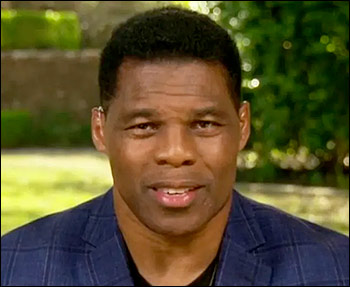
Herschel Walker (R), former University of Georgia and ex-NFL football star and current Senate candidate, enjoys his largest lead of the early election cycle.

March 11, 2022 — It was well publicized in the 2020 election cycle that the state of Georgia is beginning to swing toward the Democrats, but a new Democratic poll contains some evidence that predicting a long-standing transformational flip may have been premature. Now, the new polling suggests that Georgia voters could be open to a Republican comeback.

Blueprint Polling released their new Georgia statewide study earlier this week, and projects that GOP candidate Herschel Walker enjoys his largest lead of the early election cycle but it’s only a three-plus percentage point edge, well within the polling margin of error. The Blueprint survey (March 2-8; 662 definite (90 percent) and probable (10 percent) Georgia voters; live interview) produces a ballot test featuring Walker holding a 48.5 – 45.4 percent slight advantage over Sen. Raphael Warnock (D).

The most surprising part of the Warnock-Walker crosstabs was the Republican leading among younger voters. Walker led Warnock by just over one percentage point among those aged 18-34, typically a group that widely supports Democrats, and trails only among those aged 45-54. Among the highest turnout age sector, those 65 and older, Walker held a five-point advantage.

While Sen. Warnock still held a slight edge among Independents, 42-40 percent, Walker attracted 12 percent of Democratic votes while Sen. Warnock could manage only 9.5 percent among Republicans. The two were tied among college educated voters, a strong improvement for the Republican in this category, while Walker led by five points among those who had not attended or graduated from college.

But this result is far from the poll’s most interesting piece of information. Rather, the question about who the respondents would support in a presidential re-match produces an eye-opening result. This is particularly true when remembering that Georgia came down to an official, though disputed, small margin of 11,779 votes in Democratic candidate Joe Biden’s favor from just under 5 million ballots cast.

Continue reading

The Pew Religious Voter Study

By Jim Ellis

Poll shows President Joe Biden’s future outlook is far from positive.

Feb. 14, 2022 — The Pew Research Center released their nationwide poll late last week studying the perception of President Biden’s job approval one year after taking office among various religious segments and found a downturn in almost all groups’ perceptions when compared to their same beliefs at the beginning of the new administration.

The poll, conducted during the Jan. 10-17 period, questioned 5,128 US adults who agreed to be surveyed as part of Pew’s American Trends Panel that features a total universe of 17,472 individuals who are asked to participate in various surveys.

The survey sample, which “included oversamples of Asian, Black and Hispanic Americans in order to provide more precise estimates of the opinions and experiences of these smaller demographic subgroups,” also included atheist, agnostic, religiously unaffiliated, and those who identified themselves as “nothing in particular” in reference to religious classifications.

Therefore, the respondent sample represents a much broader matrix of religious viewpoints than those who belong to traditional Christian religions. The Jewish sector was not included in this study.

The Pew Researchers’ top point was charting how far President Biden’s image had fallen with African American Protestants. While 65 percent of Black Protestants still approve of the president’s job performance, Pew notes that his number has fallen from 92 percent after his first few days in office. The Black Protestant segment is, however, one of only three religious segments who believe Biden will be regarded as a successful president at the end of his term. The other two groups are Hispanic Catholics and atheists.

Even including these favorable sectors, the Biden future outlook is far from positive. While more Black Protestants believe he will be successful at this point than not, the aggregate sector percentage is still only 35, as compared to 14 percent who believe he will be unsuccessful. Almost half, at 49 percent, believe it is too early to tell, again a rather unacceptably high number from a group who Biden has heavily emphasized in his early Administration policy objectives.

Among Hispanic Catholics, his successful vs. unsuccessful ratio is 32:19 percent. The atheists rate him 32:30 percent successful vs. unsuccessful. A total of 48 percent of Hispanic Catholics and 38 percent of atheists believe it is too early to tell whether the Biden Administration will be regarded as successful in what Pew terms as “the long run.”

Continue reading

Biden’s Achilles Heel

By Jim Ellis

President Joe Biden

Jan. 21, 2022 — The International online survey research firm YouGov just released a major US national poll for CBS News reporting upon their respondents’ attitudes and views about President Joe Biden and his administration’s effectiveness, and the segmented data revealed a surprising information point.

In fact, the analysis pinpointed what appears to be a severe area of weakness for the president’s Democratic Party in relation to the midterm elections.

The exhaustive survey, conducted online of 2,094 American adults during the Jan. 12-14 period, focused on the issue areas (in alphabetical order) of Afghanistan, the coronavirus, crime, the economy, inflation, immigration, police and policing, and race relations. In all areas but coronavirus, where the president scored a 52:48 percent favorable rating, his approval score was underwater.

His worst showing came in his handling of inflation. On this issue, the respondent sample expressed unfavorable views about the administration’s performance in a whopping 30:70 percent positive to negative ratio.

While there has been quite a bit of post-2020 election coverage about the Republicans’ improved performance among Hispanics in particular, one group with whom Democrats have gained substantially during the past few elections is among college-educated voters. The Republicans’ diminished vote within this sector is likely a bigger area of concern for party leaders and strategists than how the GOP candidates are performing with minority voters.

Since the Obama presidential election of 2012, the Republican share among college-educated voters has dropped significantly. In fact, it is within this segment where Joe Biden outperformed Hillary Clinton with his greatest increase level. In 2012, President Obama captured 46 percent of the college-educated vote. Four years later, Clinton increased the percentage to 50, and in 2020, Biden’s share rose to 54 percent, or a full eight points better than Obama’s in an eight-year period.

These figures come from the Catalist data trust firm, an entity that bills itself as the “longest running such company in progressive politics,” as reported in a post-election analysis article on the Vox information news site.

The YouGov/CBS poll segmentation categorizes white 4-year college educated voters. Except for the coronavirus and crime issues, this highly educated sector appears to be turning on President Biden. In fact, their negative views on the economy, and particularly inflation, closely mirror the aggregate response, a sampling universe that contains overwhelmingly negative responses from self-identified conservatives.

Continue reading

New Mexico Lines Completed

By Jim Ellis

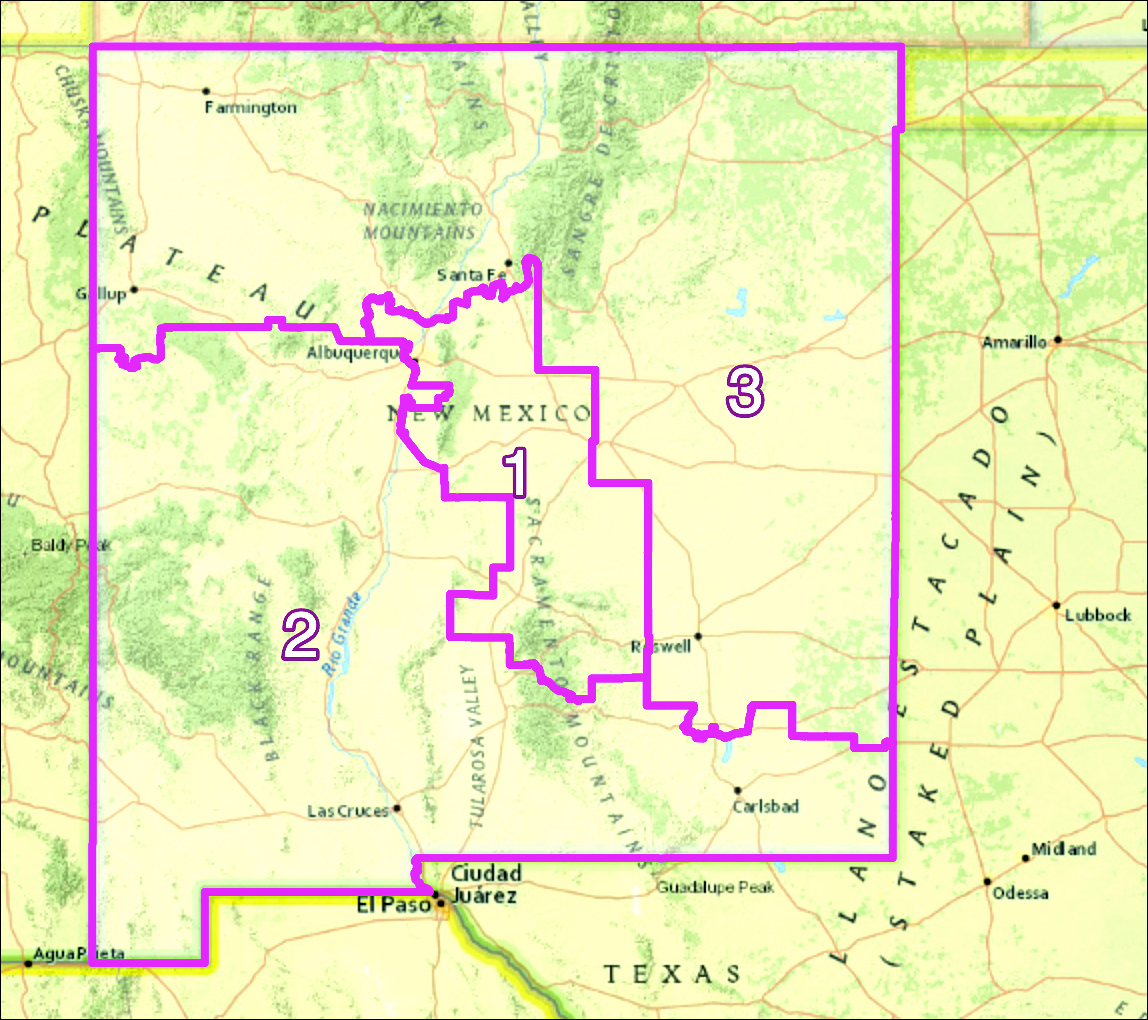
Dec. 15, 2021 — Though only a three-congressional district state, New Mexico is playing an important role in the 2021 redistricting cycle. The state is one of only four where Democrats fully control the redistricting process and can make gains.

The map that passed the legislature Monday and which was immediately sent to Gov. Michelle Lujan Grisham (D) for her signature appears to clinch the one-seat gain that national Democrats need from the state. On the other hand, it is likely that at least one of their current seats becomes more vulnerable.

Though Democrats have 15 legislative trifectas — that is where they hold the offices of governor, state Senate, and state House of Representatives — they effectively have only four for redistricting. In five of their trifecta states, redistricting has been sent to a citizens or politician (New Jersey) commission. In another six, they are maxed, meaning the Democrats already have all the seats that they can possibly win in each domain.

Ironically, the current Land of Enchantment map needed only minor adjustments to bring the redistricting plan into legal population compliance. The state’s per district resident quota is 705,841 individuals, and the three current districts were only between 3,082 and 11,290 people away from being in full compliance. Districts 2 and 3 needed to shed a combined 11,290 individuals to District 1, and the map would have balanced.

Instead, the Democratic leadership made major changes all centered around transforming freshman Rep. Yvette Herrell’s (R-Alamogordo) 2nd CD into a Democratic advantage. The US Department of Justice just filed suit against the Texas redistricting map under a partisan gerrymander argument, so it is curious to see whether they follow the same course and bring forth a similar partisan gerrymander lawsuit in New Mexico and Illinois, places where Democrats control the redistricting pen.

New Mexico is also interesting in that all three of the state’s delegation members, Reps. Melanie Stansbury, (D-Albuquerque) and Teresa Leger Fernandez (D-Santa Fe), as well as Herrell, are freshmen. In fact, Stansbury is even behind the other two in seniority since she won her seat in a June 1 special election to replace resigned Rep. Deb Haaland (D), who left the House to become US Interior Secretary in the Biden Administration.

For the first time, the redesigned New Mexico congressional map splits the state’s dominant city of Albuquerque. Drawing the southern 2nd District into the Albuquerque metropolitan area provides the Democrats the ability to enhance the party’s chances of flipping the seat. Throughout New Mexico’s history, the city has been fully contained within the 1st Congressional District.
Continue reading

Ohio Rep. Anthony Gonzalez
Won’t Seek Re-Election

By Jim Ellis

Ohio Rep. Anthony Gonzalez (R-Rocky River)

Sept. 21, 2021 — Saying he believes that former President Donald Trump “shouldn’t ever be president again,” sophomore Ohio Rep. Anthony Gonzalez (R-Rocky River) announced on Friday that he will not seek a third term in the House.

Rep. Gonzalez was one of 10 Republicans to support Trump’s second impeachment, and drew a strong Republican primary opponent as a result. Former President Trump responded to Gonzalez’s statement and decision with his own release saying, “1 down, 9 to go,” in reference to those Republican House members who supported removing him from office after the Jan. 6 Capitol invasion.

Gonzalez is the 19th member who will not be on the next election ballot for the US House seat he now holds, including the three vacancies to be filled in special elections. Of the 19, Republicans currently hold 10 seats as compared to nine for the Democrats. This is the first GOP opening with some competitive potential, however, though the Gonzalez decision will likely have a big impact upon the Ohio redistricting process currently under way within the state legislature in Columbus.

Former White House aide Max Miller had been Rep. Gonzalez’s top Republican competitor. Through the June 30 campaign financial disclosure period, Miller had raised just under $1 million ($951,520), but had only $533,153 remaining in cash-on-hand.

Despite Miller’s strong fundraising effort, Rep. Gonzalez still held the upper hand, reporting $1.22 million raised with over $1.5 million in the bank. Therefore, while the Miller challenge appeared formidable, it was not a foregone conclusion that he would have denied Rep. Gonzalez re-nomination had the congressman decided to continue running.

Rep. Gonzalez’s 16th Congressional District begins in the Westlake area to the west of Cleveland and stretches south toward the rural areas southwest of Canton. It then meanders to the northeast around Akron to end in the city of Edinburg.

Continue reading

Ohio’s Lost Seat

Ohio’s Congressional Districts

By Jim Ellis

Sept. 8, 2021 — In some of our previous redistricting articles, we’ve alluded to Ohio’s interesting situation. With a 16-member congressional delegation reducing to 15, it seemed unlikely that Republican map drawers would stretch the new map to 12R-3D from its current 12R-4D split. Outside pressures and other factors, however, suggest the first Buckeye State map could have such a partisan division.

Recently, news coming from Illinois suggests that Democratic leaders are looking at ways to reduce the Republican federal contingent in the Land of Lincoln from five House members to just three. If so, states like Ohio, where Republicans are in complete control of the redistricting process, face national pressure to maximize the partisan gain.

Another factor pointing to the Democrats losing the Ohio seat is that only one member to-date, Rep. Tim Ryan (D-Warren/Youngstown), is not running for re-election. The eastern Ohio congressman is an announced US Senate candidate, meaning that his 13th District, which stretches from Akron to the Pennsylvania border, is largely unprotected.

As in Pennsylvania, where Rep. Conor Lamb (D-Pittsburgh) is the lone House member not seeking re-election in his state because he, too, is running for the Senate, it is reasonable that the collapsed seat would be the one with no incumbent. Therefore, in both cases, Republican map drawers would have a defensible opportunity to collapse a Democratic seat. Furthermore, a Democratic power grab in Illinois, should that happen, makes Republican retribution in Ohio and Pennsylvania more likely.

Another transitional Ohio factor is the two new members coming into the House right after the Nov. 2 special election. Since the partisan primaries have already nominated candidates in a pair of vacated congressional districts that have consistently performed for each party, it became clear on primary night that Democrat Rep. Shontel Brown and Republican Rep. Mike Carey would be joining the delegation.

Brown’s 11th District that stretches from Cleveland to Akron is likely to be a key redistricting focal point. The 11th must gain 94,091 people to reach the new 15-District Ohio population quota of 786,630 individuals, which is the second most of any Buckeye State CD. Since this is also a majority minority seat, adding the necessary people from the Akron area would be a reasonable move, and such a population segment would have to come from Rep. Ryan’s 13th District.

Continue reading

New York Voting Patterns

New York’s Congressional Districts

By Jim Ellis

Feb. 11, 2021 — The Daily Kos Elections researchers are converting the 2020 presidential returns into congressional district totals, as they have successfully done in past election years. This allows us to compare the 2020 voting patterns with those from four years ago. Doing so reveals some interesting conclusions.

As you can see from the chart below of all 27 New York congressional seats, the patterns are striking, and while former President Trump met and exceeded his projected vote goals within his worst performing districts in New York City, he underperformed by similar ratios in the regions that should have been his strongest.

The NY congressional delegation is split 19-8 in the Democrats’ favor. When comparing the districts that President Joe Biden and former President Trump each won, we see that they match almost identically to the partisan choices those electorates made for the House of Representatives.

There is one exception, however, in addition to a pair of districts that Trump carried in 2016 but switched to President Biden in 2020. The Syracuse-anchored congressional seat that Republican John Katko (R) represents is the only New York district that split its presidential and congressional vote.

While Biden was carrying the CD with a nine-point margin, a net 3.6 percent Democratic improvement from Hillary Clinton’s 2016 result in this 24th District, Rep. Katko was re-elected to a fourth term with a 52-42 percent margin over college professor Dana Balter (D), his 2018 opponent who returned for a re-match. The result was a net four-point improvement for the GOP incumbent from 2018 his victory.

The two seats Trump won in 2016 that switched to President Biden in 2020 are the 18th and 19th Districts, those of Reps. Sean Patrick Maloney (D-Cold Spring/Peekskill) and Antonio Delgado (D-Rhinebeck) — CDs that bridge the city districts with those in the upstate region.

As the chart below shows, the striking point is that the net gains or losses in almost every 2020 district when compared to 2016 is almost opposite of what an analyst would have predicted. Former President Trump underperformed on Long Island as well as upstate, areas where he should have shown greater strength; and he over-performed in all of the New York City districts.

Trump lost the NYC seats by substantial margins, a heavily minority region, but his improvement ranged from a net 0.5 percent in Rep. Carolyn Maloney’s (D-Manhattan) Silk Stocking district to 15.5 percent in the Bronx CD of freshman Rep. Ritchie Torres (D). Four years ago, the latter NY-15 CD was the former president’s worst-performing district in the entire country.

These particular results show that despite the media image of Trump being America’s most racist president, the numbers generally depict clear improvement among people of color in New York State.

The explanation for his lesser performance on Long Island and upstate traces back to a familiar Trump 2020 problem: performing worse among women, those aged 65 years and older, in addition to right-of-center unaffiliated and minor party voters. It was his failure to equal his 2016 performance with these voting segments that cost him his re-election victory.

As we look at other numbers from across the country, we will see the patterns uncovered in New York also becoming prevalent in most other regions.


New York

INCUMBENT BIDEN ’20 CLINTON ’16 TRUMP ’20 TRUMP ’16 NET
1 – ZELDIN 47.3 42.2 51.5 54.5 8.1
2 – GARBARINO 47.4 43.9 53.0 51.6 2.1
3 – SUOZZI 54.7 51.6 44.3 45.5 4.6
4 – RICE 55.6 53.4 43.4 43.8 2.6
5 – MEEKS 83.3 85.7 16.2 12.7 5.9
6 – MENG 61.8 65.1 37.4 32.1 8.6
7 – VAZQUEZ 81.8 84.6 16.5 13.5 4.4
8 – JEFFRIES 82.9 86.9 17.3 10.4 12.0
9 – CLARKE 81.4 83.5 17.8 14.4 5.5
10 – NADLER 76.1 78.3 22.9 18.8 6.3
11 – MALLIOTAKIS 44.3 43.8 54.8 53.6 0.7
12 – MALONEY, C. 84.1 83.3 14.8 13.5 0.5
13 – ESPAILLAT 88.1 92.3 11.2 5.4 10.0
14 – OCCASIO-CORTEZ 73.3 77.7 25.9 19.8 10.5
15 – TORRES 86.5 93.8 13.1 4.9 15.5
16 – BOWMAN 75.3 75.1 23.8 22.5 1.1
17 – JONES 59.6 58.6 39.4 38.4 0.0
18 – JONES 51.8 47.1 46.8 49.0 6.9
19 – DELGADO 49.8 44.0 48.3 50.8 8.3
20 – TONKO 59.3 54.0 38.7 40.5 7.1
21 – STEFANIK 43.8 40.0 54.2 53.9 3.5
22 – TENNEY 43.3 39.3 54.7 54.8 3.9
23 – REED 43.3 39.7 54.6 54.5 3.5
24 – KATKO 53.4 48.9 44.4 45.3 3.6
25 – MORRELLE 60.1 55.5 37.8 39.1 5.9
26 – HIGGINS 62.6 57.6 35.6 38.0 7.4
27 – JACOBS 41.1 35.2 56.8 59.7 8.8