Tag Archives: Rep. Dan Webster

SCOTUS Decides Louisiana Case;
Florida Rep. Webster to Retire

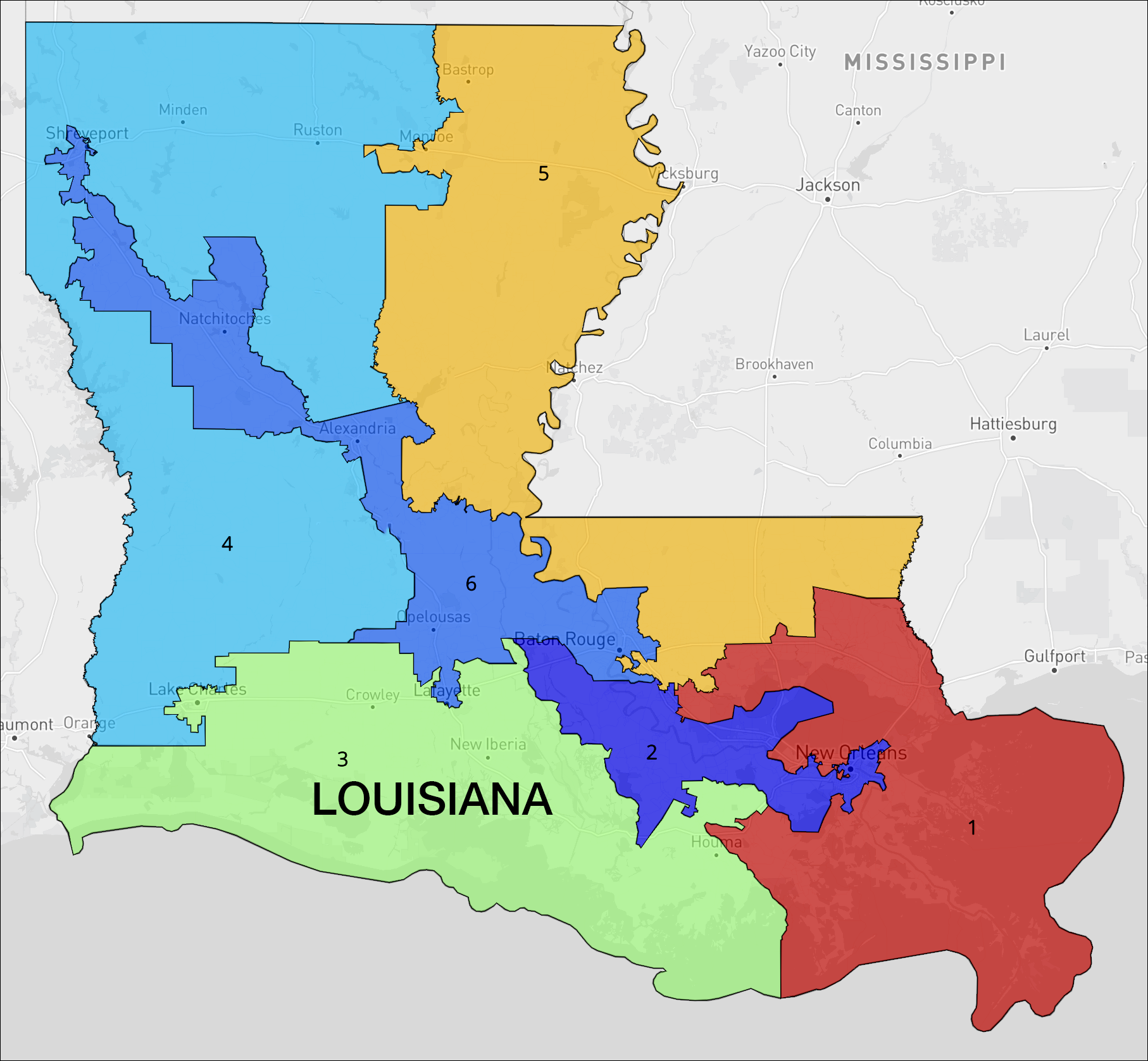
2024 Louisiana Congressional Districts map (view interactive version on Dave’s Redistricting App)

By Jim Ellis — Thursday, April 30, 2026

Louisiana

The US Supreme Court, months after initially hearing the Louisiana racial gerrymandering case, released its ruling yesterday.

In authoring the Court’s opinion, Associate Justice Samuel Alito outlined the reasons the justices upheld the three‑judge panel’s ruling in Callais v. Louisiana, which found that the congressional map used before the 2024 election constituted a racial gerrymander.

The ruling is viewed as favorable to Republicans and will almost certainly require Louisiana’s congressional map to be redrawn before the 2026 statewide primary on May 16. It is possible that the legislature could simply revert to the 2021 map that was in place for the 2022 election.

Activists in several states are already urging their legislators to redraw congressional maps. Such is the case in Georgia, Mississippi (for their state Supreme Court districts), and potentially South Carolina. The Florida legislature is now likely to pass the map that Gov. Ron DeSantis (R) produced, which was drawn in anticipation of a favorable Republican Louisiana ruling.

In the Callais decision, Justice Alito outlined the parameters of the Voting Rights Act. He wrote, “Because the Voting Rights Act did not require Louisiana to create an additional majority-minority district, no compelling interest justified the State’s use of race in creating SB8, and that map is an unconstitutional racial gerrymander.”

He further explained when race can be used as a factor in drawing legislative district boundaries. From later in the ruling, Justice Alito stated, “The Court’s precedents have identified “only two compelling interests” that can satisfy strict scrutiny: avoiding imminent and serious risks to human safety in prisons,” and “remediating specific, identified instances of past discrimination that violated the Constitution or a statute.”

Further explaining, the Justice wrote, “Properly understood, §2 thus does not intrude on States’ prerogative to draw districts based on nonracial factors, including to achieve partisan advantage. In short, §2 imposes liability only when the evidence supports a strong inference that the State intentionally drew its districts to afford minority voters less opportunity because of their race. Not only does this interpretation follow from the plain text of §2, but it is consistent with the limited authority that the Fifteenth Amendment confers.”

It remains to be seen which states besides Louisiana will redraw their maps before the 2026 election. Alabama, where officials were also required to add another minority district ahead of the 2024 election, is one possibility. With primary elections already underway in many states, most significant redistricting activity is likely to shift to the 2028 election cycle.

FL-11

Although he would have continued to represent a safely Republican district under Gov. Ron DeSantis’ proposed congressional map, eight-term US Rep. Dan Webster (R-Clermont) announced just after celebrating his 77th birthday that he will not seek re-election later this year.

Rep. Webster had been viewed as a potential retirement candidate throughout this election cycle. Under the DeSantis map, his central Florida 11th District is rated as safely Republican. In the proposed FL‑11, President Trump would have recorded a 57.2 to 41.5 percent victory margin over Kamala Harris.

Dan Webster was first elected to the Florida House of Representatives in 1980 and later became the chamber’s first Republican Speaker since Reconstruction. He was elected to the state Senate in 1998, where he went on to serve as Majority Leader.

The number of open House seats has now grown to 64. Thirty-eight of these seats are currently Republican held with 21 from the Democratic column. Five additional open districts have been created as a result of redistricting maps in California, Texas, and Utah.

Of the 64 seats in the open category, only 28 involve members retiring from elective office. This group includes two lawmakers who were paired in a new redistricting map with another incumbent of his own party, Reps. Lloyd Doggett (D-TX) and Burgess Owens (R-UT).

Twenty-seven Representatives are running for a different office, three have resigned their seats, two districts are open due to the incumbent’s death, and one has already been defeated in his primary election.

Once the Florida redistricting process is resolved, a crowded Republican field is expected to emerge for the now‑open 11th District. The Sunshine State candidate‑filing deadline for US House races is June 12, and the state’s primary is scheduled for Aug. 18.

Trump Now Supports Florida Rep. Lee; Florida State Rep. Leaves Race; McGuire Declares Victory in VA-5;

By Jim Ellis — Thursday, June 20, 2024

House

FL-15 Rep. Laurel Lee

FL-15: Trump Reverses Course Regarding Rep. Lee — In April, former President Donald Trump called upon his political support base to field a Republican primary candidate against freshman Rep. Laurel Lee (R-Tampa) in what is the most competitive of the Florida Republican-held congressional seats. Lee, who Gov. Ron DeSantis appointed as secretary of state before her election to the US House, endorsed DeSantis as the Republican candidate for president, not Trump, which caused Trump to originally target her for defeat.

No strong challenger to Lee came forward, however, although one — James Judge, who ran in the 14th District in 2022 — decided to hop into the race against Rep. Lee when Trump made his statement. Therefore, with the lack of a credible developing challenge against Rep. Lee, Trump has now given his “complete and total endorsement” to the congresswoman. Rep. Lee looks to be in strong position for renomination and for re-election, though she faces a credible Democratic challenger in the person of Hillsborough County Commissioner Pat Kemp in a 15th District that the FiveThirtyEight data organization rates as R+7.

FL-11: Ex-State Rep. Abandons Primary Challenge — Former Florida state Rep. Anthony Sabatini, who was defeated for the Republican nomination two years ago in the 7th CD (Rep. Cory Mills-R) and had subsequently launched a Republican primary challenge to Rep. Dan Webster (R-Clermont) in the state’s 11th District almost a year ago, now drops his bid.

Instead, Sabatini will run for a local county commissioner position. Remaining in the primary against Rep. Webster is geophysicist John McCloy. Without Sabatini in the race, Rep. Webster should have an easy run in the Aug. 20 primary, and in the general election.

VA-5: McGuire Declares Victory — Though the race has not been officially finalized, it does appear that Rep. Bob Good (R-Lynchburg) has been defeated for renomination. His opponent, state Sen. John McGuire (R-Manakin Sabot), thinks so and has publicly declared victory. According to the Virginia Public Access Project, all the outstanding votes have now been counted and McGuire has a 309-vote lead. With only provisional and overseas ballots left to be received and counted, it is highly unlikely that even this small lead can be overcome.

Once final, Rep. Good will be the first 2024 cycle incumbent of either party to lose renomination to a non-incumbent challenger. The only other incumbent defeat in either the Senate or the House occurred in Alabama when Reps. Barry Moore (R-Enterprise) and Jerry Carl (R-Mobile) were paired in a court ordered redistricting plan. Moore scored a 52-48 percent victory on March 5. Other primary defeats may soon follow, however. On Tuesday, Reps. Jamaal Bowman (D-NY) and Celeste Maloy (R-UT) face serious primary challenges, and Colorado Rep. Lauren Boebert (R-Silt) attempts to win renomination from a new congressional district.

High Possibility Sen. Sinema to Join “No Labels” Party in Ariz.; Hutchinson Announces; Justice With Big Lead in WVa; New Candidates in AZ-1, FL-11

By Jim Ellis — Thursday, April 6, 2023

President

Sen. Kyrsten Sinema (I-AZ)

No Labels Party: AZ Democrats Sue to Disqualify — The No Labels Party is attempting to qualify for the ballot in as many states as possible, and has already done so in Alaska, Arizona, Colorado, and Oregon. The Arizona Democratic Party, however, has filed a lawsuit attempting to disqualify the No Labels entity under the reasoning that Democratic Secretary of State Adrian Fontes was in error for certifying the organization because it doesn’t meet all of the legal qualifications. The ADP claims that No Labels has not filed with the Federal Election Commission nor have they disclosed their donors, both requirements for political parties under Arizona election law.

The Arizona Democrats are particularly concerned about No Labels because a candidate under this banner could potentially draw Democratic votes away from President Biden while further attracting a large percentage of Democratic support for Independent and Sen. Kyrsten Sinema, a former Democrat, now an Independent. Arizona is again expected to deliver very close statewide election results in 2024, as its electorate has done in the last two elections.

There is a strong possibility that Sen. Sinema could run as the No Labels Senate candidate. Doing so would allow her to qualify for the ballot with far fewer petition signatures than required to secure an Independent ballot line. Under Arizona procedure, an Independent candidate would be required to submit 45,000 valid registered voter petition signatures. A new party’s candidate would see such a signature requirement drop to less than 1,300.

Asa Hutchinson: Announces Candidacy — Former Arkansas Gov. Asa Hutchinson (R), who has repeatedly come out in opposition to former President Donald Trump, announced that he will become a presidential candidate. Though Hutchinson would be considered a “Never Trumper,” his jumping into the race could well help the former president because even small numbers of votes deflect from whoever becomes Trump’s top opponent, likely Florida Gov. Ron DeSantis, will allow the former to score a plurality victory.

Senate

West Virginia: New GOP Primary Poll Finds Gov. Justice with Big Lead — The National Public Affairs survey research firm released the results of their new West Virginia US Senate Republican primary poll. The study (March 14-17; 360 likely West Virginia Republican primary voters and Independents likely to vote in the Republican primary; live interview & text), unsurprisingly finds Gov. Jim Justice leading Attorney General Patrick Morrisey (R) and US Rep. Alex Mooney (R-Charles Town) with a 43-21-10 percent count. If the race were only between Gov. Justice and Rep. Mooney, the governor would hold a 55-24 percent advantage.

It is likely that Morrisey will likely opt for the open governor’s race instead of taking on Justice in another Senate primary. In 2018, Morrisey held Sen. Joe Manchin (D) to a 50-46 percent re-election victory after easily winning the Republican primary. A Senate announcement from Gov. Justice is expected soon.

House

AZ-1: Democrats Rebound with New Candidate — Late last week, 2022 congressional nominee Jevin Hodge (D), who held Arizona Rep. David Schweikert (R-Fountain Hills) to a tight 50.4 – 49.6 percent victory margin, announced that he would not return for a re-match. State Rep. Amish Shah (D-) said Monday that he will run.

The newly-configured 1st District electorate is voting much more Democratic than the FiveThirtyEight R+7 rating would suggest. Though Rep. Schweikert barely won, President Joe Biden, Sen. Mark Kelly (D), and Gov. Katie Hobbs (D) all carried the 1st district in their 2020 and 2022 elections, albeit by similarly slim margins. Expect AZ-1 to be a top-tier Democratic conversion seat in the next election.

FL-11: Rep. Webster to Face Primary Challenge — Former Florida state Rep. Anthony Sabatini (R), who finished a distant second to now-Rep. Cory Mills (R-New Smyrna Beach) in the open 7th District Republican primary last year, announced that he will challenge veteran Rep. Dan Webster (R-Clermont) next year in the neighboring 11th District. Sabatini will be a long-shot contender, but he will likely be able to attract sufficient resources to become competitive.

Former Florida Congressman Alan Grayson Announces Comeback

By Jim Ellis

May 3, 2018 — Acerbic former Florida Congressman Alan Grayson (D-Orlando) officially announced his political comeback after creating subterfuge about which congressional contest he would actually enter.

Former Florida Congressman Alan Grayson (D-Orlando) | Facebook

Former Florida Congressman Alan Grayson (D-Orlando) | Facebook

Originally, Grayson stated he would run in CD-11 against Rep. Dan Webster (R-Clermont) in what must be regarded as a safe Republican seat. Even while saying he would file there, Grayson indicated that he was just using a potential campaign against Rep. Webster, the man who unseated him from his original 8th District seat in 2010, as a placeholder. Upon Rep. Dennis Ross (R-Lakeland) surprisingly announcing his retirement, Grayson then publicly toyed with the idea of running in what will be an open Republican 15th District, which borders his former 9th CD but then extends well westward almost to Tampa.

With time running out, the former representative and US Senate candidate has finally made his plans clear … unless, of course, he changes his mind again before Friday’s candidate filing deadline expires. As many people always believed would be the case, Grayson announced that he would challenge freshman Rep. Darren Soto (D-Kissimmee) for the 9th District seat that he previously represented for two terms.

The ex-congressman said he is not so much “taking on” Soto, but is “ … running for my old seat. That seat doesn’t belong to anybody in particular. It’s up to the voters,” Grayson said, in a local news interview about his latest candidacy.

Continue reading

House in Flux?

By Jim Ellis

Aug. 22, 2016 — Several analysis articles have appeared in the last few days indicating that the House majority might well be in play for the Democrats. Is this reality, wishful thinking, or just a partisan rhetorical ploy to engage the party base?

To re-cap, the Republicans have their largest House majority since the 1928 election, currently standing at 247-R to 186-D, with two Democratic vacancies. In order for the Democrats to secure even a one-seat majority, they would have to re-elect incumbents and candidates in all 188 of their current districts and then convert 30 Republican positions.

Initially, not all 188 Democratic seats are secure. In fact, at least one is surely coming the GOP’s way. After the court-mandated mid-decade redistricting operation in Florida, the 2nd District became a virtual Republican gimme seat. Freshman Rep. Gwen Graham (D-Tallahassee) choosing not to seek re-election guarantees a Republican victory.

Continue reading

House Democratic Leadership Sees
No Path to Majority in 2016

Feb. 15, 2016 — The Democratic Congressional Campaign Committee released its early primary and secondary target lists for the 2016 campaign, which is a rather curious grouping. It is already clear that the House Democratic leadership sees no path to the majority in this election, at least during this campaign period.

With the Republican advantage at 247 (once former Speaker John Boehner’s western Ohio seat is filled in special election) to 188, the Democrats would need a net gain of 30 seats just to obtain a one-seat majority. The fact that their primary and secondary target list includes only 24 races suggests that they are nowhere close to putting enough seats in play to seriously challenge the Republican leadership structure.

On the primary list of 16 candidates, two seats are already under Democratic control, CA-24, the Santa Barbara seat of the retiring Rep. Lois Capps, and the FL-18 district of Rep. Patrick Murphy who is running for the Senate. Therefore, what they believe are prime opportunity races number just 14.

Continue reading

Florida Redistricting: The Latest

Jan. 14, 2016 — The Florida court-ordered redistricting saga continues with new developments regularly changing the political atmospherics. Back in early July, the Florida state Supreme Court struck down eight of the state’s congressional districts – four Republican-held; four Democratic – for reasons of “partisan gerrymandering.”

The map has been changed, enacted, and now fully reported. Since the exact boundaries have found their way into the public domain, we can now see that virtually the entire state has been affected. Mandating boundary alterations in eight districts translated into changing 24 of the state’s 27 CDs. The only three to remain intact are a trio of Republican seats: FL-1 (Rep. Jeff Miller-Pensacola; northwest Florida Panhandle); FL-8 (Rep. Bill Posey; Cape Canaveral to Vero Beach); and FL-19 (Rep. Curt Clawson; Ft. Myers-Cape Coral to Marco Island).

One, Rep. Patrick Murphy’s (D-Jupiter) 18th District (Ft. Pierce to West Palm Beach), saw less than a one percent change. The two districts altered the most are Rep. Corrine Brown’s (D-Jacksonville) 5th District and GOP Rep. Dan Webster’s 10th CD (Orlando).

The Brown seat that formerly stretched from Jacksonville to Orlando, touching Gainesville and Sanford along the way, now encompasses territory from Jacksonville to Tallahassee. It is still heavily African American, but the original region has been divided over six districts. The largest portion of the 2011-drawn seat, a 40.1 percent population segment, is actually in Orlando. Her Jacksonville anchor maintains just 38.2 percent of the former FL-5 constituency.

Continue reading

Florida Lines Finally Approved

Dec. 4, 2015 — The Florida Supreme Court finally enacted a congressional redistricting plan on Tuesday. The process began in early July when the high court struck down eight of the state’s congressional districts and now culminates in approving a lower court judge’s statewide plan that changes 22 of the Sunshine State’s 27 CDs.

Currently, the delegation stands at 17R-10D. Democrats are poised for gains, but the actual increase may be smaller than intended. Two South Florida seats, those of Republicans Carlos Curbelo (FL-26), a freshman, and Ileana Ros-Lehtinen (FL-27), a 14-term veteran and former chair of the House Foreign Affairs Committee, appear designed to elect Democrats but these districts have a history of bucking voting trends at the congressional level. Though Rep. Ros-Lehtinen’s 27th CD voted 53 percent for President Obama in 2012, the congresswoman didn’t even draw an opponent in 2014 and notched a 60-37 percent win when last contested.

There is little doubt that Democrats will convert Districts 10 and 13, while Republicans will take back District 2, a seat they lost in the 2014 election.

The Orlando-anchored 10th District becomes 15 points more Democratic on the Obama scale and switches 13 points when looking at gubernatorial candidate Charlie Crist’s (D) performance in his 2014 statewide losing effort. Incumbent Rep. Dan Webster (R) can’t win this seat, but he may survive by moving into neighboring District 11, an open CD because Rep. Rich Nugent (R) is not seeking re-election. The 11th gains a significant chunk of Lake County from Webster’s current 10th, meaning the congressman will have a foothold in the new district. If he can win nomination, FL-11’s Republican history will allow him to continue his congressional career.

Continue reading

The Florida Switch

Oct. 20, 2015 — Central Florida House Republicans are getting nervous. The new redistricting plan, which the state Supreme Court is likely to soon adopt, is not kind to the middle-state GOP incumbents. In preparation, press rumors are floating that several members will switch districts in order for each to have a winnable place to run next year.

Under the lower court’s proposed map, Rep. Dan Webster (R-FL-10) is the odd man out. His current Orlando-anchored district goes from a 46 percent Obama district to one where the president scored 61 percent. Therefore, the new 10th District becomes unwinnable for Webster even by his own admission.

Ironically, Rep. Alan Grayson’s (D) 9th District, now a 62 percent Obama district becomes even more Republican than the new 10th. The new southeastern Orlando suburban 9th would carry a 56 percent Obama rating, but even this Republican improvement would not yield a GOP victory particularly in a presidential election year. The 9th will be an open seat because Rep. Grayson is running for the Senate.

Rep. John Mica’s (R) 7th District is currently a 47 percent Obama district that would move to 49 percent Obama because the city of Sanford is annexed, which makes it a virtual tie at the presidential level (Mitt Romney also scored 49 percent). The open 6th District, northeast of the 7th that hugs the Atlantic coast from Daytona through Volusia County, is the seat Rep. Ron DeSantis (R) is vacating to run for Senate. This district gets more Democratic, too, but should remain in Republican hands. Originally, the 6th gave 41 percent of its votes to Obama; now, it would be 46 percent.

Continue reading

Florida Redistricting Lines
Almost Complete

Oct. 13, 2015 — The Republican troubles in the US House look to be getting worse as the long-awaited Florida redistricting process is at last taking shape. The state Supreme Court struck down portions of the map back in early July and, with the state legislature not passing new legislation in their abbreviated special session, the high court returned the plan to Circuit Judge Terry Lewis to serve as the redistricting special master. The original lawsuit was filed in Lewis’ court.

On Friday, Judge Lewis released his map, choosing one of the Democratic plaintiffs’ submissions, saying this plan best fulfills the Supreme Court’s sated objectives. The new map now goes to the Supreme Court for final approval.

The partisan numbers figure to favor Democrats by one to as many as four seats. Most likely, assuming no additional retirements among incumbents, the Democrats will probably gain one or two seats. There is a scenario, however, where Republicans could still break even. The Florida delegation splits 17R-10D under the current map.

The members likely to lose under the new configuration are representatives Gwen Graham (D-FL-2) and Dan Webster (R-FL-10) the latter of whom, ironically, is currently a candidate for House Speaker. Rep. David Jolly’s 13th District will also go Democratic, likely to former Gov. Charlie Crist (D) who said he would run if his St. Petersburg home was drawn into the district.

Continue reading