Tag Archives: Jim Ellis

Electoral Vote Compact Takes a Hit

By Jim Ellis

June 3, 2019 — Recently, Sen. Elizabeth Warren (D-MA) spoke one of her strongest applause lines on the presidential campaign trail, when she talked about eliminating the Electoral College. And the National Popular Vote Interstate Compact organization had been gaining significant energy when Colorado, Delaware, and New Mexico officially joined its ranks earlier this year. But, that momentum hit a major roadblock yesterday.

The National Popular Vote Interstate Compact, or NPVIC, began soon after the 2000 presidential election when Democratic nominee Al Gore won the popular vote count but fell to George W. Bush in the Electoral College. The result marked the first time since the 1888 election when the popular vote winner failed to win the presidency.

By 2007, Maryland became the first state to officially join the NPVIC. Today, 14 states are Compact members, representing 189 Electoral Votes. The organization’s stated goal is to recruit enough states to equal a majority of 270 EVs that will agree the respective members will deliver its Electors to the national popular vote winner regardless of how their own electorate votes.

However, the Maine House of Representatives, on a 76-66 vote, defeated legislation late last week to add their state to the growing NPVIC organization. And, Nevada Gov. Steve Sisolak (D), in a surprise move to some, vetoed the compact legislation that had reached his desk. Earlier in the Oregon legislative session, the state Senate passed its bill to join the compact and action is awaited in the House before the legislative session’s scheduled end on June 21.

Continue reading

The Telling Second Choices

By Jim Ellis

May 10, 2019 — Often in political polling, asking respondents about their second choice on a ballot test is quite telling. The Morning Consult firm polls regularly and they are the only prominent pollsters so far in this presidential campaign to consistently ask the second-choice question.
Their latest national survey conducted over the April 29 through May 5 period and involving 15,770 respondents who are registered self-identified Democratic voters, or those who lean to the Democrats, found former Vice President Joe Biden pulling away from the pack of candidates, claiming 40 percent support. In a distant second place is Sen. Bernie Sanders (I-VT) who had 19 percent.

None of the other candidates even reached double-digits. In third position is Sen. Elizabeth Warren (D-MA) with a preference figure of just eight percent. Following closely is California Sen. Kamala Harris at seven percent, and South Bend (IN) Mayor Pete Buttigieg who posted six percent support. Former Rep. Beto O’Rourke (D-TX) is next with five percent. All others have three percent or less.

After the initial question, those choosing one of the top five finishers were then asked who they would support if the candidate they originally named was not in the race. This provides a further way of gauging the depth of a candidate’s strength.

The Biden supporters predominantly break toward three candidates with Sen. Sanders being the chief beneficiary, getting 31 percent of the Biden first choice voters. Sen. Harris receives 13 percent, with Sen. Warren getting 10 percent.

Continue reading

Biden’s Drastically Changed Picture

By Jim Ellis

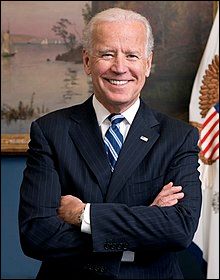
Former vice president and ex-Delaware senator Joe Biden

May 9, 2019 — Recent polling has seen former Vice President Joe Biden take full advantage of his announcement tour. While the pre-race appeared to be settling into a battle between Biden and Sen. Bernie Sanders (I-VT), once the ex-VP became an active candidate the picture drastically changed.

Several polls were taken during the last days of April and into early May. The HarrisX research organization and the Morning Consult firm conducted national surveys while Firehouse Strategies/Optimus commissioned Democratic primary polls in three of the first four nomination venues: Iowa, New Hampshire, and South Carolina. All of these polls produced big leads for Biden in contrast to what we were seeing just two weeks ago.

But, Change Research, in a slightly later New Hampshire poll with a larger sample (May 3-5; 864 likely New Hampshire Democratic primary voters), finds Sen. Sanders still on top, 30-26-12 percent over Biden and South Bend (IN) Mayor Pete Buttigieg.

The HarrisX national poll (May 3-4; 440 registered voters in the US) gives Biden a whopping 44-14 percent lead over Sen. Sanders with all others following in single-digits. The third-place finisher, Mayor Buttigieg has only eight percent support. Sens. Elizabeth Warren (D-MA) and Kamala Harris (D-CA) have seven percent and six percent, respectively, while former Rep. Beto O’Rourke (D-TX) has dropped to just three percent, tied with New Jersey Sen. Cory Booker.

Continue reading

March 3, 2020: The New Super Tuesday

By Jim Ellis

May 3, 2019 — Colorado Gov. Jared Polis (D) announced this week, as expected, that his state’s new primary will move to March 3, 2020, which has clearly become the next presidential cycle’s Super Tuesday.

Previously, Colorado employed the caucus system to apportion delegates, but voters changed to a primary when passing a 2016 ballot initiative, so now the state’s 67 Democratic first-ballot delegates and 37 Republican convention votes will be apportioned through a primary election.

But the Centennial State voters and the Democratic National Committee rules appear to be at odds. According to news reports, the 2016 Colorado electoral primary ballot initiative not only transformed into a primary, but also adopted a winner-take-all apportionment format. While Republicans allow states to award all of their delegates to one candidate based upon a primary or caucus victory, the Democrats, under the McGovern reform rules adopted after the 1972 presidential election, do not.

While the state may want to make the winner-take-all option determinative, the procedure violates Democratic rules, so we could see yet another pre-convention issue develop before the Credentials Committee, the body that certifies all of the delegate votes prior to the convention officially beginning.

The 2020 Democratic nomination process is becoming seriously front-loaded, which could play to the party’s detriment. By rule, only four states, referred to as “The First Four,” may vote before March 1 in the presidential year: Iowa (caucus, 41 first-ballot delegates), New Hampshire (primary, 24), Nevada (caucus, 36), and South Carolina (primary, 54). But just three days after South Carolina concludes, the following Tuesday, March 3, could become the most significant date of the early campaign.

Now that Colorado has joined the 3/3 fold, the following states will vote (in parenthesis, are the number of first ballot votes each entity possesses under the Democratic delegate apportionment formula):

  • Alabama (52)
  • American Samoa (6) – presumed to be voting this day
  • Arkansas (31)
  • California (416)
  • Colorado (67)
  • Democrats Abroad (13)
  • Georgia (105)
  • Massachusetts (91)
  • Minnesota (75)
  • North Carolina (110)
  • Oklahoma (37)
  • Tennessee (64) – probable, but has not yet set the calendar
  • Texas (228)
  • Utah (29)
  • Vermont (16)
  • Virginia (99)

Continue reading

Democratic Presidential Candidate Field Could Number 23 Very Shortly

By Jim Ellis

April 1, 2019
— Several presumed presidential candidates whose aspirations appeared dormant have suddenly sprung to life. In reading the current political tea leaves, and should the latest trends prove true, we could return to projections of a Democratic presidential field as large as 23 candidates.

While it has been generally regarded as a given that former Vice President Joe Biden would enter the race next month, and all indications are that he will, as many as six others may also soon join according to individual published reports late last week.

Sen. Michael Bennet (D-CO), whose name surfaced months ago as an individual contemplating becoming a national candidate, all of a sudden says that he will likely do so. This, after seemingly weeks of not even being mentioned in the long list of aspiring candidates.

Ex-Virginia Gov. Terry McAuliffe, who looked to be gearing up early but hadn’t been heard from lately, also confirms that he is headed toward announcing his candidacy this month.

Montana Gov. Steve Bullock has brandished more overt signs of planning to run. Always admitting that he was considering becoming a candidate, Gov. Bullock has spent some time in Iowa conducting meetings and getting to know the political terrain. He has also firmly ruled out challenging Sen. Steve Daines (R-MT) and appears headed toward the national stage. Bullock is ineligible to seek a third term as governor, so these underlying signals seem more indicative that he will, in fact, run for president.

Continue reading

New CNN National Numbers Are Out

By Jim Ellis

March 22, 2019 — The CNN television network released their new national survey of the Democratic presidential contest (conducted by SSRS research company; March 14-17; 1,003 US adults, 456 self-identified Democrats and those Independents who lean to the Democratic Party, 448 self-identified Republicans and those Independents who lean to the Republican Party), and while the ballot test results were consistent with most other polling, some different and interesting questions were asked.

CNN compared this poll to their previous study conducted during the Dec. 6-9 period. The first four finishers remain in relatively the same order, but the percentages have shifted and some significantly.

In the current poll, former Vice President Joe Biden continues to lead the pack of 17 tested candidates. He tops the field with 28 percent, down from the 30 percent support he held in December. Sen. Bernie Sanders (I-VT) is second with 20 percent, making a big jump from the 14 percent base CNN found three months earlier.

Sen. Kamala Harris (D-CA) surpasses former US Rep. Beto O’Rourke (D-TX), and tripled her preference from December. Sen. Harris leaps from 4 to 12 percent support. For his part, O’Rourke drops to fourth but still gains two percentage points in comparison to December (rising from 9 to 11 percent). All of the others remain in single-digits, though Sen. Elizabeth Warren (D-MA) doubled her support from 3 to 6 percent.

Continue reading

Colorado & Hickenlooper —
Decisions, Decisions

By Jim Ellis

Feb. 27, 2019 — Saying he’s “not cut out to be a senator,” former Colorado Gov. John Hickenlooper (D) said that he will either run for president in 2020 or no office at all. He further stated that, “Senators don’t build teams. Senators sit and debate in small groups … But I’m not sure that’s my — I’m a doer. That’s what gives me joy.”

Former Colorado Gov. John Hickenlooper – not running for Senate (Photo Moritz Hager)

While Hickenlooper is definitive that he won’t enter the Democratic senatorial primary to challenge first-term GOP incumbent Sen. Cory Gardner, he also has made lesser-than-expected moves toward entering the presidential race.

With already a dozen Democrats either officially entering the race or forming exploratory committees, and ex-Vice President Joe Biden set to announce his decision about becoming a candidate in the coming month, Hickenlooper, with low national name identification, may be waiting too long to generate a serious effort. Therefore, the more time that passes, the greater the chances of this ex-two-term governor and Denver mayor not being on the ballot at all in 2020.

The Monday announcement was certainly good news for Sen. Gardner. Possibly in the most vulnerable position of any Republican senator standing for re-election in 2020 – largely because his state has voted decidedly Democratic in the past several elections – the Colorado and national party leadership had hoped to recruit Hickenlooper into the Senate race. Most political observers clearly believe he would be Gardner’s strongest general election challenger.

Right now, mostly minor candidates have announced for the senate in Colorado. The two most prominent Democratic figures are former state House speaker and defeated US Senate and congressional candidate Andrew Romanoff, and ex-state senator and defeated gubernatorial candidate Mike Johnston, who finished third in the 2018 party primary that nominated current governor, Jared Polis.

Continue reading

Tracking Trump’s Approval Ratings
Against Electoral College Results

2016 Electoral College Results map (270toWin)


By Jim Ellis

Feb. 26, 2019 — Already beginning to project where the states might fall in the 2020 presidential election, the Gallup organization released a 50-state survey tracking study Friday that summarizes their cumulative research collected throughout the past year.

Gallup finds President Trump slightly improving his standing over a similar project conducted from their aggregate 2017 data. Meanwhile, the Civiqs polling organization projects, as do all other pollsters, that Trump’s job approval remains upside-down. In the good news category for the president, however, the latter organization finds that he is viewed more positively than either of the national political parties.

Nationally, Trump carries a 44:52 percent job approval ratio according to the Civiqs poll of registered voters (polled continually from Oct. 12, 2015-Feb. 23, 2019; 181,729 responses during that multi-year tracking period). The Democratic Party, however, posts a lesser 39:52 percent rating, while the Republican Party lags behind both the president and their political party counterpart. The GOP registers a poor 26:60 percent index.

But these numbers are not particularly unusual because the same trend among the three polling subjects has been consistent for many months. The more telling conclusion is that the deviation factor among the approval ratings has remained constant for well over a year, suggesting that the electorate continues locked in a highly polarized and negative status.

Continue reading

Biden Remains Ahead of the Pack

By Jim Ellis

Feb. 14, 2019 — A new Morning Consult national survey of Democratic presidential primary voters again finds former Vice President Joe Biden leading an ever-growing pack of hopefuls vying for the opportunity of facing President Trump in the 2020 general election.

The survey (Feb. 4-10: 11,627 registered voters who say they may vote in a Democratic presidential primary or attend a party caucus; 517 “early primary state” voters from Iowa, New Hampshire, Nevada and South Carolina), finds the former VP and long-time Delaware senator holding a 29-22-13 percent lead over Vermont Sen. Bernie Sanders (I/D-VT) and California Sen. Kamala Harris.

Sixteen more candidates or potential candidates were included in the poll, but none could crack double-digits. In the second tier, Sen. Elizabeth Warren (D-MA) pulled eight percent, closely followed by former Texas Rep. Beto O’Rourke (D-El Paso) with seven percent, and Sen. Cory Booker (D-NJ) who attracted five percent support. All of the others fell in between three percent and zero, inclusive.

Looking at only the four early states of Iowa, New Hampshire, Nevada and South Carolina (derived from an aggregate respondent group of 517 self-identified Democrats in those places), the order of candidates in the top tier doesn’t change, and Biden extends his lead to 33-21-11-10 percent over Sens. Sanders, Harris, and Warren. Sen. Booker gains one point to six percent, while ex-Rep. O’Rourke falls to five percent. No one else exceeds two percent.

Continue reading

House Democrats Release “Frontline Program” Targeting Perceived
Vulnerable GOP CDs

By Jim Ellis

Feb. 12, 2019 — Countering the previously announced National Republican Congressional Committee Patriot Program targeting list, the Democratic Congressional Campaign Committee released their Frontline Program protection listing late last week.

Since the Democrats are now in the House majority, their list is wholly defensive in nature while the Republicans are the minority challengers, a juxtaposition of roles from the past four election cycles. Of the 44 Frontline defense districts, 43 are also GOP Patriot Program targets. The lone exception is Connecticut freshman Jahana Hayes (D-Wolcott), a former national Teacher of the Year award winner who won a 56-44 percent victory in her maiden general election campaign.

The targeting organizational programs are important because both official political party apparatuses help the candidates with fundraising, a campaign element where Democrats overwhelmed Republicans in the 2018 election cycle. Therefore, it is likely that the Patriot Program is more important to the previously identified GOP members than the Frontline operation is to the Democratic incumbents, most of whom raised multi-millions in their own right.

Comparing the lists, the 43 top Democratic protection members who are also found on the Republican register could more realistically be narrowed to 27 campaigns that should reasonably be placed in the highest vulnerability category.

In 19 of the 27, President Trump carried the district over Hillary Clinton, and four years earlier Mitt Romney topped President Obama in 17 of the CDs. The Republicans had won all three post-redistricting congressional elections (2012, ’14, ’16) in 22 of the 27 districts prior to the 2018 vote.

Continue reading