
Tag Archives: Rep. Diana DeGette

Colorado Primary Results:
Sen. Bennet & Rep. DeGette Lose

By Jim Ellis — Wednesday, July 1, 2026

Colorado

Colorado Sen. Michael Bennet (D)

Colorado Sen. Michael Bennet (D) / Photo by Gage Skidmore, Flickr

What once appeared as a virtual sure bet for Sen. Michael Bennet to be elected Governor turned to defeat last night, and the result wasn’t close; and with pre-election polling trends running against 15-term Rep. Diana DeGette (D-Denver), she too became another incumbent loss statistic.

Sen. Bennet will continue in his present position. Because his seat was not in-cycle this year – it next comes before the voters in 2028 – the loss does not cost the Senator his political career. His 2028 situation, should he choose to seek re-election as Senator, would certainly make him more vulnerable in a new Democratic primary, however.

The Governor’s race should not be considered a Democratic Socialist win. While Attorney General Phil Weiser, who beat Sen. Bennet 56-44 percent, is certainly on the ideological left, he did not campaign as a socialist. Rather, he won this campaign by simply being the better candidate and very likely outworking Sen. Bennet, who still had to spend considerable campaign time in Washington doing his present job.

Weiser, who won two statewide races as Attorney General but was term-limited in 2026, has a compelling story in that his mother was born in a concentration camp during WWII because his grandmother was being held as a prisoner of the Nazi regime. Furthermore, with a political party moving closer toward the Palestinian coalition and away from Israel, Weiser highlighted his Jewish heritage and still won going away. Therefore, this incumbent defeat is not like most of the others we’ve seen this year but is another indication that perceived establishment candidates are doing poorly.

Rep. Diana DeGette (D-Denver)

In Denver’s 1st Congressional District, Rep. DeGette suffered a 51-42 percent defeat at the hands of 29-year-old Democratic Socialist Melat Kiros. Polling showed DeGette trailing, and she qualified for the ballot by only eight delegate votes at the 1st District nominating convention. Each clue revealed Rep. DeGette’s weakness in campaigning for renomination. Conversely, at the district nominating convention, Kiros attracted almost 70 percent of the delegate votes.

There are now seven House incumbents and two Senators who have been denied renomination. Now, added to these numbers, we have a sitting multi-term Senator running in an open Governor’s race who fails to claim his party’s nomination.

Of the seven, five – now including DeGette – are Democrats. The others are Reps. Al Green (D-TX), Julie Johnson (D-TX), Dan Goldman (D-NY) and Adriano Espaillat (D-NY). The Republicans are Reps. Dan Crenshaw (R-TX) and Thomas Massie (R-KY).

Democratic Socialists are responsible for three of the defeats: Reps. DeGette, Goldman, and Espaillat.

Al Green attempts to blame his loss on a new redistricting map, but the overwhelming majority of the new 18th District constituency carried over from his own district, suggesting the new district boundaries were not the principal reason for his losing to recently elected Congressman Christian Menefee, 68-32 percent.

In the case of freshman Rep. Johnson, redistricting was a major factor in her losing to former Congressman Colin Allred, since her 32nd District was transformed into a Republican seat, thus forcing her to seek re-election in the newly drawn 33rd District.

On the Republican side, Rep. Crenshaw’s loss in his Harris County-anchored CD began the string of incumbent losses. Rep. Massie, likely the most well-known nationally of the defeated Representatives, lost because of his feud with President Trump; this was also the case with Sen. Bill Cassidy (R-LA). Being tabbed by Trump as the most anti-Trump Republican Congressman led to Massie suffering a 55-45 percent loss in a district that he had won seven times.

Turning back to Colorado, Sen. John Hickenlooper (D) was renominated in his campaign, but with only a 55-45 percent margin against another Democratic Socialist candidate, state Sen. Julie Gonzalez (D-Denver), who he outspent by an 8:1 ratio.

In the 3rd Congressional District, freshman Rep. Jeff Hurd (R-Grand Junction) scored a lopsided 67-33 percent victory over former state Rep. Ron Hanks. The general election looks to be competitive as Rep. Hurd will face Real Estate company CEO Dwayne Romero, who last night defeated venture capitalist Alex Kirloff even though the latter man had a huge spending advantage.

In what promises to be a very close 8th District general election, state Rep. Manny Rutinel (D-Commerce City) won the right to challenge freshman Rep. Gabe Evans (R-Ft. Lupton/Thornton). The Rutinel victory margin of 61-34 percent over former state Rep. Shannon Bird was much more substantial than predicted.

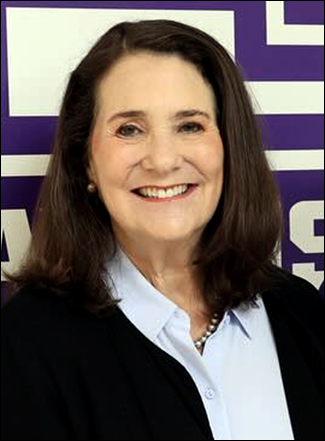
Will Colorado Rep. DeGette be Next to Fall to a Democratic Socialist?

By Jim Ellis — Thursday, June 25, 2026

US House

Six House members have already been denied renomination this cycle, and next week’s Colorado primary could add another to the list.

Rep. Diana DeGette (D-Denver) is facing a serious challenge from attorney and Democratic Socialist Melat Kiros in a race that pegs a far left liberal against a traditional liberal incumbent. Congresswoman DeGette has been in office since winning her first term in 1996, ironically a year before her opponent was born.

The June 23 New York primary underscored the strength of the Democratic Socialist candidates. Three DSA‑aligned contenders won congressional primaries in New York City, victories that all but assure them seats in November. Two of the winners defeated incumbents: Reps. Dan Goldman and Adriano Espaillat. In Brooklyn, state Assemblywoman Claire Valdez easily won a crowded primary to succeed retiring Rep. Nydia Velázquez (D).

In both the Goldman and Espaillat races, the challengers overcame major financial disadvantages. Brad Lander, the former NYC Comptroller, defeated Rep. Goldman despite being outspent 7:1; Goldman spent more than $7 million attempting to hold his seat but lost 66-34 percent. Darializa Avila Chevalier edged Rep. Espaillat 49-46 percent, despite a 2:1 spending deficit.

Earlier in the year, three additional incumbents, Reps. Dan Crenshaw (R‑TX), Al Green (D‑TX), and Thomas Massie (R‑KY), were defeated by wide margins. A sixth incumbent loss stemmed from redistricting rather than voter rejection.

In Texas’ newly drawn 33rd District, former Congressman and 2024 Senate nominee Colin Allred defeated freshman Rep. Julie Johnson (D‑Farmers Branch). Although the district lies entirely within Dallas County, most of its territory was unfamiliar to Johnson and markedly different from her original 32nd District, which was transformed into a Republican‑leaning seat stretching into East Texas.

These results reflect a broader frustration within both party bases and recent signs suggest that Colorado Democrats may be experiencing similar tensions.

Rep. DeGette’s vulnerability became apparent when she barely qualified for the ballot at the 1st District nominating convention. Colorado candidates must either secure 30 percent of convention delegate support or submit sufficient petition signatures to earn a ballot position. Rep. DeGette cleared the 30 percent threshold by just eight votes in an official intra-party caucus where delegates overwhelmingly backed Kiros.

A reported Data for Progress Colorado poll showed Kiros leading next week’s 1st District race with 41 percent, followed by DeGette at 36 percent and University of Colorado Regent Wanda James at six percent. Like Chevalier in New York, Kiros is a strong anti‑Israel activist, reflecting issues increasingly becoming prominent in Democratic primaries.

Money favors Rep. DeGette, and has been bolstered by significant outside spending. However, as seen in other incumbent defeats, financial advantages have not always been enough to counteract shifting voter sentiment.

Additional signs of political turbulence for Colorado incumbents appear in the gubernatorial and Senate primaries.

Recent polling indicates a tightening race in the open Democratic gubernatorial primary. Sen. Michael Bennet (D) faces a strong challenge from Attorney General Phil Weiser, who has mounted an unexpectedly competitive campaign effort.

A late May Colorado Community Research poll (May 22-26; 796 likely Democratic primary voters) showed Weiser leading Sen. Bennet 41-34 percent. A follow‑up Public Policy Polling survey (June 1-2; 505 likely Democratic primary voters; text & live interview) found Bennet rebounding but to only a tenuous 36-30 percent.

The Colorado Community Research poll also tested the US Senate primary and surprisingly found Sen. John Hickenlooper leading state Sen. Julie Gonzalez (D‑Denver), another Democratic Socialist, by a narrow 41–34 percent margin.

Colorado is the only state holding a June 30 primary, and the key contests are shaping up to deliver another round of closely watched and potentially consequential results.

Colorado Rep. Diana DeGette Barely Survives Ballot Challenge

By Jim Ellis — Tuesday, March 31 2026

US House

Colorado Rep. Diana DeGette (D-Denver)

Current US House member Rep. Diana DeGette (D-Denver) of Colorado barely survived a ballot challenge at the Democratic Assembly caucuses over the weekend.

Under Colorado election procedure, a candidate may qualify for the ballot in two ways. First, receive at least 30 percent support from the party assembly delegates; second, submit 1,500 valid registered voter petition signatures. Candidates can both participate in the assembly and file petitions.

At the 1st Congressional District Assembly this past Saturday, Rep. DeGette received only 33 percent of the delegate vote opposite attorney Melat Kiros.

According to The Down Ballot political blog, 235 delegates were present and voting, meaning just 78 of the participating individuals voted for the 15-term incumbent. The result indicates that she earned ballot placement by just eight votes. Rep. DeGette did not file petitions as a safeguard against performing poorly at the assembly; therefore, she risked renomination defeat had she fallen below the 30 percent threshold.

A third 1st District Democratic congressional candidate, University of Colorado Regent Wanda James, did not participate in the assembly but filed signature petitions.

Therefore, it appears Rep. DeGette has a serious primary challenge in the June 30 Colorado plurality primary election. According to the 2025 year-end Federal Election Commission financial disclosure statement, the Congresswoman held just over $535,000 in her campaign account. Kiros raised over $230,000 and James slightly under $180,000.

Though the delegate vote was overwhelming for Kiros, the assembly result is not necessarily representative of the 1st District Democratic primary vote base. It does show, however, that Kiros is a serious candidate and has significant grassroots support among the most active regular party primary voters.

Rep. DeGette is certainly not the only veteran Democratic incumbent facing a competitive primary challenge. Three, for example, face former US House members. Opposing Reps. April McClain Delaney (D-MD), Wesley Bell (D-MO), and Julie Johnson (TX-33) are former members who previously held the respective seat.

At this point, in addition to Rep. DeGette, 16 other Democratic congressional incumbents must run a serious campaign for renomination. Fewer Republicans face primary challenges, though Texas US Rep. Dan Crenshaw (R-Humble) has already been defeated in the March 3 GOP primary.

Below is a list of the other significant Democratic challenge campaigns that are worth watching as primary season progresses. The principal challengers are also identified (source: Politics1 website):

  • CA-4: Rep. Mike Thompson vs. venture capitalist Eric Jones (California jungle primary is June 2)
  • CA-7: Rep. Doris Matsui vs. Sacramento City Councilwoman Mai Vang and two other Democrats (jungle primary)
  • CA-17: Rep. Ro Khanna vs. financial tech executive Ethan Agarwal and cybersecurity engineer Mike Katz (jungle primary)
  • CA-32: Rep. Brad Sherman vs. ex-Biden White House aide Jake Levine, son of former Congressman Mel Levine, and five other Democrats (jungle primary)
  • CT-1: Rep. John Larson vs. former Hartford Mayor Luke Bronin; state Rep. Jillian Gilchrest, and two other Democrats (Connecticut plurality primary is Aug. 11)
  • FL-20: Rep. Sheila Cherfilus-McCormick vs. Luke Campbell, entertainer and former Miami Mayor candidate, ex-Broward County Commissioner Dale Holness, ex-Sunrise City Commissioner Mark Douglas, community organizer Elijah Manley, and physician Rudy Moise. Rep. Cherfilus-McCormick is under federal indictment, and the House Ethics Committee last week found her guilty of 25 ethics violations. (Florida plurality primary is Aug. 18)
  • GA-13: Rep. David Scott vs. state Sen. Emanuel Jones, state Rep. Jasmine Clark, ex-Gwinnett County School Board Chair Everton Blair, and three others. (Georgia primary is May 19; runoff June 16 if no one receives majority support)
  • HI-1: Rep. Ed Case vs. state Sen. Jarrett Keohokalole, former state House Majority Leader Della Belatti, and two others. (Hawaii plurality primary is Aug. 8)
  • IN-7: Rep. Andre Carson vs. consultant George Hornedo, and two others (Indiana plurality primary is May 5)
  • MD-6: Rep. April McClain Delaney vs. ex-Rep. David Trone, and six other Democrats (Maryland plurality primary is June 23)
  • MI-13: Rep. Shri Thanedar vs. state Rep. Donovan McKinney and three others (Michigan plurality primary is Aug. 4)
  • MN-5: Rep. Ilhan Omar vs. MN AFSCME Vice-President & DNC Member Latonya Reeves and attorney Julie Le (Minnesota plurality primary is Aug. 11)
  • MO-1: Rep. Wesley Bell vs. former Rep. Cori Bush and four other Democrats (Missouri plurality primary is Aug. 4)
  • NY-15: Rep. Ritchie Torres vs. ex-state Assemblyman Michael Blake and three others (New York plurality primary is June 23)
  • TN-9: Rep. Steve Cohen vs. state Rep. Justin Pearson, pastor DeVante Hill, and businessman LaTroy Alexandria-Williams (Tennessee plurality primary is Aug. 6)
  • TX-33: Rep. Julie Johnson vs. ex-Rep. Colin Allred in runoff election from March 3 primary (Texas runoff election day is May 26)

Colorado Maps Completed


Colorado Independent Redistricting Commissions’ Final Approved Congressional Plan

By Jim Ellis

Oct. 1, 2021 — The members of the Colorado Independent Redistricting Commissions completed their task of sending congressional and state legislative maps to the state Supreme Court at the assigned deadline, with all but one person supporting the final US House product.

The adopted map was based upon the third staff-produced map, with an amendment from Democratic commission member Martha Coleman (2nd CD) in a re-draw that affected Rep. Ed Perlmutter’s (D-Arvada) 7th District and the new 8th CD.

The staff offering became the commission’s working map. The initiative that created the redistricting panels awarded an inordinate amount of power to the professional staff in the event of a commission deadlock, meaning that a two-thirds majority is not achieved. In such a situation, the staff map would then be directly sent to the state Supreme Court at the assigned deadline. The high court has until Dec. 15 to approve the maps now officially in their possession.

The congressional map now features eight seats, since Colorado was awarded a new district in reapportionment. All of the considered maps placed the new seat in a similar location, with the final product featuring a new 8th CD lying north to northeast of Denver, and encompassing the municipal population centers of Thurston, Westminster, and Greeley.

All seven current incumbents receive districts they can win. Reps. Diana DeGette (D-Denver) and Joe Neguse (D-Boulder) have the strongest Democratic seats, while Reps. Ken Buck (R-Windsor) and Doug Lamborn (R-Colorado Springs) have the safest Republican districts. Rep. Jason Crow (D-Aurora) sees his 6th District substantially improve, while Reps. Lauren Boebert (R-Silt) and Perlmutter have districts that clearly favor their party, but which could yield a degree of competitiveness.

Rep. Boebert’s 3rd CD, or the Western Slope district, remains largely intact with the exception of moving further east along Colorado’s southern border. A great deal of the public input at the various hearings expressed the desire to unite many of the Hispanic and Native American communities in that region.

The changes don’t drastically change the political nature of her district, however. In Donald Trump’s two elections, the former president carried the 3rd by 12 and 6 points, respectively, in 2016 and 2020. The aggregate score on the new CO-3 is R+9. Therefore, the partisan complexion is largely unchanged, despite the addition of some different geography.

Continue reading

Colorado & Hickenlooper —
Decisions, Decisions

By Jim Ellis

Feb. 27, 2019 — Saying he’s “not cut out to be a senator,” former Colorado Gov. John Hickenlooper (D) said that he will either run for president in 2020 or no office at all. He further stated that, “Senators don’t build teams. Senators sit and debate in small groups … But I’m not sure that’s my — I’m a doer. That’s what gives me joy.”

Former Colorado Gov. John Hickenlooper – not running for Senate (Photo Moritz Hager)

While Hickenlooper is definitive that he won’t enter the Democratic senatorial primary to challenge first-term GOP incumbent Sen. Cory Gardner, he also has made lesser-than-expected moves toward entering the presidential race.

With already a dozen Democrats either officially entering the race or forming exploratory committees, and ex-Vice President Joe Biden set to announce his decision about becoming a candidate in the coming month, Hickenlooper, with low national name identification, may be waiting too long to generate a serious effort. Therefore, the more time that passes, the greater the chances of this ex-two-term governor and Denver mayor not being on the ballot at all in 2020.

The Monday announcement was certainly good news for Sen. Gardner. Possibly in the most vulnerable position of any Republican senator standing for re-election in 2020 – largely because his state has voted decidedly Democratic in the past several elections – the Colorado and national party leadership had hoped to recruit Hickenlooper into the Senate race. Most political observers clearly believe he would be Gardner’s strongest general election challenger.

Right now, mostly minor candidates have announced for the senate in Colorado. The two most prominent Democratic figures are former state House speaker and defeated US Senate and congressional candidate Andrew Romanoff, and ex-state senator and defeated gubernatorial candidate Mike Johnston, who finished third in the 2018 party primary that nominated current governor, Jared Polis.

Continue reading