Tag Archives: California

More Races Called in House & Senate

By Jim Ellis

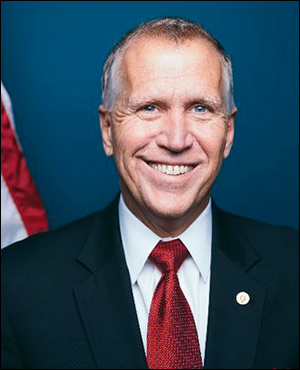
North Carolina Sen. Thom Tillis (R)

Nov. 11, 2020 — Though the North Carolina ballot reception period continues through tomorrow, Democratic US Senate nominee Cal Cunningham, after leading in polling throughout most of the race, conceded late yesterday to Sen. Thom Tillis (R).

The remaining votes are from people who requested absentee ballots that have yet to be returned. Estimates suggested approximately 116,500 could be returned but it became clear that not all of them would be sent. Each had to be postmarked on Nov. 3 and placed in the mail stream. With Sen. Tillis leading by exactly 95,000 votes and an estimated 30 percent of the absentee ballot requests going to Republican voters, it became obvious that there would not be enough available votes to turn the election Cunningham’s way.

The Tillis victory means that Republicans now control 49 Senate seats with only Alaska remaining until the two Georgia runoffs are held on Jan. 5. In Alaska, now with 69 percent of the vote reporting, Sen. Dan Sullivan (R) leads Dr. Al Gross (I/D) by 52,995 votes or by a 58.5 – 36.4 percent margin. The Alaska ballot reception period lasts through Friday, so we should see this race being called shortly, and almost assuredly for GOP Sen. Sullivan.

In the House, we see several calls being made, some of which had been obvious for some time. Democratic Reps. Tom O’Halleran (D-AZ-1), Jimmy Gomez (D-CA-34), and Kim Schrier (D-WA-8), along with Republican Rep. Ken Calvert (R-CA-42) and open seat contender Jay Obernolte (R-CA-8) were all declared official winners. All had been leading throughout the post-election period and it was just a matter of time before a declaration was made for each.

Two major competitive races were called yesterday. In California, where the post-election counting is moving along at a brisker pace than in the past, Orange County Supervisor Michelle Steel (R) has defeated freshman Rep. Harley Rouda (D-Laguna Beach) in the 48th CD. The district, which contains most of the Orange County coastline and was in Republican hands for 30 years in the person of Rep. Dana Rohrabacher (R) before Rouda won the seat in 2018, returns to the GOP.

Continue reading

The California Ballot Report

By Jim Ellis

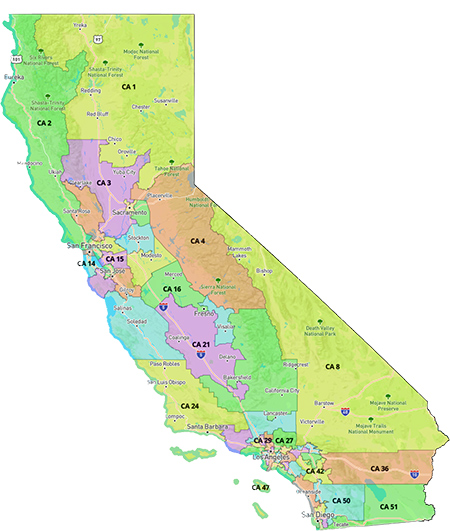
                     California Congressional Districts

Nov. 10, 2020 — The California Secretary of State — as has been the office’s practice because the counting process there is always so long — has issued its report on how many ballots are outstanding on a countywide basis.

The ballot reception period here will not conclude until Nov. 20, though vote envelopes would have had to be postmarked on Nov. 3 in order to be admitted to the count.

The SoS office is, at this point, showing a generally low number of outstanding ballots, but when looking at the total votes cast in the districts when adding the outstanding number to the recorded votes, the aggregate totals look reasonable and are all much higher than the 2016 congressional vote in each district. If the outstanding ballot number is in actuality near completion, then the races will be called right after Nov. 20, since there will be little in the way of adding extra votes to the district totals.

Extrapolating the number of ballots remaining to be counted with the area of the specific county within the congressional districts in question could provide a projection basis to in order to estimate how many votes the trailing candidate would need to win their respective race.

Below is a recap of the five most contested races in the state. Technically, Reps. Jimmy Gomez (D-Los Angeles) and Ken Calvert (R-Corona) are also uncalled, but their margin is large enough that each should be re-elected. The eighth race not technically called is in the Sacramento area, but challenger Brynne Kennedy (D) has already conceded to Rep. Tom McClintock (R-Elk Grove).


CA-8:
Jay Obernolte (R) vs. Christine Bubser (D)
• Current Standing: Obernolte +24,925 votes (55.5% to 44.5%)
• Estimated Remaining Votes: 76,223
• Minimum % Bubser Needs to Reverse: 66.3%

Inyo County: Obernolte 50.5 – 49.5%
• Estimated Remaining Votes: 370

Mono County: Bubser 60.1 – 39.9%
• Estimated Remaining Votes: 245

San Bernardino County: Obernolte 56.2 – 43.8%
• Estimated Remaining Votes: 75,608

If the estimates of the number of outstanding ballots are near correct and relatively complete, and the county percentages remain constant as compared with their previous performance, Obernolte would win with more than 55 percent.


CA-21
Rep. T.J. Cox (D-Fresno) vs. Ex-Rep. David Valadao (R)
• Current Standing: Valadao +4,570 votes (51.8% to 48.2%)
• Estimated Remaining Votes: 70,047
• Minimum % Cox Needs to Reverse: 53.3%

Fresno County: Valadao 51.5 – 48.5%
• Estimated Remaining Votes: 8,151

Kern County: Cox 61.3 – 38.7%
• Estimated Remaining Votes: 58,661

Kings County: Valadao 62.1 – 37.9%
• Estimated Remaining Votes: 1,529

Tulare County: Valadao 50.0 – 50.0%
• Estimated Remaining Votes: 2,114

If the estimates are near correct and the county percentages remain constant in the after-county as compared with their previous performance, Rep. Cox would win a close victory with less than 51 percent. Realistically, this race is likely too close to call.
Continue reading

Outstanding Races Update

By Jim Ellis

Nov. 9, 2020 — A few races were called over the weekend, while political overtime drags on for others.

Alaska senate race still undecided between physician and commercial fisherman, Democrat Al Gross (left), and first-term Republican incumbent Dan Sullivan.

The uncalled Senate races will likely remain in their current position throughout this week. Currently, Alaska Sen. Dan Sullivan (R) holds a big lead over physician Al Gross (I/D), 62.3 – 32.1 percent, with a vote margin of 57,616. Despite the large spread, the race is not called because only 58 percent of the vote is reporting. The Alaska cut-off date for receiving ballots postmarked Nov. 3 is this Friday, Nov. 13. Therefore, it is presumed that we will not have a final declaration until the weekend at the earliest.

The North Carolina situation remains frozen. Sen. Thom Tillis (R) holds a 95,739-vote lead with all counted but those ballots that could come in through Nov. 12. It appears the universe of requested ballots not yet returned could only be a maximum of approximately 116,500. The ballots must now be in the mail stream as they would have to have been postmarked on Nov. 3. Mathematics suggest a Tillis victory will occur, but such a declaration is not yet official.

As we know, both Georgia Senate races will advance to their respective runoff elections on Jan. 5. The political battles feature Republican Sen. David Perdue (49.7 of requested ballots not yet returned) and Democrat Jon Ossoff (47.9 percent). The special election features Democratic Rev. Raphael Warnock (32.9 percent) and appointed Republican Sen. Kelly Loeffler (25.9 percent).

The House races are not fully complete, as 24 contests remain in abeyance. At this point, Republicans have gained a net five seats among the 411 campaigns that have been decided. Of the remaining 24, the GOP candidates lead in 18, but many will likely flip back toward the Democrat as counting concludes. In the end, it is likely that the Republicans will gain between seven and nine seats, meaning they will hold 208 to 210 House seats as compared with 227 to 225 for the Democrats.

In the past few days, the following races have been declared and the winners are listed below:

AZ-6: Rep. David Schweikert (R)
CA-50: Darrell Issa (R) – Open Seat – Republican hold
GA-7: Carolyn Bourdeaux (D) – Open Seat – Democratic gain
IN-5: Victoria Spartz (R) – Open Seat – Republican hold
MI-3: Peter Meijer (R) – Open Seat – Republican gain
MI-8: Rep. Elissa Slotkin (D)
MI-11: Rep. Haley Stevens (D)
MN-1: Rep. Jim Hagedorn (R)
MN-2: Rep. Angie Craig (D)
NV-3: Rep. Susie Lee (D)
NV-4: Rep. Steven Horsford (D)
NJ-2: Rep. Jeff Van Drew (R)
NY-4: Rep. Kathleen Rice (D)
PA-7: Rep. Susan Wild (D)
PA-8: Rep. Matt Cartwright (D)
PA-10: Rep. Scott Perry (R)
PA-17: Rep. Conor Lamb (D)
WA-3: Rep. Jaime Herrera Beutler (R)

The remaining races are still undecided:
Continue reading

The Decisions Within the Election

By Jim Ellis

Oct. 30, 2020 — The 2020 election cycle has been unique in many ways, but a series of significant decisions, typically through judicial rulings, will likely have a long-lasting effect upon the way the various states administer their elections.

Expanded early voting is likely here to stay. With more than 66 million people already voting through Wednesday, we can expect the states to continue with this relatively new process. Currently, only four states do not have some form of early voting.

Whether we see a continuance of the post-election ballot reception period may be another matter. There is likely to be controversy over this practice that 21 states will feature beginning next week. If the presidential race is close and gets bogged down in the political overtime, the negative aspects of counting votes that come in after the election could come to the forefront.

We have also seen changes in some states, most of which came in previous years, over their primary voting procedures. With reapportionment and redistricting on the political horizon, we are seeing states place measures on Tuesday’s ballot that could bring even more change to electoral systems around the country.

According to research presented from the University of Virginia’s Dr. Larry Sabato’s Crystal Ball publication and the Ballotpedia organization, voters in nine states will be deciding measures that could alter even further the way future elections are conducted. As we have seen develop, states adopting changes lead to further states following suit. Therefore, if many of the measures receive voter approval Tuesday, other states may also begin adopting some of these practices.

We start with states potentially changing their primary systems to a variation of the jungle primary system. Currently, Louisiana, where the procedure began, California, and Washington use the top-two qualifying system. In those states, all candidates are placed on the same primary ballot and the top two vote-getters advance to the general election irrespective of political party affiliation. Louisiana can elect a candidate outright if he or she receives majority support in the primary election because the state schedules the primary concurrently with the national general election.

Voters in Florida have a ballot proposition to decide if they want their state to adopt the jungle primary system. The Sunshine State voters are also considering a proposition that would allow changes voted through initiative only to take effect if the measure passes in two general elections. Therefore, should this latter idea attain approval, it, and all of the other passed measures, would be delayed until they again pass in a subsequent election.

Alaska voters are looking at another variation of the jungle primary. They are considering a measure where the primary would produce four finishers, thus setting up multi-candidate general elections.

Continue reading

Can Repubs Win 49 of 52 Competitive House Races to Win Majority?

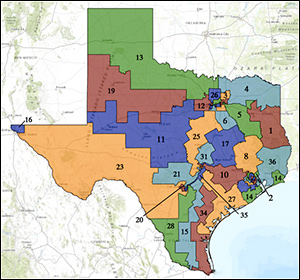
Texas could be the key state in determining whether the Democrats will gain seats. If Republicans are to make a run at the majority, they will have to maintain their historically strong showing in the Lone Star State, and also win just about everywhere else.

By Jim Ellis

Oct. 27, 2020 — Virtually all election analysts are predicting that the Democrats will maintain their majority in next week’s national election with the principal unanswered question prompting speculation about whether they will add members to their party conference.

Irrespective of predictions, it appears that 113 congressional races still feature legitimate competition, meaning the two major party nominees in each situation have adequate resources with which to communicate their respective messages. Though the incumbent, or incumbent party in the open seats, is the favorite in most of the races, enough districts are in play for Republicans to end the election cycle by making a dent into the relatively small 17-seat Democratic majority.

One can divide the competitive races into three tiers, with those in the first segment being the most likely to see an incumbent or incumbent party fall to a challenger candidate, and are the subject of this Update. Unfortunately for Republicans, the Democrats are on offense in 56 percent of the contested seats. Obviously, this gives the Dems more opportunities for gains, thus increasing their chances of adding to their majority margin.

Within our 52 rated first-tier competitive category, Democrats are on offense in 30 of them, thus making retaining the chamber majority probable and allowing multiple opportunities to increase their aggregate total.

Texas could be the key state in determining whether the Democrats will gain seats. We see 11 of the Lone Star seats falling into the competitive category, five of them in the top tier. Of the 11, only one is a Democratic seat, that held by freshman Rep. Lizzie Fletcher (D-Houston), meaning the Texas campaigns will likely prove to be ground zero in previewing the overall House result.

Continue reading

Michigan Reverses Direction
On Mail-In Ballot Oversight

By Jim Ellis

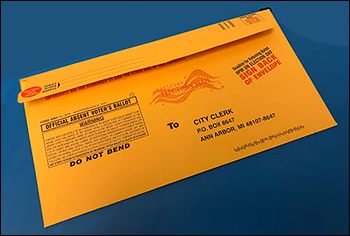
Oct. 20, 2020 — The Michigan Court of Appeals on Friday reversed a lower court ruling that allowed a post-election ballot reception period that would have lasted until Nov. 17, and granted the process known as “ballot harvesting,” where another individual or individuals can deliver unspecified numbers of ballots for voters.

The three-judge high court unanimously overturned a ruling from Court of Claims Judge Cynthia Stephens who made the original directive in deciding an election lawsuit that the Michigan Alliance for Retired Americans, a union-funded organization, brought forth.

When the Michigan attorney general and secretary of state jointly decided not to appeal Judge Stephens’ ruling, the Republican controlled state House and Senate filed the motion and were granted standing. It is unclear now whether the Michigan Alliance will appeal to the state Supreme Court.

According to the Detroit News’s reporting, the original ruling contained the directive that the ballots must be postmarked by Nov. 3. That clerical distinction, however, will be difficult to enforce once we advance into the post-election counting and challenge stage.

The US Postal Service, themselves, according to their employee practices handbook, indicate that many mail pieces do not require postmarks. In most of the 21 states that are now allowing the post-election reception period, the ballots will fall into one of these categories thus making the postmark question moot, and that will invariably lead to further lawsuits and litigation. Below is the official language for the postmark directives:

“Postmarks are not required for mailings bearing a permit, meter, or precanceled stamp for postage, nor to pieces with an indicia applied by various postage evidencing systems.”

The Appellate Court ruling means, at least until if and when the state Supreme Court addresses the issue, that there will be no post-election ballot reception period in Michigan. Ballot harvesting pertaining to individuals who are not immediate family members of the person wanting to vote absentee or is not an election office clerk, will again be prohibited. Therefore, all ballots are required to be in the possession of election authorities throughout Michigan’s counties before the polls close on Election Day, Nov. 3.

Continue reading

Pennsylvania Voting Rules

By Jim Ellis

Sept. 21, 2020 — Pennsylvania’s Democratic controlled Supreme Court changed their state election procedures late last week in a series of rulings on a lawsuit that the Pennsylvania Secretary of State and PA Democratic Party previously filed.

Under the new process, receiving votes after the election is allowed if “no evidence exists” that the ballot was mailed after Election Day, Nov. 3. The deadline for ballot acceptance now moves from 8 pm on Election Day to 5 pm, Friday, Nov. 6. Pennsylvania becomes the 17th state to allow post-election reception for this 2020 election. The ruling increases the chances that we will not have a winner declared on election night.

Additionally, three other rulings will allow drop boxes to be used as ballot receptacles in the various counties, affirmed that poll watchers can only serve in their own county of residence, and Green Party candidate Howie Hawkins’ name was removed from the ballot. The court did not grant the lawsuit motion to allow ballot harvesting, which would permit third parties to deliver ballots to the authorities or ballot drop boxes.

The drop boxes will be placed in various locations around a county and voters can deposit their ballots without using the postal service to transfer their vote to the county election authorities. Hawkins’ name was removed from the ballot because the court said he “failed to comply with the Election Code’s strict mandate” and the attempts to fix the problem “did not suffice to cure that error,” but the specifics were not addressed.

With the large number of absentee ballots expected here and in other states, the trend toward allowing post-election reception, and the laws that some states, like Pennsylvania, have to control when the mail ballots can be counted, makes it less likely that we will see a definitive presidential campaign result on Nov. 3. The same will be true for certain US Senate and House races.

Of the 17 states, now including Pennsylvania, that are allowing post-election ballot reception, seven appear competitive. The others, Alaska, California, Kansas, Massachusetts, Mississippi, New Jersey, Utah, Virginia, Washington, and West Virginia will likely declare a clear winner relatively early in the counting period.

Continue reading

Monitoring Mail-in Vote Turnout

By Jim Ellis

July 7, 2020 — With many states emphasizing mail voting as a way to increase voter participation in the COVID-19 era, has adoption of near universal mail voting in the states that have done so achieved its fundamental purpose, or has it caused more problems than it solved?

Voter turnout is always a definitive factor in determining election outcomes, and the push to change voting procedures has occurred in 31 state primaries. Therefore, the voting system alterations, should they continue into the general election, will most likely have a major impact upon the electoral outcomes.

Most of the states adopting change only expanded their mail absentee ballot procedures for the primaries; therefore, we can expect another round of battles over the general election processes to soon come before legislatures and courts.

Many of the states, Maryland, Georgia, Nevada, Pennsylvania, and New York to name several, had administrative problems with their expanded mail programs including reports of homes receiving multiple ballots because inactive voters were forced to be mailed, some people requesting absentee ballots and not receiving them, and long post-election counting periods because of the large number of mail ballots coming into the county clerk’s offices.

New York, in fact, has still not even completed its unofficial tabulation and the primary was June 23. The Clark County (Nevada) County Clerk said publicly that the directive to mail inactive voters led to chaos in the state primary since so many ballots were being sent to individuals no longer living at the mailed address.

Largely, Democrats and voting rights organizations are attempting to persuade legislatures, governors, and/or the courts to expand the mail absentee ballot voting option to all registered voters both active and inactive, enact same-day voter registration, adopt ballot harvesting, which allows any individual to collect ballots from voters and turn them into county election authorities (this process is only legal in California, to date), and allow ballots to be post-marked on Election Day as opposed to requiring that they be received on voting day. Republicans and conservative organizations typically object to most of these ideas on verification grounds.

Continue reading

Is A Budding Red Rebound Emerging?

By Jim Ellis

May 19, 2020 — Two years ago, several national political prognosticators were predicting a strong Democratic election, i.e., “a blue wave,” by using special election results, mostly from state legislative campaigns, as one of their fundamental support arguments. As we know, the forecast proved correct.

To what degree the special election totals were a precursor is difficult to say, but it is reasonable to believe that real-time results are a better voting trend indicator than publicly released polls, many of which are methodologically flawed. Therefore, it is worth analyzing similar voting patterns as we approach the 2020 election.

North Carolina Rep. Dan Bishop (R-Charlotte)

The victory of Republican Mike Garcia in California last week marked the first congressional special election of this election cycle to flip from one party to the other. Republicans have won five of the six special US House contests, including those of Garcia and Wisconsin state Sen. Tom Tiffany (R-Minocqua), who easily claimed his state’s vacant 7th District, last Tuesday.

The other significant special election occurred late last year. Though Rep. Dan Bishop’s (R-Charlotte) victory in North Carolina came in a seat that historically produced Republican victories, he was certainly considered an underdog at the outset of the special election campaign. He rebounded, however, to score a two-point victory, nonetheless, which in many ways makes it as noteworthy as the Garcia win.

The NC-9 election was necessitated because voter fraud in the 2018 general election prevented the Republican candidate from being certified the winner. After almost a year of keeping the seat vacant, the state’s Board of Elections called a new election that Gov. Roy Cooper (D) scheduled for Sept. 10, 2019.

In the campaign, Bishop was outspent $7.5 million to $2.7 million and that was on top of the $6.1 million Democrat Dan McCready expended in the 2018 general election. Furthermore, Democratic strategists predicted victory in this race because the Charlotte-Fayetteville seat contains a large suburban population, the type of district where their candidates certainly excelled in 2018, and President Trump’s job approval ratings were languishing around the 40 percent mark at the time. All things considered, the Bishop victory should not be characterized as a routine Republican hold.

According to the Ballotpedia election research organization, during the 2018 voting cycle, 197 special state legislative elections were held around the country, 98 of them in 2017, and 99 in 2018. Republicans risked 110 of the seats, substantially higher than the 87 the Democrats were forced to defend. In 2017, Democrats gained a net 11 legislative seats nationally, and eight more in 2018 for a cycle total of 19 net flips (Democrats actually won 26 Republican-held seats, but the GOP took back seven Democratic districts). It was these numbers that largely led the prognosticators to point to changing trends.

Continue reading

An Upset Win in California for Garcia

By Jim Ellis

California Republican Mike Garcia

May 14, 2020 — Despite thousands of ballots still to be received and tabulated, California Democratic Assemblywoman Christy Smith (D-Newhall) conceded the 25th Congressional District special election race to Republican Mike Garcia late yesterday, making this the first time in decades that the GOP has converted a Democratic seat in the deep blue state.

According to the California Secretary of State, the semi-official preliminary totals showed Garcia, a retired Navy fighter pilot, taking 56 percent of the vote from the 143,335 tabulated ballots. Though votes will be flowing into the election center through Friday evening, it became obvious to Smith that there would not be enough late ballots to overcome Garcia’s substantial 17,339-vote advantage.

Though the California registration figures show 420,928 individuals on the voter rolls in this congressional district, meaning a current turnout of 34.1 percent with many more ballots coming, the progression did not appear to yield the huge participation factor Smith needs to turnaround the final election result.

In the March 3 state primary, 156,550 CA-25 voters participated in the regular election, a total not far from the preliminary tabulation we saw in Tuesday’s special general, remembering that the 3/3 vote, at the time, featured a competitive Democratic presidential nomination event. Of the total, 81,994 voted in the Democratic presidential primary in a CD that Sen. Bernie Sanders (I-VT) carried over former vice president Joe Biden, 35.6 – 33.6 percent.

On the Republican side, in their non-competitive race, 64,138 individuals voted in the presidential primary with incumbent Donald Trump taking 92.3 percent of the cast ballots.

Other past races find that this special election turnout could still grow substantially. In the 2018 midterm general election that elected Rep. Katie Hill (D), who would become embroiled in a sex scandal that forced her to resign a year later, 245,022 people participated. In the 2016 presidential election year, 261,161 voters cast their ballots in the congressional race.

Therefore, these latter turnout figures imply the participation rate could still grow, but even the larger historical numbers suggest that CA-25 is a mid-level turnout district in relation to the other California congressional districts. In the presidential election year, the district ranked 24th of the state’s 53 CDs in voter participation. In 2018, with their turnout figure approaching presidential election level voting, CD 25 reached 22nd position within the California district universe.

Continue reading