Category Archives: Primary

Former Rep. Rogers Enters Michigan Senate Race; New Candidate Announces in Texas; Alabama Redistricting Map Struck Down; Primary Results in RI-1 and UT-2

By Jim Ellis — Friday, Sept. 8, 2023

Senate

Michigan: Ex-Rep. Rogers Enters Senate Race — As expected, via a strong video announcement, former US Rep. Mike Rogers (R), who served in Congress from 2001 to 2015 and rose to chair the House Intelligence Committee, officially declared his US Senate candidacy.

“No candidate is better prepared to have an impact on day one,” Rogers said in his video announcement. “I’m ready to serve again.”

The Rogers entry gives the Republicans a top-tier candidate in a state that has trended against the GOP in the last two elections. Polling suggests the favored Democratic candidate, US Rep. Elissa Slotkin (D-Lansing), who represents the same Michigan congressional district as did Rogers, would have only a small lead to start the campaign.

Former US Rep. Peter Meijer is also a potential Republican candidate, though the Rogers entry would make him a major underdog in a statewide primary. Meijer was elected to the House in 2020 but lost his bid for renomination in 2022. Rep. Slotkin faces state Board of Education President Pamela Pugh, actor Hill Harper, and former state Rep. Leslie Love in the Democratic primary. Both Rep. Slotkin and Rogers should be viewed as heavy favorites to win their respective partisan primaries.

Texas: New Dem Candidate Announces — Republicans in the Texas legislature have been coalescing in an attempt to strip Nueces County District Attorney Mark Gonzalez (D) from his office for failing to prosecute large numbers of criminals, following the lead of several big city DA’s such as those in San Francisco, New York, and Los Angeles.

Instead of dealing with a potential legislative battle, Gonzalez abruptly resigned his post and then declared his candidacy for the US Senate. He, however, must first face US Rep. Colin Allred (D-Dallas) and state Sen. Roland Gutierrez (D-San Antonio) in the Democratic primary before getting a chance to make a statement in opposing incumbent US Sen. Ted Cruz (R). In what the Democratic leadership was hoping would become an easy primary for their favored candidate, Rep. Allred, is now evolving into something quite the opposite.

House

Alabama Redistricting: Replacement Map Struck Down — Yesterday, a federal three-judge panel in Alabama struck down the legislature and governor’s new map enacted to comply with the US Supreme Court’s June ruling that ordered a redraw for racial considerations. The argument rested upon census numbers indicating that a second majority minority seat could be drawn in the state.

The legislature’s map increased the African American population in District 2 from 30 to 39 percent, but the three-judge panel ruled the new plan did not go far enough. The judicial panel also ordered a special master to draw a new map.

Alabama Attorney General Steve Marshall (R) stated immediately after the new ruling that the state will appeal the decision. Redistricting appeals automatically go to the US Supreme Court. Considering the time required for the appeal to be heard and ruled upon, there is some chance that a new map will not be in place until after the 2024 election.

RI-1: Ex-White House Aide Wins Special Dem Primary — The long-awaited special primary election to replace resigned Rep. David Cicilline (D) was conducted Tuesday, and former Biden and Obama Administration official Gabe Amo clinched the crowded Democratic primary with a 32-25-14 percent victory over former state Rep. Aaron Regunberg and state Sen. Sandra Cano (D-Pawtucket). The remaining nine candidates, including Lt. Gov. Sabina Matos, failed to even reach the 10 percent threshold.

Amo will be a lock to defeat the Republican winner, military veteran Gerry Leonard Jr. in the Nov. 7 special general election and upon election will be the first person of color to represent Rhode Island in Congress.

UT-2: Party-Endorsed Candidate Claims GOP Nomination in Special Primary — In Utah’s 2nd District, where Rep. Chris Stewart (R-Farmington) will resign his seat on Sept. 15 due to family considerations, polling suggested that former state Rep. Becky Edwards had a significant lead in a three-way contest, and early vote counting seemed to confirm this prediction.

As counting progressed, however, Republican district convention winner Celeste Maloy chipped away at Edwards’ metro-area lead once the rural counties tallies began mounting. She then won a tight, but still unofficial, Republican primary special election. In third place, also relatively close, is former Republican National Committeeman Bruce Hough.

Assuming this election is certified, and the 1,400-plus vote margin is likely enough to withstand a recount should Edwards move to have one conducted, Maloy will advance to the special general election where she will face state Sen. Kathleen Riebe (D-Cottonwood Heights). Riebe was unopposed in last night’s Democratic primary.

Now, the partisans will turn their attention to the special general election scheduled for Nov. 21. The FiveThirtyEight data organization rates the UT-2 seat as R+23, and former President Donald Trump defeated President Joe Biden here, 57-39 percent. Last November, Rep. Stewart was re-elected with a 60-34 percent vote spread. Therefore, Maloy begins the special general cycle as a heavy favorite to carry the day for the GOP.

The 14th Amendment Controversy

Former President Donald Trump / Photo by Gage Skidmore

By Jim Ellis — Thursday, Sept. 7, 2023

President

Trump: Insurrection or Rebellion? — There is a great deal of discussion mounting about whether a key provision of the 14th Amendment to the US Constitution will disqualify former President Donald Trump from the 2024 presidential election ballot.

Recently, two US senators, Tim Kaine (D-VA) and Mike Lee (R-UT), assumed opposite debate positions. The phrase “have engaged in insurrection or rebellion” is at the crux of the argument. Sen. Kaine believes Trump engaged in insurrection with regard to his actions surrounding the January 6th Capitol incursion and should be disqualified from running for office. Many legal scholars agree.

Conversely, Sen. Lee objects, citing that the US Senate found then-President Trump not guilty of insurrection in the second impeachment vote. Therefore, he says, the “rebellion or insurrection” phrase does not apply. Many legal scholars agree.

Sen. Kaine, during a CNN interview, argued that “the language (of the amendment) is specific: If you give aid and comfort to those who engage in an insurrection against the Constitution of the United States — it doesn’t say against the United States, it says against the Constitution. In my view, the attack on the Capitol that day was designed for a particular purpose … and that was to disrupt the peaceful transfer of power as is laid out in the Constitution.”

In an interview with Utah’s Deseret News, Sen. Lee indicated he agrees with the arguments put forth from University of California at Berkeley professor John Yoo and others who published a paper pertaining to this subject.

Professor Yoo and the others penned in part, “if it were clear that Trump engaged in insurrection, the Justice Department should have acted on the January 6 Committee’s referral for prosecution on that charge. Special Counsel Jack Smith should have indicted him for insurrection or seditious conspiracy, which remain federal crimes. If it were obvious that Trump had committed insurrection, Congress should have convicted him in the two weeks between January 6 and Inauguration Day. Instead, the House impeached Trump for indictment to insurrection but the Senate acquitted him.”

Obviously, there are strong opinions on both sides of this argument and, as Sen. Kaine said, the courts, and most likely the US Supreme Court, will ultimately have to make a ruling.

The larger question, however, that no one is yet addressing, is when all of this will happen. If, for example, Trump is convicted in the Washington, DC trial regarding his January 6th actions, the 14th Amendment move to disqualify him could be triggered. Should this scenario unfold, perhaps the most important point would be whether the timing is before or after the Republican National Convention now scheduled for July 15-18, 2024.

If Trump’s name is stricken from the ballot, and that will likely become a state by state issue, then the Republicans will have to nominate a new candidate, assuming that Trump has accumulated enough delegates to clinch the nomination. Currently, the latter observation appears highly likely.

If the disqualification move comes before the RNC meets, the delegates could then nominate a new candidate in an open convention. After Trump becomes the official party nominee, then a whole new set of circumstances will occur, most of which will be subject to conjecture.

Will the vice presidential nominee automatically assume the top ballot positions? Would the RNC instead be called into a special convention to nominate another candidate? Would every state recognize the RNC action, regardless of the course the national political party chooses?

Should the 14th Amendment scenario not be solved before the convention convenes, it is probable the delegates would pass binding resolutions to cover a succession protocol in case what currently exists in the party bylaws is not wholly clear or does not fully apply to the current situation. In any event, political and legal chaos would undoubtedly ensue.

Consider the situation already coming to the forefront in Arizona. Democratic Secretary of State Adrian Fontes says his state’s Supreme Court has already answered the 14th Amendment issue. Fontes says, though he disagrees with the court’s ruling, that the Arizona Supreme Court has dictated Congress would have to specifically designate that Trump, or any other candidate, is to be disqualified from the ballot as it relates to the 14th Amendment insurrection or rebellion language. Otherwise, the candidate in question would be placed on the Arizona ballot.

It is very likely we will see other states invoking some exception or quirk in their own election law that would either place Trump on their ballot or disqualify him. Therefore, the 2024 election participants would then be forced to traverse another set of controversial circumstances that will clearly affect the outcome of the still unfolding campaign.

Trump Way Up in Georgia

Donald Trump continues to defy American political logic as is evidenced in a new Atlanta Journal-Constitution primary poll. (Go to AJC story)

By Jim Ellis — Thursday, Aug. 31, 2023

President

Trump: Georgia Numbers Jump — Former President Donald Trump continues to defy American political logic as is evidenced in a new Atlanta Journal-Constitution primary poll of the Georgia Republican electorate.

Once again we see polling evidence of Trump gaining support after being indicted. This particular study first went into the field one day after the former president and his associates were officially accused of breaking Georgia election law.

The University of Georgia’s School of Public and International Affairs regularly conducts the research studies for the AJC. According to their just-released survey (Aug. 16-23; 807 likely and probable Republican primary voters; live interview), Trump captures 57 percent of the Republican primary respondents’ support.

Florida Gov. Ron DeSantis is a distant second at 15 percent and no other contender even reaches the five percent support threshold.

Since pollsters began testing the Georgia 2024 Republican presidential race, this current AJC poll reveals Trump’s strongest standing within the Peach State electorate. At the end of March, for example, WPA Intelligence detected a one-point DeSantis lead over Trump at 37-36 percent.

It is the crosstabs, however, that tell an even more interesting story. While Trump largely lost the 2020 presidential race because too many female suburban voters who supported him in 2016 turned toward Joe Biden four years later, this poll surprisingly projects his standing among female respondents who plan to vote in the Georgia Republican primary at 57.9 percent, an even stronger number than their male counterparts at 54.5 percent.

In fact, of the seven categories and 23 segments within the AJC respondent sample, Trump leads in all categories and fails to claim the top spot in just one segment. The seven categories are gender, race, age, education level, ideology, income, and partisan persuasion. The 23 segments are response cells within those categories.

A small number of Democrats (number undisclosed) responded that they intended to vote in the Republican presidential primary. Not surprisingly, this is the group in which Trump fails to lead.

Former UN Ambassador Nikki Haley is the favorite among the small number of Democrats who plan to cast their ballot in the GOP primary. In this category, Haley scores 26.1 percent support with New Jersey former Gov. Chris Christie posting 21.7 percent support. Conversely, Trump attracts only 4.3 percent among Democratic Republican primary voters.

He does rather surprisingly lead among those who identify as liberals at 30.0 percent and who say they will vote in the Republican primary. Trump holds a 12.5 point edge over Haley within this segment, and a 17.5 point advantage over Christie.

Trump’s strongest segment is found with those making between $25,000 – $49,999 annually. Here, the former president captures a whopping 76.0 percent support factor.

Though leading among the wealthiest in the sampling pool ($150,000+ annual income level), many of whom are Trump’s own peers, he records his weakest showing within a favorable cell. Within this group, the former president scores only a 30 percent support figure, though still better than any of his opponents.

The final question on the AJC poll relates to the indictment charges and just how seriously the respondents view the accusations. Here, again, we see the female respondent cell performing more in Trump’s favor than the men. A total of 46.5 percent of the female respondents believe the charges are very serious or somewhat serious. Among male respondents, that figure is a larger 52.3 percent.

Minorities break in the opposite manner, which is another surprise from this survey. Only 40 percent of minorities believe the charges are very or somewhat serious, while 48.5 percent believe they are not too serious, or not serious at all.

This poll confirms that Trump continues to enjoy strong support within the Republican primary base, which alone may be enough for him to win the presidential nomination. It is undeniably significant that these favorable partisan numbers are coming from Georgia, the state of his most recent indictment and the most important swing state overall in the general election.

Francis Suarez: Drops Presidential Bid — Miami Mayor Francis Suarez (R), who was unable to jump-start a long-shot presidential campaign, culminating with not qualifying for the first presidential debate, announced that he is officially ending his national bid. The move came with little in the way of surprise since, for the most part, he was not even registering in national polls.

Ramaswamy Advances in Polling; Romney Support Dips in Utah;
Rep. Boebert’s Colorado Challenge; Significant Candidate Lead in NH

By Jim Ellis — Monday, Aug. 21, 2023

President

Vivek Ramaswamy (R) / Photo by Gage Skidmore

Vivek Ramaswamy: Major Move in National Polls — Three new national Republican primary surveys find businessman Vivek Ramaswamy moving into the top tier within the large field of presidential candidates. The Fox News Poll (Aug. 11-14; 1,002 registered US voters; live interview) and the Quinnipiac University national surveys (Aug. 11-14; 1,632 self-identified US registered voters; 681 Republican and Republican leaning voters; 666 Democratic and Democratic leaning primary voters; live interview) project Ramaswamy as placing third behind former President Donald Trump and Florida Gov. Ron DeSantis.

The RMG Research survey finds Ramaswamy doing even better. In their latest poll (Aug. 11-14; 1,000 registered US voters; 229 likely Republican primary voters), though with a very small national GOP sample, Ramaswamy moves into second place with 13 percent compared to Gov. DeSantis’ 8 percent. Former President Trump tops the RMG poll with a whopping 60 percent support figure.

Senate

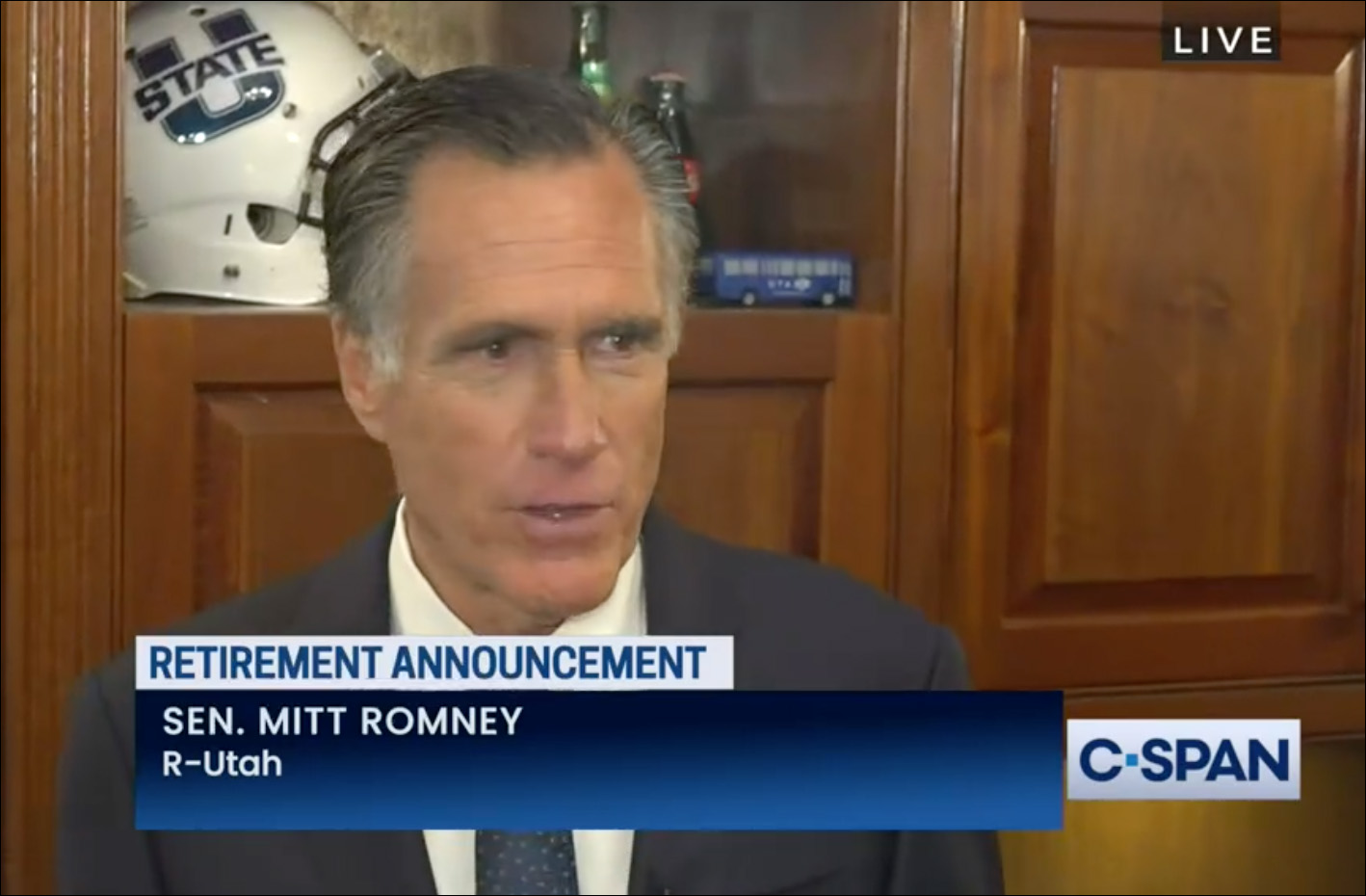
Utah: Sen. Romney at 30 percent in New GOP Poll — A Noble Predictive Insights survey conducted a month ago but just released just late last week (July 7-18; 598 registered Utah voters; 301 likely Republican primary voters; online) finds Utah Sen. Mitt Romney drawing only 30 percent support among a respondent sample of his own Republican primary voters.

Despite the low preference number, Sen. Romney leads a group of potential GOP opponents. Closest to him is Attorney General Sean Reyes, an unannounced Senate candidate, who posted 13 percent support. The two official candidates, state House Speaker Brad Wilson (R-Kaysville) and Riverton Mayor Trent Staggs posted five and three percent, respectively. When asked of the entire sample whether they believe Sen. Romney should run for re-election, 39 percent answered yes, while 44 percent replied with a negative response.

House

CO-3: Rep. Boebert’s Republican Challenge — Saying he’s “… not interested in becoming a social media celebrity … I’m interested in helping families and helping businesses and helping communities,” attorney Jeff Hurd entered Colorado’s 3rd District Republican primary hoping to deny two-term incumbent Congresswoman Lauren Boebert (R-Silt) renomination. In 2022, then-state Sen. Don Coram challenged her in the party primary but received only 34 percent of the Republican vote.

Should Rep. Boebert win renomination, she will again face a difficult general election against Democrat Adam Frisch who came within 546 votes of unseating her in the 2022 general election. This, despite the FiveThirtyEight data organization rating CO-3 as R+15.

Governor

New Hampshire: Significant Open Primary Polling Leads — Earlier in the week, we covered an Emerson College survey (Aug. 9-11; 837 registered New Hampshire voters; interactive voice response system, text & online) that posted former US Sen. Kelly Ayotte (R) to substantial leads over two strong Democratic contenders. Now, we see the primary numbers from this same poll.

According to Emerson, Ayotte would not only lead in the general election, but she opens a definitive edge over who will likely be her chief Republican opponent, former state Senate President Chuck Morse. The initial ballot test finds Ayotte leading Morse, 45-9 percent. On the Democratic side, Manchester Mayor Joyce Craig is staked to a strong 52-15 percent advantage over Executive Councilor Cinde Warmington. Gov. Chris Sununu (R) is retiring after serving what will be four consecutive terms when his tenure expires at the beginning of 2025.

Trump, Biden Ahead by Wide Margins in New Poll; Navy SEAL Declares in Montana; Redistricting News from Alabama, North Carolina

New Hampshire GOP presidential poll results / WMUR TV graphic

By Jim Ellis — Thursday, June 29, 2023

President

New Hampshire Poll: St. Anselm College Releases Regular Poll — The New Hampshire Institute of Politics of St. Anselm College published their latest regular survey of Granite State voters (June 21-23; 1,065 registered New Hampshire voters; live interview) and sees former President Donald Trump gaining strength in the Republican primary while principal challenger Gov. Ron DeSantis is losing support. The partisan primary numbers find Trump leading Florida Gov. DeSantis, 47-19 percent with no other candidate exceeding six percent support.

On the Democratic side, President Joe Biden dominates Robert F. Kennedy Jr. and author Marianne Williamson, 69-9-8 percent. These numbers exceed how the president is performing nationally. Since the state is unlikely to agree to moving their primary to comply with the new Democratic National Committee calendar, these numbers suggest that Biden could win a write-in campaign against his two intra-party challengers even if he doesn’t enter the official Democratic primary.

In hypothetical general election pairings, President Biden would lead both former President Trump and Gov. DeSantis with the same 49-40 percent spread. This data suggests there is less chance that New Hampshire will become a major general election Republican conversion target.

Senate

Montana: Retired Navy SEAL Declares Candidacy with NRSC Endorsement — Retired Navy SEAL and aerospace company CEO Tim Sheehy (R) announced his US Senate candidacy Tuesday. Immediately, the National Republican Senatorial Committee, with its chairman being Montana’s junior Sen. Steve Daines, endorsed Sheehy’s candidacy. The Montana Senate race is expected to be one of the hottest campaigns in the country as Republicans attempt to deny incumbent Sen. Jon Tester (D) a fourth term.

Rep. Matt Rosendale (R-Glendive), who is also expected to join the race, responded with a Tweet saying, “congratulations to Mitch McConnell and the party bosses on getting their chosen candidate. Now Washington has two candidates – Tim Sheehy and Jon Tester – who will protect the DC cartel.” Early polling shows Rep. Rosendale beginning the race with a substantial lead, so we can expect both a hot general election campaign, and an equally tough Republican nomination contest next year in Big Sky Country.

House

Alabama: Governor Calls Special Redistricting Session — To comply with the US Supreme Court ruling on the Alabama racial gerrymandering case that went against the state, Gov. Kay Ivey (R) said that she will call a special redistricting session for the purposes of drawing a new map to comply with the decision. The legislature will report on July 17 to begin the process.

Since Alabama is a Super Tuesday state and is holding its regular primary on March 5, time is short to draw a new map and obtain the necessary judicial approvals. The ruling and new map is expected to give the Democrats an extra seat in the Alabama US House delegation that currently stands at 6R-1D.

SCOTUS: North Carolina Case Ruling — In an unsurprising 6-3 ruling, the US Supreme Court ruled against the state of North Carolina on the subject of redistricting. Legal analyst Derek Muller of the Election Law Blog describes the crux of the state’s argument as saying, “the state constitution or state judiciary cannot constrain the state legislature exercising power under the Elections Clause.” Predictably, the justices ruled that the judiciary does have the authority to involve itself in redistricting decisions but underscored that the Supreme Court has the power to restrain lower courts from taking too much power away from the legislative bodies.

Largely because the North Carolina state Supreme Court has already reconsidered its previous partisan gerrymandering decision, the high court confined itself to the judicial power question.

Scott Tops Haley in South Carolina;
A GOP Battle in Florida; Steny Hoyer Challenged; LDP Endorses Wilson

By Jim Ellis — Wednesday, June 28, 2023

President

(R-SC)

South Carolina: Sen. Scott Again Tops Ex-Gov. Haley — The American Greatness political organization, loosely affiliated with former President Donald Trump, conducted a survey of the critically important South Carolina Republican primary (National Research, Inc.; June 19-21; 500 likely South Carolina Republican primary voters) and again finds Sen. Tim Scott (R-SC), who the recent NBC national poll now detects moving into third place on the Republican primary ballot test, topping former South Carolina Gov. Nikki Haley.

Former President Donald Trump maintains a substantial lead with 41 percent support. Florida Gov. Ron DeSantis is second with 18 percent. Sen. Scott and ex-Gov. Haley follow with 10 and eight percent, respectively, before their home state electorate. No one else even reaches the four percent benchmark. The South Carolina Republican primary is scheduled for Feb. 24, the fourth state to vote on the GOP calendar.

House

FL-16: Rep. Buchanan to Face DeSantis Appointee — Private school superintendent Eddie Speir (R), who Gov. DeSantis appointed to a board that oversees New College, a public liberal arts college in Sarasota, Florida, announced that he will challenge veteran Rep. Vern Buchanan (R-Sarasota) in next year’s GOP primary. After Rep. Buchanan lost his bid to become House Ways & Means Committee chairman, there were rumors floating that he would resign his seat. Therefore, Buchanan remains a retirement prospect. The FiveThirtyEight data organization rates FL-16 as R+13, while Dave’s Redistricting App calculates a 55.2R – 42.7D partisan lean.

MD-5: Democratic Challenger for Rep. Hoyer — On the heels of former House Majority Leader Steny Hoyer (D-Mechanicsville) hinting he will seek re-election to a 23rd term in 2024, a credible Democratic primary challenger appears on the scene. Prince Georges County Environmental Director Andrea Crooms announced her candidacy Monday, becoming the candidate with the most potential of attracting support. It is highly doubtful, however, that she can unseat Hoyer, who has represented the southern Maryland region since winning a special congressional election in 1981.

It is clear the Democratic primary will be the significant election. With a FiveThirtyEight data organization score of D+28, and a Dave’s Redistricting App partisan lean calculation of 60.9D – 36.4R, the GOP has little chance of making a serious run here in the general election.

Governor

Louisiana: Democratic Party Officially Endorses — With the open Bayou State governor’s race beginning to attract attention, the Louisiana Democratic Party has already gone on record with endorsement support for the leading party contender long before candidate filing closes on Aug. 10, 2023. The LDP now officially endorses former Secretary of Transportation Shawn Wilson, joining outgoing Gov. John Bel Edwards (D) who also publicly supports Wilson as his successor. Gov. Edwards is ineligible to seek a third term under Louisiana election law.

The Louisiana system features an all-party jungle primary on Oct. 14 of this year. If no candidate receives majority support, a runoff between the top two finishers will be held on Nov. 18. The leading Republicans are attorney general and former Congressman Jeff Landry and state Treasurer John Schroder. With eight candidates already actively running, the chances of moving to a runoff are extremely high.

Primary Maneuverings; Tiffany Pegged in Wisconsin; UT-2 Special Election Debates; Sununu Retiring?

By Jim Ellis — Wednesday, June 21, 2023

President

South Carolina: Republicans Opt for Later Primary — South Carolina moving to first position is the focal point of the Democrats’ new presidential pre-Super Tuesday primary calendar, but some of the affected states are not in agreement. Georgia, for example, voted not to adopt the Democratic National Committee recommendation and New Hampshire is sure to follow suit. Michigan has agreed, and both parties will vote on Feb. 27.

Over the weekend, the South Carolina Republican Party convention delegates voted to hold the state’s Republican primary on Feb. 24. Democrats have already chosen Feb. 3. Therefore, it is likely the state will hold two primaries, one for each party. Holding separate primary days in this state has previously happened. Both Palmetto State parties want South Carolina to continue having a premier primary, so the state is likely to make scheduling accommodations for each political entity.

Senate

Wisconsin: GOP Convention Favors Rep. Tiffany — The Wisconsin Republican Party convention conducted straw polls of those who attended over the weekend, and though it was no surprise that former President Donald Trump out-polled Florida Gov. Ron DeSantis (53-34 percent), much of the attention fell to the US Senate contest. Since Rep. Mike Gallagher (R-Green Bay) announced last week that he would not run for the Senate, the party is in need of a strong challenger to oppose two-term incumbent Tammy Baldwin (D) next year.

A strong plurality of party delegates are now looking to Rep. Tom Tiffany (R-Minocqua), who is indicating he has some interest in the statewide race. A total of 35 percent of the delegates voted for Rep. Tiffany as their first choice to oppose Sen. Baldwin. Former Milwaukee County Sheriff David Clarke was second with 19 percent, with businessman and former statewide candidate Kevin Nicholson, ex-state Sen. Roger Roth, and businessmen Eric Hovde and Scott Mayer following with 16, 11, 8 and 1 percent, respectively. None from this group are official candidates.

House

UT-2: Special Convention, Debates Scheduled — The Utah Republican Party has scheduled the special 2nd District GOP live nominating convention for this coming Saturday, June 24 in the city of Delta, which is in the geographical center of the sprawling CD that stretches from the city of Farmington, through the western Salt Lake City suburbs and then all the way to the Arizona border. Democrats are meeting in a virtual convention on June 28.

The 2nd District Republican delegates will vote among the 13 filed Republicans to send one into the special Sept. 5 primary as the official party endorsed candidate. Democrats have three candidates including the favorite for the nomination, state Sen. Kathleen Riebe (D-Cottonwood Heights). The delegates will continue the voting process until one candidate receives majority support. This individual will automatically be placed on the primary ballot. Other candidates wishing to contest the nomination will be required to file 7,000 valid registered voter petition signatures from the party for which they are attempting to qualify.

Republican debates have also been scheduled for the special election. The northern Utah forum was held Tuesday, with the southern district event on Thursday. Rep. Chris Stewart (R-Farmington), for family reasons, is resigning his seat on Sept. 15. The special general election will be held on Nov. 21. Republicans are favored to hold the UT-2 seat which the FiveThirtyEight data organization rates as R+23.

Governor

New Hampshire: Gov. Sununu Leaning Toward Retirement — In a radio interview Monday, four-term Gov. Chris Sununu (R) said, “I don’t think I’m going to run again,” but indicated he would make a firm decision this summer.

Gov. Sununu is only the second four-term governor in state history; no one has served five terms. New Hampshire, along with neighboring Vermont are the only two states that have two-year gubernatorial terms. Already, Manchester Mayor Joyce Craig and Executive Councilor Cinde Warmington have indicated they will compete for the Democratic nomination. In an open situation, the New Hampshire state house would be a prime Democratic conversion target.

Miami Mayor Files Presidential Committee; Presidential Candidate Favorable vs. Unfavorable Ratings;
A 4th Dem Enters California Race; Montana Gov’s Primary Challenge

By Jim Ellis — Friday, June 16, 2023

President

Miami Mayor Francis Suarez (R)

Francis Suarez: Miami Mayor Files Presidential Committee — As has been expected for some time, Miami Mayor Francis Suarez filed a presidential committee mid week with the Federal Election Commission and becomes now the tenth Republican candidate. Obviously a long shot who may be positioning himself as a potential vice presidential pick, Mayor Suarez would be attractive to Republicans as a candidate with potential national appeal to the Hispanic community.

YouGov Economist Poll: Mixed Results — The YouGov international online polling firm again conducted one of their extensive periodic surveys for The Economist publication (June 10-13; 1,500 US adults; online), and though a majority of respondents firmly believe former President Donald Trump should have been indicted over the classified documents issue, he would surprisingly still lead President Joe Biden by a percentage point in the national popular vote.

The respondents largely sour over the group of 11 tested potential presidential candidates, however. Only Robert F. Kennedy Jr. (49:30 percent favorable to unfavorable), Sen. Tim Scott (33:25 percent), and Vivek Ramaswamy (26:19 percent) found themselves with positive ratings.

Former Governor Chris Christie had the highest negative rating at 27:51 percent favorable to unfavorable. Ex-Vice President Mike Pence (36:53 percent), Sen. Joe Manchin (26:37 percent), ex-President Trump (43:53 percent), President Biden (45:52 percent), Marianne Williamson (19:24 percent), Gov. Ron DeSantis (41:46 percent), and former Ambassador Nikki Haley (33:34 percent) all followed in the upside-down category.

House

CA-45: Rep. Steel Draws Fourth Dem Challenger — Attorney Jimmy Pham became the fourth Democratic candidate to enter the 2024 congressional race hoping to challenge two-term Rep. Michelle Steel (R-Orange County) in a district that the FiveThirtyEight data organization rates as D+5.

In addition to Pham, Garden Grove City Councilwoman Kim Nguyen, and attorneys Cheyenne Hunt and Aditya Pai are announced candidates. Community College Trustee Jay Chen, who held Rep. Steel to a 52-48 percent victory in 2022, is a potential re-match contender but has yet to make his 2024 political plans known.

Expect this to be a top Democratic target race. The 45th is one of four California Democratic seats that a Republican represents.

Governor

Montana: Gov. Gianforte to Face Primary Challenge — Without articulating a particular criticism against Gov. Greg Gianforte (R), state Rep. Tanner Smith (R-Lakeside) has announced that he will launch a Republican gubernatorial primary challenge.

Gov. Gianforte, whose job approval ratings are high, does not appear to be vulnerable to any Republican primary challenger. At this point, he would also be rated as a prohibitive favorite to win a second full term in the 2024 general election. The Montana primary is scheduled for June 4, 2024.

Polls Show Republican Presidential Race Getting Tighter; A Twist in Wisconsin; SCOTUS Rules on Alabama Redistricting; Special Election in UT-2

By Jim Ellis — Monday, June 12, 2023

President

Former President Donald Trump still up, but down in polling.

State Polls: Republican Race Getting Tighter — Two very recent Republican presidential state polls were released late last week, one from Wisconsin and the other in Utah. While the Wisconsin spread is typical of what we are seeing in other places, the Utah poll has closed to within one percentage point.

Public Policy Polling (June 5-6; 507 likely Wisconsin voters) sees former President Donald Trump leading the Wisconsin GOP primary but with well less than majority support. The ballot test gives the former president a 41-25 percent lead over Florida Gov. Ron DeSantis. Ex-Vice President Mike Pence is next with eight percent support, and no one else breaks five percent. In an isolation question featuring Trump and DeSantis, the former pPresident leads this only 43-39 percent.

The Utah numbers are much closer. In this Dan Jones & Associates poll for the Utah Republican Party (May 22-June 1; 421 registered Utah Republican voters), Trump’s advantage is only 27-26 percent over Gov. DeSantis.

Former Rep. Liz Cheney, not even a candidate, places third with seven percent, and no other candidate breaks the five percent mark. However, this poll’s long sampling period and small respondent universe, along with the introduction of Cheney into the mix, casts an accuracy shadow over this poll.

Senate

Wisconsin: Polling Leader Emerges; Not the GOP’s Top Choice — The Wisconsin Public Policy Polling survey (see President section above) also tested the state’s US Senate race featuring two-term incumbent Tammy Baldwin (D).

The Republican primary ballot test suggests that former Milwaukee County Sheriff David Clarke would lead a prospective group of GOP candidates with 40 percent preference. Placing second is Rep. Mike Gallagher (R-Green Bay) with 20 percent, followed by Rep. Tom Tiffany (R-Minocqua) at 10 percent. Clarke is not an official candidate, and viewed as someone who would be unlikely to win the general election. So far, Rep. Gallagher has not made a discernible move to enter the Senate race. Rep. Tiffany is testing the waters.

The Wisconsin race could become competitive, but Sen. Baldwin would begin any general election as the favorite to win in November.

House

Redistricting: SCOTUS Rules on Alabama — The US Supreme Court, on a 5-4 decision with Chief Justice John Roberts and Associate Justice Brett Kavanaugh joining the majority, ruled in favor of the plaintiffs in the Alabama racial gerrymandering case. Therefore, the Alabama map will be redrawn to reflect a second minority district from the state’s seven seats. Louisiana will likely have to be redrawn as well.

Possible redraws could occur in several other southern states. The ruling is clearly a win for the Democrats and gives them even better odds of re-capturing the House majority in the 2024 election.

UT-2: Special Election Set — Since Utah Rep. Chris Stewart (R-Farmington) submitted an irrevocable letter of resignation for Sept. 15 to Gov. Spencer Cox (R), that action has allowed the state’s chief executive to set at least the special primary election even before the congressman officially leaves office.

Under Utah law, the governor must schedule the special congressional election concurrent with another election. The municipal elections were scheduled for Aug. 15 and Nov. 7, but Gov. Cox is preparing to send the legislature a measure to change those dates to Sept. 5 and Nov. 21 and add the special congressional election to that ballot. These dates meet the federal electoral notice requirements.

The legislature is expected to comply. If they do not, the 2nd District seat could remain vacant for more than a year awaiting the regular primary schedule.

In this instance, the seat will be filled while Rep. Stewart remains in office, which is similar to the Oklahoma law that allows a resigning elected official to serve until a replacement is selected.

Countering the Record

By Jim Ellis — Thursday, May 18, 2023

Elections

Jacksonville, Fla., former local news anchor Donna Deegan (D).

The media is covering Tuesday’s elections — particularly in Jacksonville, Fla. and Colorado Springs, Colo. — as Democratic or liberal upsets, but much more exists below the political surface that the analysts are either ignoring or missing.

To recap, Democratic former local news anchor Donna Deegan scored a 52-48 percent victory over Republican Chamber of Commerce CEO Daniel Davis. The media analysts portrayed the race as an upset since the Republicans held the Jacksonville mayor’s office for the past eight years in the person of term-limited incumbent Lenny Curry.

In actuality, the upset was Curry winning the past two elections, and not Deegan scoring this most recent victory. Though the Republicans now have a 400,000-plus person voter registration advantage statewide in Florida, Democrats considerably outnumber Republicans, by approximately five percentage points, within Jacksonville.

Additionally, the combined minority population in the city, led by the African-American contingent at 31 percent, now comprise a slight majority. Considering that Democrats do much better than Republicans within these communities, a victory for them in the citywide mayor’s race is less than surprising.

Furthermore, Deegan did not emphasize typical Democratic themes in her communication points. Rather, she issued detailed plans on infrastructure, affordable housing, downtown redevelopment, emergency health service, and creating a plan for attracting further state and federal aid for local projects. Therefore, her broad-based plan was more comprehensive and sellable than her Republican opponent’s approach.

In Colorado Springs, Independent candidate Yemi Mobolade, easily defeated Republican former Secretary of State Wayne Williams. Though Mobolade grew up in the socialist country of Nigeria, his campaign talking points were hardly based upon those values.

Mobolade is the city’s Small Business Development administrator who emphasized business, community and leadership development, entrepreneurship, and ministry in his successful mayoral campaign. His was not a left of center message, and though Republicans lost this mayoral race, it was not a liberal who won.

Philadelphia’s Democratic mayoral primary ended much differently than polling projected. Though the data consistently showed as many as five candidates having a chance to win the primary, the final result proved decisive. Former Philadelphia City Councilwoman Cherelle Parker captured the party nomination in rather easy fashion, a 33-23-22-11-9 percent margin over former City Controller Rebecca Rhynhart, ex-City Councilmember Helen Gym, former City Councilman Allan Domb, and businessman Jeff Brown.

All of the politicians are “formers” because Philadelphia has a resign-to-run ordinance in effect for city officials. Therefore, in order to seek a different office than the one held an official must resign before declaring a new candidacy.

In Philadelphia, the analysis coverage was not necessarily miscast, but a key point was glanced over. That is, the candidate furthest to the left and the one who drew the most support from the vocal progressive left movement, which included endorsements from Sen. Bernie Sanders (I-VT) and Rep. Alexandria Ocasio-Cortez (D-NY), was former City Councilwoman Helen Gym. In what is a liberal city, Gym fared poorly, attracting only 21 percent of the vote in what was for her, a disappointing third-place finish.

The winner, Parker, campaigned much differently — as a centrist who said she wants to “stop the sense of lawlessness that is plaguing our city.” She pushed the themes of increasing law enforcement and cracking down on the city’s rapidly rising crime rate. Likely as a result, she attracted much of the Philadelphia political establishment’s support. Term-limited Mayor Jim Kenney (D), while not formally endorsing anyone in the race, admitted to the local media that he cast his own ballot for Parker.

While Republicans lost mayoral elections in two cities they had controlled for the past eight years, the reasons leading to victories for those who won on Tuesday night appear beyond the typical ideological paradigm. As in most elections, success rewarded the candidate(s) whose messages best met the voters’ needs. Once again, we see that this is the lesson future candidates need to understand.