Tag Archives: Utah

The Alabama Debacle

By Jim Ellis

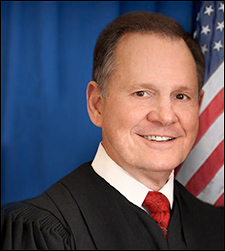
Judge Roy Moore, the Republican nominee in a special Senate election in Alabama.

Judge Roy Moore, the Republican nominee in a special Senate election in Alabama.

Nov. 14, 2017 — Senate Republicans have a major advantage in the current election cycle, but may be on the precipice of giving it away.

Looking at the 2018 Senate map, Republicans have only to defend eight of the 33 in-cycle seats. Considering that six of the eight are the safe Republican states of Mississippi, Nebraska, Tennessee, Texas, Utah, and Wyoming and the Democrats need a net gain of three conversion seats to claim the majority, it appears unattainable even if the latter party converts legitimate targets in politically marginal Nevada and now open Arizona.

But the mathematics change if Democrats score an unlikely upset in the Alabama special election on Dec. 12, and the latest unfolding events there suggest that such an outcome is far more likely to happen.

As we know, Republican Senate nominee Roy Moore, the twice removed former state Supreme Court Chief Justice, has been accused of sexual impropriety with at least one teenage girl when he was 32 years old in 1979. Washington, DC Republicans, who appear to be taking the Washington Post story and the woman’s allegations at face value, are urging Moore to remove himself from the race. Alabama Republicans are still standing firm for Moore, refusing to accept the story without proof. For his part, Judge Moore denies the incident happened.

Three polls have already surfaced telling us that Moore has suffered a major hit. Earlier surveys found him leading in low double-digits, but Opinion Savvy, Gravis Marketing, and JMC Analytics & Polling immediately went into the field to test the Alabama electorate’s reaction.

Opinion Savvy (Nov. 10; 515 likely Alabama special election voters) conducted their survey just hours after the Moore story broke. Their results find that Moore’s lead has evaporated into a 46-46 percent tie with Democratic nominee Doug Jones, a former US Attorney.

Gravis Marketing launched their poll just as quickly (Nov. 10; 478 likely Alabama voters) and finds a similar ballot test tally: 48-46 percent in Moore’s favor.

JMC Analytics (Nov. 9-11; 575 registered Alabama voters) sees Jones pulling into a 46-42 percent lead (48-44 percent when leaners to both candidates are added), but an over-sampling of female voters could account for the Democratic advantage. Fifty-six percent of the survey respondents were female and they break for Jones, 46-40 percent. Men favor the Democrat 46-45 percent.

Considering these polls were taken immediately as the story was breaking and the questionnaires included an explanation of what was being said about him, the results for Moore are not devastating. For the most part, Republican voters are taking Moore’s side while Democrats believe the accuser. The fact that the division is roughly even suggests that Moore has a chance to rebound if he can effectively tell his story.

While Republican leaders may be calling upon Judge Moore to remove himself from the ticket, realistically and legally, he cannot. Under Alabama election law, the ballot cannot be changed within 76 days of the election. That period began Sept. 28. Now comes talk that Gov. Kay Ivey (R) could be approached to postpone the election, or call a special session of the legislature to pass a new emergency election statute. The governor says she is not inclined to even think about such an option.

Additionally, some absentee packets containing Moore’s name have already mailed, thus making it logistically difficult, if not illegal, to inject a new ballot into the campaign. Therefore, the outlook is virtually certain that the election will proceed as scheduled on Dec. 12.

Another idea suggests that the Senate refuse to seat Moore if he wins the election. Should all Democrats vote against Moore, only three Republicans would need to break ranks to keep the seat in abeyance. Presumably, the state could then call a new election, but there would be nothing preventing Moore from running again. Should that be the case, Gov. Ivey then could appoint another interim senator or even keep Sen. Luther Strange (R) in the position. Also, a new election would allow him to run again, too.

For their part, Democrats are remaining publicly quiet. They are likely doing so for two reasons. First, they are adopting the old axiom, “if one’s political opponents are in process of destroying themselves don’t stop them.” Second, they may soon be faced with another vote to eject a senator. Should New Jersey Democratic Sen. Bob Menendez be found guilty in his corruption trial, there will likely be a move to expel him. Democrats would find themselves in a bind if they make a public spectacle of denying entry to Moore, and then quickly pivot to do the opposite in order to save Menendez.

The Roy Moore saga is far from over but at the outset, the situation appears perilous for Republicans. Since losing this seat would endanger their majority standing in 2018, the stakes for how the majority leadership chooses to handle the Alabama situation becomes even more challenging.
Moore Under Attack; Goodlatte #34

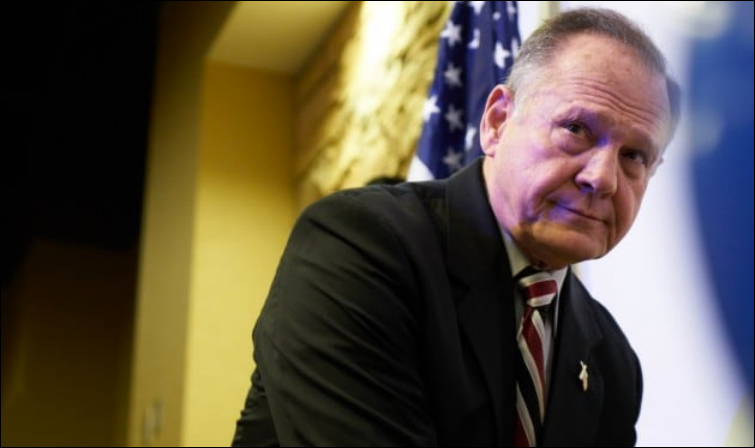
Judge Roy Moore, the Republican nominee in a special Senate election in Alabama.

Judge Roy Moore, the Republican nominee in a special Senate election in Alabama.

By Jim Ellis

Nov. 13, 2017 — Controversy is erupting in the Alabama special US Senate election as we begin to enter the last month of campaigning before the Dec. 12 vote.

The Washington Post broke a story late last week (above) that accuses former state Supreme Court Chief Justice Roy Moore (R) of engaging in sexual contact with a 14-year old girl 38 years ago. At the time, Judge Moore would have been 32 years of age. The judge vehemently denies the charges and strikes back against the Post saying the story is politically motivated. Republican officials in Alabama are generally still supportive of Moore. Washington Republicans, who made public statements, expressed the opinion that Moore should step away from the race if the allegations are true.

In actuality, there is no legal way to remove Moore’s name from the ballot even if there is Republican unanimity to do so. Ballots are printed, some absentee packets have already been mailed to voters, and the law specifically states that a change of nominees cannot be made once the campaign moves within 76 days of the election. For this contest, the point-of-no-return date occurred on Sept. 28.

Suggestions range from running defeated Sen. Luther Strange as a write-in candidate, calling the state legislature into special session to pass emergency legislation to change the election law, or simply refusing to seat Moore should he win the Dec. 12 election. If they choose the latter route, another special election would have to be called and scheduled, and the cycle begins anew.

For his part, Moore is already launching fundraising appeals lashing out at his accusers and begging for resource help in order to fight back. He shows no indication that he will relinquish his position as the US Senate nominee.

More will clearly come of this story during the coming week.

VA-6

Continuing what looks to be a series of House incumbent retirements, veteran 13-term Virginia Rep. Bob Goodlatte (R-Roanoke), chairman of the House Judiciary Committee, announced that he, too, will depart when the current Congress adjourns. The timing coincides with his allotted chairmanship tenure also coming to an end.

Goodlatte becomes the 34th regular cycle member not to seek re-election next year, and the 24th Republican. This total does not include the PA-18 vacancy (former Rep. Tim Murphy, R-Pittsburgh) that will be filled on March 13. The latest vacant seat was filled earlier this week when Utah Rep-Elect John Curtis (R-Provo) was elected to replace resigned Congressman Jason Chaffetz (R-Alpine/Sandy).

Though the open GOP list now reaches 24 seats, 17 of them are safely or likely Republican. Only two are in the toss-up category (FL-27, Rep. Ileana Ros-Lehtinen, R-Miami; NJ-2, Rep. Frank LoBiondo, R-Ventnor City), and another five are rated as lean Republican.

Virginia’s 6th District is safely in the GOP column. Goodlatte averaged 77.6 percent of the vote over his 13 congressional elections. The district hugs the West Virginia border and runs north to south along Interstate 81 from Strasburg through Harrisonburg, Staunton, and Lexington, continuing south all the way to Roanoke, with a jut westward to annex the Lynchburg region. President Trump carried the 6th, 60-35 percent, while Mitt Romney outpaced President Barack Obama here, 60-40percent.

Dems Score Big; Curtis Wins in Utah;
VA House: 12 Votes to a Win

By Jim Ellis

Lt. Gov. Ralph Northam (D) is also a pediatric neurosurgeon

Virginia governor-elect Ralph Northam (D) is also a pediatric neurosurgeon

Nov. 8, 2017 — Democrats came roaring back, particularly in the Virginia elections last night, as Lt. Gov. Ralph Northam (D) easily outpaced former Republican National Committee chairman Ed Gillespie to win the open Virginia governorship, keeping the position in the Democratic column. Northam scored a 54-45 percent win over Gillespie in a race that most pollsters projected to be much closer.

It appeared that Gillespie had momentum at the end of the past week, but last day polling again found Northam beginning to pull away. Those surveys correctly detected the final trend, as did the Quinnipiac University polls and Christopher Newport University’s final study, all considered outliers because the big margins extrapolated for Northam were outside the polling realm for the other dozen-plus polls released during the closing two-week period. In the end, the actual victory margin was nearer to the previously rejected polls.

Curiously, Gillespie ran behind the two other Republicans on the statewide ticket. All in a losing effort, lieutenant governor candidate Jill Vogel (R) pulled almost 50,000 more votes than the gubernatorial nominee, while attorney general nominee John Adams attracted just under 38,000 more. This could possibly be attributed to left over bad feelings generated from the close Republican primary election that saw Gillespie barely defeat Prince William County Board chairman and immigration policy activist Corey Stewart. Many Stewart voters stated that they would not support Gillespie in the general election, and it may well be that many of them followed through on their “promise.”

‘Many [Corey] Stewart voters stated that they would not support Gillespie in the general election, and it may well be that many of them followed through on their “promise.” ‘

Turning to New Jersey, the pollsters, who uniformly produced consistent data on this race throughout the general election cycle, proved correct. Former US Ambassador to Germany and Wall Street executive Phil Murphy (D), as expected, recorded a 55-43 percent win over Lt. Gov. Kim Guadagno (R). Murphy converts the governor’s mansion for the Democrats after eight years of having Republican Chris Christie.

Continue reading

High-Stakes Voting

By Jim Ellis

Nov. 3, 2017 — Three important campaigns will be decided Tuesday, and the stakes are actually quite high for both major political parties. The favored entity losing an upset contest in any of the venues would immediately darken the particular party’s 2018 outlook. New Jersey and Virginia voters will elect new governors in regular cycle campaigns, and the Utah special congressional election will also be settled.

New Jersey

Former US ambassador to Germany and Wall Street executive Phil Murphy (D)

Former US ambassador to Germany and Wall Street executive Phil Murphy (D)

The race between Lt. Gov. Kim Guadagno (R) and former US ambassador to Germany and Wall Street executive Phil Murphy (D) already seems decided. Polls for months have varied only slightly. The latest published polling numbers, those from Monmouth University (Oct. 27-31; 529 likely New Jersey voters), find Murphy holding steady with a 53-39 percent advantage. Virtually every poll has projected a margin of this size.

This campaign has seemed over since the beginning. Gov. Chris Christie (R) has historically poor approval ratings – still more than 70 percent negative – and research shows the voters do link Guadagno to the current governor despite the two of them having a frosty relationship.

Continue reading

Follow the Money

By Jim Ellis

Oct. 24, 2017 — The 3rd Quarter Federal Election Commission US House disclosure reports are available, and they provide valuable clues as to which campaigns could become first-tier efforts next year. The Daily Kos Elections Page once again completed their quarterly analysis, which became the major source for this column.

federal-elections-commission-logoThirty-five incumbents and two challengers have already raised more than $1 million for the current election cycle. Another seven (six incumbents; one challenger) have crossed the $900,000 mark in current cycle receipts.

Most of the million-dollar incumbents are in projected competitive primary or general election campaigns.

Arizona two-term incumbent Rep. Martha McSally (R-Tucson) is again raising and spending huge amounts in the early going. She has gathered $2.8 million, a great deal of which comes through expensive direct mail, hence her cash-on-hand total is $1.453 million. Her potential leading Democratic opponent, former 1st District Rep. Ann Kirkpatrick (D-Flagstaff) who has re-located to Tucson in order to challenge McSally, is showing only $269,000 on hand in comparison, but that is the largest amount among the five Democrats filing disclosure reports in this district.

Continue reading

Could Bannon Cost the GOP?

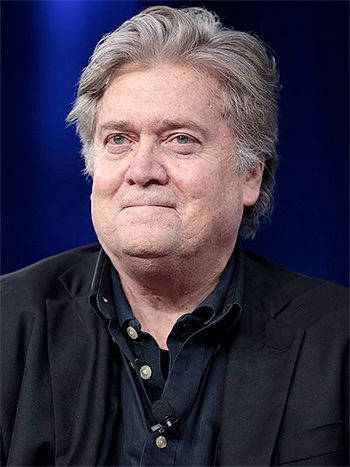
Steve Bannon (Photo by Gage Skidmore)

Steve Bannon (Photo by Gage Skidmore)

By Jim Ellis

Oct. 13 2017 — Several articles have surfaced this week speculating that former presidential advisor Steve Bannon wanting to find and support challengers to Republican Senate incumbents could cost the GOP its majority. It appears individuals making such a claim have forgotten how to count.

Keeping in mind that the Democrats must protect 25 of 33 in-cycle Senate seats, there are simply not enough legitimate targets available for the minority to change their status within the chamber, even though they need a net gain of only three seats. Yes, the Dems are forcing Sens. Dean Heller (R-NV) and Jeff Flake (R-AZ) into toss-up situations, but the remaining six GOP incumbents are some of the safest in the Senate. So, even if Bannon or other conservative insurgents recruit opposition to incumbents, the chances of the eventual Republican nominee losing the general election in these particular states are extremely low.

Continue reading

A Shocking Retirement

By Jim Ellis

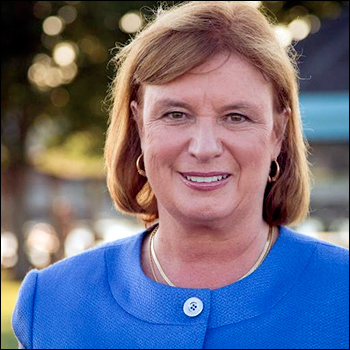
New Hampshire Rep. Carol Shea-Porter (R-Rochester)

New Hampshire Rep. Carol Shea-Porter (R-Rochester)

Oct. 10, 2017 — Since Pennsylvania Rep. Lou Barletta (R-Hazelton) announced he would run for the US Senate in late August, and after an additional eight US House seats opened in the succeeding weeks, none were as surprising as the latest one announced on Friday.

New Hampshire Rep. Carol Shea-Porter (R-Rochester), who represents the one seat that has defeated more incumbents than any other in the last decade including herself twice, announced that she will not seek re-election in 2018.

Her departure reasons were not part of the retirement statement but, for a woman who first came to Congress in 2006, was defeated in 2010, returned in 2012, and then lost again in 2014 before winning once more last November, her voluntary departure was certainly not predicted. Shea-Porter claimed another term in 2016, but with only 44 percent of the vote in part due to three Independent and minor party candidates taking more than 12.6 percent, but the number represented her lowest victory percentage.

Since the 2006 election, inclusive, the NH-1 electorate has consistently defeated its incumbent. In only 2008 was a US representative (Shea-Porter) here re-elected. The district encompasses New Hampshire’s eastern half, including the state’s largest city of Manchester, the Seacoast region, and the mountain area that hugs the Maine border. In the past six elections, the largest recorded win percentage was 54 percent (Republican Frank Guinta in 2010), while Shea-Porter never exceeded 51.7 percent.

Continue reading