Tag Archives: Survey USA

Hunter Reeling

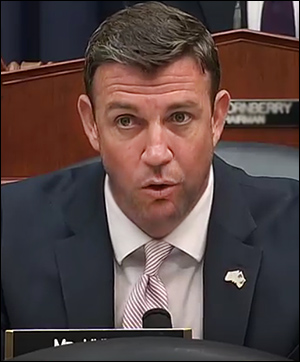
California Rep. Duncan Hunter (R-Alpine)

By Jim Ellis

Oct. 7, 2019 — In addition to his legal woes, indicted California Rep. Duncan Hunter (R-Alpine) now appears to have severe political problems according to a new just-released CA-50 district study.

A Survey USA poll conducted for the San Diego Union-Tribune (Sept. 27-Oct. 2; 592 likely CA-50 voters; 671 respondents were asked favorability questions about the top four candidates, but the electoral questions were asked only of those who described themselves as likely voters) tested the seven announced candidates for the March 3 California jungle primary.

The S-USA results find Democrat Ammar Campa-Najjar, the 2018 party nominee who held Rep. Hunter to a four-point win, holding 31 percent support. Former San Diego City councilman and mayoral and congressional candidate Carl DeMaio (R) follows with 20 percent, ex-Rep. Darrell Issa, who recently announced his candidacy records 16 percent, while Rep. Hunter posts only an 11 percent preference factor.

Rather surprisingly, state Sen. Brian Jones (R-Santee), also a recent candidate but a public official who represents almost 90 percent of the 50th District, records a very low four percent. The two independent candidates have three percent combined.

It is no surprise that Campa-Najjar is leading. In a crowded field with only one candidate from a particular party, it becomes a simple strategy to coalesce the party members behind the lone contender. While Campa-Najjar will almost certainly advance to the general election in this type of jungle format with so many candidates splitting his opposition party vote, we also must see that 52 percent of the poll respondents chose a Republican candidate. This obviously bodes poorly for the sole Democrat in the general election.

The setup here is similar to last year’s open 49th District, the adjacent seat from which Rep. Issa retired. In the June 2018 election, Republican Diane Harkey finished first by an eight-point margin in a field of 16 candidates but, in the general with only two contenders, it was Democrat Mike Levin who recorded a 56-44 percent victory.
Continue reading

Is Donnelly Faltering in Indiana?

By Jim Ellis

Indiana Sen. Joe Donnelly (D)

Indiana Sen. Joe Donnelly (D)

Oct. 25, 2018 — With only four 2018 Indiana Senate polls conducted before September, this campaign was the least surveyed toss-up race in the country, but that is changing. We now see a plethora of polling being released in October. In what appeared to be a contest trending toward Sen. Joe Donnelly (D) the results now appear to be turning.

In mid to late September, Ipsos Reuters (Sept. 12-20; 1,181 Indiana voters; online) and Fox News (Sept. 29-Oct. 2; 695 likely Indiana voters) found Sen. Donnelly leading former state representative and international businessman Mike Braun (R), 46-43 and 43-41 percent, respectively.

An early October survey from American Viewpoint (Oct. 7-10; 800 likely Indiana voters) reversed the trend, posting Braun to a 44-40 percent lead. After that, a series of three surveys from a trio of independent polling firms, all conducted between October 12-16, found Sen. Donnelly regaining the lead.

In consecutive order, Gravis Marketing (377 likely Indiana voters), Survey USA (816 likely Indiana voters), and Vox Populi (783 likely Indiana voters) posted Donnelly to leads of four (44-40 percent), one (41-40 percent), and eight (44-36 percent) percentage points, respectively.

The two latest surveys, again from American Viewpoint (Oct. 14-17; 800 likely Indiana voters) and a new one from Mason Strategies (Oct. 15-20; 600 likely Indiana voters), find Braun seesawing back into the lead. American Viewpoint yields the Republican a 44-40 percent advantage, while Mason Strategies sees Braun up 47-43 percent.

Continue reading

Florida Polling: Inconsistent Results

By Jim Ellis

Oct. 23, 2018 — Four statewide Florida polls were just released, and we continue to see conflicting results across the board two weeks prior to Election Day. As usual, the Sunshine State political situation appears too close to call from a place that seems to specialize in razor-thin elections.

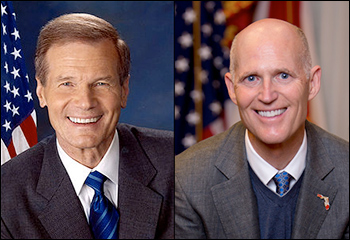
Left: Florida Sen. Bill Nelson (D) | Right: Gov. Rick Scott (R)

Left: Florida Sen. Bill Nelson (D) | Right: Gov. Rick Scott (R)

During the period of Oct. 17-21, St. Pete Polls, Survey USA, Quinnipiac University, and the Democratic polling firm of Schroth, Eldon & Associates all conducted Florida surveys.

In the Senate race, two of the surveys find incumbent Bill Nelson (D) putting some distance between he and his opponent, Gov. Rick Scott (R), while the other two project to give Scott a slight edge. In the governor’s race, three of these firms released numbers (Quinnipiac did not, but will likely do so today), and Democratic nominee Andrew Gillum, the Tallahassee mayor, holds a varying lead over former US Rep. Ron DeSantis (R).

There is quite a difference in the Senate margins, and this is largely due to how the female vote is being recorded. Both Survey USA (Oct. 18-21; 1,050 Florida adults, 859 registered Florida voters, 665 likely Florida voters) and Quinnipiac (Oct. 17-21; 1,161 registered Florida voters) find Sen. Nelson holding full-sample leads beyond the polling margin of error, 49-41 percent (S-USA) and 52-46 percent (Quinnipiac). They see females breaking for Nelson, 49-37 percent (S-USA) and 59-39 percent (Quinnipiac). Men are going the opposite way, favoring Scott, 49-46 percent (S-USA) and 54-44 percent (Quinnipiac).

Continue reading

Feinstein Still Weak; Gas Tax Polling

By Jim Ellis

California Sen. Dianne Feinstein (D)

California Sen. Dianne Feinstein (D)

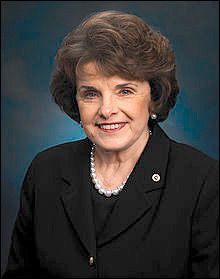
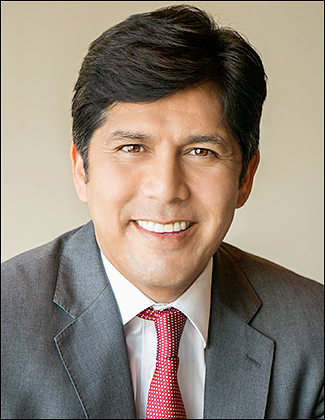
Oct. 18, 2018 — Survey USA released a poll of the California electorate, one more political study that finds Sen. Dianne Feinstein (D) failing to establish command in her race against fellow Democrat Kevin de Leon, a Los Angeles state senator.

The S-USA data (Oct. 12-14; 1,200 California adults; 964 registered California voters; 762 likely California voters) sees Feinstein again locked at 40 percent support versus 26 percent for de Leon. This is the sixth survey from four different pollsters that finds the Senator in the mid to low 40s since the June 5th jungle primary. But de Leon fares much worse, failing to break 30 percent in any of the half-dozen ballot test questions.

While all of the research suggests that Sen. Feinstein is politically weak, she will not lose this race. Though she brought in only $982,000 for the third quarter — a low number when campaigning in a state the size of California and understanding that many Democratic House candidates have brought in millions during the same period — de Leon raised just $254,000 and has a mere $309,000 cash-on-hand for the period ending Sept. 30. This is a low figure for a congressional race, let alone for a place that’s 53 times as large as a single CD.

California Senate President Kevin de Leon (D-Los Angeles)

California Senate President Kevin de Leon (D-Los Angeles)

The other feature potentially making the California Senate race a wild-card contest is the vote drop-off that we will see when comparing turnout for this office to the rest of the statewide ballot.

In 2016, when two Democrats were competing for an open Senate seat — the now-Sen. Kamala Harris vs. then-Rep. Loretta Sanchez (D-Garden Grove) — fewer votes were cast for that contest than in any other statewide election, including all of the ballot propositions. In fact, over 1.9 million more people voted in the presidential race than in the Senate race, and 1.3 million more chose to decide the last ballot initiative that banned single-use plastic bottles.

What occurred was a plethora of Republican voters simply skipping the Senate race rather than supporting one of the two Democrats. With de Leon running to the ideological left of Feinstein the Republican vote will likely drop even further, which becomes an interesting factor.

Continue reading

The Florida Seesaw Race

florida-governor-candidates-2018By Jim Ellis

Aug. 16, 2018 — There has been no race in this current election cycle that has featured more swings among the candidates than the open Florida governor’s campaign. What makes it even more interesting is that the wide swings are happening virtually simultaneously in both parties.

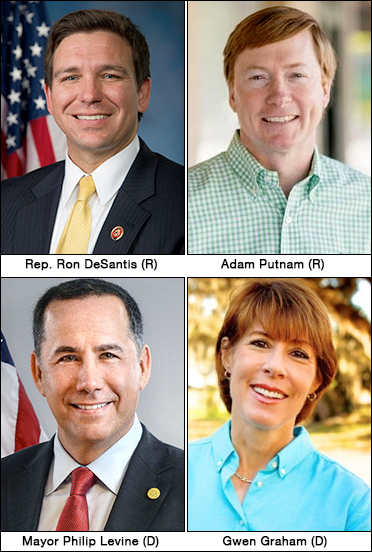
Yesterday, several polls were released showing more change in both nomination contests as the Aug. 28 primary date draws nearer. On the Republican side, the new Survey USA poll (Aug. 10-13; 558 likely Florida Republican primary voters) finds the contest again reverting into the toss-up realm after Rep. Ron DeSantis (R-Palm Coast/Daytona Beach) had opened a discernible advantage over agriculture commissioner and former US Congressman Adam Putnam. According to this latest S-USA result, the DeSantis lead is now only 40-38 percent.

A pair of polls was also released on the Democratic side and, as for their Republican counterparts, the nomination race is again getting close. After leading for most of the early campaign, Miami Beach Mayor Philip Levine fell behind former US Rep. Gwen Graham (D-Tallahassee), but studies from Survey USA (Aug. 10-13; 631 likely Florida Democratic primary voters) and Schroth, Eldon & Associates (Aug. 11-14; 600 likely Florida Democratic primary voters) see a re-tightening of this contest, too.

Continue reading

The Georgia Run-off

By Jim Ellis

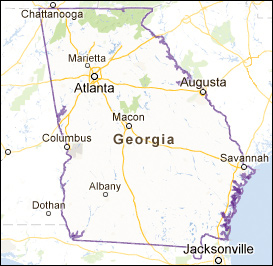
Georgia-mapJuly 25, 2018 — Peach State voters went to the polls yesterday, in a place where Republicans will choose a gubernatorial nominee while Democrats pick congressional candidates in Atlanta suburban districts 6 and 7.

Secretary of State Brian Kemp defeated Lt. Gov. Casey Cagle to win the Republican gubernatorial nomination. His landslide victory produced a more dramatic point spread than even the most optimistic poll for Kemp had predicted. In the May 22 Republican statewide primary, Lt. Gov. Cagle placed first in a field of six candidates with 39 percent of the vote. Placing second in the gubernatorial primary was Secretary of State Kemp with 26 percent of the vote. Under Georgia election law, to win a party nomination, a candidate must receive majority support. Because no one in the Republican primary topped 50 percent, the top two finishers advanced to yesterday’s run-off.

Kemp scored a crushing 69.4 – 30.6 percent win over Cagle, even though the latter began the race as the favorite for the nomination and placed first in the primary election. In that electoral contest, Cagle carried 123 of the state’s 159 counties. To best illustrate how far he dropped during the two-month run-off period, Cagle managed to win only two counties last night, Monroe, just north of Macon, and small Stephens County, a northeast Georgia political entity that hugs the South Carolina border.

Pre-election polls suggested that Kemp would win the run-off last night, as the latest publicly released survey research studies found him leading the lieutenant governor in a range between three and 18 points. The latest poll came Monday from the Trafalgar Group (July 21-22; 1,177 likely Georgia Republican run-off voters) and found Kemp topping Cagle 59-41 percent when leaners were included.
Continue reading

Top Two Playing Havoc in California

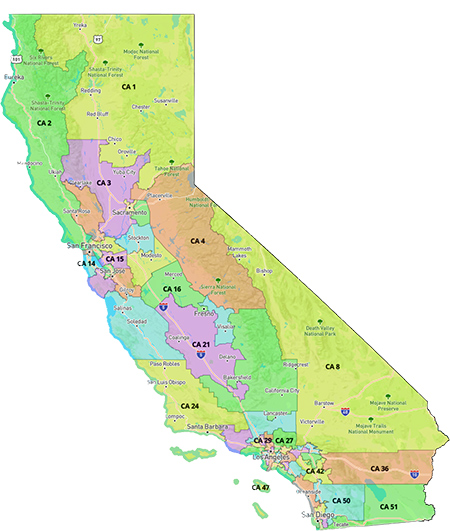
California Congressional Districts

California Congressional Districts


By Jim Ellis

April 17, 2018 — When sponsors of the 2010 California ballot initiative that would change the state’s primary system from a closed one to a structure that sends the top two finishers to the general election regardless of political party affiliation, they believed such an alteration would result in more centrist candidates being elected. Thus, the theory was, a new voting procedure would put the extreme candidates from both parties at a disadvantage.

While it’s debatable that centrists have benefited since the “top-two” system went into effect beginning with the 2012 election, the “jungle primary” is clearly having an effect in the many crucial California congressional campaigns this year. While Golden State Democrats are optimistic they can convert competitive seats in Orange County, recent polling in at least one of these seats reveals no clear advantage even as they mount strong efforts in what have traditionally been Republican districts.

Continue reading

Rare Ohio Data

By Jim Ellis

March 28, 2018 — Survey USA came into Ohio to test the Buckeye statewide races — campaigns that have not yet received much attention from national political pollsters. The results provided both expected and surprising tallies.

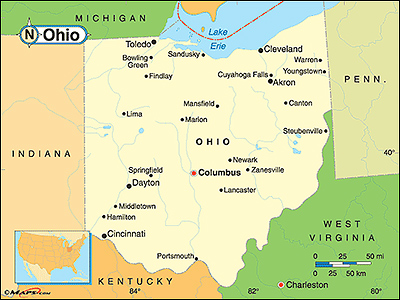
state-of-ohio-mapIn the US Senate race, a campaign that has undergone a great deal of change after original candidate Josh Mandel, Ohio’s treasurer who held Sen. Sherrod Brown (D) to a 51-45 percent win in 2012, was forced to exit the re-match because of his wife’s recently discovered serious medical condition. Upon Mandel’s departure, Rep. Jim Renacci (R-Wadsworth), who had already announced and was actively campaigning for governor, decided to switch gears and entered the Senate race.

Investment banker Mike Gibbons, an ally of Gov. John Kasich (R), was opposing Mandel while the latter man was still in the Senate contest, and continues to battle Rep. Renacci. S-USA tested them all.

According to the polling data (March 16-20; 1,408 likely Ohio voters; 541 GOP likely primary voters; 509 Democratic likely primary voters) Sen. Brown maintains strong, and identical, leads against both Republican contenders. Against Rep. Renacci and Gibbons individually, Sen. Brown’s advantage is 52-38 percent.

Continue reading

Democrats Maneuver in San Diego

By Jim Ellis

Feb. 27, 2018 — Two noteworthy Democrat events happened in San Diego over the past few days.

California Sen. Dianne Feinstein (D)

California Sen. Dianne Feinstein (D)

First, the California Democratic Party state convention, meeting in San Diego over the weekend, actually denied veteran Sen. Dianne Feinstein (D) the party endorsement. Though the delegates came close to endorsing state Senate President Kevin de Leon (D-Los Angeles), he also fell short.

In the vote to award the party endorsement for the 2018 US Senate race, it was state Sen. de Leon capturing 54 percent of the delegate votes as compared to only 37 percent for incumbent Sen. Feinstein. A total of 60 percent was needed for endorsement. This is not the first time that the liberal grassroots delegates have turned away from Feinstein. According to an NPR account of the convention proceedings, the party delegates chose then-Attorney General John Van de Kamp over Feinstein in the 1990 governor’s race.

The lack of an endorsement will not hurt the senator’s campaign, however. A January Public Policy Institute of California poll (Jan. 21-30; 1,705 California adults) favored Sen. Feinstein over Mr. de Leon, 46-17 percent, when tested in the jungle primary format. She has an even more commanding lead in campaign resources. The year-end Federal Election Commission disclosure report finds her holding just under $10 million in her campaign account as compared to an embarrassingly low $359,000 for de Leon.
Continue reading

GA-6 – Dead Even

By Jim Ellis

June 15, 2017 — The long Georgia special election cycle is mercifully almost over, as this most expensive-ever congressional race draws to a close next Tuesday. Looking at the aggregate spending, this one House campaign will easily exceed $40 million in combined expenditures, probably topping $25 million for Democrat Jon Ossoff’s campaign committee alone when the financial books close at the reporting cycle’s end.

The polls have forecast a close race between Ossoff and former Secretary of State Karen Handel (R) immediately upon both advancing from the April 18 jungle primary. The most recent study, from Survey USA polling for WXIA-TV in Atlanta (June 7-11, 700 registered GA-6 voters; 503 either likely June 20 participants or those who have voted early), finds the two again tied at 47 percent. This is a marked improvement for Handel in comparison to both S-USA’s previous poll and last week’s Abt Associates survey for the Atlanta Journal Constitution, both of which found Ossoff holding a 51-44 percent advantage.

All three of these polls, however, are apparently understating Republican strength. In party segmentation, the GOP/lean GOP cell has only small advantages over the Democrat/Lean Democrat grouping. This is largely due to over-emphasizing the close 2016 presidential race when constructing the respondent pool. Since Georgia does not register voters by political party affiliation, it becomes more difficult to determine an accurate party sample for polling purposes.

Continue reading