Tag Archives: Stacey Abrams

Sen. Warnock Jumps to Significant Lead, Kemp & Abrams Tied in Georgia; Incumbent Rep. Lee Trailing in NV-3

By Jim Ellis — July 1, 2022

Senate

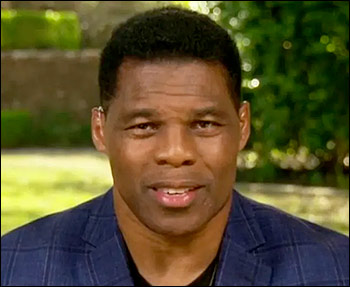
Georgia Sen. Raphael Warnock (D) and Republican challenger Herschel Walker

Georgia: Sen. Warnock Jumps to Significant Lead — The new Georgia Quinnipiac poll (June 23-27; 1,497 registered Georgia voters; live interview) finds Sen. Raphael Warnock (D) claiming a 54-44 percent lead over Republican Herschel Walker, the most lopsided pro-Democratic ballot test to date. The previous polling from December to mid-April (six polls) had given Walker a slight edge.

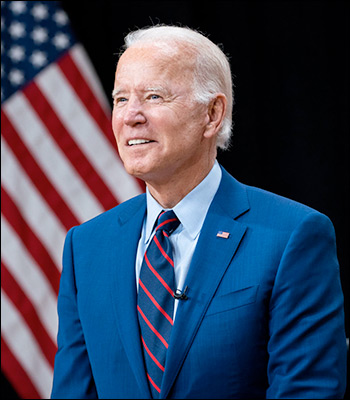
Sen. Warnock carries a positive 49:39 percent job approval rating in contrast to President Biden’s upside-down 33:60 percent approval rating. Walker scores rather poorly on honesty, 39:43 percent honest to dishonest, and is not perceived to have particularly good leadership skills, 37:43 percent. As point of reference, the same polling sample finds Gov. Brian Kemp (R) and former state House Minority Leader and 2018 gubernatorial nominee Stacey Abrams (D) tied at 48 percent.

However, the study could be an anomaly.

Though polls have been moving toward Sen. Warnock, the Q-Poll takes a giant leap, so it is possible that this survey is an outlier. Democrats support Warnock, 97-2 percent; Republicans are for Walker in a 93-7 percent clip.

The Independent sector is where we may be detecting a significant skew. This group, on virtually every question but the Biden job approval query moves significantly toward the Democratic position and/or candidate, and in a greater degree than one would expect from people who self-identify as “independents” (62-33 percent for Warnock).

While this particular poll may well skew toward Sen. Warnock, it is probable that we will soon see other data yielding a much closer ballot test. The Georgia Senate race is one that is far from over.

Missouri: Independent Joins Race — Answering former Sen. John Danforth’s (R) call for a new candidate in the Senate race, former US Attorney John Wood announced his plans to enter the contest as an Independent. He claims this is a move to potentially stop former Gov. Eric Greitens from prevailing in the general election should he win the Republican nomination. In reality, however, by splitting the vote in such a manner — if Wood were to become a top-tier candidate — would likely elect the Democratic nominee.

Wood says that if elected, he would support Sen. Mitch McConnell (R-KY) for Majority Leader and would presumably caucus with the Republicans. To qualify for the ballot in Missouri, an Independent candidate must submit 10,000 valid registered voters’ signatures by an Aug. 1 deadline.

House

FL-2: Close Poll in Paired Race — The new northern Florida’s 2nd District is rated R+16 according to the FiveThirtyEight data organization. A new Sachs Media poll (June 20-23; 400 likely FL-2 general election voters), however, finds Rep. Neal Dunn (R-Panama City) leading Rep. Al Lawson (D-Tallahassee) by only a 43-40 percent margin. Perhaps the most troubling segment for Rep. Dunn is the unaffiliated voters who are breaking for Lawson by a 42-18 percent margin.

NV-3: Rep. Lee Trailing in New Survey — The Tarrance Group, polling for the April Becker (R) campaign (June 20-23; 400 likely NV-3 general election voters), posts their client and Republican challenger to a 46-44 percent edge over incumbent Rep. Susie Lee (D-Las Vegas). Likely most troubling for the Lee campaign is her deficit among Hispanic voters who comprise almost 19 percent of the 3rd District of Nevada’s population. Within this segment, Becker leads the congresswoman 48-42 percent. President Biden’s job approval rating here is a poor 37 percent.

OK-2: Runoff Set — With enough votes counted, it is now clear that the Republican runoff to replace Rep. Markwayne Mullin (R-Westville) will feature state Rep. Avery Frix (R-Muskogee), who finished first with just 14.7 percent among the crowded field, and former state Sen. John Brecheen, who was close behind with 13.8 percent support. The two just eclipsed Muskogee Police Chief Johnny Teehee (13.0 percent) and Oklahoma Republican Party chairman John Bennett (11.3 percent). The runoff winner is a lock to win the general election in a R+55 rated seat according the the 538 data group.

Redistricting

Louisiana: Supreme Court Stays Ruling — The federal judge’s ruling that disqualified the new Louisiana congressional map because it did not draw a second black district has been stayed. The United States Supreme Court (SCOTUS) took the action to at least temporarily block the ruling from taking effect. The conclusion will mean the legislature’s map will return at least for the 2022 election.

The courts, either through this case or the Alabama Voting Rights case that the SCOTUS has already scheduled for hearing, will likely determine how the Voting Rights Act is to be interpreted moving forward. This could mean that the Louisiana map and many others will be re-drawn for the 2024 election and beyond.

Rep. Rice Loses in SC;
Flores Converts Seat for GOP in TX

By Jim Ellis — June 16, 2022

Primary Results

South Carolina Rep. Tom Rice (R-Myrtle Beach)

South Carolina: Rep. Tom Rice Loses Re-Nomination — The first of six Republican House members who are seeking re-election and voted to impeach former President Trump went down to defeat Tuesday night. South Carolina Rep. Tom Rice (R-Myrtle Beach) lost outright to Trump’s endorsed candidate, state Rep. Russell Fry (R-Murrell’s Inlet). Fry defeated Rep. Rice, 51-24 percent, with the remaining 25 percent being split among the other five candidates.

Elsewhere, Rep. Nancy Mace (R-Charleston) defeated Republican primary challenger and 2018 congressional nominee Katie Arrington by a close 53-45 percent, which proved to be a defeat for a Trump endorsed candidate. Fourth District Rep. William Timmons (R-Greenville), in a race that Trump did not affect, was also renominated but only by a 52.7 percent vote share opposite three challengers.

Statewide, both Republican incumbents, Sen. Tim Scott and Gov. Henry McMaster, were easily re-nominated. Gov. McMaster will now face former Congressman Joe Cunningham (D), who won the Democratic gubernatorial nomination outright with 56.5 percent of the vote, while the Democratic Senate candidates fell into a tight three-way finish. Two of the contenders will advance to a runoff election on June 28, presumably author Catherine Bruce and state Rep. Krystle Matthews (D-Ladson).

TX-34: Mayra Flores Converts Seat for GOP — Republican Mayra Flores, a health care professional, won the open special election last night in a 51-43 percent spread over former Cameron County Commissioner Dan Sanchez (D) and two others. The district was left vacant when then-Rep. Filemon Vela (D-Brownsville) resigned from the House to accept a position with a legislative advocacy firm.

Flores’ win will boost the Republican count to 214 in the House, just four away from creating a new majority — but winning a full term in November is a more difficult challenge for her in the regular election. The new 34th is rated 12 points more Democratic than the seat she won last night and will face 15th District Rep. Vicente Gonzalez (D-McAllen) in the impending general election.

Gonzalez chose to seek re-election in the new South Texas 34th when Vela announced his retirement, and thus won the party primary in March. We can expect the Republican national political apparatus to pull out all of the stops in an attempt to re-elect Flores in the fall, thus making the 34th CD a political battleground.

Senate

Georgia: Sen. Warnock, Herschel Walker Tied — East Carolina University tested the Georgia electorate (June 6-9; 868 registered Georgia voters) and find Georgia Sen. Raphael Warnock (D) and Republican challenger Herschel Walker tied at 47 percent apiece. The Georgia race will be one of the key battleground contests in the 2022 general election cycle.

Governor

Georgia: Gov. Kemp Leads Stacey Abrams — The aforementioned East Carolina University poll (see Georgia Senate above) finds Gov. Brian Kemp (R) leading ex-state House Minority Leader Stacey Abrams (D), 50-45 percent, in another race that is expected to go down to the wire. The two fought to a 50.2 – 48.8 percent finish in 2018.

Texas: Abbot Up in Landslide — A new Democratic Blueprint Polling survey of the Texas electorate (June 8-10; 603 likely Texas general election voters) finds Gov. Greg Abbott (R) re-establishing a huge polling lead. In this survey, the ballot test breaks 56-37 percent over former US Rep. Beto O’Rourke (D-El Paso). Gov. Abbott is seeking a third four-year term.

Notable Candidate Filings

By Jim Ellis

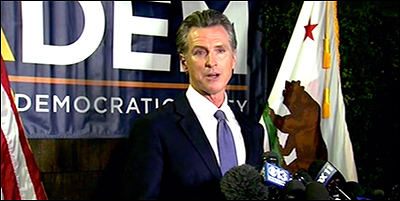
California Gov. Gavin Newsom (D) faces little in the way of strong competition in 2022.

March 15, 2022 — Candidate filing closed in three states on Friday — California, Georgia, and Idaho — and we see some highly competitive primary and general election campaigns occurring in each.

Despite 26 candidates filing against him, appointed California Sen. Alex Padilla (D) has done a good job of securing his Democratic base. As a result, he faces no serious opponent. The only way Sen. Padilla would lose in the state’s jungle primary system is if another strong Democrat surfaced and forced him into a double-Democratic general election. No such individual filed. California Gov. Gavin Newsom (D) also faces little in the way of strong competition even though he has 25 opponents.

The Georgia governor’s race features the most important May 24 primary campaign, a Republican battle between Gov. Brian Kemp and former US Sen. David Perdue. Three minor candidates are also on the ballot, and they could be a factor to force a runoff if the Kemp-Perdue race evolves into an even contest. In that scenario, a secondary election on July 26 would occur should both Kemp and Perdue be stopped short of 50 percent support.

Former Georgia state House Minority Leader and 2018 gubernatorial nominee Stacey Abrams is unopposed for the Democratic nomination. The state’s US Senate contest is already winnowing down to a battle between Sen. Raphael Warnock (D) and retired pro football player Herschel Walker (R).

In Idaho, Gov. Brad Little faces a Republican primary challenge from Lt. Gov. Janice McGeachin, who has former President Donald Trump’s endorsement. Sen. Mike Crapo has four Republican primary opponents but is in strong shape for both re-nomination and re-election to a fifth term.

In the House races, veteran Rep. Mike Simpson (R-Idaho Falls) will face a familiar foe in the Republican primary. Bryan Smith, who challenged the congressman in the 2014 Republican primary and attracted some national attention and support before falling 62-38 percent, returns for a re-match eight years after their original political battle.

Back in California in the US House races, it appears there are seven districts that will host competitive general election campaigns and many more that could send a pair of the same party’s members to the November election from the June 7 jungle primary.

Only one of the projected partisan general election battles comes in an open seat. The 3rd District, which begins in the Sacramento suburbs and stretches down along the Nevada border all the way into southern California, will yield a competitive Republican battle between state Assemblyman Kevin Kiley (R-Granite Bay) and Sacramento County Sheriff Scott Jones for one of the general election finalist positions. The state Democratic Party has endorsed physician Kermit Jones. The new 3rd, where Rep. Tom McClintock (R-Elk Grove) could have run, is rated an R+8 district.

Rep. Josh Harder (D-Turlock) will likely face San Joaquin County Supervisor Tom Patti (R) in the D+8 District 9 that retiring Rep. Jerry McNerney (D-Stockton) currently holds.

Continue reading

Georgia Turning, Again?

By Jim Ellis

Herschel Walker (R), former University of Georgia and ex-NFL football star and current Senate candidate, enjoys his largest lead of the early election cycle.

March 11, 2022 — It was well publicized in the 2020 election cycle that the state of Georgia is beginning to swing toward the Democrats, but a new Democratic poll contains some evidence that predicting a long-standing transformational flip may have been premature. Now, the new polling suggests that Georgia voters could be open to a Republican comeback.

Blueprint Polling released their new Georgia statewide study earlier this week, and projects that GOP candidate Herschel Walker enjoys his largest lead of the early election cycle but it’s only a three-plus percentage point edge, well within the polling margin of error. The Blueprint survey (March 2-8; 662 definite (90 percent) and probable (10 percent) Georgia voters; live interview) produces a ballot test featuring Walker holding a 48.5 – 45.4 percent slight advantage over Sen. Raphael Warnock (D).

The most surprising part of the Warnock-Walker crosstabs was the Republican leading among younger voters. Walker led Warnock by just over one percentage point among those aged 18-34, typically a group that widely supports Democrats, and trails only among those aged 45-54. Among the highest turnout age sector, those 65 and older, Walker held a five-point advantage.

While Sen. Warnock still held a slight edge among Independents, 42-40 percent, Walker attracted 12 percent of Democratic votes while Sen. Warnock could manage only 9.5 percent among Republicans. The two were tied among college educated voters, a strong improvement for the Republican in this category, while Walker led by five points among those who had not attended or graduated from college.

But this result is far from the poll’s most interesting piece of information. Rather, the question about who the respondents would support in a presidential re-match produces an eye-opening result. This is particularly true when remembering that Georgia came down to an official, though disputed, small margin of 11,779 votes in Democratic candidate Joe Biden’s favor from just under 5 million ballots cast.

Continue reading

A Curiously Conflicting Georgia Poll

By Jim Ellis

“The negative driver for this [Georgia poll] appears to be President Biden.”

Feb. 1, 2022 — The Atlanta Journal-Constitution (AJC) released one of their regular Georgia statewide polls that the School of Public and International Affairs from the University of Georgia administers (Jan. 13-24; 872 registered Georgia voters, live interview) and the results reflect an electorate with some conflicting views.

While President Biden’s job approval ratio has taken a steep dive since the news entity’s May 2021 survey was published, and the right track/wrong track question is heavily lopsided toward the negative, the current statewide office holders and even the state legislature land in the positive approval realm. Yet, in the accompanying ballot test numbers, the tested Democratic officials are trailing despite brandishing the relatively positive approval ratios.

President Biden now records a combined 34:61 percent favorable to unfavorable index (13 percent strongly approve; 21 percent somewhat approve; 11 percent somewhat disapprove; 50 percent strongly disapprove), which is a huge net reduction of 32 percentage points from his combined 51:46 percent score in May (28 percent strongly approve; 23 percent somewhat approve; 9 percent somewhat disapprove; 37 percent strongly disapprove).

In the new January poll, the respondents believe, in a very poor 17:71 percent ratio, that the country is on the wrong track. They also feel Georgia is headed in the wrong direction, but with less intensity, 34:48 percent negative. The May AJC poll, with a shorter questionnaire, did not ask similar track questions.

The sense of the nation figures in the January study, however, also seem inconsistent with how these same respondents rate their elected federal officials. Sens. Raphael Warnock (D) and Jon Ossoff (D) record 44:35 percent and 43:35 percent positive ratios, respectively. This tells us that the sampling universe members don’t hold their senators particularly responsible for the country being on the perceived wrong track.

In another inconsistency, the senator who is on the 2022 ballot, Rev. Warnock, actually trails his prospective general election opponent, former Georgia and NFL football star Herschel Walker (R), despite the positive job approval sentiment. In this AJC poll, Walker holds a 47-44 percent lead. This latter finding is also consistent with a recent Quinnipiac University study (Jan. 19-24; 1,702 registered Georgia voters, live interview) that gave the challenger an edge, but with a smaller 49-48 percent split.

The governor’s numbers show a similar inconsistency. In Gov. Brian Kemp’s (R) case, while the state is viewed as headed in the wrong direction, the chief executive does not appear to be shouldering an excessive amount of blame. His job approval lies in the positive realm at 49:43 percent favorable to unfavorable. Paired with his likely general election opponent, 2018 gubernatorial nominee and former state House Minority Leader Stacey Abrams (D), Kemp leads 48-41 percent.

Continue reading

Perdue to Challenge Kemp in Georgia

By Jim Ellis

Former US Sen. David Perdue (R-GA)

Dec. 7, 2021 — Something that has been rumored about and speculated upon for weeks has finally come to fruition. Defeated Sen. David Perdue has formally announced that he will challenge Gov. Brian Kemp in next year’s Republican primary.

The serious primary challenge is part of the aftermath from the 2020 election controversy where Gov. Kemp’s perceived handling of the voter fraud complaints and challenges left a significant portion of the Republican base expressing discontent. Former President Donald Trump has many times attacked Kemp on the subject and is one of the key people behind Perdue’s fledgling gubernatorial candidacy. Trump is expected to play a large role in the primary.

Georgia Gov Brian Kemp

Sen. Perdue lost his seat in the 2020 post-general runoff to Jon Ossoff (D) by a 50.6 – 49.4 percent count (54,944 votes of a total turnout of 4.48 million) after placing first in the general election by almost two full percentage points. Georgia has a majority victory rule, however, that requires all candidates to win their elections with more than 50 percent. In the November vote, Sen. Perdue fell just one-quarter percent short of securing outright victory.

One of the reasons he lost is the state’s strongest Republican counties didn’t perform in the runoff as strongly as did the best Democratic counties. Many Republicans, it is believed, did not return for the runoff because they listened to some of the key Trump leaders, including the former president himself, argue that the Georgia election system is “rigged.”

Gov. Kemp was elected in 2018, winning the primary largely because he positioned himself far to the right, thus successfully appealing to the ardent Trump Republican voter. After moderating for the general election campaign, Kemp defeated former state House Minority Leader Stacey Abrams (D) by just 54,723 votes, an almost identical number to the difference between the Ossoff-Perdue election two years later. She, like Trump, challenged the election results.

The relationship between Gov. Kemp and Trump first became strained when the former disregarded the latter’s endorsed candidate for the US Senate appointment: then-Rep. Doug Collins who was in the running to replace resigned Sen. Johnny Isakson. The three-term senator, former House member and state legislative leader, was forced to leave office for health reasons, thus allowing the governor to appoint an interim successor.

Instead of Collins, Gov. Kemp chose billionaire businesswoman Kelly Loeffler, who would go onto lose her special election runoff campaign to current Sen. Raphael Warnock (D).

Continue reading

Herschel Walker Jumps Into Race

By Jim Ellis

Herschel Walker (R), former University of Georgia and ex-NFL football star, filed to become a candidate in the 2022 Georgia Senate race.

Aug. 26, 2021 — Former University of Georgia and ex-NFL football star Herschel Walker (R), without any formal announcement, filed organizational papers Tuesday with the Federal Election Commission to form a US Senate committee. Earlier in the year, he relocated back to his native Georgia from Texas where he had been living since retiring from the Dallas Cowboys in 1997.

Filing the preliminary papers with the federal campaign agency does not make one an official candidate. The Georgia process won’t conclude until March 11, 2022, so ample time remains to make a final decision.

The move to recruit Walker as a candidate is not universally accepted in Republican circles. In fact, Red State political blog founder Erick Erickson tweeted the following statement: “I don’t know a single Republican operative who thinks Walker will lose the primary. I don’t know a single Republican operative who thinks Walker will win the general. There is a lot of frustration out there.”

Walker is clearly Donald Trump’s candidate, and with the former president’s active personal endorsement, the former football great will have a huge advantage over Agriculture Commissioner Gary Black in the Republican primary. Black is an announced candidate who has won three statewide races in Georgia. Walker obviously has high name identification in Georgia, much better than Black’s, and the combination of his football profile and Trump’s endorsement makes him the early favorite for the GOP nomination as Erickson predicts.

Furthermore, Walker is likely strong enough, especially with carrying the Trump endorsement, to scare away any other formidable Republican from entering the race. In fact, Rep. Buddy Carter (R-Pooler/Savannah) long said he would run for the Senate but step aside if Herschel Walker were to become a candidate.

With the Senate tied 50-50 and freshman Sen. Raphael Warnock (D) forced to already run for a full six-year term after winning the special election in 2020, the Georgia race again becomes a national Senate campaign. It figures to be one of the closest elections, just as the regular and runoff contests were last year, thus it becomes a top race for both parties.

Continue reading

Perdue’s Georgia Governor Test

Former US Sen. David Perdue (R-GA)

By Jim Ellis

Aug. 23, 2021 — The Fabrizio Lee polling firm, conducting a survey for former President Donald Trump’s Save America PAC, recently tested former US Sen. David Perdue opposite the Georgia Republican gubernatorial field including the party’s incumbent, Brian Kemp.

At this point, Perdue has not indicated that he will be on the ballot for any office in 2022, but that did not stop the Trump pollsters from releasing data showing how he would fare as a gubernatorial candidate. Former DeKalb County Executive and ex-state Rep. Vernon Jones, a former Democrat who became a Trump spokesman during the 2020 campaign, is Gov. Kemp’s principal challenger to date.

The Fabrizio Lee poll (Aug. 11-12; 500 likely Georgia Republican primary voters, including 100 Independents who plan to vote in the Republican primary, live interview) finds Gov. Kemp still saddled with tepid approval numbers from the GOP base. His favorability index is 69:27 percent favorable to unfavorable, which does show weakness for an incumbent within his own political party. Comparatively, Trump’s favorability index is 93:6 percent.

In the four-way primary Gov. Kemp fails to reach 50 percent, which would force a runoff vote if this poll were the final electoral result. The ballot test finds the governor leading 41-19-16-3 percent over Jones, Perdue and announced candidate Kandiss Taylor, respectively. The Perdue number is also weak, but his standing changes when another piece of information is given the respondents.

The pollsters isolated Gov. Kemp and ex-Sen. Perdue after telling the survey participants that Trump would support Purdue. Knowing that, the two-way test yields a Kemp lead of only 46-40 percent, with 25 percent saying they are “definitely” voting for Kemp while 20 percent would “definitely” support Perdue. The remainder favoring each man said they would “probably” vote for their stated individual.

The paradigm changes when all of the candidates are added to the ballot test with the respondents having the information that Trump supports Perdue. Under this scenario, it is Perdue who assumes the lead with 41 percent, while Gov. Kemp posts just 26 percent. Jones records 14 percent, and Taylor, a minor 2020 US Senate candidate, again attracts three percent support.

The Trump endorsement also played a factor in the responses for the US Senate race. Here, former University of Georgia and NFL football star Herschel Walker easily outdistances state Agriculture Commissioner Gary Black. Walker has not committed to run, while Black is an announced candidate.

Continue reading

Disputing the Georgia Poll

By Jim Ellis

Former DeKalb County, Georgia chief executive officer and ex-state representative, Vernon Jones

May 11, 2021 — At the end of last week, the Remington Research Group released a survey of the Georgia 2022 Republican gubernatorial primary for their client, former DeKalb County chief executive officer and ex-state representative Vernon Jones. The results were met with some derision.

The poll (May 1-3; 1,040 likely Republican primary voters, interactive voice response system) finds Gov. Brian Kemp leading Jones only 39-35 percent, and an Atlanta Journal Constitution reporter responded with negative comments about the poll’s credibility and cited unnamed GOP consultants who allegedly agree with this analysis.

Greg Bluestein of the AJC said in response to the poll’s publishing, “suffice it to say we have not found one person with proven knowledge about Georgia politics who believes the poll is credible.” He further stated that, “the last two independent polls I’ve seen show Gov. Kemp leading Jones 74-17 percent and Kemp up 64-14 percent.” There is no evidence that these latter polls have been publicly released, however.

To reject the Remington poll in such a manner should not be considered a legitimate response. The Remington Research Group is a national pollster that specializes in interactive voice response systems and are certainly a well-established survey research firm.

According to the FiveThirtyEight statistical website that ranks polling firms, we find the RRG earning a B grade and placed as the 103rd entity of the 482 polling organizations in the FiveThirtyEight universe. This means the pollster lands in the top 22 percent of all tested survey research firms. Therefore, to reject Remington’s latest Georgia findings as not credible is an analysis and comment trail that should be discounted.

Gov. Kemp’s popularity among Georgia Republicans clearly suffered after the election controversy in his state. At the low point, according to the Morning Consult data intelligence firm, his personal favorability rating stood with a 62:31 percent positive to negative ratio among members of his own party, which is touching the danger zone for any office holder.

Continue reading

LA-2’s Saturday Special Election

(LA-2 Candidate Troy Carter’s Closing Ad)

By Jim Ellis

April 26, 2021 — The special election to fill the vacant Louisiana congressional district from which former Rep. Cedric Richmond (D-New Orleans) resigned when he accepted a Biden White House appointment was decided Saturday, with the contest having evolved into a more significant race than originally anticipated.

The one thing we knew coming into the special election was that a Democratic New Orleans state senator would win the race, but the question around which of the two would prevail was one of longer-term national importance. We saw in this race not just a runoff between two Democratic contenders for a Democratic congressional seat, but rather an intensifying battle between the more traditional party base and the hard left movement that has had success in other places.

A victory for the Justice Democrats in the person of state Sen. Karen Carter Peterson (D-New Orleans) will increase the movement’s strength and likely lead to stronger primary challenges against more traditional Democratic incumbents come 2022.

Remember, state Sen. Troy Carter (D-New Orleans) placed first in the March 20 jungle primary with 34 percent of the vote. Sen. Peterson edged Baton Rouge community activist Gary Chambers, Jr. by 22.9 – 21.3 percent, a margin of 1,510 votes of 94,567 votes cast and spread among 15 candidates.

In the LA-2 special election on Saturday, Carter won by a 10-point spread over Peterson, 55-45%.

Peterson ironically qualified for the runoff with a better-than-expected performance in the Baton Rouge section of the district and fell below expectations in her home city of New Orleans. Conversely, Chambers proved weaker in his home of Baton Rouge but stronger in New Orleans.

Chambers’ endorsement of Sen. Peterson marked the beginning of the support we saw moving toward the second-place finisher, but the lack of available polling data – the last poll we’d seen for this race came from Edgewater Research over the March 1-2 period, which gave Sen. Carter a 35-24 percent lead – allowed us to surmise that Saturday’s end result was likely to be close and could have trended in either direction.

Continue reading