Tag Archives: President Obama

Rep. Barton to Retire;
Major Ohio Moves

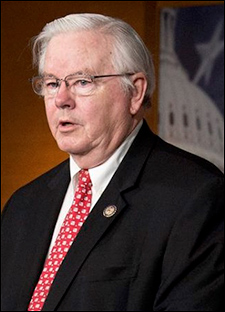
Texas Rep. Joe Barton (R-Ennis)  | Facebook

Texas Rep. Joe Barton (R-Ennis) | Facebook

By Jim Ellis

Dec. 4, 2017 — Veteran Texas Rep. Joe Barton (R-Ennis), a former Energy & Commerce Committee chairman, has apparently taken the advice he was reportedly receiving from many local Republican leaders and activists advising him not to seek re-election. Barton, recently coming under attack when his nude picture taken during a previous consensual sexual relationship surfaced on Twitter, announced late last week through social media that he will end his 34-year congressional career when the current Congress adjourns.

Barton had already filed to run in 2018, but will now withdraw his paperwork prior to Texas’ Dec. 11 candidate filing deadline. We expect to see several Republicans come forward to run in what will be the first open 6th District contest since 1984. Immediately, Tarrant County Tax Assessor Ron Wright announced that he would enter the newly open Republican primary.

The 6th District performs as a safe Republican seat beginning in the Arlington area of Tarrant County, which is the population anchor, before continuing southeast to annex Ellis and Navarro Counties. President Trump carried the 6th, 54-42 percent, down a bit from Mitt Romney’s 2012 performance of 58-41 percent against President Obama.
Continue reading

A New Nominee; Another Retirement

By Jim Ellis

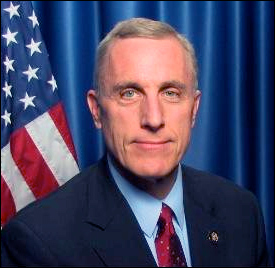
Pennsylvania Rep. Tim Murphy (R-Pittsburgh)

Pennsylvania Rep. Tim Murphy (R-Pittsburgh)

Nov. 15, 2017 — Though almost all of the weekend political media coverage focused on the Alabama Senate campaign and the sexual impropriety allegations against former state Supreme Court Chief Justice Roy Moore (R), over 800 miles from the heart of Dixie another group of Republicans was choosing a nominee to fill a US House vacancy.

In late October, yet another sex scandal-tainted political figure, Pennsylvania Rep. Tim Murphy (R-Pittsburgh), succumbed to the pressure against him and announced that he would resign from the House. Quickly, Gov. Tom Wolf (D) called the special election to fill the new vacancy for March 13. Each 18th District political party organization then had the responsibility of meeting in convention to choose their respective congressional nominee.

On Saturday, 215 Republican conferees from the CD’s four counties decided among three candidates, all members of the Pennsylvania legislature. An additional state representative, Jason Ortitay (R-Bridgeville), originally announced that he, too, would stand for nomination but decided the morning of the convention to withdraw.

Continue reading

Hensarling Retirement:
Open Seat Effect

By Jim Ellis

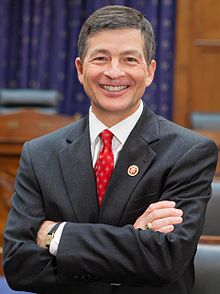
Rep. Jeb Hensarling, (TX-5)

Rep. Jeb Hensarling, (TX-5)

Nov. 2, 2017 — House Financial Services Committee chairman Jeb Hensarling (R-Dallas) announced Tuesday that he will not seek a ninth term in Congress next year to represent Texas, the timing coinciding with his internal term limit as the major committee’s leader. Hensarling was first elected in 2002 when then-incumbent Pete Sessions (R-Dallas) decided to jump to a new safe north Dallas Republican district leaving open this south Dallas-anchored seat, which, at the time, was politically marginal.

In that redistricting year, Hensarling, a former aide to Sen. Phil Gramm (R) before taking positions in the private sector with financial and energy producing companies, won the Republican nomination outright against four other GOP candidates, scoring 53 percent of the vote. He went on to record a 58-40 percent November victory, and would then average 73 percent over his seven re-election campaigns without ever being seriously challenged.

Texas’ 5th Congressional District now encompasses a substantial part of east Dallas County, including the city of Mesquite, before stretching southeast to annex five full counties and a partial one. After Dallas and Mesquite, the district’s largest population centers are the cities of Palestine, Jacksonville, and Athens.

President Trump tallied a 63-34 percent victory over Hillary Clinton here in 2016, following Mitt Romney’s similar 64-34 percent margin four years earlier. Even Sen. John McCain in President Obama’s first winning election posted a 62-37 percent spread within the TX-5 confines. Therefore, the district is solidly Republican and should not be hotly contested in next year’s general election campaign.

Continue reading

The Emerging Senate Cycle

By Jim Ellis

Tennessee state flag

Tennessee state flag

Oct. 25, 2017 — Though we still have more than two full months remaining in calendar year 2017, the 2018 US Senate field is beginning to take clear shape. With 34 statewide contests to be decided, including the Alabama special election that will conclude Dec. 12, no fewer than 10 campaigns are basically set. Action is occurring in an additional 13 states suggesting that some sort of primary or general election competition will soon come to the forefront. Eleven incumbents seeking re-election are rated as “safe” at the present time.

Former Tennessee US Rep. Stephen Fincher (R-Crockett County) announced Monday that he would join the open US Senate Republican primary battle, attempting to succeed retiring Sen. Bob Corker (R). This race already appears to be evolving into a possible two-way primary between ex-Rep. Fincher and current 7th District veteran incumbent Marsha Blackburn (R-Brentwood).

Andy Ogles, the former Tennessee director for Americans for Prosperity, remains in the race after launching what is now a moot primary challenge to Sen. Corker but it is unclear how strong he will be now that several conservative organizations are already beginning to coalesce behind Rep. Blackburn.

The only other bit of Volunteer State intrigue centers around Democratic former Gov. Phil Bredesen and whether he will enter the statewide contest. Originally, Bredesen took himself out of consideration, but now agrees to consider becoming a candidate. He says a decision will be forthcoming in a matter of weeks. Without Bredesen, the Democrats would likely concede the seat to the eventual Republican nominee since other strong potential candidates, specifically US Rep. Jim Cooper (D-Nashville) and Nashville Mayor Megan Barry, have already said they will not run.

Continue reading

Retirement Brings a Toss-Up

By Jim Ellis

Sept. 8, 2017 — Washington Rep. Dave Reichert (R-Auburn) announced earlier this week that he will not seek an eighth term next year. The congressman was first elected in 2004, succeeding veteran Rep. Jennifer Dunn (R), which proved to be only two-plus years before her untimely death.

In 2005, Reichert came to Washington after serving 33 years in the King County Sheriff’s office, his last eight as the county’s top law enforcement officer. It was in this position where Sheriff Dave Reichert gained national notoriety through apprehending the Green River serial killer. After conviction, Gary Ridgway confessed to committing 71 murders, 49 of which were confirmed. Some investigators believe his actual victim number may exceed 90. The totals make Ridgway the most prolific serial killer in American history.

Riding his local positive image, Sheriff Reichert was able to bridge the partisan gap in his first congressional race and won election to the increasingly Democratic 8th District. He would clinch three re-elections in the seat before the district lines were made more Republican. In his trio of difficult campaigns prior to redistricting, the congressman averaged 52.1 percent of the vote. Post 2011 redistricting, his average victory margin increased to 61.0 percent.

Continue reading

One In, One Out

By Jim Ellis

July 13, 2017 — Two major announcements occurred during the last few days resulted in one individual becoming an official statewide candidate and another withdrawing from a campaign that had already begun.

West Virginia Senate

As had been expected for some time, two-term West Virginia Attorney General Patrick Morrisey (R) announced his campaign for the United States Senate. He will face two-term Rep. Evan Jenkins (R-Huntington) in the Republican primary, with the winner drawing a difficult political match with Sen. Joe Manchin (D).

With average win percentages of 62 percent over two elections as governor (2004, ’08) in addition to a pair of Senate campaigns (2010 special election; 2012), Sen. Manchin appears to be in strong shape as he approaches his 2018 re-election. But, there are some cracks in his armor, hence the presence of two strong GOP opponents.

Though Sen. Manchin has attempted to cross the partisan line in his public relationship with President Trump and the Republican leadership on several issues, it is still a net negative for the senator to campaign on the same political landscape that proved to be the former’s second strongest state (69 percent).

Continue reading

Virginia Primary Today

By Jim Ellis

June 13, 2017 — The Virginia governor’s campaign is becoming a national race in relation to prognosticating political trends, and we will be able to glean some partial answers this evening.

Initially, the eventual Virginia general election winner earns the redistricting veto pen for the 2021 redraw, and becomes the first newly elected governor to have such authority. All other states where redistricting is handled through the normal legislative process will elect their commensurate governors in 2018, 2019, and/or 2020.

Second, the Commonwealth’s Democratic primary race has evolved into an early microcosm of what Democrats may be experiencing throughout the country this year and next, and quite possibly beyond.

The split between the party’s more extreme Bernie Sanders/Elizabeth Warren faction and the traditional liberal Hillary Clinton segment is portrayed in the Tom Perriello/Ralph Northam gubernatorial primary. Though former US Rep. Perriello is wrapping himself in the Sanders/Warren mantra, going so far as having them star in his ads along with film clips of President Obama extolling his virtue when he was a member of the House, Perriello’s initiative has driven Lt. Gov. Northam to adopt more leftward ideological positions, as well.

Continue reading

Pearce in Range in New Mexico

By Jim Ellis

June 8, 2017
— A statewide New Mexico poll released late last week suggests that US Rep. Steve Pearce (R-Hobbs) is well within the competitive range of fellow US Rep. Michelle Lujan Grisham (D-Albuquerque), should the two battle each other in next year’s open race for governor of New Mexico.

In December, Grisham announced that she would not seek re-election to the House, instead declaring for governor. She is the leading Democratic candidate, particularly now since Attorney General Hector Balderas, who would have been a credible gubernatorial contender, announced instead that he would seek re-election and support the congresswoman’s statewide bid. Republican Gov. Susana Martinez is ineligible to seek a third term, and the lack of an incumbent in the 2018 campaign for the state’s top public office has ignited a game of political musical chairs.

Pearce, who represents the southernmost of the three Land of Enchantment congressional districts, and the state’s only Republican seat, confirms that he is considering the gubernatorial race. He was first elected to the House in 2002, and then vacated to run for US Senate in 2008, upsetting his congressional colleague, then-Rep. Heather Wilson (R-Albuquerque), in the Republican primary but losing the general election badly to the state’s third House member, Tom Udall (D-Santa Fe), 61-39 perent. Pearce returned to the House in the 2010 election, unseating one-term Democratic Rep. Harry Teague.

Continue reading

Census Bureau: American Voting

By Jim Ellis

June 2, 2017 — There are always seemingly conflicting reports about the actual number of people who register to vote and the corresponding number who are even eligible to participate, but we are now closer to having more definitive information courtesy of the US government.

The Census Bureau recently released its biennial national report on voter registration, which provides us some definitive answers to the aforementioned observations. According to their report, the 2016 presidential total vote, rounded to 137,537,000 though the actual recorded total registers 136,792,535 ballots cast, set an all-time participation record exceeding the 131,426,292 total tallied from the previous national high (2008; Obama vs. McCain presidential election).

According to the Census Bureau report, 71.2 percent of citizens over the age of 18 are registered to vote. The Pew Charitable Trusts Research & Analysis department, which dissected the government’s findings, sees this number as a slight increase over the 70.3 percent total registration figure found soon after the 2012 presidential contest.

Continue reading

Another Close One in SC-5;
Ohio Senate Decision

By Jim Ellis

May 18, 2017 — Tuesday’s special Republican SC-5 run-off election ended in almost as close a fashion as did the primary two weeks ago. Former South Carolina state representative and 2006 congressional nominee Ralph Norman has scored an apparent 203-vote victory over state House President Pro Tempore Tommy Pope. In the original May 2 vote, Pope nipped Norman by 135 cast ballots. Since no one was close to the majority mark, the secondary run-off election was thus necessitated.

The totals are unofficial, so a recount will likely be ordered, and it is not clear whether any absentee, provisional, or disputed ballots remain uncounted. Assuming the Norman margin holds, he will face Democrat Archie Parnell, a former Wall Street executive and congressional aide, in the special general vote scheduled for June 20. The winner of that election serves the balance of the current congressional term. The seat is vacant because former Rep. Mick Mulvaney (R-Lancaster/Rock Hill) resigned to become director of President Trump’s Office of Management & Budget.

In the primary, the two candidates not only spilt the district, but they virtually halved their joint home county of York, the dominant population center. Such was not the case Tuesday, as Pope carried the entity, where 54 percent of the entire district’s ballots were cast, by a 1,414-vote margin, substantially better than his 187 ballot spread in the primary.

Continue reading