Tag Archives: Maine

Super Tuesday Has Arrived

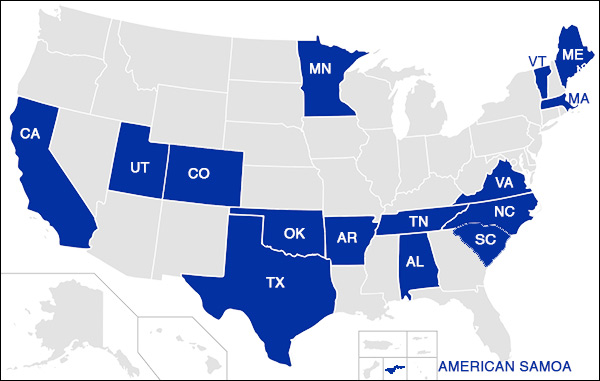
Super Tuesday 2020 States & Territories

By Jim Ellis

March 3, 2020 — The election landscape has changed since Saturday with former mayor Pete Buttigieg, Sen. Amy Klobuchar (D-MN), and billionaire Tom Steyer all exiting the race. Sen. Klobuchar endorsed former vice president Joe Biden as did Buttigieg in an announcement last night.

How do these developments and an obvious Joe Biden resurgence affect today’s vote? Maybe not as much as meets the eye. With the early voting processes well underway, and even completed in some states, the late-breaking political news and happenings will influence far fewer voters.

In fact, the three largest states with primaries today, California (415 first-ballot delegates), Texas (228), and North Carolina (110), all have extensive early voting options and large percentages of their voters have already cast their ballots meaning Biden’s sudden upswing in momentum after his South Carolina victory on Saturday night won’t sway them.

In California, more than 2 million people have already voted, which may translate into as much as one-third of the total Democratic presidential primary turnout. In 2016, more than 5.1 million people voted in the Hillary Clinton-Bernie Sanders race in June of that year. Returning to today, more than one million have already voted in Texas, and 800,000-plus have cast their ballots in North Carolina.

Thirty-eight states have some form of early voting, even if it is merely an in-person absentee system like those found in Minnesota and Virginia. For Super Tuesday, of the 14 states with primary elections today, only Alabama and Colorado have no early voting. The latter state fully conducts all-mail balloting but has no pre-election process in which to submit votes.

Looking at the current political map, though the establishment is making moves to coalesce behind Biden, the latest polling suggests that Sen. Sanders leads in nine primaries today and it’s possible, even with the candidate departures, that as many as three contenders in almost all of the states could still qualify for delegate apportionment.

Today will also mark the first time that former New York City mayor Michael Bloomberg’s name will be on the ballot and how he fares will be telling. Depending upon how many votes he takes could prevent one of the leading candidates from securing majority support, meaning the race evolving into a contested national convention is still a possibility.

Continue reading

The Open Primary Effect

Super Tuesday 2020 States and Territories


By Jim Ellis

Feb. 26, 2020 — One factor for the coming March 3 Super Tuesday primary elections that hasn’t received any discussion is whether or not the open voting system will have a major effect upon the final results. Though only 24 states around the country feature open, or semi-open, primaries, all but two of the 15 Super Tuesday states lie in this category.

For purposes of this column, South Carolina, scheduled for this Saturday and the prelude to the mega-state vote, is added to the Super Tuesday roster because of its close proximity. America Samoa, which also holds its nomination election on March 3, is a caucus.

An open primary is one where any voter may choose to participate in the nomination election of his or her choice. In these states, voters typically are not registered by political party and can select either a Democratic or Republican ballot. A semi-closed primary is one where registered party members must stay in their respective party primary, but the unaffiliated, or Independent, voter may choose the primary in which to participate. A closed primary allows only individuals who are registered in a particular political party to vote in their respective nomination election.

Pertaining to Super Tuesday, Alabama, Arkansas, Colorado, Minnesota, South Carolina, Tennessee, Texas, Vermont, and Virginia are the open primary states. The semi-opens are Massachusetts, North Carolina, Oklahoma, and Utah.

The two closed presidential primaries for the big day are California and Maine. Despite California featuring the ultimate open primary system in their regular elections, where everyone receives the same ballot and the top two finishers advance to the general election regardless of political party affiliation and percentage attained, only registered party members may vote in their respective presidential primary. Therefore, in the national nomination contest, where the top-two system is not recognized for delegate allocation, the Golden State reverts to the closed procedure.

Continue reading

Sessions in Trouble

By Jim Ellis

Former US attorney general and Alabama senator, Jeff Sessions (R)

Feb. 13, 2020 — Mason-Dixon Polling & Strategy conducted a new poll (Feb. 4-6; 400 likely Alabama Republican primary voters) of the Alabama Senate race and though former US attorney general and ex-Alabama senator, Jeff Sessions, still leads in what is a tightening Republican primary, peeling away the underlying data suggests that he could find rough going in an inevitable run-off election.

The M-D results find Sessions leading only 31-29 percent over former Auburn University head football coach Tommy Tuberville. Rep. Bradley Byrne (R-Mobile) trails with 17 percent, but well ahead of former Alabama Supreme Court chief judge and 2017 special election Senate nominee Roy Moore who posts just five percent support.

Sessions’ numbers have declined significantly since he entered the race, obviously suggesting a downward trend pointing to a more serious situation when further seeing that his name identification is universal.

With a significant double-digit margin between the top two poll finishers and Rep. Byrne, it becomes highly likely that both Sessions and Tuberville would advance to a run-off election. Neither is positioned to win the nomination outright, however. With Sessions nowhere close to a majority and, after considering his long political history in the state and 100% name identification among Republican primary voters and his current tepid ballot test numbers, it would not be surprising to see Tuberville overtake him in a one-on-one battle.

Another clue that Sessions has political problems is his favorability index as detected in the Mason-Dixon poll. According to their cell responses, Sessions carries a 49:18 percent favorable to unfavorable ratio among Republican primary voters, which looks positive on the surface, but after overlaying the pervasive name ID percentage it becomes clear that half of the respondents fail to have a positive impression.

Continue reading

Mid-Year Senate Primaries

By Jim Ellis

Jan. 24, 2020 — The second in our three-part series about the in-cycle Senate races covers the 13 contests with June and early August primary dates:

JUNE 2

Iowa: Sen. Joni Ernst (R) stands for a second term and will likely face Des Moines real estate executive Theresa Greenfield (D) in the general election. Greenfield, who aborted a congressional run in 2018 when her campaign effort didn’t collect the requisite number of legal petition signatures, enjoys at least unofficial backing from the Democratic establishment and party leadership. The leaders’ first choice to run, freshman Rep. Cindy Axne (D-Des Moines), decided to seek her first re-election instead of jumping into a statewide battle.
Sen. Ernst is favored for re-election but some of her approval ratings have been low. Much will depend upon the national political trend, particularly at the presidential level. Iowa is typically a swing state that has been moving right in most recent elections, though the Democrats did gain two congressional seats in the last election.

Montana: Sen. Steve Daines (R) stands for a second term, and with the Democrats unable to convince outgoing governor and former presidential candidate Steve Bullock to run for the Senate, most of the political attention has shifted to the open governor’s race and at-large US House contest. With Rep. Greg Gianforte (R-Bozeman) again running for governor, both the governor’s office and the state’s lone House seat are open for the coming election.
In fact, when looking at the entire statewide ticket, mostly due to term limits and statewide officials running for other offices, five of the seven statewide races are open contests in 2020. Therefore, the lack of attention and concentration on the Senate race certainly helps Sen. Daines. At this point, with the March 9 candidate filing deadline less than a month away, the type of candidate who could give the senator a serious run has not yet emerged.

New Jersey: Sen. Cory Booker (D) backed away from the presidential contest in order to concentrate on his re-election campaign. While state law was changed to allow candidates to run for offices simultaneously, Sen. Booker decided the time to exit the presidential race was upon him before embarrassing losses in Democratic primary states encouraged stronger primary competition for his re-election back home. Now concentrating on New Jersey full-time, Sen. Booker looks safe for re-election.

Continue reading

Impeachment Politics

By Jim Ellis

Dec. 20, 2019 — As the most recent polling from national research sources and in key states shows President Trump gaining political strength, the US House last night, on a virtual party line vote, approved the resolution to send the Articles of Impeachment to the US Senate for trial.

The vote was 229-198, with three Democrats voting against the articles and one Republican-turned-Independent, Michigan’s Justin Amash, supporting the measures. Presidential candidate Tulsi Gabbard, who represents the 2nd District of Hawaii, voted “Present”. Three members, two Republicans and one Democrat, were absent. Rep. Duncan Hunter (R-CA) will soon resign his seat due to pleading guilty to a federal campaign finance charge. Retiring Reps. Jose Serrano (D-NY) and John Shimkus (R-IL) were the others who did not vote. All present and voting Republicans opposed the impeachment measures.

Two of the three opposition Democrats were expected to vote no, Reps. Collin Peterson (D-MN) who represents the strongest Trump district in the country to elect a Democrat to the House, and New Jersey’s Jeff Van Drew who is about to leave his party to join the Republicans. The third no vote came from freshman Rep. Jared Golden (D-ME), who represents the northern district in Maine that delivered its electoral vote to Trump in 2016 even though the state voted for Hillary Clinton. Maine and Nebraska are the only two states that choose to divide their electoral votes.

Two pollsters who had been showing national political support for the impeachment are now projecting a swing toward the opposite conclusion.

The CNN poll, conducted by their usual research partner, the SSRS firm, surveyed 1,005 adult respondents over the Dec. 12-15 period. A total of 45 percent of the respondents favored impeaching the president, while 47 percent said, “they don’t feel that way.” In contrast, their Nov. 21-24 survey found 50 percent favoring impeachment while 43 percent said they didn’t agree with the move. Previously, the CNN polls had reported positions consistently favoring impeachment since late September.

Continue reading

Pompeo for Senate?

By Jim Ellis

US Secretary of State Mike Pompeo

Nov. 25, 2019 — Ever since Kansas Sen. Pat Roberts (R) announced last January that he would retire at the end of the current Congress there has been consistent speculation that US Secretary of State and former Wichita area congressman, Mike Pompeo, would resign his national position and return to Kansas to run for the open seat. Despite repeated denials from Secretary Pompeo, the speculation would not die.

Now, it appears the rumors of him entering the race have greater foundation, as more concrete stories that he will soon resign and announce his candidacy are regularly surfacing. The Senate Republican leadership is clearly in favor of the Pompeo move, originally fearing that former Kansas Secretary of State Kris Kobach could win a crowded August Republican primary with only a vote plurality and then perform as badly in the general election as he did when he lost the 2018 open governor’s race.

With Republicans holding 53 of the chamber’s 100 seats but having to defend 23 incumbents and open seats on the 2020 Senate election map versus only 12 for the Democrats, the GOP cannot afford an electoral debacle in what should be a safe seat. It was only two years ago that another flawed Republican Senate candidate bungled the Alabama special election, thus allowing Democrat Doug Jones to win the position that Sen. Jeff Sessions had resigned to become US Attorney General.

Currently, eight individuals have announced for the Republican nomination led by Kobach, US Rep. Roger Marshall (R-Great Bend), and state Senate President Susan Wagle (R-Wichita). Polling and local political intel suggests that Pompeo would have little trouble winning the nomination, and the seat, if he were to enter the race. If he does become a candidate, some of the others, and particularly Rep. Marshall, would have time to exit the race and pivot back toward seeking re-election to their current position.

Originally, state Treasurer Jake LaTurner (R) had been in the Senate race – in fact, he was the first to enter the contest immediately after Sen. Roberts made public his intentions – but he has already exited and, at the behest of former Gov. Jeff Colyer (R), is now challenging freshman Rep. Steve Watkins (R-Topeka) for re-nomination in the 2nd Congressional District.

Continue reading

Some Surprises Top the List
Of Third-Quarter Dollars Raised

Kentucky challenger Amy McGrath (D) is the surprise top Senate fundraiser for Q3.

By Jim Ellis

Oct. 22, 2019 — The campaign financial disclosure reports are now published and, as usual, the Daily Kos Elections site has compiled a cumulative activity summary. The list of top fundraisers includes some familiar names, but also features a few newcomers.

The top Senate fundraiser is a surprise, as Kentucky challenger Amy McGrath (D) attracted more than $10.7 million in the quarter, over $7 million of which came in small-dollar unitemized contributions. She is opposing Senate Majority Leader Mitch McConnell (R), which explains why she has attracted such a large amount of national activist money.

As they have for the entire cycle, Arizona candidates Mark Kelly (D) and appointed Sen. Martha McSally (R) again posted impressive combined quarter fundraising figures.

Kelly, a retired astronaut and husband of former Rep. Gabrielle Giffords (D-Tucson), raised over $5 million more for the quarter taking his election cycle total to almost $14 million. Sen. McSally is close behind. She pulled in just over $3 million for the quarter and has accumulated approximately $8.3 million since the campaign began. These numbers are more in line with a big state Senate race, making them extraordinary for an Arizona political contest, a state that has only nine congressional districts.

The Senate candidates breaking the $3 million barrier for the quarter are Sens. Lindsey Graham (R-SC; $3.24 million in the 3rd Quarter, $12.9 million for the election cycle), Maine challenger Sara Gideon (D; $3.18 million; $4.2 million), John Cornyn (R-TX; $3.11 million, $13.5 million), and Michigan challenger John James (R; $3.1 million, $4.7 million).

Those banking over $2 million for the past 12 weeks are, Sens. Gary Peters (D-MI; $2.48 million for the 3rd Quarter, $9.2 million for the election cycle), Cory Gardner (R-CO; $2.42 million, $9.1 million), Mitch McConnell (R-KY; $2.24 million, $13.4 million), Jeanne Shaheen (R-NH; $2.23 million, $7.3 million), South Carolina challenger Jamie Harrison ($2.21 million, $4.0 million), Sen. Susan Collins (R-ME) and Colorado challenger John Hickenlooper (D) both with $2.12 million, and Alabama Sen. Doug Jones (D; $2.01 million, $5.7 million). Sen. Collins has raised $8.6 million for the election cycle and Hickenlooper, $2.1 million for a Senate campaign that began in September.

Continue reading

Biden Showing Up Strong in North Carolina – But Is It Enough?

Former vice president and 2020 Democratic presidential candidate, Joe Biden

By Jim Ellis

Oct. 11, 2019 — Raleigh-based Public Policy Polling just released their latest North Carolina survey (Oct. 4-6; 963 likely North Carolina voters, 410 likely North Carolina Democratic primary voters) Wednesday, which projects a two-person race developing in the Tar Heel State as former Vice President Joe Biden leads Sen. Elizabeth Warren (D-MA), 39-22 percent. South Bend Mayor Pete Buttigieg receives nine percent support, while Sen. Bernie Sanders (I-VT) earns only a disappointing six percent. All other candidates fail to break the three percent level.

North Carolina is one of the Super Tuesday states, a state whose electorates will cast ballots on March 3, the largest voting day of the nominating season. On March 3, a total of 14 states and one territory will host primaries or caucuses, seven of which come from the south. It is here where former Biden would have to make his stand, since his southern numbers are the best of any candidate by a wide margin.

The question being posed is whether a sluggish Biden start in the first three voting states, Iowa, New Hampshire, and Nevada, where he could conceivably fail to place first in any, would derail his momentum to the point of lessening his southern advantage.

Making rudimentary delegate calculations from the 19 entities that would vote on or before Super Tuesday, we find that current polling would place the former vice president in the lead on the evening of March 3, but that his delegate edge would certainly not be dominating.

To re-cap, based upon the latest polling from Iowa, New Hampshire, and Nevada, the delegate estimate prior to South Carolina would find the former VP and Sen. Warren tied with 37 delegates apiece, while Sen. Sanders would have 27, meaning a virtual three-way tie despite Biden not winning any of the states outright. If he can stay in the hunt — with neither of his key opponents establishing themselves as a clear leader — the tide turns Biden’s way.

Continue reading

2020 Senate Races: The Latest

By Jim Ellis

Aug. 15, 2019 — New developments are occurring in 2020 Senate races across the country and several are apparently unofficially set for the general election. Below is a recap:

ALABAMA: Two polls have been conducted since both former state Supreme Court Chief Justice Roy Moore and retired Auburn University football head coach Tommy Tuberville joined the Republican race. Each survey showed Tuberville with the lead. The most recent, from the Cygnal research firm (June 22-23), finds Tuberville leading Rep. Bradley Byrne (R-Mobile), 29-21 percent. Judge Moore, the 2017 special election GOP nominee, recorded only 18 percent support among the likely GOP voters. An April 14 Republican run-off is likely after the March 3 primary. The eventual party nominee faces Sen. Doug Jones (D) in the general election.

ARIZONA: While the general election already appears set between appointed Sen. Martha McSally (R) and retired astronaut Mark Kelly (D), the special election schedule is not as clear cut. The 9th Circuit Court of Appeals is considering a lawsuit that challenges the length of McSally’s current appointment. The ultimate ruling could mean an earlier special election. Currently, the special cycle is to run concurrently with the regular 2020 election calendar.

COLORADO: Signs continue pointing to former Gov. John Hickenlooper leaving the Democratic presidential campaign and entering the Colorado Senate race. He looks strong in a Democratic primary – a recent Garin Hart Yang Research poll posts him to a 61-10 percent lead — but he will face a tough general election against incumbent Sen. Cory Gardner (R).

IDAHO: Sen. Jim Risch (R) has announced his re-election campaign for a third term and looks to be a lock for another win.

ILLINOIS: Minority Whip Dick Durbin now has no Democratic primary opposition as state Rep. Anne Stava-Murray (D-Downers Grove) announced several weeks ago that she was ending her Senate campaign. Sen. Durbin is the prohibitive favorite for re-election.

IOWA: The Democratic establishment is coalescing around Des Moines real estate executive Theresa Greenfield. At this point, the general election pairing looks to feature Sen. Joni Ernst (R) and Greenfield.

KANSAS: There is less conjecture that US Secretary of State Mike Pompeo (R) will return to Kansas and run for the open Senate seat and more thought that western Kansas Rep. Roger Marshall (R-Great Bend) will become a candidate. Mr. Marshall already has $1.4 million in his federal campaign account for the 2020 election cycle. He will face a crowded Republican primary but should be favored. Democrats feature a primary between former US Attorney Barry Grissom and ex-one-term Rep. Nancy Boyda.

Continue reading

2020 Senate Review – Part II

By Jim Ellis

March 26, 2019 — The second of our three-part Senate review covers the races alphabetically from Louisiana through New Mexico:

  • Louisiana – Sen. Bill Cassidy (R) – Sen. Cassidy will seek a second term next year but, as in Kentucky, no real action will occur in the federal campaigns until the 2019 governor’s race is decided. Currently, Sen. Cassidy faces no serious opposition. Likely Republican

  • Maine – Sen. Susan Collins (R) – Sen. Collins appears near the top of the 2020 Democratic target list, but she may not be as vulnerable as it might appear on paper. The four-term senator is a good fit for her constituency; she racked up win percentages of 67 and 61 in her past two elections (2014; 2008) and, unless Rep. Chellie Pingree (D-North Haven/ Portland) runs, the Dems don’t appear to have a top tier candidate.
    Neither newly elected Democratic Gov. Janet Mills nor Rep. Jared Golden (D-Lewiston) appear to be looking at a Senate run. Currently, Lean Republican and closer to Likely Republican than Toss-up

  • Massachusetts – Sen. Ed Markey (D) – Sen. Markey’s only concern is a potential Democratic primary challenger and, with Rep. Seth Moulten (D-Salem) looking more toward the presidential contest than the Senate, the veteran incumbent should be secure for a second full term. Adding his long tenure in the House, Sen. Markey will be in Congress 44 consecutive years at the end of the current session. Safe Democratic

  • Michigan – Sen. Gary Peters (D) – Republican manufacturing company owner and retired Army Ranger John James’ better-than-expected performance against Sen. Debbie Stabenow (D) last year, and first-term Sen. Peters’ below-average polling numbers are moving Michigan fast up the Republican target list. Assuming James runs, the Michigan Senate race could become quite interesting. Lean Democratic

  • Continue reading