Tag Archives: Hillary Clinton

Ohio Rep. Anthony Gonzalez
Won’t Seek Re-Election

By Jim Ellis

Ohio Rep. Anthony Gonzalez (R-Rocky River)

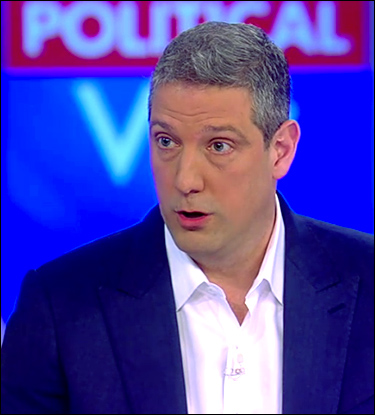
Sept. 21, 2021 — Saying he believes that former President Donald Trump “shouldn’t ever be president again,” sophomore Ohio Rep. Anthony Gonzalez (R-Rocky River) announced on Friday that he will not seek a third term in the House.

Rep. Gonzalez was one of 10 Republicans to support Trump’s second impeachment, and drew a strong Republican primary opponent as a result. Former President Trump responded to Gonzalez’s statement and decision with his own release saying, “1 down, 9 to go,” in reference to those Republican House members who supported removing him from office after the Jan. 6 Capitol invasion.

Gonzalez is the 19th member who will not be on the next election ballot for the US House seat he now holds, including the three vacancies to be filled in special elections. Of the 19, Republicans currently hold 10 seats as compared to nine for the Democrats. This is the first GOP opening with some competitive potential, however, though the Gonzalez decision will likely have a big impact upon the Ohio redistricting process currently under way within the state legislature in Columbus.

Former White House aide Max Miller had been Rep. Gonzalez’s top Republican competitor. Through the June 30 campaign financial disclosure period, Miller had raised just under $1 million ($951,520), but had only $533,153 remaining in cash-on-hand.

Despite Miller’s strong fundraising effort, Rep. Gonzalez still held the upper hand, reporting $1.22 million raised with over $1.5 million in the bank. Therefore, while the Miller challenge appeared formidable, it was not a foregone conclusion that he would have denied Rep. Gonzalez re-nomination had the congressman decided to continue running.

Rep. Gonzalez’s 16th Congressional District begins in the Westlake area to the west of Cleveland and stretches south toward the rural areas southwest of Canton. It then meanders to the northeast around Akron to end in the city of Edinburg.
Continue reading

Ohio Data: Below the Surface

By Jim Ellis

Sept. 10, 2021 — The London-based Redfield & Wilton Strategies international survey research firm tested electorates in several American states at the end of August, and today we look at their Ohio results. With a major open Senate campaign and a Republican governor seeking re-election in 2022, the Buckeye State is once again a national political focal point for the coming political year.

Ohio Rep. Tim Ryan announces his candidacy for the 2020 Presidential Election on the TV talk show, “The View.”

The Redfield & Wilton poll (Aug. 20-24; 1,200 likely Ohio voters) finds the Republican Senate candidates performing adequately opposite US Rep. Tim Ryan (D-Warren/Youngstown), who, at this early stage, has become the Democrats’ consensus statewide Senate contender.

Former state treasurer and 2012 US Senate candidate Josh Mandel (R) holds a 51-47 percent ballot test lead over Rep. Ryan within the sample segment who are self-identified as likely 2022 general election voters. Author J.D. Vance (R) largely falls into a dead heat with Ryan, trailing 37-36 percent, as does former Ohio Republican Party chair Jane Timken who places within two points of the congressman, 38-36 percent.

In the governor’s race, incumbent Republican Mike DeWine, who former Rep. Jim Renacci is challenging in the GOP primary from the ideological right, looks to be in strong shape against potential Democratic opponents. If Dayton Mayor Nan Whaley were the Democratic gubernatorial nominee, Gov. DeWine would post a 46-27 percent advantage. Should Cincinnati Mayor John Cranley become the Democratic nominee, he would trail the governor by a slightly larger 47-25 percent spread.

Generally, the Ohio polling pattern leans Democratic in the early going and then closes in the Republican candidates’ favor, while consistently understating GOP strength.

In the 2020 presidential election, Ohio polls in July of the election year were returning Joe Biden leads of 4-8 percentage points before former President Trump would rebound to score a mean average 1.0 percent polling lead close to election day, and then win the state going away with an eight-point margin, 53-45 percent. In 2016, the pattern was similar. In the July-September period, Hillary Clinton held leads of between 4 and 7 percentage points only to see the average favor Trump by a 2.2 percent spread. He would win the state 51-43 percent.

The same pattern occurred for Sen. Rob Portman (R) in 2016 and was present to a degree against Sen. Sherrod Brown (D) in 2018. In June through September of that year, certain polls found former Gov. Ted Strickland (D) leading incumbent Portman with a 3-6 point edge. As the race closed, Sen. Portman established an average 18-point lead and won 58-37 percent.

Even in a Democratic victory, the polling trend favoring Democrats early and then closing for the GOP toward election day was again present. During June-September of 2018, Sen. Brown held leads between 13-17 points. Going into the election, his polling average had slipped to 11 points, and he only won with a 6.4 percent margin.

Keeping this pattern in mind and then looking at the underlying Biden job approval numbers in the R&W poll suggests that even today, the GOP candidates are poised for a stronger finish than the current results yield. Overall, the Redfield & Wilton figures point to a 40:46 percent favorable to unfavorable presidential approval ratio for Biden, which isn’t particularly bad particularly in a state that the subject did not win. The underlying numbers, however, point to a much greater negative.

Continue reading

Brown, Carey Win In Ohio

Shontel Brown scored a convincing win in Ohio’s 11th District Democratic primary, virtually assuring her of a special general election victory on Nov. 2.

By Jim Ellis

Aug. 5, 2021 — Primary voters in two Ohio districts, for all intents and purposes, chose replacements Tuesday for resigned Reps. Marcia Fudge (D-Cleveland) and Steve Stivers (R-Columbus).

County Councilwoman and Cuyahoga County Democratic Party chair Shontel Brown scored a convincing win in the 11th District Democratic primary, virtually assuring her of a special general election victory on Nov. 2 in a seat that is safe for her party. Ohio Coal Association chairman Mike Carey did likewise in the 15th District Republican primary that occupies much of the Buckeye State’s southern sector.

Despite polling showing Brown trailing former state Sen. Nina Turner but consistently gaining momentum, it was obvious that the winner’s campaign peaked at precisely the right time. With 75,064 people voting in the Democratic primary, Brown scored a 50.2 – 44.5 percent victory. The other 11 candidates split the remaining 5.3 percent.

The 11th District contains most of the city of Cleveland in Cuyahoga County and part of Akron in Summit County. Brown’s Cuyahoga total percentage spread of 50.4 – 44.1 almost exactly mirrored the district-wide vote. Conversely, Turner scored a very tight 48.8 – 40.0 percent plurality in Summit County, a difference of just 54 votes.

Turner, the former national co-chair of the Bernie Sanders for President campaign attracted support from the Democratic socialist movement, including Rep. Alexandria Ocasio-Cortez (D-NY) and the Justice Democrats PAC. She began the campaign as almost a prohibitive favorite, leading by a 50-15 percent margin in a late May Tulchin Research organization survey. Once the final financial totals are known, it will be clear that Turner outspent the winner by a better than 2:1 margin.

Brown, receiving backing from the more establishment-oriented Democrats including House Majority Whip Jim Clyburn (D-SC), the Congressional Black Caucus, and former Secretary of State and 2016 Democratic presidential nominee Hillary Clinton, among others, began to chip away at the former state legislator’s lead about six weeks before the election and made steady gains through the closing period as polling highlighted.

The race’s most recent survey, from the Mellman Group (July 13-17; 400 OH-11 likely voters), gave Turner only a 41-36 percent advantage. A poll generally scoffed at in early July, from the Republican firm TargetPoint, found the two candidates tied at 33 percent. In the end, it was TargetPoint that proved closest to the final mark.

On the Republican side, with just 5,299 voters participating, community activist Laverne Gore was an easy winner, capturing 74 percent support. The Nov. 2 special election is now just a formality in the heavily Democratic district, however, and Brown can count on being sworn into the House toward the end of this year.

In his victory speech, 15th District Republican primary winner Mike Carey gave a large portion of the credit to former President Donald Trump who endorsed him in a crowded field of eleven candidates. “Tonight, the voters of the 15th Congressional District sent a clear message to the nation that Donald J. Trump is, without a doubt, the clear leader of our party,” Carey began his victory speech before his victory party supporters.

Continue reading

Ohio Specials Today

Ohio’s Congressional Districts

By Jim Ellis

Aug. 3, 2021 — Though the two Ohio special congressional elections won’t officially be decided until the Nov. 2 general election, today’s nomination contest in both the vacant 11th and 15th congressional districts will unofficially choose the succeeding representatives in the respective Democratic and Republican primary elections.

District 11, the vacated Cleveland-Akron seat because former Rep. Marcia Fudge (D-Cleveland) resigned to accept her appointment as Housing & Urban Development Secretary, is a solidly Democratic seat (Biden ’20: 80-19 percent; Clinton ’16: 80-17 percent). Though yielding a Democratic primary of 13 candidates, the race is boiling down to a two-way contest between former state senator and 2020 Bernie Sanders for president national co-chair Nina Turner and Cuyahoga County councilwoman and local Democratic Party chair Shontel Brown.

The 15th District lies in southern Ohio and contains some of the south Columbus suburbs of Franklin County along with 11 largely rural counties southwest, south, and southeast of the state’s capital city. The former incumbent here, Steve Stivers (R-Columbus), resigned his office in May to accept a position as president/CEO of the Ohio Chamber of Commerce. This, after testing the waters for a US Senate run. OH-15 is a reliable Republican district (Trump ’20: 56-42 percent; Trump ’16: 55-40 percent) that has grown more conservative over time.

Originally, it appeared that former Sen. Turner was a lock in the 11th District. She had big leads in polling and fundraising, but in the past six weeks, Brown has made major strides. While the latest polling still projects her trailing just outside the polling margin of error, the prevailing political trend is definitively moving in the local official’s direction.

This race is also shaping up as a battle between the two major factions within today’s Democratic Party: the Democratic socialists, led by Independent Sen. Bernie Sanders (I-VT), Reps. Alexandria Ocasio-Cortez (D-NY), Ilhan Omar (D-MN), and the political action committee known as the Justice Democrats, opposite the national party establishment featuring such individuals as House Majority Whip Jim Clyburn (D-SC), the Congressional Black Caucus leadership, and Hillary Clinton.

While keeping her ads positive, some of Brown’s outside supporters, namely the Democratic Majority for Israel PAC, have highlighted public comments Turner previously made about President Biden, Vice President Harris, all before they were elected to their present positions, and the Democratic Party in general. Conversely, Brown’s campaign ads highlight her strong support for President Biden and his stated policy agenda.

Continue reading

Ohio Specials Prelude

By Jim Ellis

OH-11

July 28, 2021 — Voters in north Texas went to the polls yesterday to decide the double-Republican runoff in their state’s vacant 6th District, but there is unfolding action in the two Ohio special elections right now. The Buckeye State’s vacant CD’s will culminate with partisan primary elections next week, on Aug. 3.

First, the Mellman Group, polling for the Democratic Majority for Israel PAC (July 13-17; 400 OH-11 likely Democratic primary voters, live interview), sees the multi-candidate contest in the Cleveland-Akron seat that has evolved into a race between two candidates getting even closer.

Mellman’s ballot test finds former state senator and ex-Bernie Sanders for president national co-chair Nina Turner leading Cuyahoga County ouncilmember and local Democratic Party chair Shontel Brown by a tightening 41-36 percent spread with the momentum again flowing toward the latter woman. The remaining 11 candidates all split an aggregate five percent, with the remainder categorized as undecided/don’t know/refused to answer.

We can expect a very active final week as the candidates continue attempting to convince their voters to cast early ballots or visit the polls a week from tomorrow. The eventual Democratic nominee will become the prohibitive favorite heading into the Nov. 2 special general election. The winner will replace former Rep. Marcia Fudge (D-Cleveland) who resigned the seat upon her confirmation as Housing & Urban Development Secretary in President Biden’s cabinet.

Mellman’s most recent effort delivered the closest result from a Democratic polling firm. Compared to their June poll, Brown is the beneficiary of a net 19-point swing. In the June poll, Mellman found a 50-26 percent spread in favor of Turner. In early July, Normington Petts, polling for the Brown campaign, also detected movement toward their client. They forecast a 43-36 percent result, certainly in the same realm as the Mellman poll conducted more than a week later. The original Mellman poll came in April and found Turner more than doubling Brown’s support, at 42-19 percent.

The primary campaign is dividing along the past Democratic primary presidential lines. The Bernie Sanders’ group, including the candidate himself, has endorsed Turner, along with the Justice Democrats PAC associated with Rep. Alexandria Ocasio-Cortez (D-NY) and their individual congressional supporters.

Continue reading

OH-11: Special Election Tightening

By Jim Ellis

OH-11

July 14, 2021 — For most of the special election campaign to replace Housing & Urban Development Secretary Marcia Fudge in her vacated US House district, it appeared that former state senator and Bernie Sanders for President 2020 national co-chair Nina Turner was a lock for the Democratic nomination. As the contest steams toward an Aug. 3 special Democratic primary election date it appears, however, that the political battle is far from over.

Cuyahoga County Councilmember and County Democratic Party chair Shontel Brown is making major strides that have come to the surface in the past two weeks. According to a just-released Normington Petts survey for the Brown campaign (July 5-8; 400 OH-11 likely Democratic special primary election voters, live interview), ex-Sen. Turner now holds only a 43-36 percent margin over Brown with the 11 minor Democratic candidates splitting the remaining 7 percent preference total.

In the firm’s first poll of this race back in April, Turner led Brown, 42-10 percent. As Jill Normington notes in her released polling synopsis, the latest results find Brown gaining 26 support percentage points between the time the two Normington Petts polls were conducted as compared to just one for Turner.

With recently announced endorsements from Hillary Clinton, House Majority Whip Jim Clyburn (D-SC), Buckeye State 2018 gubernatorial nominee Richard Cordray, Ohio US Rep. Joyce Beatty (D-Columbus), the Congressional Black Caucus, and 18 local mayors, in addition to an impressive array of community, religious, and labor leaders from the district, it appears Brown is gaining serious momentum with three weeks remaining in the primary cycle.

Turner has her own strong support organization, too, most notably from Cleveland Mayor Frank Jackson, state Senate Minority Leader Kenny Yuko, former Ohio Democratic Party chairman David Pepper, and the Justice Democrats led by New York Rep. Alexandria Ocasio-Cortez. Turner also draws support from her own group of a dozen Ohio state legislators and many local officials, along with a large number of Cleveland and Akron community and religious leaders.

Originally, Turner was lapping the entire field in terms of money raised and spent. Now, however, Brown has caught her in this area, too. According to the Daily Kos Elections site, Turner has spent $1.2 million in the campaign as compared to Brown’s $617,000, but they also track another $475,000 coming in from an outside negative ad expenditure targeted against Turner from the Democratic Majority for Israel organization.
Continue reading

Pew’s Post-Election Findings

By Jim Ellis

The candidates in action at the first presidential debate in Cleveland, Ohio: President Donald Trump (left) and former vice president Joe Biden.

July 8, 2021 — The Pew Research Center conducted a post-election poll and spent seven months developing their conclusions. On the last day of June, they publicized their report.

The study, conducted just after the November election (Nov. 7-12; 11,818 individuals through groups of screened panelists, online) was exhaustive.

Quoting the methodology description, “noncitizens and those who refused the citizenship question (N=450), voters who refused to answer the vote choice question (N=84) and panelists who declined to provide their names and thus could not be matched to a voter record (N=139) were removed, leaving 11,145 panelists for analysis.” Of this latter number, 9,668 respondents were validated as voters, meaning the research team verified with a local election office that the particular individual had in fact voted.

The basic voter segmentation conclusions were speculated upon in most media sectors during the early post-election period, but this research validates and expands upon the discovered patterns. Largely, President Biden received a significant boost from suburban voters, which proved the major difference in his increasing Democratic popular vote performance.

Despite losing the popular vote by a substantial margin, former President Trump surprisingly improved his standing with several groups such as Hispanics, Asians, black men, young voters, and women, but not to the degree necessary to counter Biden’s strength with suburban voters.

For example, among suburban voters, according to the Pew research, Biden recorded 54 percent support as compared to Hillary Clinton’s 45 percent in the 2016 election. Conversely, Trump only carried white voters 51-47 percent in the most current election, a major reduction from the 54-38 percent spread he posted four years earlier.

While Trump declined in the suburbs, his performance among rural voters was even stronger than his 2016 benchmark. In 2020, Trump’s percentage among rural voters rose to 65 percent from his 59 percent previous showing. Additionally, rural female voters largely account for his overall increase among women as he moved from 39 percent in ’16 to 44 percent in 2020.

Continue reading

Stansbury Wins New Mexico Special

By Jim Ellis

New Mexico state Rep. Melanie Stansbury (D), winner of Tuesday’s special election.

June 3, 2021 — The New Mexico special election went as expected Tuesday, as state Rep. Melanie Stansbury (D-Albuquerque) defeated state Sen. Mark Moores (R-Albuquerque) by a 60-36 percent count, which is consistent with the partisan early vote turnout.

The overall participation factor exceeded 131,000 voters, or 28.2 percent of the district’s registered voter universe, which is relatively high for a special election. It appears that over 70 percent of the people participating in the electoral contest cast an early ballot.

Stansbury, twice elected to the state House of Representatives, was victorious in the special Democratic district convention whose delegates were empowered with choosing a party nominee to replace resigned Rep. Deb Haaland (D-Albuquerque). Haaland vacated the House upon being confirmed as US Interior Secretary in the Biden cabinet.

The Stansbury congressional victory margin came from population-dominant Bernalillo County, where more than 90 percent of the CD-1 residents live. Stansbury captured 61 percent of the vote here. In the smaller rural counties, Moores took three of four, but the aggregate vote total from each of those entities was individually less than 2,500 cast ballots.

The Democratic mean average in the seat since partisan conversion in 2008 is 58.2 percent, so Stansbury ran about two points above the benchmark. The state’s current governor, Gov. Michelle Lujan Grisham, represented the 1st District for three terms and scored the single-highest Democratic election percentage during the 13-year post-conversion period. She tallied 65.1 percent in 2016, the same election in which Hillary Clinton posted a 52-35 percent CD-1 result and 48-40 percent statewide.

Continue reading

NM-1 Special Election Tuesday

New Mexico state Rep. Melanie Stansbury (D)

By Jim Ellis

June 2, 2021 — The latest in the series of special elections to fill US House vacancies was held yesterday, and the race has an obvious favorite.

On the ballot: state Rep. Melanie Stansbury (D-Albuquerque); state Sen. Mark Moores (R-Albuquerque); ex-Land Commissioner Aubrey Dunn, a former Republican who is running as an Independent; and Libertarian Party nominee Chris Manning.

The major parties nominated their candidates in special convention soon after incumbent Rep. Deb Haaland (D-Albuquerque) resigned to accept her appointment as Interior Secretary in President Biden’s cabinet.

Rep. Stansbury prevailed in a close multi-candidate Democratic convention, ultimately defeating state Sen. Antoinette Sedillo Lopez (D-Albuquerque) in a final round of delegate voting. Many believed winning the Democratic convention was tantamount to claiming the special election. Sen. Moores was an easy winner on the Republican side.

All indications pointed to a Stansbury victory, which is what played out last evening. The only recent publicly released poll before yesterday’s election, one that RRH Elections conducted (May 18-21; 555 likely NM-1 voters, interactive voice response system), found the Democratic nominee holding a 49-33 percent lead over Moores.

Secondly, the district has moved sharply to the left over the past decade, as the 2016 and 2020 presidential elections suggest. In the ’16 campaign, Hillary Clinton defeated Donald Trump here, 52-35 percent. This past November, the Biden margin over ex-President Trump soared to 60-37 percent. The last Republican to represent the 1st District was former Rep. Heather Wilson (R-Albuquerque) who left the House in 2008 to run unsuccessfully for US Senate.

Continue reading

A Special Election Look-In

By Jim Ellis

May 26, 2021 — The Albuquerque, New Mexico vacant US House seat will be filled on June 1, and a new RRH Elections survey finds the Democratic nominee holding a strong advantage. In Texas, There is no mystery as to which party will win the July 27 special runoff election in North Texas to replace the late Rep. Ron Wright (R-Arlington), but which Republican claims the vacant seat is certainly getting more interesting. We take a look at both races.

NM-1

The RRH Elections poll (May 18-21; 555 NM-1 special election voters and those intending to vote, interactive voice response system and online), finds state Rep. Melanie Stansbury (D-Albuquerque) leading state Sen. Mark Moores (R-Albuquerque), 49-33 percent.

The numbers make sense when overlaying the 1st District voting history. Former Rep. Deb Haaland (D-Albuquerque) naturally resigned the seat after being nominated and confirmed as US Interior Secretary in the Biden Administration weeks after winning re-election to a second term. Her victory percentage was 58, after claiming her first term in 2018 with a 59-36 percent margin.

At one time during the century, the 1st was politically competitive – former Rep. Heather Wilson (R-Albuquerque) held the seat for five terms, ending when she ran unsuccessfully for the US Senate in 2008, for example – but a weakened New Mexico Republican Party and a stronger Democratic composition from redistricting has taken the seat off the board.

President Biden carried the district over former President Trump, 60-37 percent, after Hillary Clinton won here in 2016 with a lower but still comparatively strong 52-35 percent spread. Testing President Biden’s current job approval rating, RRH finds him recording a 57:39 percent favorable to unfavorable ratio, which is similar to his 2020 vote performance. This consistency gives the RHH polling data further credibility.

In terms of finances, Stansbury had raised $1.2 million through the May 12 pre-primary reporting period, with $525,000 cash-on-hand as of that date. Sen. Moores, by contrast, had obtained $595,000 with $125,000 in the bank. His receipts total includes a $200,000 personal loan.

Continue reading