Category Archives: Polling

Florida Polling – What to Expect

By Jim Ellis

Aug. 20, 2021 — Two pollsters released Florida ballot test data yesterday, and the combined results are a likely prelude of what we can expect from the vast multitude of survey research firms that will be testing the Sen. Marco Rubio – Rep. Val Demings general election campaign in the coming year.

Florida Sen. Marco Rubio (R)

Susquehanna Polling & Research (Aug. 4-10; 700 registered Florida voters, live interview) posted their survey result, which found Sen. Rubio topping Rep. Demings by a relatively substantial 50-39 percent clip.

This was immediately countered by a St. Pete Polls survey conducted later in the month (Aug. 16-17; 2,068 registered Florida voters, online) that sees the race already dropping into a virtual dead heat, with Sen. Rubio only holding a two-point edge, 48-46 percent.

Florida polling history suggests we will see this type of divergent pattern among pollsters probably until the next election. In Sen. Rubio’s 2016 re-election race, for example, where he defeated then-Rep. Patrick Murphy (D) with an eight-point victory spread (52-44 percent), most of the pollsters were forecasting a much closer finish.

During the period from Oct. 25 through election day 2016, 11 polls were released covering the Rubio-Murphy race according to the Real Clear Politics polling archives, and while all but one correctly predicted Sen. Rubio would win re-election, only five were within the correct final margin range. The others were forecasting a very close Rubio win of between a virtual tie and four percentage points.

Looking at the Biden-Trump 2020 Florida aggregate research studies tells a similar tale. Again, beginning with polling occurring from Oct. 25 through the election, 19 Florida presidential ballot test polls were published. Only six of the 19 correctly predicted a Trump Florida victory and all of those were close to the final margin of 3.3 percentage points. One of the pollsters who called this race almost exactly was Susquehanna Polling & Research. St. Pete Polls missed, wrongly projecting a close Biden win.

Looking at the FiveThirtyEight statistical organization’s polling firms rating chart, Susquehanna and St. Pete Polls are at parity. Susquehanna rates as the 92nd firm of the top 100, while St. Pete finishes three slots behind them at number 95. Both receive an accuracy letter grade of B+.

Continue reading →

Virginia Polling: Still Close

By Jim Ellis

Aug. 18, 2021 — The co/efficient polling organization has conducted two surveys in the Virginia governor’s race within the last month and both continue to find a toss-up race.

Former Virginia governor, Terry McAuliffe (D)

While the Glenn Youngkin (R) campaign has so far not defined former Gov. Terry McAuliffe (D) in definitive contrasting terms — something that must occur if the Republican is to remain in victory range from a state that is cutting against his party — the numbers still remain close.

In co/efficient’s first August poll, taken for the Virginia Conservatives for Clean Energy organization (July 25-27; 762 likely Virginia voters, interactive voice response system and text), McAuliffe’s lead was 45-40 percent. Six polls, from five different pollsters have been released in this race, and all show both candidates within the 40s. The first co/efficient survey, incidentally, returns the lowest individual support numbers for both candidates.

The second co/efficient survey, released yesterday according to The Hill newspaper (Aug. 8-9; 1,200 likely Virginia voters, interactive voice response system and text), sees a closer ballot test, 47-45 percent in favor of McAuliffe, again returning similar results with their previous study and consistent with all other public polling beginning with WPA Intelligence’s release in early June (McAuliffe 48-46 percent).

Averaging all six public ballot test results, McAuliffe scores a mean of 46.5 percent as compared to Youngkin’s 43.2 percent, which tells us that a group of professional polling teams finds the race as a virtual dead heat with the former governor holding a slight edge. These margins are similar to the 47.7 – 45.2 percent final result that McAuliffe recorded over Republican Ken Cuccinelli in their 2013 governor’s race.

The 2021 race could actually be even closer. Since polling in the past several elections has tended to understate Republican support typically by two or so percentage points, the idea that the current race is nip-and-tuck is even further supported. Additionally, looking at the Democratic primary election, just over 34,000 less people voted in the 2021 Democratic primary than did in 2017. This is opposite of almost all other elections during the same time period that find drastically increased voter turnout percentages.

McAuliffe has already been tying Youngkin to former President Donald Trump, attempting to paint him as an extremist and linking him to a national candidate who fared poorly in Virginia both in 2016 and 2020.

Continue reading →

New Poll Again Shows Tight
Numbers in Georgia Senate Race

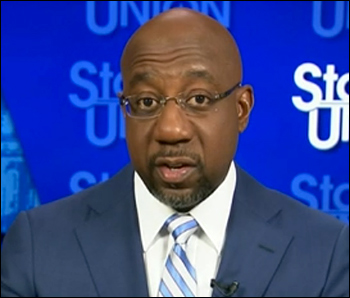
Georgia freshman Sen. Raphael Warnock (D)

By Jim Ellis

Aug. 11, 2021 — Late last week, Public Policy Polling released their new Georgia Senate findings (Aug. 4-5; 622 Georgia voters, interactive voice response system) and the results place the new Peach State Senate race in familiar territory: a virtual tie.

While PPP finds that freshman Sen. Raphael Warnock (D) leads three tested Republican potential nominees, former Sen. Kelly Loeffler, retired football star Herschel Walker, and three-term state Agriculture Commissioner Gary Black, only when paired against Black does Warnock’s edge extend beyond the polling margin of error. This early poll suggests what the conventional political wisdom already predicts, that the 2022 Senate race will again feature a close finish.

To reiterate, Sen. Warnock, though winning his seat only in 2020, must run for a full six-year term next year because he won the special election to fill the unexpired portion of former Sen. Johnny Isakson’s (R) final term. You will remember that Sen. Isakson resigned at the end of 2019 due to health reasons and Gov. Brian Kemp (R) appointed Loeffler to fill the seat until the special election was conducted.

The PPP results find Walker, who has yet to announce (and it’s still even unclear as to whether he will run), in the best position of the three tested potential candidates. In this poll, Sen. Warnock’s edge is 48-46 percent. Loeffler fares comparably with Walker, though slightly worse, trailing 44-47 percent. Commissioner Black, the only officially announced candidate of the group, falls behind by eight percentage points, 38-46 percent.

The favorability indexes provide further clues. Keeping in mind that almost everyone tends to skew negatively on the PPP favorability scores, the two benchmarks, President Biden and former President Trump, score 46:48 percent favorable to unfavorable and 43:48 percent, respectively. Sen. Warnock posts a 43:42 percent job approval score. Walker, obviously exclusively due to the personal recognition coming from both his college and professional football career, has the best result: 41:28 percent. Loeffler fares poorly: 28:47 percent, while Commissioner Black is an even split at 15:15 percent; still, that means 70 percent of the voters don’t have enough information about him to form an opinion.

These numbers provide us with several conclusions: first, Sen. Warnock has yet to establish himself beyond a partisan framework. The 85:8 percent score among Democrats carries his overall positive mark. He records a predictable 6:78 percent mark among Republicans, but perhaps most indicative, just 33:45 percent among those classifying themselves as political Independents.

Continue reading →

Newsom Recall Shock Poll

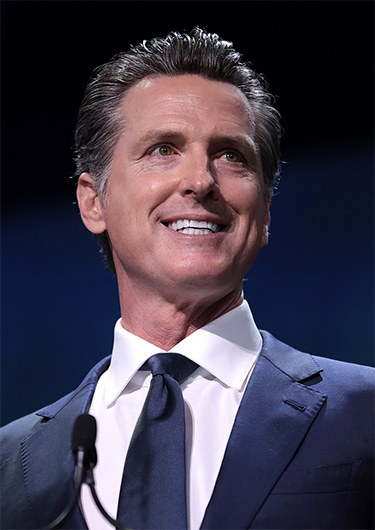
Embattled California Gov. Gavin Newsom (D)

By Jim Ellis

Aug. 10, 2021 — A stark new poll was released for the Sept. 14 California recall campaign, and the surprising results project Gov. Gavin Newsom (D) falling well behind in his battle to remain in office.

While several polls released in the past 10 days showed a weakening of Newsom’s position, the new Survey USA data (Aug. 2-4; 1,100 California adults, 888 registered California voters, 613 likely California recall election voters, 545 California voters who say they will answer the replacement candidate question; online) reveals a more extreme result.

Asked whether the sample of registered California voters would vote to recall the governor, for the first time, a 51 percent majority said they would. Those who support retaining him numbered only 40 percent.

Republicans, a distinct minority in the state but a more motivated group for this election, would vote to recall in an 8:1 ratio. Conversely, Democrats unsurprisingly favor retaining the governor, but by a smaller 3:1 ratio.

The S-USA poll sees a potentially very serious problem for Newsom in the independent category. By a 50-33 percent majority, the non-affiliated respondents would vote to remove him from office. Should this finding prove accurate, Newsom would be in danger of losing his position.

A major difference lies between those saying they are “certain” and “likely” to vote. The certain voters break 57-39 percent in favor of removal; the likely category: 43-36 percent for retention.

Differing patterns arise among racial segments. Whites heavily favor removal, 56-35 percent. Hispanics, by a 47-41 percent margin, do as well. Blacks and Asians are overwhelmingly in Gov. Newsom’s corner, however. Asians favor retention, 62-25 percent, while the small segment of blacks tested are virtually unanimous in their support for the governor.

Survey USA also segmented those claiming to be vaccinated, and those who do not. The unvaccinated, unsurprisingly, are overwhelmingly for the recall, 67-27 percent. Even a plurality of the vaccinated segment, however, also favors the recall: 47-43 percent.

The S-USA pollsters also identified reasons why those supporting the recall are doing so. Most of the responses center around how Newsom has handled the COVID-19 issue. A total of 34 percent said they are voting to recall because of “COVID issues.” Another 18 percent said the state spending is the main reason for their vote to remove Newsom. The unemployment compensation issue, and Newsom’s handling of it, was the significant reason motivating 12 percent of “yes” vote respondents (the position that supports removing the governor from office).

Continue reading →

Alaska Senate: A Re-Emergence

By Jim Ellis

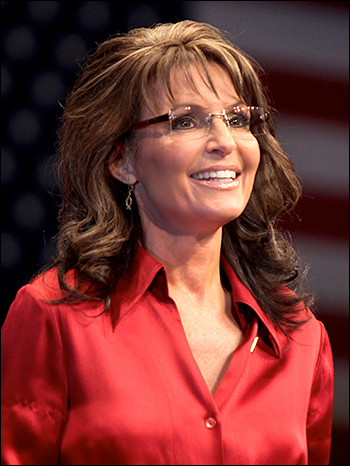
Sarah Palin, former Alaska governor and vice presidential candidate

Aug. 4, 2021 — The Alaska Survey Research firm released a new Alaska Senate poll finding Sen. Lisa Murkowski (R) improving her standing, but an even more drastic potential development has surfaced.

The poll (July 11-21; 947 registered Alaska voters, online) shows Sen. Murkowski posting her best numbers of the year, leading former State Administration Commissioner Kelly Tshibaka (R), 36-27 percent. Tshibaka, already the candidate who the Alaska Republican Party and former President Donald Trump have officially endorsed, was leading the senator in earlier published surveys (Change Research: May 22-25; 1,023 likely Alaska voters, Tshibaka 39-19 percent. Cygnal: released March 29; 500 registered Alaska voters, Tshibaka 34-19 percent).

In the July ASR poll, state Sen. Elvi Gray-Jackson (D-Anchorage) and former Senate nominee Joe Miller (R/Libertarian) trailed the two leaders with 19 and 18 percent, respectively. Under Alaska’s new top-four primary system, all four of these candidates, however, would advance into the general election.

In even better news for Sen. Murkowski, the ASR poll tested her against Tshibaka in a head-to-head match-up and the incumbent would defeat the challenger, 55-45 percent. The bad news for Murkowski is the new Alaska voting system will not allow for such a pairing. Beginning with the 2022 election, all candidates run on a jungle primary ballot in the Aug. 16, 2022, nomination contest and the top four contenders, regardless of percentage attained will advance into the general election. Therefore, testing for a one-on-one ballot test should no longer be applicable in analyzing the Alaska electoral system.

Beyond the poll, a new development could be on the Alaska political horizon. Over the weekend, former Alaska governor and 2008 vice presidential nominee, Sarah Palin, addressed a group of evangelical Christian leaders. Asked if she would run for the Senate, Palin retorted, “if God wants me to run for the US Senate next year, I will.” She then, however, scolded the leaders saying, “I would say you guys better be there for me this time, because a lot of people were not there for me last time.”

Continue reading →

Poll: Newsom in Trouble

By Jim Ellis

California Gov. Gavin Newsom (D)

July 30, 2021 — The University of California at Berkeley’s Institute of Governmental Studies released their latest Golden State survey that finds Gov. Gavin Newsom’s (D) strength in the upcoming recall election dissipating.

According to UC Berkeley, among likely voters, 47 percent would vote to recall Gov. Newsom and 50 percent would not, clearly the closest ballot test result seen to date. The recall election is scheduled for Sept. 14, and voters will first choose whether to remove the governor from office before choosing a replacement among 46 ballot qualified candidates. The replacement candidates’ votes count only if a majority supports removing the subject from office, in this case Gov. Newsom.

The Berkeley poll (July 18-24; 5,795 registered California voters; 3,266 likely California recall election voters, online) finds Newsom in trouble only among likely voters, those screened as almost certain to participate in the recall election. Within the entire polling sample, he returns to safe territory as the respondents break only 36-51 percent for removing him from office.

The major difference is partisanship. The parties, as one might guess, break in polarized fashion. A total of 91 percent of Democrats would vote against the recall while 95 percent of Republicans favor removal.

The independent and minor party sectors become interesting, however. Among the large No Party Preference group, 46 percent would vote to recall Newsom and 50 percent would not. The combined minor parties, which only account for approximately six percent of the electorate are breaking hard for the recall position. Within the minor party segment, 68 percent would vote to remove as compared to only 30 percent supporting the retain option.

Among Republicans, 90 percent say they are enthusiastic about the election, while 58 percent of Democrats say the same. Among the substantial segment in the “No Party Preference” or independent category, 53 percent say they are enthusiastic.

The polling analysis suggests that the governor’s fundamental problem is that Democrats are “almost unanimous” in their belief that he will win the recall election. This substantially explains the Democrats’ lack of solid enthusiasm for the irregular Sept. 14 stand-alone election.

Continue reading →

Ohio Specials Prelude

By Jim Ellis

OH-11

July 28, 2021 — Voters in north Texas went to the polls yesterday to decide the double-Republican runoff in their state’s vacant 6th District, but there is unfolding action in the two Ohio special elections right now. The Buckeye State’s vacant CD’s will culminate with partisan primary elections next week, on Aug. 3.

First, the Mellman Group, polling for the Democratic Majority for Israel PAC (July 13-17; 400 OH-11 likely Democratic primary voters, live interview), sees the multi-candidate contest in the Cleveland-Akron seat that has evolved into a race between two candidates getting even closer.

Mellman’s ballot test finds former state senator and ex-Bernie Sanders for president national co-chair Nina Turner leading Cuyahoga County ouncilmember and local Democratic Party chair Shontel Brown by a tightening 41-36 percent spread with the momentum again flowing toward the latter woman. The remaining 11 candidates all split an aggregate five percent, with the remainder categorized as undecided/don’t know/refused to answer.

We can expect a very active final week as the candidates continue attempting to convince their voters to cast early ballots or visit the polls a week from tomorrow. The eventual Democratic nominee will become the prohibitive favorite heading into the Nov. 2 special general election. The winner will replace former Rep. Marcia Fudge (D-Cleveland) who resigned the seat upon her confirmation as Housing & Urban Development Secretary in President Biden’s cabinet.

Mellman’s most recent effort delivered the closest result from a Democratic polling firm. Compared to their June poll, Brown is the beneficiary of a net 19-point swing. In the June poll, Mellman found a 50-26 percent spread in favor of Turner. In early July, Normington Petts, polling for the Brown campaign, also detected movement toward their client. They forecast a 43-36 percent result, certainly in the same realm as the Mellman poll conducted more than a week later. The original Mellman poll came in April and found Turner more than doubling Brown’s support, at 42-19 percent.

The primary campaign is dividing along the past Democratic primary presidential lines. The Bernie Sanders’ group, including the candidate himself, has endorsed Turner, along with the Justice Democrats PAC associated with Rep. Alexandria Ocasio-Cortez (D-NY) and their individual congressional supporters.

Continue reading →

TX-6 Special Election Today

By Jim Ellis

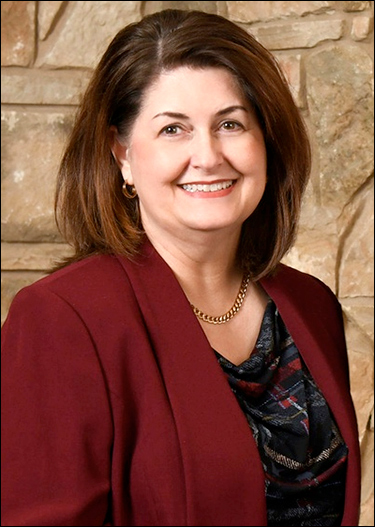
Susan Wright, favored in today’s TX-6 special election

July 27, 2021 — The late Texas US Rep. Ron Wright’s (R-Arlington) replacement will be chosen today as the double-Republican special congressional runoff election draws to a conclusion. The late congressman’s widow, Susan Wright (R), is favored over state Rep. Jake Ellzey (R-Waxahachie), but low turnout elections often produce surprising results.

From a partisan context, the race is anti-climactic since we already know a Republican will claim the seat and expand the House Republican conference total to the 212 mark. Democrats hold 220 seats.

Two more vacant House seats will largely be decided next Tuesday when voters in two Ohio districts will go to the polls in partisan primary contests. In each case, winning the party nomination is virtually tantamount to claiming the seat, so it is highly likely that the two parties will split the elections. The Ohio nominees, however, will have to wait until Nov. 2 for their final vote. The special election season will conclude on Jan. 11, 2022, when South Florida voters will choose a successor to the late Rep. Alcee Hastings (D-Delray Beach) in the state’s 20th District.

As is generally the case in special elections, voter turnout is the critical factor. The Texas Secretary of State has released the 6th District early voting participation numbers, and we see 20,534 ballots having been cast through July 23. In the May 1 jungle primary election, 45,259 people voted early, or 57.7 percent of the total voting universe for that election (78,471).

So far in this runoff, only 4.2 percent of the registered voter universe of 493,077 individuals have cast their ballot. Considering that 65.4 percent of Ellzey’s vote came via early voting in the special primary as compared to 47.2 percent for Wright, the low early totals should prove a benefit to the latter candidate.

Continue reading →

VA-Gov: Still Polling Close

Former Virginia governor, Terry McAuliffe

By Jim Ellis

July 15, 2021 — A new Trafalgar Group poll was released this week on the 2021 Virginia governor’s campaign, and the results supported data from two other pollsters that we analyzed in June.

The Trafalgar numbers (July 8-10; 1,104 likely Virginia voters, combination live interview and online) give former Virginia governor and ex-Democratic National Committee chairman Terry McAuliffe a slight 47-45 percent edge over retired hedge fund CEO Glenn Youngkin (R) in a political contest that is much closer than analysts would have foretold at the very beginning of this election cycle.

The Trafalgar results were consistent with those found in June from WPA Intelligence (June 2-6; 508 likely Virginia voters, live interview) and JMC Analytics (June 9-12; 550 likely Virginia voters, live interview). In those surveys, McAuliffe held leads of 48-46 percent (WAPi) and 46-42 percent (JMC). Therefore, we see virtually no change within the five-week period, which has to be considered good news for underdog Youngkin.

None of the three polls published a geographic segmentation, which would have been interesting since Youngkin must hit certain benchmarks in the state’s most populous areas if he is to score an upset. All of these regions have been moving decidedly Democratic in the most recent elections.

Alternatively, if we look at the most competitive previous election result, one that elected McAuliffe, we can begin to pinpoint how the current race must form and if we are to see a Republican upset.

The first clue that a close race might develop came in this year’s Democratic primary held on June 8. Turnout, when compared with the 2017 primary that nominated current Gov. Ralph Northam in a lightly competitive race, reached 542,858. This year, the Democratic participation number fell by more than 34,000 voters to 508,616. This may suggest a lesser enthusiasm factor within the Democratic base for McAuliffe’s rerun campaign.

Continue reading →

OH-11: Special Election Tightening

By Jim Ellis

OH-11

July 14, 2021 — For most of the special election campaign to replace Housing & Urban Development Secretary Marcia Fudge in her vacated US House district, it appeared that former state senator and Bernie Sanders for President 2020 national co-chair Nina Turner was a lock for the Democratic nomination. As the contest steams toward an Aug. 3 special Democratic primary election date it appears, however, that the political battle is far from over.

Cuyahoga County Councilmember and County Democratic Party chair Shontel Brown is making major strides that have come to the surface in the past two weeks. According to a just-released Normington Petts survey for the Brown campaign (July 5-8; 400 OH-11 likely Democratic special primary election voters, live interview), ex-Sen. Turner now holds only a 43-36 percent margin over Brown with the 11 minor Democratic candidates splitting the remaining 7 percent preference total.

In the firm’s first poll of this race back in April, Turner led Brown, 42-10 percent. As Jill Normington notes in her released polling synopsis, the latest results find Brown gaining 26 support percentage points between the time the two Normington Petts polls were conducted as compared to just one for Turner.

With recently announced endorsements from Hillary Clinton, House Majority Whip Jim Clyburn (D-SC), Buckeye State 2018 gubernatorial nominee Richard Cordray, Ohio US Rep. Joyce Beatty (D-Columbus), the Congressional Black Caucus, and 18 local mayors, in addition to an impressive array of community, religious, and labor leaders from the district, it appears Brown is gaining serious momentum with three weeks remaining in the primary cycle.

Turner has her own strong support organization, too, most notably from Cleveland Mayor Frank Jackson, state Senate Minority Leader Kenny Yuko, former Ohio Democratic Party chairman David Pepper, and the Justice Democrats led by New York Rep. Alexandria Ocasio-Cortez. Turner also draws support from her own group of a dozen Ohio state legislators and many local officials, along with a large number of Cleveland and Akron community and religious leaders.

Originally, Turner was lapping the entire field in terms of money raised and spent. Now, however, Brown has caught her in this area, too. According to the Daily Kos Elections site, Turner has spent $1.2 million in the campaign as compared to Brown’s $617,000, but they also track another $475,000 coming in from an outside negative ad expenditure targeted against Turner from the Democratic Majority for Israel organization.
Continue reading →