Category Archives: Polling

VA-Gov: Still Polling Close

Former Virginia governor, Terry McAuliffe

By Jim Ellis

July 15, 2021 — A new Trafalgar Group poll was released this week on the 2021 Virginia governor’s campaign, and the results supported data from two other pollsters that we analyzed in June.

The Trafalgar numbers (July 8-10; 1,104 likely Virginia voters, combination live interview and online) give former Virginia governor and ex-Democratic National Committee chairman Terry McAuliffe a slight 47-45 percent edge over retired hedge fund CEO Glenn Youngkin (R) in a political contest that is much closer than analysts would have foretold at the very beginning of this election cycle.

The Trafalgar results were consistent with those found in June from WPA Intelligence (June 2-6; 508 likely Virginia voters, live interview) and JMC Analytics (June 9-12; 550 likely Virginia voters, live interview). In those surveys, McAuliffe held leads of 48-46 percent (WAPi) and 46-42 percent (JMC). Therefore, we see virtually no change within the five-week period, which has to be considered good news for underdog Youngkin.

None of the three polls published a geographic segmentation, which would have been interesting since Youngkin must hit certain benchmarks in the state’s most populous areas if he is to score an upset. All of these regions have been moving decidedly Democratic in the most recent elections.

Alternatively, if we look at the most competitive previous election result, one that elected McAuliffe, we can begin to pinpoint how the current race must form and if we are to see a Republican upset.

The first clue that a close race might develop came in this year’s Democratic primary held on June 8. Turnout, when compared with the 2017 primary that nominated current Gov. Ralph Northam in a lightly competitive race, reached 542,858. This year, the Democratic participation number fell by more than 34,000 voters to 508,616. This may suggest a lesser enthusiasm factor within the Democratic base for McAuliffe’s rerun campaign.

Continue reading

OH-11: Special Election Tightening

By Jim Ellis

OH-11

July 14, 2021 — For most of the special election campaign to replace Housing & Urban Development Secretary Marcia Fudge in her vacated US House district, it appeared that former state senator and Bernie Sanders for President 2020 national co-chair Nina Turner was a lock for the Democratic nomination. As the contest steams toward an Aug. 3 special Democratic primary election date it appears, however, that the political battle is far from over.

Cuyahoga County Councilmember and County Democratic Party chair Shontel Brown is making major strides that have come to the surface in the past two weeks. According to a just-released Normington Petts survey for the Brown campaign (July 5-8; 400 OH-11 likely Democratic special primary election voters, live interview), ex-Sen. Turner now holds only a 43-36 percent margin over Brown with the 11 minor Democratic candidates splitting the remaining 7 percent preference total.

In the firm’s first poll of this race back in April, Turner led Brown, 42-10 percent. As Jill Normington notes in her released polling synopsis, the latest results find Brown gaining 26 support percentage points between the time the two Normington Petts polls were conducted as compared to just one for Turner.

With recently announced endorsements from Hillary Clinton, House Majority Whip Jim Clyburn (D-SC), Buckeye State 2018 gubernatorial nominee Richard Cordray, Ohio US Rep. Joyce Beatty (D-Columbus), the Congressional Black Caucus, and 18 local mayors, in addition to an impressive array of community, religious, and labor leaders from the district, it appears Brown is gaining serious momentum with three weeks remaining in the primary cycle.

Turner has her own strong support organization, too, most notably from Cleveland Mayor Frank Jackson, state Senate Minority Leader Kenny Yuko, former Ohio Democratic Party chairman David Pepper, and the Justice Democrats led by New York Rep. Alexandria Ocasio-Cortez. Turner also draws support from her own group of a dozen Ohio state legislators and many local officials, along with a large number of Cleveland and Akron community and religious leaders.

Originally, Turner was lapping the entire field in terms of money raised and spent. Now, however, Brown has caught her in this area, too. According to the Daily Kos Elections site, Turner has spent $1.2 million in the campaign as compared to Brown’s $617,000, but they also track another $475,000 coming in from an outside negative ad expenditure targeted against Turner from the Democratic Majority for Israel organization.
Continue reading

Pew’s Post-Election Findings

By Jim Ellis

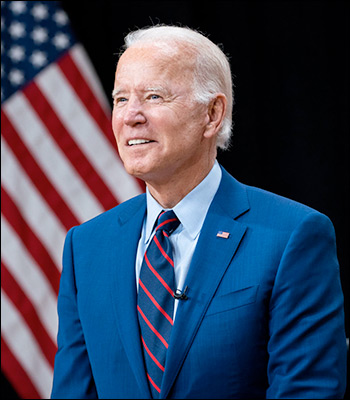
The candidates in action at the first presidential debate in Cleveland, Ohio: President Donald Trump (left) and former vice president Joe Biden.

July 8, 2021 — The Pew Research Center conducted a post-election poll and spent seven months developing their conclusions. On the last day of June, they publicized their report.

The study, conducted just after the November election (Nov. 7-12; 11,818 individuals through groups of screened panelists, online) was exhaustive.

Quoting the methodology description, “noncitizens and those who refused the citizenship question (N=450), voters who refused to answer the vote choice question (N=84) and panelists who declined to provide their names and thus could not be matched to a voter record (N=139) were removed, leaving 11,145 panelists for analysis.” Of this latter number, 9,668 respondents were validated as voters, meaning the research team verified with a local election office that the particular individual had in fact voted.

The basic voter segmentation conclusions were speculated upon in most media sectors during the early post-election period, but this research validates and expands upon the discovered patterns. Largely, President Biden received a significant boost from suburban voters, which proved the major difference in his increasing Democratic popular vote performance.

Despite losing the popular vote by a substantial margin, former President Trump surprisingly improved his standing with several groups such as Hispanics, Asians, black men, young voters, and women, but not to the degree necessary to counter Biden’s strength with suburban voters.

For example, among suburban voters, according to the Pew research, Biden recorded 54 percent support as compared to Hillary Clinton’s 45 percent in the 2016 election. Conversely, Trump only carried white voters 51-47 percent in the most current election, a major reduction from the 54-38 percent spread he posted four years earlier.

While Trump declined in the suburbs, his performance among rural voters was even stronger than his 2016 benchmark. In 2020, Trump’s percentage among rural voters rose to 65 percent from his 59 percent previous showing. Additionally, rural female voters largely account for his overall increase among women as he moved from 39 percent in ’16 to 44 percent in 2020.

Continue reading

SCOTUS Rules; Calif. Recall Scheduled

Current US Supreme Court

By Jim Ellis

July 6, 2021 — On their last day of the year’s early session last week, a Thursday, the Supreme Court of the United States issued rulings on the Arizona voting rights case and the California non-profit organization disclosure lawsuit.

In the Democratic National Committee v. Brnovich, the Supreme Court with Justice Samuel Alito writing for the 6-3 majority, ruled that the state of Arizona did not infringe upon minority voting rights or violate Section 2 of the Voting Rights Act in both prohibiting ballot harvesting with certain exceptions, and not counting provisional ballots cast from voters who do not reside in the particular precinct that the polling place covers.

The high court agreed with Arizona Attorney General Mark Brnovich’s (R) arguments that the laws are not racially motivated, nor do they intentionally discriminate against certain segments of the voting population, thus overturning the full 9th Circuit Court of Appeals ruling.

Originally in 2016, Brnovich won at the district court level and on the first appeal to a three-judge panel from the 9th Circuit. The DNC requested an en banc review of the original appellate ruling that agreed with Brnovich, and the entire 9th Circuit membership overturned the decision, siding with the plaintiff. At that point, AG Brnovich petitioned the Supreme Court, which agreed to hear the case. (Hearing cases en banc allows the full circuit court to overturn a decision reached by a three–judge panel. Due to the decreasing probability of U.S. Supreme Court intervention, the circuit court is often the court of last resort in the ordinary life of a case, thereby amplifying the importance of en banc review.)

In his ruling, Justice Alito stated that “every voting rule imposes a burden of some sort,” and that “mere inconvenience cannot be enough to demonstrate a violation of Section 2.” He also cautioned that, “what are at bottom very small differences should not be artificially magnified.”

While agreeing that holding free and open elections is a “valid and important state interest,” he also addressed the voter fraud argument, clearly stating that attempting to prevent such abuses is also a “strong and entirely legitimate state interest.”

In her article discussing these rulings, Supreme Court expert Amy Howe, in her Howe on the Court article that was published on the SCOTUS blog, offered that the Brnovich ruling “will make it more difficult to contest election regulations under the Voting Rights Act,” and thus likely means fewer voting rights cases coming through the courts. She further categorized this decision as a “major ruling.”

Continue reading

Carey Claims Big Lead in OH-15

Graphic from Ohio Coal Association chairman and congressional candidate Mike Carey’s Facebook page.

By Jim Ellis

June 30, 2021 — Ohio Coal Association chairman Mike Carey (R) released his internal Fabrizio, Lee & Associates survey on Tuesday, which posts him to a big lead for the Aug. 3 special congressional primary in his state’s vacant 15th District. Carey’s advantage widely expands when the Republican primary electorate is aware that he is being endorsed by former president, Donald Trump.

According to the Fabrizio Lee poll (June 23-24; 400 likely OH-15 special Republican primary voters, live interviews), Carey would maintain a 44-10-9-8-5 percent advantage over state Rep. Jeff LaRe (R-Lancaster), former state Rep. Ron Hood, state Sen. Bob Peterson (R-Fayette County), and state Sen. Stephanie Kunze (R-Hilliard), respectively, among those claiming to be familiar with the campaign and candidates.

The original ballot test gave Carey a 20-9 percent lead over Rep. LaRe, who has the backing of resigned Rep. Steve Stivers (R) and is the beneficiary of the former congressman spending some of his substantial leftover campaign war chest as a support independent expenditure. Hood and Sen. Peterson trial with seven percent apiece, followed by Sen. Kunze’s six percent preference. The remaining six candidates individually garner three percent or less.

When all respondents are then informed that the former president has endorsed Carey, however, the candidate’s lead grows to a whopping 60-8-7-7-6 percent margin over Hood, LaRe, Peterson, and Kunze, respectively.

The initial ballot test also identified 44 percent of the respondents who said they are undecided about who to support in the special election. When informed of the Trump endorsement, the undecided segment then broke 46-3 percent for Carey over LaRe. Peterson and Kunze each gained one percent support, with the remainder divided among the minor candidates. This largely accounts for the big swing toward Carey when comparing the initial ballot test to the aided responses.

The poll was conducted during the buildup to Trump’s first public rally since he left the White House, an event held in rural Wellington, OH on Saturday about 40 miles due west of Akron that drew close to 20,000 people according to news estimates.

Continue reading

Where DeSantis Stands

By Jim Ellis

Florida Gov. Ron DeSantis (R)

June 29, 2021 — Florida Gov. Ron DeSantis (R) has been a hot political property of late, and no less than three political pollsters were in the field during late June to test his popularity in several scenarios.

Two of the firms, Echelon Insights and McLaughlin & Associates, tested Gov. DeSantis nationally in anticipation of a possible presidential run in 2024, while the Political Matrix/Listener Group surveyed the more timely Sunshine State 2022 governor’s race.

From the interactive voice response system poll released late last week, Political Matrix/Listener Group, on June 21, surveyed a total of 716 Florida likely voters who have a gubernatorial preference. They found DeSantis faring well against both announced Democratic gubernatorial candidates.

If US representative and former governor, Charlie Crist (D-St. Petersburg), were his 2022 general election Democratic opponent, Gov. DeSantis would hold a 55-45 percent advantage. Opposite state Agriculture Commissioner Nikki Fried (D), Florida’s only Democratic statewide elected office holder, the DeSantis margin would expand to a huge 61-39 percent spread; this, in a state where Republicans consistently perform a few points better than polling numbers typically predict.

The other two survey research firms tested Gov. DeSantis against a large number of commonly viewed ’24 GOP presidential prospects. Echelon Insights (June 18-22; 1,001 registered US voters, online from representative sample of registered voters) finds the governor topping the field of 19 named potential candidates within the 386 Republican primary voters segment with a 21 percent support figure, which is seven points higher than the former vice president, Mike Pence.

Donald Trump, Jr. posted seven percent, one point ahead of ex-UN Ambassador and former South Carolina governor, Nikki Haley, and Sen. Ted Cruz (R-TX) who both followed with six percent apiece. This group of five are the only potential contenders exceeding five percent preference. Former president, Donald Trump, was not included in the Echelon Republican nomination ballot test.

McLaughlin and Associates (June 16-20; 1,000 likely US voters, 444 GOP likely presidential primary voters) tested a two-tiered national GOP primary vote, one with former President Trump and one without.

If Trump does not run in 2024, McLaughlin, like Echelon, finds Gov. DeSantis to be the leading early candidate. In the field sans the ex-president, Gov. DeSantis places first with 24 percent followed by ex-VP Pence who attracts 19 percent, while Donald Trump, Jr. places third with 15 percent. Sen. Cruz (six percent) is the only other potential candidate who tops five percent of the vote.

Continue reading

Voting Poll — Some Surprising Responses Re: Voter Supression

By Jim Ellis

June 25, 2021 — New Jersey’s Monmouth University ran a national political survey (June 9-14; 810 US adults, live interviews) about the proposals being considered to change voting procedures at the national level and in many states. The result from several of the polling questions proved surprising.

As we know, the S.1/HR-1 legislation could not amass enough votes to invoke cloture against a Republican filibuster, thus killing it at least for a time. It is highly unlikely this measure could pass as currently written, but it is not out of the realm of possibility that another version of the voting bill will be considered later in the session. Additionally, election-oriented bills are alive in many states where legislatures have not yet adjourned for the year.

National political survey results of 810 US adults polled …

Monmouth tested the national sampling universe on a series of voting proposals and ideas, and their research effort may be one of the more extensive surveys published about the subject. Most of the responses were expected: people overwhelmingly favor enhanced mail voting, making the voting system more “user friendly”, and proof of identity.

Perhaps the most onerous provision in the S.1/HR-1 concept was the national prohibition of election officials asking for identity proof. The main argument is that the voter ID procedures “suppress” minority turnout. Monmouth’s surprising result, however, finds their labeled category of minority voters actually support the ID requirement in a larger proportion than the non-Hispanic white respondents.

The 31st polling survey question asked, “In general, do you support or oppose requiring voters to show a photo I.D. in order to vote?” The overall response was 80 percent in favor and 18 percent opposed. Among those identified as Hispanic-Black-Asian-Other in the Monmouth crosstabs, the positive ratio rose to 84:13 percent.

This type of polling result shoots a major hole in the Democrats’ argument against the issue.

Their main opposition talking point is to suggest that many in the minority community cannot obtain an ID card, and thus the individual’s right to vote is suppressed, or denied. It is clear when analyzing this poll’s responses that a robust majority of these citizens don’t agree with such a characterization.

Continue reading

The Controversy over Donald Trump’s Endorsement of NC Senate Candidate, Rep. Ted Budd


By Jim Ellis

June 23, 2021 — Three Politico publication reporters, Burgess Everett, Melanie Zanona, and Olivia Beavers, combined on an article published yesterday (Nasty N.C. Senate primary tests Trump’s sway over the GOP) that merits refutation.

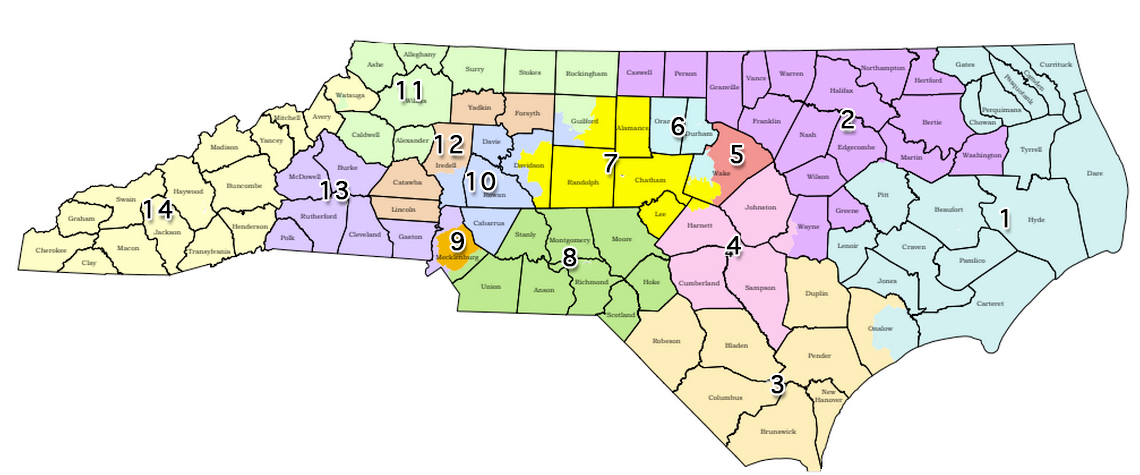
The piece details former President Trump’s public endorsement of US Senate candidate Ted Budd, the 13th District congressman, at the North Carolina Republican Party convention on June 5, and reactions to the development. Generally, and not surprisingly, it casts the endorsement and Rep. Budd’s statewide chances in a negative light.

Therefore, a number of points require balance.

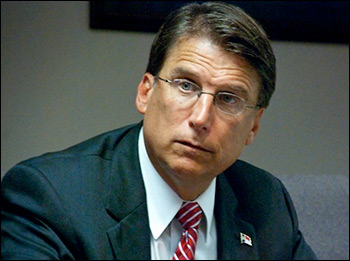
1. To begin, the story quotes key Republicans, such as retiring North Carolina US Sen. Richard Burr (R) and South Carolina Sen. Lindsey Graham (R), who are downplaying the Trump endorsement’s effectiveness, with Sen. Burr going so far as claiming that ex-governor Pat McCrory is basically the only candidate who could win the upcoming general election. It is important to note here that McCrory failed to win re-election in 2016, the last time he was on a statewide ballot.

2. Secondly, a released Meeting Streets Insight poll conducted for the Budd campaign (June 9-10; 500 likely North Carolina Republican primary voters; live interview) highlights a different perspective.

The MSI survey found McCrory leading the GOP field 45-19-12 percent over Rep. Budd and former US representative, Mark Walker, respectively. When the polling sample is informed of the Trump endorsement – only 20 percent were aware before the pollsters provided the information – the ballot test completely flips to 46-27-8 percent with Rep. Budd leading, followed by ex-governor McCrory and former Rep. Walker. Obviously, this suggests the Trump endorsement still has power within the North Carolina Republican primary voter segment.

Continue reading

Trump Endorsement Matters in North Carolina Senate Primary

By Jim Ellis

Former President Donald Trump’s endorsement changes the face of the race for Senate in North Carolina.

June 16, 2021 — North Carolina US Rep. Ted Budd’s (R-Advance) Senate campaign released an internal Meeting Street Insights poll (June 9-10; 500 likely North Carolina Republican primary voters, live interview) Monday that finds former President Donald Trump’s endorsement completely changes the 2022 statewide Republican primary.

Rep. Budd is challenging former Gov. Pat McCrory and ex-US Rep. Mark Walker for the GOP nomination succeeding Sen. Richard Burr (R) who is not seeking re-election to a fourth term.

According to Meeting Streets, former Gov. McCrory would lead the field, as other polls have shown, by a wide margin. On the first ballot test, McCrory scores 45 percent preference as opposed to 19 perecent for Rep. Budd, while 12 percent choose ex-representative Walker.

The picture drastically changes, however, when the pollsters ask if the respondent is aware that former President Trump has endorsed Rep. Budd. Only 20 percent of the sampling universe expressed knowledge of this development. On what the pollster terms the “educated” ballot test, meaning the respondent is told that Trump has, in fact, endorsed Rep. Budd, we see the drastic transformation.

With the Trump endorsement becoming known, Rep. Budd soars to the lead with 46 percent support, while McCrory drops to 27 percent, and ex-Rep. Walker falls to eight percent.

McCrory’s campaign fielded a Public Opinion Strategies survey in early April (April 6-8; 500 likely North Carolina Republican primary voters, live interview) and found the former governor leading 48-13-9 percent over Walker and Budd, respectively.

This was followed later in the month by a Spry Strategies study (April 21-24; 700 likely Republican North Carolina primary voters; combination live interview and interactive voice response system) that found a 40-11-5 percent split, again with Rep. Budd trailing his two opponents.

Continue reading

Youngkin Within Two of McCauliffe in Virginia Governor’s Campaign

By Jim Ellis

Glenn Youngkin (R), Terry McCauliffe (D), left-to-right, Virginia gubernatorial candidates

June 15, 2021 — A just-released Virginia governor’s campaign survey yields a surprising ballot test result, especially when seeing that the data was collected before last week’s Democratic primary.

WPA Intelligence (WPAi), in their most recent poll for the Glenn Youngkin for Governor campaign (June 2-6; 506 likely Virginia voters, live interview), already finds the Republican gubernatorial nominee climbing to within two percentage points (48-46 percent) of the newly crowned Democratic nominee, former governor, Terry McAuliffe.

While certain elements point to a slight Republican survey skew, it does signal, as other research has, that the 2021 Virginia governor’s race may be tighter than the state’s most recent elections that have definitively favored the Democratic candidates.

Several analysis points need reviewing. First, WPAi is a credible Republican pollster. According to the FiveThirtyEight statistical website pollster rankings, WPA Intelligence has a very respectable 0.8 predictive rating with just a slight 0.7 percent Republican bias factor.

Second, some of the geographic segmentation returns, however, appear a bit too optimistic for the Youngkin team. While the Washington, DC DMA sector breaking 56-39 percent for McAuliffe and the Roanoke/Lynchburg DMA posting a 49-46 percent edge for Youngkin are both wholly believable, the projections for two other segmented regions raise eyebrows.

Youngkin leading 51-44 percent in the Norfolk/Portsmouth/Newport News DMA, which also includes the Virginia Beach area, isn’t particularly consistent with the way the Tidewater region has voted in the most recent elections. Additionally, the same should be said for the Richmond/Petersburg DMA where WPAi sees Youngkin pulling ahead with a 48-44 percent split.

Third, these latter numbers appear too favorable for Youngkin, and particularly so in the Richmond/Petersburg area where the McAuliffe favorability rating in this same poll is 45:40 percent favorable to unfavorable. Conversely, however, if the trend were to continue for these two places and is proven accurate, it would basically signal a return to the voters’ previous electoral pattern. The Virginia historical election matrix was much better for Republicans than the numbers found in elections since the early 2000s.

Continue reading