Tag Archives: Super Tuesday

Nevada Surprises

By Jim Ellis

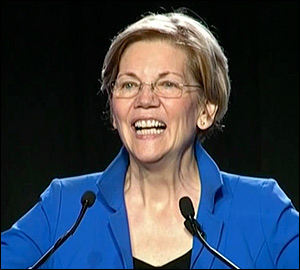
Sen. Elizabeth Warren (D-MA) moving up in Nevada

June 14, 2019 — Monmouth University just released their Nevada survey (June 6-11; 370 likely Nevada Democratic caucus attenders from a pool of 1,333 registered Democratic and unaffiliated voters) and it contained two major surprises.

First, Sen. Elizabeth Warren (D-MA), who is beginning to show signs of upward mobility after being stagnant since her campaign’s inception, moves into the runner-up position in the Silver State and, second, neighboring Sen. Kamala Harris (D-CA) fares poorly in an early voting venue where she needs to succeed.

The Monmouth data projects former Vice President Joe Biden to be leading the pack of candidates, as in almost every current poll, with 36 percent preference and Sen. Warren follows with 19 percent, ahead of Sen. Bernie Sanders (I-VT) who drops to 13 percent. Sen. Harris then places fifth with just six percent support, and one point behind South Bend Mayor Pete Buttigieg.

Monmouth then asked the second-choice question. Within these responses, the candidates are closely bunched. Here, it is Sen. Warren who leads with 15 percent, but the group is so close that a statistical tie among the top four is the best way to categorize the answers. After Sen. Warren, Sen. Sanders posts 14 percent, while Sen. Harris performs better than on the initial ballot test, tying Biden at 13 percent.

The Nevada Caucus, even though it holds only 36 first-ballot delegates, is an important momentum builder. Placed third on the nomination calendar, Nevada follows the Iowa Caucus and New Hampshire primary, respectively. It is scheduled for Saturday, Feb. 22, and exactly a week before the South Carolina primary.

Nevada is important for Sen. Harris because she is unlikely to do particularly well in either Iowa or New Hampshire. She is expected to be one of the top finishers, if not the winner, in South Carolina, so a strong performance in Nevada is critical to give her some needed momentum in order to maximize her chances in the Palmetto State.
Continue reading

Polling vs. Delegates:
“The Game Within the Game”

By Jim Ellis

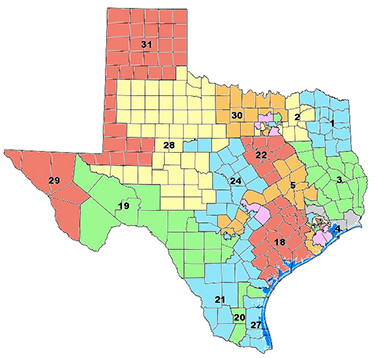
Texas state senate districts

June 7, 2018 — Quinnipiac University released their latest Texas poll (May 29-June 4; 1,159 registered Texas voters) and it finds former Vice President Joe Biden doing well in opponents’ Beto O’Rourke and Joaquin Castro’s home state.

According to the results, Biden heads the Lone Star State Democratic presidential field and is the only candidate to top President Trump when the president is isolated against each competitive Democrat (Biden over Trump: 48-44 percent).

Arguably, Texas, with its 38 Electoral Votes and the largest cache that a Republican candidate can generally claim, is Trump’s most important state. Losing here would likely mean forfeiting the presidency. There is no mathematical way to compensate for Trump failing to win Texas’ electoral votes and still allow him a path to reach the 270 Electoral Votes to claim a national victory.

In the Democratic primary, scheduled for Super Tuesday, March 3, Biden leads the pack of candidates with 30 percent of the vote, topping ex-Rep. O’Rourke (16 percent), Sen. Bernie Sanders (15 percent), Sen. Elizabeth Warren (11 percent), and the nine others who recorded between one and four percent statewide support.

Sens. Amy Klobuchar (D-MN), Kirsten Gillibrand (D-NY), Michael Bennet (D-CO), Govs. Jay Inslee (D-WA) and Steve Bullock (D-MT), Reps. Tulsi Gabbard (D-HI), Eric Swalwell (D-CA), Seth Moulton (D-MA), and Mayors Bill de Blasio (New York, NY), Wayne Messam (Miramar, FL), failed to reach the one percent plateau.

But, how would such a vote split translate into delegates for the participating candidates? Under Democratic Party rules, each state has both at-large and district delegates. Another group, called PLEO’s, are comprised of state and local Democratic Party leaders along with elected officials.

Continue reading

We Now Have Candidate #22 In
The Race, And Sanders is Falling

By Jim Ellis

May 6, 2019 — A new Democratic presidential candidate entered the race late last week, one whom we didn’t expect to see this soon.

Colorado Sen. Michael Bennet

Despite undergoing prostate cancer surgery last month, Colorado Sen. Michael Bennet says he has already received a “clean bill of health” and is embarking upon his national political effort. Now at 22 candidates in the field of Democrats seeking their party’s nomination for the 2020 presidential election, eyes turn to Montana Gov. Steve Bullock who could be the last widely discussed potential candidate yet to make a decision about forming a campaign.

It’s difficult to see how Sen. Bennet breaks through to the top tier, however. He is not well known outside of Colorado and starts well behind most of the field, putting him in a difficult position from which to even qualify for the first two debate forums scheduled for late June and the end of July.

To earn a debate podium, all candidates must either tally at least one percent support in three Democratic National Committee designated polls, or attract financial support from 65,000 donors, from which they must have a minimum of 200 in at least 20 states. For the lesser known candidates, debate participation is a necessity in order to propel themselves into serious contention for the nomination.

Furthermore, Sen. Bennet doesn’t even have his home state electorate to himself. Former Colorado Gov. John Hickenlooper is also in the race, a man who Bennet once served as chief of staff. Just two days ago, Colorado moved its new primary – they used to apportion delegates through the caucus system – to March 3, the 2020 campaign’s Super Tuesday, which could serve to boost one of the two Centennial State candidates. Yet, with both men in the race, the state’s 67 first-ballot delegate contingent will prove less of a base for either one.

Continue reading

March 3, 2020: The New Super Tuesday

By Jim Ellis

May 3, 2019 — Colorado Gov. Jared Polis (D) announced this week, as expected, that his state’s new primary will move to March 3, 2020, which has clearly become the next presidential cycle’s Super Tuesday.

Previously, Colorado employed the caucus system to apportion delegates, but voters changed to a primary when passing a 2016 ballot initiative, so now the state’s 67 Democratic first-ballot delegates and 37 Republican convention votes will be apportioned through a primary election.

But the Centennial State voters and the Democratic National Committee rules appear to be at odds. According to news reports, the 2016 Colorado electoral primary ballot initiative not only transformed into a primary, but also adopted a winner-take-all apportionment format. While Republicans allow states to award all of their delegates to one candidate based upon a primary or caucus victory, the Democrats, under the McGovern reform rules adopted after the 1972 presidential election, do not.

While the state may want to make the winner-take-all option determinative, the procedure violates Democratic rules, so we could see yet another pre-convention issue develop before the Credentials Committee, the body that certifies all of the delegate votes prior to the convention officially beginning.

The 2020 Democratic nomination process is becoming seriously front-loaded, which could play to the party’s detriment. By rule, only four states, referred to as “The First Four,” may vote before March 1 in the presidential year: Iowa (caucus, 41 first-ballot delegates), New Hampshire (primary, 24), Nevada (caucus, 36), and South Carolina (primary, 54). But just three days after South Carolina concludes, the following Tuesday, March 3, could become the most significant date of the early campaign.

Now that Colorado has joined the 3/3 fold, the following states will vote (in parenthesis, are the number of first ballot votes each entity possesses under the Democratic delegate apportionment formula):

  • Alabama (52)
  • American Samoa (6) – presumed to be voting this day
  • Arkansas (31)
  • California (416)
  • Colorado (67)
  • Democrats Abroad (13)
  • Georgia (105)
  • Massachusetts (91)
  • Minnesota (75)
  • North Carolina (110)
  • Oklahoma (37)
  • Tennessee (64) – probable, but has not yet set the calendar
  • Texas (228)
  • Utah (29)
  • Vermont (16)
  • Virginia (99)

Continue reading

The Real Super Tuesday

March 11, 2016 — March 1 earned the billing of “Super Tuesday” because 13 states held a primary or caucus that day, but the real deciding date at least for Republicans is next week’s Tuesday, March 15.

The true action in the coming days is on the Republican side despite Sen. Bernie Sanders’ upset Michigan victory earlier this week. Should Donald Trump win both the key Winner-Take-All states of Florida (99 delegates) and Ohio (66), he would isolate himself as the only candidate able to win a first ballot victory.

If Trump converts Florida and Ohio, and places first in the proportional states of North Carolina (72 delegates) and Illinois (69), as polling currently suggests, while taking a significant share of the Missouri congressional district Winner-Take-All format (52), he will likely fall into the range of committing approximately 712 delegate votes by next Wednesday morning. This means he would need 53.4 percent of the 983 available delegates from the 22 post-March 15 remaining voting entities in order to secure a first ballot victory.

Continue reading

Trump and Clinton Deliver,
But No Knockout Punch Quite Yet

March 2, 2016 — Both Hillary Clinton and Donald Trump delivered strong performances last night in their respective Super Tuesday primaries and caucuses, but neither could land the knockout punch for which they hoped.

Clinton continued her dominance in the south, but surprisingly stumbled in Oklahoma. She won seven of the 11 Democratic voting entities last night.

Trump also took seven of the 11 Republican voting states; Sen. Ted Cruz (R-TX) placed first in three, his home state of Texas, Oklahoma and Alaska; while Sen. Marco Rubio (R-FL) was victorious in the Minnesota Caucus. Despite placing first in seven voting entities, Trump broke the 40 percent threshold in only two places: Massachusetts and Alabama.

Though Trump has a healthy early lead, he is far from securing the 1,237 delegate votes required to clinch the party nomination. This suggests that the possibility of forcing a contested, or brokered, remains tangible.

Continue reading

Super Tuesday, But for Whom?

Feb. 26, 2016 — The next presidential voting event occurs this Saturday for Democrats in South Carolina, but that race is close to an end. When Hillary Clinton easily wins the Palmetto State primary, and then launches into a southern Super Tuesday sweep, the nomination will effectively be hers. But, the real action is with the Republicans.

Next Tuesday, March 1, Republican voters in 12 states will go to the polls to possibly begin officially crowning a presidential nominee, at least according to most news stories.

The media is promoting Donald Trump’s Nevada victory as possibly more than it is, however. Though his 46 percent margin was impressive and anyone’s best showing to date, Nevada has just 30 total delegates and the turnout was only about 18 percent of the total registered Republican universe. Therefore, contrary to popular opinion, the GOP nomination campaign is not yet over.

Continue reading

Trump Takes Nevada

Feb. 25, 2016 — As expected, Donald Trump placed first in the Nevada Caucuses scoring just under 46 percent of the attender preference; his strongest performance to date, though the turnout was only in the 75,000 range. Sen. Marco Rubio (R-FL) was second with 24 percent, followed by Texas Sen. Ted Cruz at 21 percent. Dr. Ben Carson and Gov. John Kasich (R-OH) trailed with five and four percent, respectively.

Though he didn’t emphasize Nevada at all, Gov. Kasich’s dead last finish behind Carson cannot be good for his pre-Ohio staying power.

Nevada apportions 30 delegates on a straight proportional basis with a zero percent vote threshold. With these percentages, Trump is expected to commit 14 delegate votes, Rubio seven, Cruz six, Carson two, and Kasich one. The small totals mean that Nevada is only partially determinative regarding GOP nomination direction.

Trump didn’t score a knockout punch, but no one expected any different. Trump adds incrementally to his delegate advantage but is the undisputed leader heading into the 12-state Super Tuesday bonanza on March 1. Those contests, mostly in the south, will go a long way to deciding whether Trump can best position himself to capture the party nomination.

Though he was projected to be the top finisher just after the Caucus meetings closed, Trump still failed to clear a 50 percent majority, and the aggregate total for Rubio and Cruz virtually equaled the current leader’s Nevada total. To win the nomination, a candidate must secure a delegate majority, meaning 1,237 from the universe of 2,472 total Republican convention delegate votes.

The important upcoming Super Tuesday states to watch are the five that require 20 percent of the vote to qualify for delegate apportionment: Alabama, Georgia, Tennessee, Texas and Vermont. All use the 20 percent threshold system, meaning a candidate must attain this vote percentage to qualify for vote distribution. Now that Dr. Carson and Gov. Kasich are fading, it is likely that the three top contenders, Trump, Rubio, and Cruz, will break 20 percent in four of those states, just as they did tonight in Nevada. Gov. Kasich, who is targeting the northern tier states for Super Tuesday, could well qualify in Vermont, but the delegate pool there is small.

If such a result occurs in those five states along with Arkansas, Oklahoma, Massachusetts, Minnesota, Virginia, Alaska, and the non-binding Wyoming precinct caucuses, Trump may well score further first place finishes, but he still won’t be near the majority mark necessary to clinch the nomination. Therefore, the primaries and caucuses will continue on through 17 more states and territories through March 15, culminating with the big Winner-Take-All states of Florida and Ohio.

On the evening of March 15, 32 voting entities will have cast their ballots and a clear pattern will have formed. Under the present vote and delegate commitment ratios, it appears that no candidate, including Trump, will have the necessary delegate votes to effectively clinch the nomination. Therefore, assuming both Cruz and Rubio remain able to attract significant delegate support, having a brokered Republican convention still looms as a possibility.

Next Steps in the Presidential Race

Feb. 23, 2016 — South Carolina Republicans went to the polls in record numbers (737,924 voter turnout, far surpassing the previous high of 601,166; a 23 percent increase) on Saturday to give Donald Trump all 50 of the state’s delegates.

Because South Carolina uses a Winner-Take-All by congressional district system, Trump placing first in all seven seats gave him a combined 21 delegates. Matched with the 29 at-large delegates he received for winning the statewide count, a backdoor Winner-Take-All result occurred.

In Nevada, while Hillary Clinton’s 53-47 percent win in the Democratic Caucuses was close, the psychological effect and momentum swing prove greater than her percentage margin. A Bernie Sanders victory could have begun to seriously unravel the Clinton campaign just when the former Secretary of State was fighting to overcome the aftermath of a frayed early start. Safely clearing Nevada, she is now has the chance to score big in her strongest geographical region: the South.

Continue reading

Justice Scalia and the Presidential Election; Latest South Carolina Polls

Feb. 16, 2016 — The sudden death of Supreme Court Associate Justice Antonin Scalia over the weekend will have a major effect upon the 2016 presidential elections. Both sides will now emphasize base issues such as abortion and 2nd Amendment rights in order to energize their respective constituencies. The heightened political atmosphere could lead to the largest electoral turnout in United States history.

Expect the Supreme Court vacancy to dominate the political coverage for the rest of the year. The high court situation not only changes the open presidential campaign, but it puts new importance upon the US Senate campaigns because the Scalia replacement confirmation battle could possibly be delayed to 2017. Since neither party will have close to the 60 seats needed to invoke cloture, we can expect this contentious situation to be unresolved for months.

South Carolina

Two new polls were released over the weekend, from the American Research Group (Feb. 12-13; 400 likely South Carolina Republican primary voters) and CBS/YouGov (Feb. 10-12; 744 likely South Carolina Republican primary voters). GOP voters cast their ballots in the party-run primary this coming Saturday, Feb. 20, while their Democratic Party counterparts will vote a week later on Feb. 27.

Continue reading