Tag Archives: Sen. Kamala Harris

The Early Delegate Projections

By Jim Ellis

June 25, 2019 — There have been several important state polls recently released that provide us data about where the Democratic presidential candidates stand in relation to popular preference. But that is only half the story.

In order to gauge where the candidates might stand in terms of delegate apportionment, we have taken the available published polls from 16 states and began extrapolating a reasonable delegate projection for each.

For purposes of this exercise, all of the polling data is considered accurate, even though in some instances such a conclusion is a stretch. Additionally, these projections were only based upon the at-large numbers but understand more than half of the delegates come from the state’s chosen districts (usually congressional district, though Texas uses their state Senate seats).

It is reasonable to believe, however, that the district apportionment will, in most cases, be similar to the statewide total. At this point, the at-large ratios are the only data set from which we can begin to draw statistical conclusions.

With that short background, the states and their most recent polling result are listed below along with our unofficial delegate projections listed in chronological order based upon voting schedule:

February 3

Iowa Caucus

(YouGov – May 31-June 12; 587 likely Iowa Democratic primary voters)
• First-Ballot Delegates: 41

Biden 30%
Sanders 22%
Warren 12%
Buttigieg 11%

Delegate Projection:

Biden 15
Sanders 11
Warren   8
Buttigieg   7

Continue reading

Florida: Biden Up

Former vice president, Joe Biden (Getty Images)


By Jim Ellis

June 20, 2019 — Quinnipiac University surveyed the Florida electorate (June 12-17; 1,279 registered Florida voters, 417 self-identified Democrats) and found former Vice President Joe Biden opening a substantial lead over Sens. Bernie Sanders (I-VT) and Elizabeth Warren (D-MA) there. He also posts a healthy advantage against President Trump in a hypothetical general election pairing in what is always a critical voting domain.

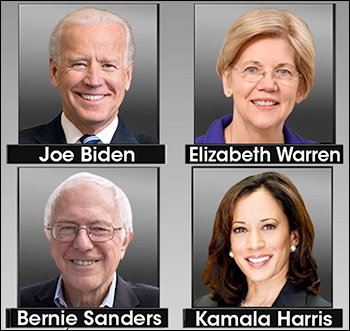
The Q-Poll numbers find Biden scoring a 41-14-12 percent advantage over Sens. Sanders and Warren, respectively, with South Bend Mayor Pete Buttigieg and Sen. Kamala Harris (D-CA) trailing in single-digits with eight and six percent, sequentially.

As Nate Silver, founder of the 538 statistical website, said in an interview this week that looking at general election polling this early is basically a futile exercise. It does, however, provide us a clue into candidates’ strengths and weaknesses. In the general election Q-Poll pairing, Biden records a 50-41 percent advantage over President Trump in Florida. This poll, of course, was taken before Trump’s Florida rally Tuesday night in which he kicked off his 2020 campaign.

Silver’s spoken sentiments are true because, among other reasons, so much time remains between now and the 2020 Nov. 3 election, and so many unknown events will occur that could alter the final outcome. Additionally, the campaign will drastically change when both parties have nominees and voters begin paying serious attention to the race.

Continue reading

California Already Tightening

By Jim Ellis

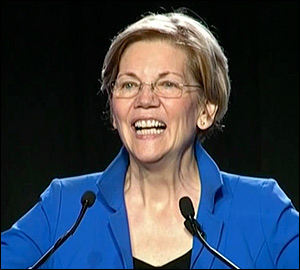
June 17, 2019 — A new large-sample Golden State poll released from the University of California at Berkeley and the Los Angeles Times (June 4-10; 2,131 likely California Democratic primary voters from a pool of 4,435 registered voters) yields some surprising results. The three most unexpected findings first show a tight race among the four top contenders, Sen. Elizabeth Warren (D-MA) surging into second place, and home-state Sen. Kamala Harris only finishing fourth but not substantially behind.

The California primary, scheduled for March 3, possesses the largest number of first-ballot delegates of any state or territory. The state’s 416 first-ballot delegates, 272 of whom are divided among the 53 congressional districts and 144 at-large, will certainly help set the tone over how the Democratic National Convention unfolds.

Sen. Harris, who could well be the indicator candidate as to what scenario will occur at the convention, (i.e., will one candidate be able to coalesce a majority coalition on the first or second ballot or does the nomination battle fall into a multi-ballot contest) must score big in her home state, and this latest survey suggests her path is challenging but doable.

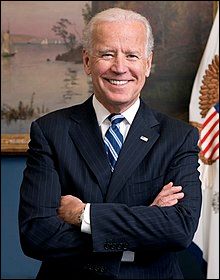
The Berkeley/LA Times study sees former Vice President Joe Biden holding a smaller lead than in past surveys, as he polls 22 percent first-choice responses. Sen. Warren makes a major jump into second place and records 18 percent, one of her best showings in any poll. Sen. Bernie Sanders (I-VT), who has been dipping in polling across the country, places third at 17 percent, and Sen. Harris trails in fourth position, but is still clearly in the game at 13 percent.

Polling from around the country within the last 10 days, and this California study is obviously no exception, has been projecting a tighter Democratic race. Though Biden still leads, his advantage is lessening.

Continue reading

Nevada Surprises

By Jim Ellis

Sen. Elizabeth Warren (D-MA) moving up in Nevada

June 14, 2019 — Monmouth University just released their Nevada survey (June 6-11; 370 likely Nevada Democratic caucus attenders from a pool of 1,333 registered Democratic and unaffiliated voters) and it contained two major surprises.

First, Sen. Elizabeth Warren (D-MA), who is beginning to show signs of upward mobility after being stagnant since her campaign’s inception, moves into the runner-up position in the Silver State and, second, neighboring Sen. Kamala Harris (D-CA) fares poorly in an early voting venue where she needs to succeed.

The Monmouth data projects former Vice President Joe Biden to be leading the pack of candidates, as in almost every current poll, with 36 percent preference and Sen. Warren follows with 19 percent, ahead of Sen. Bernie Sanders (I-VT) who drops to 13 percent. Sen. Harris then places fifth with just six percent support, and one point behind South Bend Mayor Pete Buttigieg.

Monmouth then asked the second-choice question. Within these responses, the candidates are closely bunched. Here, it is Sen. Warren who leads with 15 percent, but the group is so close that a statistical tie among the top four is the best way to categorize the answers. After Sen. Warren, Sen. Sanders posts 14 percent, while Sen. Harris performs better than on the initial ballot test, tying Biden at 13 percent.

The Nevada Caucus, even though it holds only 36 first-ballot delegates, is an important momentum builder. Placed third on the nomination calendar, Nevada follows the Iowa Caucus and New Hampshire primary, respectively. It is scheduled for Saturday, Feb. 22, and exactly a week before the South Carolina primary.

Nevada is important for Sen. Harris because she is unlikely to do particularly well in either Iowa or New Hampshire. She is expected to be one of the top finishers, if not the winner, in South Carolina, so a strong performance in Nevada is critical to give her some needed momentum in order to maximize her chances in the Palmetto State.

Continue reading

Biden Beginning to Show Cracks

By Jim Ellis

Former vice president and ex-Delaware senator Joe Biden is the Democratic front-runner in the 2020 presidential bid.

June 11, 2019 — Two polls were just released in critical Democratic primary states that find former Vice President Joe Biden’s standing to be weaker than his latest national polling results.

In Texas, the Change Research poll (May 20-June 3; 1,218 likely Texas Democratic primary voters) projects that former Rep. Beto O’Rourke (D-TX) has risen to the top of his home state electorate, leading Biden, 27-24 percent with Sen. Bernie Sanders (I-VT) posting 13 percent support. Sen. Elizabeth Warren (D-MA) is right behind with 12 percent, while California Sen. Kamala Harris records only eight percent backing.

Turning to Iowa, Selzer & Company released another of their Iowa Polls (June 2-5; 600 likely Iowa Caucus attenders; 433 saying they would personally attend their precinct caucus meeting while another 167 said they were interested in participating in the new virtual caucus that will be an Iowa Caucus feature for the first time) and while Biden leads the group of Democratic candidates, the combined numbers from the second, third, and fourth place finishers outpaces the leader by almost a 2:1 ratio.

In the Iowa Poll, conducted for CNN, the Des Moines Register newspaper, and Mediacom, Biden posts only 24 percent support. He is followed by Sen. Sanders at 16 percent, Sen. Warren notching 15 percent, and South Bend Mayor Pete Buttigieg trailing closely with 14 percent. But, Sens. Sanders and Warren together top Biden by seven percentage points and when Buttigieg is added, the trio comes close to denying Biden even the possibility of reaching majority status.

Continue reading

Democrat Debate Friction


By Jim Ellis

June 10, 2019 — The Politico publication ran a story late last week detailing building friction between the Democratic National Committee and Montana Gov. Steve Bullock, a late-entering Democratic presidential candidate, over the committee leaders apparently axing the western governor from the first debate forum coming later this month.

The source of controversy is the party leadership contending that Gov. Bullock, who looked to have qualified for the debate under the outlined criteria, now has not. Instead, New York City Mayor Bill de Blasio is in position to capture the 20th and final debate podium for the upcoming June 26-27 candidate forums from Miami.

As we have previously reported, the qualifications the party leaders have placed upon the candidates require them to either build a fundraising organization of 65,000 donors, with a minimum of 200 coming from 20 states, or score one percent support in at least three surveys from eight designated pollsters.

Gov. Bullock appeared to have met the polling requirement. He exceeded the one percent threshold in the ABC/Washington Post survey in January. But, the DNC is now disallowing this particular poll, and the action probably eliminates him from the debate.

Their reasoning is that the ABC/Post poll asked an open-ended presidential ballot test question — that is, where the names of the candidates are not read, but the respondents must voluntarily state a name. This type of question is usually employed to test hard name identification and candidate strength.

Continue reading

Democrats Up the Debate Ante

By Jim Ellis

May 31, 2019 — The Democratic National Committee just announced the imposition of new requirements for presidential candidates to participate in the series of subsequent debates to begin in mid-September. The first two sessions are scheduled for June 26-27 and July 30-31 in Miami and Detroit, respectively.

The field is close to being set for the initial forums with 20 candidates qualifying according to the Intelligencer publication, the personnel from which have been tracking the debate process since the schedule was first announced.

To earn a podium in the first two debates, the candidates are required to either score one percent support in three of eight designated polls or reach 65,000 donors, of which at least 200 must come from 20 specific states.

The participants will include some of the more obscure candidates including author Marianne Williamson, New York City businessman Andrew Yang, and the two western governors, Jay Inslee of Washington, and Steve Bullock from Montana.

This means that Sen. Michael Bennet (D-CO), Rep. Seth Moulton (D-MA), former Sen. Mike Gravel (D-AK), and Miramar, Fla., Mayor Wayne Messam likely will not be part of the first forum, though time remains for them to still qualify.

Continue reading

The Scorecard – Part I

By Jim Ellis

Former vice president and ex-Delaware senator Joe Biden is the Democratic front-runner in the 2020 presidential campaign.

May 20, 2019 — It is often said, “you can’t tell the players without a scorecard,” and that is certainly becoming the case with the presidential campaign. A 24th candidate entered the national political fray just late last week — New York City Mayor Bill de Blasio.

Greeted with the reminder that the last Quinnipiac University poll of New York City residents found that 76 percent of those polled didn’t want the mayor to run for president, de Blasio launched his late-starting campaign with a video of him talking about “putting working people first,” interspersed with video footage of being chauffeured around the city in a limousine. Saddled with poor approval ratings within his home base and a late start, de Blasio is the longest of shots to become a viable candidate.

It is likely that the de Blasio declaration is the last significant announcement, meaning all of the major players are finally in the race. Seeing two dozen candidates – and while many media networks report different numbers, the total clearly exceeds 20 – it is a good time to review the field (alphabetically) and summarize how the plethora of candidates is doing. We’ll go through the first 12, and tomorrow finish up the field:

• Former Vice President Joe Biden: The clear early race leader. Biden received the announcement bump that he desired and is proving to be the man to beat. Still, much will happen before he can legitimately clinch the party nomination. In the first 24 hours after his announcement, the former VP raised $6.3 million.

• Sen. Michael Bennet (D-CO): A prostate cancer diagnosis and surgery delayed Sen. Bennet’s entry into the race, so his campaign is just getting underway. He is a second-tier candidate who is unlikely to seriously challenge for the nomination.

• Sen. Cory Booker (D-NJ): Has not gotten much early attention, but reports suggest his campaign is among the best organized in terms of ground operation. Sen. Booker could surprise in the national candidate forums and, despite current low polling performance, might become a factor as the campaign develops.

Continue reading

Weekly Political Synopsis,
Period Ending May 17, 2019

By Jim Ellis

PRESIDENT
• Gov. Steve Bullock: As has been expected for some time, Montana Gov. Steve Bullock (D) officially announced his presidential effort this week, becoming the 23rd Democratic candidate. Bullock made the argument that he will be an effective national candidate because he’s won two elections in a conservative state and has been able to earn legislative achievements, like Medicaid expansion, in negotiating with Republican leaders.

• Mayor Bill de Blasio: Following Gov. Bullock, New York City Mayor Bill de Blasio released an announcement video at the end of the week making him the 24th Democratic presidential candidate for the 2020 election cycle. His declaration centered around being the candidate for “working families,” and cited the $15 minimum wage, a free pre-K school program, a comprehensive healthcare program that especially covers mental health, and paid sick leave.

• Florida: Former Vice President Joe Biden continues to see strong polling numbers, with the latest data coming from Florida. The Tel Opinion Research organization is reporting its latest results (released May 8; 800 likely Florida Democratic primary voters) that show Biden pulling away from his Democratic opponents on an open-ended ballot test poll. An open-ended ballot test is one where the respondent is not given the candidates’ names. That approach tests for committed strength.
According to Tel Opinion, Biden leads Sen. Bernie Sanders (I-VT), 39-16 percent, with Sens. Elizabeth Warren (D-MA) and Kamala Harris (D-CA) each pulling only five percent support. South Bend (IN) Mayor Pete Buttigieg follows at three percent preference. All of the candidates scored well on the favorability index scale. Biden is viewed positively with an 81:13 percent ratio, where Sen. Sanders’ score is 68:23 percent.

SENATE
• Arizona: Phoenix-based pollster OH Predictive Insights released their latest data from their May 1-2 poll (600 likely Arizona voters) where they queried the respondent universe about the impending Senate race between appointed Sen. Martha McSally (R) and retired astronaut Mark Kelly (D). Though we are more than a year before Arizona’s 2020 late August primary, the chances are strong that the aforementioned will be their respective party standard bearers.
According to the OH poll results, the early race again earns toss-up status. The sample breaks 45-44 percent in Sen. McSally’s favor, which is virtually identical with the firm’s late February poll giving the incumbent a 46-44 percent edge.

Continue reading

The Telling Second Choices

By Jim Ellis

May 10, 2019 — Often in political polling, asking respondents about their second choice on a ballot test is quite telling. The Morning Consult firm polls regularly and they are the only prominent pollsters so far in this presidential campaign to consistently ask the second-choice question.

Their latest national survey conducted over the April 29 through May 5 period and involving 15,770 respondents who are registered self-identified Democratic voters, or those who lean to the Democrats, found former Vice President Joe Biden pulling away from the pack of candidates, claiming 40 percent support. In a distant second place is Sen. Bernie Sanders (I-VT) who had 19 percent.

None of the other candidates even reached double-digits. In third position is Sen. Elizabeth Warren (D-MA) with a preference figure of just eight percent. Following closely is California Sen. Kamala Harris at seven percent, and South Bend (IN) Mayor Pete Buttigieg who posted six percent support. Former Rep. Beto O’Rourke (D-TX) is next with five percent. All others have three percent or less.

After the initial question, those choosing one of the top five finishers were then asked who they would support if the candidate they originally named was not in the race. This provides a further way of gauging the depth of a candidate’s strength.

The Biden supporters predominantly break toward three candidates with Sen. Sanders being the chief beneficiary, getting 31 percent of the Biden first choice voters. Sen. Harris receives 13 percent, with Sen. Warren getting 10 percent.

Continue reading