Tag Archives: Rep. Ruben Gallego

Arizona’s Kari Lake Leads in New Senate Poll; Calif. Rep. Lee Indicates a Senate Run; Manchin for WVa Gov.?

By Jim Ellis — Thursday, Jan. 12, 2023

Senate
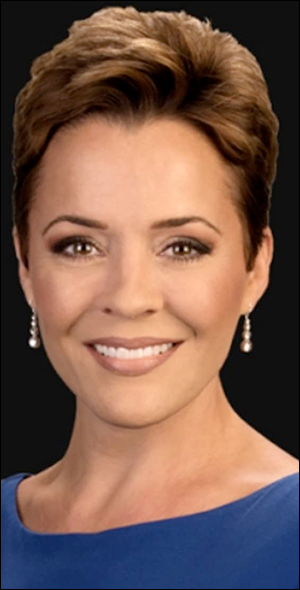
Former Arizona newscaster Kari Lake (R)

Arizona: Kari Lake (R) Leads in New Senate Poll — Former local Phoenix news anchor Kari Lake (R), who just lost a close race for governor, claims a small lead in a new hypothetical US Senate poll featuring she, incumbent Sen. Kyrsten Sinema (I), and Rep. Ruben Gallego (D-Phoenix).

David Binder Research conducted the survey (Jan. 5-8; 618 registered Arizona voters; interactive voice response system & text) and projects that Lake, who has not indicated that she will run for the Senate, leads Rep. Gallego and Sen. Sinema, 36-32-14 percent, respectively. Though Sen. Sinema trails badly, she could certainly rebound and come from the outside to win especially if the Democratic and Republican candidates almost evenly split the remaining vote. Considering recent vote history since 2018, such an outcome is certainly possible.

Rep. Gallego is an all-but-announced Senate candidate. He may, however, face opposition from US Rep. Greg Stanton (D-Phoenix), and possibly others, in the Democratic primary.

California: Rep. Lee (D) Says She will Run for Senate — California Rep. Barbara Lee (D-Oakland) reportedly is telling supporters that she will run for the Senate next year, following Rep. Katie Porter’s (D-Irvine) lead, but will not declare her intentions until Sen. Dianne Feinstein (D) announces her expected retirement. Rep. Adam Schiff (D-Burbank) is also expected to follow a similar path into the Senate contest.

We will probably see a Democratic brawl that could last the entire election cycle considering that California’s top two primary system will likely advance two Democrats into the general election.

Considering both Reps. Porter’s and Schiff’s strong fundraising prowess, Rep. Lee will be at a clear financial disadvantage. The Bay Area, however, has produced most of the recent statewide elected officials, so geography would be a point in her favor. Count on a very crowded Senate field should Sen. Feinstein, in fact, decide to retire.

Governor

West Virginia: Sec of State Announces for Governor — Secretary of State Mac Warner yesterday announced his 2024 gubernatorial candidacy in what is already becoming a crowded open seat Republican primary. Mountain State Gov. Jim Justice (R) is ineligible to seek a third term, and may run for the Senate.

Already in the race is state Del. Moore Capito (R-Charleston), son of West Virginia Sen. Shelley Moore Capito (R), and auto dealer Chris Miller, the son of 1st District Congresswoman Carol Miller (R-Huntington). Two other minor candidates have also entered the race. No Democrat has yet come forward. Former state Delegate S. Marshall Wilson is also running, representing the Americans Coming Together Party (ACT). Many more candidates are expected to enter the race. Rumors persist that Sen. Joe Manchin (D) may run for governor instead of seeking re-election.

Arizona’s Ducey Not Considering Running; Ex-Gov Daniels Tops GOP Field; Former Incumbent, Challenger to Return to House Races

By Jim Ellis — Thursday, Jan. 5, 2023

Senate

Arizona Gov. Doug Ducey (R)

Arizona: Ex-Gov Out; Gubernatorial Candidate Considering — Upon exiting office at the end of his two full terms, Arizona Gov. Doug Ducey’s (R) name continues to be mentioned prominently as a potential US Senate candidate. The now-former governor again confirmed, however, that he is not even considering running for the federal post in 2024. Another potential Senate candidate who is considering making a run is 2022 gubernatorial candidate Karrin Taylor Robson (R), who lost to former news anchorwoman Kari Lake, 48-43 percent, in the Republican gubernatorial primary.

Sen. Kyrsten Sinema (I) has not yet announced her re-election intentions but appears to be preparing her Independent run in a three-way race. Reps. Ruben Gallego (D-Phoenix) and Greg Stanton (D-Phoenix) are actively assessing their individual chances in what could become a seriously contested Democratic primary. Again, the Arizona Senate race will be one of the focal points of the 2024 election cycle, but this time will feature a unique procedural contest.

Indiana: Ex-Gov Daniels Tops GOP Field — A Bellwether Research survey (Dec. 11-17; 1,000 registered Indiana Republican voters; 457 likely Republican primary voters; online & text) was fielded just before Christmas and found former governor, and most recently Purdue University President Mitch Daniels leading a prospective open Indiana Republican US Senate primary. If he were to run, Daniels would top Rep. Jim Banks (R-Columbia City) 32-10 percent with former Rep. Trey Hollingsworth, current US Rep. Victoria Spartz (R-Noblesville), and attorney general and former Congressman Todd Rokita trailing with 9-7-7 percent support levels, respectively.

Sen. Mike Braun (R) is running for governor. None of the aforementioned has officially declared their intention to run for the Senate, but all admit to at least be considering the possibility of launching a campaign.

House

NY-17: Former Incumbent May Return — Democrat Mondaire Jones, who won the 17th Congressional District in 2020 only to depart for a post-redistricting New York City seat in 2022, says he is considering returning to Westchester County to challenge Rep-Elect Mike Lawler (R-Pearl River) in 2024. Jones did not want to oppose then-Rep. Sean Patrick Maloney in the Democratic primary after the latter man declared his candidacy, so he instead moved to a new Manhattan-Brooklyn 10th District that Rep-Elect Dan Goldman (D-New York City), an heir to the Levi Strauss fortune, eventually won.

In the 17th, Lawler, then a state assemblyman, unseated Rep. Maloney with a 51-49 percent general election victory margin. This, in a new district that the FiveThirtyEight data organization rates as D+7. There is no question that NY-17 will be a top target in 2024.

WA-3: Defeated Favorite to Return — Joe Kent, the Republican who denied then-Rep. Jaime Herrera Beutler advancement into the general election but then lost in November to Rep-Elect Marie Gluesenkamp Perez (D-Skamania County) in one of the nation’s biggest 2022 upsets, says he will return for a 2024 re-match. Because Kent was widely favored to win the seat but failed to convert, we can expect intense competition in what will be an August Washington jungle primary. FiveThirtyEight rates WA-3 as R+11.

Governor

Indiana: Braun Tops Field — The aforementioned Bellwether Research poll (see Indiana Senate above) projects Sen. Mike Braun to a large lead in the impending open 2024 GOP gubernatorial contest.

Braun holds a 25-9-7-6-3 percent Republican primary advantage over Attorney General Todd Rokita, Lt. Gov. Suzanne Crouch, ex-Rep. Trey Hollingsworth, and businessman Eric Doden, respectively. At this point, Crouch and Doden have announced their candidacies, as has Sen. Braun. Gov. Eric Holcomb (R) is ineligible to seek a third term.

Cruz Polling Up for Renomination, Down for President; Ariz. Dem Primary Looking Competitive; VA-4 Special Election Scheduled;
Sen. Braun Announces Candidacy

By Jim Ellis — Wednesday, Dec. 14, 2022

President

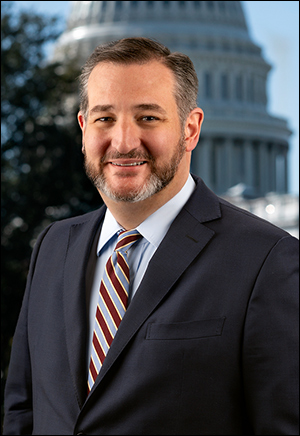
Texas Sen. Ted Cruz (R)

Texas: Cruz Polling Up for Renomination, Down for President — According to a Texas-based Republican pollster, Sen. Ted Cruz is in strong shape among prospective GOP primary voters for renomination, but not for a presidential campaign. The CWS Research firm recently conducted a Texas poll (Nov. 8-29; 860 likely Texas 2024 Republican primary voters; interactive voice response system and online) and finds the senator posting a strong 81 percent renomination score, but only records three percent support for another presidential bid.

The CWS poll leader is former President Donald Trump at 37 percent preference with Florida Gov. Ron DeSantis following closely with 34 percent. Former Vice President Mike Pence and ex-UN Ambassador and South Carolina Gov. Nikki Haley also finish slightly ahead of Sen. Cruz in his home state. Pence draws five percent backing and Haley four percent, as compared to Sen. Cruz’s three percent.

Senate

Arizona: Dem Primary Could Be Competitive — Apparently Rep. Ruben Gallego (D-Phoenix) is not the only Arizona Democratic congressman considering a run for the Senate. According to a report from the Daily Kos Elections site, Rep. Greg Stanton (D-Phoenix) — who served six years as mayor of Phoenix and nine years on the Phoenix City Council before being elected to the US House in 2018 — has conducted a statewide US Senate poll. If he were to run in what would now be an open US Senate Democratic primary since new Independent incumbent Sen. Kyrsten Sinema will advance directly into the general election, a tough battle would develop in an August 2024 primary between the two Phoenix-based congressional Democrats.

Rep. Stanton was re-elected in November with a 56-44 percent margin against a credible Republican, businessman Kelly Cooper. This, after his district was changed from a D+15 to a D+1 rating according to the FiveThirtyEight data organization calculations, meaning he rather impressively exceeded expectations.

House

VA-4: Special Election Scheduled — Gov. Glenn Youngkin (R) has surprisingly scheduled the special congressional election to replace the late Rep. Donald McEachin (D-Richmond) for Feb. 21. With Democrats certain to hold this seat in the special election, it was thought Gov. Youngkin would delay a bit longer, possibly to early April, in order to give the Republicans a further one-seat edge in the House party division count.

With the Feb. 21 general election date that will fast approach, the political parties must quickly assemble and determine how their nominees will be chosen. At this point, their realistic options are to nominate in a special district convention or hold a “firehouse primary,” that is an election with very few polling places around the district.

The Democratic nomination will be the contest to watch, since the 4th District is rated as D+30. At this point, state Sen. Jennifer McClellan (D-Richmond) and Delegate Lamont Bagby (D-Richmond) have announced their intention to file as candidates. For the Republicans, two-time nominee Leon Benjamin and insurance agent and frequent candidate Ron Wallace have declared that they will run.

Governor

Indiana: Sen. Braun Announces — First-term Hoosier State Sen. Mike Braun (R) made his obvious intentions to run for governor official Monday with his formal announcement. He will be a strong favorite for the Republican nomination, which gives him the inside track in the general election.

There is a good possibility that his Democratic opponent will be former US senator and current Ambassador to the Holy See, Joe Donnelly. The Holy See is the government of the Roman Catholic Church, which is led by the Pope in his role as the bishop of Rome. Ironically, this would set a re-match between the two men of the 2018 Senate race, a campaign that Sen. Braun won with a 51-45 percent victory margin. The Braun announcement now sets into motion a competitive Senate campaign that will likely feature a crowded Republican primary.

Sen. Sinema Officially Becomes an Independent; Rep. Khanna Considers Senate Race; Automatic Recount Beginning in Rep. Boebert’s CO-3

By Jim Ellis — Monday, Dec. 12, 2022

Senate

Sen. Kyrsten Sinema (I-AZ)

Arizona: Sen. Sinema Officially Becomes an Independent — Sen. Kyrsten Sinema on Friday announced that she is leaving the party and will represent Arizona as an Independent. As her standing before the Democratic Party electorate is poor, this move seems to clearly indicate that she is preparing for a re-election campaign. According to job approval ratings that were taken from polls conducted well before the November election, Sen. Sinema’s numbers had dropped to the point where she would be a severe underdog in a Democratic primary against her likely intra-party opponent, US Rep. Ruben Gallego (D-Phoenix). In a three-way race against Gallego and a Republican nominee, however, her re-election chances significantly improve.

Little will change in terms of her voting record, but the campaign strategy completely transforms for all involved. Not having to worry about re-nomination, Sen. Sinema will advance directly into the general election assuming she can obtain valid registered voter petition signatures from 45,000 Arizonans. She can begin signature gathering right away, so even this large number should be attainable over such a long duration.

Rep. Gallego, who had been rumored as a Sinema Democratic primary challenger, continues to move forward with his Senate plans. While admittedly convening a Senate planning group, the congressman says he will not formally decide about running until after the first of the year. Republican Pinal County Sheriff Mark Lamb also confirms he is considering entering the Senate GOP primary.

Regardless of who decides to run, the 2024 Arizona Senate race will be another contest attracting huge national attention. Sen. Sinema’s move to the Independent ballot line certainly increases her chances of winning, but she is certainly no lock to claim a second term in the next election.

California: Rep. Khanna Considers Senate Race — California Rep. Ro Khanna (D-Fremont), who was just elected to a fourth term in the House, said over the weekend that he would consider running for the Senate in 2024 if incumbent Sen. Dianne Feinstein (D), who will be 91 years of age at the time of the next election, decides to retire as expected.

Rep. Khanna further said he would more than likely seek re-election in 2024, but the door is clearly open to him exploring a senatorial run in what is expected to be a crowded Democratic battle should the seat open. The congressman has been a strong fundraiser, averaging a total receipts figure of over $4 million per election cycle for his four successful congressional campaigns along with $5-plus million remaining in his federal account, so he would have the financial base to begin a statewide run.

House

CO-3: Automatic Recount Beginning — The recount for the close CO-3 congressional race featuring Rep. Lauren Boebert (R-Silt) and Democratic former Aspen City Councilman Adam Frisch is close to completion in the district that covers Colorado’s Western Slope region. Though Frisch has already conceded the race to Rep. Boebert, the recount is taking place under the state’s election law that mandates a re-tabulation for any contest that falls within a margin of just one-half a percent.

Though Rep. Boebert’s 548-vote lead from 327,124 ballots cast is expected to stand, the 27 involved counties that comprise the 3rd District must continue the recount. Frisch says he is likely to run again in 2024. The recount process must be completed by tomorrow so the election certification process can be completed.

VA-4: Special Election Candidates Beginning to Come Forward — While Gov. Glenn Youngkin (R) has yet to call a special congressional election to replace the late Rep. Donald McEachin (D-Richmond) who passed away in late November, several individuals have come forward to announce their candidacies.

The first is state Delegate Lamont Bagby (D-Richmond), who has been a long-time supporter and confidant of Rep. McEachin’s. State Sen. Jennifer McCellan (D-Richmond), who placed third in the 2021 Democratic gubernatorial primary, also says she will enter the special congressional election. Before winning her state Senate seat in 2017, McClellan served six terms in the state House of Delegates.

For the Republicans, who have little chance in a 4th District that the FiveThirtyEight data organization rates as D+30, their two-time nominee and Christian pastor Leon Benjamin says he will enter the special election field.

Virginia’s 4th Congressional District begins in Richmond and then travels south all the way to the North Carolina border. The CD includes the cities of Richmond, Petersburg, and Emporia, along with the Colonial Heights, Chester, and Lawrenceville communities.

Another Close Arizona Race Beckons

By Jim Ellis

Arizona Sen. Mark Kelly (D)

Jan. 31, 2022 — The state of Arizona has become a volatile political domain, and a new poll suggests we will see another razor-thin US Senate race evolve later this year.

Over the course of history, the Arizona voting universe boasts a pattern of electing similar numbers of candidates from both parties. Admitted to the Union in 1912 as the 48th state, Arizonans have elected just 14 individuals to their two Senate seats, seven of whom have been Democrats with an equal number of Republicans. Since 2010, however, the electorate has strayed from its conservative political roots and moved toward the ideological center.

With this backdrop, the Data for Progress research organization just released their major statewide survey of the Grand Canyon State electorate (Jan. 21-24; 1,469 likely Arizona general election voters, online & text). The DfP finds Sen. Mark Kelly (D) already falling into a tight battle with Attorney General Mark Brnovich, should the latter man win the GOP nomination.

In the campaign from two years ago, you will remember that Sen. Kelly won a special election in 2020 and now serves the remaining two years of the late Sen. John McCain’s (R) final term. In this election year, he stands for a full six-year term.

The ballot test found Kelly holding a slight 49-47 percent edge over AG Brnovich, but with the senator’s personal approval rating lapsing into the negative realm, 46:49 percent favorable to unfavorable. He still rates higher, however, than President Biden (45:54 percent), fellow Arizona Democratic Sen. Kyrsten Sinema (42:52 percent), and Republican Gov. Doug Ducey (39:57 percent).

Brnovich also records a negative personal approval rating at 26:32 percent, while venture capitalist Blake Masters, another top Republican in the US Senate field, posts a 16:17 percent ratio, with 68 percent replying that they “haven’t heard enough (about him) to say.”

In a ballot test against Gov. Ducey, who is not a Senate candidate, Sen. Kelly’s advantage is 50-47 percent. Masters was not included in the head-to-head pairing questions with Sen. Kelly.

Continue reading

Analyzing Arizona

Click on map to go to Arizona Independent Redistricting Commission’s interactive map.

By Jim Ellis

Jan. 10, 2022 — Now that the new redistricting maps have been finalized in as many as 27 states, analysts can produce more detailed data about how the new seats will perform politically.

Such is the case in Arizona, as the Phoenix-based Data Orbital firm has published a new report about the Grand Canyon State’s congressional and state legislative maps. The DO research paints a more detailed picture of what we might expect in the 2022 elections.

At first glance, it appeared that the Arizona map might be one of the nation’s most competitive. The new Data Orbital information certainly supports such a conclusion, and tells us that two incumbents actually have more difficult situations than suggested at first glance, one a possibly easier road to re-election, and a third district that will likely produce razor-thin margins for either party in at least the decade’s early elections.

It was clear that Reps. David Schweikert (R-Fountain Hills) and Tom O’Halleran (D-Sedona) were placed in more competitive situations than their current CDs yield, but the more detailed historical data finds that their respective roads to re-election are even rockier.

The Data Orbital firm measured each district through five statewide elections from 2020 and 2018, overlaid the partisan registration figures, added the new registration trends, and took into account district electorate performance in high and lower turnout situations.

Using all of this data, we see that Rep. O’Halleran clearly has the worst draw and his chances for re-election this year appear dim. His new 2nd District (previously numbered 1) went Republican in all five of the tested elections; Republicans have the edge in current and new voter registration, and the Republican candidates performed better in both high and low turnout elections.

In all, the Republican nominees averaged vote margins of more than 10 percent over their Democratic counterparts. There is no statistical measure where Democrats outperformed Republicans in the new 2nd District, which places Rep. O’Halleran in the most difficult position of all the incumbents seeking re-election.

Rep. Schweikert, who won his last re-election in the current 6th District with only 52 percent, sees a much tougher road ahead of him in 2022 within the confines of the new 1st District.

In the five tested races — 2020 presidential, 2020 Senate, 2020 congressional, 2018 gubernatorial, and 2018 attorney general — Republicans only won two. The winning percentage for the Republican victories, however, is much higher than the three Democratic victories – the Dems only scored a cumulative winning average of 1.2 percent — so Schweikert certainly has a chance of winning another term. The GOP does score an overall performance margin advantage of 4.1 percent and leads the Democrats in party registration, among new registrants, and in both low and high turnout elections.

At first glance, it appeared that Rep. Greg Stanton (D-Phoenix) would have a more difficult re-election situation than what the deeper dive numbers suggest. Democrats won four of the five tested elections, the overall vote average favors the Democratic candidates by 5.6 percentage points, and while registration breaks almost evenly among the Democrats, Republicans, and Independents, the vote performance figures suggest that the Independent sector clearly leans Democratic. While Independents overwhelming lead the new registration category, the Democrats also outperform the Republicans by 2.4 percentage points.

Continue reading

Arizona’s Competitive Map

By Jim Ellis

Jan. 4, 2022 — The Grand Canyon State of Arizona was one of the places to complete the redistricting process toward the end of 2021 when the Arizona Independent Redistricting Commission members approved a new congressional plan. The new district boundaries will create one of the most competitive US House maps in the country.

The current 5D-4R map could easily swing from 6D-3R all the way to 3D-6R depending upon the political winds in any given election year. Among the current incumbents, Reps. Tom O’Halleran (D-Sedona), David Schweikert (R-Fountain Hills), and Greg Stanton (D-Phoenix) all see more competitive new seats.

The commission members also changed the district numbers, making voter history comparisons a bit more confusing. They did provide political data that summarizes certain past elections for each new seat, however. The data chart covers 10 statewide race results from 2016 through 2020.

Rep. O’Halleran’s 1st District, which stretches throughout most of eastern Arizona, is now labeled #2 and becomes much more Republican despite adding Native American population. In fact, the historical average is majority Republican, at 53.6 percent. The FiveThirtyEight statistical projection rates the new 2nd as the fourth most Republican district in the state at R+15.

Under the previous map, FiveThirtyEight rated the O’Halleran seat at R+8. Rep. O’Halleran, though acknowledging he will have a more difficult re-election battle, has already announced that he will run in the new 2nd.

Prior to the map release, two-term GOP state Rep. Walt Blackman, a Bronze Star Medal recipient for combat in Iraq and the first African American Republican to be elected to the state House, announced for the congressional seat, and now appears to be in even stronger political position opposite Rep. O’Halleran.

Rep. Schweikert’s 6th District electorate that includes the Scottsdale area, returned him for a sixth term with only a 52-48 percent margin in a CD that FiveThirtyEight rated R+13. The new 1st District has a 51.3 percent Republican average vote. The FiveThirtyEight rating for the new confines is R+7, meaning that Schweikert can again expect a competitive general election challenge.

Continue reading

The Game Within the Game:
Arizona Senate Race Heats Up

By Jim Ellis

Retired astronaut Mark Kelly, a Democrat, announced his candidacy for the party nomination for the Arizona Senate.

Feb. 15, 2019 — Intrigue is already building in the Arizona US Senate special election. On Tuesday, retired astronaut Mark Kelly, a Democrat, announced his candidacy for the party nomination. The next day, he claimed more than $600,000 had come pouring into his campaign literally overnight after making his declaration. Kelly, you remember, is the husband of former Rep. Gabrielle Giffords (D-Tucson) who was tragically shot in 2011 but miraculously survived a bullet passing through her head.

While many might take his brandishing the financial number as signaling appointed Republican Sen. Martha McSally that he is going to run a tough and well financed campaign, at this point the move is likely first directed toward his potential Democratic opponent.

US Rep. Ruben Gallego (D-Phoenix) was first elected in 2014 to replace then-Rep. Ed Pastor (D-Phoenix) who retired. Rep. Gallego has publicly stated on several occasions that he is considering running for the Senate in 2020. In fact, on Kelly’s announcement day, the congressman tweeted a message saying that he is still interested in running and will decide shortly.

According to Arizona sources, Gallego would like to hold his announcement until the Phoenix mayoral special election concludes next month. A special election is necessitated for that office because then-Phoenix Mayor Greg Stanton (D) was elected to succeed Kyrsten Sinema in the 9th Congressional District seat.

Continue reading

Senate: Early Handicapping

By Jim Ellis

Jan. 17, 2019 — The 2020 Senate election cycle features 34 races instead of 33 because of the Arizona special, and this time it is the Republicans who must defend the preponderance of seats. In 2018, Democrats held 26 of the 35 seats up for election; in this cycle, Republicans must protect 22 of the 34 Senate positions.

Republicans are first risking two open seats, those of Sen. Pat Roberts in Kansas and Lamar Alexander of Tennessee. At this point, both should remain in the GOP column. They also face a slew of competitive races in as many as eight incumbent states. Democrats, on the other hand, must defend in one highly competitive campaign, that of Sen. Doug Jones in Alabama, and a potentially viable contest in Minnesota.

But the most vulnerable Republican races will attract serious political attention. Appointed Sen. Martha McSally (AZ), Sen. Cory Gardner (CO), and North Carolina first term incumbent Thom Tillis are facing difficult election or re-election campaigns, in addition to Sen. Jones.

Martha McSally lost the 2018 Arizona Senate race to new Sen. Kyrsten Sinema (D) by 55,900 votes of more than 2.384 million ballots cast, or a margin of 2.4 percentage points. This, however, in the same election where Republican Gov. Doug Ducey scored a strong 56-42 percent re-election victory.

Continue reading

The Hidden Reason Why McCain is
Being Challenged in Arizona

May 28, 2015 — A surprising story broke in Arizona Tuesday. Rep. Ann Kirkpatrick (D-AZ-1) announced that she will forego her re-election bid and instead challenge Sen. John McCain (R) next year. The congresswoman was included on most “possible candidate” lists, but was not viewed as someone overtly planning to make the jump into the statewide contest. Her move, however, may be a precursor to another decision that will soon enter the public domain.

With McCain’s approval numbers dropping into the dangerously low category (36:51 percent favorable to unfavorable according to Public Policy Polling), Kirkpatrick’s move is not without political reason. The latest PPP survey (May 1-3; 600 registered Arizona voters) finds her trailing the senator only 36-42 percent, certainly suggesting that such a general election pairing would yield a competitive contest.

But, the driving force behind Kirkpatrick may not be McCain’s perceived vulnerability. Rather, since the US Supreme Court is poised to soon render a decision on the Arizona redistricting challenge, it may be this issue that is actually motivating Kirkpatrick to move forward.

The Arizona Republicans are challenging the state’s congressional map on the grounds that the US Constitution only gives federal redistricting power to state legislatures. Before the 2000 reapportionment, voters adopted a ballot proposition that created a redistricting commission empowered to draw congressional and state legislative lines. The crux of the suit argues that a citizens’ commission has no authority to draw congressional lines.
Continue reading >