Tag Archives: Quinnipiac University

Florida: Biden Up

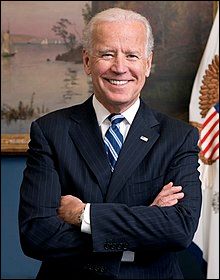
Former vice president, Joe Biden (Getty Images)


By Jim Ellis

June 20, 2019 — Quinnipiac University surveyed the Florida electorate (June 12-17; 1,279 registered Florida voters, 417 self-identified Democrats) and found former Vice President Joe Biden opening a substantial lead over Sens. Bernie Sanders (I-VT) and Elizabeth Warren (D-MA) there. He also posts a healthy advantage against President Trump in a hypothetical general election pairing in what is always a critical voting domain.

The Q-Poll numbers find Biden scoring a 41-14-12 percent advantage over Sens. Sanders and Warren, respectively, with South Bend Mayor Pete Buttigieg and Sen. Kamala Harris (D-CA) trailing in single-digits with eight and six percent, sequentially.

As Nate Silver, founder of the 538 statistical website, said in an interview this week that looking at general election polling this early is basically a futile exercise. It does, however, provide us a clue into candidates’ strengths and weaknesses. In the general election Q-Poll pairing, Biden records a 50-41 percent advantage over President Trump in Florida. This poll, of course, was taken before Trump’s Florida rally Tuesday night in which he kicked off his 2020 campaign.

Silver’s spoken sentiments are true because, among other reasons, so much time remains between now and the 2020 Nov. 3 election, and so many unknown events will occur that could alter the final outcome. Additionally, the campaign will drastically change when both parties have nominees and voters begin paying serious attention to the race.
Continue reading

Biden Beginning to Show Cracks

By Jim Ellis

Former vice president and ex-Delaware senator Joe Biden is the Democratic front-runner in the 2020 presidential bid.

June 11, 2019 — Two polls were just released in critical Democratic primary states that find former Vice President Joe Biden’s standing to be weaker than his latest national polling results.

In Texas, the Change Research poll (May 20-June 3; 1,218 likely Texas Democratic primary voters) projects that former Rep. Beto O’Rourke (D-TX) has risen to the top of his home state electorate, leading Biden, 27-24 percent with Sen. Bernie Sanders (I-VT) posting 13 percent support. Sen. Elizabeth Warren (D-MA) is right behind with 12 percent, while California Sen. Kamala Harris records only eight percent backing.

Turning to Iowa, Selzer & Company released another of their Iowa Polls (June 2-5; 600 likely Iowa Caucus attenders; 433 saying they would personally attend their precinct caucus meeting while another 167 said they were interested in participating in the new virtual caucus that will be an Iowa Caucus feature for the first time) and while Biden leads the group of Democratic candidates, the combined numbers from the second, third, and fourth place finishers outpaces the leader by almost a 2:1 ratio.

In the Iowa Poll, conducted for CNN, the Des Moines Register newspaper, and Mediacom, Biden posts only 24 percent support. He is followed by Sen. Sanders at 16 percent, Sen. Warren notching 15 percent, and South Bend Mayor Pete Buttigieg trailing closely with 14 percent. But, Sens. Sanders and Warren together top Biden by seven percentage points and when Buttigieg is added, the trio comes close to denying Biden even the possibility of reaching majority status.

Continue reading

Polling vs. Delegates:
“The Game Within the Game”

By Jim Ellis

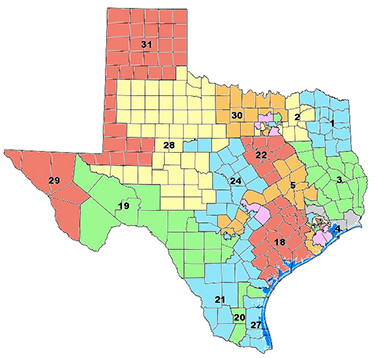
Texas state senate districts

June 7, 2018 — Quinnipiac University released their latest Texas poll (May 29-June 4; 1,159 registered Texas voters) and it finds former Vice President Joe Biden doing well in opponents’ Beto O’Rourke and Joaquin Castro’s home state.

According to the results, Biden heads the Lone Star State Democratic presidential field and is the only candidate to top President Trump when the president is isolated against each competitive Democrat (Biden over Trump: 48-44 percent).

Arguably, Texas, with its 38 Electoral Votes and the largest cache that a Republican candidate can generally claim, is Trump’s most important state. Losing here would likely mean forfeiting the presidency. There is no mathematical way to compensate for Trump failing to win Texas’ electoral votes and still allow him a path to reach the 270 Electoral Votes to claim a national victory.

In the Democratic primary, scheduled for Super Tuesday, March 3, Biden leads the pack of candidates with 30 percent of the vote, topping ex-Rep. O’Rourke (16 percent), Sen. Bernie Sanders (15 percent), Sen. Elizabeth Warren (11 percent), and the nine others who recorded between one and four percent statewide support.

Sens. Amy Klobuchar (D-MN), Kirsten Gillibrand (D-NY), Michael Bennet (D-CO), Govs. Jay Inslee (D-WA) and Steve Bullock (D-MT), Reps. Tulsi Gabbard (D-HI), Eric Swalwell (D-CA), Seth Moulton (D-MA), and Mayors Bill de Blasio (New York, NY), Wayne Messam (Miramar, FL), failed to reach the one percent plateau.

But, how would such a vote split translate into delegates for the participating candidates? Under Democratic Party rules, each state has both at-large and district delegates. Another group, called PLEO’s, are comprised of state and local Democratic Party leaders along with elected officials.

Continue reading

Democratic Presidential Candidate Field Could Number 23 Very Shortly

By Jim Ellis

April 1, 2019
— Several presumed presidential candidates whose aspirations appeared dormant have suddenly sprung to life. In reading the current political tea leaves, and should the latest trends prove true, we could return to projections of a Democratic presidential field as large as 23 candidates.
While it has been generally regarded as a given that former Vice President Joe Biden would enter the race next month, and all indications are that he will, as many as six others may also soon join according to individual published reports late last week.

Sen. Michael Bennet (D-CO), whose name surfaced months ago as an individual contemplating becoming a national candidate, all of a sudden says that he will likely do so. This, after seemingly weeks of not even being mentioned in the long list of aspiring candidates.

Ex-Virginia Gov. Terry McAuliffe, who looked to be gearing up early but hadn’t been heard from lately, also confirms that he is headed toward announcing his candidacy this month.

Montana Gov. Steve Bullock has brandished more overt signs of planning to run. Always admitting that he was considering becoming a candidate, Gov. Bullock has spent some time in Iowa conducting meetings and getting to know the political terrain. He has also firmly ruled out challenging Sen. Steve Daines (R-MT) and appears headed toward the national stage. Bullock is ineligible to seek a third term as governor, so these underlying signals seem more indicative that he will, in fact, run for president.

Continue reading

Florida Polling: Inconsistent Results

By Jim Ellis

Oct. 23, 2018 — Four statewide Florida polls were just released, and we continue to see conflicting results across the board two weeks prior to Election Day. As usual, the Sunshine State political situation appears too close to call from a place that seems to specialize in razor-thin elections.

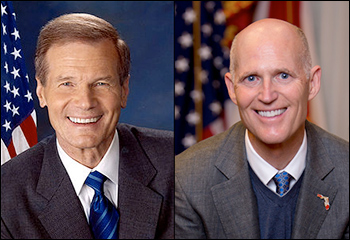
Left: Florida Sen. Bill Nelson (D) | Right: Gov. Rick Scott (R)

Left: Florida Sen. Bill Nelson (D) | Right: Gov. Rick Scott (R)

During the period of Oct. 17-21, St. Pete Polls, Survey USA, Quinnipiac University, and the Democratic polling firm of Schroth, Eldon & Associates all conducted Florida surveys.

In the Senate race, two of the surveys find incumbent Bill Nelson (D) putting some distance between he and his opponent, Gov. Rick Scott (R), while the other two project to give Scott a slight edge. In the governor’s race, three of these firms released numbers (Quinnipiac did not, but will likely do so today), and Democratic nominee Andrew Gillum, the Tallahassee mayor, holds a varying lead over former US Rep. Ron DeSantis (R).

There is quite a difference in the Senate margins, and this is largely due to how the female vote is being recorded. Both Survey USA (Oct. 18-21; 1,050 Florida adults, 859 registered Florida voters, 665 likely Florida voters) and Quinnipiac (Oct. 17-21; 1,161 registered Florida voters) find Sen. Nelson holding full-sample leads beyond the polling margin of error, 49-41 percent (S-USA) and 52-46 percent (Quinnipiac). They see females breaking for Nelson, 49-37 percent (S-USA) and 59-39 percent (Quinnipiac). Men are going the opposite way, favoring Scott, 49-46 percent (S-USA) and 54-44 percent (Quinnipiac).

Continue reading

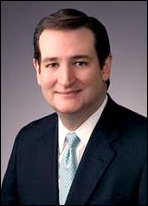
Texas Sen. Ted Cruz Rebounds

By Jim Ellis

Sen. Ted Cruz (R-TX)

Sen. Ted Cruz (R-TX)

Sept. 20, 2018 — A new Quinnipiac University poll (Sept. 11-17; 807 likely Texas voters) finds that Sen. Ted Cruz (R), after languishing in a rather prolonged syndrome where he was only posting small single-digit leads over US Rep. Beto O’Rourke (D-El Paso), has opened a much larger advantage in his campaign for re-election.

The latest Q-Poll finds Sen. Cruz now topping Rep. O’Rourke, 54-45 percent, his strongest advantage since two polls (Gravis Marketing and YouGov) put him nine and 10 points ahead in early July.

It remains to be seen whether this Quinnipiac poll proves to be an outlier. Up until this release, seven Texas statewide polls had been conducted since early July, all with a mean average of 3.4 percentage points separating Cruz and O’Rourke, but always in the senator’s favor.

This poll suggests that Texas is one of the most polarized states in the country. Both parties produce almost unanimous support for their individual nominee. Sen. Cruz, by a whopping margin of 94-6 percent, commands Republican support. By the same token, Rep. O’Rourke sees virtually the same split forming behind him among Democrats, 94-4 percent. The Independents are leaning toward O’Rourke, 51-47 percent, but the larger number of Lone Star State Republican voters catapults Cruz into a comfortable lead.

Continue reading

New York Polling Data:
Gov. Cuomo & Rep. Maloney

By Jim Ellis

July 20, 2018
— Though New Yorkers have already gone to the polls to choose their federal nominees, they must return on Sept. 13 to vote for their final state candidates. The Empire State is the only domain in the country that conducts separate primaries for federal and then state and local offices.

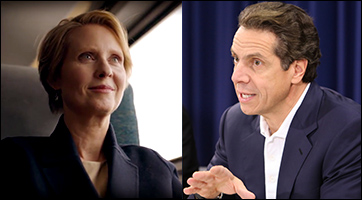
Actress Cynthia Nixon & New York Gov. Andrew Cuomo (D)

Actress Cynthia Nixon & New York Gov. Andrew Cuomo

With that in mind, Gov. Andrew Cuomo faces Democratic primary opposition against a well-known candidate who will appear on the general election ballot regardless of what happens on Sept. 13. Actress Cynthia Nixon is challenging the governor for the party nomination, but a new poll suggests that she is actually losing ground as the campaign progresses.

In a statewide race that might affect a congressional campaign, Rep. Sean Patrick Maloney (D-Cold Spring/West Point), after winning the Democratic nomination for re-election on June 26, announced that he would enter the open Sept. 13 primary for state attorney general. If he is successful in winning the party nomination, Maloney says he will end his congressional campaign. This will force the local Democratic leadership from the four counties that combine to form the 18th Congressional District to convene and choose a new nominee with barely a month remaining in the general election cycle.

With this background, Quinnipiac University comes forth with their latest New York survey (July 12-16; 934 registered New York voters, 415 likely New York Democratic primary voters). The pollsters see Gov. Cuomo expanding his Democratic primary advantage over Nixon. According to the May Q-Poll, Cuomo led Nixon 50-28 percent. In their new July study, the governor posts a stronger 59-23 percent margin, meaning a net gain of 14 percentage points. Because Nixon controls the Working Families Party ballot line, however, she will advance to the general election no matter what happens in the September state Democratic primary.

Continue reading

Poll: New Jersey Closing

By Jim Ellis

new-jersey-mapMay 31, 2018 — A new curious poll was released right before the Memorial Day break that suggests the New Jersey Senate race is already closing.

Since presumed Republican nominee Bob Hugin, the former chairman and CEO of the Celgene pharmaceutical corporation, has already spent $3.7 million on his campaign in conjunction with the June 5 primary, it is not particularly surprising that the margin between he and Sen. Bob Menendez (D) is getting tighter.

What appears unusual are the raw numbers from the recent Fairleigh Dickinson University survey, however. The poll (May 16-21; 856 registered New Jersey voters) looks to be sound methodologically, and the numbers reported for various approval ratings and other data points seem consistent with previously released research. The ballot test, however, raises questions because the incumbent’s support figure is so low and the undecideds high (46 percent). According to the F-D study, Sen. Menendez leads Hugin only 28-24 percent.

Despite the veteran senator seeing the federal bribery case against him fall apart and charges dismissed, his reputation has still suffered. The F-D report finds the senator’s favorability index at 33:39 percent favorable to unfavorable with only 51 percent of Democrats answering with a positive response. In comparison, the state’s junior senator, Cory Booker (D), posts a 55:27 percent ratio and a positive rating among Democratic respondents of 79 percent.

Demographically, the senator’s numbers are weak across the board. Even while leading Hugin in every category, his margins are tight and overall support figures poor. Sen. Menendez gets 27 percent among men, 29 percent from women, 27 percent with white voters, and just 30 percent from non-white voters. Even the college-educated voters, usually a strength segment for Democratic candidates, favor him only 32-24 percent.

This May poll is drastically different from published university polls in April and March. But Hugin’s strong early campaign provides at least a partial explanation. The former corporate leader is so far self-funding to the tune of $7.5 million and had raised almost $700,000 from individuals as listed in the May 16 pre-primary disclosure report.

Continue reading

Minnesota Becoming a Battleground

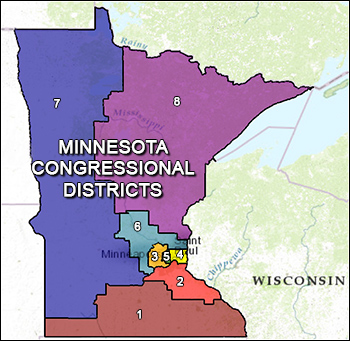
minnesota-congressional-districtsBy Jim Ellis

Jan. 22, 2018 — A new political poll is providing more evidence that Minnesota is very much in play for the coming election. Analysts were surprised in 2016 when President Trump came within one percentage point of topping Hillary Clinton in the state, but that pattern seems to be holding, at least according to this latest data.

The last time Minnesota voted Republican in a presidential race was to re-elect President Richard Nixon in 1972, thus making this state the most consistently Democratic domain in terms of presidential election victories. Since the days when Hubert Humphrey and Eugene McCarthy represented Minnesota in the Senate, Republicans have only elected four senators during that stretch of 70 years. Their record of electing governors is a bit better, with seven individuals becoming the state chief executive during the same seven-decade time span.

Building upon President Trump’s strong showing and two Democratic House members, Reps. Tim Walz (D-Mankato) and Rick Nolan (D-Crosby/Duluth), winning re-election with 50.3 and 50.2 percent, respectively, the new Minneapolis Star Tribune’s Minnesota Poll (released Jan. 17; 800 registered Minnesota voters) suggests that we could again see similarly close results later this year.

While five different pollsters have released national generic vote congressional data since the first of the year giving Democrats an advantage from five to 17 points, the Star Tribune is producing much different numbers for the Minnesota electorate. (Quinnipiac University appears to be the outlier here with polls showing Dem advantages of 11 and 17 points, the only pollster to see a double-digit margin; they were thought to be the outlier in the Virginia governor’s race, too, but ended up being closest to the final result.)

Continue reading

Election Day: Before vs. After

By Jim Ellis

Nov. 10, 2017 — Voters went to the polls in three places Tuesday to elect two governors, state legislators, and a new member of Congress. Multiple local elections, including mayoral contests in 59 of the nation’s largest cities, with New York, Minneapolis, Seattle, and Charlotte among them, also were on the various ballots.

Much was written and discussed about the Virginia gubernatorial election leading into Election Day, clearly the most important contest from a political perspective. It appeared clear that the campaign between Lt. Gov. Ralph Northam (D) and former Republican National Committee chairman Ed Gillespie was a tight one. That proved not to be the case with Northam’s nine-point win.

Polling suggested that either candidate could win. Most surveys showed either a dead heat or Northam maintaining a small lead. Research for the last Virginia gubernatorial race, that in 2013 when Gov. Terry McAuliffe (D) was elected, badly under-estimated Republican strength. Therefore, should the same methodologies be present in this latest data, Gillespie’s chances of victory may be better than the raw numbers indicate. That line of thinking was dashed by the results.

Continue reading