Tag Archives: Michigan

Race Roundup: Closing Trends — Volatile and/or Interesting Races to Watch on Election Day

By Jim Ellis — Tuesday, Nov. 8, 2020

With Election Day upon us, we have come to the end of the 2022 cycle; while strategists from both parties are either confidently or reluctantly predicting a Republican victory, not all of the numbers suggest a Red Wave outcome.

Polling generally suggests a good trend for Republicans, but the margin spread is certainly not overwhelming, and under what should be present if this were to become a wave election.

The Biden favorability index is an upside-down 44:53 percent favorable to unfavorable, which is commensurate with Donald Trump’s numbers prior to the 2018 midterm election.

Overall, it does appear that Republicans are well positioned to claim the House majority. The professional and media pollster range is wide and runs from a Republican +14 to +48 seats, but even the low-end prediction would deliver the majority. It is reasonable to believe that the Republican gain factor will be under 30, but this lower number range would still project a comfortable House majority in the new Congress.

The Senate is a flat toss-up with so many races, Arizona, Georgia, Nevada, New Hampshire, Ohio, Pennsylvania, and Wisconsin all polling within a small single-digit margin. Therefore, predicting the eventual outcome has a high difficulty factor. One point that is predictable, though: count on many of these races going into political overtime. This means it could take days if not more than a week to report a final tally on an inordinate number of close races.

With that said, let’s look at the competitive/volatile/interesting races to watch this Election Day:

Senate

Georgia — The Peach State features one of the top US Senate races, and one of only four Republican major conversion targets. Sen. Raphael Warnock (D), who won the special election runoff in 2021, is now running for a full six-year term. His opponent is former University of Georgia and professional football star Herschel Walker (R), and the two will continue to battle until the last vote is counted. Georgia has a majority vote rule, so if neither Sen. Warnock nor Walker reaches 50 percent, the two will advance to a post-election runoff on Dec. 6.

Ohio — The Senate race dominates the Buckeye State political landscape as US Rep. Tim Ryan (D-Warren/Youngstown) and author J.D. Vance (R) battle to the last day of this election cycle. Vance has led in most polls, 15 of the last 19 with two ties, but the Democrats appear to be performing slightly better in early voting. Vance has to be rated at least a soft favorite to win today. Ohio is a must-win for the GOP.

Helping Vance is a strong Gov. Mike DeWine (R) at the top of the ticket who is poised to win a landslide victory. Keeping the DeWine coalition consistent for Vance will be a boost that could well propel him to the victory.

Pennsylvania — Possibly the most publicized Senate race in the country, the open contest between Democratic Lt. Gov. John Fetterman and television’s Dr. Mehmet Oz (R), could well decide the Senate majority. Many believe that the party carrying Pennsylvania punches their majority ticket. Dr. Oz now leads in most polls after the two met in a highly publicized debate on Oct. 25. Early voting patterns, however, appear to favor the Democrats. Remembering that the Republican primary took about a month to decide because the result was so close, it wouldn’t be surprising to see something similar occur for the general election.

Arizona — The Grand Canyon State is one of the hottest political domains in the country. A now toss-up Senate race featuring Sen. Mark Kelly (D) and venture capitalist Blake Masters (R) suggests that this contest will end with a very tight result. Sen. Kelly has a slight lead in polling, but Republicans have the edge in early voting. The governor’s race is also close, but late polls suggest that Republican Kari Lake has late momentum in her race opposite Democratic Secretary of State Katie Hobbs.

Utah — The US Senate race is dominating the Utah political talk as Sen. Mike Lee (R) is on the ballot for a third term, but this time he faces a strong Independent opponent in former presidential candidate (2016) Evan McMullin. Democrats decided not to file their own candidate so they could coalesce behind McMullin and give Sen. Lee a serious challenge. The strategy has worked, as polling shows this race falling into the single-digits. Chances are still good that Sen. Lee pulls away, but this contest has evolved into much more of a serious battle than once believed. Look for a close result.

Nevada — Tough races from the top of the ballot to the bottom face Silver State voters, and the Senate race may yield the Republicans their top conversion opportunity. Polling between former Attorney General Adam Laxalt (R) and Sen. Catherine Cortez Masto (D) has been nip and tuck. With an improved standing among Hispanics, who now are 31 percent of the state’s population, an upset here is possible. Additionally, Democratic Gov. Steve Sisolak is in a toss-up race with Clark County Sheriff Joe Lombardo (R), and this seat could flip, too. Also, in the House races, the new redistricting plan drew three lean Democratic seats in Las Vegas. To gain the majority, Republicans will need to score at least one win here.

Washington — Republicans recruited a strong candidate in former nurse and veterans’ activist Tiffany Smiley. She has become a very good fundraiser and has polled close to veteran Sen. Patty Murray (D). Though Smiley has put forth a strong effort, it will likely not be enough in a strongly Democratic state like Washington. Though she may do well, a close loss is likely on the political horizon for Smiley as opposed to losing big.

Iowa — Sen. Chuck Grassley (R) leads a very busy Iowa ballot. The senator, seeking an eighth term at the age of 89, is in a closer battle than he usually finds, this time against retired Navy Adm. Michael Franken (D). Late polling suggests that Sen. Grassley will still win a comfortable, but not overwhelming victory, meaning he is likely to win in the 50s instead of his customary 60s. Conversely, Gov. Kim Reynolds (R) looks to be cruising to re-election and is expected to easily win a second full term.

North Carolina — The Senate race tops the Tar Heel State ballot this year, and we see another typically tight North Carolina race concluding. US Rep. Ted Budd (R-Advance) looks to have a slight edge over former state Supreme Court Chief Justice Cheri Beasley (D). Early voting is about even between the two parties in terms of past performance, so this is another race that comes down to the wire.

New Hampshire — In what is arguably the most prevalent swing state in the country, the Granite State ballot is filled with competitive races. Gov. Chris Sununu (R) looks set to win a fourth two-year term, but the state’s US Senate race is one of the country’s hottest. Though retired Gen. Don Bolduc (R) was virtually left for politically dead after winning the Sept. 13 primary by a percentage point, he has battled back into competitive status against one-term incumbent and former governor, Sen. Maggie Hassan (D). This race is now in upset alert status.

House

Alaska — The Last Frontier was the host of an interesting special at-large US House election that saw the new Ranked Choice Voting (RCV) system produce state Rep. Mary Peltola (D-Bethel) as the replacement for the late Rep. Don Young (R), even though Republican candidates received an aggregate 60 percent of the vote.

Now, however, it appears Rep. Peltola will win a full term regardless of whether she faces former Gov. Sarah Palin or businessman Nick Begich III, whose late grandfather and uncle served in the House and Senate, respectively, as Democrats. It is further possible that Peltola will win without even being forced into an RCV round because she may garner majority support on the initial vote.

Conversely, Sen. Lisa Murkowski could be forced into a RCV runoff with former State Administration Director Kelly Tshibaka in what would be a double-Republican race. This is a competitive contest, though the Republicans will retain the seat regardless of the outcome.

Iowa — In the state’s four congressional districts, three are highly competitive. In new District 1, freshman Rep. Ashley Hinson (R-Marion/Cedar Rapids) is favored for a second term against state Sen. Liz Mathis (D-Hiawatha). Rep. Mariannette Miller-Meeks (R-Ottumwa), who was a six-vote winner in 2020, looks to be favored over state Rep. Christina Bohannan (D-Iowa City) by more than her previous victory margin, but this contest will still be close in a historically competitive southeastern Iowa district.

The 3rd District battle may be the most competitive within this trio of races. Rep. Cindy Axne (D-Des Moines) is running for a third term having never achieved majority support. State Sen. Zach Nunn (R-Bondurant) is one of the Republicans’ better challenge candidates, and certainly has a strong chance of unseating the congresswoman. This race will draw national attention on election night.

Ohio — In the House races, veteran Cincinnati Rep. Steve Chabot (R) has a much more difficult district (D+3 according to the FiveThirtyEight data organization) than his previous seat. Cincinnati City Councilman Greg Landsman (D) is the Democratic nominee. Rep. Chabot will need a strong turnout model to record another victory in his long 26-year congressional career.

Though veteran Rep. Marcy Kaptur (D-Toledo), the dean of the Democratic conference with 40 years of congressional service, fared poorly in redistricting as her seat went from D+16 to R+6, the Republicans nominating January 6th participant J.D. Majewski has helped paved the path for the congresswoman’s re-election.

The new 13th District, located southeast of Cleveland and anchored in Akron, features a tight contest between Republican attorney Madison Gesiotto Gilbert and Democratic state Rep. Emilia Sykes (D-Akron). In a seat rated R+2, this contest is anybody’s game.

Arizona — Four competitive seats are on tap in the House delegation. Rep. David Schweikert (R-Fountain Hills) face a tough first-time candidate in businessman Jevin Hodge (D) from a new 1st District that is much less Republican than his current 6th CD, a place in which his 2020 re-election percentage did not exceed 52.

Republican Eli Crane, in a new district that is heavily Republican, is favored to unseat Rep. Tom O’Halleran (D-Sedona). Restauranteur Kelly Cooper (R) is challenging Rep. Greg Stanton (D-Phoenix) in a new 4th CD that is now only slightly Democratic. While the congressman is favored, Cooper is a formidable challenger. Rep. Ann Kirkpatrick (D-Tucson) retiring leaves the new 6th CD as a toss-up battleground between former Hispanic Chamber of Commerce executive Juan Ciscomani (R) and ex-state Senator Kirsten Engel (D).

Oregon — Reapportionment delivered a new seat to Oregon, which was placed in the area between Salem and Portland. The primary saw Democratic Rep. Kurt Schrader (D-Canby) lose to newcomer Jamie McLeod-Skinner, who is a former local official in Santa Clara County, Calif. Polling suggests that businesswoman and former local mayor, Lori Chavez-DeRemer (R), has a chance to score an upset win. Competition is also strong in the new 6th District and in the adjacent seat from which veteran Rep. Peter DeFazio (D-Springfield) is retiring.

New Hampshire — The Granite State’s two congressional districts are also highly competitive. Two-term Rep. Chris Pappas’ (D-Manchester) 1st District has defeated more incumbents since 2004 than any seat in the country. Polling has generally posted him ahead of former Trump White House aide Karoline Leavitt (R), but nothing is ever certain in such a volatile political domain.

Rep. Annie Kuster’s (D-Hopkinton/Concord) western state 2nd District is more Democratic than the eastern 1st, but this seat too can record close elections. If what some predict is a coming red wave truly develops, both Democratic incumbents could be unseated.

Governor

Georgia — The governor’s race is also intense, which features a re-match between now-Gov. Brian Kemp (R) and former state House Minority Leader Stacey Abrams (D). Polling suggests that Gov. Kemp will win re-election with a larger vote than the small margin he garnered in 2018, which resulted in his claiming the governorship through a one-point plus win. Though polling is generally looking good for the Republicans here, Democrats are so far exceeding their 2020 early vote performance.

Florida — Florida voters are navigating through a very busy ballot that the governor’s race headlines. Incumbent Gov. Ron DeSantis (R) appears likely to earn a comfortable, low double-digit victory over former governor and resigned congressman, Charlie Crist (D). The late-cycle polling, early voting matrix, and turnout model looks to favor Republicans, which will allow Sen. Marco Rubio (R) to turn back a strong challenge from US Rep. Val Demings (D-Orlando).

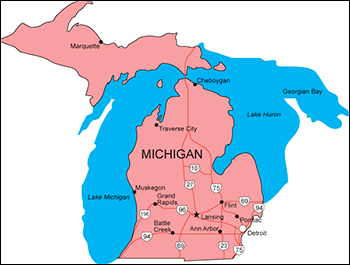
Michigan — Inconsistent polling suggests at least a semi-competitive governor’s race featuring incumbent Gretchen Whitmer (D) and challenger Tudor Dixon (R), an online radio personality. Early voting reports are heavily Democratic, which could be an indication of an impending Whitmer victory.

Oregon — The Beaver State is one of the 2022 political hotbeds. With an open governor’s race where a strong independent might flip the race to the Republican nominee in a plurality finish, Oregon is certainly a state to watch from the Pacific zone. Sen. Ron Wyden (D) faces only perennial opposition as he is on the ballot for a fifth full term.

New York — This is a close race, and incumbent Gov. Kathy Hochul (D), who ascended to the office when then-Gov. Andrew Cuomo (D) was forced to resign, finds herself in a much more difficult campaign against GOP US Rep. Lee Zeldin (R-Shirley/East Long Island) than she originally anticipated. Polling is now showing that the governor’s race is a potential toss-up. Still, the overwhelming Democratic margin in New York City should be enough to deliver Hochul a close victory at the very least.

Texas — Polling suggests a relatively close race between Gov. Greg Abbott (R) and former congressman and 2020 presidential candidate Beto O’Rourke (D). Texas Republicans typically are under-counted in polling, so it is likely that Gov. Abbott will score a stronger victory than currently projected.

Wisconsin — The Badger State is a major political battleground as close races for Gov. Tony Evers (D) and Republican Sen. Ron Johnson, are nip and tuck. Both are considered toss-ups, though polling now slightly favors Sen. Johnson in his re-election contest.

Lake Leads in Arizona Poll, Masters Closes In; Illinois Gov. Pritzker’s Lead Shrinks; Identical Poll Results Show Dixon Closing on Gov. Whitmer

By Jim Ellis — Friday, Oct. 21, 2022

Senate

Former newscaster Kari Lake (R) now running as the open gubernatorial race leader over Arizona Secretary of State Katie Hobbs (D).

Arizona: More GOP Movement — The Trafalgar Group is reporting on their latest Arizona survey (Oct. 16-17; 1,078 likely Arizona general election voters; multiple sampling techniques) that finds venture capitalist Blake Masters (R) pulling to within one point of Democratic Sen. Mark Kelly (D), 47-46 percent. This race is closing and the Trafalgar poll is not an outlier. Since Oct. 10, four research studies have shown chronological deficits for Masters of only 3, 4, 2, and now 1 percentage point.

Additionally, Trafalgar finds former newscaster Kari Lake (R) now running as the open gubernatorial race leader over Secretary of State Katie Hobbs (D). In this poll, Lake carries a 49-46 percent edge, again consistent with recent trends that other pollsters also detect.

House

OH-1: Rep. Chabot Drops Behind — Despite state legislative Republicans drawing the congressional map, veteran GOP Rep. Steve Chabot (R-Cincinnati), due to political changes within the Queen City, saw his new district become more Democratic. The FiveThirtyEight organization rates the new OH-1 as D+3, which is the exact margin a new Impact Research internal poll revealed.

The IR survey, conducted for the Greg Landsman (D) campaign (Oct. 13-16; 504 likely OH-1 general election voters; live interview & text), posts the Cincinnati City councilman to a 49-46 percent lead over Rep. Chabot. While the turnout model may provide a different result than what this poll finds, we can count on a close result coming here in November.

Governor

Illinois: Likely an Outlier — An Osage Research survey (Oct. 13-15; 600 likely Illinois general election voters; live interview) reports a ballot test that posts Gov. J.B. Pritzker (D) to only a 44-42 percent lead over state Sen. Darren Bailey (R-Louisville) with a right and wrong track result trending 35:56 percent in the downward direction. The ballot test is likely an outlier because the previous six polls, taken during the months of September and October, give Gov. Pritzker an average lead of 13 percentage points. This, however, is yet another piece of survey research showing a resurgence around the country for GOP candidates.

Michigan: Exact Polling — It’s rare to see two pollsters in the field at the same time producing a duplicate result. That’s what we have seen in the Michigan governor’s race, however. Emerson College and the Cygnal research firm surveyed the Wolverine State electorate over the same Oct. 12-14 period, and both found Democratic Gov. Gretchen Whitmer leading Republican nominee Tudor Dixon by a 49-44 percent count. This represents one of the closest results we’ve seen for this race and is more credible since two independent pollsters each detected the identical result.

Iowa Race Tightens; Blumenthal Lead Drops; DCCC Chairman Trails in Race; Conflicting Gov. Whitmer Results; Rep. Zeldin Closing on NY Gov. Hochul

By Jim Ellis — Oct. 18 2022

Senate

Iowa’s seven-term US Sen. Chuck Grassley (R)

Iowa: Race Tightens — The Des Moines Register Poll that Selzer & Company conducts (Oct. 9-12; 620 likely Iowa general election voters) has routinely been viewed as the most consistently accurate survey of the Iowa electorate. Therefore, the numbers just released over the weekend posting Sen. Chuck Grassley (R) to only a three-point, 46-43 percent, lead over retired Navy Admiral Michael Franken (D) is being taken seriously. Perhaps the most troubling sign for Sen. Grassley is that Franken leads 46-35 percent among self-described independent respondents.

The Iowa electorate can swing wildly, but in the most recent elections it has been going the Republicans’ way. Since most of the comparable data found Sen. Grassley holding low double-digit leads, the Selzer poll is a surprise. More attention will be paid to this race if confirming data soon surfaces.

Connecticut: Blumenthal Lead Drops to Five Points — A just-released Fabrizio Lee & Associates survey (Oct. 10-13; 1,200 likely Connecticut general election voters; live interview & text) finds Sen. Richard Blumenthal (D) leading his Republican opponent, former Trump appointee Leora Levy (R), by only a 49-44 percent margin. Though this race has been on the edge of competitiveness for a considerable period, it is highly unlikely that the end result will yield a Republican upset. While Sen. Blumenthal’s victory margin might be less than in years past, he will still comfortably win re-election next month.

House

NY-17: DCCC Chairman Trails in Own Race — McLaughlin & Associates released a new internal study for the Mike Lawler for Congress campaign (Oct. 2-14; 400 likely NY-17 general election voters; live interview & text) that again shows the Republican state assemblyman leading veteran New York Rep. Sean Patrick Maloney (D-Cold Spring).

This survey posts Lawler to a 52-46 percent advantage. McLaughlin polls from July and September also saw Lawler holding a significant lead. No Democratic poll was released to counter the numbers, but the Maloney campaign spokeswoman responded to the New York Post story about the survey release, saying that the Lawler polling figures are “skewed.”

Governor

Michigan: Major Polling Conflict — We see a pair of polls presenting opposite looks to the Michigan Governor’s race. The Epic-MRA organization, an entity that frequently surveys the Michigan electorate (Oct. 6-12; 600 likely Michigan general election voters; live interview) posts Gov. Gretchen Whitmer (D) to an 11-point, 49-38 percent edge, including leaners, over online talk show personality Tudor Dixon (R). But, Insider Advantage (Oct. 12; 550 likely Michigan general election voters) sees a completely different result, placing Dixon and the governor into a flat 44-44 percent tie. Most other polling has produced similar numbers to Epic-MRA, so this is another situation that bears watching if confirming data to the Insider Advantage results soon surface.

New York: Four Polls Showing Increased Competition — Gov. Kathy Hochul (D) has been running consistently ahead of US Rep. Lee Zeldin (R-Shirley/East Long Island), but now we see four consecutive polls finding the Republican deficit falling between two and eight percentage points.

In chronological order, Schoen Cooperman Research (Oct. 8-12; 824 likely New York general election voters) sees only a 50-44 percent split between Gov. Hochul, who ascended to her position when Gov. Andrew Cuomo (D) resigned, and Congressman Zeldin. Marist College (Oct. 3-6; 900 likely voters) posts a similar 52-44 percent split. The Trafalgar Group (Sept. 30-Oct. 3; 1,087 likely voters) sees the closest spread, 45-43 percent. Finally, McLaughlin & Associates (Sept. 21-25; 800 likely voters) recorded a 51-45 percent result in late September.

This is another race on the edge of competitiveness that will likely soon draw more attention. Early voting in New York does not begin until Oct. 29, so more time exists for this potentially fluid electorate to gel.

Walker Under Fire in Georgia; Masters Closing in AZ & A Dead Heat in the State’s Gubernatorial Race;
A Battle in Michigan’s 8th District

By Jim Ellis — Friday, Oct. 7, 2022

Senate

Herschel Walker (R), former University of Georgia and ex-NFL football star, 2022 Georgia Senate candidate

Georgia: Conflicting Data — Just as the negative stories about GOP Senate candidate Herschel Walker’s personal and family life began to appear in the media, along with his son coming forward to further the attacks, two conflicting surveys were released. The first, from Insider Advantage, a frequent Georgia pollster (Oct. 4; 550 likely Georgia voters), finds Sen. Raphael Warnock (D) holding only a 47-44 percent lead over Walker.

Survey USA (Sept. 30-Oct. 4; 1,076 likely Georgia voters; online) has a much different take, and actually produces one of the best polls from Sen. Warnock’s perspective since late July. The S-USA ballot test gives the senator a much larger 50-38 percent advantage.

With the negative publicity surrounding Walker, we can expect the Republican prospects to take a dip here during at least the next few days. Since the Georgia Senate race has trended close for most of the campaign year, and this type of story has been previously publicized about Walker, it would not be surprising to see a GOP bounce-back before election day.

Arizona: CBS News Projects Masters Closing — A new CBS News/YouGov survey (Sept. 30-Oct. 4; 1,164 registered Arizona voters; online) sees GOP challenger Blake Masters pulling to within three percentage points of Sen. Mark Kelly (D), 51-48 percent. With Masters finally running ads from his own campaign committee, and outside organizations coming into the state to further target Sen. Kelly, we can expect this race to continue its competitive pace all the way through Nov. 8.

Sen. Kelly, one of the most prolific fundraisers of any Senate candidate, will not likely reach the $100 million-plus in spending that he needed for the 2020 special election, but approaching the $75 million mark in outlays is highly possible. As we know, Arizona is one of the key races that will determine the next Senate majority.

House

MI-8: Junge Take Lead Over Rep. Kildee — A just released internal Cygnal poll for the Paul Junge (pronounced: Young) campaign (Sept. 27-30; 335 likely MI-8 voters) sees the GOP challenger, a former news anchor and 2020 congressional nominee in the former 8th District against Rep. Elissa Slotkin (D-Holly/Lansing), pulling into a one-point 45-44 percent lead against five-term Rep. Dan Kildee (D-Flushing/Flint). This campaign has not gotten much national play, but the two candidates have been very active, and the party organizations are spending large amounts in eastern Michigan to deliver negative messages.

The FiveThirtyEight data organization rates this seat a R+1, while the Dave’s Redistricting App partisan lean sees a 50.8 – 46.0 percent spread in favor of the Democrats. This is a national under-the-radar race destined to attract more attention.

Governor

Arizona: A Dead Heat — The aforementioned CBS/YouGov poll (see Arizona Senate above) also tested the Arizona governor’s race. Here, as other pollsters routinely find, the race between Secretary of State Katie Hobbs (D) and news anchor Kari Lake (R) is extremely close. In the CBS/YouGov survey that posted Sen. Kelly to a three-point edge, the gubernatorial ballot test finds both candidates deadlocked at 49 percent apiece.

New Mexico: A Tightening Ballot Test — After several weeks of Gov. Michelle Lujan Grisham (D) developing comfortable polling leads over Republican former television meteorologist Mark Ronchetti, a Cygnal poll conducted for GOP Attorney General candidate Jeremy Gay (Sept. 27-29; 400 likely modeled New Mexico general election voters; interactive voice response system & text) sees the pair of gubernatorial candidates falling within a two-point margin, 46-44 percent, but still in the governor’s favor.

The sample size for this statewide poll is low, so the error factor is relatively high. Both candidates are very active, so we can expect that the New Mexico gubernatorial contest will draw further national attention before the election cycle concludes.

Republican Erickson up in OR-6 Poll; Closer Poll in SC Governor’s Race; Other State & Local News

By Jim Ellis — Monday, Sept. 12, 2022

House

Republican Mike Erickson, OR-6

OR-6: Counter Poll Released — Friday, we reported on an Oregon Clout Research poll (Aug. 14-19; 409 likely OR-6 general election voters; live interview) that finds Republican Mike Erickson posting a large 43-34 percent lead over state Rep. Andrea Salinas (D-Lake Oswego) in the open new 6th District, which is the new seat Oregon earned in national reapportionment.

Predictably, the Democrats quickly countered with their own survey, but this data is even older than the Clout poll. During the Aug. 10-14 period, GBAO Research conducted a live interview survey of 500 likely OR-6 voters. They, however, only posted Salinas to a rather unimpressive 48-45 percent count. The region’s Democratic vote history – the FiveThirtyEight data organization rates the seat D+7 – would suggest a bigger margin. This is likely why the Democrats did not release this poll until they needed to respond.

Governor

South Carolina: Closer Poll Released — Democratic polling firm Impact Research (Aug. 24-30; 700 likely South Carolina general election voters) released a survey that finds that former US Congressman Joe Cunningham (D) has closed Gov. Henry McMaster’s (R) lead to 49-42 percent. The McMaster margin is still beyond the polling margin of error, however.

Actually, the Impact Research survey is close to the Republican firm’s results, The Trafalgar Group, that conducted their survey within the same time realm (Aug. 25-28; 1,071 likely South Carolina general election voters; multiple sampling techniques). Trafalgar produced a McMaster lead of 51-43 percent. South Carolina voter history suggests that Gov. McMaster will win re-election by 10 points or slightly more.

State & Local

Michigan: High Court Reverses Board of Elections — At literally the last minute to make a ballot-related decision, the Michigan state Supreme Court overruled the State Board of Elections that previously disqualified an abortion rights ballot proposition and one dealing with the elections code. The BoE struck both because they did not meet technical requirements. Both initiatives are believed to be key Democratic assets to spur the party’s base turnout.

Chicago: US Rep. Garcia Edging toward Mayor’s Race — The Chicago mayor’s race, featuring a likely competitive race with controversial incumbent Lori Lightfoot (D), is scheduled for a first vote on Feb. 28 of next year. Therefore, not much time exists between the regular general election and the new Windy City contest. Last week, Rep. Jesus “Chuy” Garcia (D-Chicago), after originally saying he would not enter the mayor’s race, now says the chances of him doing so are “50-50.”

Garcia was elected to the House in 2018, after serving on the Chicago City Council, the Illinois Senate, and the Cook County Commission. He ran for mayor in 2015 but lost to then-Mayor Rahm Emanuel (D). The mayoral candidate filing deadline is Nov. 28.

Schmitt Up Comfortably in Missouri;
Tight Election Evolving in AZ-1; Whitmer Still Leading in Michigan

By Jim Ellis — Tuesday, Aug. 30, 2022

Senate

Missouri AG Eric Schmitt (R)

Missouri: GOP’s Eric Schmitt Up Comfortably — International online pollster YouGov tested the Missouri Senate race, one of the first we’ve seen since Attorney General Eric Schmitt won the Republican primary on Aug. 2 and philanthropist Trudy Busch Valentine prevailed on the Democratic side. The YouGov poll (released Aug. 25; Aug. 8-16; 900 likely Missouri general election voters) posts Schmitt to a double-digit 49-38 percent advantage. This race, another must win for the national GOP, should be rated as Likely Republican.

House

AZ-1: Tight General Election Evolving — Arizona’s new 1st Congressional District was crafted as somewhat more favorable to the Democrats, but still a decidedly Republican seat (FiveThirtyEight rating: new AZ-1: R+7; former AZ-6: R+13; 25 percent new territory). Therefore, it comes as no surprise that a new Normington Petts survey for the Jevin Hodge (D) campaign (Aug. 15-18; 500 likely AZ-1 general election voters; live interview & text) sees the 2022 congressional race as a dead heat, with Hodge and incumbent Rep. David Schweikert (R-Fountain Hills) each receiving 47 percent support.

The poll finds Rep. Schweikert, who before the 2020 election accepted 11 ethics violations fines for misuse of his congressional office and campaign finance related issues, posting a poor 26:46 percent personal favorability rating. The additional fact that the congressman received only 43.3 percent in this year’s Republican primary against two opponents, and may well have been defeated if only one individual had challenged him, suggests that this should be a race of concern for the Republican leadership.

Governor

Kansas: Independent Qualifies; Poll Result — Northeastern Kansas state Sen. Dennis Pyle (I-Hiawatha) qualified for the ballot as an independent gubernatorial candidate on Friday. Pyle, who was elected as a Republican but became an Independent in further evidence of the deep divide between Kansas conservative and centrist Republicans, is getting support from an improbable source.

Some in the Democratic Party were active in helping further the petition signature process that allowed him to qualify for the general election. Sen. Pyle attacks GOP nominee Derek Schmidt, the state’s attorney general, as being insufficiently conservative, while the Democrats want Pyle to take conservative votes away from the GOP nominee to help incumbent Gov. Laura Kelly (D).

Four years ago, Gov. Kelly won her office with plurality support (48 percent), and her likely path to re-election will again be with less than a majority. The latest released survey, from Battleground Connect (Aug. 8-10; 1,074 likely Kansas general election voters; text) found Schmidt leading Gov. Kelly, 48-45 percent, with Pyle attracting only two percent support. This poll was conducted, however, prior to the latter man qualifying as an official November contender.

Michigan: More Conflicting Polls — Around the country, we have been seeing a number of places report conflicting polling data. Such is the case last week in the Michigan governor’s race. Though both EPIC-MRA, polling for the Michigan Information & Research Service, and the Trafalgar Group find Gov. Gretchen Whitmer (D) leading GOP nominee Tudor Dixon, the margins are quite different.

EPIC (Aug. 18-23; 600 likely Michigan general election voters; live interview) posts Gov. Whitmer to a double-digit, 50-39 percent advantage. But The Trafalgar Group, surveying basically within the same time realm (Aug. 22-25; 1,080 likely Michigan voters; multiple sampling techniques) sees the governor holding a lead just outside the polling margin of error, 49-45 percent. This example again reminds us of the volatility that can occur from pollsters using different techniques and weighting methodology.

Polling Conflict in Nevada;
Dr. Oz Draws Closer in PA;
Two Polls, Different Results

By Jim Ellis — Aug. 29, 2022

Senate

Nevada Sen. Catherine Cortez Masto (D)

Nevada: Polling Conflict — The Nevada Senate race is one of the most competitive and important statewide contests in this midterm election cycle, and two polls conducted within the same sampling realm report drawing opposite conclusions. Suffolk University, polling for the Reno Gazette Journal (Aug. 14-17; 500 likely Nevada general election voters; live interview), projects Sen. Catherine Cortez Masto (D) to be leading former Attorney General Adam Laxalt (R), 45-38 percent. Conversely, The Trafalgar Group (Aug. 15-18; 1,082 likely Nevada general election voters; multiple sampling techniques) sees a complete opposite picture. They find Laxalt holding a three-point edge, 47-44 percent.

It is not particularly surprising to see The Trafalgar Group with different results since their polling methodology is unique. Their accuracy rate, however, is among the best in the survey research industry.

Pennsylvania: Oz Drawing Closer — Despite what even a casual observer would perceive as Pennsylvania Republican Senate nominee Mehmet Oz’s campaign going poorly, two new statewide surveys find him trailing Lt. Gov. John Fetterman (D) by only four percentage points as the two research firms arrived at exactly identical ballot test results.

The pollsters, The Trafalgar Group (Aug. 15-19; 1,087 likely Pennsylvania general election voters; multiple sampling techniques) and Emerson College (Aug. 22-23; 1,034 likely Pennsylvania general election voters; interactive voice response system, online & text) both see Fetterman leading Dr. Oz, 48-44 percent. On the other hand, the new Franklin & Marshall College poll (Aug. 15-21; 522 registered Pennsylvania voters; live interview), with a much higher error rate than the other two, finds Fetterman’s advantage to be 43-30 percent.

House

MI-10: Two Polls, Same Time, Different Results — Regular Michigan pollster Mitchell Research, again surveying for the Michigan Information & Research Service (Aug. 16-21; 429 ikely MI-10 lgeneral election voters), finds former US Senate Republican nominee John James leading ex-Macomb County prosecutor Carl Marlinga (D), by a 47-38 percent clip, well beyond the polling margin of error. The Marlinga campaign countered with a Target Insyght survey (Aug. 16-18; 400 likely Michigan general election voters) that gives their candidate, Marlinga, a slight 47-45 percent edge. The new 10th was drawn as a highly competitive district, so a close finish here is clearly on the political horizon.

Governor

Pennsylvania: Same Pattern as Senate — The three pollsters that tested the Pennsylvania Senate race, The Trafalgar Group, Emerson College and Franklin & Marshall College (see PA Senate above) the same partisan pattern is also appearing in the governor’s race. The Trafalgar and Emerson results are similar, and the F&M conclusion greatly differs, though they all agree on the race order.

In the governor’s race, The Trafalgar Group finds Attorney General Josh Shapiro (D) leading state Sen. Doug Mastriano (R-Fayetteville), 49-45 percent, while Emerson posts a similar 47-44 percent division. Like in the Senate race, Franklin & Marshall sees the Democratic performance in much better position. Their ballot test projects AG Shapiro with a stronger 44-33percent advantage. The stated margin of error factor on the Trafalgar poll is 2.9, while Emerson’s is an almost identical 3.0. The F&M error factor, however, is listed as 4.3percent.

Florida, NY, OK Primaries; Term Limits Polling; Whitmer With Larger Lead

By Jim Ellis — Tuesday, Aug. 23, 2022

Primaries

Florida Gov. Ron DeSantis (R)

Florida — The Sunshine State voters also will choose their nominees today, and many important intra-party races will be decided.

Gov. DeSantis Well Ahead in Pre-Primary Poll — Florida voters will choose their general election nominees today, and a new Cherry Communications survey (conducted for the Florida Chamber of Commerce; Aug. 4-15; 608 likely Florida general election voters; live interview) projects Gov. Ron DeSantis (R) as well positioned for re-election. The CC poll results find the governor leading US Rep. Charlie Crist (D-St. Petersburg) 51-43 percent, while his advantage over state Agriculture Commissioner Nikki Fried is a similar 50-43 percent. This, in a state where Republicans traditionally under-poll. Crist, the former governor and multi-time statewide candidate who has run, and lost, under the Democratic, Republican, and Independent banners.

After recent polls found Florida Crist falling into an increasingly more competitive Democratic gubernatorial primary campaign with Fried, a new St. Pete Polls survey, on election eve, finds the congressman and former governor now ahead in a landslide. The St. Pete Polls survey (Aug. 20-21; 1,617 likely Florida Democratic primary voters; interactive voice response system) projects Rep. Crist to be holding a major 59-30 percent lead, far above any advantage he has recently posted. The Democratic winner will face Gov. DeSantis in November and will face an uphill battle against DeSantis in a campaign that will become a national event.

The Senate nomination contests in both parties, while leading to a competitive general election, are set. Sen. Marco Rubio (R) will be defending his seat against US Rep. Val Demings (D-Orlando), the former Orlando police chief. Recent polling has tightened, but voting history suggests that Sen. Rubio has at least a small lead.

A large number of US House races feature competitive nomination battles beginning in northwestern Florida’s 1st District where controversial Rep. Matt Gaetz (R-Ft. Walton Beach) is in a serious campaign with former FedEx executive Mark Lombardo. Gaetz’s highly publicized legal trouble is front and center in this race as well as Lombardo charging that the congressman’s national activities and profile have taken his attention away from serving the local district. This is certainly a race to watch, and a Lombardo upset is possible.

Florida gained a new seat in national reapportionment, and the state’s 15th District has been created. The district stretches from Lakeland into Tampa and leans Republican but we can expect some competition in the general election. Both parties feature five-person candidate fields. Polling suggests that former Secretary of State Laurel Lee has the inside track for the Republican nomination over state Sen. Kelli Stargel (R-Lakeland) and state Rep. Jackie Toledo (R-Tampa). The leading Democrat appears to be former news anchorman and two-time congressional nominee Alan Cohn.

New York — When the New York Court of Appeals, the state’s highest court, ordered the congressional districts and state Senate map redrawn, a second primary was scheduled just for these races. The original NY primary was held on June 28. The congressional and state Senate nominees will be finally decided today, and many US House contests are in a competitive mode.

Oklahoma: Close Result on Tap for Tonight in OK-2 — When Rep. Markwayne Mullin (R-Westville) opted to run for the Senate, his open eastern Oklahoma congressional district drew a crowded 14-candidate Republican field. In the June 28 regular primary for the strongest GOP district in the state (R+55 according to the FiveThirtyEight data organization), two candidates advanced into today’s runoff election even though they finished with less than 30 percent of the aggregate primary vote combined.

State Rep. Avery Frix (R-Muskogee) topped former state Sen. Josh Brecheen (R-Ada) by just 757 votes to secure the first runoff position. Brecheen then claimed the second slot over former Muskogee Police Chief Johnny Teehee by an even lesser 616-vote margin. In all, the top five candidates finished within 2,892 votes of each other.

Polling finds that the race still remains tight. The wrap-up Sooner Poll (Aug. 11-17; number of likely voter polling respondents undisclosed) projected Rep. Frix holding the lead, but with only a 43-35 percent margin. While Frix apparently enjoys a small edge, this race is still anybody’s game.

Rep. Mullin has enjoyed large leads in his bid for the Senate in post-primary polling up until the latest release. Immediately after the June 28 primary election, where he easily topped former state House Speaker T.W. Shannon, 44-18 percent within a field of 12 candidates, Rep. Mullin was seeing average leads of 18 percentage points among three polls conducted from July 25 through Aug. 15.

The latest study, however, from the Sooner Poll, which is an add-on track from their Aug. 11-15 survey that ended on Aug. 17 (322 likely Oklahoma Republican runoff voters), shows the congressman’s statewide advantage at only 53-47 percent over Shannon. Tonight’s special runoff winner will advance into the general election against former US Rep. Kendra Horn (D).

Governor

Michigan: Whitmer With Larger Lead — Countering last week’s published Fabrizio Ward (R) and Impact Research (D) teamed Michigan governor’s study (Aug. 8-14; 1,365 likely Michigan voters; live interview & text) that projected Gov. Gretchen Whitmer (D) to be leading online talk show host Tudor Dixon (R) 51-46 percent, Democratic pollster Blueprint Polling (Aug. 15-16; 611 likely Michigan general election voters; live interview) posts the governor to a much larger 51-39 percent advantage.

Ohio: One-Point Lead — Democratic pollster Lake Research (Aug. 4-9; 611 OH likely general election voters; live interview) released their latest survey that finds Gov. Mike DeWine (R) holding only a narrow one-point, 44-43 percent, edge over Dayton Mayor Nan Whaley (D).

This result is not particularly surprising. First, the Ohio electorate typically polls close and then one candidate significantly pulls away in the campaign’s last two weeks. Second, Gov. DeWine won his Republican primary with only 48.1 percent of the vote opposite three opponents suggesting clear weakness within his party’s base. Additionally, over one-third of DeWine voters say their support for him is “not so strong” or that they are only “leaning” in his direction. Expect the governor to soon use his strong financial advantage to put distance between he and Mayor Whaley.

Sen. Kelly Expands Lead in Arizona; Tied Again in North Carolina; Whitmer Holds Lead in Wisconsin

Venture capitalist Blake Masters (R) | Sen. Mark Kelly (D)


By Jim Ellis — August 22, 2022

Senate

Arizona: Sen. Kelly Expands Lead — Fox News, as part of their recent polling series, tested the Grand Canyon State electorate (Aug. 8-12; 1,012 registered Arizona voters; live interview) and found Sen. Mark Kelly (D) topping new Republican nominee and venture capitalist Blake Masters (R) with a 50-42 percent advantage. This is one of the first general election polls released since the state’s Aug. 2 statewide primary.

North Carolina: Candidates Again Tied — The Cygnal polling organization, surveying for the Raleigh-based John Locke Foundation (Aug. 13-15; 615 likely North Carolina general election voters; live interview & text), projects that former state Supreme Court Chief Justice Cheri Beasley (D) and US Rep. Ted Budd (R-Advance) are now tied at 42 percent apiece. Beasley had led in the last two polls, conducted during the last week of July and first week in August. Republicans, however, typically under-poll in North Carolina, a state that almost always features razor-thin elections.

Wisconsin: Nothing New — The latest Fox News poll (Aug. 8-12; 1,006 registered Wisconsin voters; live interview) finds Sen. Ron Johnson (R) trailing Lt. Gov. Mandela Barnes (D) by a 50-46 percent count, but this particular incumbent being behind in an election poll is standard operating procedure. According to the Real Clear Politics polling archive, 30 polls were conducted in the 2016 election, and Johnson trailed in 29 of the surveys that multiple pollsters conducted. In the end, Sen. Johnson defeated former Sen. Russ Feingold (D) by three percentage points.

Governor

Arizona: Lake Within Range — Fox News also tested the governor’s race in their new statewide Arizona poll (see Arizona Senate above). While the ballot test gives Sen. Mark Kelly (D) a rather large lead, the same respondent sample projects the governor’s contest as being much closer. The gubernatorial ballot test finds Secretary of State Katie Hobbs (D) leading former news anchor Kari Lake (R), 47-44 percent.

Michigan: Tudor Coming into Range — The Fabrizio Ward (R) and Impact Research (D) team again collaborated on a new statewide survey for AARP, this time in Michigan. The study (Aug. 8-14; 1,365 likely Michigan voters; live interview & text) finds Gov. Gretchen Whitmer (D) holding only a 51-46 percent edge over online talk show host Tudor Dixon (R) in the governor’s general election.

Neither Gov. Whitmer nor Dixon have a strong image. The governor’s personal favorability index is 50:48 percent positive to negative, while her job approval is 51:47 percent. Dixon falls into a slightly upside-down realm at 38:41 percent. A whopping 71 percent of respondents believe the US is on the wrong track while 55 percent also perceive the state of Michigan to be headed in the wrong direction.

Wisconsin: Already Close — The Fox News Wisconsin poll (see Wisconsin Senate above) also shows a tight race for governor. Gov. Tony Evers (D) holds a 49-46 percent edge, already within the polling margin of error, over new Republican gubernatorial nominee Tim Michels. It appears that both the Wisconsin governor and Senate race are becoming as hot as originally expected.

Tennessee Primary Today; Tight Race Forming in Arizona Senate; Godlewski Drops From Wisconsin Senate Race; Indiana Rep. Walorski, Three Others Killed in Crash

Tennessee Congressional Districts (click on image to see larger)

By Jim Ellis — August 4, 2022

Primary

Tennessee Primary Today: While still waiting for the remaining final numbers from Tuesday’s Arizona, Michigan, and Washington primaries, Volunteer State voters will go to the polls today to choose their nominees in the nation’s only Thursday primary.

There is no Senate race in the state in this election cycle, as Sen. Marsha Blackburn (R) will next be on the ballot in 2024 with Sen. Bill Hagerty (R) presumably running for his second term in 2026. While Gov. Bill Lee (R) is in-cycle this year, he is unopposed in today’s Republican primary.

Three Democrats are tonight vying for their party nomination, which of course will give the winner the right to challenge the governor in November. The only elected official of the group is Memphis City Councilman J.B. Smiley. Challenging him are physician Jason Martin and African American History Museum founder Carnita Atwater. Regardless of tonight’s outcome, Gov. Lee will be rated as a prohibitive favorite in the general election.

In the nine congressional races, five Republican incumbents are all unopposed for re-nomination this evening. Two incumbents — Reps. Charles Fleishmann (R-Chattanooga) and Steve Cohen (D-Memphis), the state’s lone Democratic member on the ballot this year — face only minor opponents. Rep. David Kustoff (R-Germantown) has three opponents tonight, but none look to be serious challengers. Therefore, all of the action lies in the open 5th District.

Retiring Rep. Jim Cooper (D-TN) has represented the district since the beginning of 2003. However, as a result of redistricting, Tennesseans decided to restructure a new 5th District, which was formerly a Nashville center city seat and wholly contained within Davidson County. As a result, the FiveThirtyEight organization rates the new 5th as R+15, thus upending what was a D+17 domain, which is one of the widest partisan redistricting swings in the nation. The Dave’s Redistricting App partisan lean calculations sees the new 5th as 54.4 – 42.6 percent in the Republicans’ favor. Nine Republicans are on the ballot, and with no runoff law in Tennessee, a plurality winner will be chosen tonight.

TN-5 attracted much attention just after redistricting because the state Republican Party decided to add qualifications for their candidates, such as voting in the most recent three statewide elections. The party requirement, which survived a court challenge, was designed to bounce former State Department spokesperson Morgan Ortagus, music producer Robby Starbuck, and businessman Baxter Lee from participating in the election. It was successful. All three had just recently moved to the area.

Once today’s Tennessee primary concludes, 36 states will have completed their nomination process. Two big states will remain, however, Florida, and the New York congressional and state Senate primary, both scheduled for Aug. 23.

Senate

Arizona: New Post-Primary Poll Shows Tight Race Forming — Venture capitalist Blake Masters won the Republican Senate primary on Tuesday night, and a new OnMessage survey already shows him within striking distance of Sen. Mark Kelly (D). The poll (Aug. 1-2; 600 likely Arizona general election voters) finds the senator leading Masters, 49-44 percent.

We can expect the Arizona race to be one of the most heavily polled general election campaigns during the remaining time before the Nov. 8 election. Arizona is a tight political state, and this race will go a long way toward determining which party controls the Senate in the next Congress.

Wisconsin: Dem Race Ends — While it looked as if state Treasurer Sarah Godlewski would have a last-ditch opportunity to deny Lt. Gov. Mandela Barnes the Democratic US Senate nomination in a one-on-one race, that will not be the case. After both Milwaukee Bucks basketball club executive Alex Lasry and Outagamie County Executive Tom Nelson dropped out of the race, some believed Godlewski could become a factor in the closing days before the Aug. 9 primary election.

Late last week, however, Godlewski followed suit and ended her Senate campaign. All three now former candidates have endorsed Lt. Gov. Barnes, meaning a united Democratic Party will head into the general election to oppose Sen. Ron Johnson (R). The Johnson-Barnes campaign will be national in scope and one of the key races to decide the next Senate majority.

House

IN-2: Rep. Walorski, Three Others Killed in Crash — Indiana five-term Republican Congresswoman Jackie Walorski (R-Elkart) and three others were all tragically killed in a car accident yesterday. The congresswoman and her two aides were returning from an event in the district, and died when another vehicle crossed the median line and struck them head-on. The driver of that car also died.

Walorski, who was 58, is the sixth House member to pass away in this session of Congress. Indiana state law will govern the succession procedure to replace the late representative.

Incumbent Defeats — Tuesday’s defeats of Michigan Reps. Peter Meijer (R-Grand Rapids) and Andy Levin (D-Bloomfield Township) in their respective Republican and Democratic primaries are the ninth and tenth House incumbents to lose their seats in this election cycle. Five come from both parties. Five of the incumbent losses are redistricting related, two because of ethics or personal behavior problems, one for ideological reasons, and a pair on the Republican side, such as Rep. Meijer, for voting to impeach then-President Trump.