
Tag Archives: Kansas

The Early Targets

By Jim Ellis

April 3, 2019 — Continuing our early outlook of the 2020 House situation, we can begin by narrowing the field to those districts where Republicans will be concentrating at least their initial efforts in order to reclaim the majority they lost in November.

After the 2016 election, there were 12 districts that supported President Trump but elected a Democrat to the House. After the 2018 midterm, that number rose to 31. For the Republicans to regain the majority, they will need to convert a net 18 seats back to their column, or 19 if the Democrats score a victory in the NC-9 special election to be held later this year in the Charlotte-Fayetteville metro areas in southern North Carolina.

The other two House special elections, PA-12 (May 21) and NC-3 (Sept. 10), unless huge upsets occur, look to remain within the Republican stable of districts.

Of the 31 Trump/House Democrat seats, 16 of them also voted for Mitt Romney over President Obama in 2012. Furthermore, a dozen within this group elected a Republican Representative until the 2018 election. They are:

  • GA-6 – Rep. Lucy McBath (D) – Defeated Karen Handel (R)
  • IL-14 – Rep. Lauren Underwood (D) – Defeated Randy Hultgren (R)
  • MI-8 – Rep. Elissa Slotkin (D) – Defeated Mike Bishop (R)
  • MI-11 – Rep. Haley Stevens (D) – Replaced David Trott (R)
  • NJ-11 – Rep. Mikie Sherrill (D) – Replaced Rodney Frelinghuysen
  • NM-2 – Rep. Xochitl Torres Small (D) – Replaced Steve Pearce (R)
  • NY-22 – Rep. Anthony Brindisi (D) – Defeated Claudia Tenney (R)
  • OK-5 – Rep. Kendra Horn (D) – Defeated Steve Russell (R)
  • SC-1 – Rep. Joe Cunningham (D) – Replaced Mark Sanford (R)
  • UT-4 – Rep. Ben McAdams (D) – Defeated Mia Love (R)
  • VA-2 – Rep. Elaine Luria (D) – Defeated Scott Taylor (R)
  • VA-7 – Rep. Abigail Spanberger (D) – Defeated Dave Brat (R)

Continue reading →

2020 Senate Review – Part I

By Jim Ellis

March 25, 2018 — Only nearing the end of March in the off-year, already a great deal of early 2020 Senate action has occurred. Thus, it is a good time to begin reviewing all 34 statewide federal races that will adorn next year’s ballot in a three-part series. Today, we look at the first dozen in alphabetical order:


  • Alabama – Sen. Doug Jones (D) – From the Republican perspective, this could be the most important race in the country. The GOP must convert this seat in order to provide a better cushion to protect their Senate majority.
    The 2017 special election became a debacle for the Republicans that allowed Sen. Jones to unexpectedly slip past politically wounded former state Supreme Court Chief Justice Roy Moore. Already, Rep. Bradley Byrne (R-Mobile) and state Auditor Jim Zeigler (R) have announced their 2020 Senate candidacies. Judge Moore claims to be seriously considering running again, which could again create the same adverse situation that previously plagued the Republicans. Toss-up

  • Alaska – Sen. Dan Sullivan (R) – At this point, there seems little in the way of opposition developing either in the Republican primary or general election against Sen. Sullivan. Safe Republican

  • Arizona – Appointed Sen. Martha McSally (R) – Another critically important Senate race that has already featured substantial action. Sen. McSally’s appointment came after her defeat in the 2018 Senate race and she faces a difficult campaign ahead to win the 2020 special election. Whoever wins next year serves the remaining two years of the late Sen. John McCain’s (R) final term. The seat next comes in-cycle for a full six-year term in 2022.
    Mark Kelly, a retired astronaut and husband of former Rep. Gabrielle Giffords (D-Tucson), has already announced his candidacy and will be a major candidate. In early April, Rep. Ruben Gallego (D-Phoenix), whose ex-wife, Kate Gallego, was just elected Mayor of Phoenix in a special election, is expected to enter the Democratic primary. Since Arizona holds a late August primary, a tough Democratic nomination fight would benefit McSally just as her difficult 2018 Republican primary played to Democratic Sen. Kyrsten Sinema’s advantage. Toss-up

  • Continue reading →

The Early Senate Maneuvers

By Jim Ellis

Jan. 23, 2019 — Though it is only January of the off-year, already early moves are being made in anticipation of an active 2020 US Senate campaign cycle. With 34 in-cycle Senate races on the ballot, as many as 16, at this point, could become competitive in either the primary or general election.

Below is a quick synopsis of the latest happenings in several states:


OPEN SEATS

• Kansas: The open seat is Kansas is already active with backroom discussions. After first indicating that he would not leave his current position to run for the Senate, pressure is being put on Secretary of State Mike Pompeo to re-consider his decision to stay out of the battle to succeed the retiring Sen. Pat Roberts (R).

Facing a badly split Republican Party in the Sunflower State, many GOP leaders at the state and federal level believe that Pompeo would be the best candidate to unify the disparate factions, which would enable him to easily hold the seat in the general election. This, after the party just lost the governorship.

• Tennessee: Former Gov. Bill Haslam (R) left office on Saturday and says he will decide in the next few weeks whether to seek retiring Sen. Lamar Alexander’s (R) open seat. No one has yet come forward to announce his or her candidacy — the prospective field presumably frozen until Haslam makes public his political plans. Should the former governor decide to run, he would quickly become a prohibitive favorite in the Republican primary and general election.
Continue reading →

Senate: Early Handicapping

By Jim Ellis

Jan. 17, 2019 — The 2020 Senate election cycle features 34 races instead of 33 because of the Arizona special, and this time it is the Republicans who must defend the preponderance of seats. In 2018, Democrats held 26 of the 35 seats up for election; in this cycle, Republicans must protect 22 of the 34 Senate positions.

Republicans are first risking two open seats, those of Sen. Pat Roberts in Kansas and Lamar Alexander of Tennessee. At this point, both should remain in the GOP column. They also face a slew of competitive races in as many as eight incumbent states. Democrats, on the other hand, must defend in one highly competitive campaign, that of Sen. Doug Jones in Alabama, and a potentially viable contest in Minnesota.

But the most vulnerable Republican races will attract serious political attention. Appointed Sen. Martha McSally (AZ), Sen. Cory Gardner (CO), and North Carolina first term incumbent Thom Tillis are facing difficult election or re-election campaigns, in addition to Sen. Jones.

Martha McSally lost the 2018 Arizona Senate race to new Sen. Kyrsten Sinema (D) by 55,900 votes of more than 2.384 million ballots cast, or a margin of 2.4 percentage points. This, however, in the same election where Republican Gov. Doug Ducey scored a strong 56-42 percent re-election victory.

Continue reading →

Kansas Sen. Roberts Announces
Retirement; Can Seat Stay With GOP?

By Jim Ellis

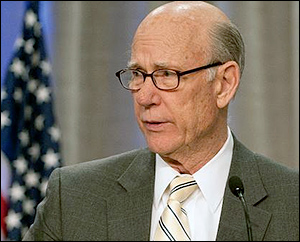
Kansas Sen. Pat Roberts (R)

Jan. 8, 2018 — Veteran Kansas Sen. Pat Roberts (R), who will turn 84 years of age before the next election, announced last Friday that he will not seek re-election to a fifth term in 2020. He becomes the second Senate incumbent to announce his retirement effective 2021, following Tennessee’s Lamar Alexander (R) who made his decision public just before Christmas.

In 2014, Sen. Roberts faced a competitive election against Independent Greg Orman who appeared to coalesce the anti-Roberts vote when Democrat Chad Taylor withdrew from the race because the latter man knew that the senator was certain to win a three-way contest.

With early October polls finding Orman leading Sen. Roberts by as many as 10 percentage points, the veteran Kansas office holder pulled out all of the stops to rebound with a 53-43 percent win. The 2014 Republican wave helped Roberts sweep to victory, overcoming what proved to be largely inaccurate polling along the way.

Pat Roberts was originally elected to Congress in 1980, winning the western 1st District, a seat he would hold for eight terms before claiming an open Senate position in 1996. At the end of the current term he will conclude 40 years of congressional service.

Continue reading →

Senate 2020: The Second Tier – Part I

By Jim Ellis

Dec. 14, 2018 — Looking ahead to the 2020 US Senate cycle, eight states are clearly in the first tier, but there is budding action occurring in a secondary set of places, also. Today, we look at the first group of prospects.

With Republicans having to defend 22 of the 34 in-cycle seats, six are at the top of their protect list: (in alphabetical order) Arizona special, Colorado (Sen. Cory Gardner), Georgia (Sen. David Purdue), Iowa (Sen. Joni Ernst), Maine (Sen. Susan Collins), and North Carolina (Sen. Thom Tillis).

Democrats look to be defending two top targets: Alabama (Sen. Doug Jones) and New Hampshire (Sen. Jeanne Shaheen).

But developments are occurring, or could occur, in a series of other states, some of which could become highly competitive under the right circumstances.

• KANSAS: Sen. Pat Roberts (R) faced strong competition six years ago, and whether or not he decides to seek a fifth term is unclear at this point. With Democrats just winning the governor’s campaign here, it is possible there could soon be renewed interest in challenging for what is traditionally a safe Republican seat.

• KENTUCKY: Senate Majority Leader Mitch McConnell is on the ballot again in 2020. He won his last two competitive campaigns with 56 and 53 percent of the vote in 2014 and 2008, respectively. Potential candidates likely won’t come forward until the 2019 statewide campaigns, including the governor’s race, are completed.

Continue reading →

The Final Outlook

2018-elections-open-seatsBy Jim Ellis

Nov. 6, 2018 — Election Day has arrived, but it is likely that a majority of those planning to vote have already done so. Early voting totals are way up in most of the 37 states that employ a pre-election ballot casting procedure in comparison to the 2014 midterm election.

According to the University of Florida’s United States Elections Project, 25 of the 37 states report receiving more early votes than they did four years ago. None, however, is larger than Texas where early voting has already exceeded that grand total votes cast in 2014. The same also has occurred in Nevada, but it’s less surprising since the last midterm aggregate turnout there was unusually low.

In Texas, just under 4.9 million votes already have been received. In 2014, the aggregate early and Election Day vote was 4.72 million. In 2014, 44 percent of the total vote was cast early. If this same pattern occurs, the current election total turnout will exceed the 2016 presidential level participation figure of 8.96 million votes, however it is unlikely that will happen. How the increased turnout will affect the election outcome is undetermined at this point, but the high number of first-time voters suggest that Democrats could improve their typical standing.

Continue reading →

The Governors’ Races & Veto Power

By Jim Ellis

2018-elections-open-seats-185Oct. 29, 2018 — The 2018 election cycle features 36 gubernatorial campaigns, 26 of which have federal redistricting ramifications. The ones that don’t are at-large congressional district states (Alaska, South Dakota, Vermont, Wyoming) or will be after the next reapportionment (Rhode Island), those that employ redistricting commissions (Arizona, California, Hawaii, Idaho), or the multi-district state where the governor is only awarded a two-year term (New Hampshire).

Here is a breakdown of where things stand in the upcoming election in the 26 states where the governor will have redistricting veto power:


PURE TOSS UPS

FLORIDA: Mayor Andrew Gillum (D) vs. Ex-US Rep. Ron DeSantis (R)
• Most Recent Polls: Gravis Marketing (Oct. 22-23): Gillum 51 percent, DeSantis 46 percent
   Gray/Strategic Research (Oct. 16-23): DeSantis 48 percent; Gillum 45 percent

GEORGIA: Sec/State Brian Kemp (R) vs. Ex-state Rep. Stacey Abrams (D)
• Most Recent Poll: NBC News/Marist (Oct. 14-18): Kemp 49 percent; Abrams 47 percent

IOWA: Gov. Kim Reynolds (R) vs. Businessman Fred Hubbell (D)
• Most Recent Poll: Selzer & Co (Sept. 17-20): Hubbell 43 percent; Reynolds 41 percent

KANSAS: Sec of State Kris Kobach (R) vs. State Rep. Laura Kelly (D) & Greg Orman (I)
• Recent Poll: Public Policy Polling (Oct. 19-20): Kobach 41 percent; Kelly 41 percent; Orman 10 percent

NEVADA: Attorney Gen Adam Laxalt (R) vs. Commissioner Steve Sisolak (D)
• Most Recent Poll: Emerson College (Oct. 10-12): Laxalt 46 percent; Sisolak 41 percent

Continue reading →

Forecasting the Results – Part II

By Jim Ellis

2018-democrat-house-majority-breakdown-text-graphicOct. 8, 2018 — The Democrats need to convert a net 24 seats to secure a one-seat majority in the US House on Election Day, Nov. 6. Many reports quote the number 23 as what is necessary to win control, but the new Pennsylvania map will yield one seat coming back to the Republicans — the new open 14th District — thus pushing the total up to 24.

As stated Friday, our forecasts listed below are based upon a series of factors, including current polling numbers, voter history, candidate personal and job approval favorability, fundraising, other races on the state ballot that could drive turnout, and outside issues such as the confirmation vote to for Judge Brett Kavanaugh to become a Supreme Court Justice, which could change the turnout model, etc.

According to our new analysis, the Democrats are on the cusp of converting the requisite number of Republican seats to take a bare majority and seeing their caucus become significantly larger. At this point, the Democratic gain range appears to reach 23 on the low side and 35 at the apex.

Looking at the country by state and region, it appears the Democrats will do well in the Midwest, in particular. The Great Lakes region that delivered President Trump his surprise victory appears to be snapping back to the Democrats in the midterm House races. Michigan looks particularly good for them at both the statewide and district levels.

Continue reading →

VA-10: Momentum Change;
Dems: Eye-Popping Dollars

By Jim Ellis

Virginia state Sen. Jennifer Wexton, D-Loudoun County (left) | Rep. Barbara Comstock, R-McLean (right)

Virginia state Sen. Jennifer Wexton, D-Loudoun County (left) | Rep. Barbara Comstock, R-McLean (right)

Oct. 4, 2018 — Recently, signals were developing that Virginia Rep. Barbara Comstock’s (R-McLean) campaign status against state Sen. Jennifer Wexton (D-Loudoun County) was trending poorly to the point that she was becoming one of the most endangered incumbents in the nation. Now, the political winds appear to be changing.

In June, Monmouth University released a survey that found the congresswoman dropping behind her Democratic opponent by a substantial margin, 50-41 percent, under a standard midterm turnout model; President Trump’s approval rating was severely upside down; and rumors were circulating that the National Republican Congressional Committee (NRCC) was looking to cancel its multi-million dollar media air time reservation.

Now, things have picked up for Comstock. Yesterday, Monmouth released their new survey for this district (Sept. 26-30; 374 likely VA-10 voters), and it shows her gaining strength when compared to their June data. Still, Wexton leads in all three of their projected turnout models, but it is clear that the momentum is moving in Comstock’s direction.

Under the standard midterm participation model, the Wexton lead is 50-44 percent. If the turnout is low, her margin dips to 50-46 percent. And, if a “Democratic surge” actually takes hold of the electorate, the margin increases to 53-42 percent.

Though Rep. Comstock is behind under all turnout models, her standing has improved in each since June, and reports from inside her campaign suggest the numbers might be even better. Under the standard turnout model forecast in June, the Comstock gain is a net three percentage points. Within the low turnout model, she gains a net five points, and even her standing vis-a-vis the “Democratic surge” is better, by a net two percent.

Continue reading →