Tag Archives: Jim Ellis

Buttigieg Tops New Hampshire Field

By Jim Ellis

South Bend Mayor Pete Buttigieg

Dec. 13, 2019 — It has been clear for some time that South Bend Mayor Pete Buttigieg is making a strong move in Iowa, perfectly understandable for a candidate hailing from the Midwest; but could an Iowa-New Hampshire sweep be in the forecast for the upstart national contender?

A new MassInc poll for WBUR radio, the public news station in Boston, finds Mayor Buttigieg, for the first time, posting a small lead in the Granite State. The survey (Dec. 3-8; 442 likely New Hampshire Democratic primary voters) gives Buttigieg a slight 18-17-15-12 percent edge over former Vice President Joe Biden, and Sens. Bernie Sanders (I-VT) and Elizabeth Warren (D-MA), respectively, as a clear four-way race is beginning to crystallize for the first-in-the-nation primary.

The latest Iowa Caucus public polling, from Nov. 8 – Dec. 10 through four different survey research firms (Selzer & Company, YouGov, Civiqs, and Emerson College), finds Mayor Buttigieg either leading or tied in three of the studies.

Should such a trend come to fruition in February, we would see the underpinnings of not only Buttigieg becoming a legitimate contender, but a serious national four-way contest taking shape.

The New Hampshire poll is significant not only because it reveals a state base for Buttigieg but also finds that neither New England stalwart politicians Sanders nor Warren have clinched the state, as one might surmise. It was only four years ago when Sen. Sanders posted a 60 percent victory over Hillary Clinton in the 2016 Democratic New Hampshire presidential primary. At this point, now exactly two months from the Granite State primary vote, it would be reasonable to believe that both would be doing better than the MassInc survey and other recent polls suggest.

The MassInc/WBUR poll also provides another key data point. Despite former New York City mayor Michael Bloomberg’s major media spending, apparently on a national basis, his favorability ratings among Democrats continue to languish. His personal index will have to substantially improve if he is to make a push to develop a five-way nomination campaign.

Yesterday, we covered a Monmouth University national poll that found Bloomberg being regarded as the most unpopular of the well-known Democratic candidates, and this MassInc/WBUR New Hampshire survey returns similar results.
Continue reading

Rep. Yoho to Retire; Texas Filings

By Jim Ellis

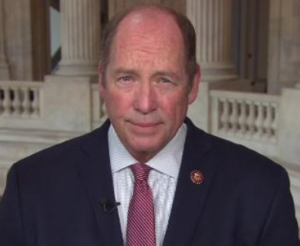
Dec. 12, 2019 — Keeping his pledge to serve only four terms in the House, Florida Rep. Ted Yoho (R-Gainesville) announced in a local radio interview earlier this week that he will not seek re-election next year. Also, the 2020 Texas candidate filing deadline came on Monday, and lists of the qualifying candidates are now becoming public.

REP. YOHO, FL-3

Florida Rep. Ted Yoho (R-Gainesville)

There had been some speculation brewing as to Yoho’s plans for 2020 with some suggesting he might eschew his original pledge. Making this now the 37th open House seat and second in Florida, potential candidates will have until May 1 to file for the Aug. 25 primary.

The eventual Republican nominee will clearly have the inside track to hold this seat for the GOP. Florida’s 3rd District is strongly, and consistently, Republican. President Trump scored 56.2 percent of the vote in 2016. This number is almost identical to the 56.6 percent that Mitt Romney posted against President Obama in 2012, and John McCain’s 54.6 percent that he garnered in the 2008 presidential election.

Rep. Yoho has averaged 61.0 percent of the vote here over four elections, but the district was significantly changed in the 2015 mid-decade court-ordered redistricting plan. In the current configuration, Yoho averaged almost exactly what the Republican presidential candidates scored: 57.2 percent in his two elections since the boundary alteration.

The 3rd District occupies five whole counties and parts of a sixth. The major population center is the city of Gainesville in Alachua County. The remaining portion of the CD is nestled squarely in the north/central section of the Florida peninsula.

Three Republicans had already announced their candidacies, but none seems particularly viable. The contender raising the most money through the Sept. 30 financial disclosure period is businesswoman Amy Pope Wells, but her receipts showed just under $40,000 raised for the campaign with a cash-on-hand figure of just under $8,500.

Continue reading

Shock Poll – Hillary Leading

By Jim Ellis

Hillary Clinton

Dec. 11, 2019 — The Harris polling organization in conjunction with Harvard University has just released what appears to be the first national poll to include former secretary of state and 2016 presidential nominee Hillary Clinton, and it finds her pulling into a small lead when tested against the rest of the Democratic field.

Looking at the large sample survey (Nov. 27-29; 1,859 registered voters — 756 Democratic registered voters, online), Hillary would take a 21-20-12-9-5 percent lead over former Vice President Joe Biden, Sens. Bernie Sanders and Elizabeth Warren, and South Bend Mayor Pete Buttigieg.

Without Hillary included, the field breaks 29-16-13-8-7 percent in favor of Biden, Sens. Sanders and Warren, Mayor Buttigieg, and former New York City mayor Michael Bloomberg, respectively.

There are negatives associated with the methodology, however. First, an online poll is less reliable than a live-interview survey, and generally even less so than an automated response device study.

Additionally, the Harris/Harvard poll was taken during the Thanksgiving holiday weekend, which again potentially skews the sample because so many people would not be included in the sampling universe because of deviations from their normal routines.

Third, the survey included former secretary of state and ex-US senator John Kerry within the field of candidates, and he received five percent support. That, too, could certainly skew the overall results to a degree because he is not running in the 2020 campaign.

Negatives notwithstanding, the fact that Clinton would already land among the leaders in the first of what will likely be several credible national surveys is significant. If anything, this data will lend more fuel to the fire that the former presidential nominee, secretary of state, US senator, and First Lady is seriously considering becoming a national candidate in 2020.

The Harris/Harvard poll again reiterates the most recent polling trend that, without Hillary being tested, Biden is establishing a clear lead but is nowhere close to the necessary 50 percent mark in order to secure nomination. The latest data also confirms that Sen. Warren dropped back into the pack after moving into a virtual tie with Biden six to 10 weeks ago. Sen. Sanders maintains his consistent supporters and is clearly going to be a top-tier factor as the race moves forward.

The candidates appearing to suffer the most from a Clinton re-emergence are Sen. Warren and Mayor Buttigieg. They both drop back significantly with her in the race, each falling into single digits. Biden and Sanders appear to hold most of their strength even with her in the field, which tells us that Warren and Buttigieg’s joint prospects will suffer if she were to return to active candidate status.

Continue reading

House Retirement No. 36

Four-term Rep. George Holding (R-Raleigh) announced that he will not seek re-election next year.

By Jim Ellis

Dec. 10, 2019 — The 36th US House seat to come open lies in Raleigh, North Carolina, as four-term Rep. George Holding (R-Raleigh) announced late Friday that he will not seek re-election next year. He is in the rare situation of being forced from his position because of an unfavorable redistricting draw during the fifth election of the political decade.

We can expect to see a number of such redistricting-related instances occur throughout the country in the next election cycle, but to be still fighting redistricting legal battles, as they are in North Carolina, with a new census and apportionment directly upon us is unprecedented.

Rep. Holding says he is now not seeking re-election because of what he describes as the “terrible” manner in which the boundaries of his 2nd District have been reconstructed. The 2nd moves from a 53-44 percent Trump district to one that voted 60-36 percent for Hillary Clinton.

Though the Republican legislators reconfigured the map, the partisan division will increase the Democratic number by at least two seats, which directly affects the Raleigh and Greensboro and Winston-Salem areas. The court directive forced a criterion change upon the legislature, which responded with the new map.

The post-2020 election delegation will likely feature an 8R-5D split, and Democrats sued arguing they should have more in a state whose electorate typically splits close to 50/50. The three-judge panel that originally struck down the previous GOP map unanimously approved this latest mapping effort, so the new plan will stand for the 2020 elections.

This new congressional map significantly changes the North Carolina political picture. The Holding seat is now a Democratic primary fight, and the early leader is former state Rep. Deborah Ross, who challenged Sen. Richard Burr (R) in 2016 and held him to a hard fought 51-45 percent victory.

The other Republican incumbent left without a political home is three-term Rep. Mark Walker (R-Greensboro), and it is clear he will not seek re-election in the new 6th District. He is reportedly weighing his options for other political opportunities. Rep. Walker averaged 58.1 percent of the vote in his three congressional victories while the newly constructed NC-6 constituency supported Hillary in a 59-38 percent result.

Continue reading

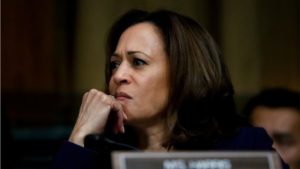
Is Sen. Kamala Harris Protecting
Her California Senate Seat?

By Jim Ellis

Democrat Sen. Kamala Harris of California

Dec. 5, 2019 — Sen. Kamala Harris (D-CA) became the first of what one might consider the top-tier candidates to end her presidential effort, but the announcement timing on Tuesday likely has more to do with her 2022 Senate race than the presidential contest.

The California candidate filing deadline is tomorrow, so Sen. Harris deciding to end her presidential effort means she won’t be on the Golden State presidential primary ballot, and thus avoids an embarrassing loss within her own constituency. Recent polling was forecasting her in the single-digit range even in California.

Obviously, losing any race in one’s home state reveals political weakness, and though she is virtually invulnerable against a Republican in the 2022 general election, the same might not be true if her opponent were a strong Democrat.

Under the California election system that features the jungle primary concept, variations of which are also seen in Washington state and Louisiana, members of the same party can advance into the general election. Florida voters will have the opportunity of adopting that jungle primary concept via ballot initiative next year.

Because California and Washington hold regular primaries before the general election, a pair of candidates always advance irrespective of percentages attained. Conversely, Louisiana holds one election concurrent with the general, meaning a candidate exceeding 50 percent is elected outright; otherwise the top two finishers advance into a December run-off election.

In the California 2022 Senate race, for example, two candidates will move into the general election from their March or June primary (California has continually alternated their primary election dates between the two months, depending upon the political situation at the time the legislature acted) so long as more than one candidate files. Thus, a strong Democrat — and California has many such individuals — could challenge Sen. Harris, draw a relatively meager percentage in the primary while finishing second, and then rally to make a serious general election challenge against her.

Other previous presidential candidates have often found the political going much tougher than expected when returning home to seek re-election after engaging in the national contest, and it remains to be seen if Sen. Harris will find her road to re-election any bumpier.

Continue reading

Pompeo for Senate?

By Jim Ellis

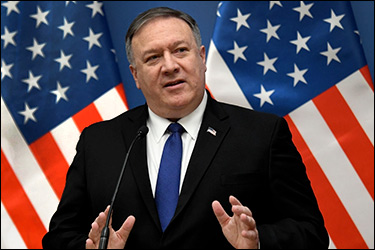
US Secretary of State Mike Pompeo

Nov. 25, 2019 — Ever since Kansas Sen. Pat Roberts (R) announced last January that he would retire at the end of the current Congress there has been consistent speculation that US Secretary of State and former Wichita area congressman, Mike Pompeo, would resign his national position and return to Kansas to run for the open seat. Despite repeated denials from Secretary Pompeo, the speculation would not die.

Now, it appears the rumors of him entering the race have greater foundation, as more concrete stories that he will soon resign and announce his candidacy are regularly surfacing. The Senate Republican leadership is clearly in favor of the Pompeo move, originally fearing that former Kansas Secretary of State Kris Kobach could win a crowded August Republican primary with only a vote plurality and then perform as badly in the general election as he did when he lost the 2018 open governor’s race.

With Republicans holding 53 of the chamber’s 100 seats but having to defend 23 incumbents and open seats on the 2020 Senate election map versus only 12 for the Democrats, the GOP cannot afford an electoral debacle in what should be a safe seat. It was only two years ago that another flawed Republican Senate candidate bungled the Alabama special election, thus allowing Democrat Doug Jones to win the position that Sen. Jeff Sessions had resigned to become US Attorney General.

Currently, eight individuals have announced for the Republican nomination led by Kobach, US Rep. Roger Marshall (R-Great Bend), and state Senate President Susan Wagle (R-Wichita). Polling and local political intel suggests that Pompeo would have little trouble winning the nomination, and the seat, if he were to enter the race. If he does become a candidate, some of the others, and particularly Rep. Marshall, would have time to exit the race and pivot back toward seeking re-election to their current position.

Originally, state Treasurer Jake LaTurner (R) had been in the Senate race – in fact, he was the first to enter the contest immediately after Sen. Roberts made public his intentions – but he has already exited and, at the behest of former Gov. Jeff Colyer (R), is now challenging freshman Rep. Steve Watkins (R-Topeka) for re-nomination in the 2nd Congressional District.

Continue reading

Winning vs. Ideology

By Jim Ellis

Nov. 21, 2019 — As the 10 Democratic presidential candidates again took the debate stage last night, this time from Atlanta, they all needed recognize a few things: They needed to walk a fine line. The contenders needed to carefully navigate between appealing to their party’s ideological base, which is key to winning the nomination, and preparing for the general election where a more centrist approach appears to be the probable course toward achieving national victory.

The Gallup organization just completed a new national survey (Nov. 1-14; 1,015 US adults from all 50 states and the District of Columbia, 437 self-identified Democrats and Independents who lean Democratic) that compared the importance between choosing an ideologically sound nominee with one who is best equipped to win the general election irrespective of where that individual stands on the party’s base issues.

Looking at the current results in the prism of Gallup asking the same questions of Republican respondents when President Obama was running for re-election in 2012, and a Democratic cell group when President George W. Bush was seeking a second term in 2004, this sample skews towards electability over ideology in the starkest proportion.

According to Gallup’s questions asked of Democrats and lean Democrats whether they believed it is more important to find a candidate who can unseat President Trump or one who agrees with the individual respondent on issues, by a margin of 60-36 percent the poll showed that the favored candidate would be the one having the best chance to win the November 2020 election.

In 2012, Republican responses to this choice involving replacing President Obama, surveyed in mid-September of 2011, leaned toward a candidate who could win over the ideologically pure contender in a 53-43 percent spread. Eight years earlier, when President Bush was seeking his second term, the ratio among Democrats at the end of 2003 was 50-44 percent in favor of ideology, but six weeks later, in early February 2004, the margin switched to 55-40 percent toward finding the candidate who was best equipped to unseat Bush.

Continue reading

Unending North Carolina Redistricting

By Jim Ellis

Nov. 20, 2019 — If it seems like the North Carolina redistricting process has dragged on for the entire decade, then your senses are correct, because it has. After seeing a mid-decade re-draw before the 2016 elections, another set of lines will be in place for 2020, and then another plan for the ensuing electoral decade beginning in 2022 will be enacted during the regular decennial process. North Carolina is a sure bet to gain a new congressional seat in 2020 reapportionment.

Last week, the Republican legislature produced a new map per court order that will concede two more seats to the Democrats. This plan is not final, however, as the new map still has must clear the legal process and certainly the Democrats will challenge in an attempt to get more. Republicans will counter and attempt to move the process away from the state three-judge panel which has been favorable to the Democratic arguments, and into federal court where they feel their own points may be given a more sympathetic hearing.

Racial gerrymandering was the subject of the original challenges, but when those arguments led to a new map without a net gain of Democratic seats, the plaintiffs filed political gerrymandering lawsuits. With the Supreme Court basically returning the political gerrymandering arguments back to the state courts, the Democrats, at least in North Carolina, are in much better position to get a map that better reflects their intended outcome.

With the current split being 10R-3D, which of the current members are in the deepest trouble under the new map? Though the map looks fundamentally similar to the current plan, there are sizable differences in district configuration from a political context.

The Daily Kos Elections site ran a voting analysis of the new seats, and it appears a new Tar Heel State delegation under this map would feature eight Republicans and five Democrats, or a net gain of two seats for the latter party.

The two current incumbents who would not likely return under the plan are Reps. George Holding (R-Raleigh) and Mark Walker (R-Greensboro). Their districts go from being a plus-10 Trump district for Holding to a minus-14 CD, and for Walker an original plus-15 Trump to a minus-11.

Continue reading

Buttigieg a Clear Factor in Iowa

By Jim Ellis

Nov. 19, 2019 — Selzer & Company, again polling for the Des Moines Register publication (Nov. 8-13; 2,012 active registered Iowa voters, 500 likely Democratic Caucus attenders), finds South Bend Mayor Pete Buttigieg pulling away from the rest of the field. YouGov, polling for CBS News (Nov. 6-13; 856 registered Democratic voters), projects a different perspective, however, in finding a virtual four-way tie.

Selzer sees Mayor Buttigieg leading the pack with 25 percent, nine points ahead of Sen. Elizabeth Warren (D-MA) and 10 points beyond both Sen. Bernie Sanders (I-VT) and former Vice President Joe Biden.

YouGov, however, finds Sanders and Biden tied at the top with 22 percent, while Buttigieg is only one point behind. The top pair leads Sen. Warren by four points. All are clearly within the polling margin of error.

The numbers again suggest that the Democratic caucus, now less than three months away on February 3rd, is a wide-open affair. All of the most recent polling also yields that Mayor Buttigieg has transformed the campaign, at least in Iowa, into a legitimate four-way race. There is also no recent poll suggesting that any one candidate is in position to secure a majority vote among the prospective Iowa Caucus attenders.

How the Iowa vote will affect the rest of the primaries is anybody’s guess at this point, but the state has proven to be a trend-setter in the past. Whether a strong showing for Mayor Buttigieg will keep him in the top tier as the process moves through New Hampshire, Nevada, and South Carolina prior to Super Tuesday is difficult to currently assess.

Alabama & Arkansas: The Filings

By Jim Ellis

Nov. 15, 2019 — Candidate filing for the 2020 election cycle is now closed in two states, Alabama and Arkansas, and several individuals unexpectedly became candidates.

First, in the presidential race, not only did former New York City mayor Michael Bloomberg file in Alabama, as was widely reported last week, but he also submitted papers for the Arkansas presidential primary. This doesn’t necessarily mean he will enter the national race, but it certainly gives him the option to become an active candidate.

Reports are now surfacing, however, that Bloomberg will not file for the New Hampshire presidential primary at today’s deadline. This move is even more surprising in light of his filing in Alabama and Arkansas. Polling must tell him he would be shut out in the Granite State and, with only a total of 24 first-ballot delegates, skipping the state would not greatly affect his potential delegate acquisition count.

Another surprise came in Arkansas where, at least for now, first-term Sen. Tom Cotton (R) has no Democratic opponent. When filing closed, Fayetteville Democrat and former congressional candidate Josh Mahony complied with the deadline requirements and said in his exit statement said he had been working the state for six months in order to lay groundwork for his statewide campaign. Before the day ended, however, he decided to rescind his candidacy.

Mahony said a family issue keeps him from running, but the Arkansas Republican Party had also just filed an ethics complaint against him, so it is possible that this development also had some influence on his decision to leave the race. In any event, Mahony is no longer a candidate even though he would have been unopposed for the Democratic nomination.

At this point, the Democrats have no Senate candidate, but state law will allow the party members to meet and choose a new nominee to oppose Sen. Cotton. Either way, Cotton’s re-election prospects appear completely sound.

Of course, the Alabama Senate race, now that former US attorney general and Alabama senator, Jeff Sessions, is returning in an attempt to re-capture his previous position, has drawn the most political attention. The entire Republican field for the office includes the aforementioned Sessions, Secretary of State John Merrill, US Rep. Bradley Byrne (R-Mobile), former Auburn head football coach Tommy Tuberville, ex-state Supreme Court Chief Judge and 2017 special Senate nominee Roy Moore, state Rep. Arnold Mooney (R-Shelby County), and businessman Stanley Adair.

The other somewhat surprising filing came in Arkansas’ 2nd Congressional District, where state Sen. Joyce Elliott (D-Little Rock) will run to oppose three-term Rep. French Hill (R-Little Rock). The 2nd District, which is comprised of the Little Rock metropolitan area, is the most politically marginal of Arkansas’ four congressional districts.

Continue reading