Tag Archives: Jim Ellis

Mountain Polling

By Jim Ellis

the-primariesJune 25, 2018 — The Utah state primary is tomorrow, and we have finally seen a poll testing former presidential nominee Mitt Romney in his run for the open Senate seat that the venerable Orrin Hatch (R) is vacating after what will be 42 years of legislative service. In New Mexico, Carroll Strategies released a statewide survey last week of 1,199 of the state’s registered voters and segmented the respondents into the state’s three congressional districts. We look at the upcoming primaries in both states:

Utah Senate

According to the Hinckley Institute at the University of Utah (June 11-18; 654 registered Utah voters, 356 likely Utah Republican primary voters), Romney has a commanding lead as the campaigns enter the final days before Republican voters choose their nominee. In late April, state Democratic convention delegates nominated Salt Lake County Councilwoman Jenny Wilson as the party standard bearer, so there is no Democratic Senate primary on Tuesday.

The polling results find the 2012 Republican presidential nominee leading state Rep. Mike Kennedy, a Provo physician who outpaced Romney among delegates at the Republican state convention, by a whopping 65-23 percent margin. Therefore, little doubt exists that we will see a sizable Romney victory this coming Tuesday night.

Continue reading

Still Counting . . .

By Jim Ellis

i-vote-i-countJune 21, 2018 — Even in the age of advanced technology, vote counting can be a surprisingly long process. Despite political primaries being conducted weeks ago in California (June 5) and Maine (June 12), as of this writing, election officials still have not determined a winner, or second general election qualifier, in at least three campaigns.

In California, the 48th Congressional District’s second general election qualifier remains undeclared. There, Democratic businessmen Harley Rouda and Hans Keirstead are fighting to determine which of the two will advance from a pool of 15 candidates challenging veteran Rep. Dana Rohrabacher (R-Costa Mesa).

On election night, Rohrabacher clinched first place with 30.3 percent of the vote over the field of 15, while Rouda placed second. With the California process being notoriously slow because of the large number of mail ballots that must be counted and are allowed to be postmarked the day of the election and received through that following Friday, it appeared evident that the substantial number of outstanding votes could well change the outcome for the second place qualifier. Hence, the abnormally long post-election process began.

Today, the official count, though still not complete, now finds Rouda re-capturing second place, this time by a scant 69 votes of the more than 173,000 votes cast, counted, and recorded district-wide, and the 57,285 ballots divided only between Rouda and Keirstead.

Continue reading

Maine’s Instant Run-Off Examined

By Jim Ellis

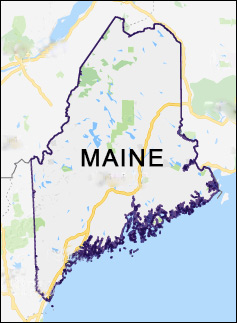
MAINEJune 15, 2018 — An interesting situation is developing from the still-in-progress Maine primary that could become a test case for either changing or instituting state run-off electoral systems.

As you know, run-offs ensure that a party nominee obtains a majority or, in the case of North Carolina and South Dakota, a substantial share of the vote. The run-off’s purpose is to prevent a party from nominating a winner in a multi-candidate election who garners only a small plurality.

The South Carolina 4th Congressional District race is a good example of why some states choose a run-off format. On Tuesday, both parties advanced a pair of candidates into respective run-off elections because no one came close to receiving majority support.

For the Republicans, with 13 candidates running to succeed retiring Rep. Trey Gowdy (R-Spartanburg), former state Sen. Lee Bright finished first, but with only 25 percent of the vote. In most other states, he would have been nominated. Since, 75 percent of the Republican voters chose another candidate, the run-off ensues. On June 26, Bright and state Sen. William Timmons (R-Greenville), who finished second with 19.2 percent, will decide the party nomination in one-on-one electoral competition. On the Democratic side, candidates Doris Lee Turner (29.4 percent) and Brandon Brown (28.5 percent) advance, while Eric Graben (25.7 percent), Will Morin (9.1 percent), and J.T. Davis (7.2 percent) are eliminated.

Maine is testing a unique new system that prevents situations such as their own that occurred in the past two gubernatorial elections, but avoids the cost of holding another separate election. Political observers will now see if their new idea will work and potentially withstand a legal challenge.

Continue reading

California Still Counting;
CD-48 Still Undecided

By Jim Ellis

The California state flag

The California state flag

June 13, 2018 — The notoriously long California vote counting system continues to grind along, and a week later a major election is still in doubt — the 48th Congressional District, a seat fully contained within Orange County. Among the 16 jungle primary candidates, incumbent Rep. Dana Rohrabacher (R-Costa Mesa) has secured the first run-off position and advances into the general election. The ongoing battle is for second place between biomedical company CEO Hans Keirstead and businessman Harley Rouda, both Democrats.

This is an interesting election since the national and state Democratic Parties are split. The California State Democratic Party convention gave its official endorsement to Keirstead, while the Democratic Congressional Campaign Committee and many Democratic leaders officially backed Rouda.

On election night, Rouda had taken the lead, but the laborious post-election count has now put Keirstead in second place with a growing lead. His previous edge over Rouda was 87 votes. The latest count, released Monday night, increases Keirstead’s edge over Rouda to 372 votes, continuing the pattern of Keirstead moving up in the post-election count.

Continue reading

Today’s Primary Preview

By Jim Ellis

June 12, 2018 — Today brings another set of primaries, this time from five states: Maine, Nevada, North Dakota, South Carolina, and Virginia.

MAINE

the-primariesSen. Angus King (I) stands for a second term, and today’s primary will be a non-event. Both the Republicans and Democrats have only one candidate on the ballot. State Sen. Eric Brakey (R-Kennebec County), who was the Maine State Director for the 2012 Ron Paul for President campaign, will be the GOP nominee, while teacher Zak Ringelstein is the Democratic candidate. Sen. King is a prohibitive favorite for re-election.

The open governor’s race is a wild affair for both parties. Gov. Paul LePage (R) is ineligible to seek a third term. The Democrats are fielding seven candidates and the Repblicans, four. Expect the general election to be competitive.

The 2nd District Democratic congressional primary is of keen interest, as a three-way contest culminates among state Rep. Jared Golden (D-Lewiston), wealthy conservationist Lucas St. Clair, and former Islesboro Selectman Craig Olson. The resource battle is between Golden and St. Clair, and both figure to spend more than $800,000 in attempting to secure the party nomination. The winner will challenge two-term Rep. Bruce Poliquin (R-Oakland/Bangor) in the general election.


NEVADA

The Silver State political card is full with contested races for Senate, governor, and three House races.

Continue reading

Democrats Re-Visit
“Super Delegates”

By Jim Ellis

June 11, 2018
— According to an article published late last week by Politico, Democratic National Committee chairman Tom Perez informed a group of US House members this week in a meeting that the party will be considering a move to change the status of what are now known as “Super Delegates” in preparation for the 2020 presidential election.

super-delegates-375The Democratic National Committee’s Rules and Bylaws panel met Friday to consider two proposals about making the group virtually powerless before the next presidential campaign begins. The Super Delegates became controversial in the 2016 presidential contest because of Hillary Clinton’s dominance within this delegate sector, which is comprised of elected officials and party leaders.

Many believed the group unfairly tilted the playing field toward Clinton in the face of actual Democratic primary and caucus voters who preferred Vermont Senator Bernie Sanders. In the end, Clinton still won the pledged delegate count — those earned in primaries and caucuses — but her strength with Super Delegates clinched the nomination long before all the delegates voted on the first ballot at the Democratic National Convention.

In short, each state is awarded a certain number of Super Delegates, officially labeled as “PLEO’s” (Party Leader/Elected Official). They are comprised of a defined number of the state’s elected officials, internally elected, and “distinguished” party leaders. Each state has different rules governing who is awarded Super Delegate status.

Continue reading

California Jungle Primary Intrigue

The California state flag

The California state flag

By Jim Ellis

June 4, 2018 — In 2010, Golden State voters adopted a ballot proposition that changed the state’s primary system. As we have often noted in articles about the state’s political campaigns, the primary is now a qualifying election with the top two vote-getting candidates advancing to the general election regardless of percentage or political party affiliation. Looking toward the California preliminary vote tomorrow, the top-two jungle primary system may produce some unintended consequences.

When the initiative was first floated eight years ago, many pro-enterprise organizations joined in support because they correctly saw that business coalition candidates, and Republicans in particular, were headed for further downturns in California elections. The top-two format, many believed, would produce more centrist victors from both political parties. In practice, when analyzing the three election cycles since the process began and going into a fourth on Tuesday, such has not quite been the case.

As we know, Democrats have heavily targeted California in their 2018 bid to regain the US House majority, believing that their chances of winning the seven Republican districts Hillary Clinton carried in the last presidential election are strong. But Tuesday’s vote is providing them a new obstacle to overcome, a complication that could actually shut them out of even having a general election candidate in some of their top targeted districts.

Continue reading

Post-Primary Pennsylvania:
Setting the Stage

By Jim Ellis

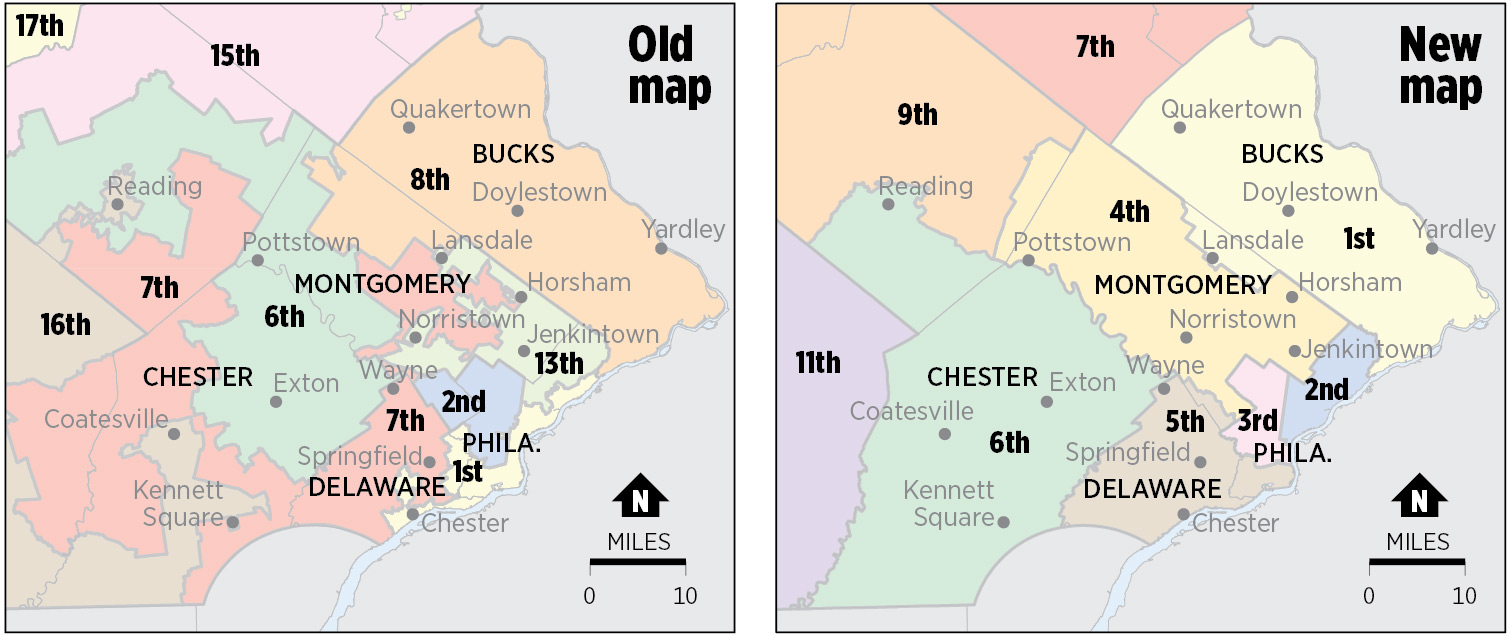
New Pennsylvania Congressional Map - Philadelphia Area

New Pennsylvania Congressional Map – Philadelphia Area | Click on map to see full-size Philadelphia area congressional line up

May 17, 2018 — Now that the dust is settling from the May 15 Pennsylvania primary, we can firmly look at which of the races have already produced November winners and the match-ups for what will be key toss-up races.

Keystone State voters chose nominees for the statewide offices and congressional races where incumbents and candidates ran for the first time in newly drawn districts.

The governor’s race will feature incumbent Democrat Tom Wolf seeking a second term against York Republican state senator and businessman Scott Wagner. With Gov. Wolf’s job approval improving after a rocky first two years in office, he is clearly favored for re-election in the fall.

Sen. Bob Casey Jr. (D) runs for a second term against Rep. Lou Barletta (R-Hazelton). Barletta tallied a 63 percent Republican primary victory on Tuesday, setting up the general election contest. Sen. Casey is favored for re-election, and it remains to be seen if Rep. Barletta can attract the attention and financial support to make this a top-tier challenge race.

The Pennsylvania primaries produced Tuesday winners who have virtually punched their tickets to Washington in districts that heavily favor their political party. Aside from incumbents Brendan Boyle (D-Philadelphia), Dwight Evans (D-Philadelphia), Lloyd Smucker (R-Lancaster), Tom Marino (R-Williamsport), Glenn Thompson (R-Howard), Mike Kelly (R-Butler), and Mike Doyle (D-Pittsburgh) securing re-election, the following non-incumbents will also head to DC after the general election:

• District 4 (Montgomery County) – State Rep. Madeleine Dean (D)
• District 5 (Delaware County) – Ex-local official Mary Gay Scanlon (D)
• District 9 (East-Central PA) – Former Revenue Comm. Dan Meuser (R)
• District 13 (Central PA) – Dr. John Joyce (R)
• District 14 (Southwest PA) – State Sen. Guy Reschenthaler (R)

Races that heavily favor a particular candidate, yet still feature competition:

• District 6 (Chester County) – Chrissy Houlahan (D) vs. Greg McCauley (R)
• District 10 (Harrisburg/York) – Rep. Scott Perry (R) vs. George Scott (D)

The following are the highly competitive districts that will dominate the Pennsylvania congressional campaign landscape in the fall:

• District 1 (Bucks County) – Rep. Brian Fitzpatrick (R) vs. Scott Wallace (D)
• District 7 (Allentown/Bethlehem) – Marty Nothstein (R) vs. Susan Wild (D)
• District 8 (Scranton/Wilkes-Barre) – Rep. Matt Cartwright (D) vs. John Chrin (R)
• District 17 (Allegheny County) – Rep. Keith Rothfus (R) vs. Rep. Conor Lamb (D)

May Primaries: Round 2

By Jim Ellis

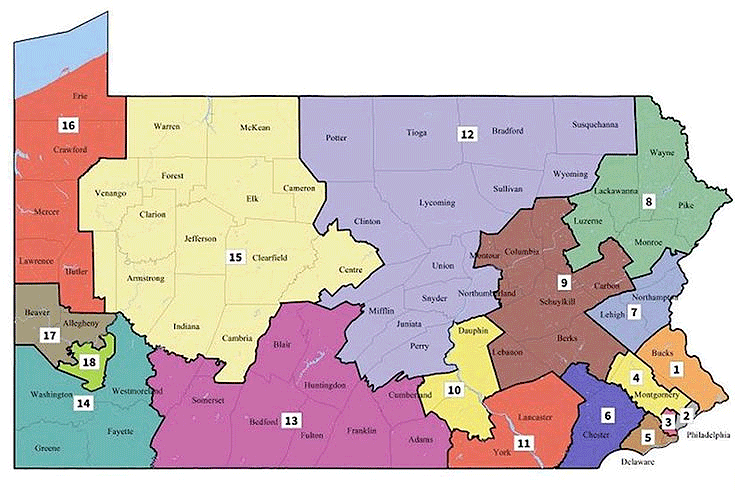
New Pennsylvania Congressional Map | Source: Pennsylvania State Supreme Court (click on image to see full size)

New Pennsylvania Congressional Map | Source: Pennsylvania State Supreme Court (click on image to see full size)

May 15, 2018 — Voters in four more states go to the polls to choose their nominees today. Today, we examine those four states as voting gets underway in the Idaho, Nebraska, Oregon and Pennsylvania primaries.

Pennsylvania

Voters in the Keystone State go to the polls throughout the day to choose partisan nominees for governor, US senator, and representatives in their 18 new US House Districts.

The governor and Senate contests are not stirring up much intrigue as neither Gov. Tom Wolf (D) nor Sen. Bob Casey Jr. (D) face any Democratic primary opposition. On the Republican side, state Sen. Scott Wagner (R-York) seems to have the inside track against businessman Paul Mango and former Pittsburgh Chamber of Commerce president Laura Ellsworth. In the Senate GOP contest, US Rep. Lou Barletta (R-Hazelton) appears primed to defeat state Rep. Jim Christiana (R-Monaca) for the opportunity to challenge Sen. Casey in November. Both Democratic incumbents are currently favored to win new terms.

PA-1: Rep. Brian Fitzpatrick (R-Levittown) will easily win re-nomination against a minor Republican candidate. Democrats have three candidates vying for advancement to the general election. Though the district remains 93 percent intact after the state Supreme Court re-drew the Pennsylvania CDs, and contains all of Bucks County, this race has toss-up potential.

PA-2: Rep. Brendan Boyle (D-Philadelphia) is running in the eastern downtown district, now fully contained within Philadelphia County. Rep. Boyle will have little trouble securing this seat in tonight’s Democratic primary and in the general election. Half of Rep. Boyle’s previous 13th District comprises new District 2.

PA-3: Freshman Rep. Dwight Evans (D-Philadelphia) seeks re-election in a slightly different district, as 80 percent of his former constituents are re-cast into the new 3rd CD. Evans will easily be re-elected in both today’s primary and the general.

PA-4: The new 4th is comprised of parts of five previous districts, and now contains most of Montgomery County with a sliver of Berks County. Former US Rep. Joe Hoeffel (D) is attempting a comeback here, but it appears state Rep. Madeleine Dean has the advantage in the Democratic primary. The new 4th is safely Democratic in the general election.

Continue reading

Top-Two “Jungle Primary” Reverberations

By Jim Ellis

May 14, 2018 — Back in 2010, when initiators created the movement to change the California primary system to feature a jungle format — where the top two finishers advance to the general election regardless of the percentage of vote they attained or party affiliation — they had hoped their ultimately successful ballot initiative would favor candidates closer to the political center. Approaching the June 5, 2018 primary, however, we see that this top-two system might produce quite different and possibly unintended outcomes.
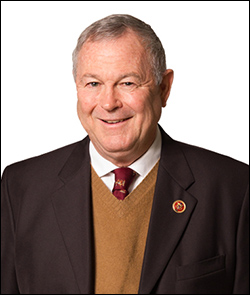
California Rep. Dana Rohrbacher (CA-480

California Rep. Dana Rohrbacher (CA-48)

In a pair of competitive Southern California Republican congressional districts, recent polling suggests that Democrats could find themselves on the outside looking in for the November election despite having high hopes of converting the two seats.

The districts are CA-48, where veteran 15-term US Rep. Dana Rohrabacher (R-Costa Mesa) seeks to be part of another two-year congressional session, and CA-49, the open Orange/San Diego County seat from which Rep. Darrell Issa (R-Vista) is retiring.

The pair of early May polls, one from Change Research (CA-48) and the other Benenson Strategy Group (CA-49), reveals that two Republicans could potentially advance to the general election in both districts, thus preventing Democrats from competing in the general election. Though it’s mathematically possible that two Dems could also progress to November in both places, the latter scenario is less likely because the GOP holds a voter registration edge in each CD.
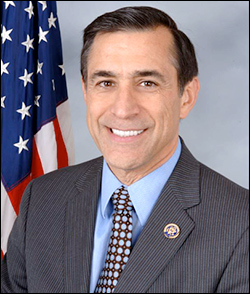
California Rep. Darrell Issa (CA-49)

California Rep. Darrell Issa (CA-49)

In the 48th, Republicans have a 10-point 40.7-30.1 percent registration advantage over Democrats with an additional 24.5 percent declaring No Party Preference, meaning the latter are Independents. In the 49th, the GOP advantage is a lesser 36.7–31.1 percent with 26.6 percent not stating a party preference. Therefore, without coalescing the Democratic vote in each district behind one strong candidate, the chance plainly exists that Republicans could potentially slip two contenders in through the proverbial backdoor. In both the 48th and 49th, too many Democratic candidates are strong enough so as to prevent such a base unification.

The Change Research survey (May 2-3; 590 likely CA-48 jungle primary voters) finds Rep. Rohrabacher leading the field of four tested candidates (though a total of 16 candidate names will appear on the primary ballot, including three Democrats and one Republican who have withdrawn, but too late to erase their ballot positions). Rohrbacher is in front in the poll with just 27 percent of the vote, followed by Democratic scientist Hans Keirstead, who has 19 percent, and ex-state assemblyman and former Orange County Republican Party chairman Scott Baugh, with 17 percent. Democrat Harley Rouda, a businessman and attorney, garners 11 percent support.

Continue reading