Tag Archives: Jim Ellis

The Georgia Run-off

By Jim Ellis

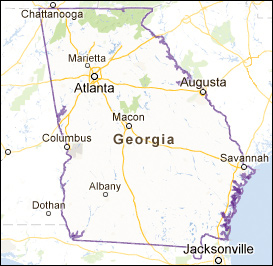
Georgia-mapJuly 25, 2018 — Peach State voters went to the polls yesterday, in a place where Republicans will choose a gubernatorial nominee while Democrats pick congressional candidates in Atlanta suburban districts 6 and 7.

Secretary of State Brian Kemp defeated Lt. Gov. Casey Cagle to win the Republican gubernatorial nomination. His landslide victory produced a more dramatic point spread than even the most optimistic poll for Kemp had predicted. In the May 22 Republican statewide primary, Lt. Gov. Cagle placed first in a field of six candidates with 39 percent of the vote. Placing second in the gubernatorial primary was Secretary of State Kemp with 26 percent of the vote. Under Georgia election law, to win a party nomination, a candidate must receive majority support. Because no one in the Republican primary topped 50 percent, the top two finishers advanced to yesterday’s run-off.

Kemp scored a crushing 69.4 – 30.6 percent win over Cagle, even though the latter began the race as the favorite for the nomination and placed first in the primary election. In that electoral contest, Cagle carried 123 of the state’s 159 counties. To best illustrate how far he dropped during the two-month run-off period, Cagle managed to win only two counties last night, Monroe, just north of Macon, and small Stephens County, a northeast Georgia political entity that hugs the South Carolina border.

Pre-election polls suggested that Kemp would win the run-off last night, as the latest publicly released survey research studies found him leading the lieutenant governor in a range between three and 18 points. The latest poll came Monday from the Trafalgar Group (July 21-22; 1,177 likely Georgia Republican run-off voters) and found Kemp topping Cagle 59-41 percent when leaners were included.
Continue reading

Against Pelosi? Maybe Not

By Jim Ellis

Minority Leader Nancy Pelosi (D-CA)

Minority Leader Nancy Pelosi (D-CA)

July 24 2018 — Several media stories have already been written about Democratic House candidates reportedly saying they will not support Minority Leader Nancy Pelosi (D-CA) for leadership elections scheduled in November. Their actual utterances require closer examination, however.

The Vox news organization tallied the list of such candidates earlier in the month and found 25 who they record as stating opposition to Rep. Pelosi. But examining the actual candidates’ statements indicate that most are leaving themselves some wiggle room when it comes to actually voting against her, while many others in this group are simply not in a strong position to win.

According to Vox, the following Democrats have clearly stated their intention not to support Pelosi for a leadership position, including Speaker:

AR-2: State Rep. Clarke Tucker (D-Little Rock)
Opponent: Rep. French Hill (R-Little Rock)
Race Outlook: Likely Hill
• Tucker is running a television ad opening with a statement that he will not vote for Nancy Pelosi.


CA-39: Retired Naval Officer Gil Cisneros
Opponent: Former Assemblywoman Young Kim (R)
Incumbent: Rep. Ed Royce (R-Yorba Linda) – retiring
Race Outlook: Toss-up
• When asked in a Politico interview if he would support Pelosi, Cisneros answered, “No.” Then he thanked her for serving California, but said new leadership is needed.


ME-2: State Rep. Jared Golden (D-Lewiston)
Opponent: Rep. Bruce Poliquin (R-Oakland/Bangor)
Race Outook: Poliquin Favored
• Vox quotes Golden in an interview with the Lewiston Sun Journal as saying he has “no intention of voting for Nancy Pelosi. None at all.”


NC-9: Businessman Dan McCready
Opponent: Baptist former Pastor Mark Harris
Incumbent: Rep. Bob Pittenger (R-Charlotte) – defeated in Republican primary
Race Outlook: Toss-up
Continue reading

West Viginia Poll: The SCOTUS Effect

By Jim Ellis

July 23, 2018 — The Trafalgar Group surveyed the West Virginia US Senate campaign (July 13-16; 1,158 likely West Virginia general election voters) and tested — for what may be the first time any pollster has done so since President Trump officially nominated Appeals Court Judge Brett Kavanaugh to replace retiring Justice Anthony Kennedy — how the impending Supreme Court confirmation vote will affect a US Senate election.

Trafalgar’s initial ballot test response is consistent with other released polls regarding the race itself. That is, Sen. Joe Manchin (D) leads Attorney General Patrick Morrisey (R) 50-40 percent when the question is first posed. For the past month, all West Virginia surveys have delivered results in a similar range.

Polling chart courtesy Trafalgar Group

Polling chart courtesy Trafalgar Group. Click on the Trafalgar Group link or the graphic above to see more details.

However, the question also was asked of each individual respondent how he or she would would view the Senate race through the prism of whether or not Sen. Manchin would vote for or against confirming Judge Kavanaugh for the US Supreme Court. How much would the answer to that question sway a voter? The answer is: greatly.

At this point, the senator has not yet indicated how he will vote. Immediately after the nomination became public, Sen. Manchin stated that he wanted Judge Kavanaugh to complete the hearing process and publicly answer specific questions (Sen. Manchin is not a member of the Judiciary Committee).

According to Trafalgar, should he vote to confirm Judge Kavanaugh to serve on the Supreme Court, Sen. Manchin’s support within the electorate would substantially grow. However, if he opposes the judge, his campaign against Morrisey falls into the toss-up category.

Continue reading

Feinstein Loses

By Jim Ellis

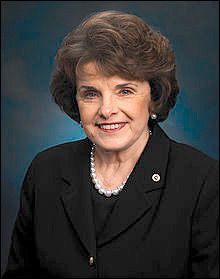
California Sen. Dianne Feinstein (D)

California Sen. Dianne Feinstein (D)

July 17, 2018 — Five-term Sen. Dianne Feinstein (D) lost the official California Democratic Party endorsement to her general election rival and fellow Democrat, state Sen. Kevin de Leon (D-Los Angeles), this past weekend in Oakland, attracting an embarrassing seven percent of the vote among the Democratic Party delegates.

Sen. Feinstein knew she was headed for defeat within the party structure formal endorsement process, so she was campaigning for the delegates to vote “no endorsement.” This ploy garnered more votes than she received, as 28 percent of the delegates supported the party taking no official action in the Senate race. Thus, Sen. de Leon received 65 percent of the delegate vote, exceeding the minimum threshold of 60 percent to claim the party endorsement.

The action means that de Leon will be designated the official party candidate on the ballot, obviously an unusual situation for a challenging Democrat opposing an incumbent of the same party. So unusual, in fact, that in no other race where two Democrats are facing each other in the general election, from the statewide contests through the state assembly races, did the party delegates choose the challenger over the incumbent.

In winning the party endorsement, Sen. de Leon will be entitled to direct party funding and access to the state party’s fundraising and voter databases. Though having access to these resources should result in him raising an estimated several hundred thousand dollars, such an amount is just a drop in the bucket as to what a candidate in the nation’s most populous state needs in terms of financial resources necessary to compete.

Continue reading

Crowley: Still on the Ballot

By Jim Ellis

Democrat-Socialist Alexandria Ocasio-Cortez

Democrat-Socialist Alexandria Ocasio-Cortez

July 16, 2018 — As has been extensively covered in the national media, Democratic socialist Alexandria Ocasio-Cortez upset 10-term Rep. Joe Crowley (D-Queens) in the June 26 New York federal primary, but the winner is now claiming the defeated congressman may still oppose her in the general election.

As we detailed in our own report about the 14th Congressional District result, Rep. Crowley could still force a general election campaign because he became the Working Families Party nominee on the same night that he was losing the Democratic Party nomination. Under New York election law, candidates may simultaneously appear on the ballot as the nominee of more than one party.

The congressman, however, still maintains that he is not running but simultaneously has refused to resign from the WFP line — even when the party leadership asked him to do so.

Ocasio-Cortez is accusing the congressman of launching a minor party general election effort because he has, according to her, refused to follow through on scheduled calls to discuss his support for her despite his public comments to the contrary. Crowley said, via Twitter, that it is Ocasio-Cortez’s people who have “not followed through,” with scheduling the appointments.

Swept up in the national media coverage that has engulfed her since denying Rep. Crowley re-nomination, Ocasio-Cortez is already moving onto the national stage and still challenging the party establishment. She has already dispersed staff members to Delaware to help US Senate candidate Kerri Harris who is challenging Sen. Tom Carper in the Sept. 6 Democratic primary. She is doing the same for Bernie Sanders activist Brent Welder, one of the far left candidates hoping for the chance to unseat GOP Rep. Kevin Yoder in Kansas.

Continue reading

Gauging the Enthusiasm Gap

By Jim Ellis

i-vote-i-countJuly 13, 2018 — Much has been written over the past few elections cycles about voting enthusiasm and whether it is a predictive political factor. It has been seemingly apparent that the party members most interested in participating in an election, most particularly for a midterm or special election vote, generally see its candidates enjoy the greater success.

Yesterday, we looked at the extensive just-released Survey Monkey-Axios Media data that covered 13 US Senate races. The combined number of states also hosts a minimum of 15 competitive US House races. To re-cap, while the Survey Monkey analysts posted results under various turnout models in each of the tested states, it generally became clear about which candidate has the current advantage from the Senate contests in question.

Democrats were performing well in the Midwest and Mid-Atlantic regions, where incumbents in Pennsylvania, Michigan, Wisconsin, Ohio, and West Virginia all held substantial leads over their Republican opponents.

The GOP held the upper hand in Indiana and North Dakota challenge races. In the South, Republican Gov. Rick Scott looks to be topping Florida Sen. Bill Nelson, and US Rep. Marsha Blackburn (R-TN) has opened a substantial lead over Tennessee former Gov. Phil Bredesen.

Turning to the West, Democrats are moving ahead in both Arizona and Nevada and securely lead in Montana.

The Missouri contest between Sen. Claire McCaskill (D) and Attorney General Josh Hawley (R) stretches from a five-point Democratic lead all the way to a five-point Republican advantage depending upon the turnout model.

The Survey Monkey pollsters tested voter enthusiasm in all 13 states. They asked the following question:

Continue reading

Supreme Politics

By Jim Ellis

July 11, 2018 — President Donald Trump’s choice of US Circuit Judge of the DC Court of Appeals Brett Kavanaugh to replace retiring Supreme Court Justice Anthony Kennedy will likely fundamentally change the 2018 Senate election cycle.

Judge Brett Kavanaugh at the White House, where President Trump nominated him to replace retiring Supreme Court Justice Anthony Kennedy. | C-SPAN

Judge Brett Kavanaugh speaks at the White House, where President Trump announced Monday that Kavanaugh would be his nominee to replace retiring Supreme Court Justice Anthony Kennedy. | C-SPAN

With Senate Majority Leader Mitch McConnell (R-KY) already publicly indicating that he is planning to keep the Senate working through August, the Supreme Court confirmation process now guarantees such will happen. With majority Republicans having leverage over the confirmation hearings and vote schedule, we can expect a great deal of politics will be accompanying the legal rhetoric that awaits us during the remaining summer months.

The Senate political map helps Judge Kavanaugh in his confirmation battle. Both sides will mount crushing pressure on those members perceived as swing votes, and the eventual targets will be backed into such a position where it will be impossible to avoid political damage once their eventual vote is cast. The three Democrats who supported Supreme Court Justice Neil Gorsuch when he was confirmed on April 7, 2017 are:

  • Sen. Joe Donnelly (D-IN)
  • Sen. Heidi Heitkamp (D-ND)
  • Sen. Joe Manchin (D-WV)

The three will naturally be the top targets for this confirmation battle, and there is a strong chance that each will also vote for Judge Kavanaugh. Already trapped in tough re-election battles, these senators will be hard-pressed by both sides pushing them to vote for or against Kavanaugh; but considering their respective states voted for President Trump in margins of 19 (IN), 36 (ND), and 43 (WV) percentage points suggests the density of pressure to support the nominee will overwhelm the opposition.

After last night’s announcement, Sen. Manchin issued a statement saying he is particularly interested about Judge Kavanaugh’s position on healthcare issues, especially those affecting people with pre-existing conditions as they relate to healthcare insurance coverage. Sen. Manchin says over 800,000 people in his state of West Virginia fall into this category.

Continue reading

Opposing Florida Gubernatorial
Candidates Both Ahead by 17 Points …

By Jim Ellis

Florida state Agriculture Commissioner and former US Congressman Adam Putnam (left) -- ahead by 17 percent; US Rep. Ron DeSantis (R-Palm Coast/Daytona Beach) leading by 17 percent

Florida state Agriculture Commissioner and former US Congressman Adam Putnam (left) — ahead by 17 percent according to polling; US Rep. Ron DeSantis (R-Palm Coast/Daytona Beach) — also ahead by 17 percent

July 10, 2018 — It’s not particularly unusual to find a political race where different pollsters see separate leaders in an election contest, but the open Florida Republican primary governor’s campaign may be setting a new standard.

As Ryan Nichol of the Florida Politics Blog reports, a new Remington Research poll (July 2-5; 2,900 likely Florida Republican primary voters via automated response) finds US Rep. Ron DeSantis (R-Palm Coast/Daytona Beach) leading state Agriculture Commissioner and former US Congressman Adam Putnam 43-26 percent in the upcoming open Aug. 28 Republican primary.

What’s unusual about this survey conducted for the Tenth Amendment Project, a group supporting DeSantis, is that the result provides the opposite margin when compared to two other recent independent news organization political polls that both project Putnam to be substantially ahead — one of which by the same 17-point spread that Remington sees for DeSantis. Another poll posts the Putnam advantage at 15 percentage points.

Marist College, conducting their poll for NBC News (June 17-21; 1,083 Florida adults, 947 registered Florida voters, 326 likely Florida Republican primary voters, 344 likely Florida Democratic primary voters via live telephone interviews), found Putnam’s edge to be 38-21 percent, which is similar to the Fox News survey (Anderson Roberts Research [D] and Shaw & Company Research [R]; June 15-19; 901 likely Florida Republican primary voters via live telephone interview) that forecast Putnam leading 32-17 percent.

Continue reading

Cloud Wins Special in Texas

By Jim Ellis

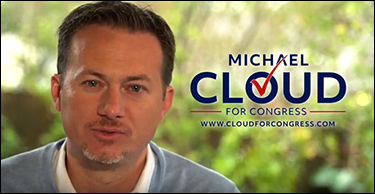
Michael Cloud (R) | Photo from campaign ad

Michael Cloud (R) | Photo from campaign ad

July 2, 2018 — Perhaps the most unique special election from a long series of 2017-18 irregular voting contests just wrapped up this weekend in southeast Texas, capping a subdued political battle that attracted little national attention.

Former Rep. Blake Farenthold (R-Corpus Christi) is one of several members to be forced from office because of sexual harassment allegations. Already announcing that he would not seek re-election because of a settlement reached with a female employee that was financed through the special congressional taxpayer funded account created years ago to settle internal employee relations incidents, Farenthold then quickly resigned from Congress when it became apparent that the House Ethics Committee was going to fully investigate his situation.

Rep. Farenthold’s exit meant the committee would no longer have jurisdiction to consider an ethics complaint because the incumbent’s mid-term departure meant the committee could not pursue a private citizen.

Under Texas election law, Gov. Greg Abbott (R) was forced to quickly call a special election to fill the balance of the term. His state’s vacancy procedure did not afford him the opportunity of making the special election concurrent with the regular vote as Govs. Rick Snyder (R-MI) and Andrew Cuomo (D-NY) did when House members in their states resigned (Rep. John Conyers, D-MI) or suddenly passed away (Rep. Louise Slaughter, D-NY).

Continue reading

Examining The Tuesday Turnout

By Jim Ellis

the-primariesJune 29, 2018 — In continuing the effort to monitor primary turnout as a potential indicator of how the general election may unfold and whether a Democratic wave is forming, today we examine the preliminary participation numbers from the June 26 primaries.

Previously, in the 26 states where primaries were held, it appears that a normal turnout pattern had developed. Generally, more Democrats were voting in the states that typically vote Democratic, while more Republicans participated in those places where Republican candidates win the greater number of offices. In the five pure primary (non-run-off) states that held primaries on Tuesday, such a pattern continued. Utah was not included in the following analysis because the state did not feature any political contest where both Democrats and Republicans held a primary vote.

Democrats decisively turned out more people in Maryland (the Senate Democratic primary attracted 560,477 votes while the Republicans only produced 169,047), as one would expect, since the Free State is one of the strongest Democratic entities in the country. Conversely, more Republicans than Democrats voted in the Oklahoma primary (452,194 to 395,038 in the gubernatorial race), and that ratio, too, was anticipated.

Colorado, generally considered a swing state but one moving toward the Democrats in most elections, again saw more Democrats participating in Tuesday’s election. In the open governor’s race, 627,839 Democrats voted in the gubernatorial primary as compared to 493,445 Republicans. Once more, these numbers are predictable and represent a rather normal voter turnout pattern.

While talk of a “blue wave” continues and polls continue to show that more Democrats are interested and enthused about the coming midterm elections in the fall, such is not apparent in actual voting behavior within the two largest and most prolific Democratic states. In California, as we previously reported, while more Democrats than Republicans voted in the statewide jungle primary, in the seven targeted congressional districts more people voted for Republican candidates in six of those seven.

Continue reading