Tag Archives: Jim Ellis

The Final Outlook

2018-elections-open-seatsBy Jim Ellis

Nov. 6, 2018 — Election Day has arrived, but it is likely that a majority of those planning to vote have already done so. Early voting totals are way up in most of the 37 states that employ a pre-election ballot casting procedure in comparison to the 2014 midterm election.

According to the University of Florida’s United States Elections Project, 25 of the 37 states report receiving more early votes than they did four years ago. None, however, is larger than Texas where early voting has already exceeded that grand total votes cast in 2014. The same also has occurred in Nevada, but it’s less surprising since the last midterm aggregate turnout there was unusually low.

In Texas, just under 4.9 million votes already have been received. In 2014, the aggregate early and Election Day vote was 4.72 million. In 2014, 44 percent of the total vote was cast early. If this same pattern occurs, the current election total turnout will exceed the 2016 presidential level participation figure of 8.96 million votes, however it is unlikely that will happen. How the increased turnout will affect the election outcome is undetermined at this point, but the high number of first-time voters suggest that Democrats could improve their typical standing.
Continue reading

“Blue Wave” Absent in Arizona Races

By Jim Ellis

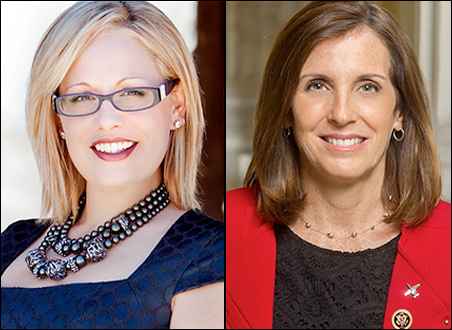
L-R -- Arizona Reps. Kyrsten Sinema (D-Phoenix) and Martha McSally (R-Tucson)

From left to right, Arizona Reps. Kyrsten Sinema (D-Phoenix) and Martha McSally (R-Tucson)

Nov. 2, 2018 — It was always believed that the Grand Canyon State’s open Senate race between Reps. Kyrsten Sinema (D-Phoenix) and Martha McSally (R-Tucson) would be one of the best campaigns in the country, and no one should be disappointed.

As we approach Election Day, differing indicators have presented themselves regarding who might win this toss-up campaign. Five polls have been released covering the period between Oct. 23-29. Three of the five give Rep. Sinema a slight lead, while one projects a tie.

YouGov/CBS News (Oct. 23-26; 972 likely Arizona voters) and Marist College/NBC News (Oct. 23-27; 506 likely Arizona voters) both post the Democratic nominee to identical 47-44 percent leads. CNN/SSRS (Oct. 24-29; 702 likely Arizona voters) finds Sinema’s edge to be 51-47 percent. But HighGround Public Affairs (Oct. 26-28; 400 likely Arizona voters) sees Rep. McSally ahead, 47-45 percent. Fox News (Oct. 27-29; 643 likely Arizona voters) came to a third conclusion, a 46-46 percent tie.

Continue reading

Ohio: Contrasting Polls

By Jim Ellis

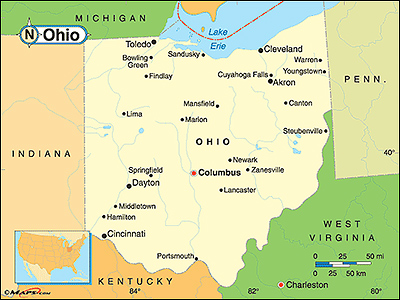
state-of-ohio-mapNov. 1, 2018 — The Buckeye State of Ohio is viewed as one of the country’s quintessential swing states. In 2016, however, the state exceeded polling and even Republican expectations in their presidential vote, as President Trump won a decisive 52-44 percent victory over Hillary Clinton.

Some suggested the Trump vote was an indication that the state could be moving more definitively to the political right, but new surveys suggest the Buckeye electorate is returning to its previous swing vote history.

Still, Ohio proves a reliable national political barometer. In both 2008 and 2012, the electorate here voted for President Obama after twice after backing President George W. Bush in his two elections. The state previously favored President Bill Clinton in his two successful national campaigns. In fact, the last time Ohioans failed to vote for the winning presidential candidate came in 1960 when the state awarded its electoral votes to Republican Richard Nixon in his national losing effort against John F. Kennedy.

Two new polls were released this week that paint different pictures of the Ohio electorate’s current state. Some of the results are curious to the point of questioning the polling reliability or not being able to adequately determine how the governor’s race will end and failing to understand the wide discrepancy in US Senate polling projections.

Continue reading

National Early Voting Report

By Jim Ellis

i-vote-i-countOct. 31, 2018 — Now more than halfway through the early voting period in the 37 states that offer early voting options for the populace, some places are turning in record participation rates. Each state has various nuances in their early voting procedures, so comparing the early reports to each other is of little value. Going back to contrast the current 2018 reported numbers with how that particular state voted in the last midterm election (2014) does have significance, however.

Already, in the latest available reports according to the United States Election Project administered by the personnel at the University of Florida, seven states are reporting more received early voting ballots than were recorded for the entire 2014 pre-election period. They are:

• Tennessee – 162.3% more ballots (1,029,846 versus 634,364 recorded in 2014)
• Texas – 144.3% increase (2,980,915 versus 2,066,368 recorded in 2014)
• Indiana – 127.9% increase (292,726 versus 228,932 recorded in 2014)
• Nevada – 122.5% increase (372,455 versus 304,005 recorded in 2014)
• Georgia – 111.1% increase (1,188,636 versus 1,069,912 recorded in 2014)
• Minnesota – 106.0% increase (249,909 versus 235,808 recorded in 2014)
• Delaware – 103.2% more ballots (8,550 versus 8,288 recorded in 2014)


An additional seven states have so far recorded better than 85 percent of their early voting total in comparison to their entire 2014 pre-election voting universe:

• North Carolina – 97.1% of previous (1,140,657 versus 1,174,188 recorded in 2014)
• Virginia – 94.2% of previous total (191,755 versus 203,556 recorded in 2014)
Continue reading

With Media Focused on O’Rourke, Cruz Maintains Consistent Edge

By Jim Ellis

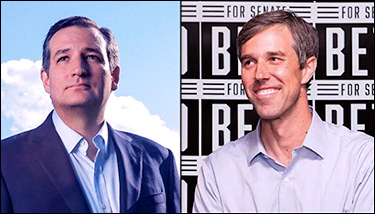
Texas Sen. Ted Cruz (R) | Rep. Beto O’Rourke (D-El Paso)

Texas Sen. Ted Cruz (R) | Rep. Beto O’Rourke (D-El Paso)

Oct. 25, 2018 — The Texas Senate race has become the premier political contest of this midterm election. With Rep. Beto O’Rourke (D-El Paso) becoming a national celebrity due to constant media attention, and now with record fundraising, this election has stretched beyond Texas and evolved into a national campaign.

Though the media continually promotes O’Rourke, extensive polling has only put him ahead of Sen. Ted Cruz (R) just once during the entire election cycle. Despite O’Rourke raising an eye-popping $38 million during the last quarter, an all-time record for any Senate race, Cruz’s margins are actually growing.

During this calendar year, 35 polls have been conducted of the Texas Senate race from 19 different polling firms. In only one, an online survey from Ipsos Reuters in early to mid-September (Sept. 6-14; 992 Texas respondents), did Rep. O’Rourke score an advantage over Sen. Cruz. In that poll, the El Paso congressman led 47-45 percent.

While Sen. Cruz held an advantage in the other 34 polls, his margin was typically small. His average support factor is 45.6 percent. He hits 50 percent or more in only 13 of the surveys. Rep. O’Rourke records an average of 41.1 percent and reaches 50 percent in one survey. While these numbers and margins clearly show weakness for an incumbent, as we pointed out when covering Sen. Claire McCaskill (D-MO) and Sen. Joe Donnelly (D-IN) in similar columns earlier this week, Sen. Cruz is demonstrating growth as the early voting period begins and Election Day draws nearer in contrast to the others who appear to be losing momentum.

In the last 10 polls, covering the Oct. 1-21 period from 10 different pollsters, Sen. Cruz averages 50.2 percent preference and posts majority support in seven of the 10 studies. Rep. O’Rourke averages 45.2 percent, leads in none, and obviously never reaches 50 percent. While Cruz maintains a consistent edge, O’Rourke remains in position if not to score an upset, at least to record the best Democratic statewide percentage since 1990, which was the last time a Democratic candidate won a Texas statewide office.

Continue reading

Is Donnelly Faltering in Indiana?

By Jim Ellis

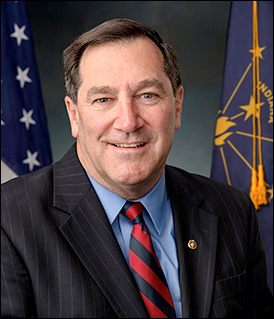
Indiana Sen. Joe Donnelly (D)

Indiana Sen. Joe Donnelly (D)

Oct. 25, 2018 — With only four 2018 Indiana Senate polls conducted before September, this campaign was the least surveyed toss-up race in the country, but that is changing. We now see a plethora of polling being released in October. In what appeared to be a contest trending toward Sen. Joe Donnelly (D) the results now appear to be turning.

In mid to late September, Ipsos Reuters (Sept. 12-20; 1,181 Indiana voters; online) and Fox News (Sept. 29-Oct. 2; 695 likely Indiana voters) found Sen. Donnelly leading former state representative and international businessman Mike Braun (R), 46-43 and 43-41 percent, respectively.

An early October survey from American Viewpoint (Oct. 7-10; 800 likely Indiana voters) reversed the trend, posting Braun to a 44-40 percent lead. After that, a series of three surveys from a trio of independent polling firms, all conducted between October 12-16, found Sen. Donnelly regaining the lead.

In consecutive order, Gravis Marketing (377 likely Indiana voters), Survey USA (816 likely Indiana voters), and Vox Populi (783 likely Indiana voters) posted Donnelly to leads of four (44-40 percent), one (41-40 percent), and eight (44-36 percent) percentage points, respectively.

The two latest surveys, again from American Viewpoint (Oct. 14-17; 800 likely Indiana voters) and a new one from Mason Strategies (Oct. 15-20; 600 likely Indiana voters), find Braun seesawing back into the lead. American Viewpoint yields the Republican a 44-40 percent advantage, while Mason Strategies sees Braun up 47-43 percent.

Continue reading

The Nevada Sway

By Jim Ellis

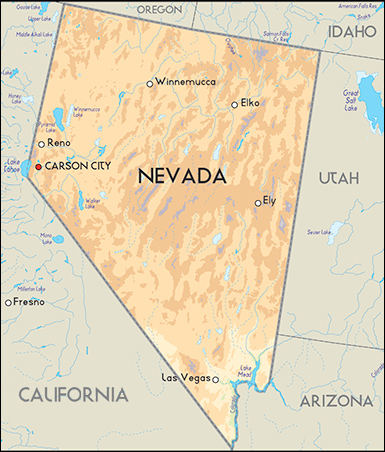
Nevada-mapOct. 17, 2018 — A new Emerson College poll (Oct. 10-12; 625 likely Nevada voters) projects Sen. Dean Heller (R) to a 48-41 percent lead over freshman Rep. Jacky Rosen (D-Henderson), which is the largest lead for either candidate since the June 12th primary.

For most of the election cycle, this race has been rated as a toss-up campaign, but most prognosticators believed it would eventually tilt toward the Democrats yielding a challenger victory.

Viewed as a state trending Democratic because of Hillary Clinton’s 48-45 percent victory in the most recent presidential campaign added to President Obama winning here in both of his elections: 52-46 percent over Mitt Romney, and in a 55-43 percent landslide over John McCain, the 2014 Republican sweep from the governor’s race through the state legislative campaigns has generally been disregarded as an anomaly.

Outgoing Gov. Brian Sandoval (R) has strong approval ratings and would clearly be a re-election favorite if the state did not have a term limit law. The governor is playing an interesting role in this year’s campaign. He is featured prominently in Sen. Heller’s advertising but refuses to endorse Attorney General Adam Laxalt (R) as his successor because the latter man refuses to support the Sandoval tax program, which is becoming the governor’s legacy as Nevada’s chief executive.

Continue reading

A Polling Dichotomy in Wisconsin

By Jim Ellis

Superintendent of public instruction, Tony Evers (D), left, and Gov. Scott Walker (R)

Superintendent of public instruction, Tony Evers (D), left, and Gov. Scott Walker (R)

Sept. 15, 2018 — Two succeeding polls were just released with one showing Wisconsin Gov. Scott Walker (R) barely leading in his fight for a third term, while another predicts he will be blown out. Yet, the two seemingly contradictory polls both find an almost identical Senate race status.

NBC News/Marist College went into the field during the period of Sept. 30-Oct. 3 (943 Wisconsin adults; 781 registered Wisconsin voters; 571 likely voters) and found Democratic superintendent of public instruction, Tony Evers, leading Gov. Walker by a whopping 53-43 pecent among the likeliest of voters (52-43 percent within the registered voter segment). But, Marquette University Law School, a prolific Wisconsin pollster since the 2012 election cycle, actually finds the governor clinging to a one-point, 47-46 percent edge in their just-released survey (Oct. 3-7; 1,000 registered Wisconsin voters; 799 likely voters).

Sen. Tammy Baldwin (D), left, and state Sen. Leah Vukmir (R-Brookfield)

Sen. Tammy Baldwin (D), left, and state Sen. Leah Vukmir (R-Brookfield)

While the two pollsters are far apart in how they see the governor’s race, they are very consistent in projecting the US Senate contest between first-term incumbent Sen. Tammy Baldwin (D) and state Sen. Leah Vukmir (R-Brookfield). NBC/Marist gives Sen. Baldwin a 54-40 percent advantage within their likely voters cell, while Marquette finds a similar 53-42 percent spread.

A simple explanation suggests that the governor’s race is quite volatile while the Senate campaign is virtually decided. The two polls were run consecutively with NBC/Marist ending on Oct. 3 and Marquette beginning on that day. Obviously, this means the Marquette data is the most recent.

The Marquette sampling universe looks to be the stronger, as both the registered and likely voter cells are larger than NBC/Marist’s. Additionally, since Marquette exclusively polls the Wisconsin electorate and does so on what appears to be a quarterly basis but more frequently when closer to an election, their knowledge of the voter base is likely superior to NBC/Marist, which is a national pollster. Therefore, the greater local knowledge likely provides them a superior ability to better pull a reflective sample.

Continue reading

New Nevada Data

By Jim Ellis

Nevada-mapOct. 11, 2018 — The new NBC News/Marist College survey (Sept. 30-Oct. 3; 920 NV residents; 780 registered Nevada voters; 574 likely Nevada voters) detects movement toward the Republicans in the two major Nevada statewide races (governor and senator), while keeping both contests in the pure toss-up column.

Marist College is an “A” rated pollster from the 538 statistical analysis organization and has partnered with NBC News since the 2012 election. Already releasing several statewide polls this year, Marist tested the Nevada electorate knowing that Sen. Dean Heller (R) is embroiled in a tough re-election campaign against freshman Rep. Jacky Rosen (D-Henderson), while the open governor’s race, featuring Attorney General Adam Laxalt (R) and Clark County Commissioner Steve Sisolak (D), had begun to turn toward the latter.

According to the NBC/Marist ballot test results, Sen. Heller posts a 46-44 percent edge among likely voters and an almost identical 45-43 percent within the registered voter sample. When the Libertarian Party nominee is added and a question asking whether any of the candidates are satisfactory, Sen. Heller maintains the lead, 44-42 percent, with eight percent going to Libertarian Tim Hagan, and another two percent saying they want “none of these candidates.” Among registered voters, the respondents split 42-41-8-3 percent in Sen. Heller’s slight favor, with Rep. Rosen closely following, and Hagan and “none of the above” trailing respectively.

Continue reading

NJ-11: Rebounding

By Jim Ellis

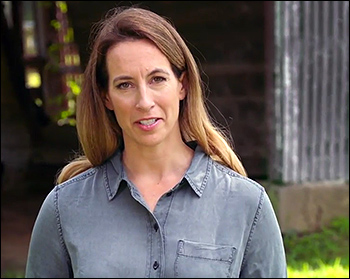
Navy veteran and attorney, Mikie Sherrill

Navy veteran and attorney, Mikie Sherrill

Sep. 3, 2018 — A new poll suggests that conventional wisdom about how a northern New Jersey district will vote next month might be inaccurate.

For quite some time, the common belief has been that retiring Rep. Rodney Frelinghuysen’s (D-Morristown) seat will convert to the Democrats in the person of attorney and Naval Academy graduate Mikie Sherrill.

An internal National Strategy poll for the Jay Webber (R) campaign (Sept. 24-27; 400 likely New Jersey voters), however, now finds the GOP nominee drawing much closer to Sherrill, to the point where he is within the polling margin of error. According to National, the ballot test finds Sherrill leading, 46-43 percent.

Published polls here have been few and far between. Right after the primary, the money count so favored Sherrill that the prognosticators began making a Democratic victory in this open Republican district a foregone conclusion.

Sherrill had already raised over $4.2 million before the end of June and held just under $3 million in the bank. This compared to Webber having less than $200,000 cash-on-hand. His fundraising was slow to gain momentum, and he had to spend in order to win the party nomination in the June 5 primary, hence his low post-primary financial total. The dollar count led to the principle idea that Sherrill was becoming a lock. Since that time, Webber’s fundraising has moved well into seven digits.

Continue reading