Tag Archives: favorability

NY-2: Trump for Congress?

NOTE: Happy Thanksgiving. Our Political Updates will return on Monday, Dec. 2.

By Jim Ellis

Lara Trump

Nov. 27, 2019 — Action about who the Republicans might nominate to succeed retiring New York Rep. Peter King (R-Seaford) is beginning to simmer, especially since the Club for Growth released a poll of the district’s GOP electorate late last week.

The Club contracted with WPA Intelligence to test Lara Trump, wife of Eric Trump and daughter-in-law of President Trump. Rumors had been surfacing that she might be contemplating running in the 2nd District; hence, the interest in gauging what type of support she might have for such a race. WPAi paired Lara with former congressman, Rick Lazio, who is considering becoming a candidate, in a hypothetical Republican primary. According to their data (Nov. 17-18; 400 likely NY-2 Republican primary voters), Lara Trump would lead Lazio by a whopping 53-19 percent.

The result is not particularly surprising because Donald Trump has a solid Republican base in the district. The WPAi survey finds the president’s favorability ratio at 78:19 percent within this GOP primary voter sample.

In response to the poll, Lara told Breitbart News that she’s, “ … incredibly honored by this showing of support from my fellow New Yorkers. While I would never close the door on anything in the future, right now I am focused on winning a second term for President Trump.” Lara serves as an advisor to the president’s re-election campaign.

So far, Islip Town Councilwoman Trish Bergin Weichbrodt and Suffolk County Elections Commissioner Nick LaLota are announced Republican candidates. State Assemblyman Mike LiPetri (R-Massapequa) has formed a congressional exploratory committee and is expected to join the race. Early last week, former Suffolk County executive, Steve Levy, and County Legislature Minority Leader Tom Cilmi both said they would not run for the seat.

The Democrats appear to be coalescing around Babylon Town Councilwoman Jackie Gordon, who is a retired Army officer. Gordon had announced a challenge campaign against Rep. King and raised just under $188,000 through the Sept. 30 deadline. The 2018 Democratic nominee, Liuba Grechen Shirley, who held the congressman to a surprisingly close 53-47 percent victory, has already announced that she will not enter the 2020 open seat campaign.

Continue reading

New Data in Mississippi Gov. Race

By Jim Ellis

Mississippi Lt. Gov. Tate Reeves (R)

Oct. 24, 2019 — One of the more intriguing current elections is the Mississippi governor’s campaign. Here, GOP Lt. Gov. Tate Reeves is attempting to continue the Magnolia State Republican advantage, since the only Democrat to clinch the top elected job since the 1991 election is Ronnie Musgrove in 1999. Prior to Kirk Fordice winning in ’91, Democrats had held the governorship for 116 consecutive years.

Reeves arguably faces the strongest Mississippi Democratic opponent in this century’s state politics. Attorney General Jim Hood (D) has won four consecutive statewide elections to his current position, making him the most successful Democratic politician in the Deep South.

A just released Mason-Dixon Polling & Strategy survey (Oct. 17-19; 625 registered Mississippi voters) finds the electorate breaking closely between the two contenders, as Reeves leads AG Hood, 46-43 percent according to the ballot test responses.

But the Mississippi election, going to the voters on Nov. 5, has an interesting caveat. Winning a statewide majority is not enough to be elected governor. In addition to reaching the 50 percent plateau for the statewide vote, a candidate also must carry a majority of the state’s 122 (meaning 62) state House of Representatives’ districts.

If neither candidate wins both a majority of votes and districts, then the state House members will cast their own votes to choose the next governor. With Republicans holding a 74-44 state House majority with 2 Independents and two vacancies, the chances of the GOP nominee carrying the majority of districts are high, and the Republican winning a vote among House members is a virtual certainty.

According to Mason-Dixon, the two candidates’ favorability indexes are similar. Reeves records a 41:26 percent positive to negative ratio, while Hood posts a 39:29 percent favorable score.

Most of the segments break as one would expect: Democrats going for Hood, 87-2 percent; Republicans favoring Reeves, 82-8 percent. Men favor Reeves, 50-38 percent, while women choose Hood in a 47-43 percent cut. The under 50 years of age segment leans to Hood 46-41 percent, while the over 50 group chooses Reeves, 51-39 percent. Whites support Reeves, 66-24 percent, and blacks back Democrat Hood in their typical division, 80-7 percent.

Continue reading

Hunter Reeling

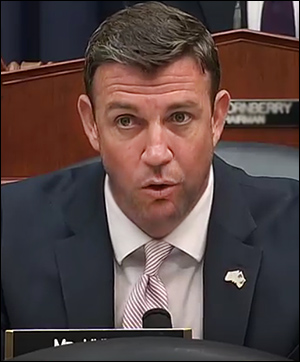
California Rep. Duncan Hunter (R-Alpine)

By Jim Ellis

Oct. 7, 2019 — In addition to his legal woes, indicted California Rep. Duncan Hunter (R-Alpine) now appears to have severe political problems according to a new just-released CA-50 district study.

A Survey USA poll conducted for the San Diego Union-Tribune (Sept. 27-Oct. 2; 592 likely CA-50 voters; 671 respondents were asked favorability questions about the top four candidates, but the electoral questions were asked only of those who described themselves as likely voters) tested the seven announced candidates for the March 3 California jungle primary.

The S-USA results find Democrat Ammar Campa-Najjar, the 2018 party nominee who held Rep. Hunter to a four-point win, holding 31 percent support. Former San Diego City councilman and mayoral and congressional candidate Carl DeMaio (R) follows with 20 percent, ex-Rep. Darrell Issa, who recently announced his candidacy records 16 percent, while Rep. Hunter posts only an 11 percent preference factor.

Rather surprisingly, state Sen. Brian Jones (R-Santee), also a recent candidate but a public official who represents almost 90 percent of the 50th District, records a very low four percent. The two independent candidates have three percent combined.

It is no surprise that Campa-Najjar is leading. In a crowded field with only one candidate from a particular party, it becomes a simple strategy to coalesce the party members behind the lone contender. While Campa-Najjar will almost certainly advance to the general election in this type of jungle format with so many candidates splitting his opposition party vote, we also must see that 52 percent of the poll respondents chose a Republican candidate. This obviously bodes poorly for the sole Democrat in the general election.

The setup here is similar to last year’s open 49th District, the adjacent seat from which Rep. Issa retired. In the June 2018 election, Republican Diane Harkey finished first by an eight-point margin in a field of 16 candidates but, in the general with only two contenders, it was Democrat Mike Levin who recorded a 56-44 percent victory.

Continue reading

Florida: Biden Up

Former vice president, Joe Biden (Getty Images)


By Jim Ellis

June 20, 2019 — Quinnipiac University surveyed the Florida electorate (June 12-17; 1,279 registered Florida voters, 417 self-identified Democrats) and found former Vice President Joe Biden opening a substantial lead over Sens. Bernie Sanders (I-VT) and Elizabeth Warren (D-MA) there. He also posts a healthy advantage against President Trump in a hypothetical general election pairing in what is always a critical voting domain.

The Q-Poll numbers find Biden scoring a 41-14-12 percent advantage over Sens. Sanders and Warren, respectively, with South Bend Mayor Pete Buttigieg and Sen. Kamala Harris (D-CA) trailing in single-digits with eight and six percent, sequentially.

As Nate Silver, founder of the 538 statistical website, said in an interview this week that looking at general election polling this early is basically a futile exercise. It does, however, provide us a clue into candidates’ strengths and weaknesses. In the general election Q-Poll pairing, Biden records a 50-41 percent advantage over President Trump in Florida. This poll, of course, was taken before Trump’s Florida rally Tuesday night in which he kicked off his 2020 campaign.

Silver’s spoken sentiments are true because, among other reasons, so much time remains between now and the 2020 Nov. 3 election, and so many unknown events will occur that could alter the final outcome. Additionally, the campaign will drastically change when both parties have nominees and voters begin paying serious attention to the race.

Continue reading

NC-9: The First Poll is Surprising

By Jim Ellis

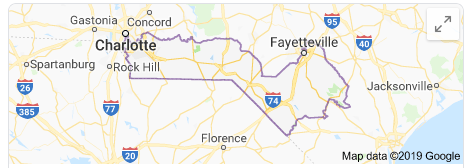
North Carolina’s 9th Congressional District

May 30, 2019 — The JMC Analytics survey research firm released the first special general election poll for North Carolina’s 9th District, and some may consider the results surprising.

According to JMC (May 21-24; 350 NC-9 registered voters), Republican state Sen. Dan Bishop (R-Charlotte) has taken a 46-42 percent lead over Democrat Dan McCready, the solar energy businessman who was the 2018 party nominee. Considering the seven-month-long vote fraud controversy that kept the North Carolina Board of Elections from certifying Republican Mark Harris as the general election victor over McCready (the unofficial total gave the GOP nominee a 905-vote edge) many expected the Democrat to open the special election campaign with a discernible advantage.

There is no doubt that McCready has a resource advantage, however, which should play a major role as this contest moves toward a Sept. 10 conclusion. In the pre-primary financial disclosure period report that ended April 24, McCready reported already raising over $2.01 million, with a $1.57 million cash-on-hand figure. In contrast, Sen. Bishop stated $505,000 raised within the same time frame, more than any individual Republican candidate at the time, but the total included a $250,000 personal loan.

Continue reading

The Telling Second Choices

By Jim Ellis

May 10, 2019 — Often in political polling, asking respondents about their second choice on a ballot test is quite telling. The Morning Consult firm polls regularly and they are the only prominent pollsters so far in this presidential campaign to consistently ask the second-choice question.

Their latest national survey conducted over the April 29 through May 5 period and involving 15,770 respondents who are registered self-identified Democratic voters, or those who lean to the Democrats, found former Vice President Joe Biden pulling away from the pack of candidates, claiming 40 percent support. In a distant second place is Sen. Bernie Sanders (I-VT) who had 19 percent.

None of the other candidates even reached double-digits. In third position is Sen. Elizabeth Warren (D-MA) with a preference figure of just eight percent. Following closely is California Sen. Kamala Harris at seven percent, and South Bend (IN) Mayor Pete Buttigieg who posted six percent support. Former Rep. Beto O’Rourke (D-TX) is next with five percent. All others have three percent or less.

After the initial question, those choosing one of the top five finishers were then asked who they would support if the candidate they originally named was not in the race. This provides a further way of gauging the depth of a candidate’s strength.

The Biden supporters predominantly break toward three candidates with Sen. Sanders being the chief beneficiary, getting 31 percent of the Biden first choice voters. Sen. Harris receives 13 percent, with Sen. Warren getting 10 percent.

Continue reading

New CNN National Numbers Are Out

By Jim Ellis

March 22, 2019 — The CNN television network released their new national survey of the Democratic presidential contest (conducted by SSRS research company; March 14-17; 1,003 US adults, 456 self-identified Democrats and those Independents who lean to the Democratic Party, 448 self-identified Republicans and those Independents who lean to the Republican Party), and while the ballot test results were consistent with most other polling, some different and interesting questions were asked.

CNN compared this poll to their previous study conducted during the Dec. 6-9 period. The first four finishers remain in relatively the same order, but the percentages have shifted and some significantly.

In the current poll, former Vice President Joe Biden continues to lead the pack of 17 tested candidates. He tops the field with 28 percent, down from the 30 percent support he held in December. Sen. Bernie Sanders (I-VT) is second with 20 percent, making a big jump from the 14 percent base CNN found three months earlier.

Sen. Kamala Harris (D-CA) surpasses former US Rep. Beto O’Rourke (D-TX), and tripled her preference from December. Sen. Harris leaps from 4 to 12 percent support. For his part, O’Rourke drops to fourth but still gains two percentage points in comparison to December (rising from 9 to 11 percent). All of the others remain in single-digits, though Sen. Elizabeth Warren (D-MA) doubled her support from 3 to 6 percent.

Continue reading

Biden Remains Ahead of the Pack

By Jim Ellis

Feb. 14, 2019 — A new Morning Consult national survey of Democratic presidential primary voters again finds former Vice President Joe Biden leading an ever-growing pack of hopefuls vying for the opportunity of facing President Trump in the 2020 general election.

The survey (Feb. 4-10: 11,627 registered voters who say they may vote in a Democratic presidential primary or attend a party caucus; 517 “early primary state” voters from Iowa, New Hampshire, Nevada and South Carolina), finds the former VP and long-time Delaware senator holding a 29-22-13 percent lead over Vermont Sen. Bernie Sanders (I/D-VT) and California Sen. Kamala Harris.

Sixteen more candidates or potential candidates were included in the poll, but none could crack double-digits. In the second tier, Sen. Elizabeth Warren (D-MA) pulled eight percent, closely followed by former Texas Rep. Beto O’Rourke (D-El Paso) with seven percent, and Sen. Cory Booker (D-NJ) who attracted five percent support. All of the others fell in between three percent and zero, inclusive.

Looking at only the four early states of Iowa, New Hampshire, Nevada and South Carolina (derived from an aggregate respondent group of 517 self-identified Democrats in those places), the order of candidates in the top tier doesn’t change, and Biden extends his lead to 33-21-11-10 percent over Sens. Sanders, Harris, and Warren. Sen. Booker gains one point to six percent, while ex-Rep. O’Rourke falls to five percent. No one else exceeds two percent.

Continue reading

American Electorate Tracking Poll:
A Look at The Underlying Numbers

By Jim Ellis

Jan. 29, 2019 — In the past couple of days, the new Morning Consult American electorate tracking poll (Jan. 18-22 — 1,996 US registered voters; 35 percent self-identified Democrats, 33 percent Independent, 32 percent Republican) captured media attention because it released a national Democratic presidential primary ballot test.

The results concluded that former Vice President Joe Biden is leading Sen. Bernie Sanders 17-12 percent while 19 other candidates or potential candidates all fell into single digits. (Some reports indicated Biden’s edge over Sanders was 26-16 percent, but this was done by eliminating some minor candidates and extrapolating the remaining preference votes among the major candidates. The actual polling results for the entire field are the ones quoted in the first sentence of this paragraph.) But, the figures are largely irrelevant because the ballot test was asked of the whole respondent pool and not just the Democrats and Independents who lean Democratic.

The inclusion of the Republican and Republican-leaning Independents certainly would skew this data, thereby not accurately depicting where the candidates stand among Democrats, and more particularly, Democratic primary voters and likely caucus attenders. This makes the results highly questionable as they relate to where national Democrats are headed in choosing a presidential nominee.

The ballot test, however, was just one query of 82, an extensive segmented questionnaire that, for the most part, provides us interesting and useful issue data.

While President Trump is clearly in what could be the lowest point of his presidency in terms of popularity and job approval – Morning Consult finds him with a 40:57 percent favorable to unfavorable ratio – those highly negative opinions don’t necessarily carry through to other Republicans.

Continue reading

Sen. Alexander to Retire

By Jim Ellis

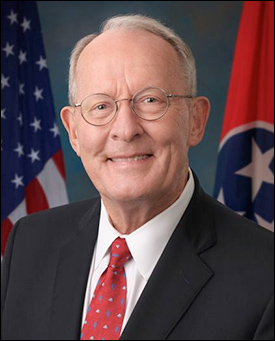
Tennessee Sen. Lamar Alexander (R)

Dec. 19, 2018 — Last week, Tennessee Sen. Lamar Alexander’s (R) campaign released an internal survey that tested the three-term incumbent’s favorability ratings, which showed excellent results. Accompanying the release was the senator’s promise to announce his 2020 re-election decision before the end of the year.

He kept the announcement promise, but his decision, which he announced Monday, proved surprising. Spending the money to conduct a poll and releasing the strong results is usually a prelude to announcing for re-election, but not in this case; Sen. Alexander made public his decision to retire in 2020.

Tennessee voters will now elect another new senator for the second time in a two-year cycle. Sen. Bob Corker’s (R) retirement this year opened the door for Rep. Marsha Blackburn (R-Brentwood) to win the open 2018 campaign, but now potential Senate candidates will immediately get another chance.

Tennessee’s vote history suggests that the eventual Republican nominee will begin the 2020 general election cycle in the favorite’s position. This year, Democrats fielded arguably their best possible candidate, former two-term Gov. Phil Bredesen, who left office with very favorable ratings and a strong record. But, even after matching Blackburn in spending, the former governor fell 55-44 percent in the general election. The result will likely dampen Democratic prospects for 2020.

Continue reading