Category Archives: Senate

Sununu Out; James In

By Jim Ellis — Thursday, April 10, 2025

New Hampshire

Former New Hampshire Gov. Chris Sununu (R)

Saying he believes the Republicans have a strong chance to win the open New Hampshire US Senate seat in 2026, former Gov. Chris Sununu (R) put an end to the public speculation that he may become a candidate.Sununu said it is not the right time for him to run for the Senate, which is consistent with his action when Republican leaders previously approached him about launching a Senate campaign.

Former Massachusetts US Sen. Scott Brown (R), who moved to New Hampshire after he was defeated for re-election in 2012, challenged Sen. Jeanne Shaheen (D) two years later. The three-term incumbent, who has already announced her retirement when the current Congress adjourns, defeated Brown, 51-48 percent. It is apparent that the former Massachusetts Senator is intent on running again.

Frank Edelblut, Commissioner of the New Hampshire Department of Education, is also a potential candidate. Then-Gov. Sununu originally appointed him to his current position and the new Governor, former US Sen. Kelly Ayotte (R), kept him in place. Ex-White House aide and two-time congressional candidate Matt Mowers is another Republican potential candidate. For now, however, it appears that former Sen. Brown is the front-runner for the party nomination.

Late last week, four-term US Rep. Chris Pappas of Manchester announced his intention to run and appears as the clear front-runner for his party’s nomination. He has a strong chance of becoming a consensus Democratic candidate.

It was obvious that recruiting former Gov. Sununu would give the Republicans their best chance of converting this Senate seat. It remains to be seen how competitive the Republicans can be against Rep. Pappas, but sans Sununu, the Democrats regain the early advantage.

Michigan

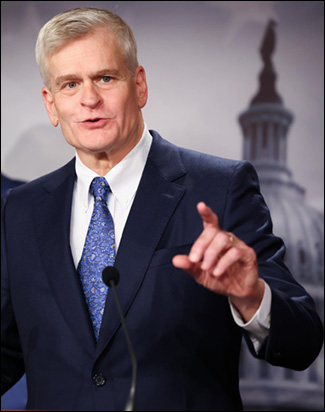
Michigan Rep. John James (R-Farmington Hills)

The anticipated hot open Michigan Governor’s campaign came into better focus.

As expected, two-term US Rep. John James (R-Farmington Hills) announced that he will enter the Governor’s race, striving to succeed term-limited incumbent Gretchen Whitmer (D).

James has twice run statewide. In 2018, he challenged US Sen. Debbie Stabenow (D) and then ran again two years later opposite Sen. Gary Peters (D). James drew national attention in holding Sen. Stabenow to a tighter than expected 52-46 percent margin spread. In 2020, the political battle ended in even closer fashion, 50-48 percent, in Sen. Peters’ favor.

Redistricting in the following year created an open US House seat in his home area. James would win a half-point 2022 victory over former local judge and prosecutor Carl Marlinga (D), and then scored a six-point re-election victory this past November against the same opponent.

The 2026 Michigan Governor’s race will likely be unique among all statewide elections in that it has the chance of becoming a legitimate three-way contest.

On the Republican side, many cast Rep. James as the early front-runner for the party nomination even with polling showing a close contest between he and 2022 gubernatorial Republican nominee Tudor Dixon. It is not clear, however, if she will again run for Governor. Former Attorney General Mike Cox is also taking steps to organize a gubernatorial campaign along with state Senate Minority Leader Aric Nesbitt (R-Paw Paw).

The Democrats also have nomination competition. Secretary of State Jocelyn Benson is an announced candidate, and polling posts her to an early lead. Lt. Gov. Garlin Gilchrist recently entered the race, as did Genesee County Sheriff Chris Swanson.

The third contender, and one who will advance directly into the general election because he is running as an Independent, is three-term Detroit Mayor Mike Duggan. The municipal chief executive was first elected in 2013 and subsequently re-elected in 2017 and 2021. It was a surprise when he entered the race, not because he became a statewide candidate but for declaring as an Independent. Previously, he had run as a Democrat.

With Duggan having an obvious political base in Detroit, the state’s largest city, a potential Benson-James-Duggan race is set to become the wild card race of the 2026 national election cycle.

Roundup: Senate, House, Governor, States & Cities Updates

By Jim Ellis — Tuesday, April 8, 2025

Senate

South Carolina Sen. Lindsey Graham / Photo by Gage Skidmore

South Carolina — Speculation about a Republican primary challenge to Sen. Lindsey Graham has largely been extinguished. Last week, President Donald Trump announced his endorsement of the Senator for re-election, which should dissuade a MAGA activist from deciding to primary the four-term incumbent. Rep. Ralph Norman (R-Rock Hill) had been publicly musing about challenging Sen. Graham but now appears to have his sights set either for the open Governor’s race or running for re-election.

Fundraising — Two potential US Senate candidates signaled that they are taking their preparatory phase seriously. Rep. Haley Stevens (D-MI) says she is going to report raising over $1.1 million for the first quarter of 2025. The Congresswoman indicates she will decide in the next few weeks about launching a Senate campaign to replace retiring Sen. Gary Peters (D-MI).

Illinois Rep. Raja Krishnamoorthi (D-IL), who is a likely Senate candidate if Sen. Dick Durbin (D) announces his retirement, wasted no time and is reporting raising over $3 million in the first quarter. Federal Election Commission reports will be made public after the 1st quarter filing deadline on April 15.

Minnesota — Attorney General Keith Ellison (D) this week announced that he won’t run for the Senate and instead endorsed Lt. Gov. Peggy Flanagan (D). It is expected that Ellison will seek re-election to a third term as the state’s AG. Also in the Democratic primary race is former state Senate Minority Leader Melisa Lopez Franzen. US Rep. Angie Craig (D-Prior Lake) is still considered as a possible Senate candidate.

Several Republicans have announced, but the party leaders are looking for a strong contender who could run a tough and competitive general election campaign to come forward.

House

AZ-5 — Former professional football place kicker Jay Feeley (R), an ex-member of the Arizona Cardinals football team and CBS Sports sideline reporter, says he is considering entering what will be an open congressional race in Arizona’s 5th District. Additionally, former state Rep. Travis Grantham formally announced his congressional candidacy during the week. A crowded Republican primary is expected to compete to succeed Rep. Andy Biggs (R-Gilbert) who is running for Governor. The 5th District with a partisan lean of 58.5R – 39.6D according to the Dave’s Redistricting App statisticians is rated as the 87th most vulnerable seat in the Republican Conference.

AZ-7 — Pima County Supervisor Adelita Grijalva (D), as expected, announced that she will attempt to succeed her father, the late-Congressman Raul Grijalva (D-Tucson) in the upcoming special election. The Democratic primary will likely be a battle between Ms. Grijalva and former state Rep. Daniel Hernandez. Others will comprise the field, but these two will be the principal contenders to win the nomination. The Democratic nomination is virtually tantamount to winning the Sept. 23 special election. Rep. Grijalva passed away on March 13.

CA-32 — Jake Rakov (D), a former staff member for California Rep. Brad Sherman (D-Sherman Oaks), announced that he will challenge his old boss in the 2026 California jungle primary. Rep. Sherman was first elected in 1996 and has not yet announced whether he will run for a 16th term. Rakov says he is challenging Sherman because of his “inadequate wildfire response, not holding in-person town halls & not doing enough to resist Trump’s “MAGA hellscape.” Talent Agent Chris Ahuja (D) is also a declared candidate. Rep. Sherman is again favored to advance into the general election and retain his seat in the 2026 election.

NY-4 — It appears that we won’t see the third version of the Rep. Laura Gillen (D-Rockville Centre) vs. former Rep. Anthony D’Esposito (R) campaign. President Trump announced that D’Esposito will become the Inspector General for the Department of Labor. Previously, the former New York Congressman, who lost his seat to Gillen in November, said he would return for a rematch. Republicans are expected to field a viable candidate to compete for the Long Island seat.

OH-13 — Former state Senator and Representative Kevin Coughlin (R), who lost to Rep. Emilia Sykes (D-Akron) by a 51-49 percent tally in November, says he will return to seek a rematch in 2026 in a district that former Vice President and presidential candidate Kamala Harris carried by just 183 votes. The district, however, may be different than in 2024. Under the Ohio redistricting system and because the current redistricting map was not passed with the required bipartisan support level, the map can only stand for two election cycles. Therefore, expect a new congressional plan to be unveiled in the next few weeks.

Governor

California — Former US Health and Human Services Secretary, ex-California Attorney General and previous Congressman Xavier Becerra (D) announced his intention to enter the open Governor’s campaign next year. Becerra also said he intends to stay in the race even if former Vice President Kamala Harris decides to run. Former Orange County Congresswoman Katie Porter (D) is also a declared candidate.

Lt. Gov. Eleni Kounalakis (D), ex-Los Angeles Mayor Antonio Villaraigosa (D), and state Senate President Toni Atkins (D-San Diego) have all indicated they will run but could step aside if Harris decides to enter. Gov. Gavin Newsom (D) is ineligible to seek a third term. Most of the 2026 attention has focused on whether Harris will run, but she has yet to provide a definitive answer. The only serious Republican candidate is Riverside County Sheriff Chad Bianco.

Georgia — Rep. Lucy McBath (D-Marietta) announced last week that she will not move forward with her plans to run for Governor. She said complications involving her husband’s cancer treatments have changed her plans as she will be devoting more time to helping him. It is expected she will seek re-election to the House, however.

On the other hand, former Atlanta Mayor Keisha Lance Bottoms (D) announced that she will run for Governor. She will likely face a crowded Democratic primary field.

Republican Attorney General Chris Carr is an announced gubernatorial candidate for the GOP nomination. The Republican primary is expected to feature a number of candidates once term-limited Gov. Brian Kemp (R) announces whether he will run for the Senate.

South Carolina — First Tuesday Strategies poll (March 19-21; 500 likely South Carolina Republican primary voters; interactive voice response system & online) finds Attorney General Alan Wilson, son of Rep. Joe Wilson (R-Springdale), leading Rep. Nancy Mace (R-Charleston), Lt. Gov. Pamela Evette, and Rep. Ralph Norman (R-Rock Hill) by a 21-16-7-6 percent margin.

States & Cities

Arkansas — Gov. Sarah Huckabee Sanders (R) signed legislation that eliminates moving the primary election from cycle to cycle as has been the previous practice. In presidential election years, the Arkansas primary was held in March, but in midterm years the nomination vote returned to its traditional May slot. The new law sets March as the state’s permanent primary month. This means both the 2026 Democratic and Republican primaries will likely be held on March 3.

Boston — Though it was expected that real estate developer Thomas O’Brien (D) would announce his mayoral candidacy during the week, in fact he did the opposite. Mr. O’Brien, brother of Boston College head football coach Bill O’Brien and a former NFL head coach, instead announced that he will not enter the race to oppose incumbent Michelle Wu. Still in the contest is businessman Jonathan Kraft, son of New England Patriots owner Bob Kraft. The September jungle qualifying election is expected to be competitive.

Oakland — A new Oakland mayoral poll suggests that former Rep. Barbara Lee (D) has fallen behind in her quest to succeed ousted Mayor Sheng Thao (D). A new election was called once Thao was recalled from office during the November election. Oakland City Councilman Loren Taylor (D) released his internal EMC Research survey (March 17-20; 400 Oakland likely special election voters) that finds him leading the former veteran Congresswoman 45-40 percent. Previously, Lee led in all published polling but with diminishing margins. In 2024, Ms. Lee risked the US House seat she held for 26 years for an unsuccessful US Senate bid.

St. Louis — It appears that St. Louis Mayor Tishaura Jones’ (D) days in office are coming to an end. After performing poorly in the mayoral primary, a new Remington Research Group poll finds Alderwoman Cara Spencer (D), who placed first in the primary, enjoying a large 55-31 percent lead in the upcoming runoff election. Four years ago, Jones defeated Spencer but it appears the 2025 election will feature the opposite result.

A Questionable Texas Poll

By Jim Ellis — Tuesday, April 1, 2025

Senate

Attorney General Ken Paxton (R) / Photo by Gage Skidmore, Flickr

A new Texas statewide poll shows Sen. John Cornyn (R-TX) trailing Attorney General Ken Paxton (R) in a hypothetical Senate Republican primary, but the survey contains several flaws.

Lake Research and Slingshot Strategies partnered on a poll for the Texas Public Opinion Research organization (reported only as March 2025; 700 registered Texas voters) and though the study was designed predominantly to test issues and attitudes, the ballot test between Sen. Cornyn and AG Paxton, showing the incumbent trailing the challenger 38-27 percent before a Republican vote segment, cannot be considered reliable.

First, there is no indication as to how many people were surveyed as “Republican primary voters” because there is no number disclosure of self-identified Republicans. Using the percentages answering the partisan identification question means the segment cell could possibly only contain a maximum of 315 respondents, which would be very low for a statewide survey in a place the size of Texas.

Secondly, the pollsters did not test the entire proposed GOP field. Rep. Wesley Hunt (R-Houston) was not included on the ballot question even though he has been firmer in statements about running for the Senate than has Paxton.

Third, the data gathering period was not identified, nor was the data collection method, the latter meaning live interview, Interactive Voice Response system, text, or online. Without this information, it is difficult to detect a proper error factor.

Fourth, a four-term Senate incumbent attracting only 28 percent within his own party on a ballot test is hard to believe, and likely wholly understated, though the Paxton support figure of 38 percent could be about right.

Fifth, the pollsters exhibited a somewhat liberal bias with regard to the types of questions asked and the descriptive language used, especially when describing the abortion question. The query asked respondents if they identify as pro-choice or anti-choice. Certainly, the anti-choice option would receive less support than if described as pro-life.

The favorability index question responses were also curious especially relating to Sen. Cornyn. In fact, of the 11 individuals and institutions queried for a favorable or unfavorable rating, Sen. Cornyn finished dead last (21:43 percent). Again, it is difficult to find credible that a scandal-free elected official who has won six statewide elections (four for US Senate; one for state Attorney General; one for Texas Supreme Court) would perform so badly.

Of all 11 people tested, former Representative and 2024 US Senate nominee Colin Allred, the only Democratic politician on the list, finished with the strongest favorability rating, 37:30 percent positive to negative. Allred is the only tested individual or institution to finish with a positive rating even though he lost the Senate race this past November to GOP incumbent Sen. Ted Cruz by almost nine percentage points.

In contrast, both President Donald Trump and Vice President J.D. Vance are three points down (Trump: 47:50 percent; Vance: 44:47 percent), yet the Trump-Vance ticket carried the state by almost 14 percentage points.

For his part, AG Paxton scored a 35:40 percent index, which is not particularly bad considering he came within a few state Senate votes of being removed from office in 2023. Again, an argument can be made against the Lake/Slingshot reliability factor when seeing an elected official who was almost removed from office largely by members of his own party (at least in the State House of Representatives) enjoying a better standing within the electorate than a sitting incumbent with no personal scandal who has been elected six times to statewide office.

It will be interesting to see if Paxton ultimately decides to run. While his performance in this Lake/Slingshot poll is stronger than Sen. Cornyn’s, which would encourage him, fundraising under the federal election system will not.

Gone would be the days when a contender could call selected donors and receive major contributions sometimes totaling seven figures as he or she can under Texas election law. Running for Senate, Paxton will have to fund raise in small increments: $3,500 per election, or a grand total of $10,500, if someone wanted to fully support him in the Republican primary, the Republican runoff (if necessary), and the general election.

While certain individuals might contribute large dollars to a Super PAC supporting Paxton or opposing Cornyn, they would have no control over how the money is spent. Furthermore, contributing to an incumbent, as many big donors did for Paxton when he was AG, is much different than contributing major dollars against an incumbent, especially one that many of these same prospective donors have also supported in past campaigns.

Considering Texas will hold its primaries on March 3, 2026, this election campaign will soon be swinging into high gear.

Rep. Higgins Won’t Run for Senate

By Jim Ellis — Monday, March 24, 2025

Senate

Louisiana Rep. Clay Higgins (R-Lafayette) / Photo by Joshua Sukoff

Five-term Louisiana Rep. Clay Higgins (R-Lafayette) announced late last week that he will not challenge Sen. Bill Cassidy (R-LA) in the state’s new partisan primary system scheduled to take effect next year.

While saying he believes Sen. Cassidy can be beaten in the ensuing Republican primary, Rep. Higgins indicated that he can better serve his country and party by continuing his career in the US House.

Higgins said, “Now, it is my considered determination that, current engagement in the House being incredibly significant, it may be ultimately more beneficial to the Republic that I remain in service to the MAGA America First agenda as a senior Republican in the House of Representatives,” according to a news report on The Washington Times news site.

The Congressman also cited his close relationship with the chamber’s top leaders, Speaker Mike Johnson and Majority Leader Steve Scalise both from Louisiana, as another benefit to remaining in the House. Higgins is also chairman of the Border Security and Enforcement Subcommittee of the House Homeland Security Committee, which he states is another strong reason to continue his current career.

The one published Louisiana Senate poll was released at the end of February, from the JMC Analytics & Polling, a Louisiana based survey research entity.

According to the JMC results at the time (Feb. 26-28; 600 likely Louisiana Republican primary voters), State Treasurer and former Congressman John Fleming, an announced Senate candidate, posts a 40-27 percent lead over Sen. Cassidy in a head-to-head pairing. When other potential candidates, state Sen. Blake Miguez (R-New Iberia) and Public Service Commissioner Eric Skrmetta, are added to the ballot test questionnaire, Fleming leads Cassidy 29-27 percent with the remaining individuals receiving respective six and two percent preference figures.

This is the first time Sen. Cassidy will face a partisan Republican primary. Last year, the state legislature, at the behest of Gov. Jeff Landry (R), changed the state law to reinstitute a partisan primary structure for certain offices, including all federal positions. Previously, all candidates were listed only on the general election ballot. If no one received majority support in a particular race, a runoff election between the top two finishers was held during the first week in December.

Critics of the previous system argued, especially for freshman federal office holders, that they were starting at a disadvantage in Washington since they were still campaigning when the rest of the new members were going through orientation. Additionally, they were ineligible to run for party leadership posts nor present at the critical time to lobby for coveted committee slots.

The new closed partisan primary where only registered party members are eligible to vote is scheduled for April 18, 2026. If no candidate receives majority support, the top two finishers advance to a May 30 secondary election.

Sen. Cassidy’s biggest negative, of which he will be reminded of many times during the primary campaign, is that he voted to impeach President Donald Trump at the end of the latter’s first term. He was also questioning a couple of the Trump cabinet appointees, in particular HHS Secretary Robert F. Kennedy Jr., but in the end voted in favor of all.

While a Trump endorsement for a Republican primary candidate is a major positive in crowded fields, it will likely be an even more important factor in this Louisiana Senate primary. Should the President endorse a candidate other than Sen. Cassidy, the incumbent could quickly become the underdog.

In the new primary configuration, it is likely the most conservative and pro-Trump supporters would dominate the voting bloc, a group where Sen. Cassidy could show weakness. Another negative for the incumbent may be the size of the candidate field. If more contenders enter the race, which is expected, the chances of Sen. Cassidy being forced to a runoff increase.

The runoff history of incumbents is not particularly favorable. Already, a majority of the primary voters would have chosen another candidate, thus giving the incumbent a smaller base from which to start. He or she must then convince a significant percentage of voters who supported a challenger in the first vote to return to his or her fold in the runoff election. Certainly, incumbents have recovered to win runoffs, but the typical outcome leans toward an incumbent loss.

The Louisiana race, along with the likely Republican primary challenge to Sen. John Cornyn (R-TX), will be a closely monitored nomination battle as the election cycle matures.

The Hot Senate Cycle

By Jim Ellis — Wednesday, March 19, 2025

Senate

Examining developing political events, we are already seeing the prelude to what might become the most competitive US Senate campaign cycle in decades.

Since Michigan Sen. Gary Peters (D) declared in late January that he will not seek re-election, three other Senators announced that they will also retire at the end of the current term. Depending upon the candidates each party fields, all of these newly open races have the potential of becoming expensive toss-up campaigns.

As we know, the other open seats are found in Kentucky (Sen. Mitch McConnell-R), Minnesota (Sen. Tina Smith-D), and New Hampshire (Sen. Jeanne Shaheen-D). Should the Kentucky Democrats convince Gov. Andy Beshear to run and likewise the New Hampshire Republicans recruit former Gov. Chris Sununu, these two states would certainly host major toss-up campaigns. Absent Beshear and Sununu running, each party would be favored to hold their respective seat.

Democrats expect to have the advantage in Minnesota, but it is unclear at this early point who their party will nominate. With Gov. Tim Walz (D) not running for Senate, Lt. Gov. Peggy Flanagan and former state Senate Minority Leader Melisa Lopez Franzen have announced their candidacies, while Rep. Angie Craig (D-Prior Lake) is listed as a possible contender. If Republicans can recruit a credible nominee, this open seat could transform into a competitive battle.

Perhaps the Republicans’ most vulnerable incumbent is North Carolina’s Thom Tillis; Democrats are trying to convince former Gov. Roy Cooper to enter that state’s Senate race. Like many others, Cooper is said to have presidential ambitions that could forestall a Senate challenge.

National Democrats would also like to see Maine US Rep. Jared Golden (D-Lewiston) challenge Sen. Susan Collins (R), but this is unlikely to happen. Golden is a former Collins staff member, and if he does run statewide it is more likely he will enter the open Governor’s race.

Two other Republican Governors are being recruited to run for the Senate, but it is unclear at this point if either will declare a bid. Georgia Gov. Brian Kemp and Virginia Gov. Glenn Youngkin would pair with Sens. Jon Ossoff (D-GA) and Mark Warner (D-VA), but there is no guarantee that either will make the move. Both have presidential aspirations and may not want to test their prospects for a national campaign in a Senate race where they stand a reasonable chance of losing.

Alabama Sen. Tommy Tuberville (R), reversing himself from his earlier statements and now saying he may well enter his state’s open Governor’s race, means we could see a very crowded, but determinative nominating campaign to succeed the Senator as the Republican nominee. Such an individual would then become a heavy favorite to win the general election, but the nominating process would be highly competitive.

Alaska Democrats would like to recruit former Rep. Mary Peltola (D) to challenge Sen. Dan Sullivan (R), but the lure of an open Governor’s race will likely be more tempting for Peltola.

Kansas Sen. Roger Marshall (R) stands for a second term next year, and the Democrats’ best potential candidate for this race is term-limited Governor Laura Kelly who cannot succeed herself. Kelly or Rep. Sharice Davids (D-Roeland Park) would be the Democrats’ best options for the Senate, but at this point there is little indication that either plan to run.

Expect, however, that Democratic Senatorial Campaign Committee chair Kirsten Gillibrand (D-NY) will make a strong push to convince one of those two to enter the Jayhawk State Senate race.

Louisiana Sen. Bill Cassidy (R) is likely to also experience a competitive re-election race but not for the general election. With his state returning to a partisan primary system, Sen. Cassidy, for the first time, will have to face a strong Republican challenger before only Republican voters. One such individual, State Treasurer and former Rep. John Fleming (R), is already campaigning and leading in a late February poll (JMC Analytics; Feb. 26-28; 600 likely Louisiana Republican primary voters; Fleming 40 – Cassidy 27 percent).

Should Texas Sen. John Cornyn (R) stumble in the early 2026 Republican primary, Democrats would have a chance of putting Texas in play particularly if flawed Attorney General Ken Paxton becomes the Republican nominee. National Democrats would like to see 2024 Senate nominee and former Congressman Colin Allred run again.

Additionally, two appointed Senators, Florida’s Ashley Moody (R) and Jon Husted of Ohio (R) must run in special elections to fill the balance of the current terms and both will be expensive campaigns in large states.

If all of the most prominent potential candidates were to run in these 15 potentially competitive states, we would see a very volatile set of US Senate campaigns.

Chances are, however, the list of eventual nominees from both parties will be a bit more mundane than in the aforementioned outlined scenarios. Several of these big-name potential Senate contenders may be more inclined, like former US Transportation Secretary Pete Buttigieg who just bowed out of the Michigan race, to follow the presidential winds.

Buttigieg Says No to Senate Run

By Jim Ellis — Tuesday, March 18, 2025

Senate

Pete Buttigieg / Photo by Matt Johnson, Flickr

Sen. Gary Peters (D-MI) opting not to seek a third term has left the 2026 Michigan Senate race in a highly competitive open political mode. As we learned at the end of last week, however, one person who will not participate is former US Transportation Secretary and ex-presidential candidate Pete Buttigieg (D).

The former national cabinet official and ex-South Bend, Indiana Mayor publicly announced that he will not enter the Wolverine State Senate race despite leading in published polls. The one early released Democratic primary poll (Blueprint Polling; Jan. 30-Feb. 2; 536 likely Michigan Democratic primary voters; SMS text) found Buttigieg ahead of Attorney General Dana Nessel 40-16 percent but doing poorly within the important Black community in Detroit.

Rather, “Mayor Pete,” as he is often called, is apparently looking to follow the presidential winds, and his Michigan decision strongly suggests that he will be organizing another presidential campaign for the open 2028 national campaign when President Donald Trump will be ineligible to seek re-election.

Without Buttigieg in the Senate race, AG Nessel, who is ineligible to seek a third term for her current position, is a presumed top-tier potential candidate likely to be among those attempting to fill the Senate void. Congresswoman Haley Stevens (D-Birmingham) is also reportedly making moves to organize a Senate campaign as is state Sen. Mallory McMorrow (D-Royal Oak). Nessel’s weak poll showing against Buttigieg suggests that she is anything but a lock for her party’s nomination.

Several other names are being floated as potential Michigan Senate candidates including Republican former Congressman Mike Rogers who came within 19,006 votes of winning the state’s other Senate race last November. He lost to now-Sen. Elissa Slotkin (D) by three-tenths of one percentage point from over 5.77 million cast ballots.

Rogers, who is expected to run again, may have an impending GOP primary fight against a woman who lost the most recent Governor’s race by 10 percentage points, former steel company executive, national political commentator, and 2022 Michigan Republican gubernatorial nominee Tudor Dixon.

While Rogers moves to the right in hiring Trump co-campaign manager Chris LaCivita as one of his key consultants, a new Fabrizio Lee & Associates poll (Feb. 17-19; 600 likely Michigan Republican primary voters; live interview & text) suggests the former Congressman may not be the prohibitive favorite for the next GOP Senate nomination despite his impressive performance in the 2024 election.

The Fabrizio ballot test finds him trailing Dixon 40-36 percent in a hypothetical 2026 Republican primary poll. Among those saying their vote would be definite, the two are virtually tied with 22 percent saying they would definitely support Dixon and 21 percent indicating the same about Rogers.

Dixon, however, has been more closely tied to the open Governor’s race since incumbent Gretchen Whitmer (D) is ineligible to seek a third term. If she returns to again enter the state chief executive’s office campaign Dixon will likely face an equally difficult Republican nomination run against Rep. John James (R-Farmington Hills).

In 2018, James, as a first-time candidate, held veteran Sen. Debbie Stabenow (D) to just over 52 percent of the vote. Two years later, he came within less than two percentage points of unseating Sen. Peters. Now, Rep. James, who won his congressional seat in 2022 and was re-elected in November, looks to be preparing a run for the 2026 open Governor’s contest.

It is already clear that we will see many more twists and turns in the Michigan statewide races before reaching the August 2026 primary election. It is already clear, however, even in this early going, that Michigan, featuring both an open Senate and open Governor’s race for the first time in the modern political era, will be one of the top political states to follow in the coming months.

Sen. Jeanne Shaheen to Retire

By Jim Ellis — Thursday, March 13, 2025

Senate

Sen. Jeanne Shaheen (2008 file photo) / Photo by Gage Skidmore

Yesterday, three-term New Hampshire Sen. Jeanne Shaheen (D) announced that she will not seek re-election next year, ending what will be a 30-year career in elective politics counting her time as Governor and in the state Senate.

Shaheen is now the fourth Senator, three of whom are Democrats, who will not seek re-election in 2026. While the national Senate map favors the Dems because they must protect only 13 of 35 in-cycle campaigns, having to defend three open seats, all of which are competitive (Minnesota; New Hampshire) to highly competitive (Michigan) decreases the party’s odds of reclaiming the Senate majority.

Sen. Shaheen is the first woman in American history to be elected as a Governor and US Senator. She first won her state Senate seat in southeastern New Hampshire in 1990 where she served three two-year terms. Elected Governor in 1996, she would again maintain her office for three two-year terms.

Attempting to move to the Senate in 2002, Shaheen lost to then-Rep. John E. Sununu (R) and was out of elective politics until 2008 when she returned to win that same Senate seat, defeating Sununu in a re-match.

In her three victorious Senate elections, Shaheen averaged 53.2 percent of the vote. Though not seeking re-election in 2026, Sen. Shaheen vows she is “not retiring.” She will serve the remainder of the current term and continue being an activist after she leaves office, according to her statements in yesterday’s video announcement.

The Shaheen decision is not particularly surprising. The Senator had not committed to running again and repeatedly said she would decide at a later date. A poll was released last week, however, (from Praecones Analytica; Feb. 26-March 1; 626 registered New Hampshire voters; online) that found her trailing former Gov. Chris Sununu (R) by eight percentage points with over 60 percent responding that they are concerned or somewhat concerned about the Senator’s age if she were to seek another six-year term. Sen. Shaheen, if she were to run in 2026 and serve through 2032 would be 85 years old.

Previously, Sununu indicated he was not interested in running for the Senate, but just recently stated that he might be reconsidering his position. Now that the seat will be open, Republican leaders will engage a “full court press” to recruit the former four-term Governor into the Senate race. For the Democrats, the leading prospective candidate appears to be four-term 1st District Rep. Chris Pappas (D-Manchester).

First elected in 2018, Pappas has secured the eastern New Hampshire seat that was once considered the most competitive district in the nation, defeating more incumbents than re-electing them from 2004 until Pappas’ victory in 2018. Other potential Democratic candidates include former Rep. Annie Kuster and potentially freshman Rep. Maggie Goodlander (D-Nashua), though she would likely yield to Pappas if he decides to run.

Should Sununu not run, expect former Massachusetts Sen. Scott Brown to possibly make another attempt at returning to the Senate from New Hampshire. In 2014, he challenged Sen. Shaheen but lost 51-48 percent. Other potential Republican candidates are Manchester Mayor Jay Ruais and Executive Councilor Janet Stevens. Gov. Kelly Ayotte (R), a former Senator who was defeated for re-election in 2016 but then elected Governor in 2024, would be likely to seek re-election instead of a return to the Senate.

Chris Sununu became only the second person to win four consecutive Governors’ elections in New Hampshire. His Senate candidacy would clearly give the Republicans’ their best chance of converting the seat. With another Republican as the party standard bearer, Democrats would again have the advantage in the general election.

Should Rep. Pappas run, count on a major effort from both parties to capture the swing 1st District. With such a small House majority, both parties will be striving to win every possible seat, and the NH-1 seat becoming open, noting the region’s long history of flipping between the two parties, means that we will see a major national campaign being fought in this CD.

With the Shaheen retirement, the New Hampshire political musical chairs show will soon begin. This open Senate seat, and what could be a highly competitive open House district, means the Granite State will become one of the key battleground regions in the 2026 midterm election.