Category Archives: Senate

New Texas Data Shows Mixed Results

By Jim Ellis — Tuesday, June 3, 2025

Senate

texas sen john cornyn

Texas Sen. John Cornyn (R) / Photo by Gage Skidmore

A new YouGov poll conducted for the Barbara Jordan Public Policy Research and Survey Center at Texas Southern University produces mixed results for veteran GOP Sen. John Cornyn, who has largely seen poor polling data since the year began.

The YouGov survey (May 9-19; 1,200 registered Texas voters; online) projects Sen. Cornyn trailing Texas Attorney General Ken Paxton 34-27 percent on the Republican primary ballot test but finds him leading prospective Senate candidate Wesley Hunt, the two-term 38th District Congressman who represents a district wholly contained within Harris County. In the three-way YouGov survey, Hunt draws 15 percent support.

While the Senator still trails AG Paxton beyond the polling margin of error, this ballot test is definitely an improvement with regard to his standing within the Texas Republican Party. The last three publicly released GOP primary polls found Paxton at or over 50 percent when directly paired with Sen. Cornyn.

The better news for the Senator is that he fares well in general election pairings with the Democrats who are considering entering the statewide contest.

Tested against former Rep. Colin Allred, the Democratic 2024 Senate nominee against Sen. Ted Cruz (R), Cornyn would lead 48-44 percent. Opposite former Congressman, ex-statewide and 2020 presidential candidate Beto O’Rourke, the Cornyn advantage is 49-43 percent. If Rep. Joaquin Castro (D-San Antonio) were to become a Senate candidate and win the party nomination, Sen. Cornyn would top him by seven percentage points, 48-41 percent.

While Paxton and Hunt also top the Democrats in every iteration, Sen. Cornyn fares best. The other point of note is to acknowledge that Texas Republicans typically under-poll on ballot tests.

For example, in 2024 President Trump averaged just under a seven-point lead in polls from Sept. 1 through the election according to the Real Clear Politics polling archives but won the state by almost 14 percentage points. Sen. Cruz was running an average of four points ahead of then-Congressman Allred in the same polls from Sept. 1 through the election but recorded a winning margin of almost nine percentage points.

The bad news for Sen. Cornyn comes when comparing the candidates’ favorability indexes. Within a sample cell of Republican primary voters, and in polling the at-large electorate, Sen. Cornyn posts the most negative numbers. President Trump scores best within the Republican sample with an 85:14 positive to negative ratio. Gov. Greg Abbott is next with a 78:20 score, just ahead of Sen. Cruz’s 77:21. AG Paxton records a 68:22 total, while Sen. Cornyn only reaches a 57:34 figure within his own party.

The general electorate indexes are similar. Here, Sen. Cornyn is one of three political figures who are not rated with positive favorability scores. The four-term incumbent is viewed positively by only 39 percent of the general election polling sample versus 47 percent who have an unfavorable impression of him.

Former Congressman O’Rourke is also in negative territory with an upside-down 43:49 percent ratio. Paxton’s index is dead-even with 44 percent responding positively and 44 percent expressing a negative view. Rep. Castro posts a 34:27 favorable ratio, while Rep. Hunt is also in positive territory but with a lower name identification. His favorability index is 28:19.

Part of the reason Sen. Cornyn fails to score better among Republicans is the impression that he is not supremely supportive of President Trump, along with his record on gun control issues. Many believe his defense of the Second Amendment, which protects the right of individuals to keep and bear arms, is not strong enough.

To improve his standing with the party faithful, Sen. Cornyn has recently contracted President Trump’s pollster, Fabrizio Lee & Associates, while former Trump co-campaign manager Chris LaCivita has just joined the leadership team for a Super PAC supporting the Senator.

Sen. Cornyn is making these types of moves to hopefully keep President Trump neutral in the race, knowing that an endorsement for Paxton could doom his renomination effort; according to the aforementioned YouGov poll, 49 percent of the Republican primary voters are more likely to vote for a candidate that President Trump endorses.

Paxton was an early supporter of Trump, but the White House is also keenly aware of the Attorney General’s weaker standing before the general electorate due to negative publicity involving bribery accusations, an impeachment in the state House of Representatives, and having a well-known extramarital affair — though he remains married to state Sen. Angela Paxton (R-Allen/Plano).

Considering Texas’ early March 3 primary date, we can expect the Lone Star State’s Senate race to attract the most attention of any campaign within the early election cycle.

Vying to Replace Tuberville

By Jim Ellis — Monday, June 2, 2025

Senate

Alabama Sen. Tommy Tuberville (R)

Alabama Sen. Tommy Tuberville (R)

Alabama Sen. Tommy Tuberville’s (R) announcement last week that he will forgo re-election to enter the open Governor’s race leaves a huge developing candidate field in his wake.

While the Senator looks to have an easy electoral road to the state’s Governor’s mansion, the open Republican Senate nomination process promises to tell another story. So far, we see two individuals already announcing their candidacy with at least 10 more indicating they are considering running.

Retired Navy SEAL Jared Hudson (R) is already the first to enter the Senate contest. He has run for office one time, losing a close battle with an incumbent Sheriff in Jefferson County, the state’s largest population entity. Current White House aide Morgan Murphy (R) says he is “planning to enter the race,” according to The Down Ballot political blog.

Term-limited Attorney General Steve Marshall (R), even before Sen. Tuberville formally declared for Governor, indicated he is seriously considering entering the Senate race. Former Secretary of State John Merrill and ex-Veterans Affairs Commissioner Kent Davis are also probable candidates.

In the House delegation, Rep. Barry Moore (R-Enterprise), who won a paired Republican primary in early 2024 when the court-ordered redistricting draw forced he and then-Rep. Jerry Carl (R) into the same Mobile to Montgomery district, says he, too, is considering a Senate run. Should Rep. Moore run statewide, former Rep. Carl is likely to re-enter the 1st District congressional race. If Moore stays in the House, Carl’s name is another being mentioned as a potential Senate contender.

Other Republicans said to be contemplating a Senate run are former Congressman Mo Brooks, though he says he’s unlikely to enter the race, ex-Congressman Bradley Byrne, 2024 congressional candidate Caroleen Dobson, state House Speaker Nathaniel Ledbetter (R-Rainsville), Auburn University basketball coach Bruce Pearl, and businesswoman and former gubernatorial aide Jessica Taylor.

Two House members are taking themselves out of Senate consideration: Reps. Gary Palmer (R-Hoover) and Dale Strong (R-Huntsville).

For the Democrats, aside from several minor candidates who have already indicated they are running for the Senate, the speculation will revolve around former Sen. Doug Jones.

Yet, even with him in the race – remember, Tuberville unseated him with a 60-40 percent victory margin in 2020 – a Democrat has little chance of winning. In 2024, President Trump carried the state with 64.6 percent of the vote, making it his seventh strongest state in the country. Additionally, three of the top 14 Trump congressional districts are in Alabama, including AL-4 (Rep. Robert Aderholt-R), where the President garnered his best CD finish nationally with 82.8 percent of the vote.

At this point, Sen. Tuberville looks to have little in the way of early opposition in either party for his quest to succeed term-limited Gov. Kay Ivey (R). His biggest obstacle, however, might come in court.

Throughout his time in politics, the Senator’s residence has been a sticking point. Claims have been made that he still lives in the multi-million dollar Florida house that he owns as opposed to the smaller home he declares as his residence in Auburn, AL.

Considering his position as a federal elected official, the residence issue was only a minor one. Running in an Alabama state race, however, residency becomes a much different story. Alabama requires a seven-year residency to run for a statewide office. Chances are this will not prevent Sen. Tuberville from running, considering he will have represented the state for six years in Washington, but the Alabama Democratic Party leaders are already talking about filing a court action pertaining to the Senator’s residency status.

The Alabama primary will be held on May 19 next year, since legislation was passed to change the primary date from the state’s previous early March election time slot. Should a runoff be required because no candidate receives a majority vote in the initial election, a likelihood in what promises to be a crowded Senate primary, the secondary vote will be held on June 16, 2026.

Georgia Republican Senate Candidates Closing in on Sen. Jon Ossoff

By Jim Ellis — Thursday, May 29, 2025

Senate

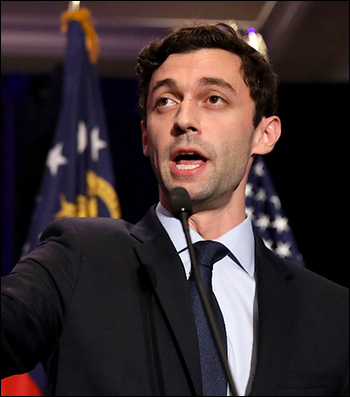
Georgia Democratic Sen. Jon Ossoff

A recently released Cygnal survey research firm poll finds the Republican Senate candidate pool pulling closer to Georgia Sen. Jon Ossoff (D), and the two best available performers aren’t yet in the race.

The Cygnal poll (May 15-17; 800 likely Georgia voters; live interview & text) projects that Secretary of State Brad Raffensperger (R) runs slightly ahead of Sen. Ossoff, 44.3 to 44.1 percent. Rep. Mike Collins (R-Jackson) appears next strongest, trailing the incumbent, 45.7 – 44.3 percent. Neither, however, are announced Senate candidates.

Secretary Raffensperger, who was the focal point of the 2020 vote fraud claim controversy in the presidential race, could seek re-election. He has also publicly contemplated entering the open Governor’s race but has been relatively silent about launching a bid against Sen. Ossoff.

Rep. Collins has been listed as a potential Senate candidate since the beginning of the prognostication discussion, and he is still considered as a possible statewide contender.

Another potential Republican candidate, but one unlikely to run, is former US Senator and current Small Business Administration Director Kelly Loeffler. She also does well in the Cygnal poll, trailing Ossoff just 46.3 – 42.8 percent.

The announced candidates fall into the same close polling realm. Sen. Ossoff would lead Rep. Buddy Carter (R-Pooler/Savannah), 46.0 – 42.1 percent, while state Agriculture Commissioner John King falls behind the Senator by a closer 44.7 – 42.1 percent.

This set of polls is much different from what we have previously seen in the early going. Before, Gov. Brian Kemp (R), who recently announced he would not run for Senate, polled slightly ahead of Ossoff, but the others were substantially behind. Therefore, the new Cygnal poll, from a frequent Georgia pollster, marks a significant improvement for the lesser known GOP candidates and potential contenders.

For example, the April Atlanta Journal-Constitution poll (May 15-24; 1,000 registered Georgia voters) found Sen. Ossoff leading Commissioner King, 51-38 percent. A January WPA Intelligence survey (Jan. 14-15; 500 likely Georgia voters) posted Ossoff leading King, 47-31 percent and 45-32 percent over Rep. Carter.

The Tyson Group also polled the Georgia Senate race in January (Jan. 30-31; 600 likely Georgia voters) and reported Gov. Kemp leading Sen. Ossoff, 49-42 percent. They also tested Rep. Carter and found Ossoff rebounding to lead 47-32 percent. The Trafalgar Group, in their April poll (April 24-27; 1,426 likely Georgia voters; multiple sampling techniques), saw Sen. Ossoff running ahead of Rep. Collins by a closer 47.5 – 42.8 percent margin.

The Trafalgar Group also released Republican primary numbers from last month’s results. At the time, Rep. Marjorie Taylor Greene (R-Rome), who later announced that she would not enter the Senate race, led the group with 42.7 percent of the likely Republican primary voters. Raffensperger was second with 22.0 percent, followed by Rep. Collins’ 15.0 percent support. Rep. Carter drew 13.1 percent, potential candidate Rep. Rich McCormick (R-Suwanee) posted 5.3 percent, and Commissioner King trailed with only 2.0 percent preference.

While certain states, adjacent North Carolina being a prime example, see routine polling inaccuracies that usually involve an under-poll for Republican candidates, the 2024 Georgia data produced sound projections.

According to the Real Clear Politics Polling Archives, the past six Georgia presidential polls all saw the race coming down to a one point margin. The final Atlas Intel (Nov. 3-4) survey predicted the correct margin, a two-point victory for President Trump. This most recent polling track record is a clear improvement for Georgia polling methodologies because the group of participating pollsters largely missed the 2020 Georgia presidential and 2022 Senate races.

The Republican nomination field is expected to be large, meaning the May 19 GOP Senate primary will likely advance to a late June runoff between the eventual top two finishers. Once a Republican nominee is chosen (Sen. Ossoff is expected to be unopposed for the Democratic nomination) the Peach State political fireworks will then consume the remaining five months of the ’26 election cycle.

The Georgia race promises to be one of the most hotly contested battleground Senate campaigns of the 2026 election cycle. It is clearly the Republicans’ best chance to convert a Democratic seat, so the party will be all-in here, regardless of which Republican will ultimately challenge Sen. Ossoff.

Senate: Early Open Seat Observations

By Jim Ellis — Tuesday, May 27, 2025

Senate

Senator and former Auburn football coach Tommy Tuberville

It appears that Alabama Sen. Tommy Tuberville (R) will announce his campaign for Governor at some point this week.

Tuberville’s doing so will make the Alabama seat the sixth open Senate race for the 2026 election cycle, joining Illinois, Kentucky, Michigan, Minnesota, and New Hampshire.

Sen. Tuberville’s move toward the Governor’s contest looks ever more secure since Lt. Gov. Will Ainsworth (R) announced late last week that he will not run. Earlier this month, his statements led observers to believe that he would be the only Republican willing to challenge the Senator in the Republican gubernatorial primary.

Previously, Ainsworth reiterated that he would not run for the Senate, making it clear that his eyes were on the Governorship. Therefore, his announcement of not running for Governor is quite surprising but likely a testament to Tuberville’s strength within the Republican base.

In the open Senate race, we can expect to see a crowded Republican field, but possibly only one major candidate on the Democratic side. While a Republican House member may or may not jump into the Senate skirmish, several state officials are likely to do so.

For the Democrats, former US Senator Doug Jones, who Sen. Tuberville unseated in 2020 with a 60-40 percent victory margin, is indicating that he is considering either entering the Senate or Governor’s race next year. With Tuberville headed to the Governor’s campaign, it is probable that Jones, if he decides to again run for office, will attempt to regain his Senate seat since that race will be open.

Three of the open Senate seats are already stabilizing. At the outset, the races in Illinois and Minnesota appear similar. Here, we see Sens. Dick Durbin (D-IL) and Tina Smith (D-MN) retiring, leaving hotly contested Democratic primaries in their wake. Republicans, on the other hand, don’t see a major candidate surfacing right now in either campaign.

The Illinois Democratic primary will be decided on March 17. The contest features two US House members, Reps. Raja Krishnamoorthi (D-Schaumburg) and Robin Kelly (D-Matteson/Chicago), along with Lt. Gov. Juliana Stratton.

The Lieutenant Governor won endorsements from Gov. J.B. Pritzker (D) and the state’s junior Senator, Tammy Duckworth (D). Yet, Stratton and Rep. Kelly largely share the same major constituency, the Black community, and even hail from similar locations in the Chicago area. Therefore, the two have a high probability of splitting the same vote pool. Rep. Krishnamoorthi had almost $20 million in his campaign account at the end of the first quarter and may have better potential to attract downstate votes. In any event, this will be an interesting early race.

In Minnesota, with former state Senate Minority Leader Melisa Lopez Franzen already dropping out of the Democratic race, the contest, likely to be decided in an August primary, is already evolving into a close two-way affair between Lt. Gov. Peggy Flanagan and Rep. Angie Craig (D-Prior Lake).

Kentucky Sen. Mitch McConnell (R) retiring after seven terms will leave this seat with a new occupant for the first time since 1985. Republicans are headed to a May primary battle between former Attorney General and 2023 GOP gubernatorial nominee Daniel Cameron and Rep. Andy Barr (R-Lexington).

The big unanswered question, however, is whether Gov. Andy Beshear (D-KY) will enter the race. He has won two statewide campaigns, including defeating Cameron in the 2023 general election. If the Governor runs for Senate, the open race becomes very much in play. Should he only focus on running for President in 2028, the eventual GOP nominee should have an easy walk in the general election.

The New Hampshire Senate race is already evolving into a general election contest even before state legislators decide if they will move the September primary to an earlier date.

Rep. Chris Pappas (D-Manchester) is quickly uniting the Democratic Party behind his candidacy and looks to become a consensus candidate. He will have the advantage in November likely over former Massachusetts Sen. Scott Brown (R), who is moving toward again locking down the GOP nomination. In 2014, he held Sen. Jeanne Shaheen (D) to a 51-48 percent re-election victory.

Finally, the Michigan race looks to be the one toss-up open Senate race. Republican former Representative and 2024 US Senate nominee Mike Rogers returns for another shot but may have to win a Republican primary against Rep. Bill Huizenga (R-Holland).

The Wolverine States Democrats are for sure headed to a contested primary. Rep. Haley Stevens (D-Birmingham) and state Sen. Mallory McMorrow (D-Royal Oak) are already in the race, while term-limited Attorney General Dana Nessel may soon join the field. The 2024 general election was decided by just 19,006 votes, and it would not be surprising to see a similar result occur in 2026.

A Pair of Senate No-Go’s

By Jim Ellis — Wednesday, May 21, 2025

Senate

Minnesota Sen. Tina Smith (D) — not seeking re-election.

Two Midwest Democratic Senate primaries became better defined early this week. With no viable Republican candidate so far coming forward in either Minnesota or Illinois, the Democratic primary in both states is likely to produce the outgoing incumbents’ successors.

With that being the case, in Minnesota, we see former state Senate Minority Leader Melisa Lopez Franzen (D) suspending her Senate campaign, and Illinois Rep. Lauren Underwood (D-Naperville) has been telling supporters she has decided not to enter the open Democratic primary to replace retiring Sen. Dick Durbin (D).

Minnesota Sen. Tina Smith (D) is not seeking re-election, and immediately upon the incumbent’s political intentions becoming public, Lt. Gov. Peggy Flanagan (D) announced her Senate candidacy. Shortly thereafter, Franzen joined the race. At the end of April, Rep. Angie Craig (D-Prior Lake) entered, and the primary campaign’s trajectory changed.

While Lt. Gov. Flanagan continued in the favorite’s position, the Craig entry made the race a two-way affair in many observers’ minds. This narrowed a plausible victory path for Ms. Franzen; hence, she came to the conclusion that her Senate effort would be relegated to futile status.

The Illinois situation is vastly different. Some believe Rep. Underwood might have eventually positioned herself as the favorite to defeat Reps. Raja Krishnamoorthi (D-Schaumburg), Robin Kelly (D-Matteson/Chicago), and Lt. Gov. Juliana Stratton.

Considering the credibility factor of those in the field, the Land of Lincoln Democratic primary campaign will be a difficult run for any who ultimately file. Apparently, Rep. Underwood believed her chances of topping the Democratic field were not strong enough to risk what has become, for her, a safe House seat.

Expect the Minnesota race to be very expensive, but whether the Flanagan-Craig battle will be settled in the primary election remains to be seen. The Minnesota nominating process features state party endorsing conventions. Most of the time, and particularly on the Democratic side, the candidates accept the convention result and do not force a primary.

In this high-stakes race, however, the chances of the candidate not receiving the party endorsement forcing the August primary must be considered a likelihood. Still, the endorsing convention facet of the Minnesota nominating system creates one more obstacle that the eventual nominee must overcome either by winning the official party endorsement or bypassing the party leaders’ votes.

The Illinois race is shaping up to be an interesting battle. In a three-way race with an early primary (March 17) and no runoff, one candidate must find the right geographic and demographic coalition path to victory.

The best-positioned candidate now may be Rep. Krishnamoorthi. Having the most money in the bank at this point – at the end of March he posted just under $20 million in his campaign account – and seeing two Black opponents coming from the same area in Chicago conceivably splitting the sizable Illinois Black and South Side city vote will likely work in his favor. If the two women run close together, Krishnamoorthi may inherit the inside track toward building a plurality victory coalition within groups beyond the city of Chicago.

Lt. Gov. Stratton has the support of Gov. J.B. Pritzker (D) and Sen. Tammy Duckworth (D) suggesting that she will be viewed as the party establishment candidate. Stratton, however, is just getting her campaign launched and is far behind in the money chase.

Suggestions abound that the Governor may be helping construct a Super Pac to boost her standing, but it remains to be seen if such will happen or whether this is mere wishful thinking from the Stratton team.

Though we are still in the very early stages of these two campaigns, both will be nomination battles to carefully monitor for the remainder of the pertinent nomination cycles.

Texas Senate: Rep. Hunt on the Board

By Jim Ellis — Monday, May 19, 2025

Senate

Texas Rep. Wesley Hunt (R-Houston)

It is common knowledge that Sen. John Cornyn (R-TX) is trailing in every Texas Republican primary poll, but now we see the first survey that includes Rep. Wesley Hunt (R-Houston) as a potential candidate.

A Super PAC has spent seven figures running television ads in the state’s major media markets with the exception of Houston to promote Hunt. The ads are not running in the two-term Congressman’s home market where he already has name identification. It is evident that Hunt is seriously exploring entering the Senate contest, which will add a new dynamic to the Cornyn primary challenge.

The Senate Leadership Fund, an outside Super PAC that supports GOP incumbents, semi-publicized a recent poll result that the organization conducted. The Tarrance Group conducted the research study, but the sampling universe size was not released. The pollsters were in the field during the April 27 through May 1 period. It is assumed the Republican primary ballot test queried only GOP primary voters.

Such being the case, the first ballot test was between Sen. Cornyn and Attorney General Ken Paxton, and the results broke 56-40 percent in the challenger’s favor. Adding Rep. Hunt to the questionnaire sees the Paxton support number dropping to 44 percent, while Sen. Cornyn falls to 34 percent, but the gap between he and Paxton closed. Rep. Hunt then posted a respectable 19 percent considering he is not yet a candidate.

Six polls have been conducted of the Texas Senate Republican primary since the beginning of the year, and all show Cornyn trailing Paxton. The challenger averages 48.5 percent over the six surveys, while Cornyn posts a mean average of just 33.5 percent, and reaches the 40 percent plateau in only one of the six studies.

The common analysis of the Texas campaign suggests that Sen. Cornyn would fare well in the general election if he can win renomination, while the Republicans would be in clear danger of losing a Senate race to a Democrat for the first time since a 1993 special election if Paxton becomes the party nominee.

The SLF Tarrance poll then tested the hypothetical general election and finds such an analysis basically ringing true, but the numbers are all very close. Paired with former Congressman Colin Allred, who was the 2024 Democratic Senate nominee against Sen. Ted Cruz (R), the ballot test breaks for Cornyn by six points while Hunt posts a four-point edge. Paxton, however, trails ex-Rep. Allred by a single percentage point.

The Democrats, however, may not have a consensus candidate. Allred has not yet committed to running again, while former Rep. Beto O’Rourke (D), who failed to win two Texas statewide campaigns and fared poorly in a national Democratic presidential nomination battle in 2020, is confirming that he is considering declaring his candidacy. It remains to be seen if either, or both, of these former US Representatives will enter the 2026 Senate contest.

The more pressing question is how will a multi-candidate primary race affect Cornyn?

Typically, in states that employ a runoff nomination system, an incumbent forced into such a secondary election loses. Such is the case because a majority of the primary electorate has already rejected the incumbent, making it difficult for him or her to quickly re-establish a majority coalition.

Certainly, Rep. Hunt, and possibly others, joining the race would likely produce a primary first-place finisher with only plurality support. In such a scenario, we would more than likely see Sen. Cornyn securing a runoff position. Whether he would fare better against either Paxton or Hunt remains an open question.

The Texas primary is the earliest in the election cycle and is scheduled for March 3. If the previously mentioned runoff scenario is the end result, the subsequent two-person contest would culminate on May 26.

The Texas race will prove a critical factor in the Republicans’ bid to retain the Senate majority. Should a Democrat score an upset win in Texas, the party’s chances of regaining chamber control would grow exponentially.

The Texas Senate contest may well prove the lynchpin of the 2026 national US Senate campaign cycle.

Georgia Senate Race:
Carter In; Greene Out

By Jim Ellis — Tuesday, May 13, 2025

Senate

Georgia Rep. Buddy Carter (R-Pooler/Savannah)

Now that Georgia Gov. Brian Kemp has publicly declined to seek the Peach State’s Republican US Senate nomination, the political dominoes are beginning to fall.

Soon after the Kemp announcement at the end of last week, Rep. Buddy Carter (R-Pooler/Savannah), who said he would run statewide if Gov. Kemp did not, announced that he will compete for the party’s Senate nomination. Quickly after the Carter declaration, Rep. Marjorie Taylor Greene (R-Rome) released a written social media statement indicating that she will not enter the Senate campaign.

Despite Ms. can candidates as are state Agriculture Commissioner Tyler Harper and Insurance Commissioner John King.

Secretary of State Brad Raffensperger has also “not closed the door” on running for the Senate, but he is more likely to enter the open Governor’s race if he decides to run for a different statewide position. Attorney General Chris Carr (R) long ago announced his campaign for Governor.

The eventual GOP winner will face first-term Sen. Jon Ossoff (D). The party nomination may not be decided until late June of next year, however, if the multi-candidate May Republican primary evolves into a runoff election between the top two finishers should no one secure majority support.

The Senator has raised almost $32 million during his four-plus years in office and has $11 million in his campaign account. Clearly, the Georgia Senate race will be one of the most hard-fought and expensive campaigns of the 2026 election cycle.

Since President Trump first won here in 2016, the Georgia races, for the most part, have yielded very close results. Previously, the state was reliably Republican, but demographic changes principally due to large numbers of African Americans moving from other southern states to the Atlanta metro area for better job opportunities, according to a Pew Research study, have made the Democrats much more competitive. Thus, the state is now viewed as politically purple, meaning their elections routinely fall into the toss-up category.

In 2016, Donald Trump defeated Hillary Clinton, 50.7 – 45.6 percent. Two years later, then-Secretary of State Brian Kemp won a close 50.2 – 48.8 percent gubernatorial victory against Democrat Stacey Abrams. Four years afterTrump’s initial close Georgia victory, he would lose to Joe Biden in an official margin of 11,779 votes statewide, or just under three-tenths of one percentage point.

In that same 2020 election, Ossoff would score a one-point victory over Sen. David Perdue (R), and Rev. Rafael Warnock (D) would win a two-point special election decision over appointed Republican Sen. Kelly Loeffler.

The irregular election was necessary to fill the balance of the term after veteran Sen. Johnny Isakson (R) had passed away, and Loeffler was appointed to serve until an election was held. Both Senate seats, however, were decided in close post-election runoffs since Georgia is one of only three states that require majority victories in general elections.

Republicans would rebound to a degree in 2022 when Gov. Kemp scored a more decisive 53-46 percent victory over Abrams. Sen. Warnock, however, again recorded a two-point run-off victory to secure a six-year term, this time against former University of Georgia football star Herschel Walker (R) who was routinely characterized as a weak candidate. In 2024, the Georgia electorate again turned to Trump in another tight finish, 50.7 – 48.5 percent, this time over Vice President Kamala Harris.

The recent electoral history sets the stage for what should be another very close 2026 general election. Early polling suggested that Gov. Kemp, if he were to become a candidate, would have enjoyed a small lead over Sen. Ossoff. Sans Kemp, the incumbent begins with more substantial survey margins against any other prospective Republican opponent.

Without Kemp, the Georgia Senate contest won’t have the national political star power that the national media would have focused upon during the midterm election cycle, but this race still has the potential of becoming highly competitive with a different Republican nominee.

Despite the change in status, the Georgia Senate race will remain as one of the keys to determining the size of the next Senate majority.

Two US Reps Announce for Illinois Senate Race; More Likely to Come

By Jim Ellis — Friday, May 9, 2025

Senate

Rep. Raja Krishnamoorthi (D-Schaumburg)

Two members of the Illinois US House delegation have officially announced their intention to compete in the state’s open Senate race, and a third may soon join the fray.

Last week, Senate Minority Whip Dick Durbin (D-IL) announced that he will retire after what will be 44 years of congressional service counting his time in both the House and Senate. Left in his wake will be a highly competitive statewide Democratic primary to be decided in plurality fashion. The Illinois primary is scheduled for March 17, 2026.

Considering the Illinois electorate’s voting history since the turn of the century, winning the statewide Democratic primary is typically tantamount to also clinching the general election.

Reps. Robin Kelly (D-Matteson/Chicago) and Raja Krishnamoorthi (D-Schaumburg) announced their Senate campaigns this week, and Rep. Lauren Underwood (D-Naperville) is soon expected to follow. Lt. Gov. Juliana Stratton (D), who both Gov. J.B. Pritzker (D) and Sen. Tammy Duckworth (D) support, is also an announced candidate.

Public Policy Polling released the first poll of the newly open Democratic Senate primary. The survey April 9-30; 674 likely Illinois Democratic primary voters; live interview & text) found Rep. Krishnamoorthi leading the pack of contenders with 20 percent compared to Rep. Underwood’s 16 percent; Lt. Gov. Stratton posted 13 percent, and Rep. Kelly trailed with 8 percent support.

In terms of name recognition, however, Rep. Underwood leads the group. According to the PPP data, she records a 55 percent statewide name recognition score, which is surprising for a House member who represents just under 6% of the state’s population. Rep. Krishnamoorthi posts 50 percent name ID. Only 42 percent of the polling universe recognized the lone statewide official, Lt. Gov. Stratton. Rep. Kelly is least well known, recording a name identification score of only 31 percent.

According to Jim Williams, the Public Policy Polling representative that conducted the study, Stratton jumps ahead of the others “after voters learn more about each candidate.” This is largely in reference to the pollsters informing the respondents that Stratton has received public endorsements from Gov. Pritzker and Sen. Duckworth.

After the respondents hear the push questions, the ballot test changes to 26-17-17-9 percent with Stratton leading Rep. Krishnamoorthi, Rep. Underwood, and Rep. Kelly, respectively.

The early money count, however, greatly favors Rep. Krishnamoorthi. According to the 1st quarter Federal Election Commission filings, the northern Illinois Congressman posts just under $19.5 million in his campaign account. Reps. Kelly and Underwood have $2.0 million and $1.1 million, respectively. For the federal officials, all of their cash-on-hand money is transferable to a US Senate campaign account.

Since Lt. Gov. Stratton just formally announced her candidacy, she obviously did not file a 1st quarter disclosure report. The Democratic Lieutenant Governors’ Association, however, has endorsed her candidacy and a spokesman said the organization was committed to spending “seven figures” to help elect Stratton. She is also counting on a major Super PAC contribution from Gov. Pritzker. The latter may or may not happen since the Governor will likely be on the ballot himself, striving for a third term in an expensive state in which to campaign.

Adding the retiring Rep. Jan Schakowsky (D-Evanston), the 17-member Illinois congressional delegation will already feature at least three open seats, and four if Rep. Underwood makes the expected move into the Senate race.

The 2026 Illinois Senate race will receive a great deal of attention in the early portion of the election cycle since the early Democratic primary in March will almost assuredly determine who will win the general election. We can count on seeing much more about this race as the open campaign continues to develop.

Georgia Gov. Kemp Out; Which
Other Governors Could Be In?

By Jim Ellis — Thursday, May 8, 2025

Senate

Georgia Gov. Brian Kemp (R)

Georgia Gov. Brian Kemp’s announcement earlier in the week that he would not challenge Sen. Jon Ossoff (D) next year was surprising to many but not all political observers.

In fact, it’s possible that we will see all of the Governors or ex-Governors who could run for the Senate in the various states take a pass on challenging a Senatorial incumbent or competing in an open seat situation.

The Kemp announcement now unfreezes the Republicans waiting in the wings who want to run statewide. Individuals who have expressed interest or at least confirm they are considering challenging Sen. Ossoff, include four members of the US House delegation. They are: Reps. Buddy Carter (R-Pooler/Savannah), Rich McCormick (R-Suwanee), Mike Collins (R-Jackson), and Marjorie Taylor Greene (R-Rome). Also counted among the possible candidates are state Agriculture Commissioner Tyler Harper and state Insurance Commissioner John King.

The Atlanta Journal-Constitution newspaper conducted a statewide Georgia poll (April 15-24; 1,000 registered Georgia voters) and found Gov. Kemp, if he were to challenge Sen. Ossoff, leading the prospective race 49-46 percent.

Now, without Kemp in the candidate field, the advantage turns to Ossoff. The AJC poll found him leading King 51-38 percent, and topping Rep. Greene, 54-37 percent. Also tested was Secretary of State Brad Raffensperger who has said he’s considering a Senate bid but is more likely to enter the open Governor’s race. Raffensperger, however, polls best within this group against Sen. Ossoff, trailing 48-39 percent in the AJC poll. Reps. Carter, McCormick, and Collins were not tested.

The outlook suggests that the Georgia Republicans will now see a crowded Senate primary field, meaning it will become difficult for one candidate to win the nomination outright. The 2026 Peach State election calendar has not yet been set, but the likely statewide primary date will be May 19, 2026, with a runoff for the top two finishers, should no one reach the 50 percent threshold, probably scheduled for June 16. Therefore, the most plausible projection is that the Georgia GOP won’t have an official Senate nominee until late June of next year.

With Sen. Ossoff already possessing over $11 million in his campaign account, a number that will grow exponentially before the Republicans nominate their Senate candidate, he is in a favorable pre-election position.

Elsewhere, there are a dozen situations where a Governor or ex-Governor could conceivably run for an open Senate seat or challenge an incumbent of the opposite party.

Of the 12, we see one reverse situation. Tennessee Sen. Marsha Blackburn (R) appears intent on running for an open gubernatorial position.

Alabama Gov. Kay Ivey (R) could look at an open Senate seat campaign if Sen. Tommy Tuberville (R) decides to run for Governor as expected, and Maine’s Janet Mills (D) could challenge Sen. Susan Collins (R) with the encouragement of many Democratic leaders. Neither, however, is likely to run for Senate because both are over or nearing 80 years old.

Aside from Gov. Kemp, four other Governors have already turned down opportunities to run for the Senate.

Illinois Gov. J.B. Pritzker (D) has already endorsed Lt. Gov. Juliana Stratton (D) to replace retiring Sen. Dick Durbin (D), while the Governor himself appears to be preparing a third run for his current position.

Term-limited Michigan Gov. Gretchen Whitmer (D) is very likely to run for President in 2028 and will therefore bypass a run for her state’s open Senate seat.

Like Gov. Pritzker in Illinois, Minnesota Gov. Tim Walz, the 2024 Democratic Vice Presidential nominee, has endorsed Lt. Gov. Peggy Flanagan to replace retiring US Sen. Tina Smith (D). As with Pritzker, Gov. Walz is preparing to run for a third term.

New Hampshire ex-Gov. Chris Sununu (R), who like Gov. Kemp in Georgia would give the Republicans their best chance of converting a Democratic Senate seat, has also said he will not run in 2026. His future plans are only speculated upon, but a future presidential bid would not be out of the question.

Term-limited Kansas Gov. Laura Kelly (D) is not mentioned as a possible presidential candidate, but party leaders are encouraging her to challenge first-term Sen. Roger Marshall (R). It remains to be seen what the Governor will decide for 2026.

Two term-limited Governors and one ex-state chief executive are at the forefront of presidential prognostication, yet each sees a viable Senate situation developing in their respective state.

Gov. Glenn Youngkin (R) could challenge Sen. Mark Warner (D) next year, since his one term will expire in early 2026. Though clearly looking at a presidential run, Gov. Youngkin, and any Republican, would face an uphill battle against Vice President J.D. Vance for the party nomination. A race against Sen. Warner would also be uphill, so Gov. Youngkin may see his electoral window closing.

On the Democratic side, Gov. Andy Beshear (D-KY) and former Gov. Roy Cooper (D-NC) could enter what promises to be a very crowded 2028 Democratic presidential campaign. Should only one of these two run, that individual, either Beshear or Cooper coming from the southern region, would be a viable prospective nominee because of their opportunity to accumulate a large quantity of delegate support from the vote-rich South.

Signs are pointing to a situation where the aforementioned Governors or ex-Governors follow the Sununu and Kemp example and decline their party leaders overtures to launch a 2026 Senate campaign.

A Senate Review – Part II

By Jim Ellis — Wednesday, May 7, 2025

Senate

Today concludes our two-part series covering the latest in competitive US Senate campaigns. This edition examines developing contests in Michigan through Virginia.

In this report, if a state is not listed, it means the incumbent is currently expected to seek re-election and face little in the way of credible opposition.

Michigan — The 2024 open Senate contest surprisingly proved to be the tightest in the nation, so a second open contest in successive election cycles will draw much greater early national attention and resources. Republican former Congressman Mike Rogers, despite being badly outspent, lost to then-Rep. Elissa Slotkin (D) by just 19,006 votes statewide. He returns to again battle for a Senate seat; this time left open because Sen. Gary Peters (D) is retiring.

Rogers should be a clear favorite for the Republican nomination, though Rep. Bill Huizenga (R-Holland) says he is considering entering the race. For the Democrats, Rep. Haley Stevens (D-Birmingham) and state Sen. Mallory McMorrow (D-Royal Oak) are announced candidates. Term-limited Attorney General Dana Nessel is also a potential Democratic candidate. Count on this race being considered a toss-up all the way through the Nov. 4, 2026, election day.

Minnesota — Sen. Tina Smith (D) is not seeking a second six-year term, which opens the door for a highly competitive Democratic primary. In the race are Lt. Gov. Peggy Flanagan, Rep. Angie Craig (D-Prior Lake), and former state Senate Minority Leader Melisa Lopez Franzen. Others may join but count on this race advancing through the party endorsing convention to the August primary ballot.

Republicans, at this point, do not have a credible announced candidate, which means it is highly likely that Sen. Smith’s successor will be the Democratic primary winner.

New Hampshire — Sen. Jeanne Shaheen (D) will retire at the end of the current Congress, and Rep. Chris Pappas (D-Manchester) is well on his way to becoming a consensus Democratic candidate long before next year’s candidate filing deadline. Already publicly endorsing Pappas are a host of New Hampshire Democratic leaders including Sen. Shaheen, the state’s junior Senator, Maggie Hassan, Rep. Maggie Goodlander (D-Nashua), former four-term Gov. John Lynch, and ex-Rep. Annie Kuster.

Republicans lost their best candidate option when former four-term Gov. Chris Sununu declined to run. Ex-Massachusetts Sen. Scott Brown, who lost to Sen. Shaheen in 2014 on a 51-48 percent count, looks to be running again and could well win the nomination. Without Sununu in the race, however, the edge goes to the Democrats particularly with Rep. Pappas performing so well early.

North Carolina — This is yet another situation where party leaders are trying to convince a sitting or former Governor to challenge the opposite party’s incumbent Senator. Ex-Gov. Roy Cooper (D), who was ineligible to seek a third term in 2024 under his state’s election law, remains uncommitted about challenging Sen. Thom Tillis (R).

In the race for the Democrats, however, is former Rep. Wiley Nickel who did not seek re-election to a second term in 2024 because of an adverse redistricting map. Originally, Nickel said he would stand aside for Cooper but does not appear to be saying such any longer. This could be a clue that the former Governor will not run for Senate to instead prepare for a 2028 presidential campaign.

The nature of North Carolina politics suggests that the 2026 Senate race will again be close irrespective of whose running. The state traditionally features tight statewide elections in almost every cycle. Consider this race a toss-up, particularly if Cooper decides to run, though former Congressman Nickel will prove an able candidate.

Ohio — As in Florida, Ohio will host a special election to fill the balance of a current Senate term. After then-Sen. J.D. Vance was elected Vice President, Gov. Mike DeWine (R) appointed Lt. Gov. Jon Husted (R) to the Senate seat. Husted now must run in 2026 to fill the balance of the six-year term, and then again in 2028 for a full six-year stint.

Last week, former Representative and 2022 US Senate nominee Tim Ryan (D) announced he would not challenge Sen. Husted but still expresses interest in the Governor’s race.

Ohio is another state where potential candidates, in this case Democrats, are frozen in time waiting for a decision from another. Former three-term Sen. Sherrod Brown (D), who lost his seat to Bernie Moreno (R) in November, is a potential candidate for both Senate and Governor. Until Brown decides where to run, if anywhere at all, expect little movement among other prospective Democratic candidates.

South Carolina — Talk of a Republican primary challenge to Sen. Lindsey Graham has died down since both Reps. Nancy Mace (R-Charleston) and Ralph Norman (R-Rock Hill) are looking toward an open Governor’s race. Sen. Graham showing almost $16 million in his campaign account also is dissuading potential challengers from both parties. At this point, expect Sen. Graham to have an easy road to re-election.

South Dakota — Recently, Sen. Mike Rounds (R) stated that he would not enter the open Governor’s race which would be an attempt to regain a political position he once held. Curiously, he did not announce a bid for re-election in declining to run for Governor.

Rounds is still expected to stand for election to the Senate in 2026, and with his state featuring a Governor’s race that could yield a major Republican primary battle, the two-term federal incumbent is expected to breeze through another re-election next year.

Texas — Several recent polls show incumbent Sen. John Cornyn badly trailing Attorney General Ken Paxton, who is an announced Republican primary competitor. The polling, however, is not the full story.

A non-profit organization, Standing for Texas, is running ads in the major media markets with the exception of Rep. Wesley Hunt’s (R) hometown of Houston, positively profiling the Congressman and clearly laying the groundwork for a statewide run. Curiously, however, the latest polls do not include Rep. Hunt as a Senate candidate, even though signs are clear that he intends to enter the contest. The addition of Rep. Hunt, and/or other candidates, could certainly change the campaign trajectory.

Sen. Cornyn’s problem is that large numbers within the Texas GOP base believe him to be a RINO (Republican In Name Only) because he has strayed from the typical party position on several issues. A fair characterization or not, it is clear that Sen. Cornyn will have to neutralize this image in order to forge a winning coalition.

On the Democratic side, no major candidate has yet come forth but 2024 Senate nominee Colin Allred, now a former Congressman, confirms he is considering returning for a 2026 campaign. Ex-Congressman and failed presidential, Senate, and gubernatorial candidate Beto O’Rourke says he is not “closing the door” on entering the Senate race. Rep. Joaquin Castro (D-San Antonio) is another possibility as is astronaut Terry Verts.

It appears we will see a great deal of early action from candidates in both parties for the Texas Senate race. The party primaries are scheduled for March 3, 2026, with a runoff on May 26 if no candidate secures majority support. Regardless of the outcome of each nomination contest, expect the Texas Senate campaign cycle to yield a tough and close months-long campaign.

Virginia — Sen. Mark Warner (D) is on the ballot for a fourth term, and unless Gov. Glenn Youngkin (R) decides to challenge him, the Democratic incumbent should have little trouble again winning re-election. If the Governor does run, the contest will prove close, but the Senator would still be rated as at least a slight favorite to win the general election.

Gov. Youngkin is another of the state chief executives said to have presidential aspirations, so it remains to be seen if he is looking toward launching a national campaign, running for the Senate, or simply retiring from elective politics. Virginia is the only state in the country that limits its Governors to one term, so Youngkin’s future political options are narrow.