Category Archives: Senate

Lara Trump Out in Florida;
Vance Senate Replacement Update

By Jim Ellis — Thursday, Jan. 2, 2025

Senate

Lara Trump / Photo by Gage Skidmore

Former Republican National Committee Co-Chair Lara Trump announced before Christmas that she is removing herself from consideration to replace Secretary of State-designate Marco Rubio as Senator in Florida, and there are new signals emerging about who will succeed Vice President-Elect J.D. Vance via similar appointment.

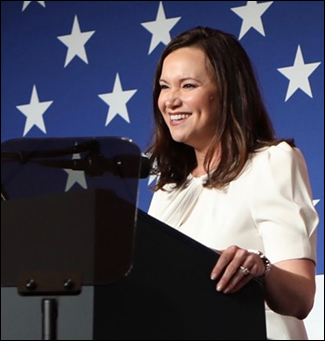
Gov. Ron DeSantis (R) will appoint a new Florida Senator upon Rubio being confirmed as Secretary of State. Therefore, expect an individual who is close to DeSantis to be chosen. Lt. Gov. Jeanette Nunez, Attorney General Ashley Moody, and ex-state House Speaker Jose Olivo are possible Rubio successors. DeSantis says he will announce his choice sometime in January.

Sen. Rubio will likely be one of the first Trump nominees confirmed since his position is one of the more important and the approval process before his 99 colleagues is expected to progress smoothly. There is little suggestion that he will lose any Republican votes and is likely to attract some crossover Democratic support.

Possibly, a reason for Ms. Trump’s withdrawal from consideration is an understanding that Gov. DeSantis is headed in another direction. He certainly will pick someone who has a campaign background and the ability to raise funds. Ms. Trump fit the bill concerning both of those qualifications but is not a Florida political insider. Ms. Trump hails from North Carolina and the Eric Trump family has lived in Florida for only a short time.

Whoever Gov. DeSantis selects will have to run to serve the balance of the term in 2026, and then again in 2028 when the seat next comes in-cycle for a full six-year term. Therefore, the new Senator will be in heavy fundraising mode for a full four-year period since Florida, the state with the third largest population, is a very expensive place in which to campaign.

Ohio — The Ohio appointment is interesting in that the top prospects are all saying they instead want to run in the state’s open Governor’s contest. Originally, it appeared that both Lt. Gov. Jon Husted and Attorney General Dave Yost were thought to be the top appointment contenders. Both had already announced they were running for Governor and each reiterated he wanted to stay in the race.

Another potential appointment, Secretary of State Frank LaRose who ran unsuccessfully for the Senate in 2024, is also expressing interest in the Governor’s race. LaRose is thought of a long-shot appointment since he is well to the right of Gov. Mike DeWine, therefore it’s unlikely that the latter man would look in the Secretary’s direction.

Recent indications, however, suggest that Lt. Gov. Husted could still become Gov. DeWine’s choice for the Senate seat if Husted would change his intention and accept the position. Appointing Husted would make sense because it would save the Republicans from enduring a difficult and potentially divisive gubernatorial primary principally between he and Yost.

As in Florida, the new Ohio Senator will have to run in 2026 to fill the balance of the term, and then again in 2028 when the seat comes in-cycle for its six-year term. Therefore, it would behoove the Republicans to have a candidate who is experienced in running statewide campaigns and has the type of fundraising base that can sustain him or her through what will be a very expensive four-year political period, particularly if outgoing Sen. Sherrod Brown (D) decides to run in either 2026, 2028, or both.

In Brown’s unsuccessful re-election bid this year, he became the second most prolific fundraiser of all Senate candidates, attracting over $103 million in cycle financial receipts. Therefore, GOP fundraising would become an even greater priority if Brown becomes the new Senator’s opponent.

One group essentially disqualified from receiving a Senate appointment in either Florida and Ohio are Republican US House members. Already down a potential three seats until special elections are held due to Trump Administration nominations, the scant Republican majority cannot afford further leakage. Therefore, neither Governor will choose a Representative for the Senate appointment.

North Carolina Senate:
Another Tight Race Forecast

By Jim Ellis — Monday, Dec. 23, 2024

Senate

North Carolina Sen. Thom Tillis (R-NC)

Tar Heel State Sen. Thom Tillis (R) stands for re-election to a third term in 2026, and another tough campaign is looming for him on the political horizon. In fact, history shows us that the preponderance of North Carolina political contests end in razor-thin victory margins.

Looking at the key statewide races since and including 2016, the winning percentages were as follows: 2016 President (Trump 49.8 percent); 2016 Senate (Burr 51.1 percent); 2016 Governor (Cooper 49.0 percent); 2020 President (Trump 49.9) percent; 2020 Senate (Tillis 49.9 percent); 2020 Governor (Cooper 51.5 percent); 2022 Senate (Budd 50.5 percent); 2024 President (Trump 50.9 percent).

As you can see, regardless of political party affiliation or even incumbency, a typical North Carolina campaign is extremely close. Therefore, Sen. Tillis can expect another close finish in 2026 especially if his Democratic opponent is outgoing Gov. Roy Cooper, which is a distinct possibility. Gov. Cooper is also speculated upon as a potential 2028 presidential candidate.

Sen. Tillis, the former Speaker of the North Carolina House of Representatives, was originally elected to the Senate in 2014 when he unseated then-Sen. Kay Hagan (D) with 48.8 percent of the vote in another close electoral contest that ended in a 1.5 percentage point victory spread for the GOP challenger.

In 2020, Sen. Tillis trailed in the polls for almost the entire campaign, but rebounded to defeat Democrat Cal Cunningham after the latter man was caught in an ongoing extramarital affair. Sen. Tillis would post a two-point win but fell short of the 50 percent mark.

According to the Real Clear Politics polling archives, 28 surveys were conducted of the 2020 NC Senate race during the final month of the campaign. Cunningham led in 24 of the polls, and Sen. Tillis in only two, while two results found the men tied. The associated negative publicity relating to Cunningham’s extramarital affair helped turn the race Tillis’ way, along with the pollsters consistently under-counting the Republican support factor which is often the case in the southern states.

In 2026, it is conceivable that Sen. Tillis may face primary opposition, particularly if he decides to oppose one or more of the Trump cabinet nominees. Previously, Tillis had little trouble in his primaries, however.

He received 78 percent of the vote in 2020 and won a crowded initial primary in 2014 with 45.7 percent of the vote against seven Republican opponents. North Carolina has a 30 percent runoff law, so it is unlikely that a 2026 primary will produce a field of candidates with low enough support to force a secondary election. Therefore, expect a nominee to come forth through one intra-party election in both parties.

While Gov. Cooper would be the Democratic leadership’s first choice to oppose Sen. Tillis, there is no guarantee that he will run, possibly due to the lure of an open Democratic presidential primary season beginning just weeks after the 2026 midterm elections conclude.

Rep. Wiley Nickel (D-Cary) didn’t seek a second term in the House because his 13th Congressional District turned red in the 2023 redistricting plan. Instead, Nickel announced that he would bypass a 2024 re-election campaign in order to challenge Sen. Tillis in 2026. Therefore, the Democrats are guaranteed of having at least one credible candidate to make a Senate run in the next statewide election.

In the 2026 Senate races, Republicans will be in a defensive position similar to the way Democrats were defending themselves in ’24. Counting the yet-to-be named Senators from Ohio and Florida when Sens. J.D. Vance (R-OH) and Marco Rubio (R-FL) assume their new positions as Vice President and Secretary of State and resign from the Senate, Republicans will be defending 22 seats and Democrats only 13. In the 2024 election, Democrats had to defend 23 seats as compared to the Republicans’ 11.

Clearly, the North Carolina race, mostly due to the state’s voter history that features such close elections, will be at the top of the Democrats’ conversion target list. Therefore, we can count on paying close attention to the Tar Heel State race throughout the entire election cycle.

Ousted Sen. Brown Vows to Return; Colorado’s Neguse Leads in Early Poll; New Mexico Governor Candidacy Considerations

By Jim Ellis — Thursday, Dec. 19, 2024

Senate

Ohio Sen. Sherrod Brown (D)

Ohio: Defeated Sen. Brown Hints at Return — “This is my last speech on the Floor this year. But it is not — I promise you — the last time you will hear from me,” were the words of defeated Sen. Sherrod Brown (D-OH) suggesting that he will make a comeback in future elections. He lost the 2024 election to Senator-Elect Bernie Moreno (R) by a 50-46 percent count. If so, it is likely the 72-year-old long-time Ohio politician will again seek office in 2026. He could choose to run in the open Governor’s race where he would likely have an easy run in the Democratic primary or attempt to return to the Senate.

When Sen. J.D. Vance resigns his seat to become Vice President in January, Gov. Mike DeWine (R) will then appoint a replacement. the new Senator may well find him or herself on the ballot in 2026, and possibly again in 2028, against Brown. Whoever is appointed will run to serve the balance of the current term in 2026, and then for a full six-year term in 2028.

Governor

Colorado: Rep. Neguse Leads Early Dem Primary Poll –– Colorado Gov. Jared Polis (D) is ineligible to seek a third term, so a very competitive 2026 Democratic primary awaits the voters. Magellan Strategies completed a Centennial State Democratic primary poll earlier this month (for the Healthier Colorado organization; Dec. 4-9; 630 likely Colorado Democratic and unaffiliated primary voters; text & online) and found Boulder area Congressman Joe Neguse opening with a small lead.

According to the ballot test, Rep. Neguse posted 20 percent support with Secretary of State Jena Griswold in second position at 16 percent. Current US Ambassador to Mexico, former US Senator, and ex-Interior Secretary Ken Salazar was next with 11 percent, while Attorney General Phil Weiser follows at eight percent preference. Therefore, the results of this survey suggest that we will see a highly competitive wide open race for the Democratic gubernatorial nomination. The eventual nominee will then be a heavy favorite to win the office in the 2026 general election.

New Mexico: Interior Secretary Haaland Making Gov Move — Another state with a term-limited Governor is New Mexico; Gov. Michelle Lujan Grisham (D) is ineligible to seek a third term. Therefore, speculation is brisk as to who will run to succeed the outgoing Governor. Earlier, we reported that Sen. Martin Heinrich (D), fresh from his re-election victory for a third term, could be interested in running for Governor.

Now, we see US Interior Secretary and ex-Congresswoman Deb Haaland (D) also coming to the forefront. In addition to Sen. Heinrich and Secretary Haaland, Lt. Gov. Howie Morales and Secretary of State Maggie Toulouse Oliver are also potential Democratic candidates. Whoever wins the June 2026 Democratic primary will hold the inside track to winning the general election.

Sen. Cornyn’s Budding Challenge

By Jim Ellis — Wednesday, Dec. 18, 2024

Senate

Texas Sen. John Cornyn (R) / Photo by Gage Skidmore

It is common knowledge in Texas political circles that four-term Sen. John Cornyn will face a Republican primary challenge from three-term Attorney General Ken Paxton, but is such a race an upset in the making?

Paxton has won three statewide elections to his current position, but his most difficult challenge may have been surviving a 2023 impeachment effort. The state House of Representatives voted in an overwhelming margin to impeach him, but he was saved in the state Senate when the body fell well short of the two-thirds majority vote to remove him from office. Most of the 16 articles of impeachment dealt with accusations of improperly using his office to assist a federally indicted individual.

The impeachment’s sideshow included bringing his alleged mistress into the proceedings to discuss whether the AG had used state funds to cover travel and lodging expenses in association with an extramarital affair.

Additionally, Paxton had been under federal indictment since 2015 over financial transactions before becoming Attorney General. After allowing the case to languish for almost a decade, the government settled the case earlier this year.

All of this notwithstanding, Paxton is reportedly toning his political operation to challenge Sen. Cornyn in the March 2026 Republican primary. Some suggest that the Senator could be vulnerable in a Texas GOP primary because he is closer to the political center than the Republican electorate as a whole.

When reviewing the candidates’ political history, however, such may not be the case. In addition to clinching four Senate elections, Cornyn also won statewide elections for Attorney General and state Supreme Court during his long career. In his four Senate general elections, Sen. Cornyn averaged 56.3 percent of the vote.

This number factors favorably when compared to other key Texas statewide officials, Gov. Greg Abbott and Sen. Ted Cruz. Abbott has averaged 56.6 percent in his three elections, and Sen. Cruz 53.5 percent in his trio of statewide elections, the most recent of which was on Nov. 5 when he defeated Rep. Colin Allred (D-Dallas), 53.1 – 44.6 percent.

Sen. Cornyn’s primary statistics, an impending election where some view him as weaker than against a Democrat, are actually more impressive. In his four primary elections, including when Cornyn first won the open seat in 2002, he averaged 77.3 percent. The Senator’s most difficult primary challenge came in 2014 when he defeated then-Rep. Steve Stockman with 59.4 percent, thus winning the party nomination outright and avoiding a runoff election.

Furthermore, the Cornyn stats compare favorably with those of Paxton. The Attorney General has also won three statewide general elections with an average vote percentage of 54.3; but, the primary numbers show a major support difference.

In Paxton’s three primaries, he averaged 62.4 percent of the Republican vote. In two of those primaries, however, he was forced into a runoff election. In the third, his first re-election in 2018, he ran unopposed for renomination, which obviously pushes his average northward. In the two campaigns where a runoff occurred, Paxton’s primary average was only 43.6 percent. He did well in his two runoffs, however, averaging 66.5 percent.

Paxton will also see a major difference in running for federal office. While he has been a successful fundraiser, he’s done so with large contributions that are legal under Texas election law. He has not participated in a race with severe contribution limits such as in a federal contest.

Looking at the financial situation, Sen. Cornyn reports a cash-on-hand figure of $3.5 million at the end of the 2024 election cycle. Paxton has $2.5 million in his AG campaign account, but none of that money can be transferred to a federal account because it was not raised under the federal contribution limits. Therefore, from a financial perspective, he would begin a federal election campaign from ground zero.

While Paxton is close to President-Elect Trump and is likely counting on an endorsement from him, such may change before this election campaign comes to fruition. Sen. Cornyn has already pledged to vote for all of the Trump nominations, and the two are sure to routinely support each other’s legislative goals, so it can’t be assumed that Trump would oppose Sen. Cornyn.

Obviously, this potential challenge campaign will be a long time coming and not certain until filing time. Yet, with Sen. Cornyn making clear moves to prepare for another re-election campaign, a Paxton upset must be considered a major long shot.

2026 Senate Status

By Jim Ellis — Friday, Dec. 13, 2024

Senate

Sen. Dick Durbin (D-IL) / Photo: Center for American Progress Action Fund

Sen. Dick Durbin (D-IL), during a CNN interview, indicated he will make an announcement about whether he will seek a sixth term “after the first of the year.”

Sen. Durbin, now 80 years old, was first elected to the Senate in 1996 after serving seven terms in the US House of Representatives. Should he decide to retire, we can expect to see a crowded Democratic primary form with the winner of the March 2026 primary becoming a definitive favorite to win the succeeding general election.

Though we have yet to see an announced retirement, we have seen a sizable number of Senators indicate they are seeking re-election, along with potential primary challenges forming.

While Sen. Durbin hasn’t announced his plans, several thought to be on the potential retirement list have already said they are running for re-election. Sens. Susan Collins (R-ME), Ed Markey (D-MA), and Jack Reed (D-RI) have publicly stated their intention to seek another term in 2026.

Sen. Mitch McConnell (R-KY), while retired from his party leadership post and who is presumed to be retiring in 2026, has not yet publicly stated whether he will run for re-election.

Other retirement prospects who have not yet indicated whether they will seek re-election are Sens. Jim Risch (R-ID), and Jeanne Shaheen (D-NH).

Those who have already made public statements confirming they will run in 2026 are Sens. Tommy Tuberville (R-AL), who at one time was contemplating entering what will be an open race for Governor, John Hickenlooper (D-CO), Joni Ernst (R-IA), Tina Smith (D-MN), Cindy Hyde-Smith (R-MS), Pete Ricketts (R-NE), Cory Booker (D-NJ), and Jeff Merkley (D-OR).

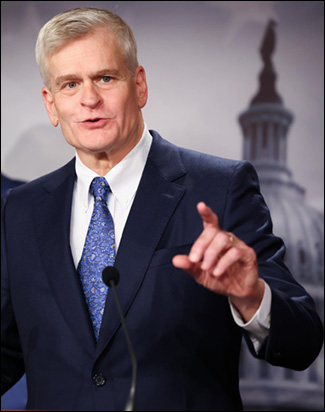
We’ve also seen our first 2026 primary challenge announcement. Louisiana state Treasurer and former Congressman John Fleming (R) has declared his intention to challenge Sen. Bill Cassidy in the newly re-instated 2026 Louisiana partisan primary.

At Gov. Jeff Landry’s (R) initiative, a special redistricting session of the Louisiana state legislature late last year passed a bill eliminating the jungle primary system for federal races and several other offices. This means that Sen. Cassidy, who supported the second Trump impeachment, must stand for re-election in a partisan Republican primary with a 50 percent runoff system.

Other potential GOP Senate challengers to Cassidy include Rep. Clay Higgins (R-Lafayette), outgoing Public Service Commissioner Eric Skrmetta, and retiring Rep. Garret Graves (R-Baton Rouge). Graves was the victim of a court-ordered redistricting map that created a new African American plurality seat which eliminated his current CD.

Speculation is rampant that Texas Sen. John Cornyn (R), who has announced for re-election, will be challenged for renomination, while others being rumored to face primary opponents are Sens. Thom Tillis (R-NC) and Lindsey Graham (R-SC). Sen. Tillis has announced he will seek re-election, and it is presumed Sen. Graham will also run for another term.

Two term-limited Republican Governors are said to be considering challenging their state’s incumbent Democratic in-cycle Senator. GOP leaders and activists are encouraging Georgia Gov. Brian Kemp (R) to oppose first-term Sen. Jon Ossoff (D) who has kicked-off his re-election bid. In Virginia, the GOP brain trust is hoping to see Gov. Glenn Youngkin attempt to unseat three-term Sen. Mark Warner (D).

In Kentucky, two-term Gov. Andy Beshear (D) is thought to be a potential Senate candidate irrespective of Sen. McConnell’s plans to either retire or run for an eighth term. Though a reliable Republican state in federal elections, Gov. Beshear would give the Democrats a strong chance of converting the seat regardless of who might be his Republican opponent.

The other incumbents who have not yet declared their 2026 intentions but are expected to seek re-election are Sens. Dan Sullivan (R-AK), Tom Cotton (R-AR), Chris Coons (D-DE), Roger Marshall (R-KS), Gary Peters (D-MI), Steve Daines (R-MT), Ben Ray Lujan (D-NM), Markwayne Mullin (R-OK), Mike Rounds (R-SD), Bill Hagerty (R-TN), Shelley Moore Capito (R-WV), and Cynthia Lummis (R-WY).

As has been extensively reported, we will also see two other soon-to-be appointed Senators seeking to fill the balance of unexpired terms. When Ohio Sen. J.D. Vance resigns to become Vice President and Sen. Marco Rubio (R-FL) is confirmed as the new Secretary of State, Govs. Mike DeWine (R-OH) and Ron DeSantis (R-FL) will appoint replacements who must run in 2026 and 2028 when their respective seats next come in-cycle.

In all, we will see Republicans being forced to defend 22 seats and Democrats only 13, thus reversing the advantage that the GOP held in 2024.

As you can see, the 2026 US Senate cycle is already beginning to feature a great degree of serious competition.

Senator Schiff? Durbin Retirement Announcement? Rep. Mace Considers Political Future; Republican Challenger to Gov. Shapiro?

By Jim Ellis — Thursday, Dec. 12, 2024

Senate

Newly appointed California Sen. Adam Schiff (D)

California: Schiff Takes Office — There is a bit of confusion surrounding California Rep. Adam Schiff being sworn into the Senate before the next Congress convenes. In November, Schiff defeated retired baseball player Steve Garvey (R), 59-41 percent, for the regular term. Yet, Senator-Elect Schiff already has been sworn into office as a Senator. This is because appointed Sen. Laphonza Butler (D) resigned the seat after the election as she promised. Butler was appointed to the Senate to replace the late Sen. Dianne Feinstein (D) who passed away in September of 2023.

Schiff, on Nov. 5, also won the special election to fill the balance of the unexpired term. Because of California’s long election certification period, neither the regular term nor the special election results are yet certified; therefore, Gov. Newsom has appointed now-Senator Schiff during the interim.

Illinois: Sen. Durbin to Make Announcement in January — Sen. Dick Durbin (D-IL), during a CNN interview, indicated he will make an announcement about whether he will seek a sixth term, “after the first of the year.”

Sen. Durbin, now 80 years old, was first elected to the Senate in 1996 after serving seven terms in the US House of Representatives. Should he decide to retire, we can expect to see a crowded Democratic primary form, with the winner of the March 2026 primary becoming a definitive favorite to win the succeeding general election.

South Carolina: Rep. Mace Considering Primary Challenge — Earlier it was reported that Rep. Nancy Mace (R-Charleston), who was just re-elected to a third term, confirmed she is considering entering the open 2026 Governor’s race. She is reportedly also looking at potentially launching another challenge to Sen. Lindsey Graham in the ’26 Republican Senatorial primary.

In 2014, Mace, then the first woman to graduate from The Citadel, was one of six Republicans who challenged Sen. Graham, who was then completing his second term. She finished fifth in the field of seven, securing only 6.2 percent of the statewide vote. Sen. Graham won that primary with 56 percent of the vote. While it is clear Mace would attract more support in a 2026 challenge, she would again face an uphill challenge to Sen. Graham who is arguably much stronger with the Republican base than he was in 2014.

Six years later, the Senator faced a major challenge from Democrat Jaime Harrison, who would later become Democratic National Committee chairman. Harrison raised an incredible $132 million in his 2020 race against Graham, but the Senator still prevailed with a comfortable 10 percentage point win. At this early stage of the 2026 election cycle, Sen. Graham must again be considered a strong favorite for re-election regardless of what Republican or Democratic opponent might emerge.

Governor

Pennsylvania: Rep. Meuser Contemplating Gov Race — Pennsylvania Rep. Dan Meuser (R-Dallas/Lebanon), who was just re-elected to a fourth term, confirmed earlier this week that he is considering launching a general election challenge to Gov. Josh Shapiro (D). With Gov. Shapiro enjoying positive job approval ratings and rumored as a potential presidential candidate in 2028, the incumbent will be difficult to dislodge.

Therefore, for Republicans, this race looks like a long shot, so it will be interesting to see if Meuser would risk his safe House seat for a difficult statewide run. To date, no one has yet come forward to declare a gubernatorial candidacy.

The Ohio Senate Appointment

By Jim Ellis — Tuesday, Dec. 10, 2024

Senate

Vice President-Elect and current Ohio Sen. J.D. Vance.

Soon after the Trump-Vance ticket won the November presidential election, the Senate appointment discussion to replace Ohio senator and Vice President-Elect J.D. Vance began.

The appointment conversation originally centered around the two individuals who were viewed as the leading candidates to assume the Senate seat — Lt. Gov. Jon Husted and Attorney General David Yost.

Both men were gearing up for a gubernatorial run to replace incumbent Gov. Mike DeWine (R) who is ineligible to run for a third term. Therefore, it appeared that the governor appointing one to the Senate would avoid a bruising 2026 Republican gubernatorial primary and give the GOP a strong interim senator well positioned to hold the seat in succeeding elections. Such an easy solution, however, is no longer probable.

Both Husted and Yost have said they do not want the Senate appointment, and each is continuing to campaign for governor.

Now, the situation becomes even more complicated. Late last week, Secretary of State Frank LaRose, who entered the 2024 Republican Senate primary but fared poorly after leading in early polls, says he, too, is considering entering the governor’s race. LaRose has a base within the most conservative flank of the Ohio Republican Party, so he could be a factor in a crowded multi-candidate gubernatorial primary.

State Treasurer Robert Sprague and State Auditor Keith Faber are two more Republican statewide officials whose names have been mentioned in reference to the governor’s race. Others include Rep. Warren Davidson (R-Troy) and former congressman and statewide candidate Jim Renacci. It is unclear if Gov. DeWine is considering any of these latter individuals as possible Senate appointees.

Though the Senate appointment would be a gift to whoever becomes the interim incumbent, it is not without strings attached. While the individual would be guaranteed two years in the Senate, he or she would have to run to serve the balance of the term in 2026, and again in 2028 assuming the senator would want to run for the full six-year term. This means despite being handed the Senate seat, the individual would be forced into full campaign and fundraising mode for four years.

In the governor’s race, the eventual Republican nominee, after winning what promises to be a difficult primary, would not have a free ride in the general election. Democrats have formidable potential candidates and will certainly make a major run in the 2026 general election campaign.

Potential Democratic gubernatorial candidates included defeated Sen. Sherrod Brown who, in losing to Republican Bernie Moreno, raised more than $103 million for his re-election bid, the second highest of all US Senate candidates.

Other Democrats said to be considering the governor’s race include former congressman and 2022 Senate candidate Tim Ryan, State Supreme Court Justice and ex-Secretary of State Jennifer Brunner, and mayors Aftab Pureval (D-Cincinnati), Andy Ginther (D-Columbus), and Justin Bibb (D-Cleveland).

Sen. Vance has not yet indicated when he plans to resign, but obviously he must do so before he takes the oath of office as vice president. Therefore, the Senate appointment drama will likely continue well into next month and likely very close to the presidential inauguration, which is scheduled for Jan. 20.

Expect Gov. DeWine to quickly announce his choice soon after Sen. Vance resigns. It would not be in the state of Ohio or the Republican Party’s interest to keep the Senate seat vacant for long.

Therefore, it’s very possible we will see a joint announcement when Vance resigns, which includes the vice president-elect officially leaving the Senate and the introduction of the interim replacement.

Texas Senate Seat Questions; Florida House Special Elections Set; Arkansas Redistricting Commission Filed

By Jim Ellis — Monday, Dec. 9, 2024

Senate

Tarrant County Republican Party chairman Bo French

Texas: Potential Challenger Issues Statement — There have been political rumors in Texas for some time that Attorney General Ken Paxton is planning to challenge Sen. John Cornyn in the 2026 Republican primary, and now another individual is coming forward to confirm he is considering entering the next US Senate campaign.

Tarrant County Republican Party chairman Bo French, a MAGA activist, released a statement indicating he is considering becoming a Senate candidate. While he was running for Majority Leader, Sen. Cornyn stated he would run for a fifth term. It remains to be seen, however, if he will follow through with that statement now that he is not in the leadership.

House

FL-1: Special Election Field Set — Candidate filing has closed for the two Florida special congressional elections with primaries scheduled for Jan. 28. President-Elect Donald Trump and Sen. Rick Scott (R) have endorsed Florida Chief Financial Officer Jimmy Petronis. Upon seeing the move from the national leaders, two potentially strong contenders, state Rep. Michelle Salzman (R-Pensacola) and wealthy businessman Keith Gross, exited the race and endorsed Petronis. Even so, 10 others remain.

Though the field remains large, the top combatants are Petronis and state Rep. Joel Rudman (R-Navarre). The size of the GOP field suggests that we will see a plurality nominee advance into the April 1 special general election. One Democrat, athletic trainer Gay Valimont, and an Independent candidate also filed.

The FiveThirtyEight data organization rates FL-1 as R+38, which makes the northwestern panhandle seat Florida’s safest Republican domain. Therefore, the winner of the Jan. 28 GOP primary will win the seat outright on April 1.

FL-6: Sen. Randy Fine (R) in Driver’s Seat for Special Election — While 11 Republican candidates filed in the 1st District special election, we see only one other Republican do so in the Atlantic coastal 6th District after President-Elect Trump and Sen. Scott publicly endorsed state Sen. Randy Fine (R-Melbourne). The individual also is a MAGA activist — Aaron Baker. Sen. Fine appears to be a lock for the GOP nomination.

Three Democrats, a Libertarian Party nominee, and an Independent have filed. It appears Sen. Fine has won this seat once candidate filing closed. The Independent candidate is Randall Terry, a well-known pro-life activist who was the 2024 American Constitution Party presidential nominee and lives in Tennessee.

The FiveThirtyEight data organization rates the seat as R+28, so neither vacant Florida seat appears vulnerable to a Democratic conversion.

Redistricting

Arkansas: Redistricting Commission Filed — According to the Redistricting Network organization, state Sen. Bryan King (R-Green Forrest) has filed a bill to create a redistricting commission to draw future district boundaries at all levels of government. This measure would create a nine member commission where the governor, state attorney general, and the secretary of state would appoint those serving.

The move is a strange one considering that Republicans have trifecta control of the governor’s mansion, the state Senate and state House of Representatives. From the current map, the Republicans hold a 4-0 advantage in the congressional delegation, a 29-6 division in the state Senate, and 82-18 in the state House. The chances for passage in this legislative session appear slim at the outset.

Primary Challenge to Louisiana Sen. Cassidy; New Jersey Sen. Helmy to Resign; Gray Wins CA-13; Detroit Mayor Duggan Announces for Gov.

By Jim Ellis — Friday, Dec. 6, 2024

Senate

Sen. Bill Cassidy (R-LA)

Louisiana: Primary Challenge to Sen. Cassidy Continues to Brew — Earlier, we noted that outgoing Public Service Commissioner Eric Skrmetta is considering launching a 2026 partisan primary challenge to Sen. Bill Cassidy (R), and now state treasurer and former Congressman John Fleming (R) announced he will challenge the senator. Outgoing Congressman Garret Graves (R-Baton Rouge), who was the Republican casualty under the state’s new congressional redistricting map, is also mentioned as a possible candidate. Another who is confirming preliminary Senate race interest is Rep. Clay Higgins (R-Lafayette) who just won a fifth US House term with 71 percent of the vote.

The Louisiana political situation will be different in 2026 because the state is moving away from the top-two jungle primary system for some offices and returning to the partisan primary procedure that most states use. Under the new legislation, races for the US Senate, US House, state school board, Public Service Commission, and state Supreme Court Justices will go to a partisan primary.

The Louisiana Secretary of State has already released a schedule for the new election calendar. The partisan primaries will be held on April 18, 2026. If no candidate receives majority support, a runoff between the top two finishers will be held on May 30, 2026.

New Jersey: Sen. Helmy to Resign — New Jersey caretaker Sen. George Helmy (D), who Gov. Phil Murphy (D) appointed to replace resigned Sen. Bob Menendez (D) on an interim basis, announced that he will resign on Sunday. Sen. Helmy is doing so to allow Rep. Andy Kim (D-Moorestown), who won the general election on Nov. 5, to begin his Senate career early as Gov. Murphy will appoint him to replace Helmy. There are likely to be important lame-duck session votes in the Senate later this month for which Sen-Elect Kim will now participate.

House

CA-13: Gray Wins — Weeks after the election, we finally have all 435 congressional races decided. In northern California’s 13th District, we now see former state Assemblyman Adam Gray (D) defeating freshman Rep. John Duarte (R-Modesto) by just 187 votes. There will be no recount. Rep. Duarte will not contest the outcome, and so the closest race in the country draws to a close. Duarte says he hopes to continue serving the public in other ways and is open to again running for Congress. Therefore, we could see a third race between these two in 2026.

The Gray win means the House will divide at 220 Republicans and 215 Democrats, an overall one-seat gain for Democrats from the current Congress. The margin will drop to 217-215 with Rep. Matt Gaetz (R-FL) having already resigned from the House and Reps. Mike Waltz (R-FL) and Elise Stefanik (R-NY) soon to be headed into Trump Administration positions. It is likely the House will remain in the 217-215 mode until early April since the special elections for the two Florida seats will occur on April 1.

Governor

Michigan: Mayor Duggan Announces for Governor — Michigan will host one of 15 open governor’s races next year because the incumbents are term-limited, so candidates are already beginning to make moves. Detroit Mayor Mike Duggan, who switched from the Democratic Party to Independent status earlier this year, is serving his third term having been originally elected at the end of 2013. As of this week, so far the mayor has become the first individual to announce that he will run as an Independent for governor next year.

Duggan is viewed as an effective mayor for a city that had major problems when he assumed office. Coming from the state’s largest municipality, his Independent candidacy could become serious. This means we could see a very interesting three-way Michigan gubernatorial campaign in 2026. Certainly, both the Democrats and Republicans will field their own candidates, so we will likely see a winner crowned with only a plurality victory margin.

No Need for Term Limits?

Happy Thanksgiving, everyone.
Enjoy your holiday; we’ll be back after the weekend.

By Jim Ellis — Wednesday, Nov. 27, 2024

For at least two decades, groups of activists have been arguing for federal term limits to be applied to the US Senate and House of Representatives, just as they are in many state legislatures; but, are they needed in today’s political climate?

For virtually the entire last decade on congressional commencement day, a majority of the House members had served three full terms or less. The same will be the case in the new 119th House being sworn into office on Jan. 3.

At this point in looking at the incoming House of Representatives, 239 members will have served three full terms or less when the oath of office is administered.

Examining the entire incoming body as a whole and even counting the two uncalled races in California, the mean average length of individual service for the 434 members is 10.1 years, and the median average is seven years. (The 434 number includes Reps. Mike Waltz (R-FL) and Elise Stefanik (R-NY) because they will still be members at the time of commencement even though they will be soon leaving for Trump Administration posts, but does not include ex-Rep. Matt Gaetz (R-FL) who has resigned.)

These statistics are typically within the range that term limits advocates suggest. Yet, the incoming 119th Congress, as have the bodies since the 112th, have achieved similar seniority levels, at least for the majority within the House, without imposing artificial limits on all members.

Turning to the Senate, the new body will feature incumbents who have served slightly over two terms, meaning 12.4 years to be exact. Of course, senators have six-year terms as opposed to the House members, who must run every two years. The median average is exactly two terms, which is again the number that most term limits activists claim is appropriate for a senator.

The longest serving senator, or “Dean,” is Sen. Chuck Grassley (R-IA), who was first elected in 1980. Following him is Sen. Mitch McConnell (R-KY) with 40 years, and Sen. Patty Murray (D-WA) with 32 years of service. In the House, the two longest serving members are Reps. Hal Rogers (R-KY) and Chris Smith (R-NJ). They, like Sen. Grassley, were first elected in 1980 and have 44 years of seniority. They are closely followed by former House Majority Leader Steny Hoyer (D-MD). He was elected in a May 1981 special election.

A total of 13 senators have been members for at least 20 years, and just the aforementioned three for 30 years or longer. In the House, 54 members, or an almost identical 12.4 percent compared to the Senate’s 13 percent, have 20 years of service. A total of 19 representatives have 30 or more years of congressional experience, a fraction of the full body at just 4.4 percent.

Therefore, the prevailing wisdom that members of Congress stay decades in their positions causing the body to lack sufficient turnover appears disproved by the current statistics.

Since the two congressional chambers have a mix of fresh blood and experienced members some 235 years since formation, again alludes to the founding fathers’ wisdom in building the legislative system. It also appears that allowing the people’s votes to decide who serves in Congress as opposed to a bureaucratic procedure is likely a more reflective indicator of the country’s political leanings.