Category Archives: Polling

Kennedy’s Victory Path

By Jim Ellis — Tuesday, Aug. 8, 2023

President

Robert F. Kennedy Jr. / Photo by Gage Skidmore

Can RFK Jr. Do It?: Here’s How — Though there is plenty with which to disagree in a new piece that author and literary agent Brian Robertson published Sunday in the Washington Examiner (RFK Jr. Has a Path to Victory), he does raise an interesting point about a potential victory path for presidential candidate Robert F. Kennedy Jr.

In the article, Robertson makes the statement that the Kennedy campaign is now “driving the legacy media, as well as their handlers in the Democratic Party, insane with desperation.” He further states that Kennedy is showing “surprising strength” in the polls and posting “robust” fundraising numbers.

Little of the aforementioned rings true. It is highly unlikely that the Biden campaign strategists and their many media allies are panicking over the presence of Kennedy as an opponent.

Furthermore, it is not realistic to describe Kennedy’s poll numbers, which ranged from 11-20 pecent among Democratic primary voters through various national surveys, as ”surprising strength.” Additionally, while the Kennedy campaign reports on their June 30 Federal Election Commission campaign finance disclosure report of raising over $6.3 million, in this day and age of campaigning nationally such a dollar number is not particularly “robust.”

Robertson, however, does make some intriguing points. First, he is correct in his assessment that Kennedy has done a credible job of cracking through the media-imposed blackout of him and at least neutralizing their attempt to dismiss him as basically just a nuisance candidate to President Joe Biden.

Conversely, it’s important to keep in mind that President Biden’s own standing within Democratic primary polling isn’t all that impressive for an incumbent national leader. While Kennedy ranges from 11-20 percent as mentioned above, President Biden’s numbers spread between 60-71 percent in the same polls. Typically, an incumbent president should be posting average support figures of well over 80 percent from voters within his own political party.

But Robertson’s most interesting point is around the type of primaries the early states will host. The author isolates the first voting states of, for the Democrats, South Carolina, New Hampshire, Nevada, and Michigan, and educates the reader that all have some form of open voting. This means that non-affiliated voters can crossover and cast their ballot in the Democratic primary. The vast majority of these voters are not covered in the Democratic nomination polls, so within this group could be a hidden subset of voters for Kennedy.

The situation then becomes more intriguing if President Biden does not enter the New Hampshire primary. The state is unlikely to adhere to the Democratic National Committee’s primary schedule, thus President Biden may just skip the Granite State vote.

In and of itself, this would not be a major happening, but if Kennedy can begin to attract enough non-affiliated voters, and perhaps even some Republican support where election laws allow, meaning South Carolina, Michigan, Alabama, Arkansas, Minnesota, Mississippi, Tennessee, Texas, Vermont, and Virginia, from this pool of states voting before and on Super Tuesday, the campaign could begin to change.

While there is little chance that even a surging Kennedy campaign could deny President Biden renomination, the challenger exceeding expectations may certainly cast a new light upon the general election. Additionally, the stronger Kennedy’s showing in the early states is, enhances his attractiveness to a minor party searching for a candidate.

While Kennedy at this point rejects questions about running as a minor party candidate, a stronger than expected finish in the early Democratic primaries could cause him to think otherwise.

DeSantis Accepts Debate Challenge; Poll Shows Gallego Leading; New NC AG Candidate; Cuellar Starting Early

By Jim Ellis — Monday, Aug. 7, 2023

President

Florida Gov. Ron DeSantis (R) / Photo by Gage Skidmore

DeSantis: Accepts Debate Challenge — Gov. Ron DeSantis has accepted the rather unusual debate challenge he received from California Gov. Gavin Newsom (D), a non-candidate. The idea came from an interview Newsom held with Fox News television host Sean Hannity. The California governor said he would go as long as three hours and not use any notes. He also agreed for Hannity to moderate. Details to follow.

Senate

Arizona: New Poll Finds Rep. Gallego Leading — A new Noble Predictive Insights (formerly OH Predictive Insights) Arizona survey (July 13-17; 1,000 registered Arizona voters; online) finds US Rep. Ruben Gallego (D-Phoenix), the likely 2024 Democratic Senate nominee, leading incumbent Sen. Kyrsten Sinema (I), and unannounced Republican candidate Kari Lake. According to the ballot test, Rep. Gallego is staked to a 34-26-25 percent advantage over Sinema and Lake. In this wild card race, as the Noble poll illustrates, all three candidates can craft a victory path.

The good news for Sen. Sinema is that 69 percent of Independents, 57 percent of Republicans, and 43 percent of Democrats say they are extremely willing, very willing, or at least somewhat willing to support her, which is a marked improvement when compared to previous research studies.

House

NC-8: Rep. Bishop to Run for NC Attorney General — As expected, three-term US Rep. Dan Bishop (R-Charlotte) announced late last week that he will enter the open 2024 race for attorney general in his home state of North Carolina. The move opens his 8th Congressional District, which, for now, is a safe Republican seat. With the North Carolina map slated to be redrawn in early October, we can expect this Charlotte metro open seat to be radically changed.

Rep. Bishop is the 15th House member to announce he won’t be seeking re-election in 2024, and the fifth Republican. Of the 15, only two are retiring. The remainder are seeking other elective offices. The North Carolina attorney general’s office will be open because incumbent AG Josh Stein (D) is running for governor.

TX-28: Rep. Cuellar Starting Early — Texas Rep. Henry Cuellar (D-Laredo), generally viewed as the most conservative member of the House Democratic Conference, is taking fast action to answer two political questions.

First, if there there is a chance he might switch parties; and second, is he preparing for another Democratic primary challenge? He is clearly staying in the Democratic Party, and he is already working to blunt what could be another intra-party challenge. In the past two election cycles, he edged attorney Jessica Cisneros by a 48.7 – 46.6 percent split in 2020 followed with a bare 50.3 – 49.7 percent win in 2022.

In an attempt to unite the party behind him for the 2024 election, Rep. Cuellar late last week announced endorsements from House Democratic Leader Hakeem Jeffries (D-NY), Minority Whip Katherine Clark (D-MA), Democratic Conference chairman Pete Aguilar (D-CA), Speaker Emerita Nancy Pelosi (D-CA), former Majority Leader Steny Hoyer (D-MD), and ex-Majority Whip Jim Clyburn (D-SC).

GOP Changes Delegate Allocation Rules; Former Rep. Cisneros May Return; Re-Match Possible in New Hampshire, Other House News; Wisconsin Redistricting Lawsuit

By Jim Ellis — Friday, Aug. 4, 2023

President

California: GOP Changes Delegate Allocation Rules — The California Republican Party’s executive committee, a total of 100 members, voted to change the way the state allocates its Republican delegates. Despite California being a poor performer for Republicans, the presidential delegation to the GOP national convention is still the largest in the country. In 2024, the state will feature 169 voting delegates.

Instead of allocating the delegates through the state’s 52 congressional districts – three delegates per district plus at-large votes – the California GOP will now authorize a system that awards a winning candidate who obtains majority support in the March 5, 2024 primary all of the state’s delegate votes. Many states use this system, but California doing so will provide an extra vote boost to the Golden State primary winner.

At this point, several polls show former President Donald Trump at or exceeding the 50 percent threshold. The change makes it all the more likely that the nomination will be clinched as voting ends on Super Tuesday.

House

One-term ex-Congressman Gil Cisneros (D)

CA-31: Former Rep. Cisneros May Return — One-term ex-Congressman Gil Cisneros (D), a former US Navy officer who struck it rich in winning over $200 million from a major lottery, has resigned his position as Under Secretary of Defense. Speculation suggests this is his first definitive move to declare for retiring Rep. Grace Napolitano’s (D-Norwalk) Los Angeles County congressional seat.

Cisneros defeated now-Congresswoman Young Kim (R-La Habra) in 2018 from a 39th District that covered parts of Los Angeles and Orange counties. In 2020, Kim returned for a re-match and reversed the outcome. She now represents the post-redistricting 40th CD that covers parts of Orange, Riverside, and San Bernardino counties.

Already in the open 31st District race are state senators Bob Archuleta (D-Pico Rivera) and Susan Rubio (D-Baldwin Park) along with Community College Trustee and former Monrovia Mayor Mary Ann Lutz (D). It is likely that two Democrats will advance into the general election from the all-party primary. While Cisneros represented virtually none of the current 31st CD during his previous stint in the House, even Rep. Napolitano fails to reside within the district, so the lack of residency is likely not much of a detriment.

NH-2: Re-Match Possible — Former Hillsborough County Treasurer Robert Burns (R), who lost the 2022 congressional race 56-44 percent to veteran Rep. Annie Kuster (D-Hopkinton/ Concord), confirms that he is considering returning for a re-match. His decision is nowhere close to being made, however. He also says he would like to run for governor and would even consider a bid for Executive Councilor if one of those seats were to open. It is likely the Republican leadership would prefer a more committed candidate.

Since the New Hampshire June candidate filing deadline is later than most state’s primaries, this race will develop over a long period. At this point, Rep. Kuster will be favored to win a seventh term in 2024.

PA-7: New Candidate Announces — The Public Affairs director of the Philadelphia Convention Center, Maria Montero (R), announced her congressional candidacy Wednesday. This will be the second time she has run for the US House. Montero, also former staff member for Republican former Gov. Tom Corbett, entered the special nomination for the 12th District seat, closer to central PA, when then-Rep. Tom Marino (R) resigned. She lost to then-state Rep. Fred Keller who would go onto win the special election.

Already in the race are state Rep. Ryan MacKenzie (R-Macungie) and 2022 candidate Kevin Dellicker who secured 49 percent of the Republican primary vote. The winner will face vulnerable Rep. Susan Wild (D-Allentown) in a politically marginal 7th CD that covers the Allentown-Bethlehem-Easton area. In the past two competitive elections against Republican Lisa Scheller, Rep. Wild has been re-elected with 52 and 51 percent of the vote.

UT-2: Maloy Approved for Ballot — Celeste Maloy, who the Republican 2nd District convention chose as its candidate for the special election to replace resigning Rep. Christopher Stewart (R-Farmington), has faced a serious challenge to her standing as a candidate.

A state judge in ruling Wednesday over a lawsuit filed against Maloy claiming that she did not meet the state’s residency requirement to run for Congress, declared that she will be slated on the Sept. 5 special primary ballot. The judge stated that “the public interest favors respecting the party convention’s choice.” He further said that the election process is well underway, and ballots have been printed. Therefore, altering the candidate configuration would be disruptive.

Earning Republican ballot positions through the signature petition process are former state Rep. Becky Edwards and ex-Republican National Committeeman Bruce Hough. Democrats have united around state Sen. Kathleen Riebe (D-Cottonwood Heights). The special general election is scheduled for Nov. 21. Rep. Stewart will resign on Sept. 15.

States

Wisconsin: Redistricting Lawsuit Filed — A coalition of law firms and progressive left activists filed a challenge to Wisconsin’s state Senate and Assembly redistricting maps, labeling them partisan gerrymanders. Now that the new liberal majority state Supreme Court has taken office, the plaintiffs winning this lawsuit is probably just a matter of time.

The court will likely order a redraw of the two plans, which will almost assuredly be a precursor to the congressional map being re-configured as well. At this time, however, the federal plan is not included in this particular lawsuit.

Comparing Biden

President Joe Biden / Photo by Gage Skidmore

By Jim Ellis — Thursday, Aug. 3, 2023

President

Polling: Biden at Lowest Job Approval Rating — News reports are quoting the recent CBS News poll from the YouGov international polling firm (July 26-28; 2,181 US adults; online) as giving President Joe Biden his lowest job approval rating to date. The CBS result found a whopping 60 percent saying they disapproved of the president’s performance in office.

Lately, presidential job approval polling is prevalent. Several firms, such as Morning Consult and Rasmussen Reports, track presidential job performance daily. Therefore, we frequently see a rather wide range of Biden performance ratings on a regular basis.

According to the FiveThirtyEight data organization, President Biden’s positive job approval response from July 26 through Aug. 1 ranged from 35 percent (Premise) all the way to 47 percent (Rasmussen Reports). The president’s disapproval score was recorded from a low of 51 percent (Rasmussen) to a high of 60 percent (YouGov for CBS; Premise).

Regardless of how the job approval research data may vary from day to day, it is curious to see just how these numbers compare with the historical presidential research. The Gallup data firm began presidential approval polling and has charted it ever since President Harry Truman began preparing for the 1948 national election.

According to the current Gallup data, last recorded on President Biden’s 918th day in office, 40 percent of the sampling universe graded him with a positive job approval score (Gallup only records the positive approval response on their historical chart).

Reviewing the 14 presidents from Truman through Biden, inclusive, we look at where certain other presidents stood at around this same time in their own administrations. Interestingly, three other presidents were within the same approval rating realm as Biden at this same approximate point in their presidencies. The three are: Donald Trump (42 percent at the 922nd day of his presidency); Barack Obama (42 percent; 929); and Ronald Reagan (44 percent; 923).

As you can see just from this group, presidential approval 18 or so months before the general election is not an absolute predictor as to whether the subject wins or loses the succeeding national election. Just from the above sample of three, we see one who lost (Trump) and two who won (Obama, Reagan). President Reagan, in fact, had the highest growth rate from his standing 923 days into his term to his final vote percentage of all 14 charted presidents (44 percent approval; 58.8 percent vote percentage in the 1984 election; a comparative gain of 14.8 percentage points).

This tells us that presidential job performance between the commensurate benchmark point in time and the election, and running a sound campaign, are far more important factors in determining presidential re-election outcome than job approval at this point in the term.

Interestingly, the three presidents with the highest approval rating at the commensurate benchmark who ran for re-election: George H.W. Bush (72 percent approval; 905th day in office); Dwight Eisenhower (72 percent; 910); and George W. Bush (62 percent approval; 900) were also the three who lost the most percentage points from their approval ratings in comparison to their ending vote percentage.

In fact, as we know, the leader at this commensurate point, George H.W. Bush with a 72 percent positive job approval, would go on to lose re-election with a finishing popular vote percentage 34.5 points lower than his approval score 18 months before the 1992 national vote. Both presidents Eisenhower and George W. Bush followed the same pattern, but not as dramatically. Eisenhower dropped 14.6 percent from his approval rating to final vote percentage, and Bush, 11.3 percent.

Overall, of the 14 presidents with recorded job approval scores throughout their tenure in office, seven won the succeeding election and four lost. Two — presidents John F. Kennedy and Lyndon Johnson — did not seek another term. Obviously, Kennedy had been assassinated, while Johnson declined to run.

Of the seven who won the succeeding election, four had positive job approval ratings approximately 18 months before the vote (Truman, Eisenhower, Richard Nixon, and George W. Bush), while three did not (Reagan, Bill Clinton, and Obama).

From the group of four presidents who lost the succeeding election, two had positive ratings approximately 900 days into their terms (George H.W. Bush and Gerald Ford), and two were in upside-down territory (Jimmy Carter and Trump).

Though President Biden has low approval ratings at this juncture, it is by no means certain that he will fail to win re-election in 2024. History tells us that any result can still happen.

Ramaswamy Claims 2nd Place in New Poll; Testing the Waters in Virginia; Brown With Big Lead in Ohio; Houston Mayoral Poll Released

By Jim Ellis — Wednesday, Aug. 2, 2023

President

2024 presidential candidate Vivek Ramaswamy / Photo by Gage Skidmore

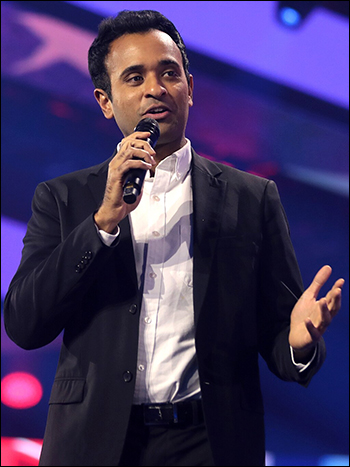
Ohio: Ramaswamy Claims 2nd Place in New Poll — Ohio Northern University Institute for Civics and Public Policy released a new survey of the Buckeye State electorate (July 17-26; 67 registered Ohio voters) and found businessman Vivek Ramaswamy, who has been climbing in recent Republican presidential polls, moving into second place behind former president Donald Trump with 12 percent support, ahead of Florida Gov. Ron DeSantis who posted only 9 percent. Trump recorded a whopping 64 percent backing.

Since the poll has only 675 total respondents, the unpublished Republican primary sample would be very low. Therefore, the error factor will be quite high. Still, Ramaswamy moving to second place in any survey is affirmation that his campaign is building upward momentum.

House

VA-7: Rep. Spanberger Testing Gov Waters — Reports are surfacing that three-term Virginia Rep. Abigail Spanberger (D-Glen Allen) is laying the groundwork for a gubernatorial run in 2025 when incumbent Gov. Glenn Youngkin (R) will be ineligible to seek re-election. Virginia is the only state in the Union that limits its governors to one four-year term. Apparently, she is also considering not seeking re-election to the House in 2024 to conserve resources for the gubernatorial run.

If she does decide to run for governor, leaving the House makes political sense. Her 7th District is politically marginal, and the seat has been reconfigured to the point that her Glen Allen political base is nowhere even close to the 7th CD lines, which is now a district that comes as far north as Prince William County.

Additionally, with Virginia’s more open campaign finance law her ability to transfer funds from her congressional committee to a gubernatorial committee is very favorable. After the 2nd Quarter financial disclosure period closed, Rep. Spanberger reported $1.184 million cash-on-hand.

Senate

Ohio: Sen. Brown Posts Bigger Lead — The aforementioned Ohio Northern University Institute for Civics and Public Policy poll (July 17-26; 675 registered Ohio voters) also tested the important Ohio US Senate race. In this instance, Sen. Sherrod Brown (D), contrary to previous studies that showed a very tight race, opens a substantial lead over the Republican field.

In this survey, state Sen. Matt Dolan (R-Chagrin Falls) fares slightly better than the rest of the GOP contenders, but is still down double-digits, 45-33 percent. Opposite Secretary of State Frank LaRose (R), Sen. Brown’s advantage is a similar 45-32 percent. If businessman Bernie Moreno were the GOP nominee, Sen. Brown would begin with a 45-28 percent lead.

This poll is inconsistent in that the Republican support figure is very low against Sen. Brown while the presidential numbers place the GOP candidates in much better standing against President Joe Biden. The numbers are consistent with Sen. Brown’s support figure, however, when compared to previous surveys. In all published data, Sen. Brown lands in the mid-40s and not particularly close to the 50 percent majority figure.

Cities

Houston: New Mayoral Poll Released — The Hobby School of Public Affairs at the University of Houston conducted a survey of their city’s open mayoral race (July 12-20; 800 likely Houston voters) and found state Sen. John Whitmire (D), who has been in the state legislature since 1973, and US Rep. Sheila Jackson Lee (D-Houston) breaking away from the remaining candidates.

The UoH poll found Sen. Whitmire posting a 34-32 percent edge over Rep. Jackson Lee, with the next closest candidate only at the three percent mark. If no candidate receives majority support in the Nov. 7 nonpartisan election, the two front runners will advance to a runoff on a date scheduled after the initial election, likely for mid-December. Testing a runoff between Sen. Whitmire and Rep. Jackson Lee, the pollsters find the former developing a strong 51-33 percent advantage. Jackson Lee would have to relinquish her US House seat only if she wins the 2023 municipal election.

Presidential Trends

By Jim Ellis — Friday, July 28, 2023

President

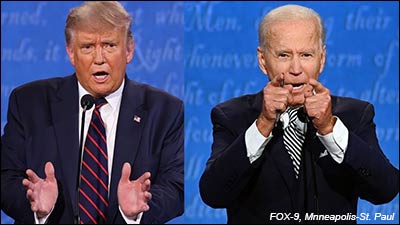
Are Trump and Biden locks for their respective parties?

Presidential Trends: Biden, Trump Party Nominations Look Inevitable — Heading toward August of the off-year, we are seeing clear presidential trends already developing.

President Joe Biden will be renominated. Despite Robert F. Kennedy Jr. being in the primary race and attracting some media attention, the Democratic process will almost assuredly be a non-event.

Trends are also clear for former President Donald Trump. He continues to lead in all polling and has actually gotten stronger within the party base after the series of indictments were leveled against him.

The Morning Consult data and research firm released a graph of the candidates’ progress from December of 2022 through the present. The latest result from their daily online track finds Trump now approaching 60 percent support nationally. In December, he was right at 50 support, but then generally dropped into the 40s through February but has continued to gain strength ever since.

The perennial second-place candidate, Florida Gov. Ron DeSantis, is now trending in the opposite direction. Beginning with 30 support national support in late December, Gov. DeSantis now finds himself languishing in the teens according to most GOP surveys.

The trajectory for most of the second-tier candidates has also been upward. Aside from Gov. DeSantis, who has fallen, and former Vice President Mike Pence and ex-UN Ambassador Nikki Haley, who have remained virtually stagnant, businessman Vivek Ramaswamy, Sen. Tim Scott (R-SC), and North Dakota Gov. Doug Burgum have all improved their standing. Ex-New Jersey Gov. Chris Christie has bolted onto the scene but appears to be running to deny Trump, and while he is moving into the middle of the pack, it is difficult to see how his support grows from the Republican Party’s relatively small “Never Trump” faction.

As we know, national polls do not deliver any delegate votes to the candidates. Those, of course, are won at the state level through public voting, so it is important to follow the state data to get a true indication of the nomination contest’s ebbs and flows.

Continue reading

Matos Under Scrutiny in RI; Republican Challengers Align in CA-9; Democrat Battle Brewing in NY-4; Kentucky, New Hampshire Gov. News

By Jim Ellis — Wednesday, July 26, 2023

House

Rhode Island Lt. Gov. Sabina Matos (D)

RI-1: Matos’ Signatures Undergoing Greater Scrutiny — Earlier, we reported that Lt. Gov. Sabina Matos (D), a candidate in the special election to replace resigned Rhode Island Congressman David Cicilline (D), is under scrutiny about the legality of her petition signatures. Now, the situation has become more serious. Yesterday, the Rhode Island Board of Elections members voted 5-1 to investigate her petition filing.

The Board will order research on each of the submitted petition signatures to ensure the required number of legal entries are present. If short of the required 750 number, Matos would be disqualified from participating as a candidate in an election where she appears as the clear leader. A total of 12 Democrats have preliminarily been approved for the special election ballot. The Democratic primary, winning of which is tantamount to claiming the seat, is scheduled for Sept. 5.

CA-9: Candidate Withdraws; Endorses — Pastor Brett Dood, who had previously declared his congressional candidacy to compete against Rep. Josh Harder (D-Tracy), has announced that he will end his campaign. Dood then said he would support Stockton Mayor Kevin Lincoln (R) who became a congressional candidate last week. Republicans now appear to be uniting behind Lincoln, meaning they will have a credible challenger against Rep. Harder in a district that can become competitive.

In 2021 redistricting, Rep. Harder fared poorly and moved into the 9th District to run after veteran Rep. Jerry McNerney (D) announced his retirement. Though Rep. Harder had less than 28 percent of the crossover population from his previous 10th District, he still recorded a 55-45 percent victory over San Joaquin County Supervisor Tom Patti (R) but needed to outspend him by a 6:1 ratio in order to do so.

The FiveThirtyEight data organization rates CA-9 as D+8. Though in an underdog position, this is the type of seat Republicans need to put in play to protect their small majority.

NY-4: Dem Battle Brewing — There was no doubt that freshman Rep. Anthony D’Esposito (R-Island Park) was going to face a major re-election battle in 2024. He was the 2022 election cycle’s big upset winner in defeating former Hempstead Town Supervisor Laura Gillen (D) in a district that the FiveThirtyEight data organization rates as D+10. Now, however, it appears that Gillen, who has announced she will return for a rematch, will face her own major challenge in the Democratic primary.

Though he has not yet made an official announcement, two-term state Sen. Kevin Thomas (D-Levittown) has filed a congressional committee with the Federal Election Commission. Expect this race to draw significant national political attention from beginning to end.

Governor

Kentucky: GOP Poll Shows Closing Race — The Republican State Leadership Committee released a new Public Opinion Strategies survey (July 19-20; 500 Kentucky registered voters; live interview) showing a closing of the 2023 governor’s race between incumbent Gov. Andy Beshear (D) and Attorney General Daniel Cameron (R). The ballot test finds the governor holding only a 49-45 percent edge. The poll counters another POS poll from late June for a public interest group that posted Gov. Beshear to a 52-42 percent lead. The election is scheduled for Nov. 7.

New Hampshire: Former US Sen. Ayotte Enters Open Gov Race — Former New Hampshire Sen. Kelly Ayotte (R), who won a landslide 2010 victory with a 60-36 percent spread but lost her seat six years later to current incumbent Maggie Hassan (D) in a razor-thin 49-48 percent margin, announced Monday that she will return to active politics with a run for governor. Four-term incumbent Chris Sununu (R), who is not seeking a fifth two-year term, leaves behind what promises to be a hotly contested general election as well as two competitive party primaries.

In addition to Sen. Ayotte entering the governor’s race, former state Senate President and 2022 US Senate candidate Chuck Morse is also an announced Republican candidate. The Democrats already feature a race for their party nomination between Manchester Mayor Joyce Craig and Executive Councilor Cinde Warmington.