Tag Archives: Ranked Choice Voting

Alaska’s Begich Joins House Race; Congressional Map Redraw Ordered in NY; Qualifying Candidates in UT-2;
A New NH Gubernatorial Candidate

By Jim Ellis — Monday, July 17, 2023

House

Nick Begich III

Alaska: Begich Announces for House — Nick Begich III, who ran in the special at-large congressional election after Rep. Don Young (R) suddenly passed away, and then again in the 2022 general election announced that he will return to run again next year. He hopes for the opportunity of facing Rep. Mary Peltola (D-Bethel) one-on-one in the final Ranked Choice Voting round.

Both in the special and regular elections, Begich failed to reach second place, finishing third behind former Gov. Sarah Palin by three percentage points in each contest, while Peltola, coalescing the smaller Democratic base, was able to place first. For Begich to get the chance of facing Rep. Peltola in the final Ranked Choice round in 2024, the three finalists coming from the primary must hold the Congresswoman to less than a majority.

Though the Republican vote is much larger than the Democratic segment in Alaska, the GOP split has allowed Peltola to win the seat by attracting more second and third choice votes than did Palin. Begich will need a more united Republican Party behind him if he is to overcome Rep. Peltola. The AK-AL seat is the most Republican seat in the nation that sends a Democrat to the House. For the Republicans to hold their small House majority, the Alaska seat is fast becoming a must-win for them.

New York: Court Orders Cong Map Redraw — A lower appellate court last week sided with the Democratic lawsuit challenging New York’s court-drawn congressional map and ordered the Independent Redistricting Commission to begin a new re-mapping process. Republicans will then appeal to the state’s highest court, the New York Court of Appeals, which is the panel that made the original ruling that led to the creation of the current map.

Republicans gained seats on the current map; hence, the reason why Democrats are moving to replace the plan. It appears a final decision about whether we will see a new map for 2024 is undoubtedly months away.

UT-2: Two Candidates Qualify — The Utah Secretary of State announced late last week that the two special election congressional candidates who filed petitions to earn a ballot position have both officially qualified. Former state Rep. Becky Edwards and ex-Republican National Committeeman Bruce Hough both successfully submitted at least 7,000 petition signatures.

The pair will now join congressional legal counsel Celeste Maloy in a Sept. 5 special Republican primary election. Maloy prevailed in the pre-primary party convention. Doing so gave her an automatic ballot slot in the nomination campaign along with the official Republican Party endorsement. The last time Utah hosted a special election – 2017 in the 3rd Congressional District – the eventual primary winner, then-Provo Mayor John Curtis, did not win the convention. Therefore, it appears we may see a free-for-all campaign for the party nomination. The winner will face state Sen. Kathleen Riebe (D-Cottonwood Heights) in the Nov. 21 special general election. The Republican nominee will be favored in a seat the FiveThirtyEight data organization rates as R+23. Rep. Chris Stewart (R-Farmington) is resigning the seat on Sept. 15 due to family considerations.

Governor

New Hampshire: Manchester Mayor to Run Statewide — Manchester Mayor Joyce Craig (D), who already announced that she will not seek re-election to her current position but gave broad hints that she would enter the 2024 governor’s campaign, formally announced her intention to run statewide late last week.

With Gov. Chris Sununu (R) sending clear signals that he is unlikely to run for a fifth two-year term, it is very likely that Craig will be competing for an open seat. There will be a Democratic primary, however. Executive Councilor Cinde Warmington announced her gubernatorial campaign in early June.

The Executive Council, unique to New Hampshire, is an elected five-member panel from districts to serve as a check on gubernatorial power. A majority of the Executive Council can veto state contracts and nominations. The Council also has the power to issue pardons. Because Gov. Sununu says he will make a formal decision about whether to run again later this summer, no Republicans have yet come forward as potential gubernatorial candidates.

Hill Harper Announces for Senate; Nevada’s Brown Will Run for Senate; Sen. Ted Cruz Picks Up Challenger; Jockeying in Alaska for House Seat

By Jim Ellis — Thursday, July 13, 2023

Senate

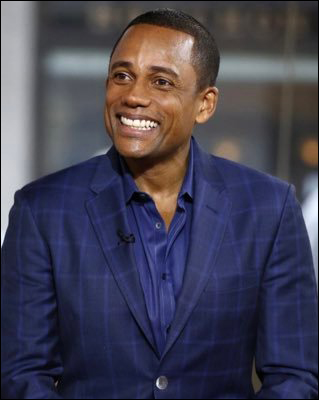
Frank Eugene “Hill” Harper (D), one of the stars of the “CSI: NY” and “The Good Doctor” programs

Michigan: Actor Announces for Senate — As expected, actor Frank Eugene “Hill” Harper (D), one of the stars of the “CSI: NY” and “The Good Doctor” programs, announced that he will compete in the open Michigan US Senate primary. He becomes the fourth major candidate, and third African American, in the Democratic primary. He joins US Rep. Elissa Slotkin (D-Lansing), Michigan State Board of Education president Pamela Pugh, and former state Rep. Leslie Love.

The crowded field likely plays well for the perceived leader, Rep. Slotkin. This primary will take a long while to unfold, however. The Michigan primary won’t occur until Aug. 6, 2024, and its competitiveness could tamp down the Democrats’ advantage in the general election. Though the party primary may well be more eventful considering Harper’s entry, Rep. Slotkin must still be rated as the favorite for the party nomination and to win the seat in the November election. Sen. Debbie Stabenow (D) is retiring after serving what will be four full terms.

Nevada: Republicans Score Candidate Prospect — In another move that has been expected for several months, disabled Afghan War veteran and 2022 Senate candidate Sam Brown (R) announced he will return to again compete in a Nevada US Senate race. This time, he hopes to capture the Republican nomination and challenge first-term Democratic Sen. Jacky Rosen.

In ’22, Brown lost the party primary to former Attorney General Adam Laxalt, 56-34 percent, but raised an impressive $4 million-plus for his effort. Laxalt would then lose the general election to Sen. Catherine Cortez Masto (D) by fewer than 18,000 votes from more than 1 million ballots cast. Now, it appears that Brown has the inside track for the party nomination and would be an interesting candidate in the general election. A strong Brown candidacy could elevate Nevada into top-tier campaign status.

Texas: State Senator Enters Battle to Challenge Sen. Cruz — San Antonio area state Sen. Roland Gutierrez (D) announced Tuesday that he will enter the Texas Democratic primary, which will likely ignite a difficult nomination battle against US Rep. Colin Allred (D-Dallas) who announced his candidacy in early May. The eventual party nominee will then challenge two-term Sen. Ted Cruz (R) in the general election.

Sen. Gutierrez, who represents a legislative domain similar to that of US Rep. Tony Gonzales’ (R-San Antonio) congressional district in that it begins in the metro area and then stretches through most of west Texas toward El Paso, is a strong gun control advocate. Prior to defeating a Republican incumbent to win a Senate seat in 2020, Gutierrez had served six terms in the state House of Representatives.

Rep. Allred is reporting raising more than $6.2 million for his Senate effort after announcing his candidacy, but now will have to spend heavily just to win the party nomination in March. It is likely the beneficiary of what will be a hotly contested race between Allred and Gutierrez is Sen. Cruz. The Texas primary is scheduled for Super Tuesday, March 5, 2024.

House

AK-AL: Nick Begich (R) Considering Another House Bid — Businessman Nick Begich III, whose grandfather was a Democratic congressman and uncle, Mark Begich, served as a Democratic US senator before losing to current Republican Sen. Dan Sullivan, is again reportedly contemplating a run for the state’s at-large US House seat. He participated in the 2022 special and regular elections as a Republican, qualifying for the secondary election both times, but failing in Ranked Choice Voting.

Many observers believed he would be the strongest candidate against Rep. Mary Peltola (D-Bethel) who won both of those elections by outdueling Sarah Palin in the Ranked Choice rounds. Should Begich run in 2024, it is probable he would have a strong chance to end in the final round with Rep. Peltola. The at-large Alaska seat is now the most Republican congressional district in the country to send a Democrat to the US House.

Challenger May Be DQ’d in Indiana; California Rep. Napolitano to Retire; Barrett Returns in Michigan;
Top-Four vs. RCV in Idaho

By Jim Ellis — Wednesday, July 12, 2023

Senate

Indiana: Banks’ GOP Challenger May Be Out — Last week, egg farmer John Rust announced a challenge to Indiana Rep. Jim Banks (R-Columbia City) for the open GOP Senate nomination, but his quest might end before it even begins. This week, as the Daily Kos Elections site reports, we find that Rust may not qualify for the ballot because he is not in good standing as a Republican according to Hoosier State election procedure. Because Indiana is a non-party registration state, the GOP candidate qualification requirements include voting in the two most recent Republican primaries, or the approval of the individual’s local GOP county chair.

Rust last voted in the 2016 Republican primary but also participated in the 2012 Democratic primary. Jackson County Republican chair Amanda Lowery is quoted as saying she wants to speak with Rust before making a final determination regarding his qualification status. For his part, Rep. Banks is saying Rust is “a liberal Democrat trying to run in the GOP primary,” and therefore should not be awarded a ballot line.

House

Rep. Grace Napolitano (D-Norwalk)

CA-31: Rep. Grace Napolitano to Retire — Veteran Congresswoman Grace Napolitano (D-Norwalk), who first won her seat in the 1998 election, announced Monday that she will not seek re-election to a 14th term next November. Napolitano, now 86 years old, is the oldest member of the House. She becomes the 14th House member and 10th Democrat to not seek re-election next year, but only the second to outright retire. The remainder are all running for a different office. Napolitano’s retirement decision also creates the fourth open House seat in the California delegation.

In her statement announcing her retirement, the congresswoman endorsed state Sen. Bob Archuleta (D-Norwalk) as her successor. Ironically, Sen. Archuleta, if elected to the House in 2024, would be, at the age of 79, the second-oldest freshman in American history. At a D+29 rating from the FiveThirtyEight data organization, the seat will not be competitive for a Republican candidate. Chances are high, however, that we would see another double-Democratic general election under California’s all-party top-two jungle primary system. The California qualifying election is scheduled for Super Tuesday, March 5, 2024.

MI-7: Ex-Sen. Tom Barrett (R) to Return — Former Michigan state Sen. Tom Barrett (R), who was considered at least a slight under-performer in the 2022 election against US Rep. Elissa Slotkin (D-Lansing) when losing 52-46 percent, announced he will return next year for another try. Since Rep. Slotkin is running for the state’s open Senate seat, the politically marginal 7th District will also be open. Last week, former state Sen. Curtis Heftel (D) announced his candidacy with Gov. Gretchen Whitmer’s (D) support. Heftel left the legislature to join Gov. Whitmer’s administration.

Neither man is expected to face much intra-party opposition, but the general election will be hotly contested. MI-7 is one of 20 US House districts where the FiveThirtyEight and Dave’s Redistricting App data organizations disagree over which party has the partisan edge. In this instance, 538 projects the 7th District as having a R+4 rating, while Dave’s App calculates a 49.3D – 47.9R partisan lean.

States

Idaho: Top-Four Primary Initiative Cleared for Signature Gathering — An organized group called Idahoans for Open Primaries has launched an initiative to transform the current Idaho partisan primary system into Alaska’s unique Top Four Primary, which includes a Ranked Choice Voting component for the general election. In the legislative session just concluded, a law was enacted banning Ranked Choice Voting in any Idaho election.

The initiative, if qualified and passed, would repeal the new RCV ban law and institute an all-party open primary where all candidates running for a particular office will compete to finish in the first four positions. All four would then advance into the general election. If no candidate receives majority support, Ranked Choice Voting would be implemented. In Alaska, the system has led to a Democrat winning the at-large congressional seat even though 60 percent of voters chose a Republican candidate in the open all-party primary.

Organizers are now cleared to begin gathering petition signatures. They must secure 63,000 valid Idaho registered voter signatures on or before May 1, 2024. Included in this number must be signatures from at least six percent of residents in 18 of the state’s 35 legislative districts.

Alaska Moves to Repeal Ranked Choice Voting; Ranked Choice Voting Killed in Montana; NC Redistricting News; Reeves Increases Lead in Miss.

By Jim Ellis — Tuesday, May 2, 2023

States

Alaska Sen. Lisa Murkowski (R)

Alaska: Move to Repeal Ranked Choice Voting — In 2020, Alaska voters with only a 50.5 percent victory margin approved a top-four/Ranked Choice Voting election change that has had a major effect upon the state’s elections. Under the system, all candidates are placed on the same ballot with the top four finishers, regardless of party affiliation, advancing into the general election. In the regular vote, if no candidate receives majority support, the Ranked Choice process takes effect.

Supporters of Sen. Lisa Murkowski (R) were active in getting the measure passed correctly believing that the system would help her. A top-four structure would guarantee the senator advancing to the general election, thus bypassing what had proven to be her main point of vulnerability: a partisan Republican primary.

Now, conservative activists backed by Sarah Palin, former Alaska governor, and 2022 US Senate candidate Kelly Tshibaka are mounting a signature campaign for a ballot initiative that would repeal the current system. The legislature is also considering legislation to do the same. Proponents of the repeal initiative must submit 26,705 valid registered voter signatures to qualify the measure. The group has already recruited the mandatory 100 petition sponsors and received initial approval from the lieutenant governor, meaning the initiative is officially qualified for signature gathering. The group’s goal is to place the measure on the 2024 general election ballot.

Montana: Top-Two Primary Could Return, Ranked Choice Voting Killed — Late last week, Gov. Greg Gianforte (R) signed legislation to prohibit the Ranked Choice Voting system from being instituted in the state of Montana, joining several other states that have taken similar action.

Reports also suggest that proponents of legislation to use the 2024 US Senate race as a test case for the all-party jungle primary system that would qualify the top two finishing candidates for advancement into the general election may still be revived in the state House of Representatives before the current legislative session adjourns. The measure has already passed the state Senate but was tabled in a House policy committee. It is possible another committee could consider the measure and pass it to the floor for a vote in the session’s final days.

North Carolina: State Supreme Court Nullifies Previous Redistricting Ruling — In the 2022 election, Republicans converted two Democratic seats on the North Carolina Supreme Court, which gave the GOP a 5-2 majority. In the post-election session, the outgoing Democratic panel ruled that the state Senate boundaries were unconstitutional as was the North Carolina voter ID law. The congressional and state House maps are court-drawn. The new Republican court decided to reconsider these previous court rulings and on Friday reversed the directives.

This means the legislature can redraw all of the district maps and their chance of being upheld in this state Supreme Court is high. The new court and the legislature’s majority members are much closer in the way they view redistricting law and procedure. Therefore, we can soon count on seeing a new congressional plan that will likely break the 7R-7D current delegation’s partisan division. The new draw will inevitably add Republican seats to the congressional delegation at the likely expense of some of the less senior Democratic members.

The high court’s action could also lead to a moot ruling on a similar case currently before the US Supreme Court. If the federal justices take such action on the Moore vs. Harper political gerrymandering and judicial authority case, then we will not see a sweeping Supreme Court directive pertaining to political gerrymandering. This would, at least for the short term, continue the practice of awarding the final redistricting judicial authority to the 50 state Supreme Courts.

Governor

Mississippi: Gov. Reeves Increases Lead — A new Siena College poll of the Mississippi electorate (April 16-20; 783 registered Mississippi voters; live interview & online) projects Gov. Tate Reeves (R) expanding what was a closer lead over Mississippi Public Service Commissioner Brandon Presley (D). The ballot test yields Gov. Reeves a 49-38 percent advantage. In early March, Mason-Dixon Polling & Strategy found the governor holding a 46-39 percent edge.

While the Siena College poll revealed the governor’s job approval index at 53:46 percent favorable to unfavorable, his personal popularity remains upside down. This latest data projects for him only a 42:45 percent positive to negative ratio. Gov. Reeves faces only minor competition in the Aug. 8 Republican primary and Commissioner Presley is unopposed on the Democratic side. Therefore, it is clear the two will face each other in the Nov. 7 general election.

Biden Suggests Primary Schedule; Maine’s King Prepping for Re-Election Campaign; A Budding GOP Primary Challenge in VA-9; Louisiana’s Gov Race Hinges on Kennedy

By Jim Ellis — Monday, Dec. 5, 2022

President

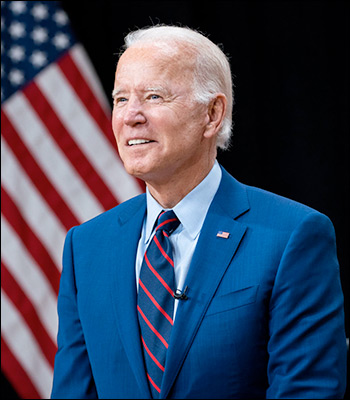
President Joe Biden

Primaries: President Biden Suggests Schedule — Considering that the White House will have a major say as to how the new Democratic presidential nomination rules are changed, President Biden shared his idea for a new primary schedule. He suggests South Carolina, the state that launched his own victory through the previous nomination process, be the first state to vote. He then says that New Hampshire and Nevada, voting on the same day, should be scheduled a week after the Palmetto State with Georgia and Michigan following on successive Tuesdays. This idea would increase the number of places voting before Super Tuesday from four to five.

Senate

Maine: Sen. Angus King (I) Preparing for Re-Election Campaign — Sen. Angus King (I), who has previously overcome both skin and prostate cancer, is reportedly planning to seek re-election in 2024 when he will be 80 years old. The senator, who previously served two terms as Maine’s governor, was first elected to his federal office in 2012. At the time, it appeared the 2018 campaign would be his last, but retiring at the end of the succeeding Congress does not now look to be the senator’s ultimate career path.

Sen. King runs as an Independent on the Maine ballot but caucuses with the Democrats, as does New England neighboring Sen. Bernie Sanders (I-VT). Should he indeed run in 2024, it will be the first time Sen. King will experience Maine’s Ranked Choice Voting system. Considering this situation, the veteran office holder may draw stronger opposition than in his past election campaigns.

House

VA-9: A Budding GOP Primary Challenge — Virginia Rep. Morgan Griffith (R-Salem), who was just re-elected to a seventh term with 73.5 percent of the vote, may be drawing a 2024 Republican primary challenge. Freshman state Delegate Marie March (R-Floyd) made a statement late last week saying that Rep. Griffith has “been in Congress too long,” and hinted that she might challenge him in the next GOP primary.

Rep. Griffith was first elected in 2010, defeating long-time incumbent Rick Boucher (D) and has had little in the way of competition ever since. He’s averaged 72.4 percent in his six re-election victories and has not yet faced a Republican primary challenge.

Governor

Louisiana: Yielding to Sen. Kennedy — Louisiana State Treasurer John Schroder (R) announced late last week that he will run for governor next year unless, he said, Sen. John Kennedy (R) enters the jungle primary field. If Kennedy does run, Schroder will opt to seek re-election. Sen. Kennedy, fresh from a 62 percent jungle ballot election victory in November that saw him winning a second US Senate term outright, is expected to enter the governor’s race and be considered the clear front runner. The senator says he will make a decision after the first of the year. Gov. John Bel Edwards (D) is ineligible to seek a third term.

Warnock Leads in New Runoff Poll; WVa. Gov. Considers Senate Race;
Kiley Wins CA-3 – Republican Majority Now at 221; Questions Over McCarthy’s Leadership

By Jim Ellis — Monday, Nov. 28, 2022

Senate

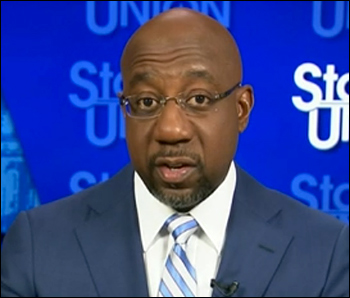
Georgia freshman Sen. Raphael Warnock (D)

Georgia: Sen. Warnock Leads in New Poll — The Fabrizio Lee (R) and Impact Research (D) polling team conducted another survey for the AARP organization, this time of the Georgia Senate runoff election scheduled for Dec. 6.

According to the joint poll (Nov. 11-17; 500 likely Georgia runoff voters; live interview), the first published study of this race since the general election yielded a 49.4 – 48.5 percent result for Sen. Raphael Warnock (D) over retired professional football player Herschel Walker (R), the incumbent again posts a small advantage. The AARP ballot test finds Sen. Warnock’s lead a reaching 51-47 percent. As is the case with all runoff elections, voter turnout will likely be the determining factor.

West Virginia: Gov. Justice Considering Senate Race — While Rep. Alex Mooney (R-Charles Town) has already announced his bid to challenge Sen. Joe Manchin (D) next year, Gov. Jim Justice (R), who is ineligible to seek re-election in 2024, indicated last week that he, too, is considering launching a Senate campaign.

Gov. Justice’s approval numbers are high – rated as the sixth most popular governor nationally at 65:29 percent favorable to unfavorable according to the Morning Consult quarterly ratings for the period ending Sept. 30, 2022 – so he would certainly be a formidable candidate for the Republican nomination and against Sen. Manchin. A Triton Polling & Research organization August poll found Gov. Justice leading Sen. Manchin 47-32 percent in an early hypothetical race survey, for example.

House

CA-3: Republican Kevin Kiley Declared Winner — The Associated Press, in a race that appeared to be clinched days ago, finally projected California Republican state Assemblyman Kevin Kiley (R-Granite Bay/Sacramento) as the winner of the newly created open 3rd Congressional District that stretches from the northern Sacramento suburbs all the way into southern California via the Nevada border. The FiveThirtyEight data organization rates CA-3 as an R+8 district, so the outcome of Kiley defeating Democratic physician and Iraq War veteran Kermit Jones is hardly a surprise result.

The Kiley victory brings the Republican House total to 221 with two races outstanding, the CA-13 seat that is a close contest between agri-businessman John Duarte (R) and state Assemblyman Adam Gray (D-Merced), and the at-large Alaska seat of Rep. Mary Peltola (D-Bethel).

Once the Alaska contest advances into the Ranked Choice Voting rounds, which began right after Thanksgiving, the system will produce another victory for Peltola. Therefore, count her in the Democratic column. The race between Duarte and Gray is very tight: Duarte has an 852-vote lead with an estimated 93 percent of the vote counted. Therefore, this contest can still go either way when examining from where the outstanding votes lay.

Speakership: More Republicans Express Negative Views Toward McCarthy — Last week we covered a story indicating that three Republicans were headed toward a “No” vote for House Minority Leader Kevin McCarthy (R-CA) in his quest to become Speaker of the House. Reps. Andy Biggs (R-AZ) and Matt Gaetz (R-FL) publicly announced their opposition to McCarthy, while Rep. Matt Rosendale (R-MT) said he does not believe McCarthy would be a successful Speaker.

Now joining the “No” chorus are Reps. Ralph Norman (R-SC) and Bob Good (R-VA). Texas Rep. Chip Roy (R-Austin) was among those expressing similar feelings of failure regarding a McCarthy Speakership. With the Republicans having a 222-member conference at best (if John Duarte holds his lead in the CA-13 outstanding race), McCarthy has little margin with which to play in order to secure his 218 votes to be elected Speaker during the Jan. 3 initial roll call of members.

Senate Majority Now Decided;
House Majority Continues
To Remain in Limbo

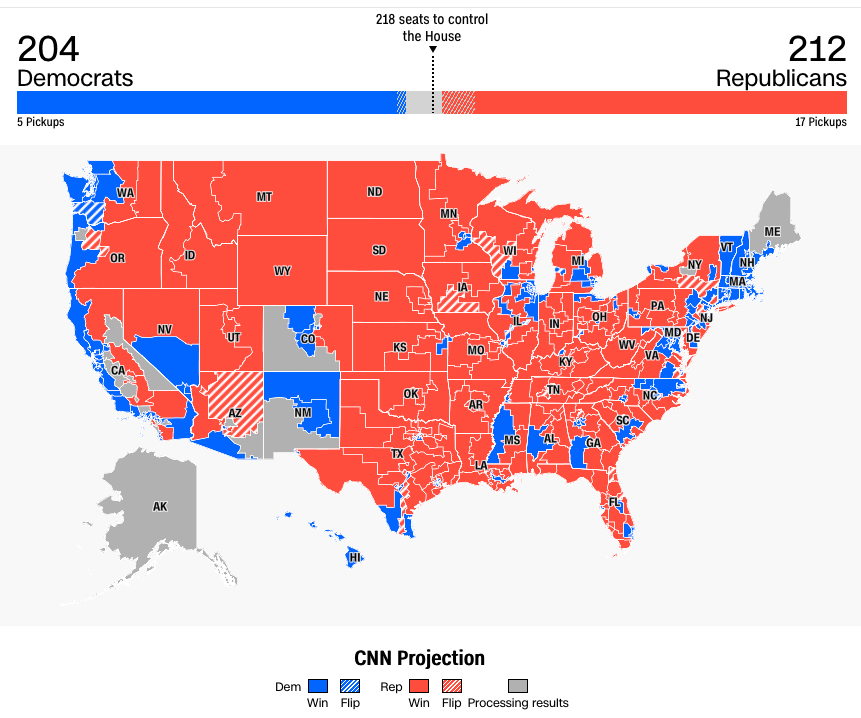
Click on map or here to see CNN’s interactive 2022 elections results House map: CNN

By Jim Ellis — Monday, Nov. 14, 2022

Now, just about a week beyond the 2022 election, each major party still has a chance of controlling the US House, while the Democrats, with late victories in Arizona and Nevada, have secured at least a 50-50 ostensible Senate majority when counting the vice president’s tie-breaking vote.

Senate

Senate: Majority Decided — Just one of the 35 Senate elections still remains undecided: the Georgia race that will head to a post-election runoff on Dec.6. Once the tight Arizona, Nevada, and Wisconsin races were called for incumbents Mark Kelly (D-AZ), Catherine Cortez Masto (D-NV), and Ron Johnson (R-WI) the majority was decided in favor of the Democrats.

The Georgia race unofficially finds incumbent Raphael Warnock (D) holding 49.4 percent of the vote versus Republican Herschel Walker’s 48.5 percent. Libertarian Chris Victor taking 2.1 percent, or just over 48,000 votes, denied both major party candidates the opportunity of reaching the 50 percent plateau. Therefore, the two finalists advance to a new election.

A Warnock win would put the Senate balance of power at 51-49 with the Democrats in control and not needing the vice president to make a tie-breaking vote. A Walker win would leave the Senate without a true majority at 50-50, thus requiring Vice President Kamala Harris’ deciding call on straight party line votes.

The Alaska Senate race is also undecided, but the state’s new electoral system that sends four candidates to the general election won’t be final for another two weeks.

It is obvious that contest will winnow down to a battle between two Republicans, Sen. Lisa Murkowski and former Alaska Director of Administration Kelly Tshibaka. While Tshibaka leads the aggregate vote count, it has become clear that she and Sen. Murkowski will eventually advance into the Ranked Choice runoff.

Though Tshibaka is, and may remain, the vote leader, the RCV runoff system looks to favor Sen. Murkowski. Regardless of which woman is declared the victor when the lengthy process ends, the GOP will retain the Alaska Senate seat.

House

House: Majority Count Remains in Limbo — The House races are still very much undecided with 19 races uncalled. Considering that 10 of those races are in California and one in New York where it will likely take weeks to arrive at final totals, it could be quite some time until we know the ultimate outcome.

According to the CNN election site count, of the 19 uncalled races the Democrats lead in nine, Republicans eight, and two are pure toss-ups, both of which the GOP candidate has a slight count edge. Republicans, however, sitting at 212 called races in their favor versus 204 for the Democrats, need only six of the 19 to fall their way, while Democrats require 14 to claim a bare majority.

It appears the final margin may come down to just one or two seats. The GOP lead seems relatively secure in five of their eight advantage seats, which would give them 217, while the Democrats appear to have solid advantages in another seven of their nine, which puts them at 211.

Therefore, the Republican projection appears to lie in the 217-221 range, while the Democrats’ best-case scenario looks to be scoring a 218-217 slight majority. These predictions, however, are based upon rudimentary projections that could easily change once the actual votes are finally tabulated in all 19 outstanding campaigns.

Governor

Aggregate Governor: Incumbents Dominate — Surprisingly little change occurred in the 36 governors’ races in terms of party change. Democrats, as predicted, easily converted the Maryland and Massachusetts open seats.

The 36 governors’ races are also almost complete, with only Alaska and Arizona uncalled.

In returns that defied polling and thus favor the Democrats, Arizona Secretary of State Katie Hobbs (D) leads former news anchorwoman Kari Lake (R) in the governor’s race, and her advantage may be enough to clinch the office once the state works through its counting delays.

At this point, Hobbs holds a 50.5 – 49.5 percent lead with an estimated 93 percent of the vote counted. This translates into approximately 180,000 votes remaining to be tallied. To win, Lake would have to receive more than 56 percent of the outstanding vote to make up her 26,000-plus vote deficit, which is difficult.

In the only competitive election resulting in a partisan conversion, Republican Clark County Sheriff Joe Lombardo (R) unseated Nevada Gov. Steve Sisolak (D). In races that were largely decided in the states’ respective Democratic primaries, Wes Moore and Maura Healey successfully converted Republican governorships in Maryland and Massachusetts, respectively.

Oregon, the site of perhaps the most interesting governor’s race because it featured a three-way battle, saw former state House Speaker Tina Kotek (D) prevail over ex-House Minority Leader Christine Drazan (R) and former state Sen. Betsy Johnson (I). Polling correctly suggested that Johnson had dropped well off the pace but also largely projected incorrectly that Drazan was positioned for a close upset win. In the end, the election broke 47-44-9 percent in Kotek’s favor with an estimated 93 percent of the all-mail vote counted.

Alaska Republican incumbent Mike Dunleavy looks to be in position to potentially clinch re-election outright, thus exceeding the 50 percent mark within the aggregate vote and avoiding a Ranked Choice Voting instant runoff. With ballots being allowed two weeks to report from the wilderness, it will be just before Thanksgiving when all of the Last Frontier races finally conclude.

Alaska’s Ranked Choice Voting System Favors Sen. Murkowski, Begich over Palin; Dr. Oz Closes On Lt. Gov. Fetterman in PA; CA-26 Race Tightens

By Jim Ellis — Tuesday, Oct. 4, 2022

Senate

Alaska Sen. Lisa Murkowski (R)

Alaska: Ranked Choices Favors Sen. Murkowski — The new Alaska Survey Research firm tested the Alaska Senate race, and we again see Sen. Lisa Murkowski (R) having trouble distancing herself from challenger and fellow Republican Kelly Tshibaka.

The ASR poll (Sept. 25-27; 1,282 likely Alaska general election voters; online) finds Sen. Murkowski leading Tshibaka only 41-39 percent on the ballot test question, with Democrat Pat Chesboro attracting 17 percent support, and Republican Buzz Kelley garnering a four percent preference factor. Kelley has already withdrawn as an active candidate and endorsed Tshibaka, but his name remains on the ballot as one of the four finalists from the Aug. 16 primary vote.

The Ranked Choice system then kicks in to put Sen. Murkowski well ahead in the final round. After Chesbro and Kelley are officially eliminated, Sen. Murkowski would top Tshibaka, 57-43 percent, once the second and third choice votes are added to the tabulation.

Pennsylvania: Movement Confirmation — Yesterday, as well as late last week, we reported upon a trio of surveys finding Dr. Mehmet Oz (R) coming within close range of Lt. Gov. John Fetterman (D) on the various ballot test questions. Fox News, Franklin & Marshall, and Insider Advantage found the Fetterman lead dropping to three and four percentage points.

Now, Emerson College has released their Pennsylvania statewide survey, the fourth coming to a similar conclusion within a constant time realm. The new Emerson study (Set. 23-26; 1,000 likely Pennsylvania voters; multiple sampling techniques) sees Dr. Oz coming within the polling margin of error, trailing Fetterman by only a 45-43 percent count.

House

AK-AL: Poll Finds Begich Passing Palin — The aforementioned Alaska Survey Research poll (see Alaska Senate above) also tested the state’s at-large US House District campaign and it discovered two significant data points. First, in the ballot test of the four candidates who advanced into the general election, businessman Nick Begich III now moves ahead of former governor and 2008 vice presidential nominee Sarah Palin by two and three percentage points on the initial vote and first Ranked Choice Voting round.

The second finding is newly elected Rep. Mary Peltola (D-Bethel) would defeat either Begich or Palin even before getting to the second Ranked Choice round. According to the ASR poll, Rep. Peltola would achieve majority support, thus winning the election, once Libertarian Chris Bye, the fourth-place finisher, is eliminated from further competition.

CA-26: Poll Suggests New Race Bubbling to the Surface — A just-released OnMessage survey (Sept. 14-18; 400 likely CA-26 voters; live interview) surprisingly finds Rep. Julia Browley (D-Westlake Village/Ventura) leading Republican Matt Jacobs by only a 48-43 percent point spread. This poll, that even finds Jacobs leading among the self-described Independents 44-34 percent, is quite a change from the June 7 jungle primary results. In that election, Brownley topped Jacobs, 54-38 percent, with three other candidates sharing the remaining eight percent of the vote.

Whether Jacobs can become competitive to the point of unseating Rep. Brownley remains to be seen in a southern California district that President Biden carried 61-36 percent. For her part, Brownley has averaged 61 percent of the vote in her last three terms, but did have close calls in both her original 2012 election (53-47 percent) and 2014 (51-49 percent).

Palin Loses in Alaska; Walker Leads in Second Poll in Georgia, Kemp Holds Edge; Gen. Bolduc Again Leading in NH; Gov. McMaster’s SC Quest

By Jim Ellis — Thursday, Sept. 1, 2022

House

Former state Rep. Mary Peltola (D) wins the Alaska special election race.

AK-AL: Sarah Palin Loses Special Election — Former Alaska governor and 2008 GOP vice presidential nominee Sarah Palin fell to Democrat Mary Peltola in the at-large Alaska special election, which marked the first full usage of the state’s new Ranked Choice Voting system.
At the end of the final counting, 60 percent of voters chose a Republican candidate, but the RCV system yielded a Democratic victor. Therefore, in a system that is designed to create a majority candidate, in this case it produced a minority vote share winner.

The finalists were Peltola, who recorded 40.2 percent of the vote; Palin, who secured 31.3 percent, and Nick Begich III (R), the grandson of former Democratic US Rep. Nick Begich, and the nephew of former US senator and ex-Anchorage Mayor Mark Begich (D), who captured 28.5 percent. Finishing third, Begich was eliminated from further competition, and his first-place votes were located and then distributed to the other candidates via the voters’ ranking. In the end, Peltola defeated Palin by a 5,219 votes; another 14,965 ballots were disqualified in the Ranked Choice Voting process.

Senate

Georgia Sen. Raphael Warnock (D) and Republican challenger Herschel Walker[/caption]Georgia: Walker Leading in Second Poll — Previously, an early August Phillips Academy poll projected Republican Herschel Walker to be holding a slight 45-44 percent lead over Sen. Raphael Warnock (D) after trailing in seven of eight July surveys. Emerson College released the result of their most recent Georgia survey Tuesday (Aug. 28-29; 600 likely Georgia general election voters; interactive voice response system, text, and online), which found Walker posting an almost identical 46-44 percent edge, again providing more evidence that this race is a long way from being over.

New Hampshire: Gen. Bolduc Again Leading — In mid-August, when St. Anselm College released a survey showing retired Army general and 2020 US Senate Republican candidate Don Bolduc developing a substantial lead for the Sept. 13 GOP Senate primary, Gov. Chris Sununu (R) went public in an attempt to negate his advantage. Many believe, including Gov. Sununu, that Gen. Bolduc would lose to Sen. Maggie Hassan (D) in November. Previously, Gen. Bolduc had accused Gov. Sununu of being “a Chinese communist sympathizer,” among other comments that created bad blood between the two men.

The University of New Hampshire (Aug. 25-29; 892 likely New Hampshire Republican primary voters; online) reported the results of their new statewide survey. According to the UNH Granite State Poll, Gen. Bolduc continues to lead state Senate President Chuck Morse (R-Salem) by over 20 points, 43-22 percent, with three other candidates languishing in low single digits.

Georgia: Kemp Again Holds Advantage — The aforementioned Emerson College survey (see Georgia Senate above) also tested the Peach State governor’s race between incumbent Brian Kemp (R) and challenger Stacey Abrams (D) who returns for a re-match from their close 2018 contest. The Emerson results give Gov. Kemp a 48-44 percent edge, which appears as a consistent margin routinely found in eleven of 12 July-August polls in which the incumbent held an edge. The lone outlier poll, a Research Affiliates study that concluded on Aug. 1, found the two candidates tied at 47 percent apiece.

South Carolina: Gov. McMaster Leading in Re-election Poll — Gov. Henry McMaster (R) succeeded then-Gov. Nikki Haley (R) when she resigned her office in 2017 to become US Ambassador to the United Nations. McMaster would then win a full term in 2018, and now seeks re-election. Because of the state’s former one and now two-term limit, winning re-election this year and serving most of the next term would make McMaster the longest-serving governor in state history.

The Trafalgar Group, as part of their nationwide polling series (Aug. 25-28; 1,071 likely South Carolina general election voters; multiple sampling techniques) tested the Palmetto State electorate and sees Gov. McMaster jumping out to a 51-43 percent lead over former Congressman Joe Cunningham, who won the Democratic nomination back in the June primary. Four years ago, Gov. McMaster was re-elected with a 54-46 percent margin.

Updated Alaska Results; First Poll From Arizona’s New 6th District; A Resolution in NY-10?

By Jim Ellis — Friday, Aug. 26, 2022

House

Sarah Palin, former Alaska governor and vice presidential candidate, now running for US House Representative

AK-AL: Updated Results — Alaska officials have updated the election totals as more ballots have been received, counted, and recorded. Under Alaska voting procedure, ballots can still be accepted from the outlying rural regions until Aug. 31 as long as they were postmarked on primary day, Aug. 16.

In the special election to fill the remainder of the late Rep. Don Young’s (R) current term, Democratic state Rep. Mary Peltola maintains the lead with an adjusted 38.9 percent of the vote. Former governor and 2008 vice presidential nominee Sarah Palin is second with 31.4 percent of the vote, a total of 5,630 votes ahead of third-place finisher Nick Begich III (R). Palin has maintained this 5,000-plus vote margin over Begich for virtually the entire counting process. Second place is critical, since the first two finishers will advance into the Ranked Choice Voting round.

State officials estimate that approximately 90 percent of the votes are now recorded. This means another 20,000 ballots could be outstanding. If so, calculations suggest that Begich would have to garner approximately 73 percent of the vote pool that remains for a Republican candidate. So far, he has only received 47.2 percent of the ballots that were marked for either he or Palin. Should this standing hold, Palin would need approximately 40 percent of the Begich second choice votes to overtake Peltola and win the special election. This is a reasonable number, but her biggest problem could be the number of votes that are disqualified in the second round for mis-marking the multiple entries due to voter confusion over the new system.

Votes are also being counted for the regular House primary election where the top four finishers will advance into the regular general election. Like in the special general election, the top three finishers kept the same order, Peltola-Palin-Begich. The person currently running fourth, Republican Tara Sweeney, who has only four percent of the vote, says she will not continue if she qualifies. The Board of Elections officials ruled that when Independent candidate Al Gross withdrew from the competition after qualifying for the special general that only three would then advance. Therefore, we are likely to see a rerun of this special general election in the regular November vote.

AZ-6: First Poll, No Surprise — Democratic pollster Greenberg Quinlan Rosner Research released the first post-primary survey of Arizona’s new 6th District, the seat located in the southeast corner of the state that encompasses the largest part of the city of Tucson. The district leans slightly Republican, R+6 according to the FiveThirtyEight data organization with a partisan lean index of 52.0-R – 47.1-D from Dave’s Redistricting App.

The GQR survey (Aug. 16-21; 500 likely AZ-6 general election voters; live interview) finds Democratic former Tucson state senator and representative Kirsten Engel posting a two-point lead over ex-Hispanic Chamber of Commerce official Juan Ciscomani (R), 49-47 percent. This is Ciscomani’s first run for elective office.

NY-10: Candidates May Return for General Election — Once all of the thousands of yet-to-be-counted mail ballots are finally tabulated and recorded, it is projected that attorney Dan Goldman (D) will win the crowded open seat Democratic primary. NY election officials are not releasing any new results until Aug. 31, they’ve announced, and it could take as long as just before the Sept. 9 primary election certification deadline to officially crown a party primary winner in this and other races.

Goldman, however, may face another electoral hurdle before taking the seat. He did not hold the Working Families ballot line, and this liberal political party has a slot in the general election. Rep. Mondaire Jones (D-Westchester County), who left his 17th District to run for re-election in the new 10th, failed to win the primary but does carry the WFP endorsement in his previous district. There is an argument that Jones would be entitled to the ballot line in this election.

The Working Families Party, however, endorsed state Assemblywoman Yuh-Line Nioh (D-Manhattan) instead of Rep. Jones for this election, thus a dispute is beginning to arise as to who would represent the party in the 10th District general election. Having the ballot line would give one of these two the opportunity of challenging Goldman for the seat in the general election. At this point, Rep. Jones is indicating he would not pursue running in the general election, thus leaving the ballot line for Nioh.