Tag Archives: President Trump

The Polling Machine

By Jim Ellis

Sept. 17, 2018 — In news that got pushed aside because of all of last week’s primaries, the Siena College Research Institute entered into a polling partnership with the New York Times to survey what the news organization spokespeople indicate will be nearly 100 US House campaigns. The Times’ statement also says more people will be “talked to (in sampling groups) than ever before.”
sienna-college-research-institute-jim-ellis-insightThe other interesting twist is that the results will be published in real time, meaning readers can see the responses as they are being recorded. The full sample is targeted to be in the 500 range per congressional district, a very healthy size. But readers should be cautioned about trying to project a pattern before the individual respondent universe is fully developed.

Siena College has been the featured New York Times pollster for several election cycles, concentrating on New York races. They regularly poll the state to test a governor’s approval rating, and how the electorate rates certain state-related and federal issues, along with conducting candidate ballot tests.

The 538 political analytics organization, which rates national, regional, and local pollsters, among other research, awards Siena an A grade in both the 2016 and 2018 election cycles, saying they have called 82 percent of the races correctly from 66 political surveys (60 in the 2016 election cycle, and six this year).

Siena records an average polling error rate of 4.9 percent, and concentrates on the live phoner method that includes conducting some respondent interviews on cell phones. The 538 organization records a Siena bias factor toward the Democrats of just 0.1 percent, which ties for one of the lowest in the polling universe and behind only Iowa’s Selzer & Company and Fairleigh Dickinson University, which scored a perfect 0.0 percent bias factor rating.

Continue reading

NY State Results; The Fox Polls

By Jim Ellis

Sept. 14, 2018 — Gov. Andrew Cuomo, as predicted, easily won the Democratic gubernatorial primary last night with a 65-35 percent victory over actress Cynthia Nixon. Late polling projected the governor to be breaking the 60 percent threshold with Nixon lagging way behind. He will now have little trouble winning a third term in the general election against the new Republican nominee, Duchess County Executive Marc Molinaro.

fox-news-polls-for-key-senate-racesUS Rep. Sean Patrick Maloney’s (D-Cold Spring/West Point) quest to become the state’s attorney general ended last night. Despite a late poll suggesting he had forged into the lead, Maloney dropped to third position in the actual vote.

The Democratic primary winner was New York City Public Advocate Letitia James, who said that she “ … can’t wait to wake up each and every day, go to the office, sue somebody and then go home,” in her victory speech and stated that she wants to target President Trump, the NRA, and state corruption, captured 38 percent of the Democratic primary vote.

In second, with 30 percent, was frequent Democratic candidate Zephyr Teachout who challenged Gov. Cuomo back in the 2014 party primary. Rep. Maloney drew only 24 percent. He will now return to the congressional campaign trail since he was re-nominated back in the June federal primary.


THE FOX POLLS

Fox News just released a series of five polls in key US Senate states where they find very close races. Fox conducts its surveys jointly through two research entities, a Democratic polling company, Anderson Robbins Research, and the Republican firm of Shaw & Company Research.

All five studies were conducted during the Sept. 8-11 period. The organizations used the live interview method to conduct their data gathering through a combination of landline and cell phone calls. The polling universes begin with a registered voter pool from which likely voter segments are derived. Results are reported for both the larger and more refined polling cells. In all cases, the candidates’ individual approval ratings differed very little between registered voters and likely voters.

Arizona (801 registered Arizona voters; 710 likely voters)
• Rep. Kyrsten Sinema (D-Phoenix) has a 47-44 percent edge over Rep. Martha McSally (R-Tucson) among likely voters and 46-42 percent within the broader registered voters universe.
• President Trump’s Arizona job approval rating is 49:49 percent positive to negative. This contrasts with Rep. Sinema’s 52:35 percent index and McSally’s 47:43 percent.

Obviously, the ballot test shows that either candidate can win the race. Rep. McSally has a lesser favorability rating than Rep. Sinema largely because she was attacked in a multi-candidate primary, whereas the latter woman was a consensus Democratic candidate who breezed through the primary without being forced to absorb negative hits.
Continue reading

Rhode Island Results

By Jim Ellis

RHODE-ISLANDSept. 13, 2018 — The Ocean State conducted the final primary before the general election yesterday, and Gov. Gina Raimondo was successfully re-nominated in the Democratic primary. But her victory margin wasn’t particularly impressive.

Now, all states with the exception of Louisiana have held their federal nomination elections. Because the Bayou State leaders desire a system that allows candidates to win an office in one election – by obtaining majority support – such a procedure is only legally possible when that one election is scheduled concurrently with the regular general vote. For those who fail to achieve majority support, the top two finishers, regardless of political party affiliation, advance into a Dec. 8 run-off to determine the final outcome.

In Rhode Island, Gov. Raimondo scored a 57-33 percent re-nomination victory percentage against former Secretary of State Matt Brown, with a turnout basis of just over 116,000 Democratic primary voters. Minor candidate Spencer Dickinson captured the remaining nine percent of the vote. The fact that almost 43 percent of Democratic voters chose a candidate other than their sitting governor is obviously not a good sign for her as Gov. Raimondo now embarks upon a general election campaign.

But her positive spin is that Cranston Mayor Allan Fung, was also the party nominee in 2014, win the Republican primary again last night. His victory percentage last night was virtually the same as the governor’s — about 56.5 percent — but from a small Republican voter base of just under 33,000 individuals. State House Minority Leader Patricia Morgan, who was running to ung’s right, took 40 percent of the GOP vote.

Continue reading

MA-3: A Sleeper?

Massachusetts congressional districts

Massachusetts congressional districts


By Jim Ellis

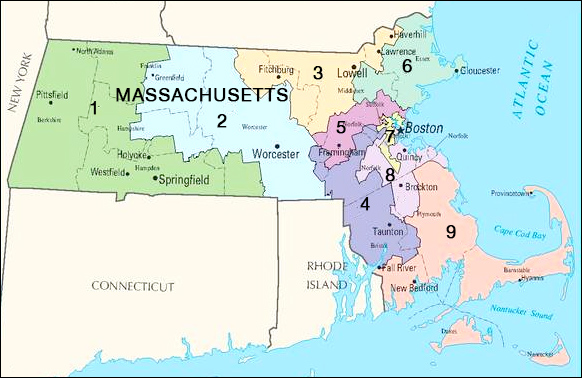
Aug. 27, 2018 — One of the few interesting remaining primaries in this 2018 election cycle is the open northern Massachusetts congressional race a week from tomorrow featuring 10 Democratic candidates all attempting to succeed retiring Rep. Niki Tsongas (D-Lowell).

A new University of Massachusetts at Lowell and Boston Globe survey of the impending MA-3 Democratic primary (Aug. 14-21; 849 MA-3 registered voters, 553 MA-3 likely Democratic primary voters) finds ex-Boston mayoral chief of staff Dan Koh forging into the lead, but with only a 19-13-13 percent edge over former ambassador to Denmark, Rufus Gifford, and state Sen. Barbara L’Italien (D-Andover) as the state’s Sept. 4 partisan primary draws near.

But other candidates could possibly make a run, too. Business consultant Lori Trahan posts eight percent in the poll, and while state Rep. Juana Matias (D-Lawrence) has just six percent, she is dominant within the district’s Hispanic community. In such a crowded campaign with a low voter turnout, any candidate with a major support base must be taken seriously. The other five candidates each register four percent and below.

But there could be more to this campaign than the winner of a crowded primary going on to easily take the general election in what should be a safe seat for the dominant party in the district, in this case the Democrats.

Continue reading

The Aug 7 Primaries – Part II

the-primariesBy Jim Ellis

Aug. 7, 2018 — We finish our look at today’s primary elections, covering Michigan and Washington, and the OH-12 special congressional election contest.


MICHIGAN

The US Senate and open governor campaigns lead the Michigan ticket today. Sen. Debbie Stabenow (D) will learn whether she faces venture capitalist Sandy Pensler or retired Army Ranger and manufacturing company owner John James, the latter a President Trump-endorsed candidate, in the fall campaign. The senator begins the general election in the clear favorite’s position.

With Gov. Rick Snyder (R) ineligible to seek a third term, competitive Republican and Democratic primaries will be both settled tonight. For the GOP, Attorney General and former US Congressman Bill Schuette has enjoyed double-digit leads in all polling for several months over Lt. Gov. Brian Calley. On the Democratic side, former state House Minority Leader Gretchen Whitmer has been the clear leader almost since the campaign began, and she is expected to defeat former Detroit Health Commissioner Abdul El-Sayed and businessman Shri Thanedar. The general election promises to be highly competitive in this pivotal redistricting state.

Three open seats are the top attractions in the congressional contests.

In veteran Rep. Sander Levin’s (D-Royal Oak) open seat, it appears the retiring congressman’s son, energy consultant Andy Levin, is the clear favorite in the Democratic primary. The 9th is a decidedly Democratic district meaning Levin’s chances of succeeding his father in the general election are strong.

Rep. David Trott (R-Birmingham) is retiring from Congress after two terms and leaves a toss-up political contest in his wake. Crowded primaries are present for both parties, including a Republican race featuring five candidates, while the Democrats have an additional five people running. Trump state co-chair Lena Epstein has developed a late lead in two Republican primary polls, while former Treasury Department official Haley Stevens and state Rep. Tim Greimel (D-Troy) appear atop of the Democratic contest.

Continue reading

Tennessee Primary Election Results

By Jim Ellis

Aug. 3, 2018 — Often in politics when two candidates begin to square off against each other in a multi-candidate field, that pair loses and an opponent coming from the outside walks away with the prize. That model again happened last night in the Tennessee Republican primary.

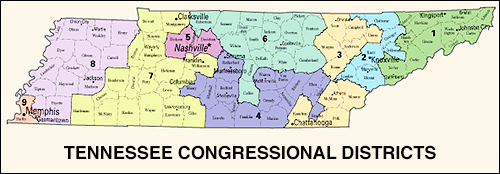
TENNESSEE-CONGRESSIONAL-DISTRICTS-with-citiesBusinessman Bill Lee, the only candidate with no governmental experience, took advantage of his late polling surge and captured the GOP gubernatorial nomination in Thursday’s Volunteer State primary election. Lee’s victory was substantial, winning a 37-24-23-15 percent over businessman and former state Economic Development Commissioner Randy Boyd, US Rep. Diane Black (R-Gallatin), and state House Speaker Beth Harwell (R-Nashville). Lee will now oppose former Nashville Mayor Karl Dean, who easily won the Democratic gubernatorial primary with 75 percent of the vote.

The open governor’s primary had been hotly contested. Rep. Black and Boyd had been leading in most polls, but Lee had made a major final push and became a late factor in the race. Most surveys had Rep. Black holding a slight advantage, but the polls had been hovering within the polling margin of error for several weeks. We saw that play out last night.

Voter turnout heavily favored the Republicans to the point of more than doubling the Democratic participation rate. In the governor’s race, 785,969 Republicans voted as compared to 369,775 Democrats. Lee now becomes the heavy favorite to succeed term-limited Gov. Bill Haslam (R) in the fall general election.

There was no suspense in the open US Senate race because Rep. Marsha Blackburn (R-Brentwood) and former Gov. Phil Bredesen (D) easily won their respective party nominations against only minor opposition, thus officially beginning a general election campaign that has already been proceeding for many weeks.

In the House races, incumbents Phil Roe (R-Johnson City), Chuck Fleischmann (R-Chattanooga), Scott DesJarlais (R-South Pittsburg), and Steve Cohen (D-Memphis) all were easily re-nominated in percentages ranging from 70 (DesJarlais) to 91 (Cohen). Rep. Jim Cooper (D-Nashville) was the only incumbent House member in either party unopposed for re-nomination.

Continue reading

The Crystal Ball Comparison

By Jim Ellis

Professor Larry Sabato, University of Virginia

Professor Larry Sabato, University
of Virginia

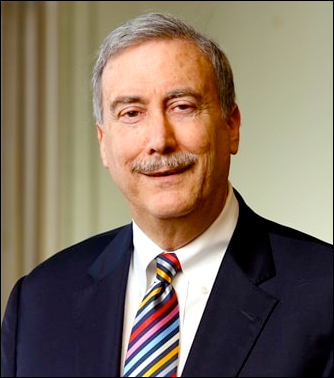
July 31, 2018 — Last week, University of Virginia professor Larry Sabato released his latest “Crystal Ball” ratings of the current US House races and declared that the Democrats are a “soft favorite” to assume the majority in the coming November elections. There’s more to the story, however.

Dr. Sabato supports his claim for several basic reasons. First, he sites the historic trends that a new president’s party loses seats in the first midterm election, and traces this electoral pattern all the way back to the Civil War era. Second, he turns to the typical polling regularly released that places President Trump’s approval ratings in what he terms “the low 40s”, and includes the generic House ratings, along with the “enthusiasm” analysis. Third, is the Democrats’ record in the current cycle’s federal and state special elections, and fourth is their second quarter fundraising “advantage.”

There are counter arguments that need mentioning for each of these points.

It is questionable to compare electoral trends developed during the 1800s to the elections of today because the world has changed so much. Bringing the analysis to at least the 20th Century and looking just at the post-World War II patterns (from President Harry Truman, inclusive, to today), we find that the average seat loss in the House during a new president’s first midterm is 26 seats. But, this average combines the six Democratic presidents losing 32 seats, and the five Republicans’ dropping 15 districts. Just three elections, 1966 (Johnson; -47 seats), 1994 (Clinton; -54), and 2010 (Obama; -63) have substantially upped the overall average.

Continue reading

The Georgia Run-off

By Jim Ellis

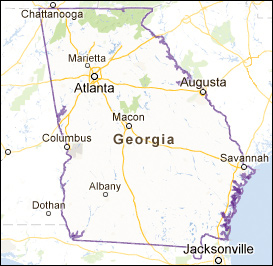
Georgia-mapJuly 25, 2018 — Peach State voters went to the polls yesterday, in a place where Republicans will choose a gubernatorial nominee while Democrats pick congressional candidates in Atlanta suburban districts 6 and 7.

Secretary of State Brian Kemp defeated Lt. Gov. Casey Cagle to win the Republican gubernatorial nomination. His landslide victory produced a more dramatic point spread than even the most optimistic poll for Kemp had predicted. In the May 22 Republican statewide primary, Lt. Gov. Cagle placed first in a field of six candidates with 39 percent of the vote. Placing second in the gubernatorial primary was Secretary of State Kemp with 26 percent of the vote. Under Georgia election law, to win a party nomination, a candidate must receive majority support. Because no one in the Republican primary topped 50 percent, the top two finishers advanced to yesterday’s run-off.

Kemp scored a crushing 69.4 – 30.6 percent win over Cagle, even though the latter began the race as the favorite for the nomination and placed first in the primary election. In that electoral contest, Cagle carried 123 of the state’s 159 counties. To best illustrate how far he dropped during the two-month run-off period, Cagle managed to win only two counties last night, Monroe, just north of Macon, and small Stephens County, a northeast Georgia political entity that hugs the South Carolina border.

Pre-election polls suggested that Kemp would win the run-off last night, as the latest publicly released survey research studies found him leading the lieutenant governor in a range between three and 18 points. The latest poll came Monday from the Trafalgar Group (July 21-22; 1,177 likely Georgia Republican run-off voters) and found Kemp topping Cagle 59-41 percent when leaners were included.
Continue reading

West Viginia Poll: The SCOTUS Effect

By Jim Ellis

July 23, 2018 — The Trafalgar Group surveyed the West Virginia US Senate campaign (July 13-16; 1,158 likely West Virginia general election voters) and tested — for what may be the first time any pollster has done so since President Trump officially nominated Appeals Court Judge Brett Kavanaugh to replace retiring Justice Anthony Kennedy — how the impending Supreme Court confirmation vote will affect a US Senate election.

Trafalgar’s initial ballot test response is consistent with other released polls regarding the race itself. That is, Sen. Joe Manchin (D) leads Attorney General Patrick Morrisey (R) 50-40 percent when the question is first posed. For the past month, all West Virginia surveys have delivered results in a similar range.

Polling chart courtesy Trafalgar Group

Polling chart courtesy Trafalgar Group. Click on the Trafalgar Group link or the graphic above to see more details.

However, the question also was asked of each individual respondent how he or she would would view the Senate race through the prism of whether or not Sen. Manchin would vote for or against confirming Judge Kavanaugh for the US Supreme Court. How much would the answer to that question sway a voter? The answer is: greatly.

At this point, the senator has not yet indicated how he will vote. Immediately after the nomination became public, Sen. Manchin stated that he wanted Judge Kavanaugh to complete the hearing process and publicly answer specific questions (Sen. Manchin is not a member of the Judiciary Committee).

According to Trafalgar, should he vote to confirm Judge Kavanaugh to serve on the Supreme Court, Sen. Manchin’s support within the electorate would substantially grow. However, if he opposes the judge, his campaign against Morrisey falls into the toss-up category.

Continue reading

Roby Wins Run-off

By Jim Ellis

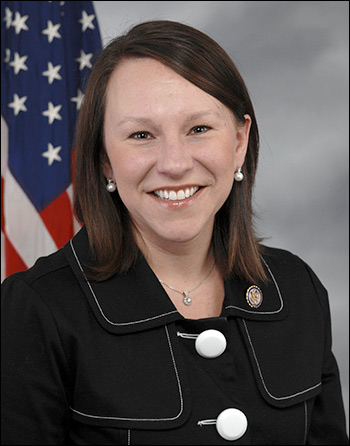
Rep. Martha Roby (R-Montgomery)

Rep. Martha Roby (R-Montgomery)

July 19, 2018 — Alabama voters went to the polls Tuesday to settle run-off elections, and the only congressional race on the ballot featured a Republican contest in the state’s southeastern 2nd District.

Rep. Martha Roby (R-Montgomery), who fared poorly in the June 5th GOP primary in scoring only 39 percent of the vote against four opponents – a clear danger sign for any incumbent – rebounded to post a 68-32 percent victory over former one-term Rep. Bobby Bright, the man Roby unseated back in 2010. At the time, Bright served as a Democrat. He changed parties and entered the Republican primary to challenge Rep. Roby and forced a political re-match eight years after the original contest.

The 2nd District is comprised of 14 southeastern Alabama counties and part of Montgomery County. The largest communities are the cities of Montgomery (part), Dothan, and Enterprise. Roby carried all 15 local entities within a turnout of just over 71,000 voters. The congresswoman spent over $1.5 million, after obtaining more than $1 million in just the 2nd quarter. Her fundraising totals $2.2 million since the beginning of the campaign cycle.

In contrast, Bright raised just $406,000 through the June 27 pre-election report, and almost $309,000 of that total came in the form of a candidate loan.

Roby is a former Montgomery City Council member who decided to challenge then-Rep. Bright in the 2010 election. She defeated him that year, 51-49 percent, in the Republican wave election. Two years later, she scored 64 percent in her first re-election campaign, followed by a 67 percent win in 2014. Her victory margin dropped to 49-40 percent in 2016, largely because she came out against then-candidate Donald Trump after the Access Hollywood videotape became public.

Continue reading