Tag Archives: Patrick Morrisey

High Possibility Sen. Sinema to Join “No Labels” Party in Ariz.; Hutchinson Announces; Justice With Big Lead in WVa; New Candidates in AZ-1, FL-11

By Jim Ellis — Thursday, April 6, 2023

President

Sen. Kyrsten Sinema (I-AZ)

No Labels Party: AZ Democrats Sue to Disqualify — The No Labels Party is attempting to qualify for the ballot in as many states as possible, and has already done so in Alaska, Arizona, Colorado, and Oregon. The Arizona Democratic Party, however, has filed a lawsuit attempting to disqualify the No Labels entity under the reasoning that Democratic Secretary of State Adrian Fontes was in error for certifying the organization because it doesn’t meet all of the legal qualifications. The ADP claims that No Labels has not filed with the Federal Election Commission nor have they disclosed their donors, both requirements for political parties under Arizona election law.

The Arizona Democrats are particularly concerned about No Labels because a candidate under this banner could potentially draw Democratic votes away from President Biden while further attracting a large percentage of Democratic support for Independent and Sen. Kyrsten Sinema, a former Democrat, now an Independent. Arizona is again expected to deliver very close statewide election results in 2024, as its electorate has done in the last two elections.

There is a strong possibility that Sen. Sinema could run as the No Labels Senate candidate. Doing so would allow her to qualify for the ballot with far fewer petition signatures than required to secure an Independent ballot line. Under Arizona procedure, an Independent candidate would be required to submit 45,000 valid registered voter petition signatures. A new party’s candidate would see such a signature requirement drop to less than 1,300.

Asa Hutchinson: Announces Candidacy — Former Arkansas Gov. Asa Hutchinson (R), who has repeatedly come out in opposition to former President Donald Trump, announced that he will become a presidential candidate. Though Hutchinson would be considered a “Never Trumper,” his jumping into the race could well help the former president because even small numbers of votes deflect from whoever becomes Trump’s top opponent, likely Florida Gov. Ron DeSantis, will allow the former to score a plurality victory.

Senate

West Virginia: New GOP Primary Poll Finds Gov. Justice with Big Lead — The National Public Affairs survey research firm released the results of their new West Virginia US Senate Republican primary poll. The study (March 14-17; 360 likely West Virginia Republican primary voters and Independents likely to vote in the Republican primary; live interview & text), unsurprisingly finds Gov. Jim Justice leading Attorney General Patrick Morrisey (R) and US Rep. Alex Mooney (R-Charles Town) with a 43-21-10 percent count. If the race were only between Gov. Justice and Rep. Mooney, the governor would hold a 55-24 percent advantage.

It is likely that Morrisey will likely opt for the open governor’s race instead of taking on Justice in another Senate primary. In 2018, Morrisey held Sen. Joe Manchin (D) to a 50-46 percent re-election victory after easily winning the Republican primary. A Senate announcement from Gov. Justice is expected soon.

House

AZ-1: Democrats Rebound with New Candidate — Late last week, 2022 congressional nominee Jevin Hodge (D), who held Arizona Rep. David Schweikert (R-Fountain Hills) to a tight 50.4 – 49.6 percent victory margin, announced that he would not return for a re-match. State Rep. Amish Shah (D-) said Monday that he will run.

The newly-configured 1st District electorate is voting much more Democratic than the FiveThirtyEight R+7 rating would suggest. Though Rep. Schweikert barely won, President Joe Biden, Sen. Mark Kelly (D), and Gov. Katie Hobbs (D) all carried the 1st district in their 2020 and 2022 elections, albeit by similarly slim margins. Expect AZ-1 to be a top-tier Democratic conversion seat in the next election.

FL-11: Rep. Webster to Face Primary Challenge — Former Florida state Rep. Anthony Sabatini (R), who finished a distant second to now-Rep. Cory Mills (R-New Smyrna Beach) in the open 7th District Republican primary last year, announced that he will challenge veteran Rep. Dan Webster (R-Clermont) next year in the neighboring 11th District. Sabatini will be a long-shot contender, but he will likely be able to attract sufficient resources to become competitive.

Lt. Gov. a Potential Senate Candidate in Wisc.; Mayor Sheila Jackson Lee?; Reeves Rebounds in Mississippi; West Virginia Candidate Decisions

By Jim Ellis — Tuesday, March 21, 2023

Senate

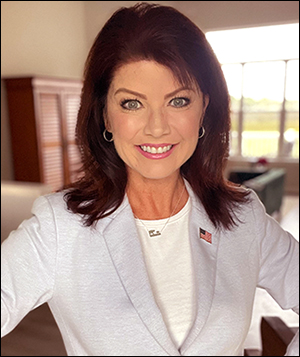
Wisconsin’s former Lt. Governor Rebecca Kleefisch (R)

Wisconsin: Former Lieutenant Governor Potential Senate Candidate — We reported late last week that business owner Scott Mayer is considering competing for the Wisconsin US Senate nomination in a race that has not yet begun. Now we see reports surfacing that former Lt. Gov. Rebecca Kleefisch (R) is “leaving the door open” to considering a bid against Sen. Tammy Baldwin (D).

Kleefisch, who served as lieutenant governor under then-Gov. Scott Walker (R) from 2011 to 2019, but who lost the 2022 GOP nomination for governor to businessman Tim Michels — who would then lose the general election to Gov. Tony Evers (D) — is currently leading the 1848 Project organization, a Wisconsin-based conservative action group.

House

TX-18: Mayor’s Option Still Open — Texas US Rep. Sheila Jackson Lee (D-Houston) is not commenting about further reports suggesting she will enter the open mayor’s race later this year. At the same time, she is not denying interest in doing so, and reports suggest that the congresswoman is telling close supporters that she is actively considering the race. The candidate filing period does not conclude until August, so quite a bit of time remains for her to enter the citywide campaign. Mayor Sylvester Turner (D) is ineligible to seek a third term, and is reportedly considering challenging Sen. Ted Cruz (R) next year.

Governor

Mississippi Public Service Commissioner Brandon Presley (D)

Mississippi: Reeves Rebounds — Mason-Dixon Polling & Strategy conducted a new Mississippi governor’s poll for the Magnolia Tribune (March 6-9; 625 registered Mississippi voters; live interview) and sees Gov. Tate Reeves (R) rebounding from a January Tulchin Research survey. The Mason-Dixon ballot test posts Gov. Reeves to a seven-point lead over Mississippi Public Service Commissioner Brandon Presley (D), 46-39 percent. The Tulchin poll staked Presley to an early 47-43 percent advantage.

In the M-D poll, the governor has leads throughout the state with the exception of the state’s 2nd Congressional District (Rep. Bennie Thompson-D), that occupies most of the Mississippi Delta area. In that region, Presley pulls a 15-percentage point lead. Gov. Reeves is strongest — a pair of 15-point spreads — in the Tennessee border region and on the Gulf Coast. With party nominations secure for both Gov. Reeves and Presley, the two are already waging a general election battle that will be settled on Nov. 7.

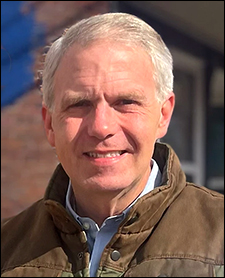
West Virginia: AG Morrisey Leads in New Poll — West Virginia Attorney General Patrick Morrisey (R), who lost to Sen. Joe Manchin in a close 49-46 percent result in 2018, claims to be deciding among seeking a re-match in the Senate race, or running for the open governor or 2nd Congressional District positions, or simply seeking re-election.

A newly released National Research poll that was conducted in late February for the Black Bear PAC (Feb. 23-28; 600 likely West Virginia Republican primary voters) projects Morrisey to be holding a 28-15-11-6 percent advantage in an open governor’s primary against state Delegate Moore Capito (R-Charleston), the son of Sen. Shelley Moore Capito (R); Secretary of State Mac Warner (R); and businessman Chris Miller, son of Rep. Carol Miller (R-Huntington).

Though Morrisey has yet to commit to a race, this poll suggests his gubernatorial prospects are positive. Incumbent Gov. Jim Justice (R) is ineligible to seek a third term, and is likely to challenge Sen. Manchin.

PA Sen. Casey Recovering from Cancer Surgery; WV’s Justice Topping Sen. Manchin; Wilson Likely Louisiana Governor Candidate; Missouri Poll Favors Former Senator’s Son

By Jim Ellis — Friday, Feb. 17, 2023

Senate

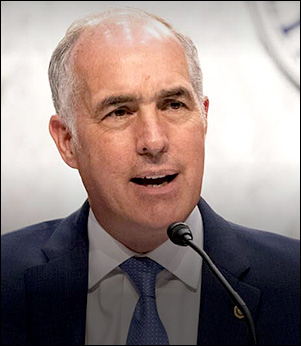
Pennsylvania Sen. Bob Casey, Jr. (D) recovering from cancer surgery.

Pennsylvania: Sen. Bob Casey Jr. Recovering from Cancer Surgery — Sen. Bob Casey, Jr’s. (D) office staff released a statement indicating that the senator’s surgery for prostate cancer is complete and doctors at least preliminarily believe he will need no further treatment. Sen. Casey previously said he hopes to run for re-election to a third term so long as his health responds. With early indications being positive, it is likely the senator will be back on the ballot in 2024.

West Virginia: New Poll Finds Gov. Jim Justice Topping Sen. Manchin — Mountain State Gov. Jim Justice (R) has been leaning towards challenging Sen. Joe Manchin (D) next year, and a new poll will likely add fuel to his fire. The Tarrance Group, polling for the Senate Leadership Fund (Feb. 5-7; 60 registered West Virginia voters, including an over-sample of 100 likely Republican primary voters; live interview), projects Gov. Justice leading Sen. Manchin by a substantial 10-point margin, 52-42 percent.

Testing the other known potential Republican candidates, Attorney General Patrick Morrisey and US Rep. Alex Mooney (R-Charles Town), the results prove to be very different. Against each of these Republicans, Sen. Manchin holds a lead. If AG Morrisey were to return for a re-match from their 2018 campaign (Manchin won 50-46 percent), the senator would be staked to a reversed 52-42 percent advantage. He would fare better opposite Rep. Mooney. In this pairing, Sen. Manchin’s margin would be an even stronger 55-40 percent.

At this point, Rep. Mooney has announced his Senate candidacy. Morrisey says he is looking at the Senate race, along with governor, Rep. Mooney’s open congressional seat, or running for re-election. Gov. Justice is reportedly nearing a decision.

Governor

Louisiana: Transportation Sec Shawn Wilson Resigning; Likely Gov Candidate — Louisiana Department of Transportation Secretary Shawn Wilson (D) announced that he is resigning his position largely with the intent of running for governor later this year. It appears he is doing so with Gov. John Bel Edwards’ (D) tacit endorsement. Gov. Edwards said of Wilson, “we would be very well served to have Shawn Wilson as our next governor.” Edwards is ineligible to seek a third term. At this point, Wilson would be the lone Democrat in the field.

Among Republicans, attorney general and former Congressman Jeff Landry and state Treasurer John Schroder are announced candidates. US Rep. Garret Graves (R-Baton Rouge) is another potential contender. The field won’t become finalized until Aug. 10. The jungle primary is scheduled for Oct. 14 with a runoff on Nov. 18 if no candidate receives majority support in the first vote.

Missouri: New Poll Favors Former Senator’s Son — The Remington Research Group released a survey of what will be an open 2024 Show Me State governor’s race. The study (Feb. 8-9; 820 presumed likely Missouri Republican primary voters; interactive voice response system) projects state Attorney General Jay Ashcroft, son of former US senator and US Attorney General John Ashcroft, leading the open GOP primary to replace term-limited Gov. Mike Parson (R) in the 2024 election.

The ballot test finds Ashcroft drawing 28Wilson support, more than tripling that of Lt. Gov. Mike Kehoe who posts nine percent preference. The eventual Republican gubernatorial nominee will begin the general election campaign as a clear favorite.

Murkowski Takes Lead; Manchin Opponent Announces; Each Party Gains Seat in House

By Jim Ellis — Monday, Nov. 21, 2022

Senate

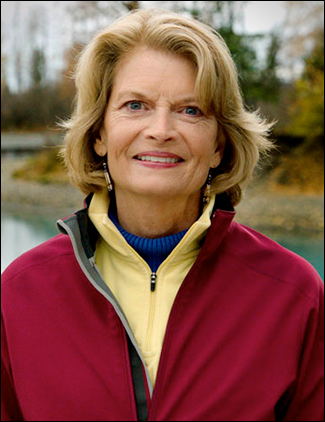
Alaska incumbent Sen. Lisa Murkowski (R)

Alaska: Murkowski Takes Lead — The Alaska ballot count slowly continues, and now with 87 percent of the projected vote recorded Sen. Lisa Murkowski (R) has assumed the aggregate vote lead over Republican challenger Kelly Tshibaka. According to this latest tabulation, Sen. Murkowski now has a 1,658-vote edge over Tshibaka.

The aggregate count, however, won’t likely end this election. Since the leading candidate will almost assuredly finish under the 50 percent majority mark – Sen. Murkowski now has 43.3 percent – we will then see the contest falling into the Ranked Choice Voting system. This, too, should favor Sen. Murkowski. Though Tshibaka is likely to receive more second-choice votes from the first eliminated conservative Republican candidate who has already endorsed her, Sen. Murkowski will receive many more from the second eliminated candidate, sure to be Democrat Pat Chesbro. At the end of this very long counting process expect Sen. Murkowski to be re-elected.

West Virginia: First Senate Announcement — West Virginia Rep. Alex Mooney (R-Charles Town) last week announced that he will challenge Sen. Joe Manchin (D) in the 2024 Senate race. He is the first such individual to announce for the next Senate election cycle in any state. In the 2022 election cycle, Mooney was paired with Rep. David McKinley (R-Wheeling) because West Virginia lost one of its three congressional seats in national reapportionment. In a tough Republican primary campaign, Rep. Mooney defeated Rep. McKinley, 54-36 percent, and went onto win the general election with 65 percent of the vote.

Back in August, Triton Research ran early ballot test questions pairing Sen. Manchin with several potential Republican challengers, including Rep. Mooney. In that pairing, Mooney led the senator 45-38 percent. Another potential Manchin opponent, Attorney General Patrick Morrisey (R) who challenged him in 2008, indicates he is considering another Senate bid but said he is also looking at what will be an open governor’s race, a potential bid for what will now be Rep. Mooney’s open congressional seat, or simply to seek re-election to his current position.

House

CA-13: Closest Race Continues On — In what could end as being the closest race in the country when all the votes are finally counted, Republican agri-businessman John Duarte (R) has re-captured the lead over state Assemblyman Adam Gray (D-Merced) with 73 percent of the projected vote counted. Currently, Duarte has an 865-vote lead. Looking at the five counties in the newly created District 13 that stretches from the Stockton area border to the south of Fresno, the race is close in each place.

Though the outstanding vote total in San Joaquin County is the largest and a place that clearly favors Gray, the total vote is too low to make a substantial difference in the overall count. Therefore, if percentages for the two candidates remain consistent among the outstanding votes, Duarte could win a very close victory. Therefore, we can expect not only a long waiting period to arrive at a final count, but a recount and vote challenge period will almost certainly follow. This may be the last race in the country to be called.

CO-3: Rep. Boebert Projected; Dem Concedes — Though Colorado Rep. Lauren Boebert (R-Silt) may be the projected winner with just a 554-vote margin from a total vote count of 327,110, and Democrat Adam Frisch has conceded the race, the tabulation process may not be over. Because the race is within the .5 percent range that triggers an automatic recount under Colorado state law, we still may see a post-election proofing procedure after the final canvass even though Rep. Boebert has declared victory and Frisch conceded. At this point, however, with the Boebert projection, the Republican House total increases to 219.

CO-8: Democrat Caraveo Wins New Seat — Colorado’s new 8th District earned in national reapportionment was drawn as a 50/50 seat with the slightest Democratic lean, and that is exactly the way the election finished. Over the weekend, Democratic state Rep. Yadira Caraveo (D-Eastlake) was projected the winner, claiming a 1,625-vote win from a total of 236,426 currently counted ballots, giving her a 48.4 – 47.7 percent victory over Weld County Republican state Sen. Barbara Kirkmeyer.

Because this margin is likely to remain beyond the .5 percent mandatory recount range, this win will soon be certified. The Caraveo victory brings the Democratic House total to 212 with four seats remaining outstanding.

The (Mostly) Final Election Results

By Jim Ellis

Nov. 7, 2018
— The long 2018 midterm election cycle drew to a close last night and, as predicted, split government will return to Capitol Hill. Republicans held the Senate and saw their majority grow as Democratic Sens. Heidi Heitkamp (ND), Joe Donnelly (IN), and Claire McCaskill (MO) 2018-mid-term-election-results-graphicfell to Republican challengers. Florida Gov. Rick Scott (R) likely will be forced into a recount to see if his just-under 40,000 vote advantage will be enough to unseat Sen. Bill Nelson (D).

The Montana race is undecided as Sen. Jon Tester (D) is on the precipice of losing but the outstanding vote suggests he could survive by a very small margin. The razor-thin Arizona race is a must-hold for the GOP. Democrat Jacky Rosen defeated Nevada Republican Sen. Dean Heller, and West Virginia’s Joe Manchin (D) fought back a tough challenge from Attorney General Patrick Morrisey (R).

If all of these follow their current trends, Republicans will gain a net of four seats and increase their majority margin to 55-45. If Montana and Arizona go Democratic, the division would slip to 53R-47D. In any event, it appears likely that the Republicans will gain two to four seats.

The new Senate will maintain their new majority split once the Nov. 27 run-off election is held and decided in Mississippi. In that new secondary election, appointed Sen. Cindy Hyde-Smith (R) will face former US Agriculture Secretary and ex-Mississippi congressman, Mike Espy (D). Sen. Hyde-Smith placed first in the Nov. 6 preliminary vote and ended with 41.5 percent of the vote, not close to secure the majority support that would have elected her outright and just ahead of Espy’s 40.6 percent. State Sen. Chris McDaniel (R-Ellisville) was third with 16.4 percent, likely denying Hyde-Smith the opportunity to win in the first round. He is eliminated from further competition.

As predicted, the House did flip to the Democrats and leadership elections will soon be held to determine who will replace retiring House Speaker Paul Ryan (R-WI). It is perceived that California’s Nancy Pelosi will again become the speaker after serving from 2007-11 and losing the post when the Republicans secured the majority in the 2010 election.

Continue reading

West Viginia Poll: The SCOTUS Effect

By Jim Ellis

July 23, 2018 — The Trafalgar Group surveyed the West Virginia US Senate campaign (July 13-16; 1,158 likely West Virginia general election voters) and tested — for what may be the first time any pollster has done so since President Trump officially nominated Appeals Court Judge Brett Kavanaugh to replace retiring Justice Anthony Kennedy — how the impending Supreme Court confirmation vote will affect a US Senate election.

Trafalgar’s initial ballot test response is consistent with other released polls regarding the race itself. That is, Sen. Joe Manchin (D) leads Attorney General Patrick Morrisey (R) 50-40 percent when the question is first posed. For the past month, all West Virginia surveys have delivered results in a similar range.

Polling chart courtesy Trafalgar Group

Polling chart courtesy Trafalgar Group. Click on the Trafalgar Group link or the graphic above to see more details.

However, the question also was asked of each individual respondent how he or she would would view the Senate race through the prism of whether or not Sen. Manchin would vote for or against confirming Judge Kavanaugh for the US Supreme Court. How much would the answer to that question sway a voter? The answer is: greatly.

At this point, the senator has not yet indicated how he will vote. Immediately after the nomination became public, Sen. Manchin stated that he wanted Judge Kavanaugh to complete the hearing process and publicly answer specific questions (Sen. Manchin is not a member of the Judiciary Committee).

According to Trafalgar, should he vote to confirm Judge Kavanaugh to serve on the Supreme Court, Sen. Manchin’s support within the electorate would substantially grow. However, if he opposes the judge, his campaign against Morrisey falls into the toss-up category.

Continue reading

Big Primary Results

By Jim Ellis

2018-elections-open-seats-185May 9, 2018 — Voters in four states made their preliminary electoral statements known last night, choosing nominees in Indiana, North Carolina, Ohio, and West Virginia in the 2018 election cycle’s first multi-state primary event. The night included defeating the first incumbent of the electoral season, North Carolina three-term Rep. Bob Pittenger (R-Charlotte), and nominating two Senate nominees in what could become first-tier Republican challenger campaigns.

Indiana

One of the more interesting contests heading into yesterday’s voting was the Indiana GOP Senate primary where three major contenders were vying for the right to advance into the general election and face first-term Sen. Joe Donnelly (D). There, former state representative and national distribution company owner Mike Braun attempted to seamlessly drape both Reps. Todd Rokita (R-Brownsburg/Lafayette) and Luke Messer (R-Greensburg/Muncie) in the algae of the Washington swamp, with the two House members retaliating that Braun is a former Democrat with a voting record that supported raising taxes 47 times.

Considering that Braun proved successful in winning the nomination last night, his strategy and clever advertising campaign worked but, in the aggregate, almost 60 percent of the Republican primary electorate still voted for one of the two congressman. In the end, Braun captured 41.2 percent of the vote, enough of a plurality to claim the nomination. Rep. Rokita was second with 30 percent, while Rep. Messer was a very close third, getting 28.8 percent of the GOP vote. Braun swept virtually all of the counties outside of Congressional Districts 4 and 6, which belong to Reps. Rokita and Messer, respectively.

A Donnelly-Braun general election will be highly competitive, as now the new Republican nominee will make the incumbent senator the focal point of his anti-Washington swamp, politics-as-usual campaign strategy. The Indiana race now becomes one of the premier GOP challenge targets in the country.

In the House races, while Braun ran strongly throughout most of the state, he failed to provide familial coattails. His brother, Steve Braun, fell to state Rep. Jim Baird (R-Greencastle) in a 36-29 percent spread from a 4th District GOP electorate that exceeded 80,000 votes. Baird will easily win the general election and come to Washington as Rep. Rokita’s replacement in the western state congressional district that touches the outer Indianapolis suburbs.

Turning to the eastern 6th District, in a highly expected result, Vice President Mike Pence’s older brother, Greg Pence, easily captured the Republican nomination for Rep. Messer’s open seat. His 65 percent victory over four opponents sends him into a general election campaign that he will surely win in November.

North Carolina

All local political observers were following the two Republican US House incumbents facing strong challengers. As mentioned in the introduction, Rep. Bob Pittenger (R-Charlotte) became the first House member in this fledgling election cycle to be denied re-nomination. Pittenger, who came within just 134 votes of losing the 2016 GOP primary, could not overcome former pastor Mark Harris this year. Harris, a 2014 US Senate candidate, ran two years later for the post court-mandated redistricting seat that changed 60 percent of the district just before the 2016 primary.

Though it looked like Rep. Pittenger would have an easier road to re-nomination this year, the opposite proved true. Harris won the party nomination, 48.5–46.2 percent, a margin of 814 votes of more than 35,000 primary votes cast. Harris will now face the new Democratic nominee, businessman Dan McCready who is already on record saying he won’t vote for Nancy Pelosi as House speaker if he wins in November. The 9th District, which stretches from Charlotte to Fayetteville, posted a 54-43 percent victory for President Trump. Rep. Pittenger won re-election in 2016 with 58 percent of the vote. Though the numbers stack up well for Republicans in this district, with McCready already raising $1.9 million for the primary, it makes this contest competitive and may become a targeted Democratic challenge race.

Moving to the Outer Banks region, veteran Rep. Walter Jones (R-Farmville), also facing serious competition, scored a 43 percent victory to win what he says will be his last term. The fact that he had two opponents who pulled virtually equal support allowed Jones to win again with just a plurality. He faces no competition in the general election, which means last night’s victory assures him of re-election in the fall.

In the Greensboro area, as expected, University of North Carolina at Greensboro trustee Kathy Manning, another challenger who has raised well into seven figures, easily advanced into the general election last night with 70 percent of the vote. She will face freshman Rep. Ted Budd (R-Advance) in another November race that appears more competitive than the regional voting history might suggest. Budd garnered 56 percent in his first general election. The congressman was unopposed last night in the Republican primary.

Ohio

The Ohioans voted as expected last night. Rep. Jim Renacci (R-Wadsworth) scored a 47-32 percent win over investment banker Mike Gibbons to win the 2018 Republican Senate nomination. The congressman now advances against two-term Sen. Sherrod Brown (D) in November.

Originally a gubernatorial candidate, Renacci made the smart switch to the Senate race after attorney general and former US Sen. Mike DeWine and Secretary of State Jon Husted voluntarily formed a ticket to effectively clinch the nomination in the early part of the year. All of these strategic moves proved prescient, as DeWine easily won the gubernatorial election last night, 60-40 percent over Lt. Gov. Mary Taylor (R); Rep. Renacci secured the Senate nomination.

In the 12th District special election, state Sen. Troy Balderson (R-Zanesville) out-paced Liberty Township Trustee Melanie Leneghan by a single percentage point (29-28 percent) and topped a field of seven other candidates to win the Republican nomination and advance to the Aug. 7 special election. Franklin County Recorder Danny O’Connor easily won the Democratic nomination. The 12th is a reliably Republican seat, and with a 24,000-vote edge in total turnout last night, Sen. Balderson becomes the clear favorite to win the special general. Both men also were nominated for the full two-year term in November.

Looking at Rep. Renacci’s open Cleveland-Akron area 16th District, technology executive and former NFL football player Anthony Gonzalez defeated conservative state Rep. Christina Hagan (R-Marlboro Township) 53-41 percent to win the Republican nomination. Gonzalez will now face healthcare company executive Susan Moran Palmer, who captured the Democratic nomination. The former Indianapolis Colts and Ohio State Buckeye wide receiver is the favorite to win the seat in November.

West Virginia

In the other premier Senate contest of the evening, media reports that disgraced former coal company CEO Don Blankenship was making a serious move on the Republican nomination proved erroneous as two-term Attorney General Patrick Morrisey won the GOP primary with a 35-29 percent margin over US Rep. Evan Jenkins (R-Huntington). Placing third with 20 percent of the Republican vote was Blankenship. AG Morrisey won the right to challenge Sen. Joe Manchin in the general election. The incumbent defeated a Democratic primary challenger from his left, environmentalist Paula Jean Swearingen, 70-30 percent.

Morrisey swept the northern and central portions of the state, with Rep. Jenkins dominating south West Virginia, the site of his congressional district. Blankenship won four small counties. The Manchin-Morrisey Senate election now becomes a top-tier Republican challenge race.

With Reps. David McKinley (R-Wheeling) and Alex Mooney (R-Charles Town) running unopposed for re-nomination, the congressional action was in Rep. Jenkins’ open 3rd District where state House Majority Whip and farmer Carol Miller (R-Cabell County) topped a field of six other Republican candidates, including two sitting state delegates, one former delegate and congressional nominee, and an ex-West Virginia Republican Party chairman to win a close nomination campaign. She begins the general election in the favorite’s position against state senator and Iraq War veteran Richard Ojeda (D-Holden/Logan) who easily won the Democratic primary.