Tag Archives: North Carolina

Primary Results: Many Undecided

By Jim Ellis

June 24, 2020 — Partial returns were reported last night in Kentucky and New York, but it likely will be June 30 before we see even unofficial final totals as both states wait for returning absentee ballots.

In Kentucky, an estimated 625,000 ballots are in the postal system and can take until June 27 to arrive in their respective county counting centers. The secretary of state is allowing the Kentucky counties to not report until June 30 and will not release statewide totals until then. News services, however, were reporting counted numbers.

Trends appear better established in New York, where a greater percentage of the overall vote is most likely counted. New York generally records low primary participation numbers. Most of the races have clear winners, however. Completed totals are reported in North Carolina and Virginia.

The Kentucky Senate Democratic primary, as closing polling predicted, is tight in early counting. Retired Marine Corps pilot Amy McGrath leads state Rep. Charles Booker (D-Louisville), but with only a 5,104-vote margin (45-37 percent) among the just under 62,000 votes tabulated. No numbers are reported from the state’s two largest counties, Jefferson and Fayette, the homes of Booker and McGrath, respectively.

At this point, McGrath appears headed toward a close victory but, with so many votes outstanding, it will likely be a full week before we see an official winner declared. On the Republican side, Senate Majority Leader Mitch McConnell’s 87 percent total assures him of re-nomination.

All five of Kentucky congressional Republican incumbents have been re-nominated, as each total between 88-94 percent of the yesterday’s in-person vote. Kentucky is one of 12 states that does not allow early voting. In Rep. John Yarmuth’s (D-Louisville) 3rd District, no numbers have been reported in the Republican primary, but the congressman has been re-nominated because he was unopposed on the Democratic side.

In New York, state Sen. Chris Jacobs (R-Buffalo) has been projected as the special election winner in the vacant 27th District. Of the totals counted, he topped former Grand Island town supervisor Nate McMurray (D), 69-29 percent. In the concurrent Republican primary for the regular term, Jacobs is capturing 71 percent of the vote to easily win the party nomination for the full term.
Continue reading
The Unique New York Special;
Other Key Primaries Today

By Jim Ellis

June 23, 2020 — Voters in five states — New York, Kentucky, Mississippi, North Carolina, and Virginia — will cast nomination votes today, and some interesting races are on tap.

NEW YORK

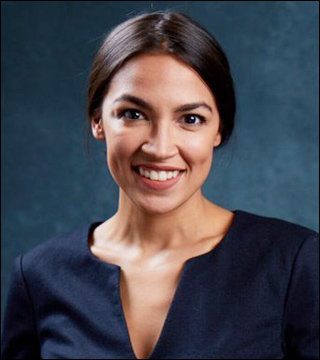
New York Rep. Alexandria Ocasio-Cortez (D-Bronx), faces challenges from former CNBC anchor Michelle Caruso-Cabrera and two minor candidates today.

Though the intra-party challenges to Reps. Eliot Engel (D-Bronx) and Alexandria Ocasio-Cortez (D-Bronx) have drawn the most political attention, Buffalo area state Sen. Chris Jacobs (R) is embroiled in a unique special congressional election to replace resigned-Rep. Chris Collins (R).

The special wasn’t designed to have such an interesting, and largely confusing format, but a quirk in New York election procedure has caused Jacobs to be campaigning simultaneously before two different electorates. He faces Democratic former Grand Island town supervisor Nate McMurray, who held Rep. Collins to a 48-47 percent victory in 2018 in the special general, and two strong Republican challengers in the regular 2020 primary.

It’s not particularly unusual to see a special election and a regular primary election being run concurrently, but it is strange to see a special general and a regular primary paired. Therefore, this forces Jacobs to campaign closer to the political center, a place where he typically falls, in his battle with McMurray to serve the balance of the current term, while also protecting his right flank against two opponents who are attacking him for being outside the Republican Party mainstream. McMurray has no such problem because he is unopposed on the Democratic side.

The 27th District is vacant because Rep. Collins resigned the seat when pleading guilty to an insider financial trading federal charge. Gov. Andrew Cuomo (D) scheduled the replacement election on the same day as the regular primary. Since the New York political parties give power to choose replacement nominees to the various county chairmen in the district, there is no special election primary. Therefore, voters only cast one ballot to fill a congressional vacancy.

While Sen. Jacobs needs the Republican rank and file to turn out heavily to support him against McMurray, two GOP candidates not chosen by the party leaders, Erie County Comptroller Stefan Mychajliw and attorney and former town judge Beth Parlato, are consistently hitting him from the right, thus cross pressuring his message to the GOP base.

In the closing days, Parlato, who also carries the Conservative Party ballot line, has launched an additional attack on Jacobs indicating that he’s being investigated for voter fraud. While a citizen charge was filed, the local District Attorney has already dropped the action as having no substantiation. Still, Jacobs’ has had to defend himself on another political front.

The 27th District is an upstate seat that begins in the eastern Buffalo suburbs and extends north all the way to Lake Ontario, and then drops south of Rochester and east as far as the town of Canandaigua. The district includes four whole counties and parts of four others, including Erie and Niagara. It is a reliably Republican district (Trump ’16: 60-35 percent; Romney ’12: 55-43 percent).

The CD did flip to the Democrats, however, the last time a special congressional election was held here. Kathy Hochul, now New York’s lieutenant governor, won the seat in 2011. She was then subsequently defeated in the 2012 regular election by Collins, however.
Continue reading

The Senate Barometer

Sen. Cory Gardner Senate campaign attack ads hitting former Colorado Gov. John Hickenlooper hard (see COLORADO writeup below)


By Jim Ellis

June 18, 2020 — Next to discussion of the presidential race, the political contests attracting the most political attention and debate are the 2020 US Senate campaigns.

As we know, Republicans have a 53-47 Senate majority, meaning the Democrats will have to convert a net three GOP seats if Joe Biden wins the presidency, or four if President Trump is re-elected. Many believe that the winning presidential candidate will also sweep in a Senate majority for his party.

Below is an update of the key races:


• ALABAMA: In many ways, this could be the most important race on the board. Republicans must convert this seat back to their column in order to provide a greater cushion toward protecting their chamber majority. Sen. Doug Jones (D), who scored a fluke special election win in 2017, stands for a full six-year term in November.

Republicans are in a runoff election that will be decided on July 14, postponed from the original March 31 date. In the March 3 primary, retired Auburn University head football coach Tommy Tuberville placed first over former attorney general and ex-Alabama senator Jeff Sessions within a field of seven total candidates, 33-32 percent.

Runoff polling, however, gives Tuberville a large lead as the contenders enter the last month of the secondary election campaign. The May 26-27 OnMessage survey gave Tuberville a 49-43 percent edge, down considerably, however, from the 55-32% margin the former coach posted in a Cygnal research group poll conducted over the May 7-10 period.

Tuberville, with President Trump’s endorsement and running an ad saying Sessions’ appointment as AG is the president’s top regret since taking office, clearly has the advantage. In the general election, this race is a must-win for the GOP. If converted, the Republican majority expands to 54, which will be critical for their chances to hold.


• ARIZONA: Things continue to break retired astronaut Mark Kelly’s (D) way in the early going opposite appointed Sen. Martha McSally (R). Being one of the top national fundraisers with $31 million raised and millions more coming into the state in the form in independent expenditures, Kelly is the favorite to convert the seat in November. He has led in the last 11 publicly released polls, the latest coming from the Civiqs organization, polling for the Daily Kos Elections website (June 13-15), which posts Kelly to a 51-42 percent advantage.


• COLORADO: Sen. Cory Gardner (R) seeks a second term, and with the state’s electorate moving decidedly to the left since the incumbent’s original election in 2014, the Colorado race sets up well for Democratic conversion.

There is some weakness developing, however, surrounding Sen. Gardner’s likely Democratic opponent, former governor and presidential candidate John Hickenlooper. Recently, the Colorado Ethics Commission ruled that Hickenlooper, while governor, twice violated the state’s gift ban, which has caused him negative statewide publicity.

Now, the National Republican Senatorial Committee has launched an ad campaign underscoring the commission finding just as the former governor approaches his June 30 primary election against former state house speaker Andrew Romanoff. Sen. Gardner also is on the air in a new ad highlighting Hickenlooper’s statements during the presidential campaign when he was quoted extensively as saying he didn’t want to be a US senator. Taking this into consideration, more people are looking toward the Democratic primary, in which Romanoff is gaining some momentum. This general election is a must-win for the Democrats.
Continue reading

Is A Budding Red Rebound Emerging?

By Jim Ellis

May 19, 2020 — Two years ago, several national political prognosticators were predicting a strong Democratic election, i.e., “a blue wave,” by using special election results, mostly from state legislative campaigns, as one of their fundamental support arguments. As we know, the forecast proved correct.

To what degree the special election totals were a precursor is difficult to say, but it is reasonable to believe that real-time results are a better voting trend indicator than publicly released polls, many of which are methodologically flawed. Therefore, it is worth analyzing similar voting patterns as we approach the 2020 election.

North Carolina Rep. Dan Bishop (R-Charlotte)

The victory of Republican Mike Garcia in California last week marked the first congressional special election of this election cycle to flip from one party to the other. Republicans have won five of the six special US House contests, including those of Garcia and Wisconsin state Sen. Tom Tiffany (R-Minocqua), who easily claimed his state’s vacant 7th District, last Tuesday.

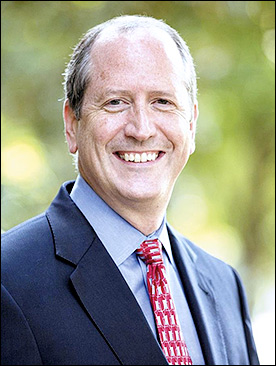
The other significant special election occurred late last year. Though Rep. Dan Bishop’s (R-Charlotte) victory in North Carolina came in a seat that historically produced Republican victories, he was certainly considered an underdog at the outset of the special election campaign. He rebounded, however, to score a two-point victory, nonetheless, which in many ways makes it as noteworthy as the Garcia win.

The NC-9 election was necessitated because voter fraud in the 2018 general election prevented the Republican candidate from being certified the winner. After almost a year of keeping the seat vacant, the state’s Board of Elections called a new election that Gov. Roy Cooper (D) scheduled for Sept. 10, 2019.

In the campaign, Bishop was outspent $7.5 million to $2.7 million and that was on top of the $6.1 million Democrat Dan McCready expended in the 2018 general election. Furthermore, Democratic strategists predicted victory in this race because the Charlotte-Fayetteville seat contains a large suburban population, the type of district where their candidates certainly excelled in 2018, and President Trump’s job approval ratings were languishing around the 40 percent mark at the time. All things considered, the Bishop victory should not be characterized as a routine Republican hold.

According to the Ballotpedia election research organization, during the 2018 voting cycle, 197 special state legislative elections were held around the country, 98 of them in 2017, and 99 in 2018. Republicans risked 110 of the seats, substantially higher than the 87 the Democrats were forced to defend. In 2017, Democrats gained a net 11 legislative seats nationally, and eight more in 2018 for a cycle total of 19 net flips (Democrats actually won 26 Republican-held seats, but the GOP took back seven Democratic districts). It was these numbers that largely led the prognosticators to point to changing trends.

Continue reading

Nevada: A Target?

By Jim Ellis

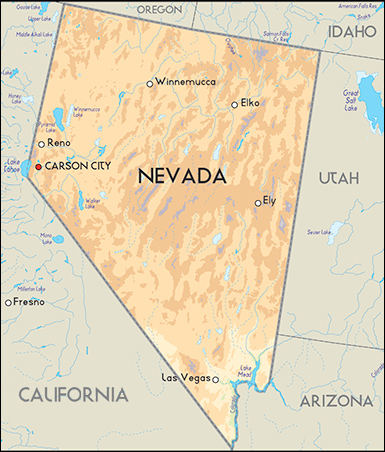
May 8, 2020 — The Silver State of Nevada, with six Electoral College votes, has been regarded as a swing state in most 21st Century presidential elections, but in projecting the 2020 vote, it is routinely considered as a place destined to land in the Democratic column. But, could Nevada ultimately be in play for President Trump?

With a general election electoral vote map looking ever closer as we move toward November, introducing a new target could drastically change the eventual outcome or at least the campaign focus and strategy.

A new ALG Research poll (April 27-30; 76 likely Nevada general election voters) reports findings that are consistent with virtually all of the 2016 Nevada general election surveys. Last week, the firm found former vice president Joe Biden leading President Trump with a 49-45 percent spread. Such a margin and preference percentages fall into the same realm as all 31 polls conducted in Nevada from May through the November 2016 election.

When ‘16 ended, Hillary Clinton carried the state, but her margin was only 2.4 percentage points, meaning a 27,000-vote spread of more than 1.12 million ballots cast. And, consistent with the large number of polls that concluded a close race within the 40s would be the actual result, Clinton defeated Trump, 47.9 – 45.4 percent, validating the plethora of research conducted over the final five-plus months of that election cycle.

Four years ago, 13 different pollsters conducted the almost three dozen surveys, and in no instance did either Trump or Clinton ever reach the 50 percent plateau. On the other end of the spectrum, in just three instances did one of the candidates dip below 40 percent. Therefore, in 28 of the 31 studies logged within the 2016 Real Clear Politics polling archives, both candidates fell within the 40s, meaning this result occurred over 90 percent of the time. In terms of range, the span stretched from Clinton plus-7 to Trump plus-6, but the average between the two was only 2.7 percent, which is almost exactly the actual final total. This obviously suggests a competitive political battlefield.

Continue reading

COVID & Redistricting

By Jim Ellis

April 29, 2020 — The deadline for the Census Bureau to release the new population data is March 31, 2021, but with the entire process being delayed due to COVID-19 precautions, the ability to meet the requirement is becoming more difficult by the day. Already, the Bureau has been delayed in dispatching their door-to-door teams necessary in obtaining the responses from people who did not return their mail tabulation form.

The Trump Administration is reportedly suggesting that the March 31 deadline be postponed to sometime in the summer of 2021. If this happens, we will see a series of redistricting problems ignited in the states. First, the political leaders in New Jersey and Virginia, places that have 2021 elections and need their new state legislative lines in place well before that date, would find themselves in a difficult position.

Initially, the two states would certainly have to postpone their primary elections because both nominate their general election candidates in June. Beyond that, it is possible they would have to even postpone their general elections into 2020 or run in the obsolete boundaries that were drawn back in 2011. In either case, we could expect lawsuits being launched from whichever party loses a particular electoral contest.

Other states would be affected, too. Many have legal deadlines in place mandating that the new redistricting maps for state legislature and the US House delegation be adopted before the legislative sessions ends. Most states recess before mid-summer, which would mean special sessions being called if the legislature is to act.

The problem intensifies in the states that are either gaining or losing congressional districts in reapportionment. Currently, it appears that seven states will add seats to their delegations (the best projections suggest that Texas will gain three, Florida two, and Arizona, Colorado, Montana, North Carolina, and Oregon one apiece), while 10 will lose single districts (Alabama, California [for the first time in history], Illinois, Michigan, Minnesota, New York, Ohio, Pennsylvania, Rhode Island, and West Virginia).

The aforementioned apportionment is based upon calculations released publicly and not, of course, using the actual numbers. Therefore, we could see some differences between these projections and what the formulas actually produce when the Census Bureau finally can produce the updated real figures.

Continue reading

This Time in 2016

By Jim Ellis

Does Arizona hold the key in a Trump-Biden candidacy?

April 23, 2020 — It is interesting to revert back to April of 2016 to see just how Donald Trump was faring against Hillary Clinton and compare those results with today’s survey research. Thanks to the Real Clear Politics website and their polling archives, the day-by-day polling data from four years ago is still available so we can track the Trump-Clinton campaign historical progress with the new Trump-Joe Biden impending national contest.

The key point to remember about national presidential polling is that the aggregate ballot test means very little yet is the subject of most political research studies. Knowing what voters think about the campaign in places like Arizona, Florida, Georgia, Michigan, North Carolina, Pennsylvania, Texas, and Wisconsin is much more important when attempting to project a final outcome, but we see far fewer numbers coming from these places than we do nationally.

In 2016, we will remember that almost all analysts and political prognosticators were predicting a Clinton win, and virtually all national polling was revealing an advantage for the former secretary of state, US senator, and First Lady, yet Trump emerged the winner. After the election, most surface analysis reported that the polling was in error, but such was not generally the case. The preponderance of polling, which predicted a narrow Clinton popular vote victory was actually correct; as we will remember, Clinton finished ahead of Trump in a close plurality.

With this background in mind, let’s look at what the various polling firms are projecting this month for the Trump-Biden race and compare it to the available data from 2016.

In April 2016, through the 15th of the month, three national polls had been released from individual or collaborating media entities: CBS News (April 8-12), NBC News/Wall Street Journal (April 10-14), and Fox News (April 11-13). This year, we see a more active April polling month that yields nine studies from eight different pollsters.

In 2016, the three testing entities all predicted Hillary Clinton to be holding the advantage over Donald Trump, by margins of 10 (CBS), 11 (NBC/WSJ), and 7 (Fox) percentage points. A little over six months later, Clinton would carry the national popular vote by 2.1 percentage points but lose the presidency because the key states broke toward Trump, which added up to an Electoral College win.

Continue reading